Challenge on Combustion
AIM:
Part-1: To perform a combustion simulation on the combustor model and to plot the variation of the mass fraction of the different species’ in the simulation using line probes at different locations.
Part-2: To add the water content in the fuel from 5% to 30% by mole and observe the effect of it on the results.
Introduction:
Combustion: Combustion is defined as a chemical reaction in which a hydrocarbon fuel reacts with an oxidant to form products, accompanied with the release of energy in the form of heat. Being the integral part of various engineering applications like: internal combustion engines, aircraft engines, rocket engines, furnaces, and power station combustors, combustion manifests itself as a wide domain during the design, analysis and performance characteristics stages of the above-mentioned applications.
With the added complexity of chemical kinetics and achieving reacting flow mixture environment, proper modeling physics has to be incorporated during computational fluid dynamic (CFD) simulations of combustion.
Computational fluid dynamics modeling of combustion calls upon the proper selection and implementation of a model suitable to faithfully represent the complex physical and chemical phenomenon associated with any combustion process.
The model should be competent enough to deliver information related to the species concentration, their volumetric generation or destruction rate and changes in the parameters of the system like enthalpy, temperature and mixture density. The model should be capable of solving the general transport equations for fluid flow and heat transfer as well as the additional equations of combustion chemistry and chemical kinetics incorporated into that as per the simulating environment desired
Geometry:
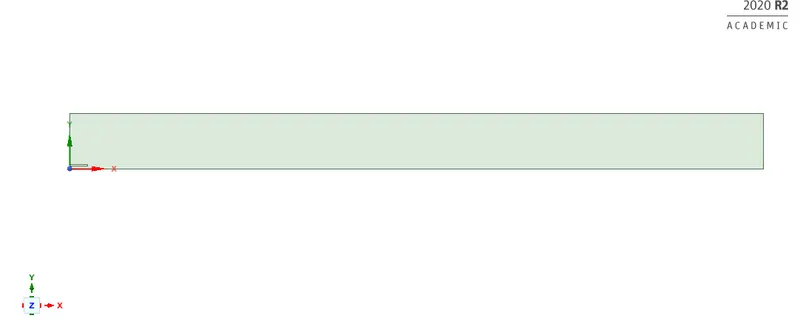
The 3D model is converted into 2D.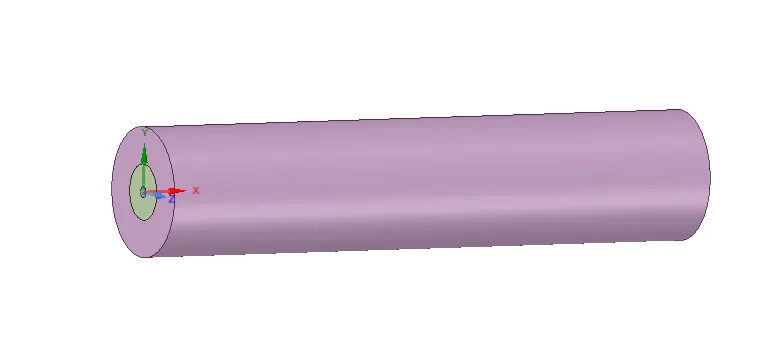
Mesh:

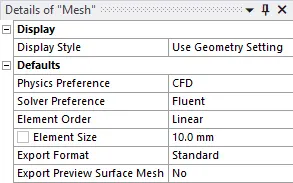
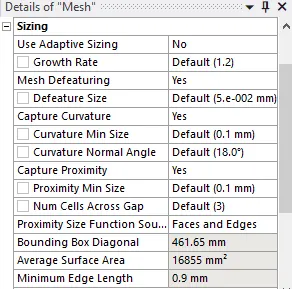
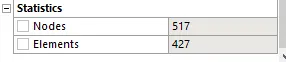
The Mesh details are shown below.
Capture proximity is enabled.
Setup & Simulation:
With Pressure based solver, absolute velocity formulation, steady state condition and with axisymmetric the simulation started.
Viscous model - k-epsilon
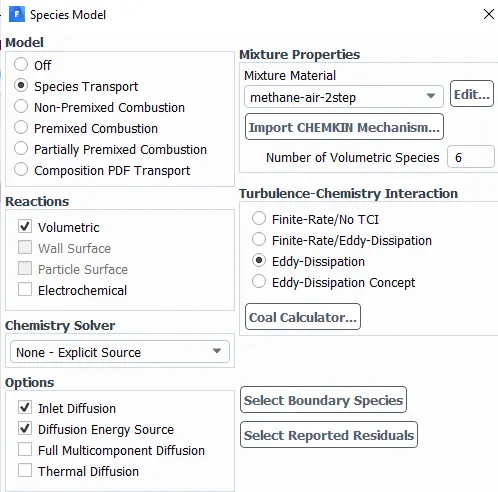
Species - species transport is enabled with volumetric reactions.
Mixture material of methane-air-2step is used.
Turbulence-Chemistry Interaction of Eddy-Dissipation is enabled.
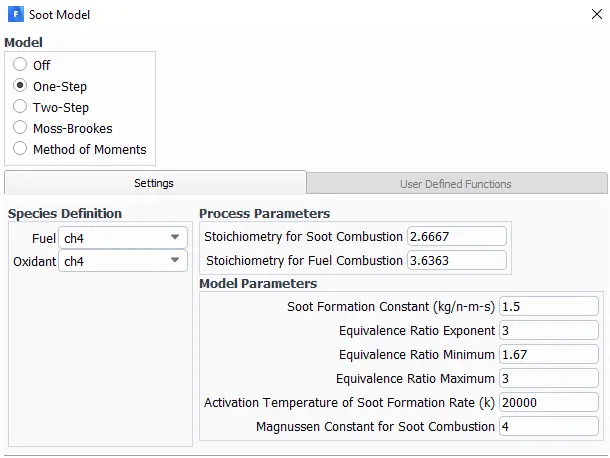
Soot:
Part-1:
Boundary Conditions:
1. Air inlet ==> Velocity = 0.5m/s, Temperature = 300k, 0.23 species mass fraction of O2.
2. Fuel-inlet==>Velocity = 80m/s, Temperature = 300k, 1 species mass fraction of CH4.
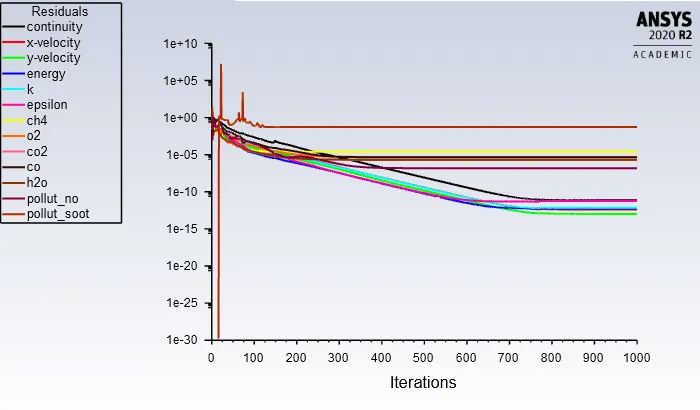
Residuals:
Temperature:
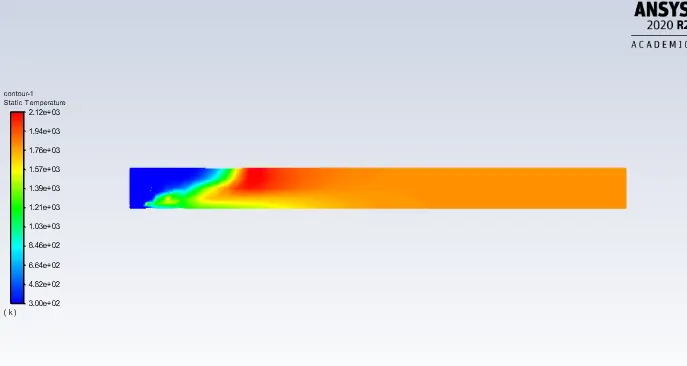
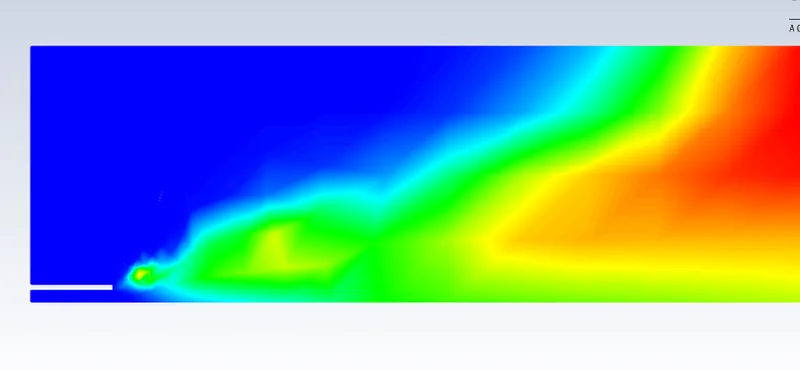
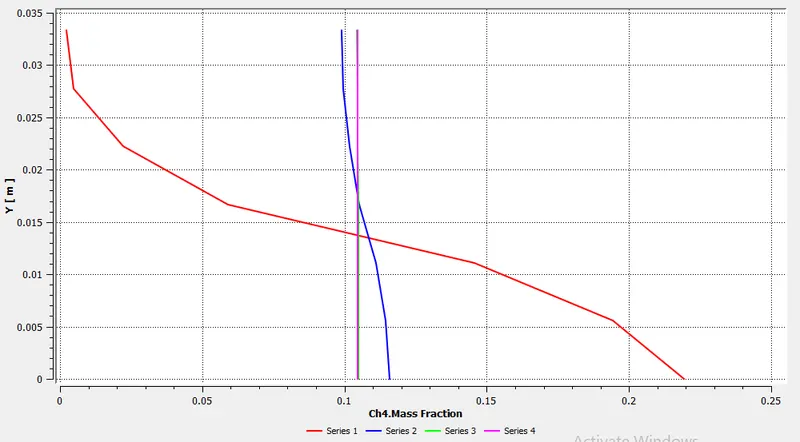
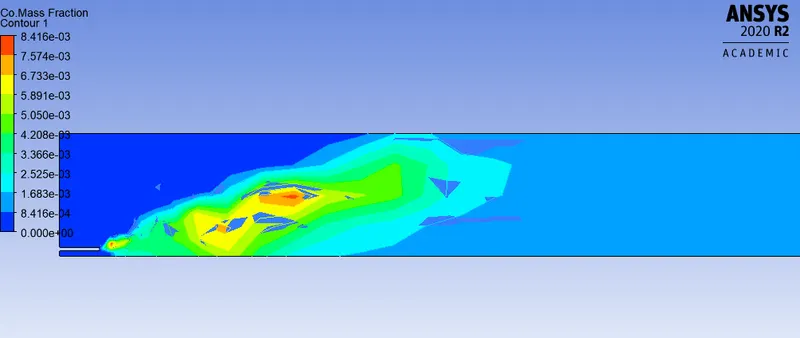
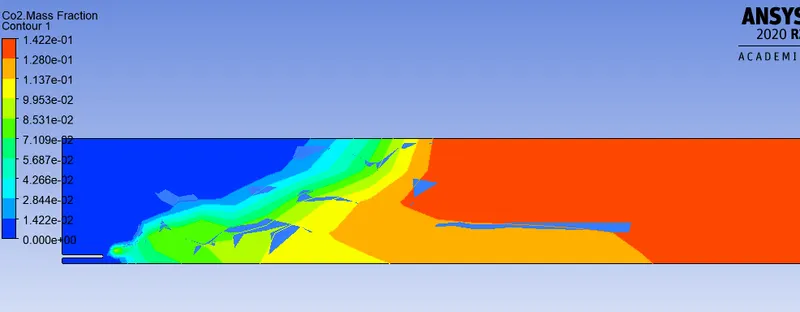
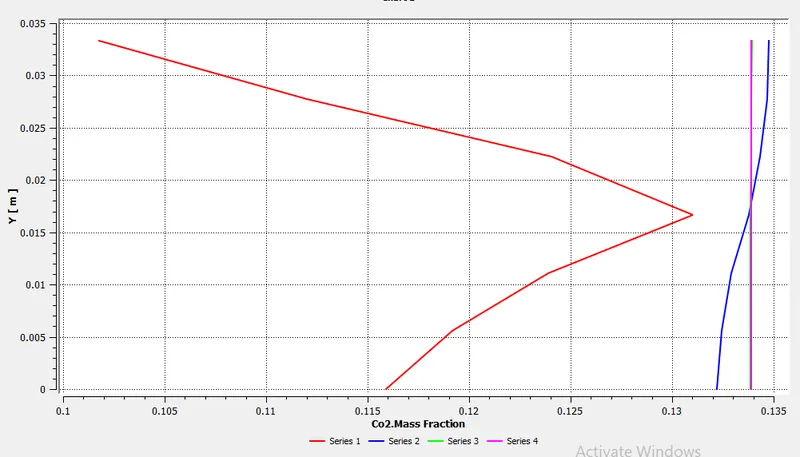
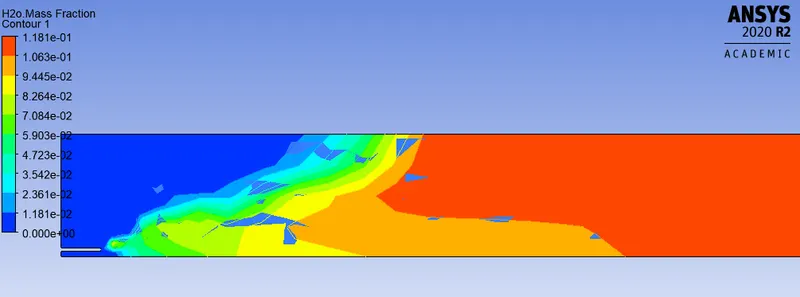
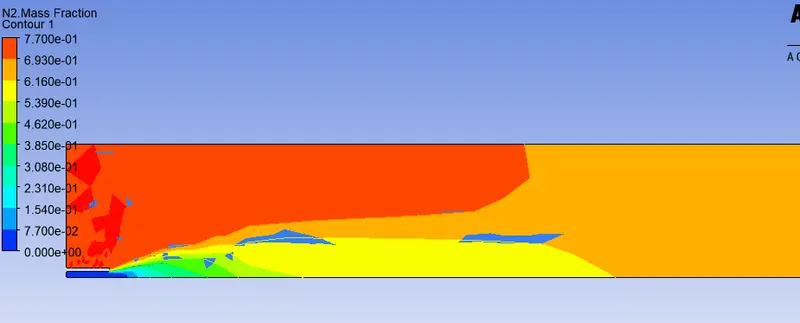
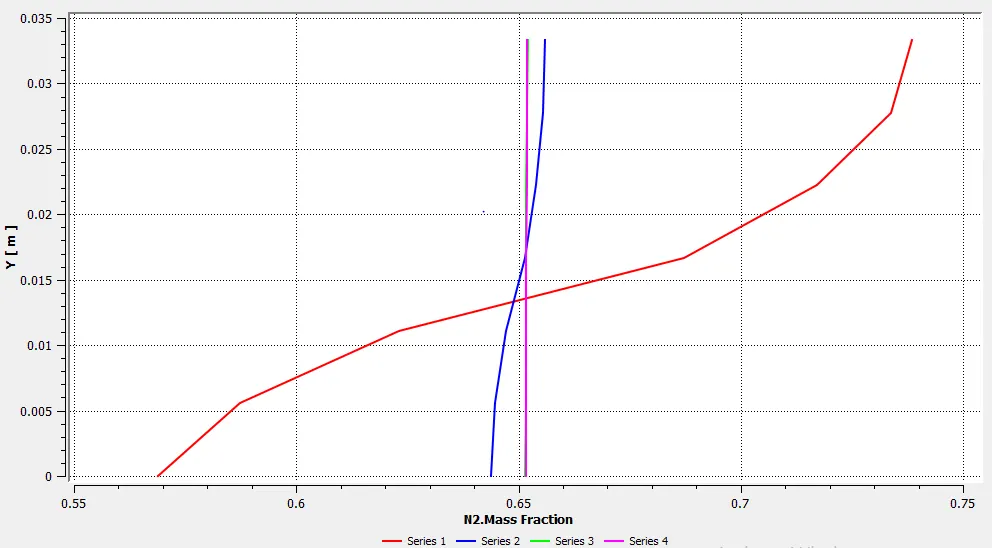
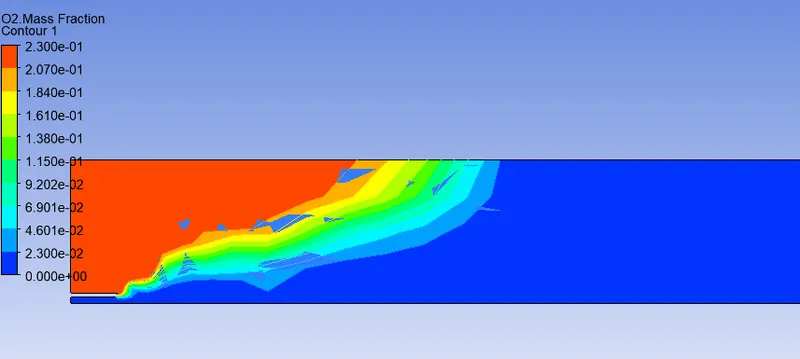
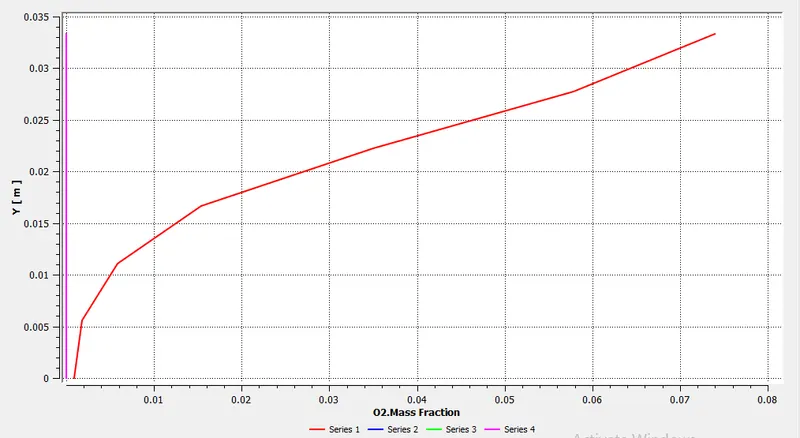
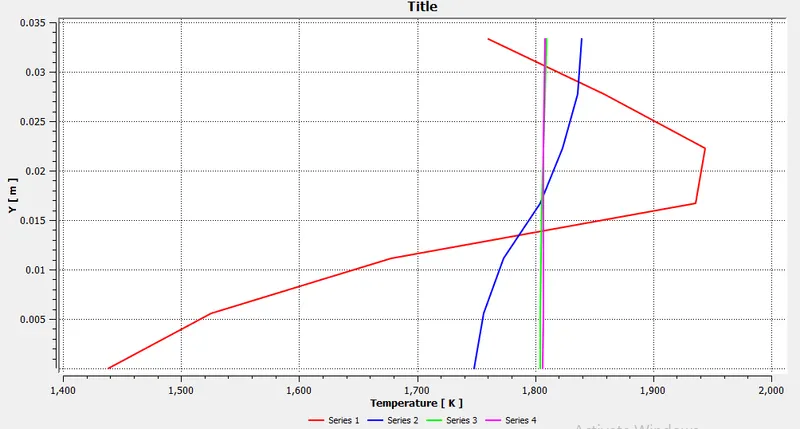
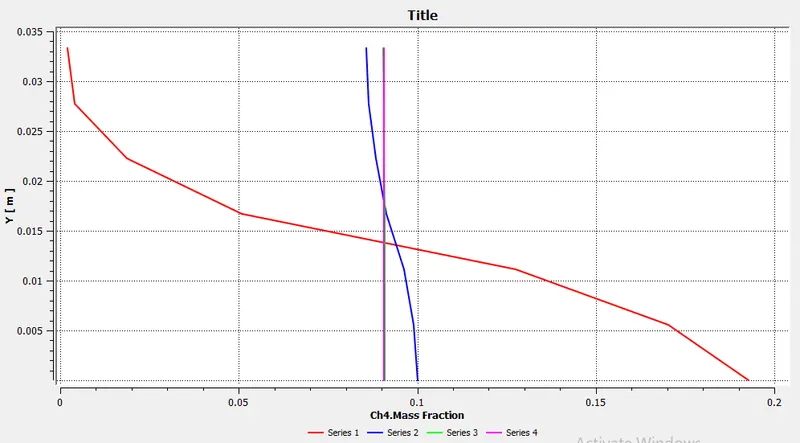
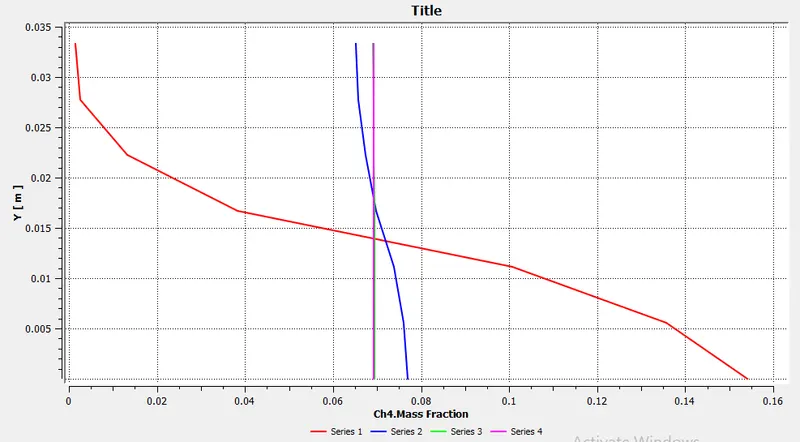
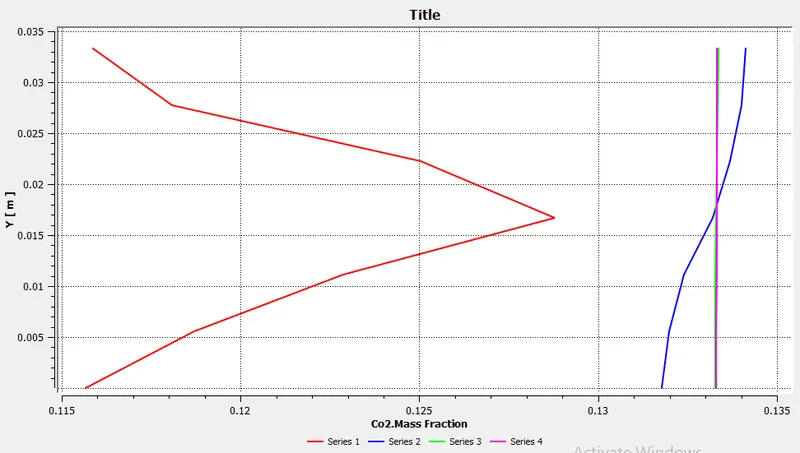
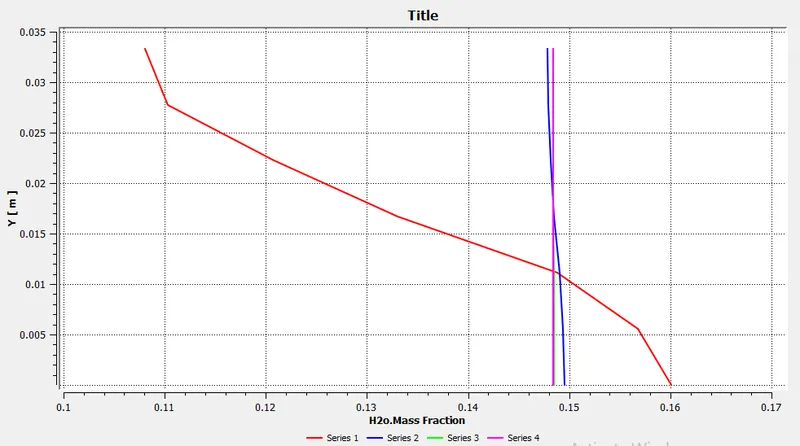
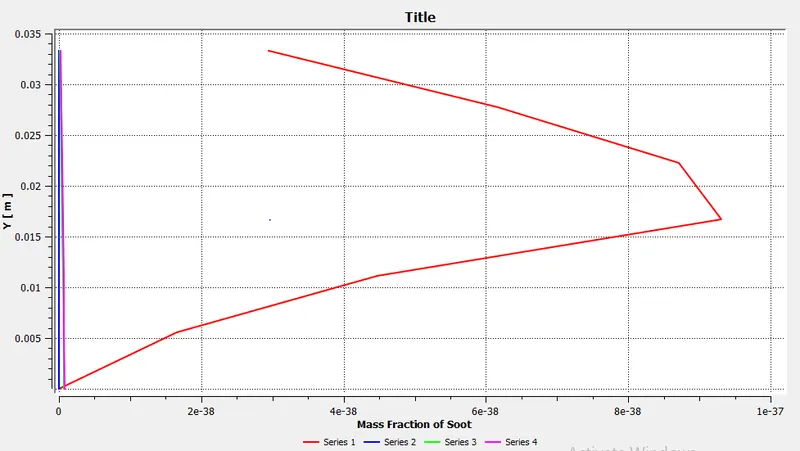
Line probes at different locations of the combustor

point 1 = 0.1
point 2 = 0.2
point 3 = 0.3
point 4 = 0.4
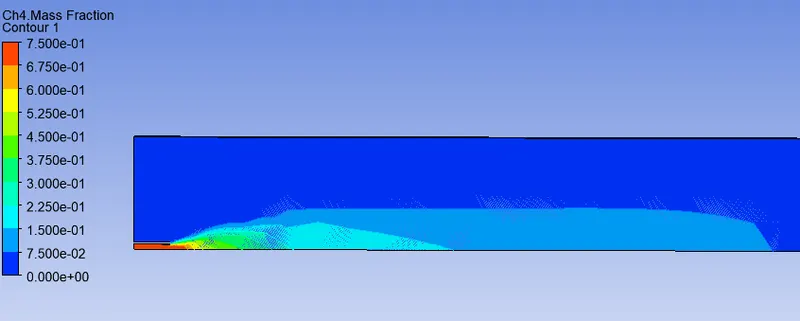
CH4 Mass Fraction:
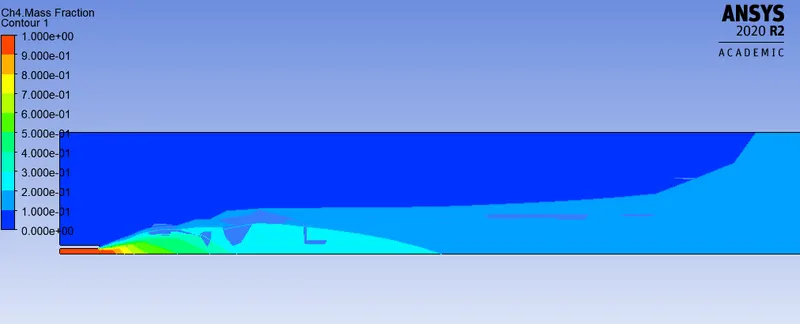
Co MAss Fraction:
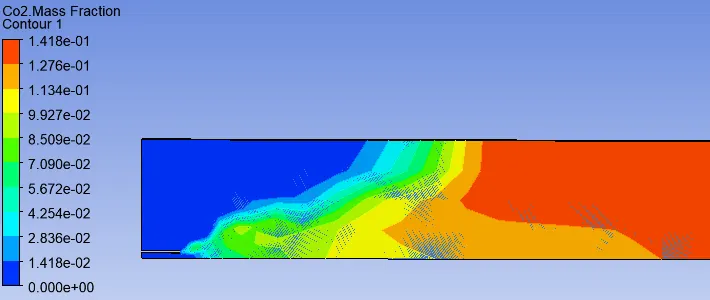
CO2 Mass Fraction:
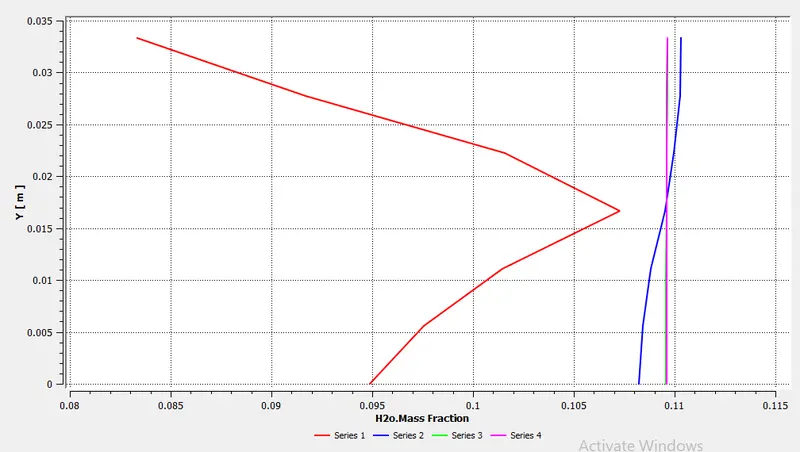
H2O Mass Fraction:
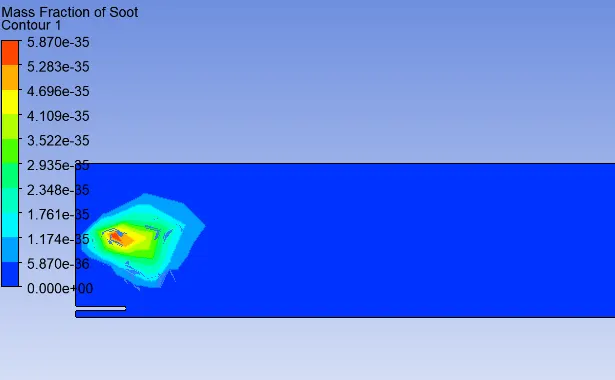
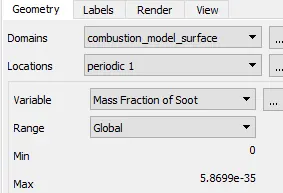
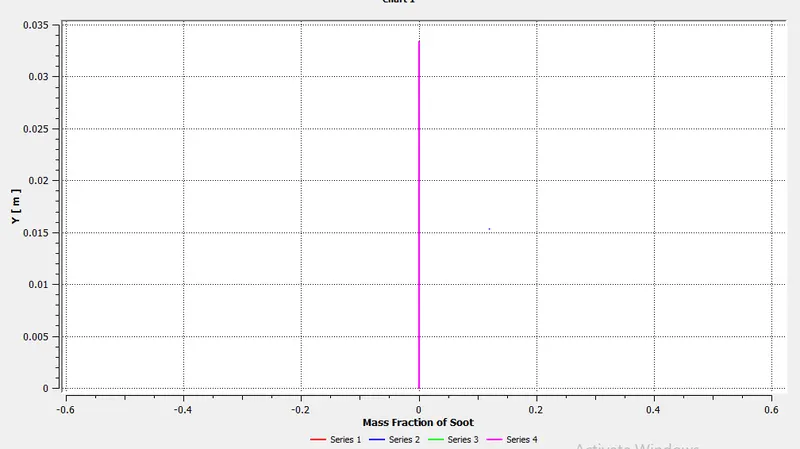
Soot Mass Fraction:
N2 Mass Fraction:
O2 Mass Fraction:
Part-2:
Case-1: 0.05 H2O
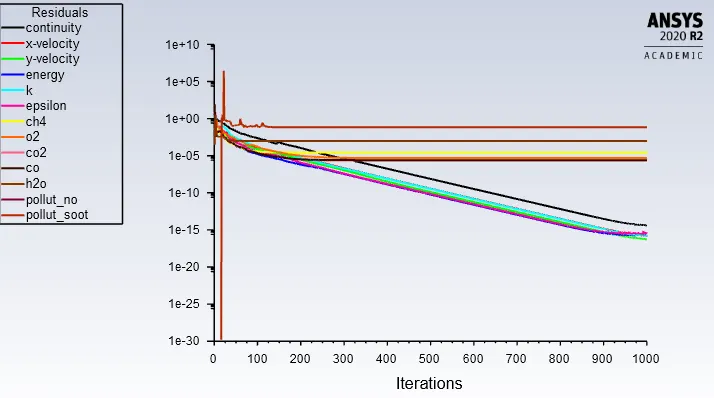
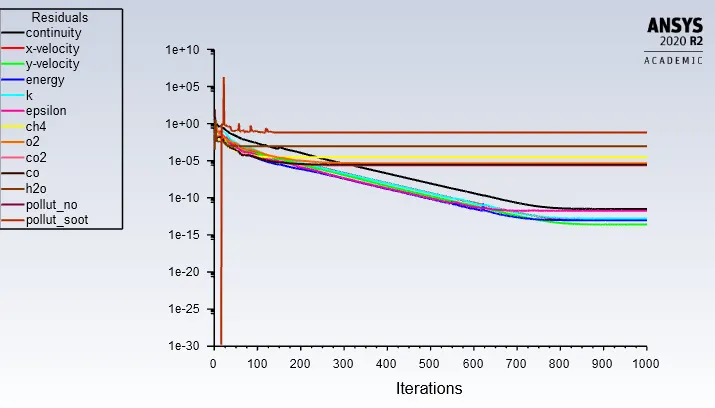
Residuals:
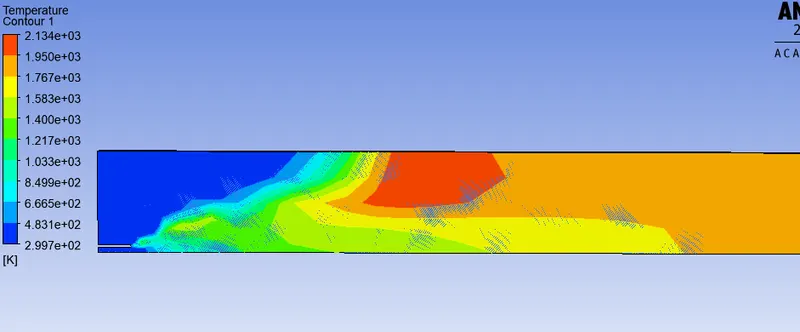
Temperature:
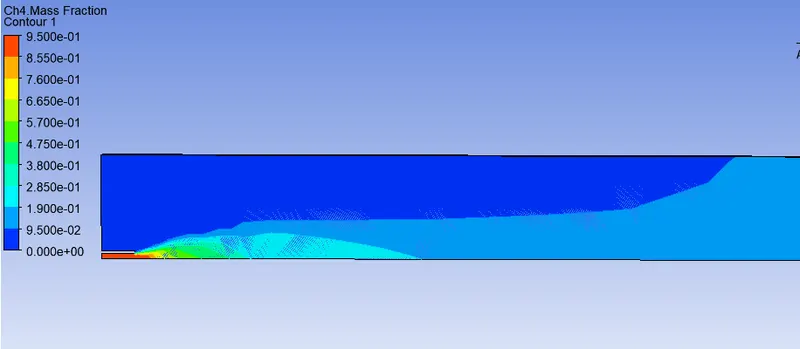
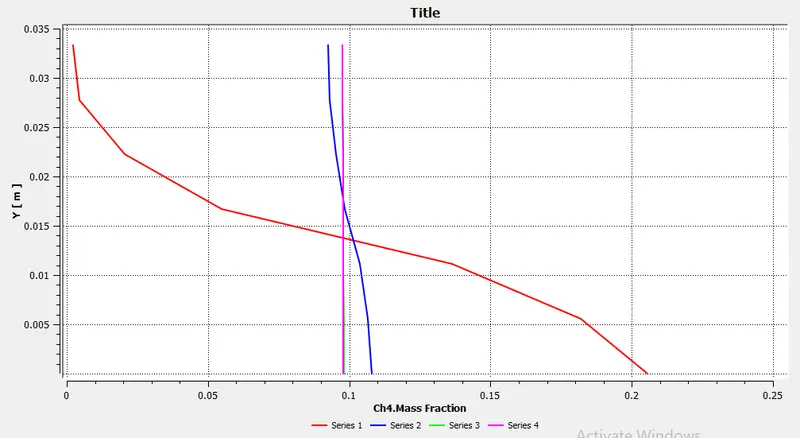
CH4 Mass Fraction:
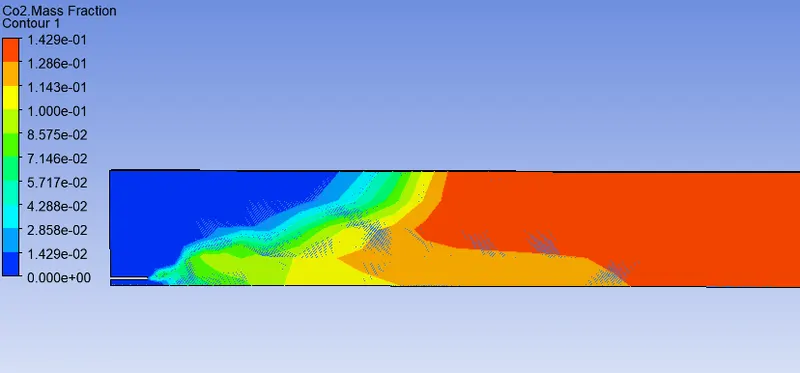
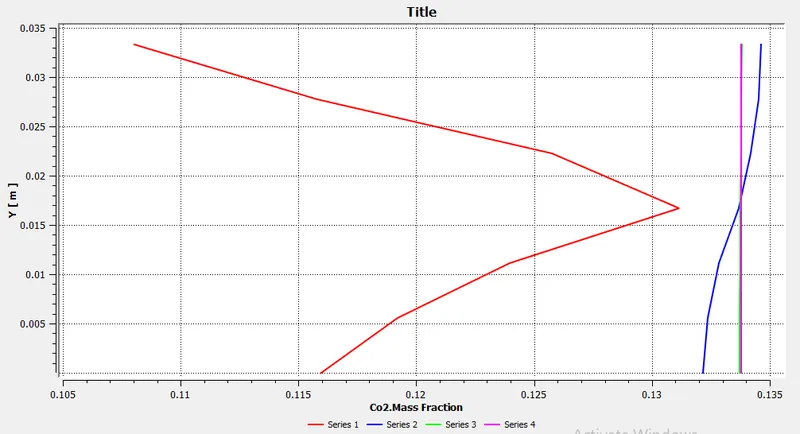
CO2 Mass Fraction:
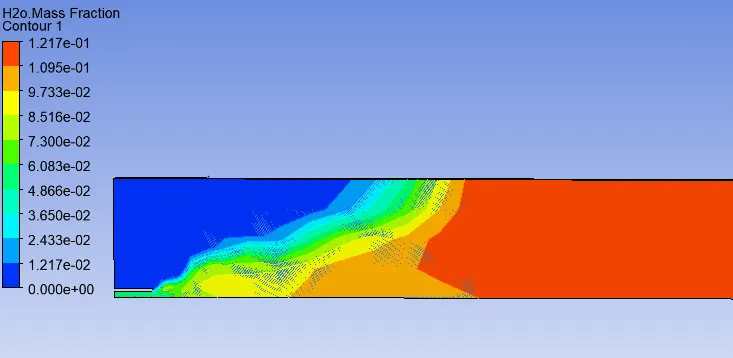
H2O Mass Fraction:
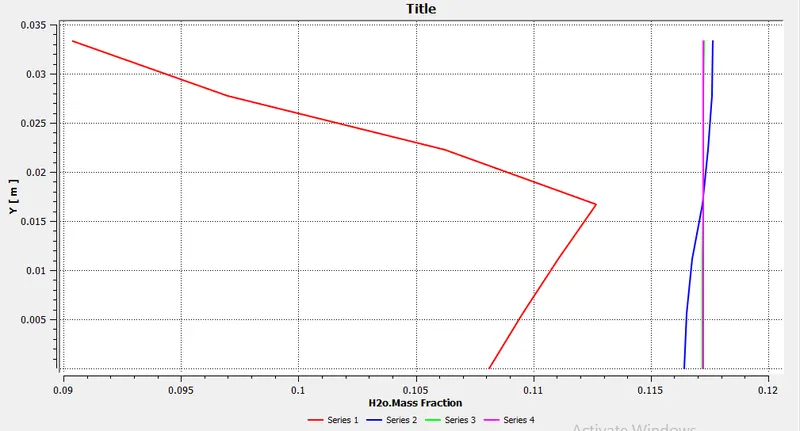
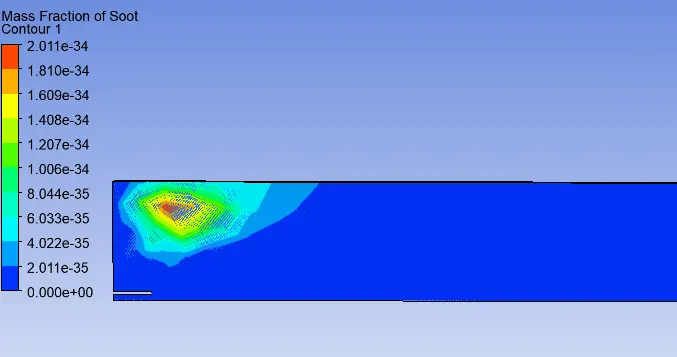
Soot Mass Fraction:
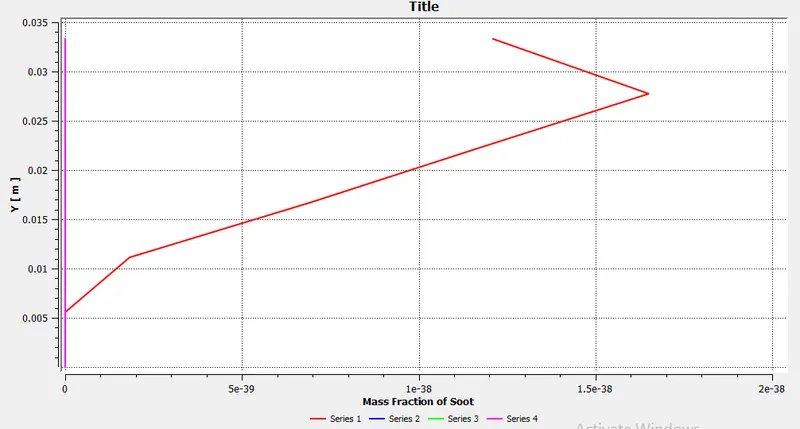
N2 Mass Fraction:
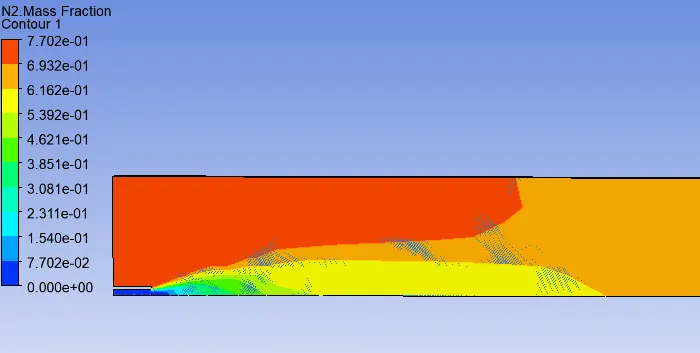
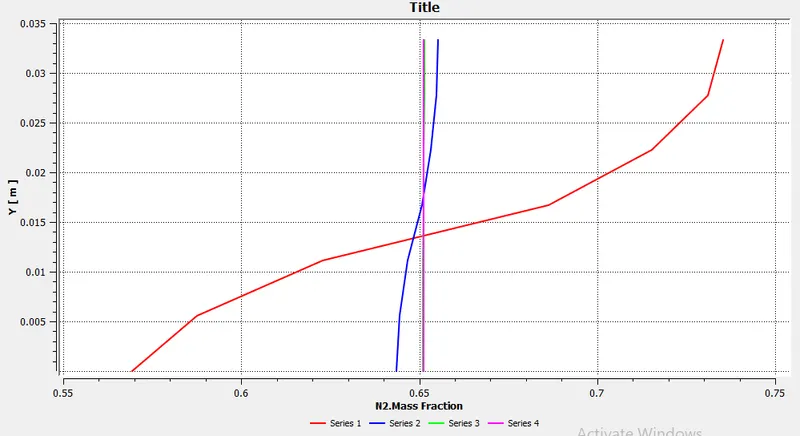
O2 Mass Fraction:
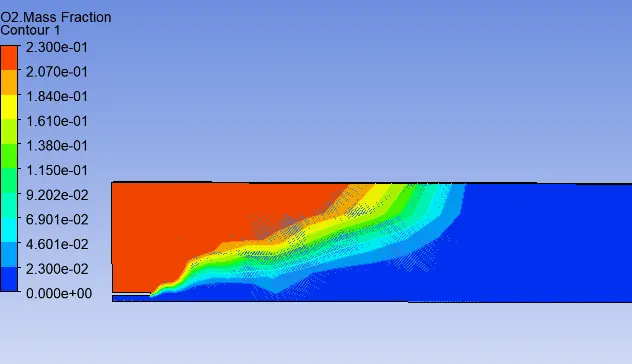
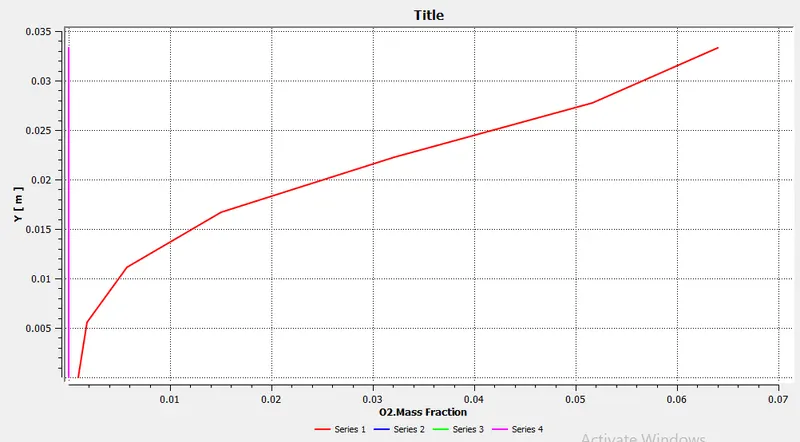
Case-2: 0.1 H2O
Residuals:
Temperature:
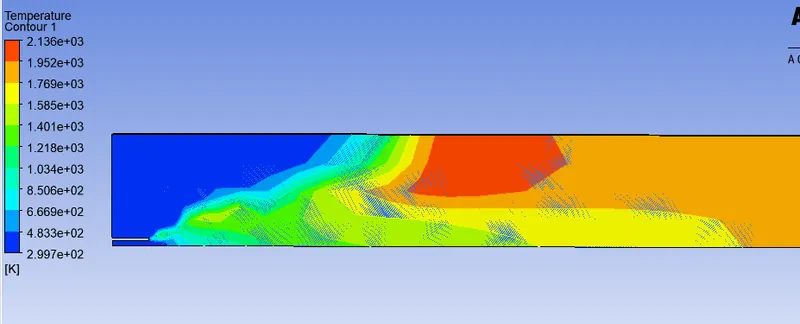
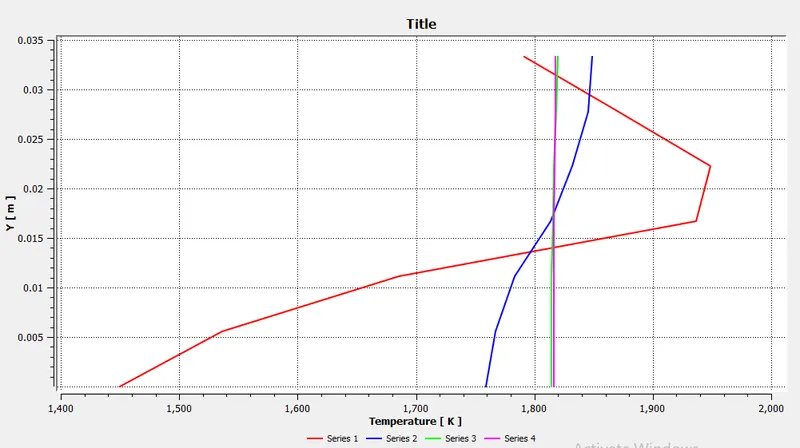
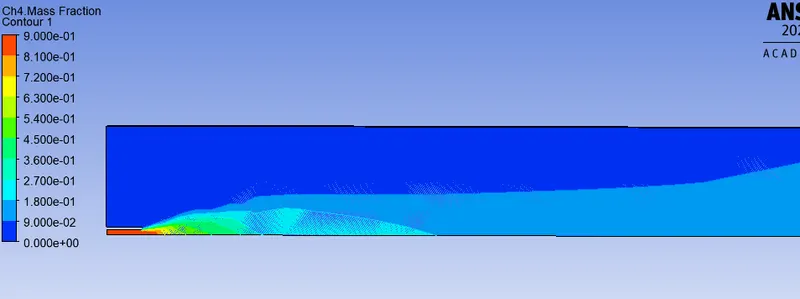
CH4 Mass Fraction:
CO2 Mass Fraction:
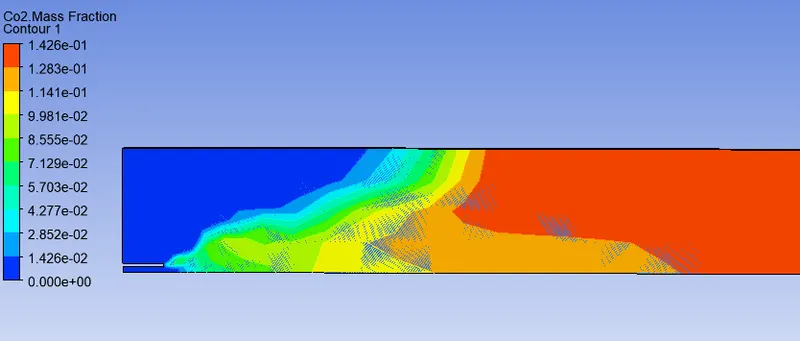
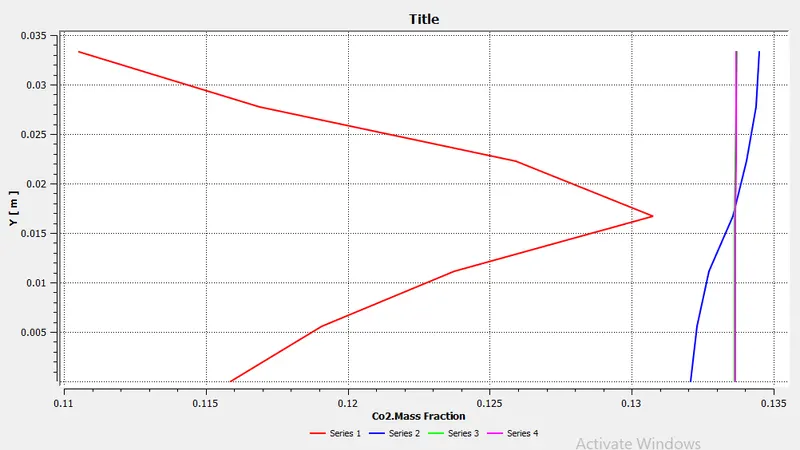
H2O Mass Fraction:
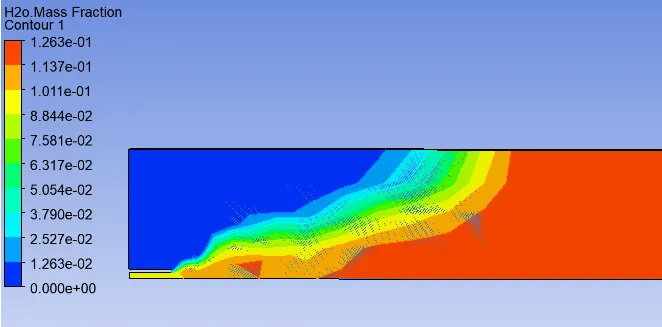
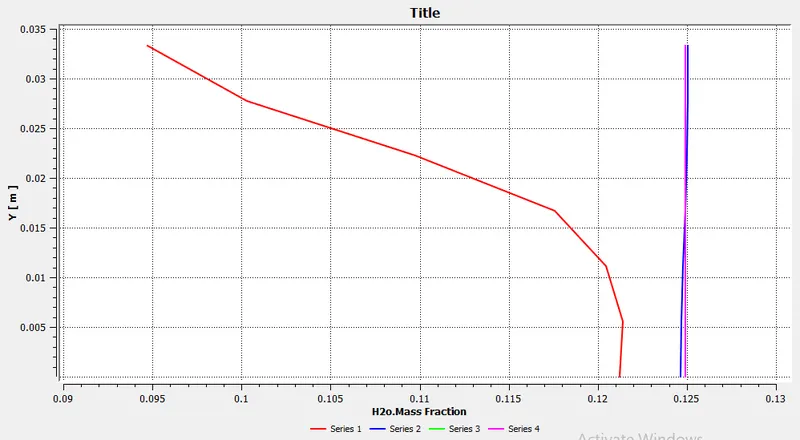
Soot Mass Fraction:
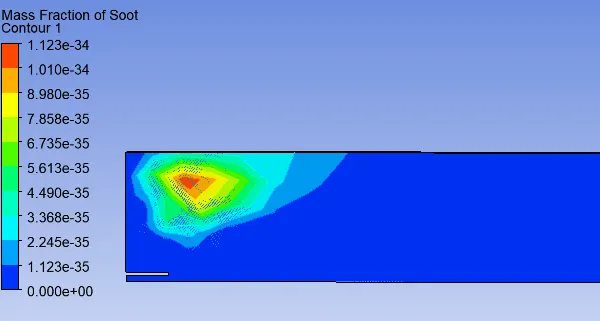
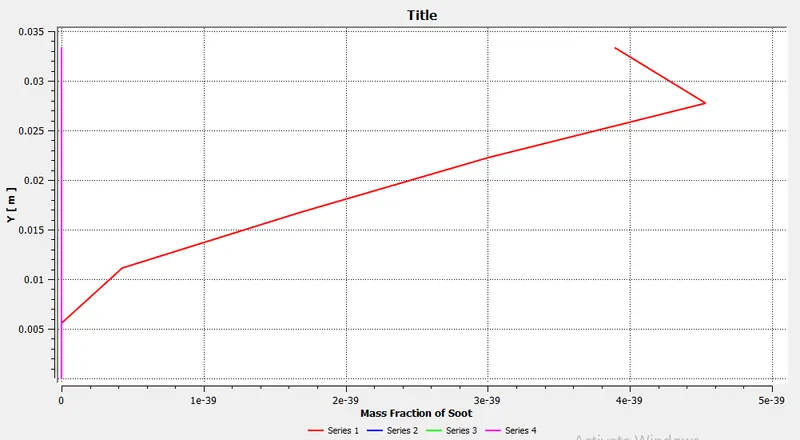
N2 Mass Fraction:
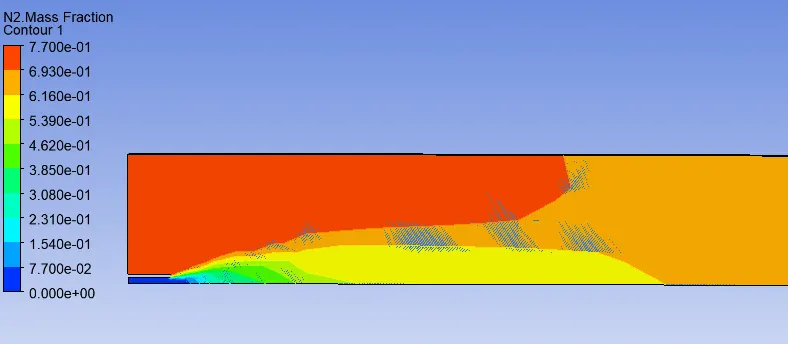
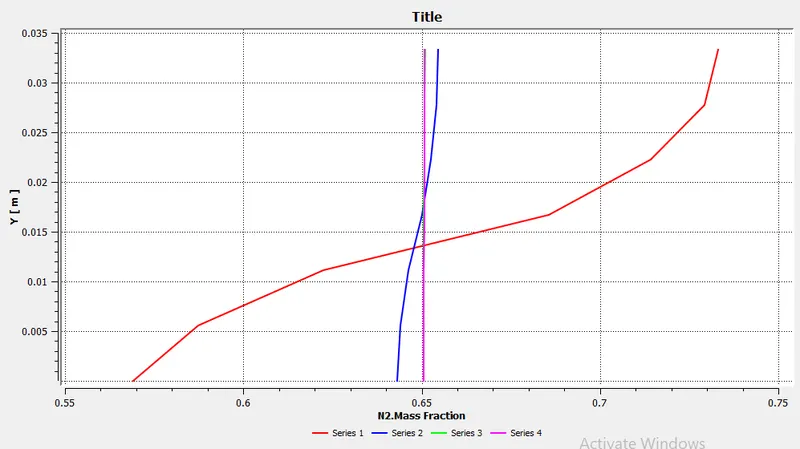
O2 Mass Fraction: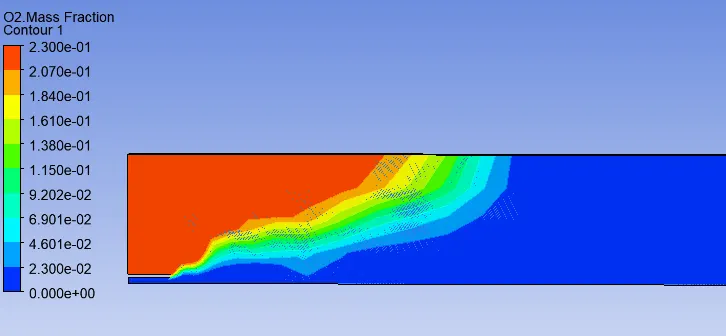
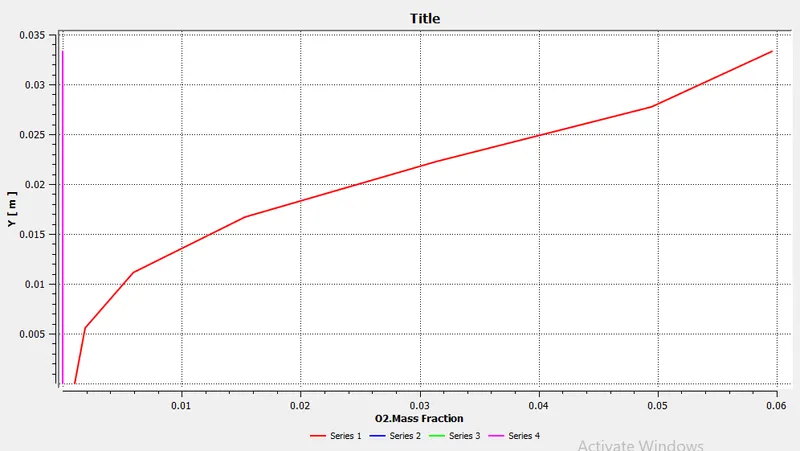
Case-3: 0.25 H2O
Residuals:
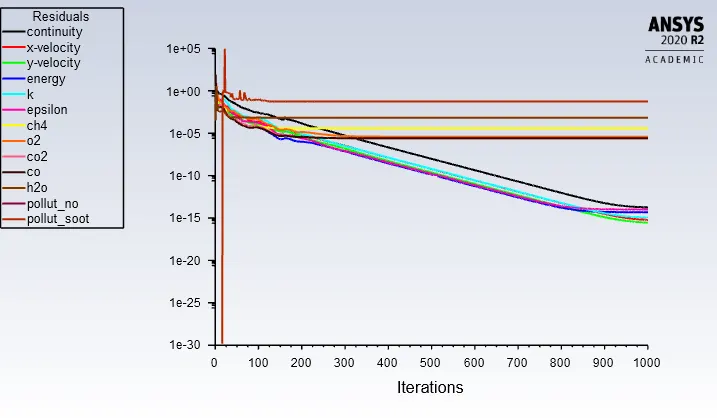
Temperature:
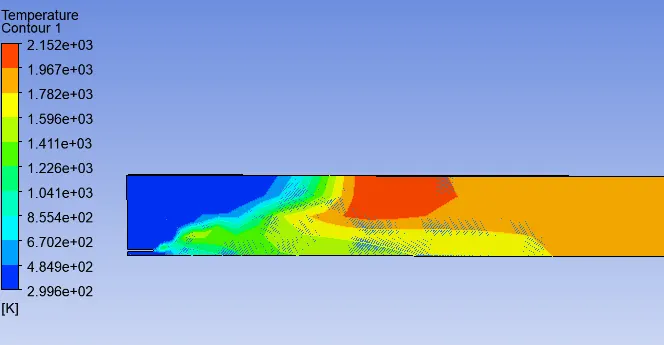
CH4 Mass Fraction:
CO2 Mass Fraction:
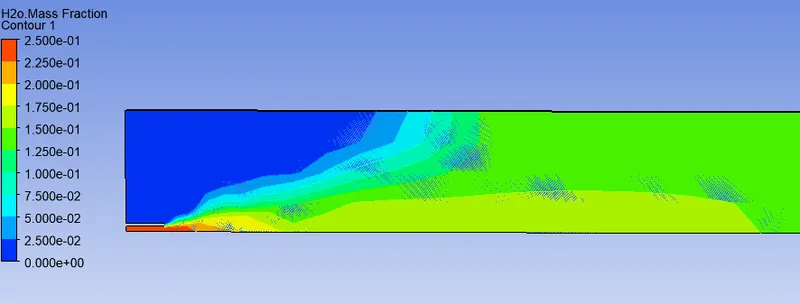
H2O Mass Fraction:
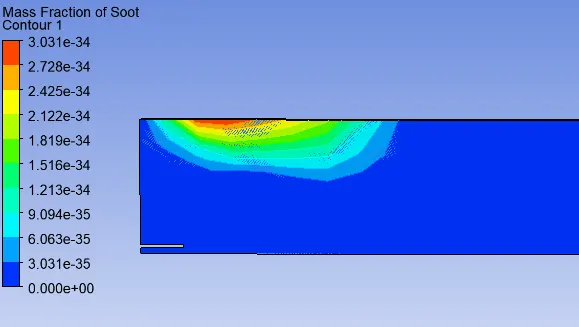
Soot Mass Fraction:
N2 Mass Fraction:
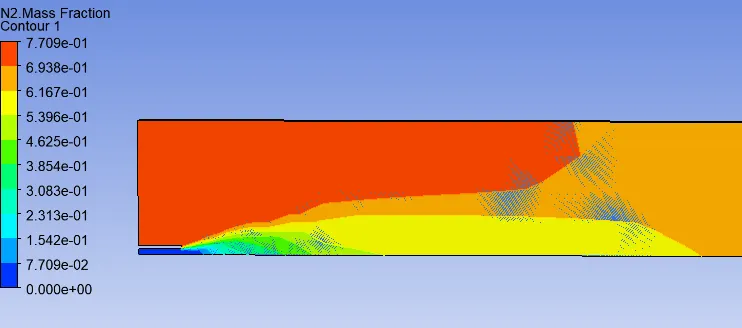
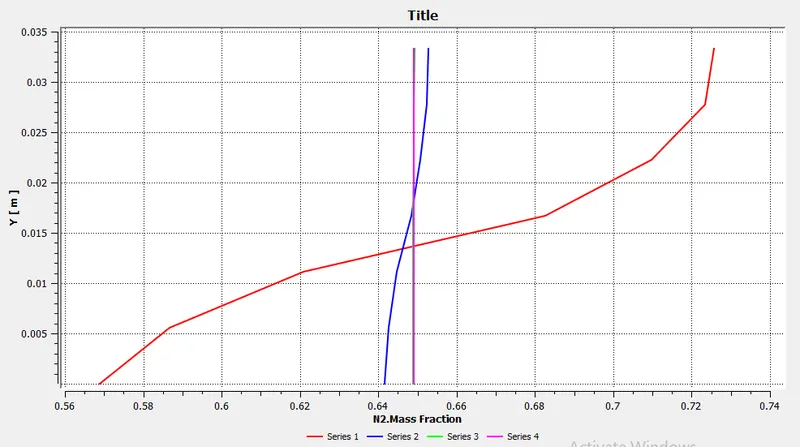
O2 Mass Fraction:
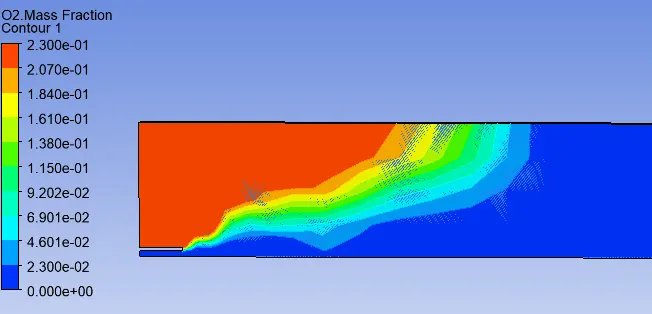
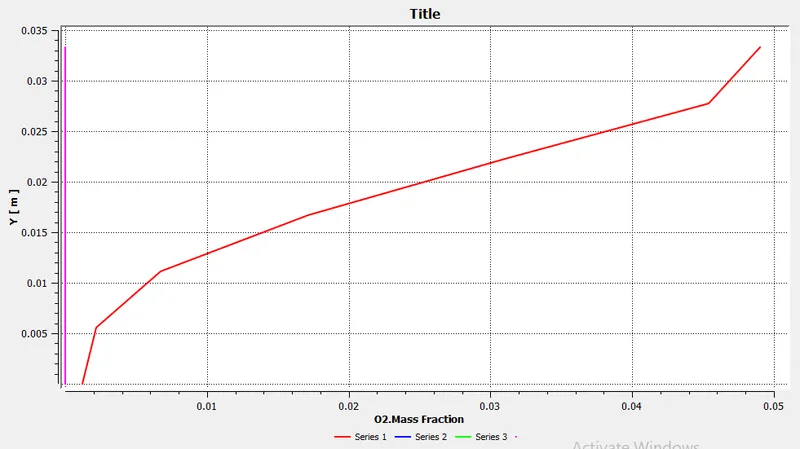
Conclusion:
As water count increases reduction of NOx, Soot, CO2, N2, O2 observed.