Challenge 2- Comparing the performance of three types of beams under bending load.
Aim - Comparing the performance of three types of beams under bending load and find which beam is better under bending and gain much stress and strain.
Introduction -
Defination of Beam - A beam is a structural element that primarily resists loads applied laterally to its axis. Beams are commonly used in construction and engineering to support and distribute loads, such as the weight of a building, vehicles, or other objects. They are characterized by their horizontal length being much greater than their vertical height, and they are typically designed to carry loads perpendicular to their longitudinal axis.
Beams can come in various shapes and sizes, such as I-beams, H-beams, and rectangular or circular cross-sections. The choice of beam shape and size depends on the specific requirements of the structure and the loads it needs to support. Beams are often a critical component in structural systems, providing stability and strength to buildings, bridges, and other constructions.
Types of Beam - There are different types of beams are used in different places and different sizes.
1. Simply Supported Beam: Supported at both ends and free to rotate, a simply supported beam is one of the most basic and common types.
2. Fixed Beam: A beam that is rigidly supported at both ends, preventing rotation and translation at those points.
3. Cantilever Beam: A beam that is supported at one end and projects horizontally, carrying the load on the free end. Cantilever beams are common in structures like balconies.
4. Continuous Beam: A beam that spans over more than two supports, creating a continuous structure.
5. Tied Beam: A beam reinforced with tension members (ties) to prevent it from spreading.
6. Inverted T-Beam: A T-shaped beam that is often used in the construction of bridges and buildings.
7. L-Beam: Resembles the shape of the letter 'L', with one end supported and the other projecting horizontally.
8. Composite Beam: Made by combining different materials, like steel and concrete, to optimize the structural performance.
9. Overhanging Beam: A beam that extends beyond its support on one or both ends.
10. Trussed Beam: A beam strengthened by adding trusses, which are triangular frames of struts and ties.
11. Reinforced Concrete Beam: A beam made of concrete reinforced with steel bars to enhance its strength and durability.
12. Box Beam: Consists of a top and bottom flange connected by a vertical web, forming a rectangular or box-like shape.
13. Railroad Beam: Used in railroad tracks to support the rails and distribute the load from the train.
14. I-Beam (or H-Beam): Commonly used in the construction industry, these beams have an I or H shape, providing strength and stability.
Here we are using 3 types of beam and compare their performance under bending load.
1. Rectangular Beam -
A rectangular beam is a common structural element used in construction and engineering to support loads. It is a type of beam that has a cross-sectional shape resembling a rectangle. The beam is oriented so that its longer sides, known as the flanges, are horizontal, while the shorter sides, known as the web, are vertical. The rectangular shape makes it straightforward to analyze and design, and it is often used in various construction projects.
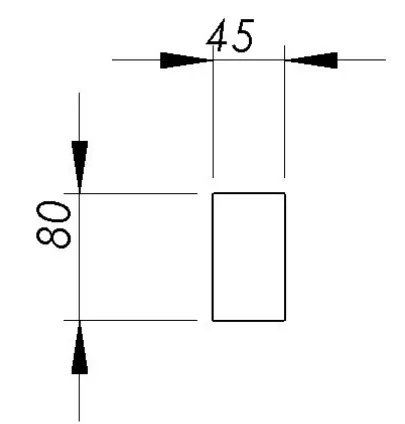
Dimensions of Beam - 80*45 mm
Extruded length - 400mm
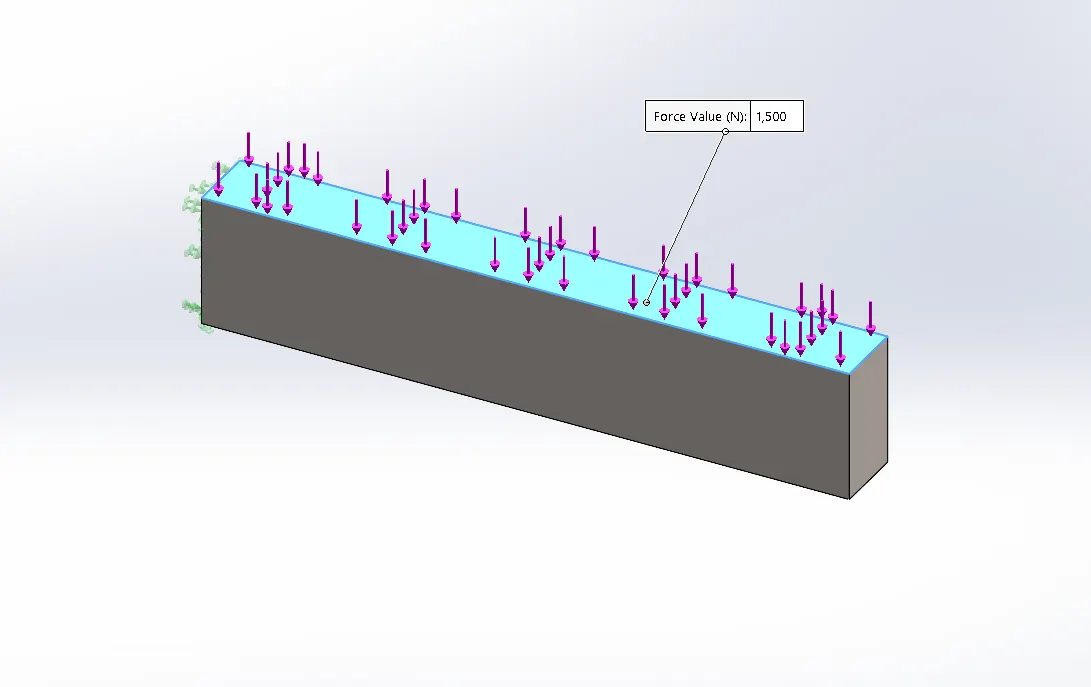
Applied Load - 1500 N
Material used for Beam - alloy steel
2. I-section Beam -
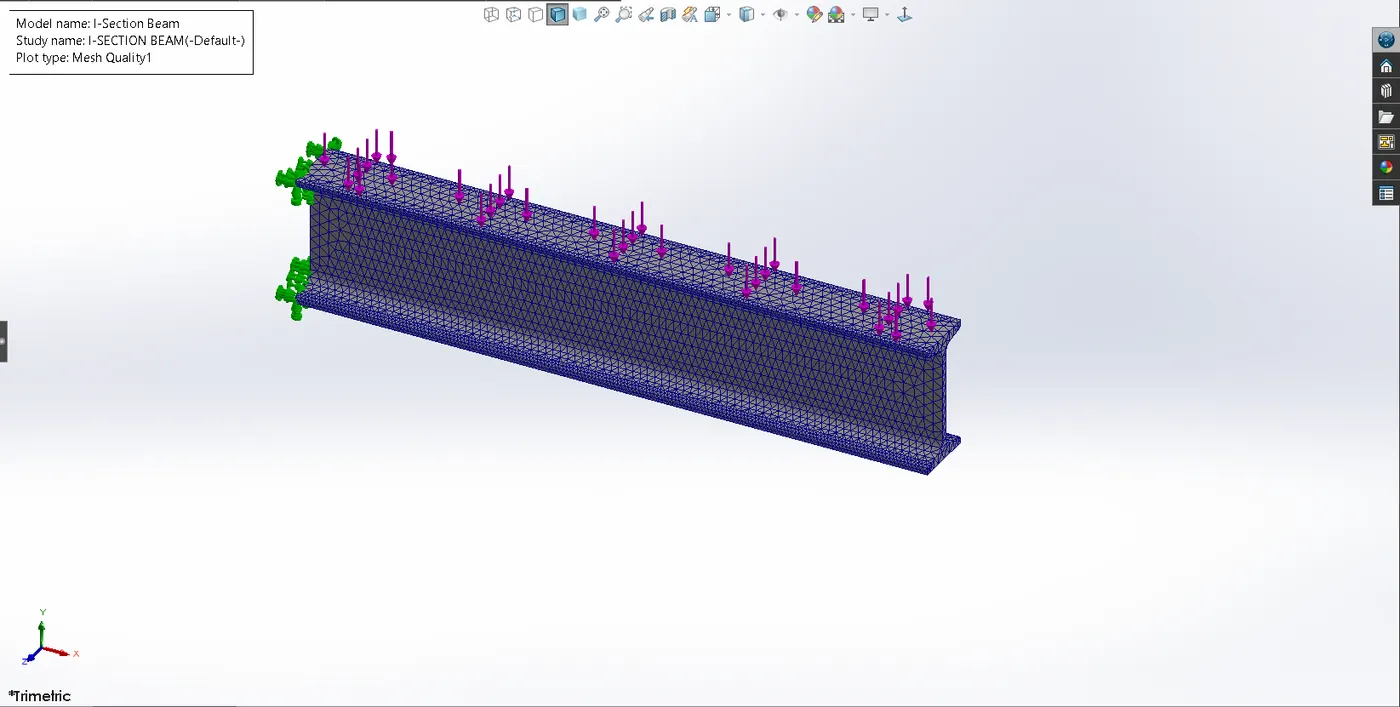
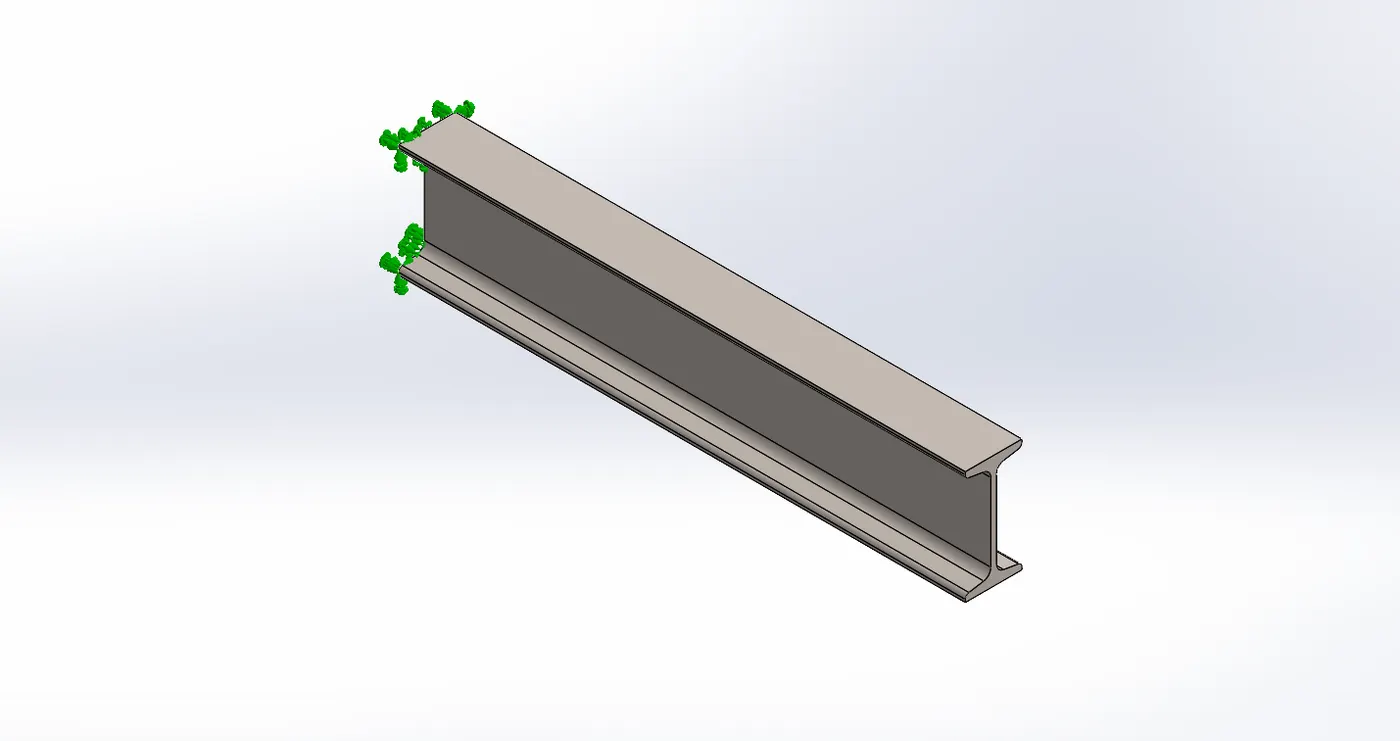
An I-section beam, also known as an I-beam or H-beam, is a structural steel shape with a cross-sectional profile that resembles the letter "I" when viewed in a horizontal plane. It is one of the most common and widely used structural steel shapes in construction and engineering applications.
The I-section beam consists of two flanges (horizontal elements) and a web (vertical element) that connects the flanges. The flanges are typically wider than the web, providing stability and resistance to bending. The shape of the I-beam is efficient in distributing the load along the length of the beam, making it suitable for carrying heavy loads over long spans.
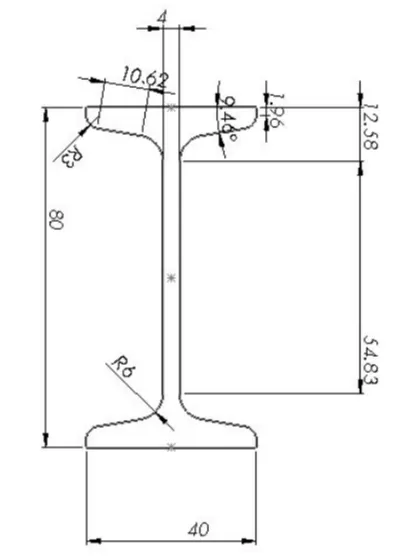
Dimensions of Beam- As per fig.
Extruded length - 400mm
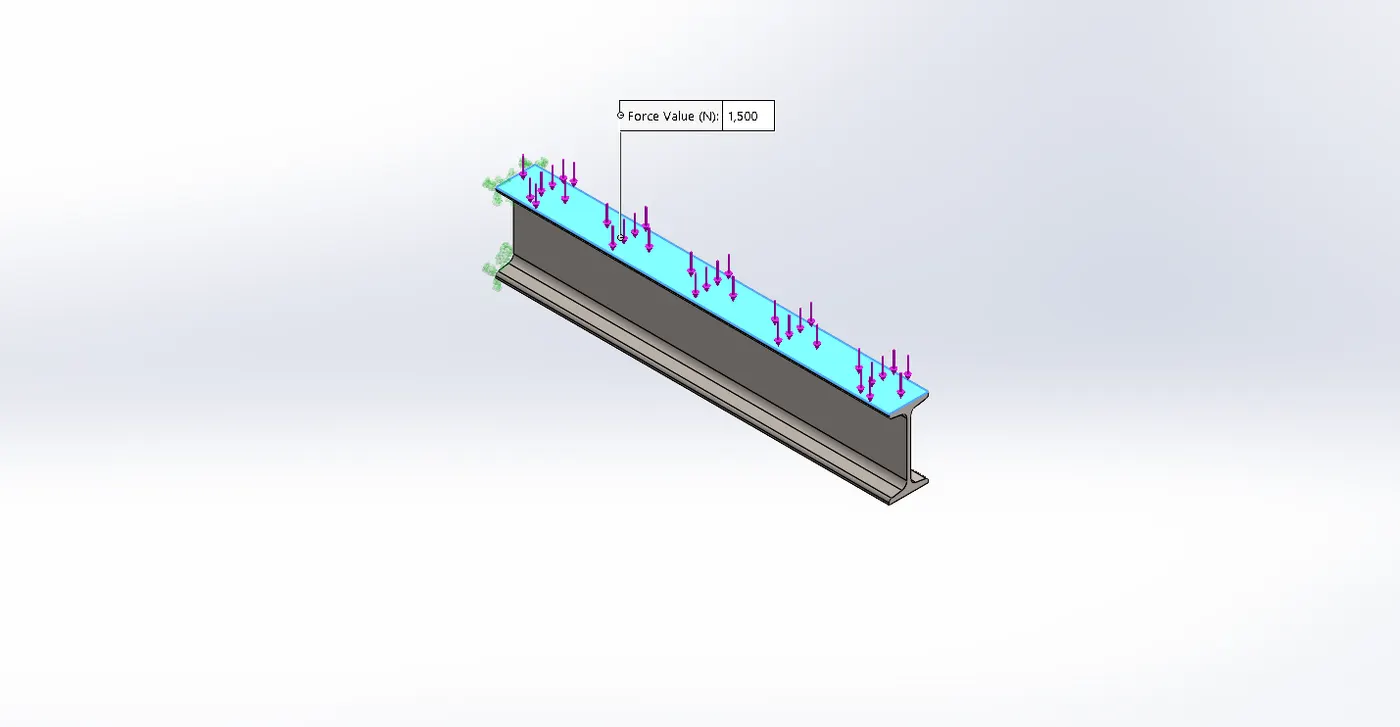
Applied Load - 1500 N
Material used for Beam - alloy steel
3. C-section Beam -
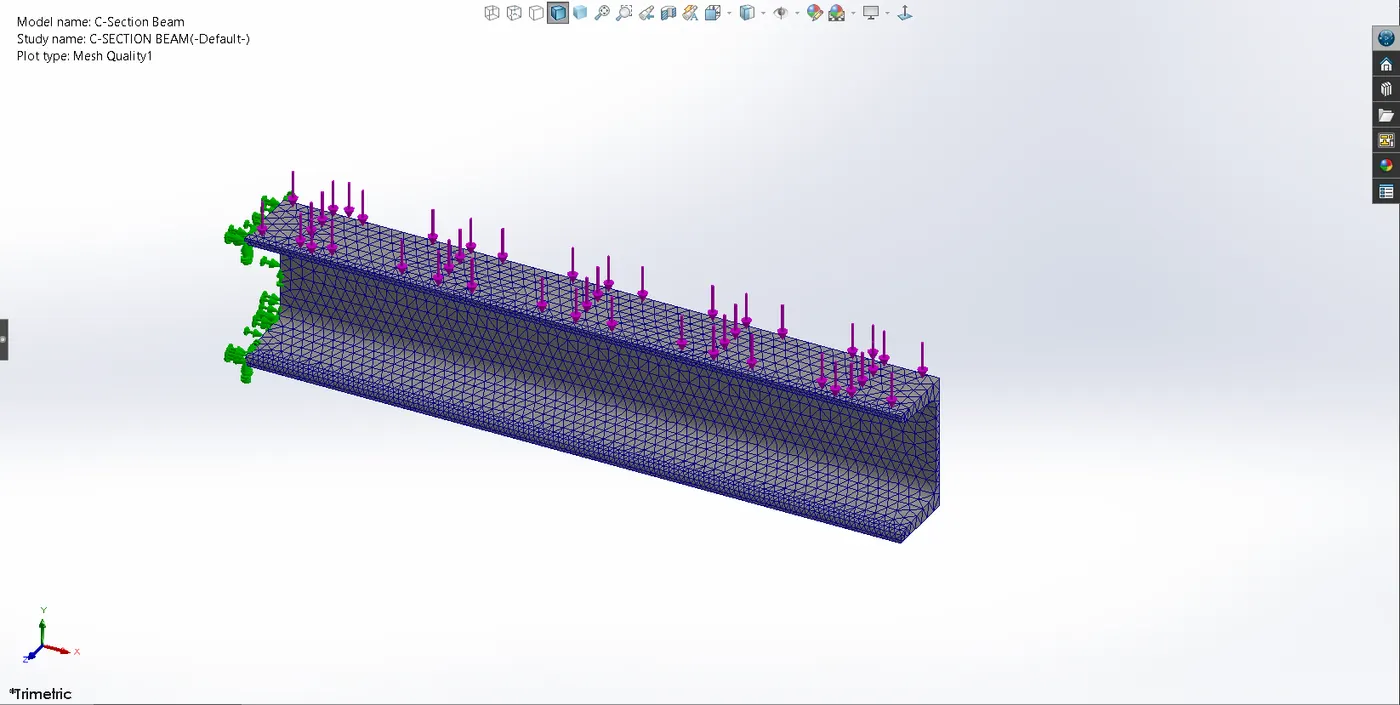
The C-section beam is characterized by its shape, which resembles the letter 'C.' The horizontal part of the C is known as the flange, and the vertical part is the web. This design provides stability and strength, making it suitable for supporting heavy loads over long spans.
C-section beams are commonly used in the construction of buildings, bridges, and other structures where a combination of strength and cost-effectiveness is essential. They can be used horizontally as beams or vertically as columns, depending on the specific requirements of the project.
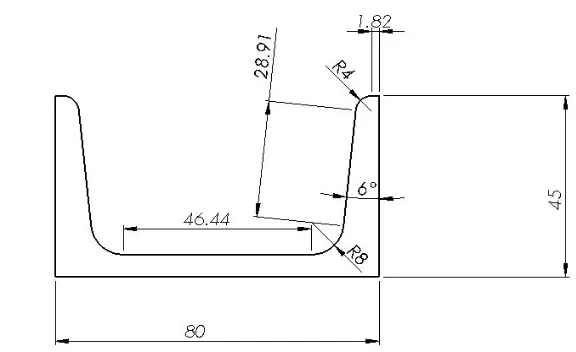
Dimensions of Beam- As per fig.
Extruded length - 400mm
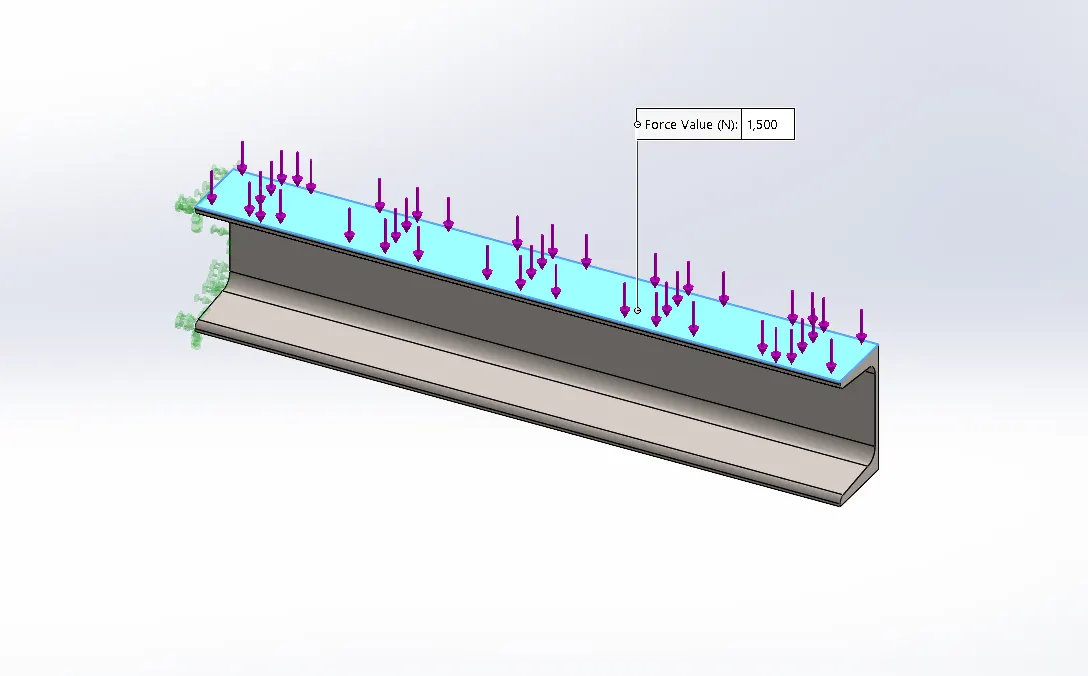
Applied Load - 1500 N
Material used for Beam - alloy steel
Finite Element Model -
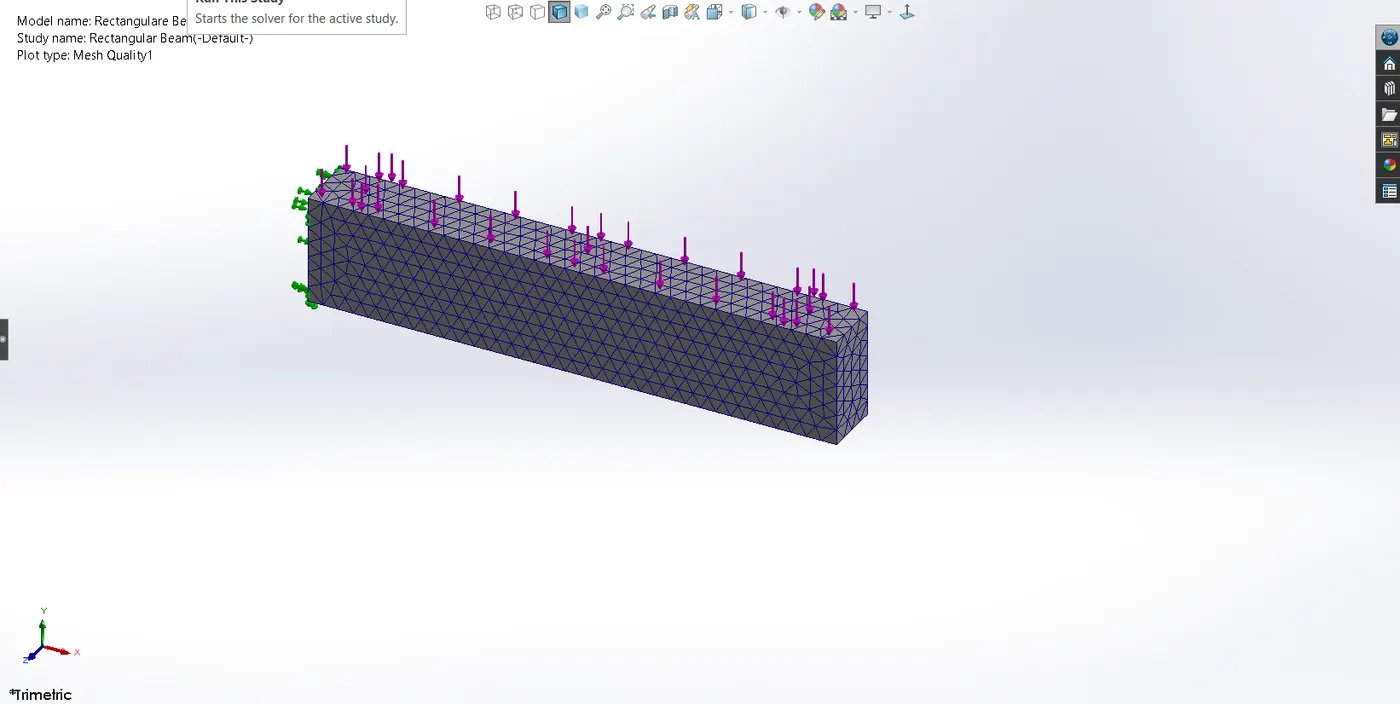
1. Mesh Generation-
Rectangular Beam
I-Section Beam
C-section Beam
2. Boundary Conditions -
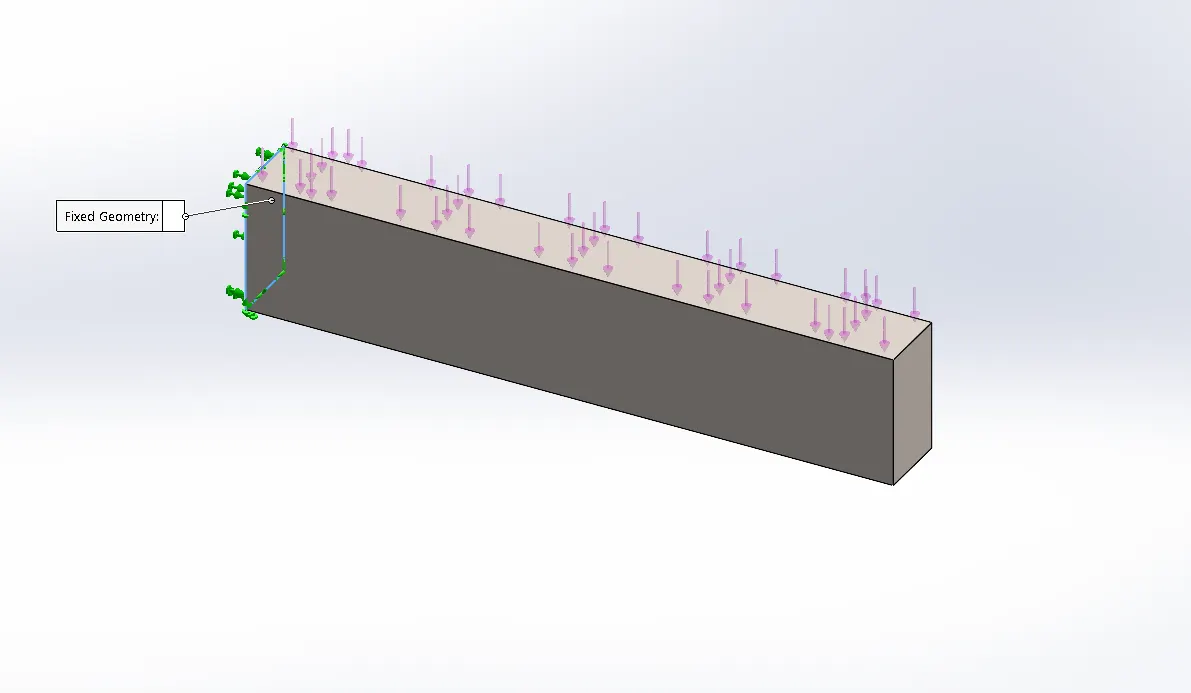
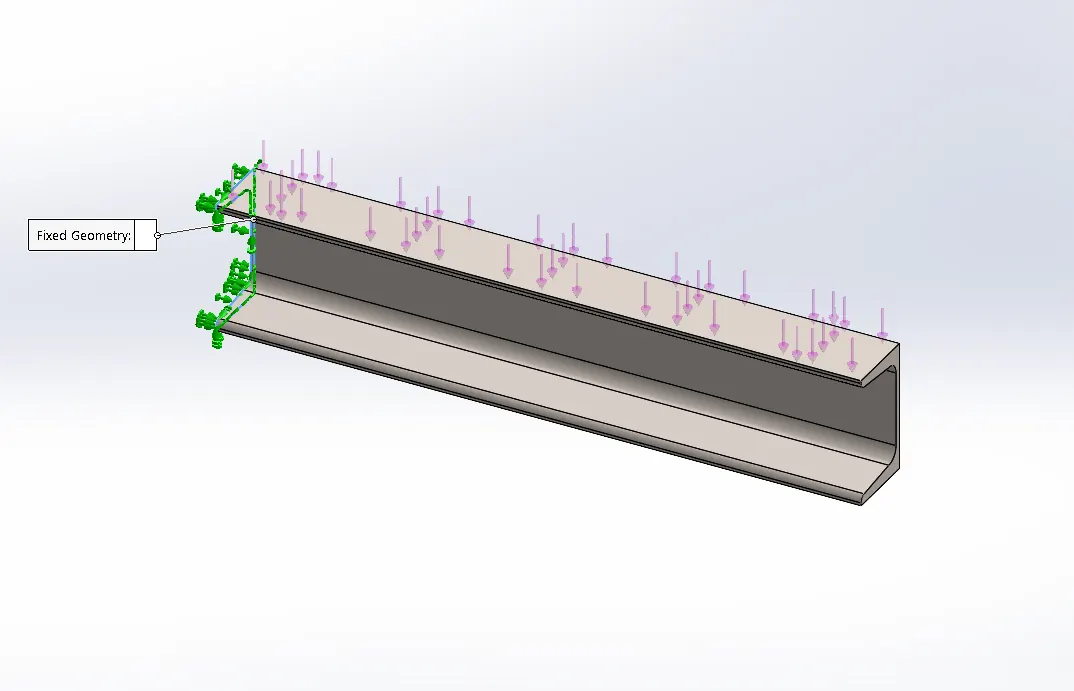
Fixing the side of Beam -
Rectangular Beam
I-Section Beam
C-Section Beam
Applid Load
Applied the 1500N load on beam which have downward direction on top side of beam.
Rectangular Beam
I-Section Beam
C-Section Beam
3.Results and Discussion -
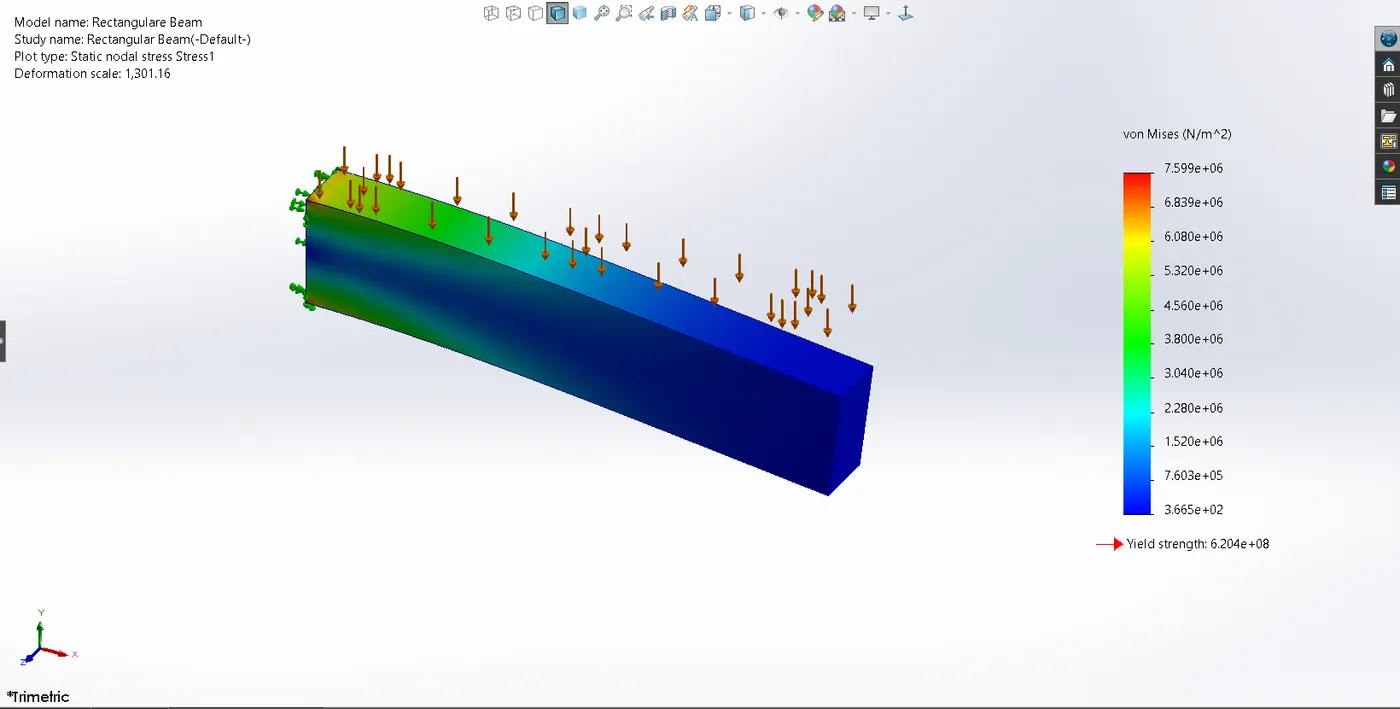
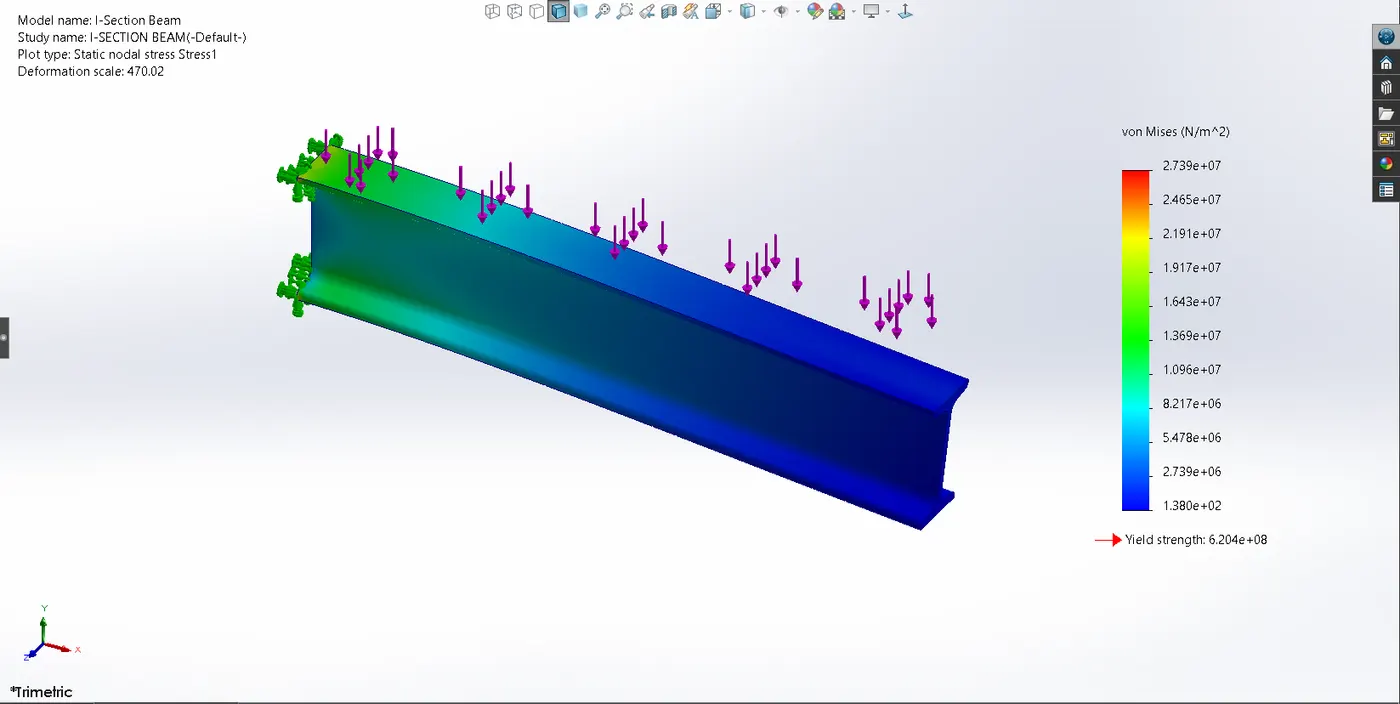
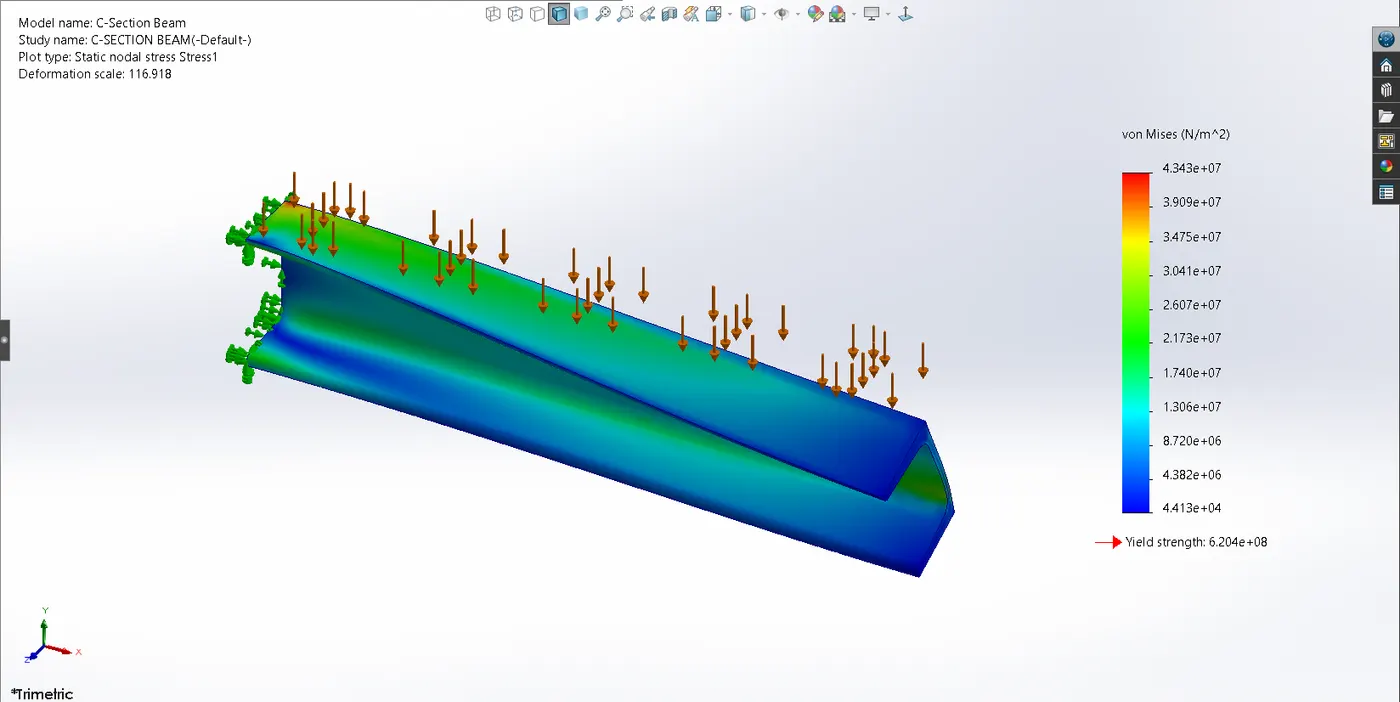
1. Stress Analysis -
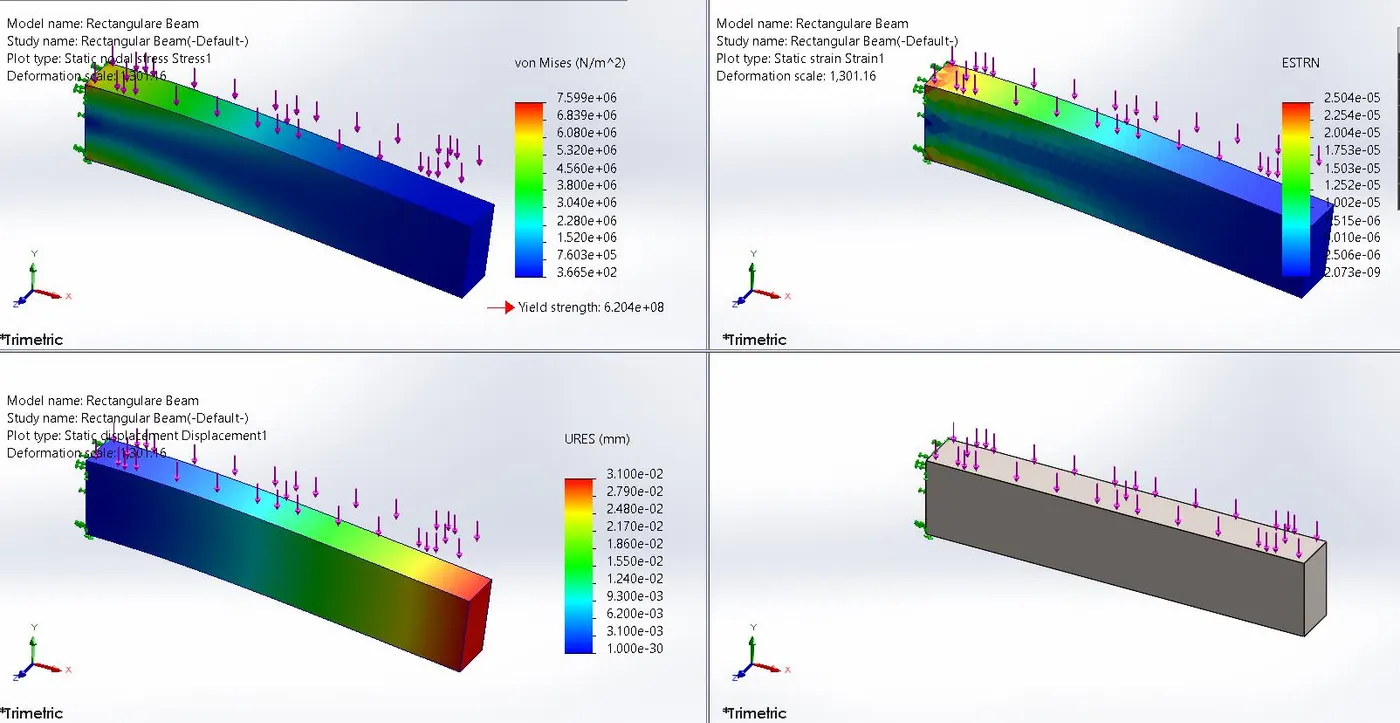
Rectangular Beam
I-Section Beam
C-Section Beam
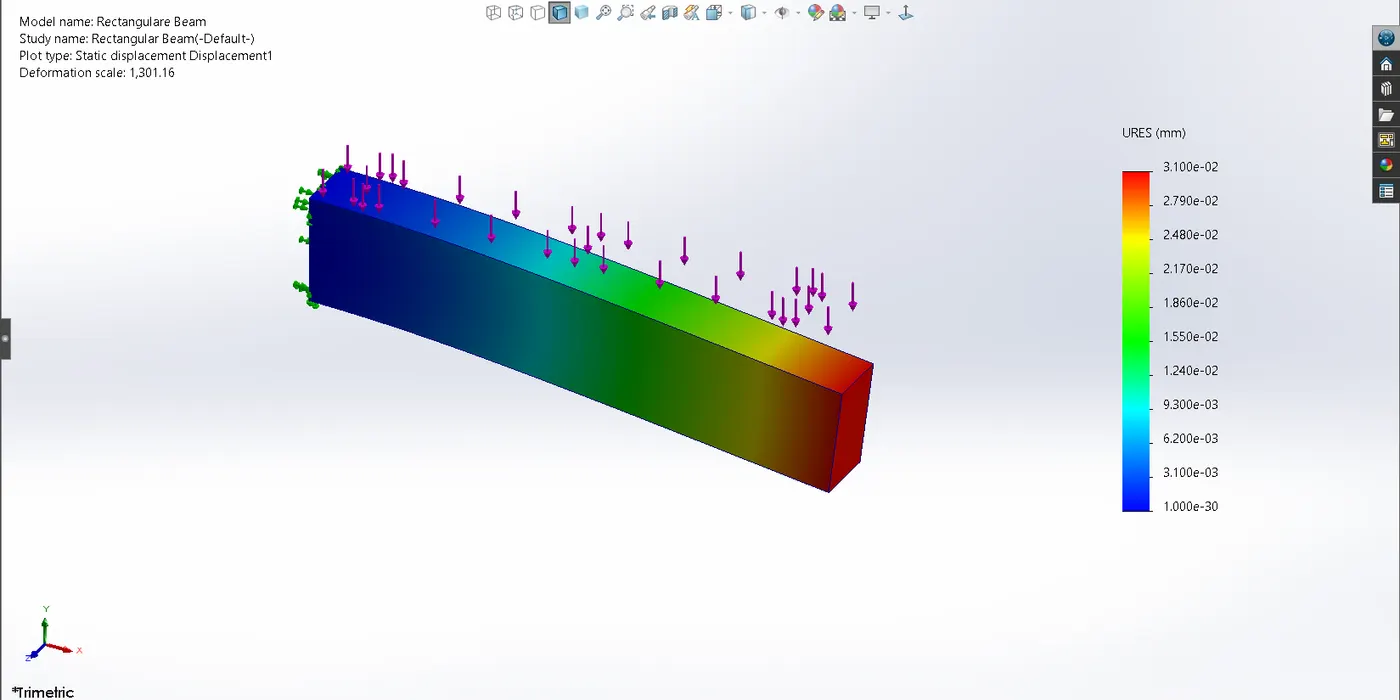
2. Displacement Analysis -
Rectangular Beam
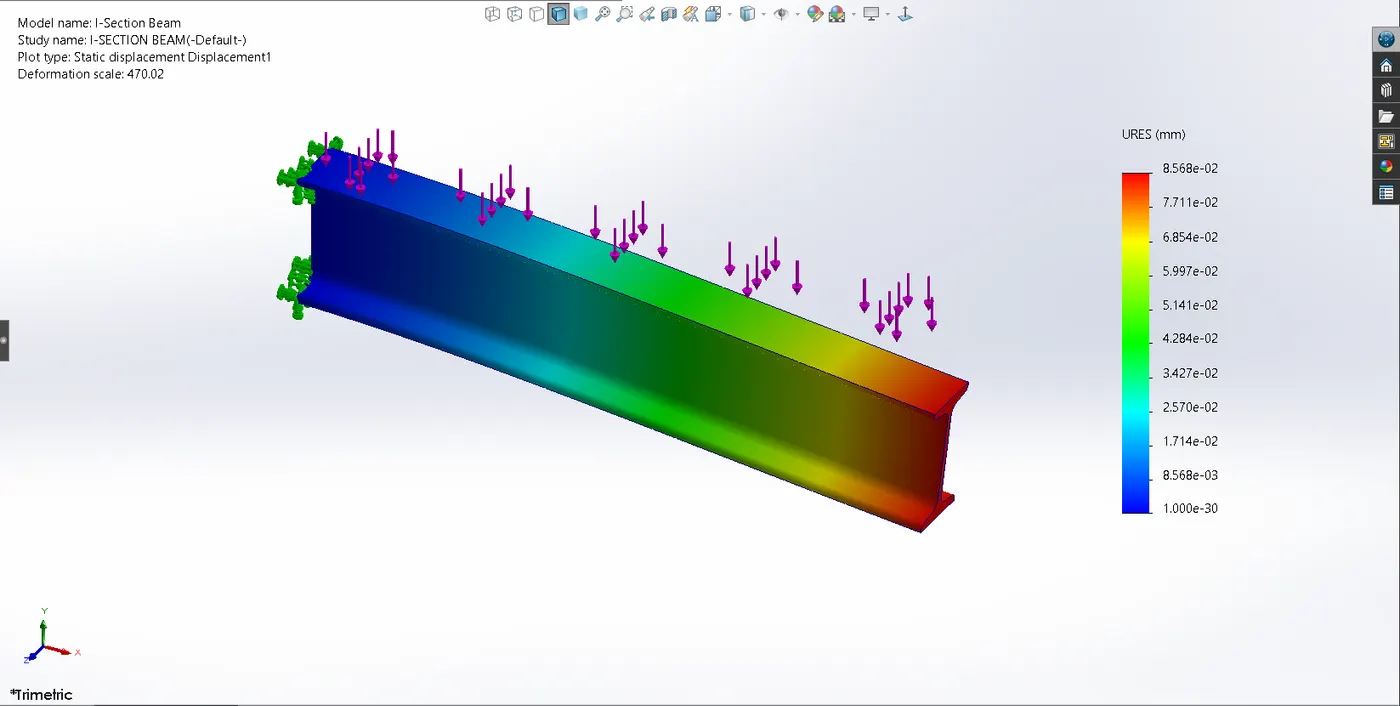
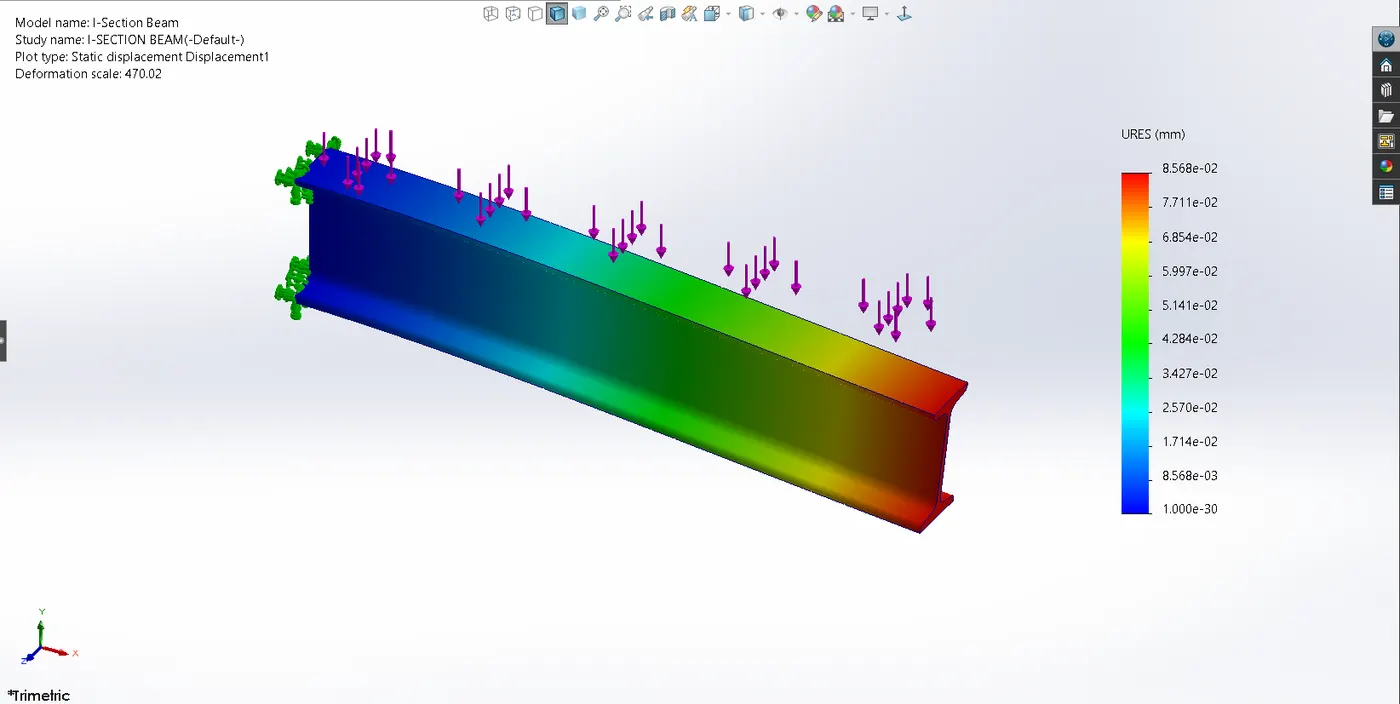
I-Section Beam
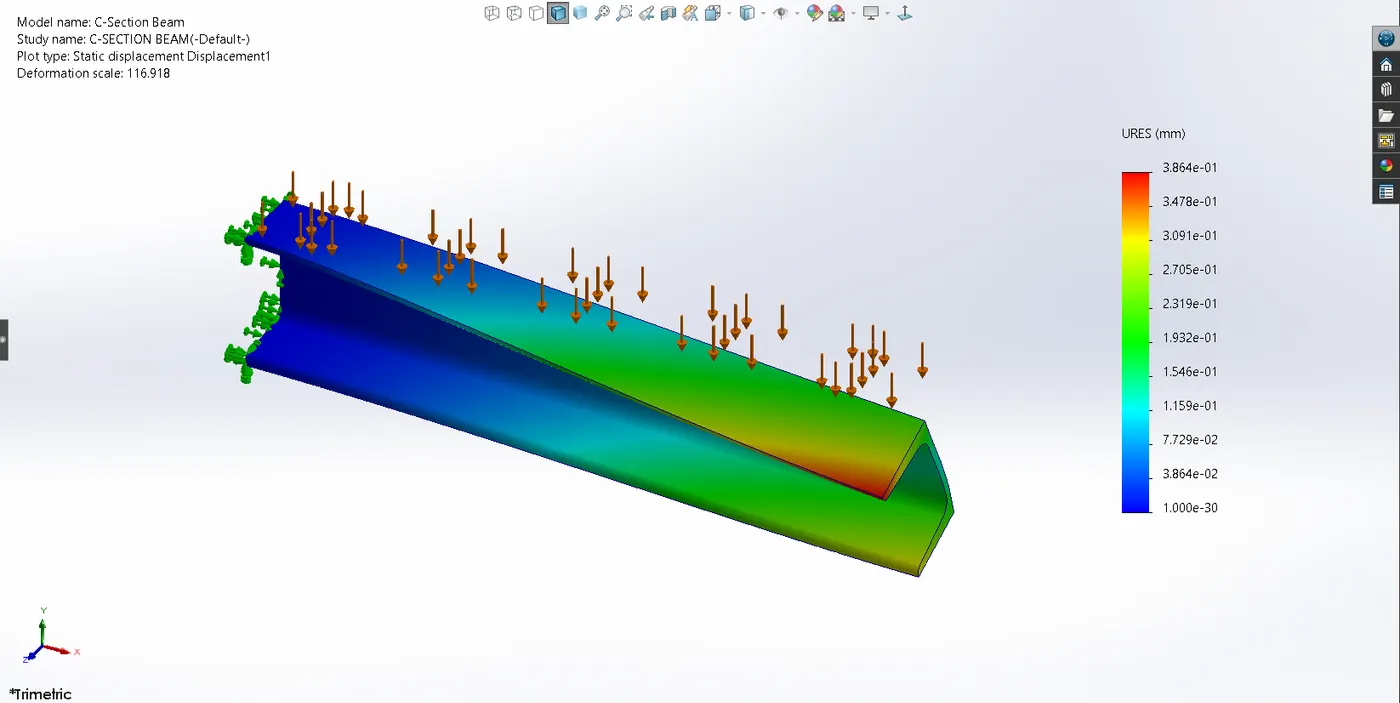
C-Section Beam
3. Strain Analysis -
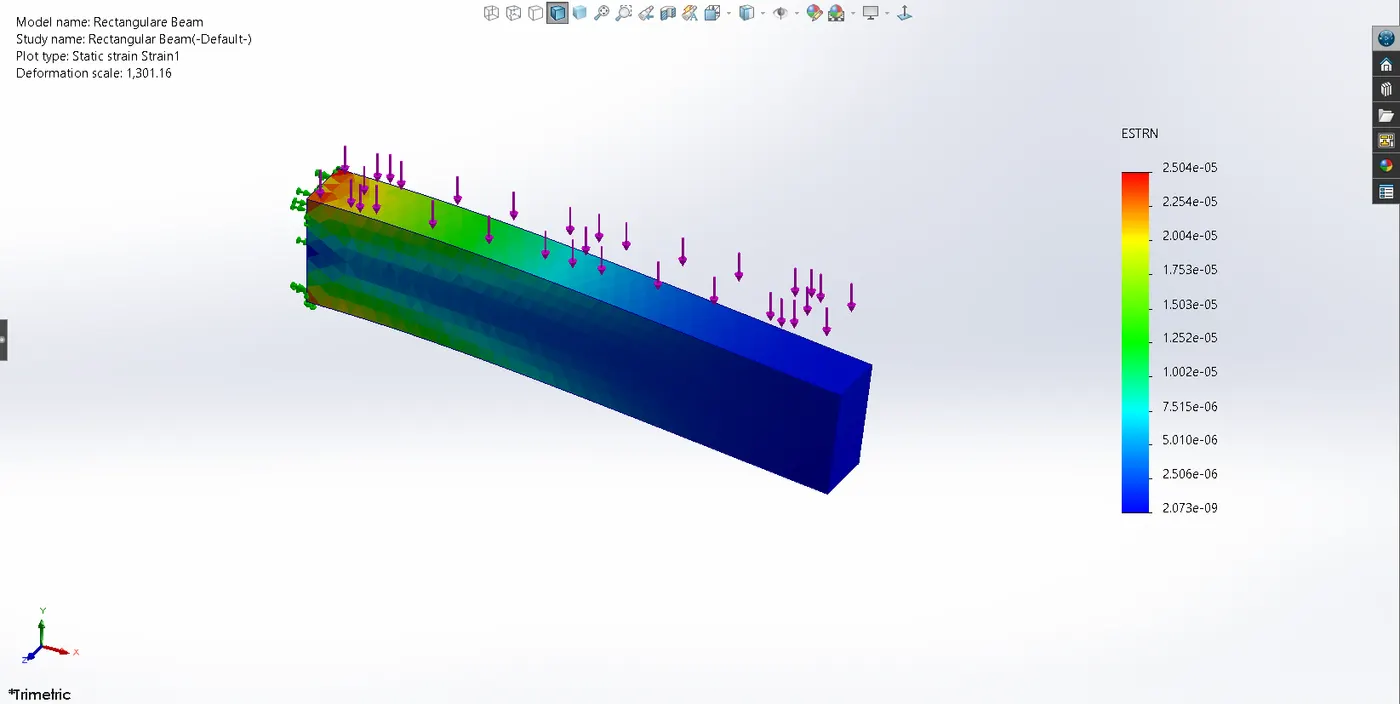
Rectangular Beam
I-Section Beam
C-Section Beam
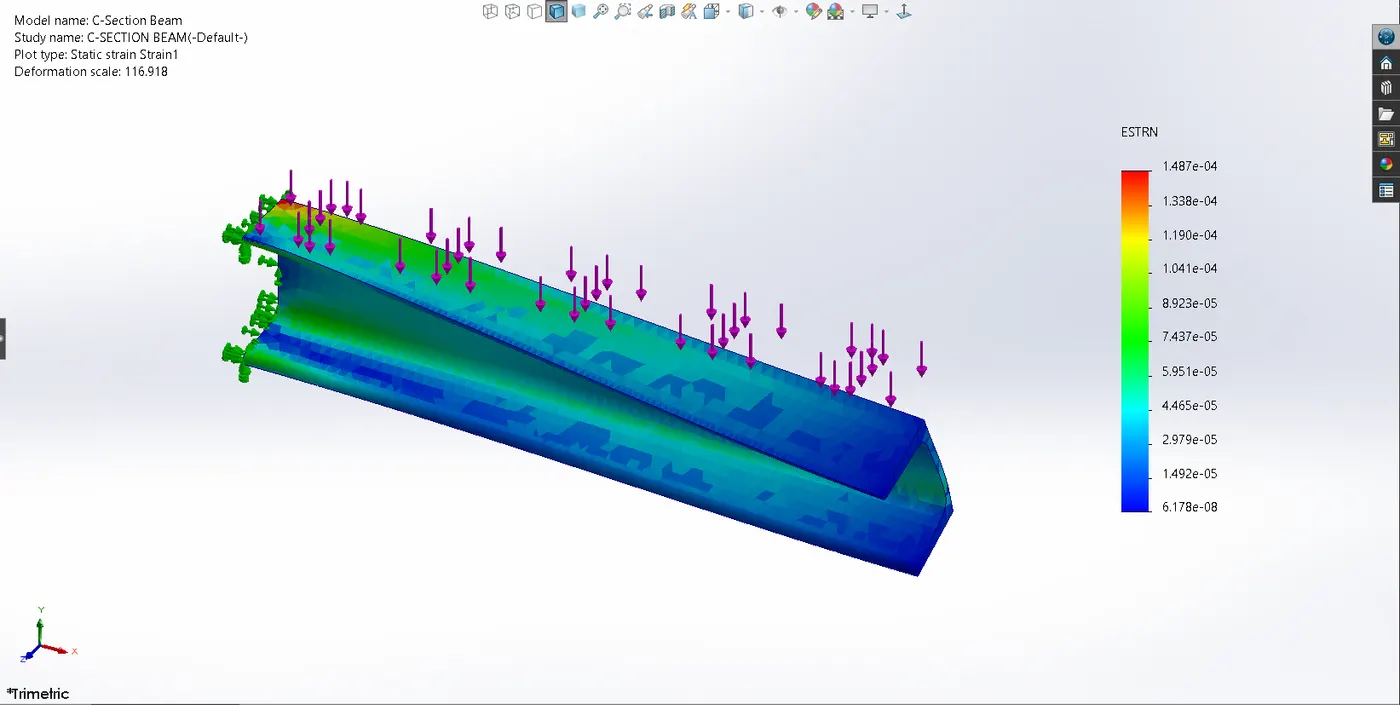
Comparison of Results
Result of comparison of all beam three beam.
Rectangular Beam
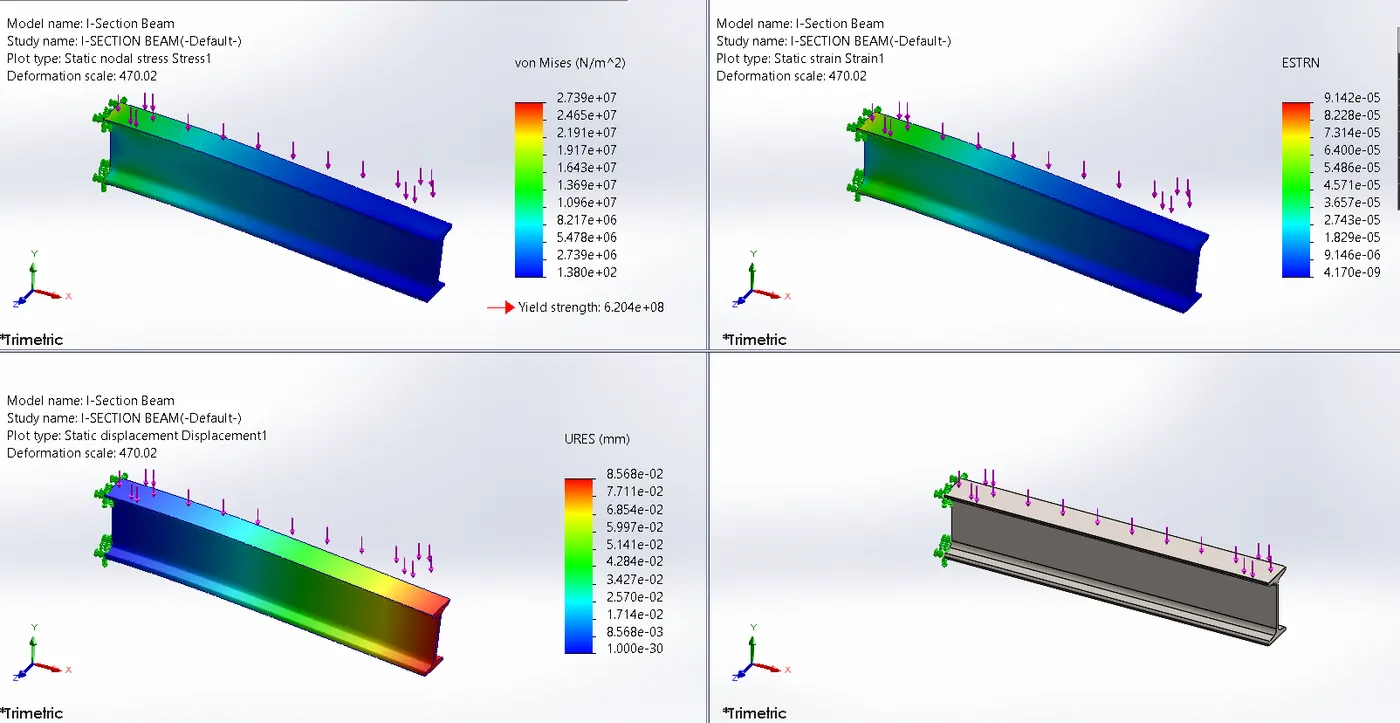
I-section Beam
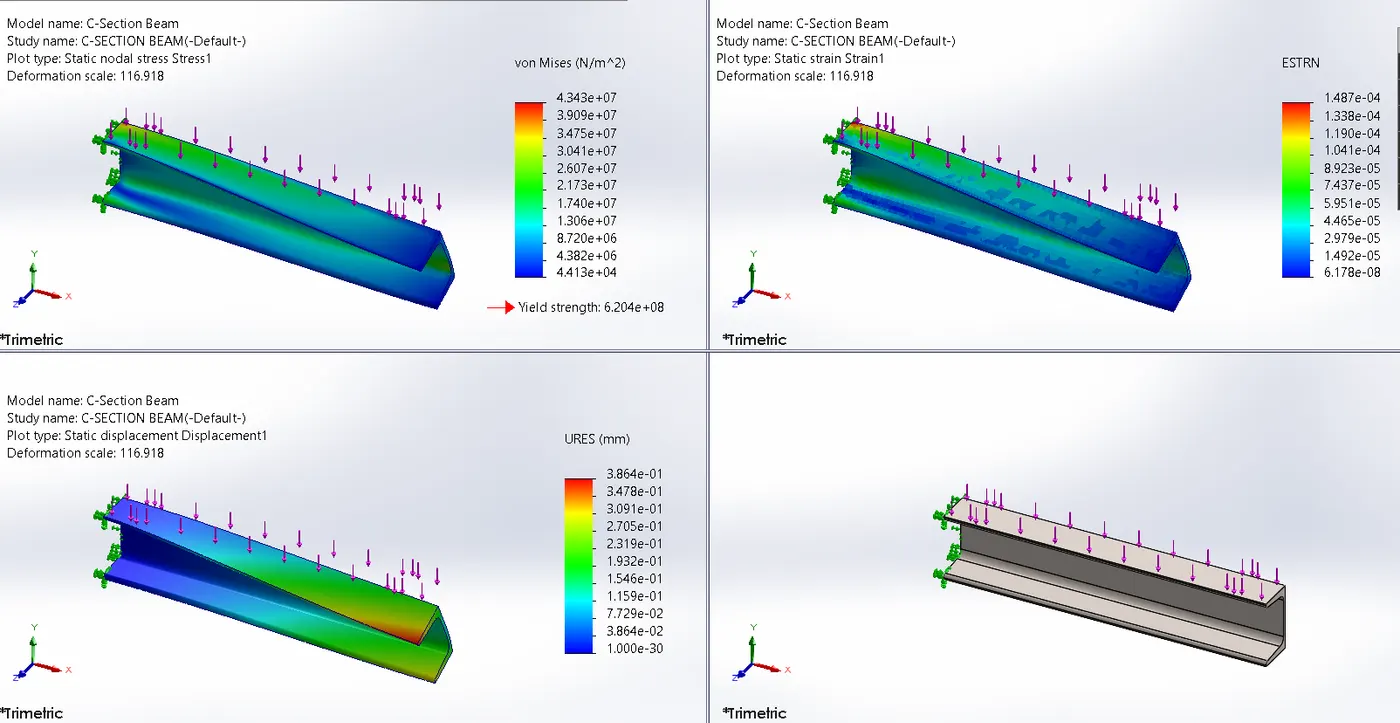
C-Section Beam
Result
| Analysis Type | Rectangular Beam | I-Section Beam | C-Section Beam |
| Max Stress (N/mm^2) | 7.599 | 27.39 | 43.43 |
| Max Strain | 2.504e-0.5 | 9.142e-0.5 | 1.487e-0.4 |
| Max Displacement(mm) | 0.031 | 0.085 | 0.038 |
| Factor of Safety | 82 | 23 | 14 |
| Mass (kg) | 1.44 | 0.30696 | 0.382 |
Conclusion -
Here comparing the all three beam in there Rectangular beam have less stress, strain & displacement of other two beam and Rectangular beam have maximum stress, strain & displacement of other two. this beam have more factor of safety by other other than two beam.
I-Section have much strain & displacement value of other than two beam. this beam have medium stress & factor of safety.
C-Section have not gain much stress as comparing the analysis of three Beam. this beam have less factor of safety by other than two beam.