To study the concept of Benchmarking in Predesign and Development phase of automotive designs for manufacturing.
Objectives:
01.
To study and implement the concept of Benchmarking in real world application.
02.
Prepare a report explaining what is Bench-Marking
03.
Compare at least 4 vehicles.
04.
Provide a proper conclusion for the report, suggesting a single suitable vehicle among the comparison made with images.
Introduction:
Benchmarking is defined as the process of measuring products, services, and processes against those of organizations known to be leaders in one or more aspects of their operations. Benchmarking provides necessary insights to help you understand how your organization compares with similar organizations, even if they are in a different business or have a different group of customers.
Benchmarking can also help organizations identify areas, systems, or processes for improvements—either incremental (continuous) improvements or dramatic (business process re-engineering) improvements.
Benchmarking has been classified into two distinct categories: technical and competitive. The House of Quality matrix and Gantt charts are often used to plot the benchmarking evaluation.
Technical Benchmarking:
Technical benchmarking is performed by design staff to determine the capabilities of products or services, especially in comparison to the products or services of leading competitors. For example, on a scale of one to four, four being best, how do designers rank the properties of your organization’s products or services? If you cannot obtain hard data, the design efforts may be insufficient and products or services may be inadequate to be competitive.
Competitive Benchmarking:
Competitive benchmarking compares how well (or poorly) an organization is doing with respect to the leading competition, especially with respect to critically important attributes, functions, or values associated with the organization’s products or services. For example, on a scale of one to four, four being best, how do customers rank your organization’s products or services compared to those of the leading competition? If you cannot obtain hard data, marketing efforts may be misdirected and design efforts misguided.
Benchmarking Procedure:
I.
Considerations:
- Before an organization can achieve the full benefits of benchmarking, its own processes must be clearly understood and under control.
- Benchmarking studies require significant investments of manpower and time, so management must champion the process all the way through, including being ready and willing to make changes based on what is learned.
II.
Plan:
- Define a tightly focused subject of the benchmarking study. Choose an issue critical to the organization’s success.
III.
Collect:
- Collect information directly from partner organizations. Collect both process descriptions and numeric data, using questionnaires, telephone interviews, and/or site visits.
IV.
Analyze:
- Compare the collected data, both numeric and descriptive.
- Determine gaps between your performance measurements and those of your partners.
- Determine the differences in practices that cause the gaps.
V.
Adapt:
- Develop goals for your organization’s process.
- Develop action plans to achieve those goals. Implement and monitor plans.
Problem Statement:
Benchmark with presently available cars in the market for the following case.
Mr. D.S. Pughazhyendhii is a married man who lives in Bangalore which is a highly crowded city. His Family comprises five members including his wife, a five-year-old boy, his father, and his mother. He visits his native place Madurai which is 500 kms away from Bangalore once a month. Also, he will be using his car to commute to his office. His budget falls between 8 to 10 lakhs on road. Please suggest to him options so that he will buy a good car for his family.
Note: Pughazhyendhii is fond of big cars
Solution:
All the requirements of Mr. D. S. Pughazhyendhii is a main focus on basis of which we will benchmark the product.
And the requirements are as follows:
- Car for a heavy traffic.
- Car with a lot of space atleast 5-seater.
- Car with safety on highways.
- Car within price range of 8 to 10 lakhs.
- Mr. Pughazhyendhii is a fond of big cars.
Now let's see different choices available in the market as per our requirements. On basis on same we'll start benchmarking.
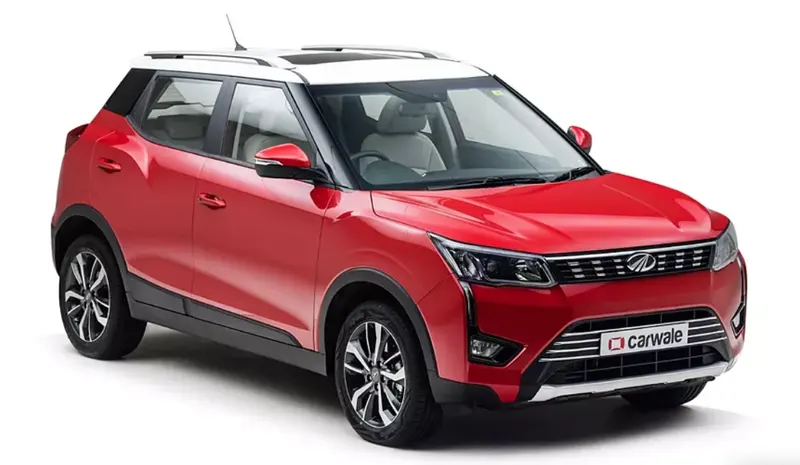
I. Mahindra XUV 300.
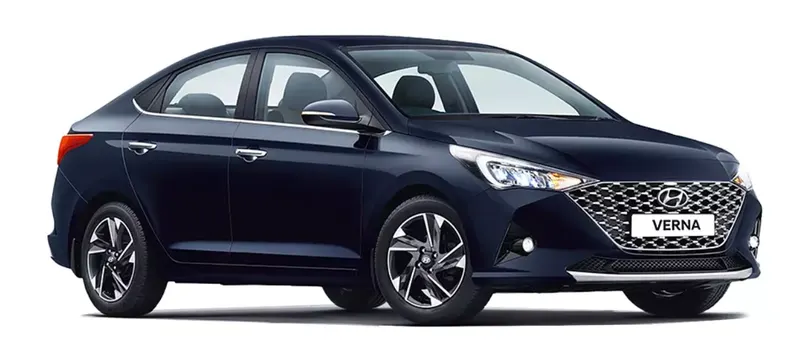
II. Hyundai Verna.
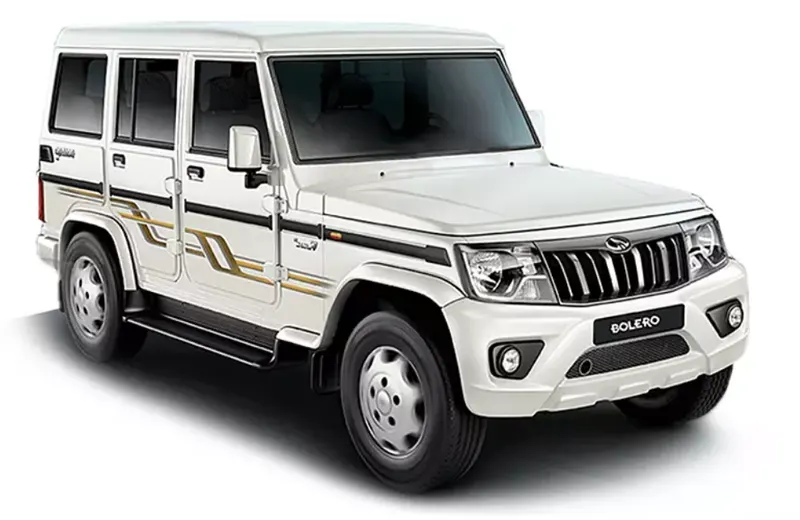
III. Mahindra Bolero.
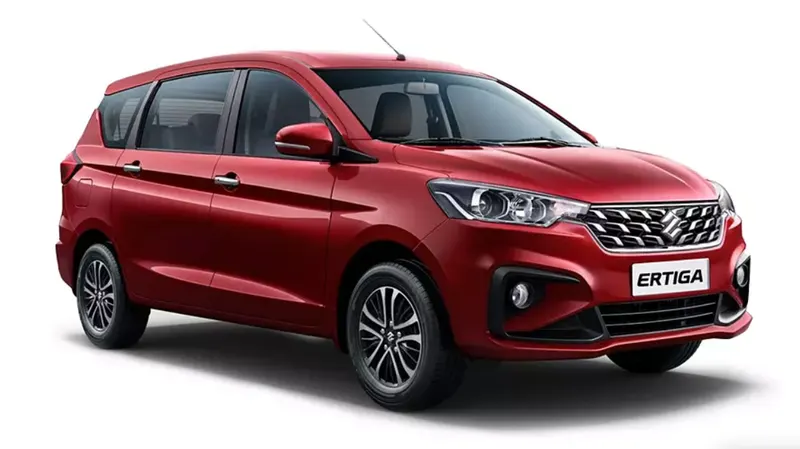
IV. Maruti Suzuki Ertiga.
I.
Mahindra XUV 300:
Fig1.1: Mahindra XUV300.
Mahindra's first-ever premium compact SUV ticks all the right boxes. It looks great, has plenty of features and has a strong diesel engine. When it was first introduced, the XUV300 had an option of both petrol and diesel engines paired to a manual gearbox as standard. The 1.2 litre turbocharged petrol engine gives us 109 bhp available at 5,000 rpm and a twisting force of 200 Nm is accessible from 2,000 rpm.
The 1.2 litre engine and well tuned gearbox allows driver to access the city traffic more efficiently.
There are no complaints when it comes to space in the front-row helped further by comfortable seats. But despite being based on a bigger car with the longest wheelbase, the rear legroom of the XUV300 is not as good as some of its competition. There’s an acceptable amount of knee and headroom. And we wished it came with better under-thigh support. All we can say that a comfortable car for four.
The Mahindra XUV300 one of the few cars on sale in India with a five-star NCAP safety rating. This top-spec model we have here has a long list of features. In terms of safety the XUV300 is equipped with seven airbags, hill-hold function, four disc-brakes, front parking sensors, TPMS, and child-seat anchoring. Other features include push-button start, leather seats, sunroof, cruise control, navigation, heated mirrors, dual-zone climate control with its own set of memory function, LED DRLs, and projector headlamps to name a few. The seven-inch touchscreen is well-placed and has a simple interface to work around with. It is good to touch and operate too and comes with all the smartphone connectivity options available.
The starting price of the car is 8.5 lakhs Average Ex. showroom price.
II.
Hyundai Verna:
Fig1.2: Hyundai Verna.
The Hyundai Verna is available in both petrol and diesel engine options. Under the hood, the (1,497cc) 1.5-litre, four-cylinder petrol engine generates 113 bhp at 6,300 rpm and 144 Nm of torque at 4500 rpm. This engine is available in six-speed manual and IVT options. The (1,493cc) 1.5-litre, four-cylinder engine generates 113 bhp at 4000 rpm and 250 Nm of torque at 1500 rpm. The diesel engine is available in six-speed manual and automatic options. The (998cc) 1.0-litre turbo petrol engine option produces 118 bhp at 6000 rpm and 172 Nm of torque at 1,500 rpm. The 1.0-litre turbo engine is mated to a seven-speed DCT transmission.
It is fun to ride it in city traffic but it is not suitable for roads of urban roads because of it's minimum ground clearance.
In Verna, there’s ample space on the inside. Both front seats get cooled function and offer good lateral support and bolstering. But it lacks under-thigh support, especially for taller driver/passenger. Moving to the back, the seats are pretty comfortable and well angled. They are easy to get in, but the narrow and low door makes ingress a tight fit (unless you are in good shape), especially for the elderly.
For safety purpose it is equipped with Overspeed warning, Emergency Brake light flashing, Seat belt warnings, Child Seat Anchor points, 2 airbags (Driver, Passenger).
The starting price of the car is 9.5 lakhs Average Ex. showroom price.
III.
Mahindra Bolero:
Fig1.3: Mahindra Bolero.
The BS6 Mahindra Bolero facelift is powered by a BS6-compliant 1.5-litre mHawk75 diesel engine that produces 75bhp at 3,600 rpm and 210 Nm of torque between 1,600-2,200 rpm. This engine is paired to a five-speed manual transmission.
Since it's a big car, driving it in a city traffic would be little more difficult whereas on urbun roads car is fun to ride.
Car has a lot space in a front row for both driver and passenger. It's a seven-seater car with ample amount of space and headroom for the middle row passengers.
Talking about a safety of car it comes with a overspeed warning, 3.5 star NCAP safety rating, 2 airbags for Driver and Front paseenger and Seat belt warnings.
The starting price of the car is 9.5 lakhs Average Ex. showroom price.
IV.
Maruti Suzuki Ertiga:
Fig1.4: Maruti Suzuki Ertiga.
Mechanically, the new Maruti Suzuki Ertiga is powered by the next-gen 1.5-litre K15C Smart Hybrid petrol engine which generates 102 bhp at 6,000 rpm and 136.8 Nm of torque at 4,400 rpm. This engine is available in both five-speed manual and six-speed automatic transmission options.
The MPV can also be had with the regular 1.5-litre engine mated to a five speed manual transmission in both petrol and CNG options. The petrol version produces 99bhp at 6,000 rpm and 136 Nm of torque at 4,400 rpm, while the CNG option produces 87 bhp at 5,500 rpm and 121.5 Nm of torque at 4,200 rpm.The MPV can also be had with the regular 1.5-litre engine mated to a five speed manual transmission in both petrol and CNG options. The petrol version produces 99bhp at 6,000 rpm and 136 Nm of torque at 4,400 rpm, while the CNG option produces 87 bhp at 5,500 rpm and 121.5 Nm of torque at 4,200 rpm.
The 1.5 litre engine and well tuned gearbox allows driver to access the city traffic more efficiently. For urban roads the car is upto the mark but not for offroading.
Car has a lot space in a front row for both driver and passenger. It's a seven-seater car with ample amount of space and headroom for the middle row passengers.
Talking about a safety of car it comes with a overspeed warning, 3 star NCAP safety rating, 2 airbags for Driver and Front paseenger, Child Seat Anchor points and Seat belt warnings.
The starting price of the car is 8.4 lakhs Average Ex. showroom price.
Results:
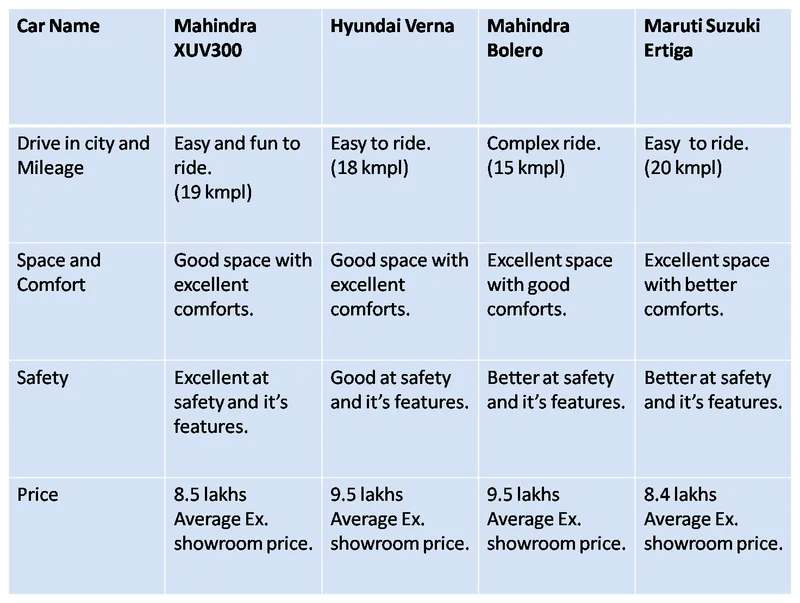
Now considering Mr. Pughazyendhii's requirements of the car we'll finalize the car.
For Mahindra XUV300, the space and comfort for 5 people is not available as compared to the others.
For Hyundai verna, the compatability and quality of drive gets compromised on urban roads.
For Mahindra Bolero, the is bulky and bit complex for driving in city traffic.
Whereas the MAruti Suzuki Ertiga is the car which fulfills all the requirements.
Therefore as per the requirements the Maruti Suzuki Ertiga is the best option to go for.
Conclusion:
Studied the concept of Benchmarking in Predesign and Development phase of Automotive designs.