Benchmarking
BENCHMARKING
Benchmarking is the practice of comparing business processes and performance metrics to industry bests and best practices from other companies. Dimensions typically measured are quality, time and cost.
Benchmarking is used to measure performance using a specific indicator (cost per unit of measure, productivity per unit of measure, cycle time of x per unit of measure or defects per unit of measure) resulting in a metric of performance that is then compared to others.
Also referred to as "best practice benchmarking" or "process benchmarking", this process is used in management in which organizations evaluate various aspects of their processes in relation to best-practice companies' processes, usually within a peer group defined for the purposes of comparison. This then allows organizations to develop plans on how to make improvements or adapt specific best practices, usually with the aim of increasing some aspect of performance. Benchmarking may be a one-off event, but is often treated as a continuous process in which organizations continually seek to improve their practices.
In project management benchmarking can also support the selection, planning and delivery of projects.
In the process of best practice benchmarking, management identifies the best firms in their industry, or in another industry where similar processes exist, and compares the results and processes of those studied to one's own results and processes. In this way, they learn how well the targets perform and, more importantly, the business processes that explain why these firms are successful. According to National Council on Measurement in Education, benchmark assessments are short assessments used by teachers at various times throughout the school year to monitor student progress in some area of the school curriculum. These also are known as interim government.
TYPES:
Benchmarking can be internal (comparing performance between different groups or teams within an organization) or external (comparing performance with companies in a specific industry or across industries). Within these broader categories, there are three specific types of benchmarking:
- Process benchmarking
- Performance benchmarking
- Strategic benchmarking.
PROBLEM STATEMENT:
Mr. D.S. Pughazhyendhii is a married man who lives in Bangalore which is a highly crowded city. His Family comprises five members including his wife, five-year-old boy, his father, and his mother. He visits his native place Madurai which is 500kms away from Bangalore once in a month. Also, he will be using his car to commute to his office. His budget falls between 8 to 10 lakhs on road. Please suggest tofio him with options so that he will buy a good car for his family.
Note: Pughazhyendhii is fond of big cars
CUSTOMER REQUIREMENTS:
- S. Pughazhyendhii has 5 members in his family. (5-seater car required)
- He lives in Banglore which is a crowded City. (Shorter length car is preferred)
- He goes daily to office in his car. (Car with good mileage is required)
- He makes a long trip of 1000 kms up and down once a month. (Requires a highly stable car on higher speeds and should provide good comfort for all the passengers throughout the whole trip, especially the room for rear passengers should be adequate)
- He requires a family car including his small 5-year-old child. (Safety must be given utmost priority)
- His budget is 8 to 10 lakhs (Cars falling into this budget category are only chosen with the On Road Price in Bangalore as standard)
- He is fond of big Cars (Premium Hatchback, SUV, Sedan and Crossovers are given more preference)
Based on the customer requirements, first we can select all the 5- seater cars currently available in 8 to 10 lakhs budget in the market. The following is the list.
- Maruti Suzuki Ciaz
- Maruti Suzuki S Cross
- Maruti Suzuki Baleno
- Maruti Suzuki Vitara Brezza
- Hyundai Venue
- Hyundai Verna
- Hyundai I20 – 3rd Generation
- Honda Jazz
- Honda Amaze
- Honda WR-V
- Honda City
- Renault Kiger
- Renault Duster
- Renault Triber
- Toyota Glanza
- Toyota Urban Cruizer
- Toyota Yaris
- Tata Tiago
- Tata Nexon
- Tata Altroz
- Tata Tigor
- Mahindra XUV 300
- Mahindra KUV 100 NXT
- Nissan Magnite
- Nissan Kicks
- Kia Sonet
- Skoda Rapid
- Fiat Punto
- Fiat Linea
- Volkswagen Polo
- Ford Aspire
- Fore Figo
- Ford Freestyle
- Ford Ecosport
- Chevrolet Sail Hatchback
- Chevrolet Sail
From this long list, we will select cars have 5-star crash test safety rating as safety is mandatory. Also, the bodies of cars which are stable during crash are only selected to increase the confidence of the driver while driving at higher speeds. So, the list gets shorter as follows.
- Maruti Suzuki S Cross
- Hyundai Verna
- Honda Jazz
- Honda City
- Tata Nexon
- Tata Altroz
- Mahindra XUV 300
- Nissan Magnite
- Nissan Kicks
Since Mr. D.S. Pughazhyendhii is in a crowded city and as he goes to office daily, mileage is considered as a parameter. Based on that, cars giving mileage above 16 kmpl are considered. The list is as follows.
- Maruti Suzuki S Cross (18.55 Kmpl)
- Hyundai Verna (17.7 to 22 Kmpl)
- Honda Jazz (16.6 to 17.1 Kmpl)
- Honda City (18 to 23 Kmpl)
- Tata Nexon (17.4 to 19 Kmpl)
- Tata Altroz (19.5 t0 24 Kmpl)
- Mahindra XUV 300 (17 to 20 Kmpl)
- Nissan Magnite (17.7 to 19.42 Kmpl)
Since Mr. D.S. Pughazhyendhii goes on a long trip of 1000kms up and down once a month, the ride quality and comfort given by the vehicle matters a lot. So, lets consider and compare them. Three cars from the above list are not comfortable for rear passengers. They are Hyundai Verna, Honda City and Tata Altroz. Also, three cars from the above list have poor ride quality when compared to their competitors. They are Honda Jazz, Honda City, Hyundai Verna and Nissan Kicks. The above listed 5 cars are not suitable as per Mr. D.S. Pughazhyendhii’s expectations. So, they are neglected.
The following are the cars that are chosen and compared to suit Mr. D.S. Pughazhyendhii’s family.
- Maruti Suzuki S Cross
- Tata Nexon
- Mahindra XUV 300
- Nissan Magnite
Let’s compare their technical aspects more in detail to arrive at a better solution.
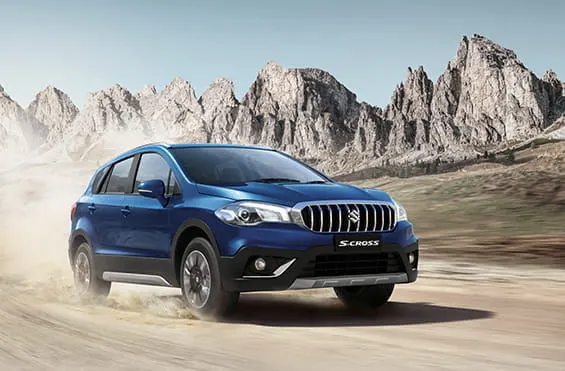
- MARUTI SUZUKI S-CROSS:
|
Overall Length |
4300mm |
|
Overall Width |
1785mm |
|
Overall Height (with Roof Rail) |
1595mm |
|
Wheelbase |
2600mm |
|
Turning Radius |
5.5m |
|
Engine Type |
1.5L K15 BS6 Engine |
|
Fuel Type |
Petrol |
|
Engine Capacity (cc) |
1462 |
|
Fuel-Efficiency (km/l) |
18.55 (MT) / 18.43 (AT) |
|
Max Torque (Nm@rpm) |
138@4400 |
|
Emission Type |
BS VI |
|
Fuel Tank Capacity (L) |
48 |
|
Front Brakes |
Ventilated Disc |
|
Rear Brakes |
Solid Disc |
|
Front Suspension |
McPherson Strut with coil spring |
|
Rear Suspension |
Torsion Beam with coil spring |
|
Price |
₹ 8,39,000 to ₹ 12,39,000 |
ADVANTAGES Of S-CROSS:
- Good when driven in the city. It is smooth and quick in the traffic.
- It has a great ride and handling balance.
- The suspension functions silently and effectively when it goes through potholes.
- The S-Cross has one of the most comfortable rear seats and plenty of legroom in its class.
- The cabin is also very easy to get in and out.
- Outstanding value for money.
- Easily accessible and low-cost service.
DISADVANTAGES Of S-CROSS:
- There are no AC vents, USB or 12-volt sockets to charge devices in the rear seat.
- No cooled seats, wireless charging and sunroof.
- No diesel engine variant.
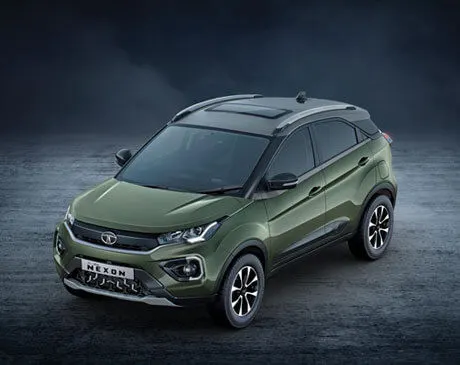
- TATA NEXON:
|
Overall Length |
3993mm |
|
Overall Width |
1811mm |
|
Overall Height (with Roof Rail) |
1606mm |
|
Wheelbase |
2498mm |
|
Turning Radius |
5.1m |
|
Engine Type |
1.2L Turbocharged Revotron (Petrol) 1.5L Turbocharged Revotorq (Diesel) |
|
Fuel Type |
Petrol, Diesel |
|
Engine Capacity (cc) |
1199 (Petrol) 1497 (Diesel) |
|
Fuel-Efficiency (km/l) |
17.4 |
|
Max Power (kW@rpm) |
120@5500 110@4000 |
|
Max Torque (Nm@rpm) |
170@1750-4000 260@1500-2750 |
|
Emission Type |
BS VI |
|
Fuel Tank Capacity (L) |
44 |
|
Front Brakes |
Disc |
|
Rear Brakes |
Drum |
|
Front Suspension |
Independent, Lower Wishbone, McPherson Strut with coil spring |
|
Rear Suspension |
Semi-Independent, closed profile twist beam with Dual path strut |
|
Price |
₹ 7,19,000 to ₹ 12,95,900 |
ADVANTAGES Of NEXON:
- The 8-speaker Harman audio system stands out as something special.
- Well defined and effective drive modes – Eco, City, Sport.
- Bobbing or pitching is very less in the bumps.
- Gives the confidence to ride at higher speeds and remains well balanced.
- Spacious rear seats and legroom.
- Value for money.
DISADVANTAGES Of NEXON:
- Not good to drive in city.
- Power delivery in low speed is not good.
- Difficult to enter and exit the rear seat due to arched window line.
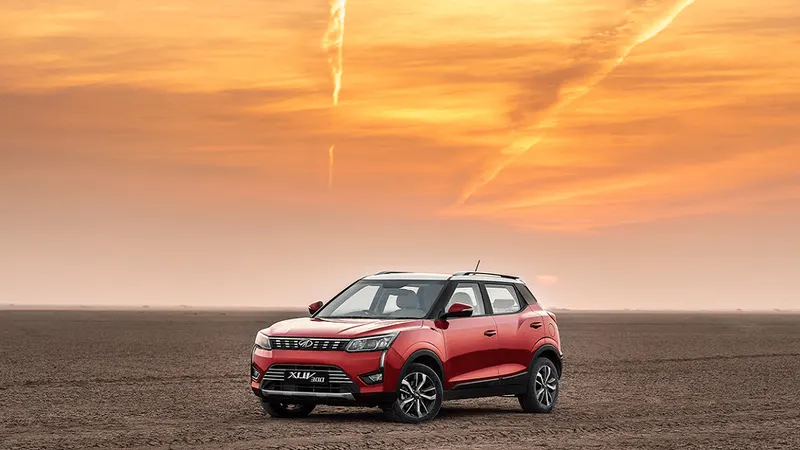
- MAHINDRA XUV 300:
|
Overall Length |
3995mm |
|
Overall Width |
1821mm |
|
Overall Height (with Roof Rail) |
1627mm |
|
Wheelbase |
2600mm |
|
Turning Radius |
5.3m |
|
Engine Type |
1.2-Litre 3-Cylinder Petrol Engine 1.5-Litre 4-Cylinder Diesel Engine |
|
Fuel Type |
Petrol, Diesel |
|
Engine Capacity (cc) |
1197 cm3 (Petrol) 1497 cm3 (Diesel) |
|
Fuel-Efficiency (km/l) |
17 - 20 |
|
Max Power (kW@rpm) |
81 kW (110.1 PS) @ 5000 r/min (Petrol) 85.8 kW (116.6 PS) @ 3750 r/min (Diesel) |
|
Max Torque (Nm@rpm) |
200 Nm @ 2000 - 3500 r/min (Petrol) 300 Nm @ 1500 - 2500 r/min (Diesel) |
|
Emission Type |
BS VI |
|
Fuel Tank Capacity (L) |
42 |
|
Front Brakes |
Disc |
|
Rear Brakes |
Disc |
|
Front Suspension |
MacPherson Strut with Anti-roll Bar |
|
Rear Suspension |
Twist Beam Suspension with Coil Spring |
|
Price |
₹ 7,95,962 to ₹ 13,09,000 |
ADVANTAGES Of XUV 300:
- Safety at its best for children.
- Cabin is very spacious.
- The vehicle performs at its best in normal and comfort modes.
- The rear seat is very comfortable for 3 persons.
DISADVANTAGES Of XUV 300:
- The back seat is low and leg support is less.
- No automatic transmission.
- No rear AC vents and USB charging vents.
- Sports mode is less responsive while approaching a corner at high speed.
- Middle and higher end variants are costly (above 10 lakhs).
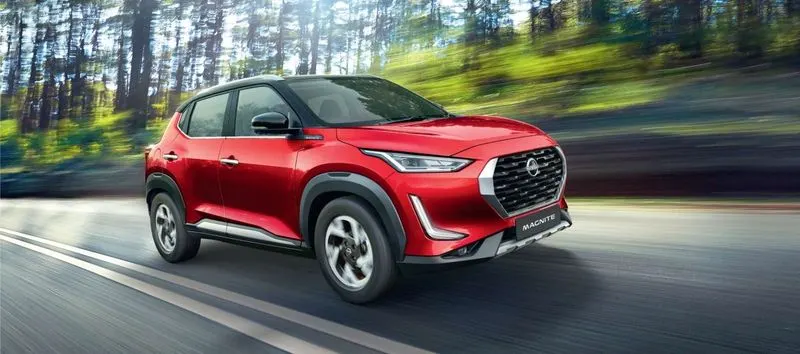
- NISSAN MAGNITE:
|
Overall Length |
3994mm |
|
Overall Width |
1758mm |
|
Overall Height (with Roof Rail) |
1572mm |
|
Wheelbase |
2500mm |
|
Turning Radius |
5m |
|
Engine Type |
HRA0 1L Petrol HRA0 1L Turbo Petrol |
|
Fuel Type |
Petrol |
|
Engine Capacity (cc) |
999 cm3 |
|
Fuel-Efficiency (km/l) |
18.75(Petrol) 20 (Turbo Petrol) |
|
Max Power (kW@rpm) |
72 kW @ 6250 r/min (Petrol) 100kW @ 5000 r/min (Turbo Petrol) |
|
Max Torque (Nm@rpm) |
96 Nm @ 3500 r/min (Petrol) 160 Nm @ 2800-3600 r/min (Turbo Petrol) |
|
Emission Type |
BS VI |
|
Fuel Tank Capacity (L) |
40 |
|
Front Brakes |
Disc |
|
Rear Brakes |
Drum |
|
Front Suspension |
MacPherson strut with Lower Transverse link |
|
Rear Suspension |
Twin tube telescopic shock absorber |
|
Price |
₹ 5,59,000 to ₹ 9,90,000 |
ADVANTAGES Of MAGNITE:
- Effortless driving in city traffic.
- Even the high-end version is relatively fairly priced.
- The car’s exterior and interior design looks appealing.
- Plenty of space and leg room inside.
DISADVANTAGES Of MAGNITE:
- No diesel engine option.
- Poor build quality of plastic interiors.
- Road noises are heard when passing through bumps on the road.
- No sunroof.
- Less responsive when turning in a corner.
From the above comparisons it can be inferred that all the four cars are similar in their segments (Crossover) and are very spacious for the passengers to sit.
When comparing the four cars (Maruti Suzuki S-Cross, Tata Nexon, Mahindra XUV 300 & Nissan Magnite), Mahindra’s XUV 300 is very highly priced and certain features can be accessed only on the mid and top variants which costs more than 10 lakhs. So, Mahindra XUV 300 can’t be a perfect choice.
Tata’s Nexon is good in terms of higher speeds. But it is difficult to drive it in low speeds in traffic. Mr. D.S. Pughazhyendhii goes to office daily in a crowded city. So, it makes Nexon unfit for him to go to office.
Nissan’s Magnite is good in city but less responsive at higher speeds. So, it can’t be suitable for Mr. D.S. Pughazhyendhii ’s family to go for long trips.
Even though Maruti Suzuki’s S-Cross lacks certain features like rear AC vents, USB charging, etc it doesn’t matter as Mr. D.S. Pughazhyendhii is not concerned about that. It is also good to ride in city as well as provides comfort and confidence at high speeds in highways. So, Maruti Suzuki’s S-Cross is suitable for Mr. D.S. Pughazhyendhii ’s family requirements.