Benchmarking
Benchmarking
Benchmarking is a process of measuring the performance of a company’s products, services or processes against those of another business considered to be the best in the industry. The point of benchmarking is to identify internal opportunities for improvement. By studying companies with superior performance, breaking down what makes such superior performance possible, and then comparing those processes to how your business operates, you can implement changes that will yield significant improvements.
That might mean tweaking a product’s features to more closely match a competitor’s offering or changing the scope of services you offer or installing a new customer relationship management system to enable more personalized communication with customers.
There are two basic kinds of improvement opportunities: continuous and dramatic. Continuous improvement is incremental, involving only small adjustments to reap sizeable advance. Dramatic improvement can only come about through reengineering the whole internal work process.
Benchmarking is a simple, but detailed, five-step process:
- Choose a product, service or internal department to benchmark
- Determine which best-in-class companies you should benchmark against which organizations you’ll compare your business to
- Gather information on their internal performance or metrics
- Compare the data from both organizations to identify gaps in your company’s performance
- Adopt the processes and policies in place within the best-in-class performers
Benchmarking will point out what changes will make the most difference.
In order to benchmark anything, you need to have quantitative data available to study. That means breaking down internal processes to calculate performance metrics. Quantify everything, because only quantifiable information can be accurately compared.
Case Study:
Mr D.S. Pughazhyendhii is a married man who lives in Bangalore which is a highly crowded city. His family comprises five members including his wife, five year old boy, his father and his mother. He visits his native place Madurai which is 500 kms away from Bangalore once in a month. Also, he will be using his car to commute to his office. His budget falls between 8 to 10 lakhs on road. Please suggest to him with options so that he will buy a good car for his family.
Note: Mr D.S. Pughazhyendhii is fond of big cars.
As Mr D.S. Pughazhyendhii is fond of big cars and the car should have a comfortable seating for his child and his parents it is better to make a choice between SUV and MUV.
What is MUV?
A Multi-utility vehicle or MUV is a large, spacious car that was built as an improved and stylized station wagon. It is considered to be a subset of the broader SUV category of automobiles. MUVs are essentially family cars that help improve the travel experience by offering an enhanced passenger capacity.
Operating on a FWD system, MUVs are suited for travelling on levelled roads. Their cost-effective designs and augmented mileage rates make them a top choice among most people looking for family cars. Connoting their spacious interiors and core functionality, these cars are often called ‘people movers’.
Most MUVs fall in the lower end of the price spectrum. However, MUVs are not well-suited for undulating terrains. They also have smaller and less powerful engines, making them an ill fit off-roading adventure.
What is SUV?
SUVs or sports utility vehicles are cars derived from an improved and stylized truck design. These cars are formed for their sporty look and sturdy design. The body of a SUV is constructed on an elevated and raised platform- mimicking a truck’s design. Much like trucks, they are strong and fit for off-roading adventures.
The powerful engine of a SUV is distinctively unmatched. They operate on RWD or AWD systems making navigation hassle-free and smooth. This makes controlling the vehicle easier when driving through rough terrains. Thus, they are renowned as adventure cars.
A drawback with these cars is that they tend to be expensive when compared to the other subset prototypes available in the same genre. They also offer poor mileage capacities and the cost of maintaining the car can be high. Most people tend to choose a MUV over a SUV due to these disadvantages.
Comparison table between MUV and SUV
|
Parameters of comparison |
MUV |
SUV |
|
Pedigree and Design |
The design of a MUV reflects features similar to a minivan. |
The design of a SUV reflects its similarities with a truck |
|
Terrain Suitability |
Cannot be used for off-roading purposes. |
Can be used for off-roading purposes. |
|
Drive System |
MUVs operate on a FWD system. |
Either the RWD or AWD system is used by most SUVs. |
|
Cost |
Less expensive than SUVs. |
More expensive than MUVs. |
|
Fuel Efficiency |
MUVs tend to be fuel-efficient, offering good mileage. |
SUVs are not fuel-efficient and offer poor mileage. |
|
Engine strength |
The engine of a MUV is weaker than an SUV. |
The engine of a SUV is stronger than a MUV. |
Considering the requirements of Mr D.S. Pughazhyendhii and pros & cons of MUV and SUV, it is better choice to go with MUV (Multi-utility vehicle).
List of MUVs under 10lakh:
- Maruti Ertiga
- Renault Triber
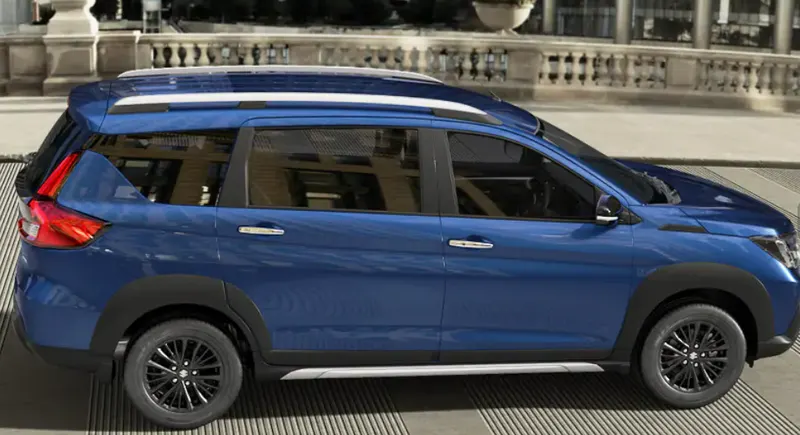
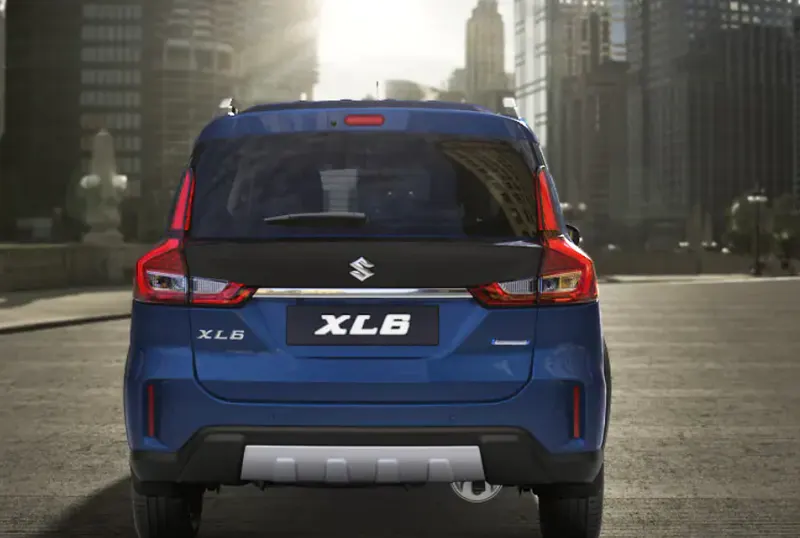
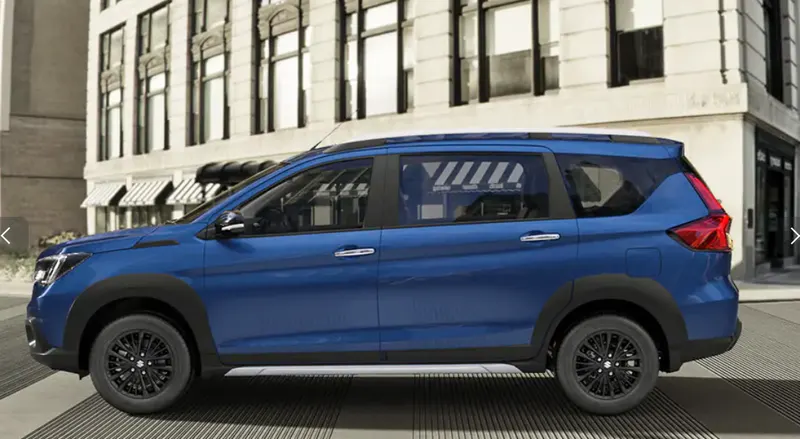
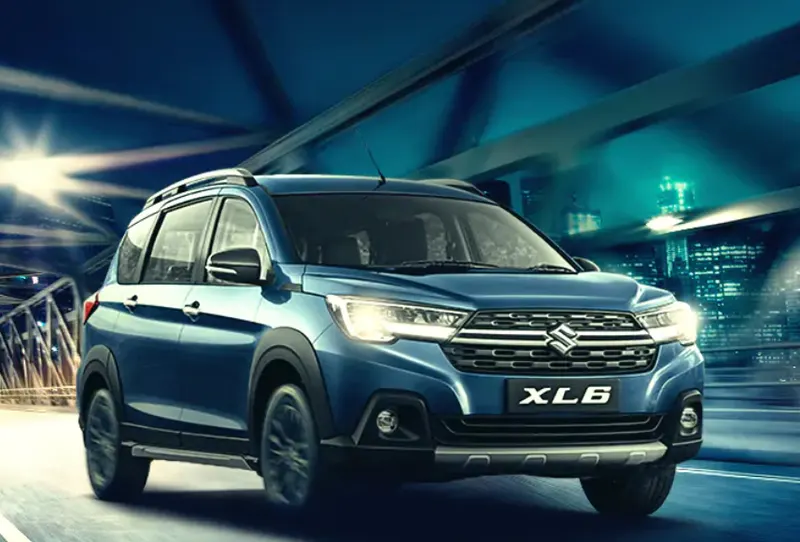
- Maruti XL6
- Datsun GO Plus
|
Parameters of comparison |
Maruti Ertiga
|
Renault Triber
|
Maruti XL6
|
Datsun GO Plus
|
|
NCAP safety rating |
3 star |
2 star |
3 star |
1 star |
|
Mileage |
17.99Kmpl |
20Kmpl |
19.01Kmpl |
19.02Kmpl |
|
Seating Capacity |
07 |
07 |
06 |
07 |
|
Fuel Capacity |
45 liters |
40 liters |
45 liters |
35 liters |
|
Boot Space |
209 liters |
84 liters |
206 liters |
347 liters |
|
Engine Type |
K15 Smart Hybrid |
1.0L Petrol Engine |
K15B Smart Hybrid |
Naturally Aspirated 12V DOHC EFI |
|
Fuel Type |
Petrol |
Petrol |
Petrol |
Petrol |
|
Max Torque |
138Nm @440rpm |
96Nm @3500rpm |
138Nm @440rpm |
140Nm @4000rpm |
|
No. of cylinders |
04 |
03 |
04 |
03 |
|
Gear Box |
5 Speed |
5 Speed |
5 Speed |
5 Speed |
|
Engine Displacement |
1462 cc |
999 cc |
1462 cc |
1198 cc |
|
Max Power |
103.26bph @6000rpm |
71bhp @6250rpm |
103.26bph @6000rpm |
67.05bph @5000rpm |
|
Emission Norm Compliance |
BS VI |
BS VI |
BS VI |
BS VI |
|
Transmission |
Manual |
Manual |
Manual |
Manual |
|
Kerb Weight |
1135-1170 Kg |
947 Kg |
1180 Kg |
904 Kg |
|
Steering Type |
Power |
Electric |
Power |
Manual |
|
Suspension Front |
MacPherson Strut |
MacPherson Strut with Coil Spring |
MacPherson Strut with Coil Spring |
MacPherson Strut with lower transverse link |
|
Suspension Rear |
Torsion Beam & Coil Spring |
Torsion Beam Axle |
Torsion Beam & Coil Spring |
Twist Beam Suspension with coil spring |
|
Brakes Front |
Ventilated Disc |
Disc |
Ventilated Disc |
Disc |
|
Brakes Rear |
Drum |
Drum |
Leading & Trailing Drum |
Drum |
|
Minimum Turning Radius |
5.2 metres |
5.4 meters |
5.2 meters |
4.6 meters |
CONCLUSION
I suggest Mr D.S Pughazhyendhii to buy Maruti XL6, which have a NCAP safety rating of 3 and with the good mileage range of 19.01kmpl. This car is better vlue for its money and the maintenace & service cost is considerably low when compared to many other cars.
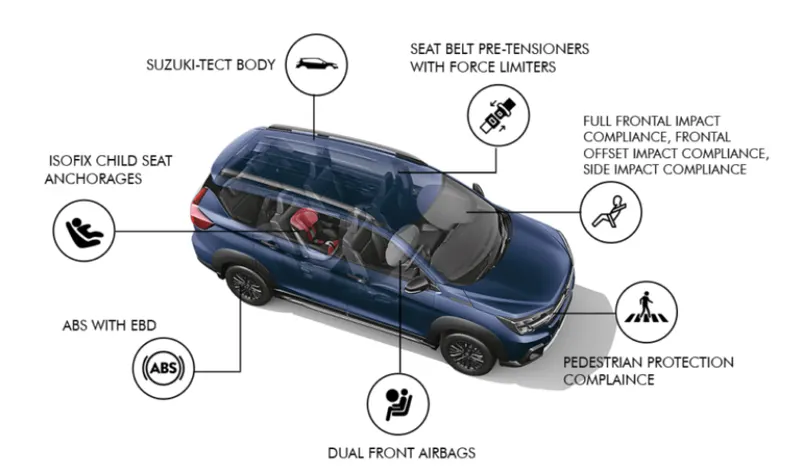
Maruti XL6 Key safety features
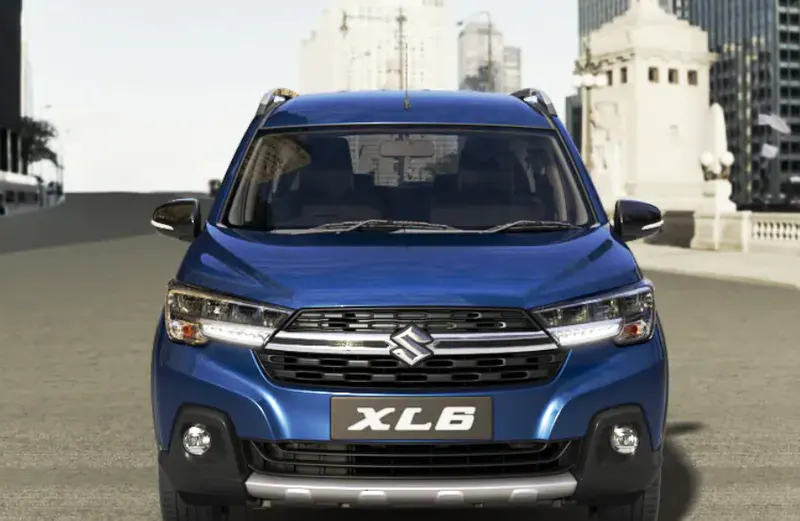
Maruti XL6 Exterior Pictures
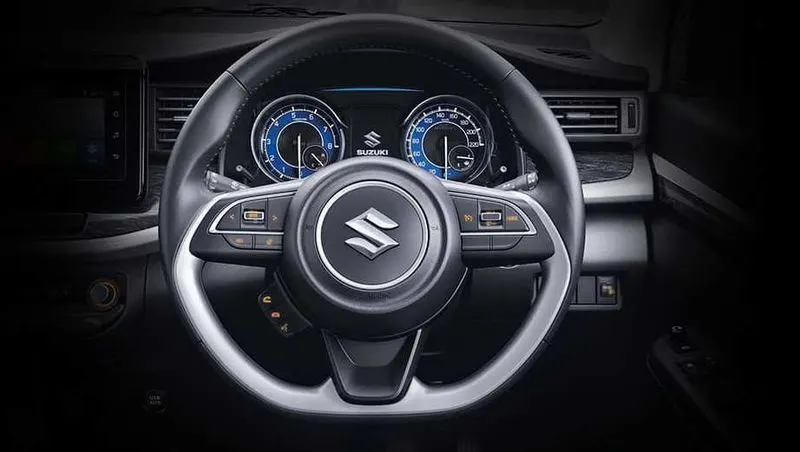
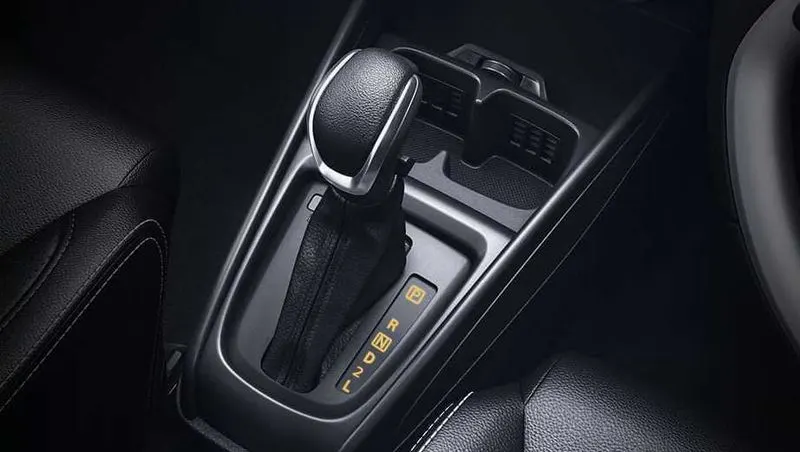
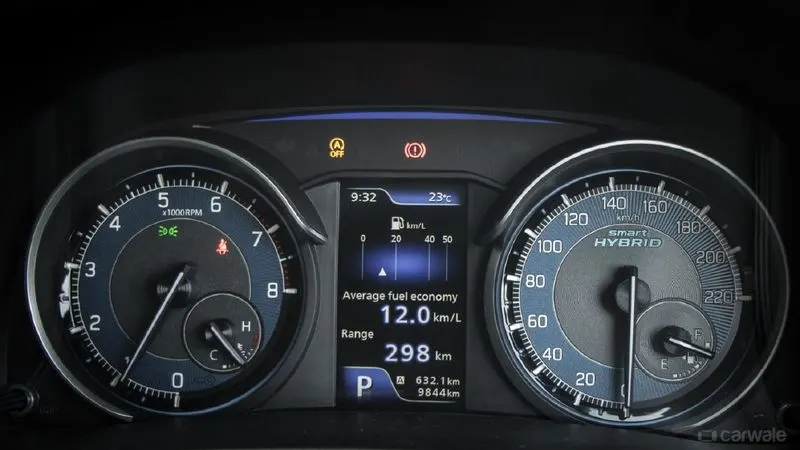
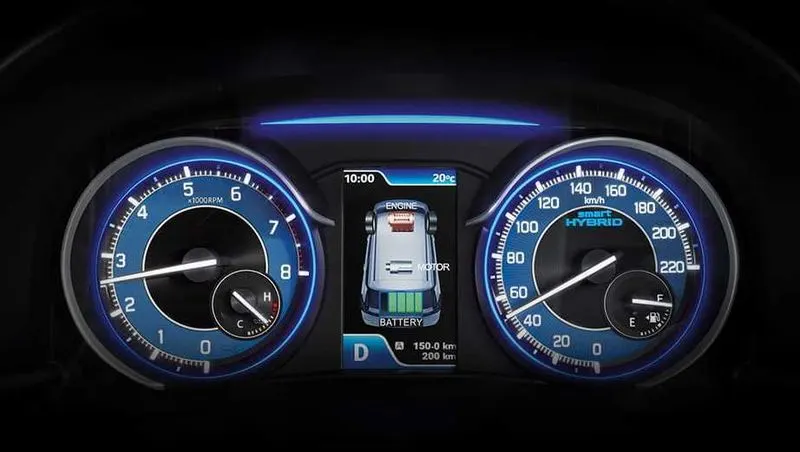
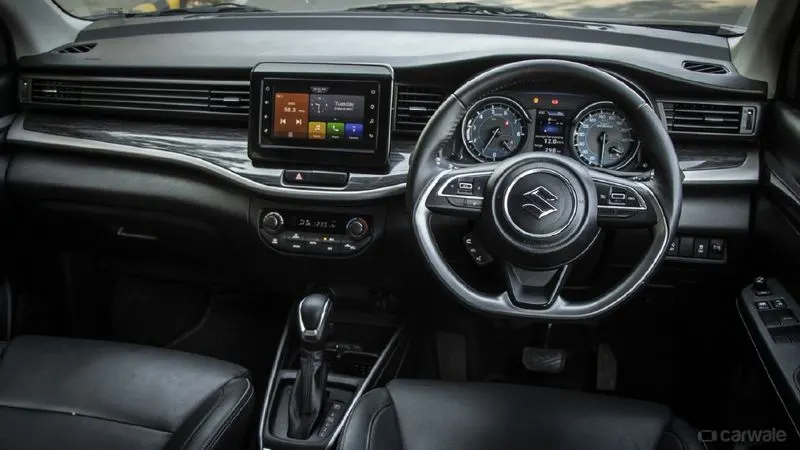
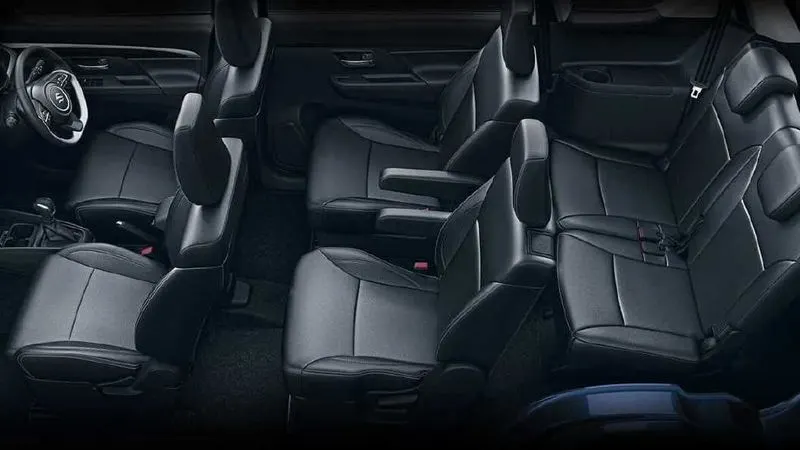
Maruti XL6 Interior Pictures