Benchmarking
WHAT IS BENCHMARKING
Benchmarking is defined as the process of measuring products, services, and processes against those of organizations known to be leaders in one or more aspects of their operations. Benchmarking provides necessary insights to help you understand how your organization compares with similar organizations, even if they are in a different business or have a different group of customers.
Benchmarking can also help organizations identify areas, systems, or processes for improvements—either incremental (continuous) improvements or dramatic (business process re-engineering) improvements.
Incremental Quality Improvement vs Benchmarking Breakthroughs
Benchmarking has been classified into two distinct categories: technical and competitive. The House of Quality matrix and Gantt charts are often used to plot the benchmarking evaluation.
- Technical benchmarking
- Competitive benchmarking
- Benchmarking procedure
- Benchmarking example
- Benchmarking studies
- Benchmarking resources
TECHNICAL BENCHMARKING
Technical benchmarking is performed by design staff to determine the capabilities of products or services, especially in comparison to the products or services of leading competitors. For example, on a scale of one to four, four being best, how do designers rank the properties of your organization’s products or services? If you cannot obtain hard data, the design efforts may be insufficient, and products or services may be inadequate to be competitive.
COMPETITIVE BENCHMARKING
Competitive benchmarking compares how well (or poorly) an organization is doing with respect to the leading competition, especially with respect to critically important attributes, functions, or values associated with the organization’s products or services. For example, on a scale of one to four, four being best, how do customers rank your organization’s products or services compared to those of the leading competition? If you cannot obtain hard data, marketing efforts may be misdirected and design efforts misguided.
BENCHMARKING PROCEDURE
Considerations
- Before an organization can achieve the full benefits of benchmarking, its own processes must be clearly understood and under control.
- Benchmarking studies require significant investments of manpower and time, so management must champion the process all the way through, including being ready and willing to make changes based on what is learned.
- Too broad a scope dooms the project to failure. A subject that is not critical to the organization’s success won’t return enough benefits to make the study worthwhile.
- Inadequate resources can also doom a benchmarking study by underestimating the effort involved or inadequate planning. The better you prepare, the more efficient your study will be.
Plan
- Define a tightly focused subject of the benchmarking study. Choose an issue critical to the organization’s success.
- Form a cross-functional team. During Step 1 and 2, management’s goals and support for the study must be firmly established.
- Study your own process. Know how the work is done and measurements of the output.
- Identify partner organizations that may have best practices.
Collect
- Collect information directly from partner organizations. Collect both process descriptions and numeric data, using questionnaires, telephone interviews, and/or site visits.
Analyze
- Compare the collected data, both numeric and descriptive.
- Determine gaps between your performance measurements and those of your partners.
- Determine the differences in practices that cause the gaps.
Adapt
- Develop goals for your organization’s process.
- Develop action plans to achieve those goals.
- Implement and monitor plans.
BENCHMARKING EXAMPLE
Carleton University’s department of housing began a project to improve the process by which students apply for and are assigned housing. This project had three main goals:
- Reduce residence vacancy rates to below 1%
- Improve student satisfaction levels
- Make the best possible use of employee time and effort
The department chose benchmarking as the basis for the improvement project after realizing that other universities already had better processes Carleton could learn from and quickly implement without needing to re-engineer the process from scratch.
The cross-functional team started by mapping the existing residence application process to establish a baseline, focusing attention on the process used by new first-year students (left side, Figure 1).
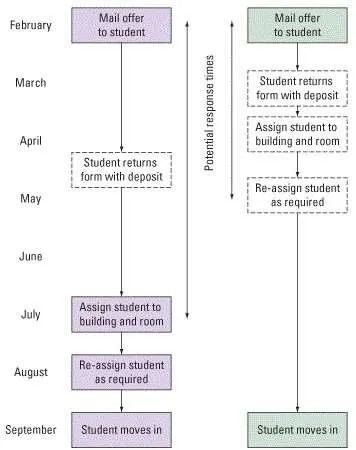
Figure 1: Main Process Steps Before and After Benchmarking
The project team then conducted focus groups with students living in residence, asking them to describe their expectations of the assignment service process, their perceptions of the services they actually received, and any gaps between the two.
The team also reviewed websites of housing offices at 24 international universities, followed by a telephone survey of 12 of these to find out more about their systems. The team then conducted site visits to four universities seen as leaders in dealing with residence applications to learn about their current processes and discuss the relative advantages and disadvantages of each one.
The team presented its benchmarking report to management, describing the best practices seen at other universities and making specific recommendations for adapting them for Carleton (right side, Figure 1). Carleton implemented many of the recommended changes and is seeing the benefits (Figure 2).
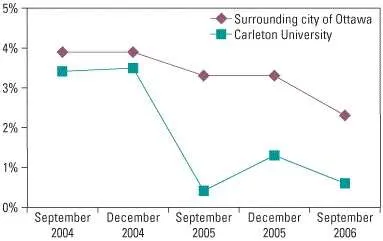
Figure 2: Benchmarking Average Vacancy Rates for Residences
SUGGESTABLE CARS
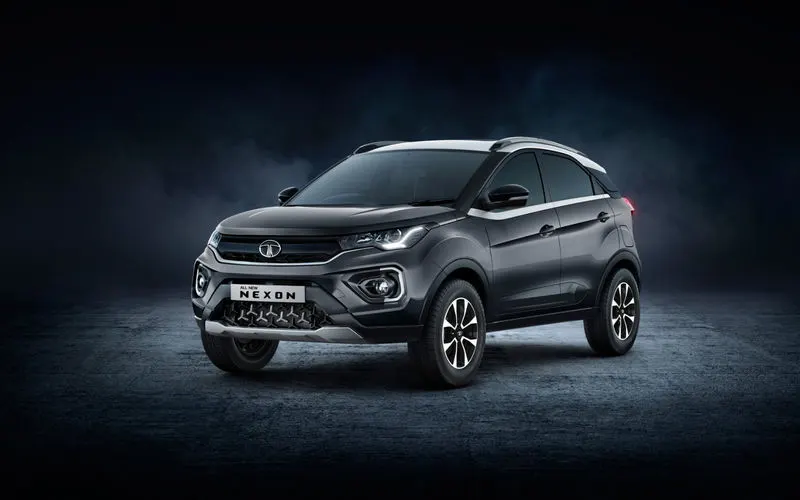
1
BRAND - TATA
MODEL - NEXON
VARIENT - XE
NCAP RATING - 5 STAR
EX SHOWROOM PRICE - 7.69 lakhs
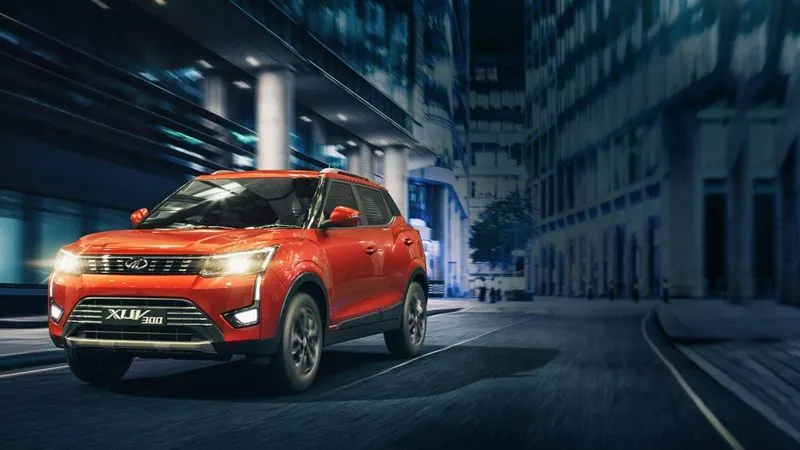
2
BRAND - MAHINDRA
MODEL - XUV 300
VARIENT - W4
NCAP RATING - 5 STAR
EX SHOWROOM PRICE - 8.41 lakhs
3
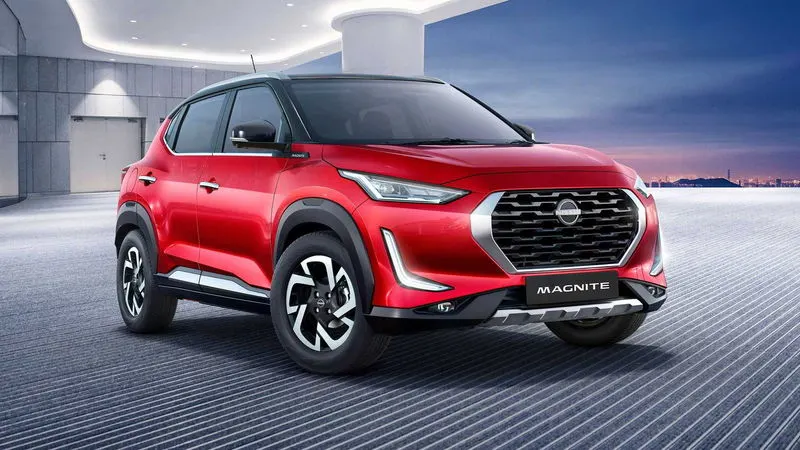
BRAND - NISSAN
MODEL - MAGNITE
VARIENT - XV
NCAP RATING - 4 STAR
EX SHOWROOM PRICE -7.61 lakhs
4
BRAND - CITREON
MODEL - C3
VARIENT - Feel 1.2 liter dual tone
NCAP RATING - 4 STAR
EX SHOWROOM PRICE - 7.10 lakhs

COMPARISION BETWEEN NEXON , XUV 300 , MAGNITE AND CITREON
Engine & Transmission
| Acceleration (0-100 kmph) (seconds) | 11.14 | |||
| Engine | 1199 cc, 3 Cylinders Inline, 2 Valves/Cylinder, SOHC | 1197 cc, 3 Cylinders Inline, 4 Valves/Cylinder, DOHC | 999 cc, 3 Cylinders Inline, 4 Valves/Cylinder, DOHC | 1198 cc, 3 Cylinders Inline, 4 Valves/Cylinder, DOHC |
| Engine Type | 1.2L Turbocharged Revotron | 1.2 Turbo Petrol | 1.0L B4D | PURETECH 82 |
| Fuel Type | Petrol | Petrol | Petrol | Petrol |
| Max Power (bhp@rpm) | 118 bhp @ 5500 rpm | 109 bhp @ 5000 rpm | 71 bhp @ 6250 rpm | 80 bhp @ 5750 rpm |
| Max Torque (Nm@rpm) | 170 Nm @ 1750 rpm | 200 Nm @ 2000 rpm | 96 Nm @ 3500 rpm | 115 Nm @ 3750 rpm |
| Mileage (ARAI) (kmpl) | 17.5 | 17 | 18.7 | 19.8 |
| Driving Range (Km) | 773 | 714 | 750 | 594 |
| Drivetrain | FWD | FWD | FWD | FWD |
| Transmission | Manual - 6 Gears, Sport Mode | Manual - 6 Gears | Manual - 5 Gears | Manual - 5 Gears |
| Emission Standard | BS 6 | BS 6 | BS 6 | BS 6 |
| Turbocharger/Supercharger | Turbocharged | Turbocharged |
Dimensions & Weight
| Length (mm) | 3993 | 3995 | 3994 | 3981 |
| Width (mm) | 1811 | 1821 | 1758 | 1733 |
| Height (mm) | 1606 | 1627 | 1572 | 1586 |
| Wheelbase (mm) | 2498 | 2600 | 2500 | 2540 |
| Ground Clearance (mm) | 209 | 180 | 205 | 180 |
| Kerb Weight (kg) | 939 | 982 |
Capacity
| Doors (Doors) | 5 | 5 | 5 | 5 |
| Seating Capacity (Person) | 5 | 5 | 5 | 5 |
| No of Seating Rows (Rows) | 2 | 2 | 2 | 2 |
| Bootspace (litres) | 350 | 257 | 336 | 315 |
| Fuel Tank Capacity (litres) | 44 | 42 | 40 | 30 |
-
Suspensions, Brakes, Steering & Tyres
Front Suspension Independent, Lower Wishbone, McPherson Strut with Coil Spring MacPherson Strut with anti-roll bar Mac Pherson Strut with Lower Transverse Link MacPherson Strut with Coil Spring Rear Suspension Semi-Independent; closed profile Twist beam with Coil Spring and shock absorber Twist beam suspension with coil spring Twin-tube Telescopic Shock Absorber Rear Twist Beam with Coil Spring Front Brake Type Disc Disc Disc Disc Rear Brake Type Drum Disc Drum Drum Minimum Turning Radius (metres) 5.1 5.3 5 4.98 Steering Type Power assisted (Electric) Power assisted (Electric) Power assisted (Electric) Power assisted (Electric) Wheels Steel Rims Steel Rims Alloy Wheels Steel Rims Spare Wheel Steel Steel Steel Steel Front Tyres 195 / 60 R16 205 / 65 R16 195 / 60 R16 195 / 65 R15 Rear Tyres 195 / 60 R16 205 / 65 R16 195 / 60 R16 195 / 65 R15
Features
-
Safety
Overspeed Warning 1 beep over 80kmph, Continuous beeps over 120kmph 1 beep over 80kmph, Continuous beeps over 120kmph 1 beep over 80kmph, Continuous beeps over 120kmph 1 beep over 80kmph, Continuous beeps over 120kmph NCAP Rating 5 Star (Global NCAP) 5 Star (Global NCAP) 4 Star (ASEAN NCAP) Not Tested Airbags 2 Airbags (Driver, Passenger) 2 Airbags (Driver, Passenger) 2 Airbags (Driver, Front Passenger) 2 Airbags (Driver, Front Passenger) -
Braking & Traction
Anti-Lock Braking System (ABS) yes yes yes yes Electronic Brake-force Distribution (EBD) yes yes yes yes Brake Assist (BA) yes no no no Electronic Stability Program (ESP) yes no no no Hill Hold Control yes no no no Traction Control System (TC/TCS) yes no no no -
Seats & Upholstery
Driver Seat Adjustment 6 way manually adjustable (seat forward / back, backrest tilt forward / back, headrest up / down) 6 way manually adjustable (seat forward / back, backrest tilt forward / back, headrest up / down) 8 way manually adjustable (seat forward / back, backrest tilt forward / back, headrest up / down, seat height up / down) 8 way manually adjustable (seat forward / back, backrest tilt forward / back, headrest up / down, seat height up / down) Front Passenger Seat Adjustment 6 way manually adjustable (seat forward / back, backrest tilt forward / back, headrest up / down) 6 way manually adjustable (seat forward / back, backrest tilt forward / back, headrest up / down) 6 way manually adjustable (seat forward / back, backrest tilt forward / back, headrest up / down) 6 way manually adjustable (seat forward / back, backrest tilt forward / back, headrest up / down) Rear Row Seat Adjustment 2 way manually adjustable (headrest up / down) 2 way manually adjustable (headrest up / down) 2 way manually adjustable (headrest up / down) Seat Upholstery Fabric Fabric Fabric Fabric Rear Passenger Seats Type Bench Bench Bench Bench Interiors Dual Tone Dual Tone Single Tone Single Tone Interior Colours Off-White and Grey Black and Beige Light Gray Rear Armrest With Cup Holder Folding Rear Seat Full Full Full Full Split Rear Seat 60:40 split 60:40 split Head-rests Front & Rear Front Front & Rear Front & Rear -
Doors, Windows, Mirrors & Wipers
Outside Rear View Mirrors (ORVMs) Black Body Coloured Body Coloured no Scuff Plates Optional no no no Power Windows Front Only Front & Rear Front & Rear Front & Rear One Touch -Down no Driver Driver All One Touch - Up no no Driver All Adjustable ORVM Internally Adjustable Electrically Adjustable Electrically Adjustable & Retractable Internally Adjustable Turn Indicators on ORVM yes no yes yes Rear Defogger no no yes no Rear Wiper no no yes no Exterior Door Handles Black Body Coloured Chrome Body Coloured Interior Door Handles Painted Black Silver Chrome Door Pockets Front & Rear Front & Rear Front & Rear Front Boot-lid Opener Internal with Key Electric Tailgate Release Electric Tailgate Release Internal CONCLUSION
I would like to recommend XUV 300 because
Adult Safety Rating: This parameter has a total score of 17, out of which Tata Nexon scores 16.06, thus securing a 5-star rating. The Mahindra XUV300 fares a little better here, scoring 16.42 out of 17. The body shell of both cars was reported to be stable. Child Safety Rating: The maximum achievable score here is 49.
-