Benchmarking
Benchmarking
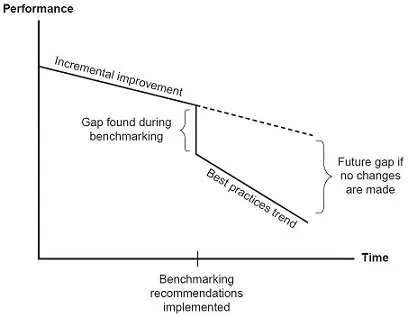
Benchmarking is defined as the process of measuring products, services, and processes against those of organizations known to be leaders in one or more aspects of their operations. Benchmarking provides necessary insights to help you understand how your organization compares with similar organizations, even if they are in a different business or have a different group of customers.
Benchmarking can also help organizations identify areas, systems, or processes for improvements either incremental improvements or dramatic improvements.
Technical Benchmarking
Technical benchmarking is performed by design staff to determine the capabilities of products or services, especially in comparison to the products or services of leading competitors. For example, on a scale of one to four, four being best, how do designers rank the properties of your organization’s products or services If you cannot obtain hard data, the design efforts may be insufficient, and products or services may be inadequate to be competitive.
Competitive Benchmarking
Competitive benchmarking compares how well or poorly an organization is doing with respect to the leading competition, especially with respect to critically important attributes, functions, or values associated with the organization’s products or services. For example, on a scale of one to four, four being best, how do customers rank your organization’s products or services compared to those of the leading competition? If you cannot obtain hard data, marketing efforts may be misdirected and design efforts misguided.
Benchmarking Procedure
Considerations
- Before an organization can achieve the full benefits of benchmarking, its own processes must be clearly understood and under control.
- Benchmarking studies require significant investments of manpower and time, so management must champion the process all the way through, including being ready and willing to make changes based on what is learned.
- Too broad a scope dooms the project to failure. A subject that is not critical to the organization’s success won’t return enough benefits to make the study worthwhile.
- Inadequate resources can also doom a benchmarking study by underestimating the effort involved or inadequate planning. The better you prepare, the more efficient your study will be.
BENIFITS:
In addition to helping companies become more efficient and profitable ,benchmarking has other benefits, too much as:
By identifying areas you wish to improve on in your business and benchmarking your existing performance against competitors, your business can strive to enhance your execution tenfold. Using benchmarking this way has allowed businesses to gain strategic advantages over competitors and grow industry averages.
- Monitor Performance
Benchmarking involves looking at current trends in data and projecting future trends depending on what you aim to achieve. In order to know you have been successful, benchmarking needs to be a continuous process. Monitoring performance is an inherent characteristic of it.
- Continuous Improvement
As well as monitoring performance, continuous improvement is an essential attribute of benchmarking. This is because the aim of benchmarking is to improve certain elements of a business. This improvement should not merely be something that improves once and is forgotten, but something that improves over time and is continuous.
- Planning and Goal Setting
Once benchmarking has been carried out, goals and performance metrics are set in order to improve performance. These goals are new, more competitive targets for a company but they must be achievable. If goals are unrealistic to achieve teams become demotivated and goals are destined to remain unfulfilled.
- Encourage Ownership
When companies look at their processes and metrics they need to ask hard questions to get all the answers they need. This includes talking to everyone in the business and understanding their roles. By asking these questions and gaining a better understanding of everyone’s role, ownership of processes and performance is encouraged. This means that employees will take pride in their job and the work they do. This pride leads to better performance and higher-quality end results.
1. Benchmark with presently available cars in the market for the following case.
Mr. D.S. Pughazhyendhii is a married man who lives in Bangalore which is a highly crowded city. His Family comprises five members including his wife, a five-year-old boy, his father, and his mother. He visits his native place Madurai which is 500kms away from Bangalore once a month. Also, he will be using his car to commute to his office. His budget falls between 8 to 10 lakhs on road. Please suggest to him options so that he will buy a good car for his family.
Note: Pughazhyendhii is fond of big cars
Selection of cars
1. Renault Triber

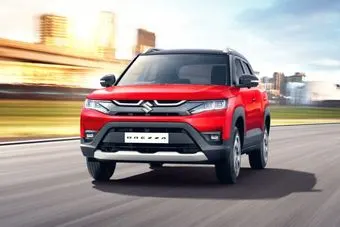
2. Maruti Brezza
3. Tata Nexon

4. Hyundai Venue

| Basic Information | RXZ EASY-R AMT Dual Tone | VXi | XM Diesel | S Plus Diesel |
|---|---|---|---|---|
| Brand Name |
Renault
|
Maruti
|
Tata | Hyundai |
| On Road Price |
Rs.9,59,866#
|
Rs.9,60,310#
|
Rs.9,39,444*
|
Rs.9,43,511#
|
| Offers & Discount |
2 Offers
|
|||
| User Rating |
4.3
|
4.5
|
4.4
|
4.5
|
| Finance Available (EMI) |
Rs.19,371
Check Now
|
Rs.20,841
Check Now
|
Rs.21,686
Check Now
|
Rs.22,199
Check Now
|
| Insurance |
Rs.40,850
|
Rs.41,340
|
Rs.49,553
|
Rs.49,220
|
| Service Cost (Avg. of 5 years) |
Rs.2,034
|
-
|
Rs.4,447
|
-
|
| Engine and Transmission | ||||
|---|---|---|---|---|
| Engine Type |
-
|
K15C Smart Hybrid
|
1.5l Turbocharged Revotorq Engine
|
1.5 U2 CRDi
|
| Displacement (cc) |
999
|
1462
|
1497
|
1493
|
| No Of Cylinder |
3
|
4
|
4
|
4
|
| Max Power (bhp@rpm) |
71.01bhp@6250rpm
|
101.65bhp@6000rpm
|
108.49bhp@4000rpm
|
98.56bhp@4000rpm
|
| Fuel & Performance | ||||
|---|---|---|---|---|
| Fuel Type |
Petrol
|
Petrol
|
Diesel
|
Diesel
|
| Mileage (City) |
15.0 kmpl
 |
17.0 kmpl
|
18.0 kmpl
|
|
| Mileage (ARAI) |
18.2 kmpl
|
20.15 kmpl
|
21.19 kmpl
|
-
|
| Fuel Tank Capacity |
40.0 (Litres)
|
48.0 (Litres)
|
44.0 (Litres)
|
45.0 (Litres)
|
|
View More
|
||||
| Suspension, Steering & Brakes | ||||
|---|---|---|---|---|
| Front Suspension |
Macpherson strut with lower triangle & coil spring
|
Mac Pherson Strut & Coil
|
Independent Lower Wishbone McPherson Strut with Coil Spring
|
McPherson strut with coil spring
|
| Rear Suspension |
Torsion beam axle
|
Torsion Beam & Coil Spring
|
Semi-Independent closed profile Twist beam with Coil Spring and shock absorber
|
Coupled torsion beam axle with coil spring
|
| Steering Type |
Electric
|
Electric
|
-
|
Power
|
| Steering Column |
Tilt
|
Tilt
|
-
|
Tilt
|
|
View More
|
||||
| Dimensions & Capacity | ||||
|---|---|---|---|---|
| Length (mm) |
3991
|
3995
|
3993
|
3995
|
| Width (mm) |
1739
|
1790
|
1811
|
1770
|
| Height (mm) |
1643
|
1685
|
1606
|
1617
|
| Ground Clearance Unladen (mm) |
182
|
-
|
209
|
-
|
|
View More
|
||||
| Comfort & Convenience | ||||
|---|---|---|---|---|
| Power Steering | ||||
| Power Windows Front | ||||
| Power Windows Rear | ||||
| Power Boot |
-
|
-
|
-
|
|
|
View More
|
||||
| Interior | ||||
|---|---|---|---|---|
| Tachometer |
-
|
|||
| Electronic Multi Tripmeter | ||||
| Leather Seats |
-
|
-
|
||
|
View More
|
||||
| Exterior | ||||
|---|---|---|---|---|
| Available Colors | +5 MoreT | +4 More | +3 More | +2 Mor |
| Body Type |
MUV
|
SUV
|
SUV
|
SUV
|
| Adjustable Headlights | ||||
|
View More
|
||||
| Safety | ||||
|---|---|---|---|---|
| Anti Lock Braking System | y | y | y | y |
| Brake Assist |
-
|
-
|
y | y |
| Central Locking | y | y | y | y |
| Power Door Locks | y | y | y | y |
|
View More
|
||||