Benchmarking
BENCHMARKING
Benchmarking is a process of measuring the performance of a company’s products, services, or processes against those of another business considered to be the best in the industry, “best in class.” The point of benchmarking is to identify internal opportunities for improvement. By studying companies with superior performance, breaking down what makes such superior performance possible, and then comparing those processes to how your business operates, you can implement changes that will yield significant improvements.
That might mean tweaking a product’s features to more closely match a competitor’s offering, or changing the scope of services you offer, or installing a new customer relationship management (CRM) system to enable more personalized communications with customers.
There are two basic kinds of improvement opportunities: continuous and dramatic.
Continuous improvement is incremental, involving only small adjustments to reap sizeable advances. Dramatic improvement can only come about through reengineering the whole internal work process.
STEP-BY-STEP BENCHMARKING
Benchmarking is a simple, but detailed, five-step process:
Choose a product, service, or internal department to benchmark.
Determine which best-in-class companies you should benchmark against, which organizations you’ll compare your business to.
Gather information on their internal performance, or metrics.
Compare the data from both organizations to identify gaps in your company’s performance.
Adopt the processes and policies in place within the best-in-class performers.
Benchmarking will point out what changes will make the most difference, but it’s up to you to actually put them in place.
In order to benchmark anything, you need to have quantitative data available to study.
That means breaking down internal processes to calculate performance metrics. Quantify everything, because only quantifiable information can be accurately compared.
BENEFITS
In addition to helping companies become more efficient and profitable benchmarking has mproving employee understanding of cost structures and internal processes
Encouraging team-building and cooperation in the interests of becoming more competitive
Enhancing familiarity with key performance metrics and opportunities for improvement company-wide
In essence, benchmarking helps employees understand how one small piece of a company’s processes or products can be the key to major success, just as one employee’s contributions can lead to a big win.
REQUIREMENT
Benchmark with presently available cars in the market for the following case.
Mr. D.S. Pughazhyendhii is a married man who lives in Bangalore which is a highly crowded
city. His Family comprises five members including his wife, five-year-old boy, his father, and
his mother. He visits his native place Madurai which is 500kms away from Bangalore once
in a month. Also, he will be using his car to commute to his office. His budget falls between
8 to 10 lakhs on road. Please suggest to him with options so that he will buy a good car for
his family.
Note: Pughazhyendhii is fond of big cars
In my view,
I would suggest Diesel Engine Vehicle, SUVs and Sedans is preferrable.
SUGGESTIBLE CARS
1. Tata Nexon
2. Hyundai Venue
3. Maruti Suzuki Vitara Brezza
4. renault kiger
1. Tata Nexon

Key Specification of Nexon Top Model
| Emission Norm Compliance | BS VI |
| Mileage | 22.07 Kmpl |
| Engine Displ. | 1497 cc |
| Transmission | Automatic |
| Fuel Type | Diesel |
| Boot Space | 350 Liters |
| Power Windows | Front and Rear |
| Airbags | Driver and Passenger |
| ABS | Yes |
| Central Locking | Yes |
2. Hyundai Venue
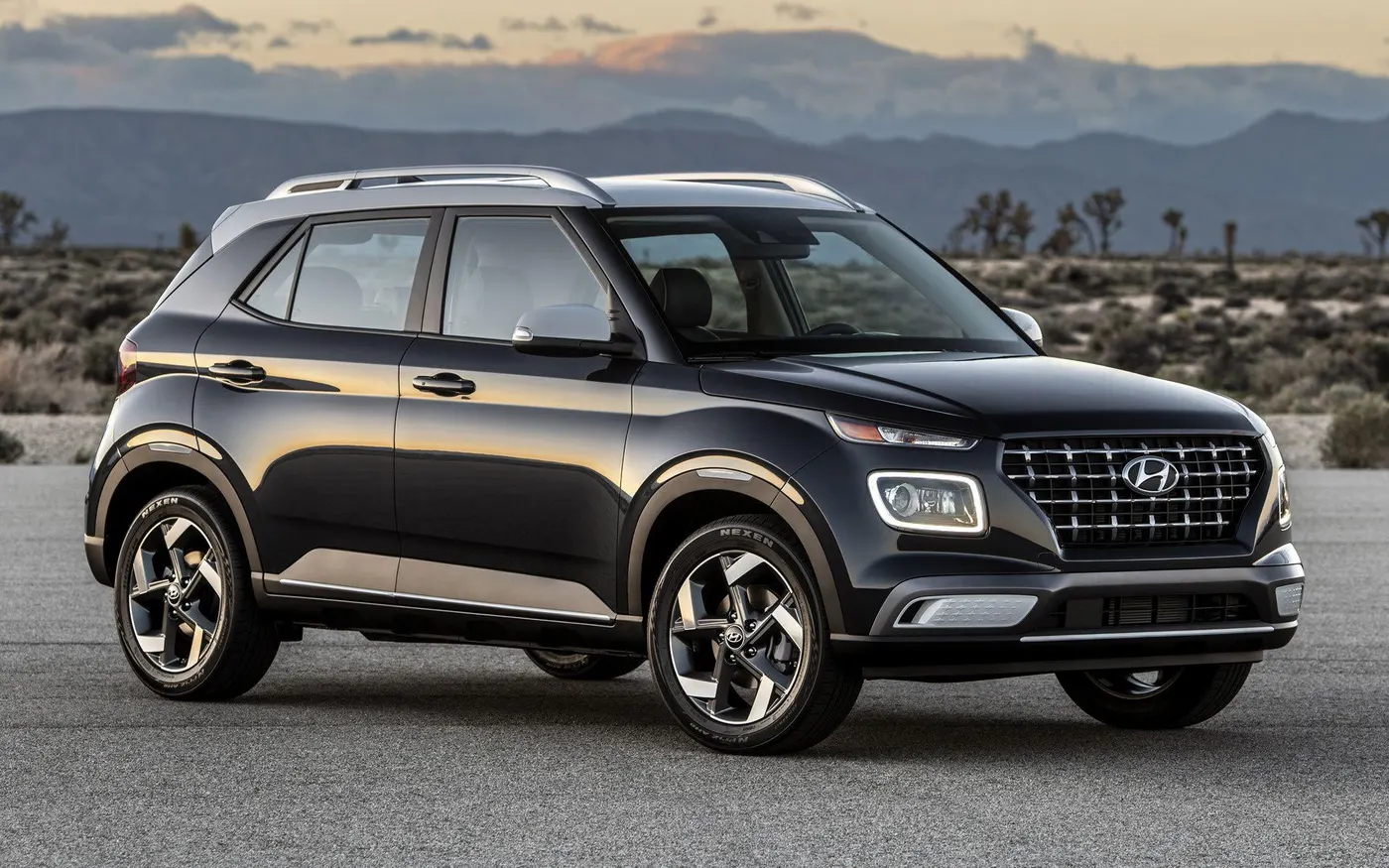
Pros:
1. Ease of driving on offer
2. Three different engine options
3. Feature loaded
Cons:
1. Isn't as big as rivals
2. No diesel automatic on offer
3. 1.2 petrol is weak on punch
MODELS /
SPECIFICATIONS HYUNDAI VENUE
ARAI Mileage 18.14kmpl
Engine Displacement (cc) 998
Max Torque (nm@rpm) 171.6Nm@1500-4000rpm
Transmission Type Automatic
Max Power (bhp@rpm) 118.35bhp@6000rpm
Seating Capacity 5
Boot Space (Litres) 350
Body Type SUV
Safety 4 stars NCAP rating
3. Maruti Suzuki Vitara Brezza
Key Specifications of Maruti Vitara Brezza
| ARAI Mileage | 17.03 kmpl |
| City Mileage | 17.3 kmpl |
| Fuel Type | Petrol |
| Engine Displacement (cc) | 1462 |
| No. of cylinder | 4 |
| Max Power (bhp@rpm) | 103.26bhp@6000rpm |
| Max Torque (nm@rpm) | 138nm@4400rpm |
| Seating Capacity | 5 |
| TransmissionType | Manual |
| Boot Space (Litres) | 328 |
| Fuel Tank Capacity | 48.0 |
| Body Type | SUV |
4.renault kiger
Key Specifications of Renault Kiger
| ARAI Mileage | 18.24 kmpl |
| City Mileage | 14.0 kmpl |
| Fuel Type | Petrol |
| Engine Displacement (cc) | 999 |
| No. of cylinder | 3 |
| Max Power (bhp@rpm) | 98.63bhp@5000rpm |
| Max Torque (nm@rpm) | 152Nm@2200-4400rpm |
| Seating Capacity | 5 |
| TransmissionType | Automatic |
| Boot Space (Litres) | 405 |
| Fuel Tank Capacity | 40.0 |
| Body Type | SUV |
| Ground Clearance Unladen | 205 |