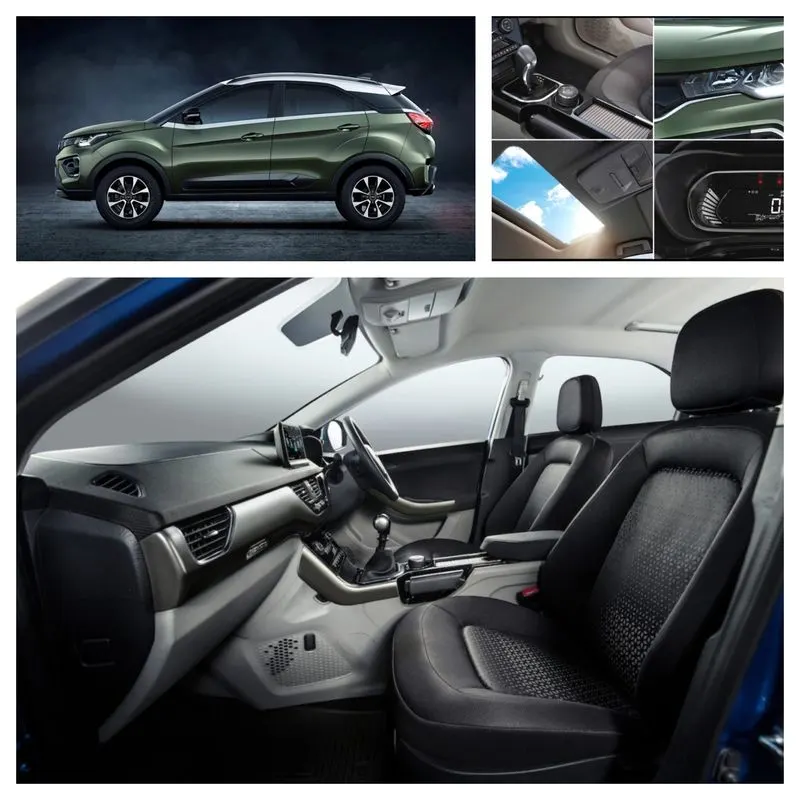
Benchmarking
BENCHMARKING
Benchmarking is the continuous process of measuring products, services and practices against the competitors and also against the previous versions of the products, services or practices.
AUTOMOTIVE BENCHMARKING
Automotive benchmarking is the process of studying, comparing and analyzing similar vehicles that fall under the similar competitive category. It involves making selective decisions for a concept vehicle based on comparison results of various vehicle factors.
Benchmarking in the automotive sector is usually performed in the first stage i.e.; predesign and development stage of the vehicle development process
Benchmarking is again of two types, generally referred to as,
- Benchmarking I
- Benchmarking II
Benchmarking I
Benchmarking I is a step that is carried out in the predesign and development stage once concept preparation is completely done. Some of the functional elements of benchmarking include,
- Clear definition of type/segment of the vehicle
- Clear definition of target competitors
- Outlining the price
- Defining key specifications
- Selection of key features of the segment
Benchmarking II
Benchmarking II is the last final step in predesign and development stage. Benchmarking II is the final and part/component-specific comparison of the vehicle we are going to develop with the selected competitors. We can say Benchmarking II is a more magnified and detailed version of Benchmarking I.
For example, comparing a specific property of the vehicle like its weight with the competitors to improve the performance and fuel efficiency.
IMPORTANCE OF AUTOMOTIVE BENCHMARKING
A specific, distinctive vehicle attribute branding is essential to make cars unique and competitive. As a first step on the way, vehicle manufacturers have to benchmark their vehicles in the competitive environment in order to understand and strengthen or improve the potential of their vehicles.
GIVEN CASE:
Mr. D.S. Pughazhyendhii is a married man who lives in Bangalore which is a highly crowded city. His Family comprises five members including his wife, a five-year-old boy, his father, and his mother. He visits his native place Madurai which is 500kms away from Bangalore once a month. Also, he will be using his car to commute to his office. His budget falls between 8 to 10 lakhs on road. Please suggest to him options so that he will buy a good car for his family.
Note: Pughazhyendhii is fond of big cars
FACTORS DECIDING CAR SELECTION
- Lives in Bangalore (A crowded city)
- Has a family of 5 members
- Visits his native once a month (500 km away)
- Uses to commute to work every day
- Budget: 8 – 10 Lakhs (On-road)
- Fond of big cars
CASE ANALYZATION SUMMARY
Segment
Mr. D.S. Pughazhyendhii has a family of 5 members including a 5-year-old kid. So, the car must be spacious enough to accommodate all the members of the family without any hassle. In addition to that, he is also keen on getting a big car because of his fondness for that segment of cars. So, the viable option to look towards is a Compact Sports Utility Vehicle (SUV) or a Multi Utility Vehicle (MUV).
Transmission
He lives in Bangalore which is a crowded, hustle-bustle kind of city with a lot of traffic. It has also been mentioned that he will be using the car to commute to his workplace. Most workplaces operate roughly between 8.00 AM and 6.00 PM which are peak hours for traffic. So, keeping the traffic in mind, an AMT transmission may be preferable for a smoother riding experience. But the decision for the choice of transmission also depends on a lot of other factors like the on-road price and fuel economy. Usually, automatic transmissions fall on the pricier side of the automobile spectrum as their engineering and development are comparatively difficult. So, going for a manual transmission would be a monetarily clever choice here.
Variant
He visits his native place Madurai once every month which is 500 kilometres away in addition to his daily commute to work. If we assume that his workplace is roughly 5 km away from where he lives and he drives the same distance on weekends as well, the total distance covered on average adds up to (1200~1300) kilometres/month i.e.; (40~44) km/day on avg. which is under (80~100) km/day on avg. So, we can go for a petrol variant. If the daily average starts touching (80~100) km then one should start considering diesel variants as they provide better fuel economy and longer life than petrol variants over that range. A petrol car might have higher fuel costs, around (600rs. – 800rs.) more on fuel every month relative to diesel cars, in this case (considering today’s fuel costs). But diesel cars cost more. In this case, following all the budget and other necessary constraints, a diesel variant is eliminated because the latest on-road price in Bangalore is exceeding 10 lakhs for almost all models and variants.
Safety
As a family car, one of the important features to be keenly considered before deciding on the car is safety. The car should be having at least a 4-star rating on the Global NCAP rating, most possibly even a 5-star rating as the family has a child of 5 years of age. Safety is not something that one can compromise upon when it comes to purchasing a family car.
Service Center Availability
The chosen brand of the car must have a service facility within the city or within a close range of the city so that it will be easy for a customer to perform regular servicing and also for repair purposes in case of any mechanical or technical failures.
These cars are selected considering the discussed points in the above summary,
- Tata Nexon XE
- Kia Sonet HTK 1.2
- Hyundai Venue E 1.2 Petrol
- Maruti Suzuki Brezza Lxi
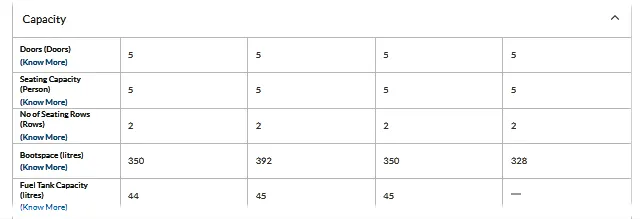
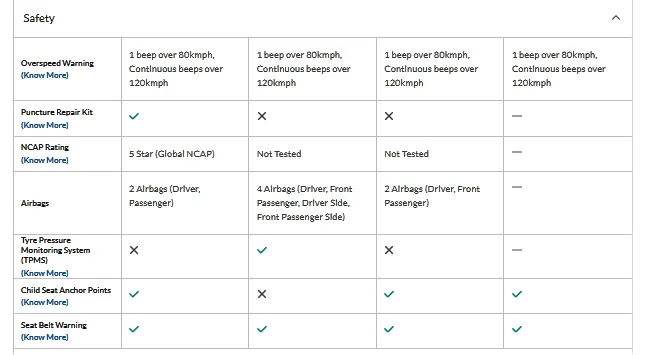
A detailed comparison of these 4 cars is given below,

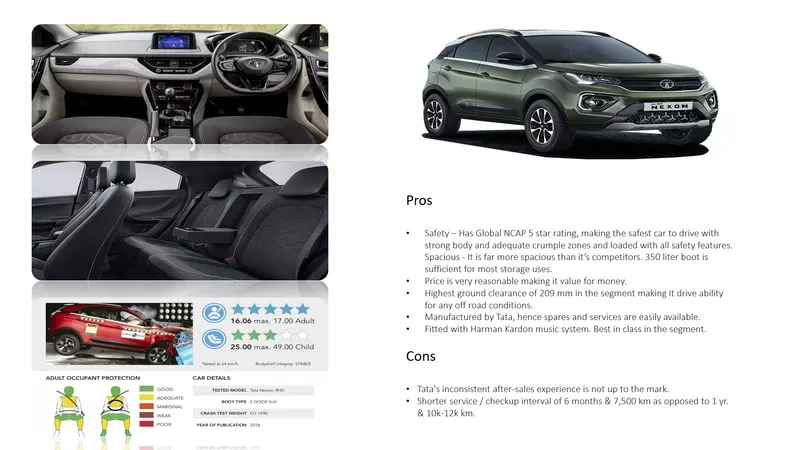
Pros and Cons of Each Vehicle
Tata Nexon XE
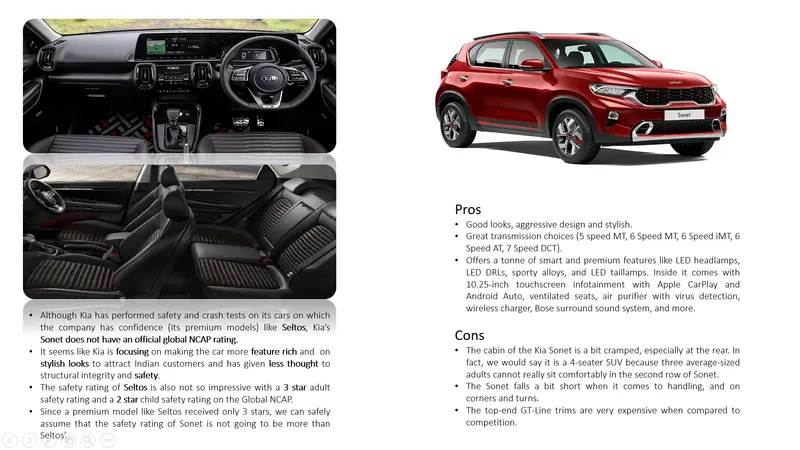
Kia Sonet
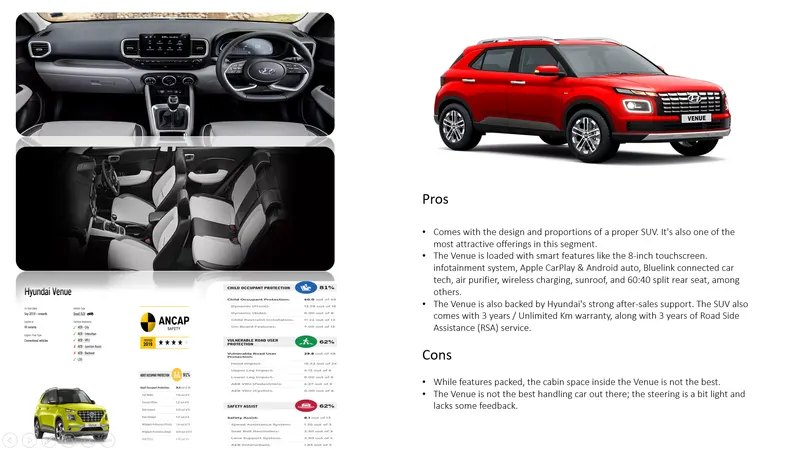
Hyundai Venue
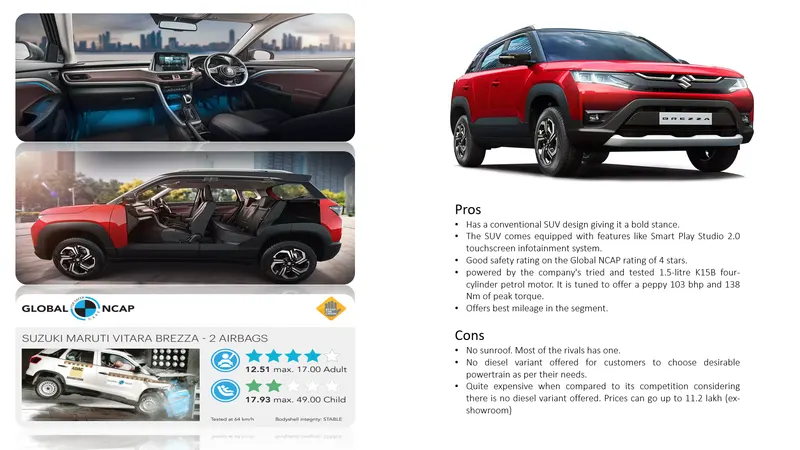
Maruti Suzuki Brezza
After analyzing the complete vehicle specifications of all the four cars selected and also carefully comparing the pros and cons of the vehicles with respect to the needs of Mr. D.S. Pughazhyendhii, the ideal choice of vehicle to go for would be the TATA NEXON.
- Tata Nexon has a large cabin space which would easily accommodate all 5 members of the family without any hassle or discomfort, unlike other compact SUVs which are comparatively a bit cramped.
- The Tata Nexon has a 350-litre boot capacity which would satisfy all the travel storage needs of Mr. D.S. Pughazhyendhii and his family during his trips to his native every month.
- The safest car in the segment. Has a 5-star Global NCAP rating for adult safety and a 3-star for child safety. As safety comes above anything else when choosing a family car, Tata Nexon just proves itself to be the right choice again by providing the best safety without breaking the bank.
- Has the most powerful engine of all the cars in comparison. Equipped with a 1.2L turbocharged revotron petrol engine which produces BHP of 118 at 5500 RPM and a max torque of 170Nm at 1750 RPM
- Provides a decent mileage of 17.2kmpl(ARAI) and the city mileage also stands at a decent value of 14.8kmpl for the selected XE variant.
- Provided with a very good infotainment system and the best-in-class Harmon Kardon sound system.
VERDICT
The Tata Nexon XE is the car selected for the case of Mr. D.S. Pughazhyendhii and his family after studying and understanding his needs and preferences through performing careful benchmarking of possible competitive options available in the market under the provided budget constraints.