Benchmarking of Automobiles
BENCHMARKING OF AUTOMOBILES
Objective:
The main objective of this report is to suggest a car which is currently available in the market and best suited for the given case through benchmarking.
Case:
Mr. D.S. Pughazhyendhii is a married man who lives in Bangalore which is a highly crowded city. His Family comprises five members including his wife, a five-year-old boy, his father, and his mother. He visits his native place Madurai which is 500kms away from Bangalore once a month. Also, he will be using his car to commute to his office. His budget falls between 8 to 10 lakhs on road. Please suggest to him options so that he will buy a good car for his family.
Note: Pughazhyendhii is fond of big cars
Description:
In predesign and development stage of vehicle development process, benchmarking plays a vital role to initiate the new project.
Benchmarking:
Benchmarking is the practice of comparing business processes and performance metrics to industry bests and best practise from other companies. Dimensions typically measured are quality, time and cost.
Benchmarking is used to measure performance using a specific indicator (cost per unit of measure, productivity per unit of measure, cycle time of X per unit of measure or defects per unit of measure) resulting in a metric of performance that is then compared to others.
Product benchmarking, also referred to as “best practice benchmarking” is an evaluation process of a manufacture that is measured against the process of its competitors or peers within a given industry. The goal is to create and implement improvement plans and best practices to increase performance in the production lifecycle, and/or other manufacturing and business processes and practices. By discovering the best achievable performance, process gaps can be eliminated.
While product benchmarking in the automotive industry traditionally involves other manufacturers, its primary purpose is to positively impact internal processes. Consequently, benchmarking can be based on internal measurement where co-operative manufacturing process benchmarks of other manufactures is a secondary measure. This goes to the heart to understanding the purpose and use of benchmarking. Often benchmarking is focused on the manufacturing process itself to,
- Improve quality
- Decrease manufacturing time
- Reduce scrap and rework
- Increase production
Clearly in any benchmarking study, the choice of which attributes to measure is of paramount importance. This centres on a set of performance measures and often how closely a plant adhered to the “lean production model”. This would involve three primary areas including productivity, quality and time.
The vehicles chosen for benchmarking are comes under the automatic transmission vehicles segment. Those vehicles are,
- Tata Punch Adventure AMT
- Toyota Glanza S AMT
- Hyundai Aura S 1.2 AMT Petrol
- Maruti Suzuki Dzire VXi AGS
- Renault Triber RXT EASY-R AMT.
I have chosen the automatic transmission segment, because most of the people likes automatic cars rather than the manual cars. This is because of ease of handling the vehicles in city traffics.
1.TATA Punch:
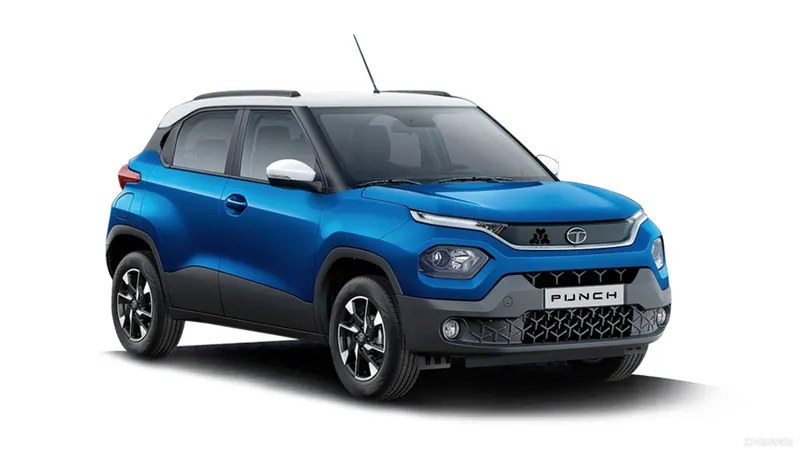
Manufacturer: TATA Motors Cars is a division of the India - based automaker Tata motors which produces passenger cars under the brand name Tata motors. It is currently the 3rd largest car manufacturer in India in terms of sales after Maruti Suzuki and Hyundai Motors. Tata motors offers most safest cars in India as crash tested by the global NCAP. Some of them includes Tata punch, Tata nexon, Tata altroz, Tata tigor and Tata Tiago.
Model description: Tata punch is a subcompact crossover SUV manufactured since 2021. Positioned as the smallest SUV of the brand below the Nexon, the punch is built on ALFA- ARC platform shared with the Altroz hatchback.
- It is powered by a 1.2 litre revotron three-cylinder engine which shared with the altroz, tiago and tigor.
- Tata punch is a front-wheel-drive, front engine car which was crash tested by global NCAP in 2021 in its most basic safety specification of two airbags, anti-lock brakes and ISOFIX anchorages. It achieved the maximum of five star rating for adult protection.
- It has the price range from Rs. 7.17 lakhs to Rs.11.56 lakhs in four variants that include pure, adventure, accomplished and creative. Out of these punch adventure AMT comes under the given budget range of 8-10 lakhs. And it also has 2 more models in this budget range and variant.
- The specifications and features are compared with all the following models in the benchmarking table to make a decision or come to an conclusion.
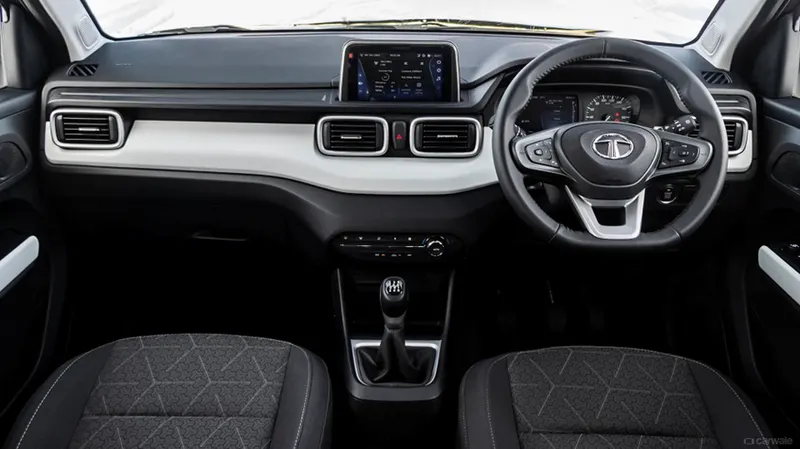
Dashboard.
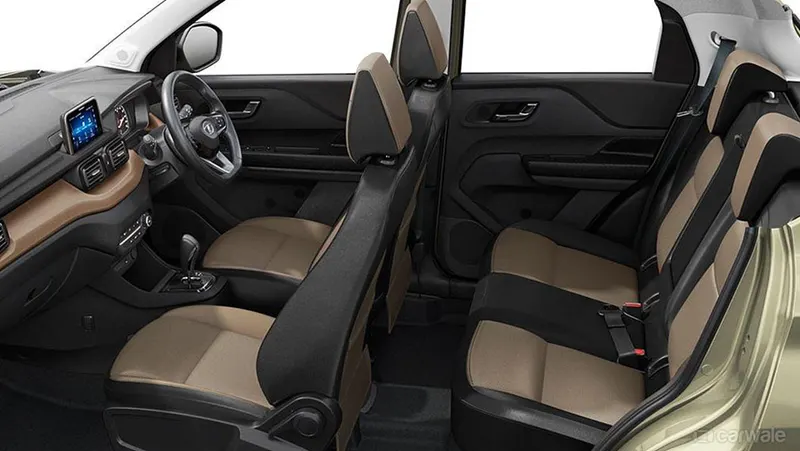
Cabin space.
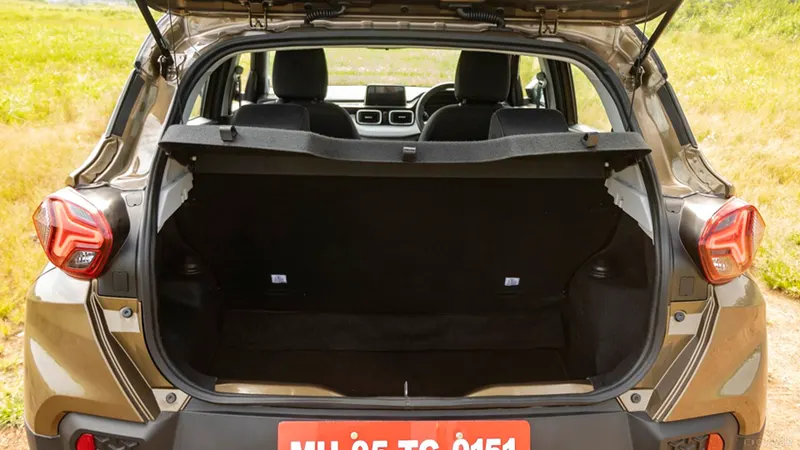
Boot space.
Pro’s:
- It has 5-star global NCAP rating in the terms of safety.
- It has good ground clearance of 187mm best suited for city roads.
- Ride quality is good.
- The 1.2 litre revotron engine produces 84bhp and 113 Nm of torque gives its best performance in subcompact SUV segment.
- The automatic transmission with 5 gears has manual override option gives the advantages to overtake other vehicles in highways.
- It has good legroom and headroom.
Con’s:
- Mileage wise it gives only 18.8 kmpl which is less compared to the following models and poor highway mileage of 15.89 kmpl and city mileage of 14.42 kmpl.
- Average boot space of 366 litres was not enough for a family.
- Tight shoulder room for three at the back.
- Kerb weight of 1010 kg reduces the fuel efficiency.
- It has driving range of 696 km, again it is less compared to the following models.
- There is no option for fuel, it comes only with petrol variant.
- No charging port or cup holders for rear seat passengers.
2.Toyota Glanza:
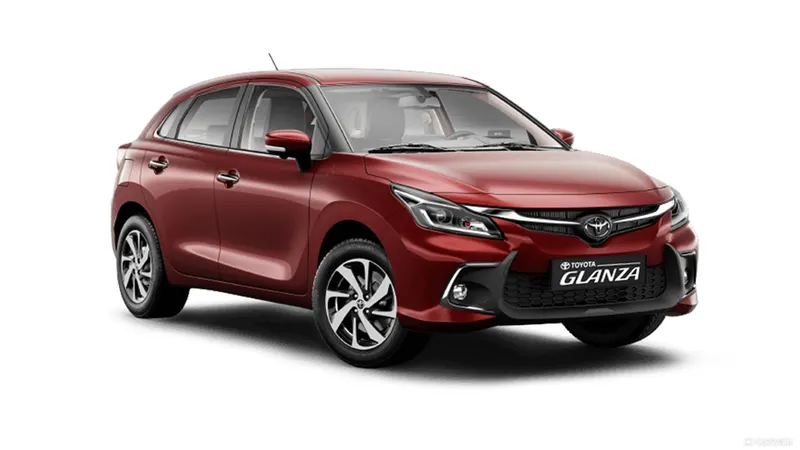
Manufacturer: Suzuki Motor Corporation is a Japanese multinational corporation, head quartered in Minami-ku, Hamamatsu, Japan. Suzuki manufactures automobiles, motorcycles, all-terrain vehicles (ATVs), outboard marine engines, wheel chairs and a variety of other small internal combustion engines. Suzuki Motor Corporation offers affordable cars in the budget segments for Indian customers through its subsidiary Maruti Suzuki India Limited. Suzuki Baleno is a subcompact car produced by the Suzuki in India and marketed by Toyota as the Toyota Glanza since June 2019.
Model description: Toyota Glanza is a subcompact car with a hatchback body style which is marketed by Toyota in india as the Toyota glanza. The original manufacturer is Suzuki, they launched Suzuki baleno in September 2015.
- It is powered by a 1.2L VVT four-cylinder engine, which produce 88bhp and 113 Nm of torque.
- Toyota Glanza is a front- engine, front-wheel-drive car.
- Toyota Glanza was not tested by the global NCAP and so it has no safety ratings.
- The price range of Toyota Glanza starts from Rs.7.90 lakhs to Rs.11.89 lakhs in four variants including E, S, G and V. out of these Toyota glanza S AMT comes under the given budget range of 8-10 lakhs. It has only one model in this budget range.
- The specifications and features are compared with all the following models in the benchmarking table to make a decision or come to a conclusion.
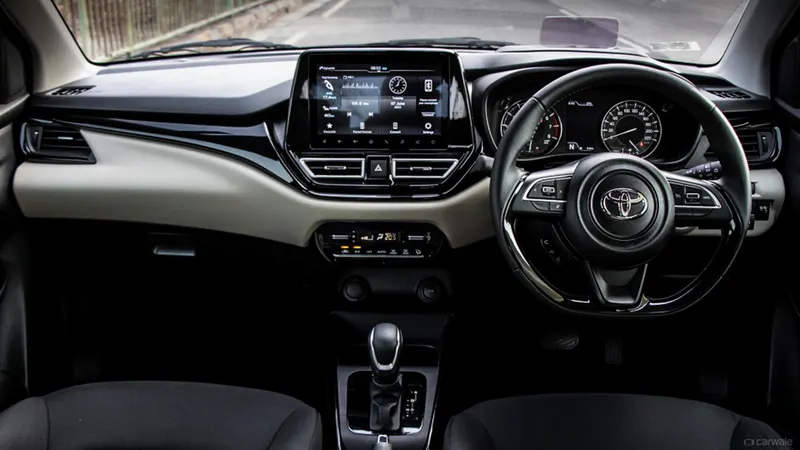
Dashboard.
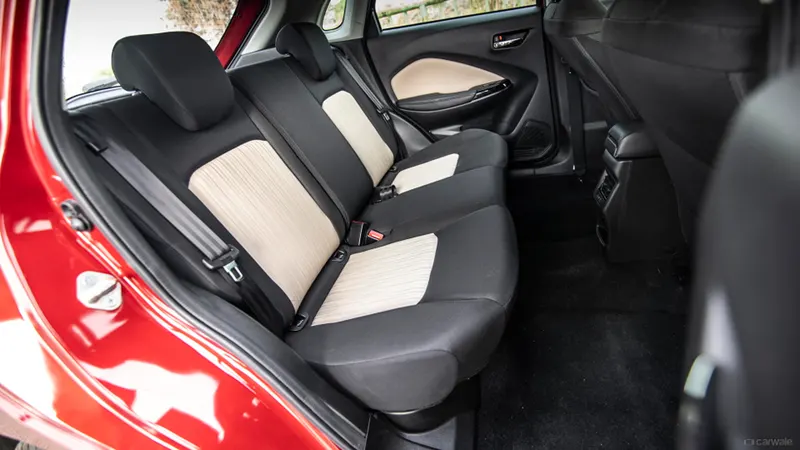
Rear seats.
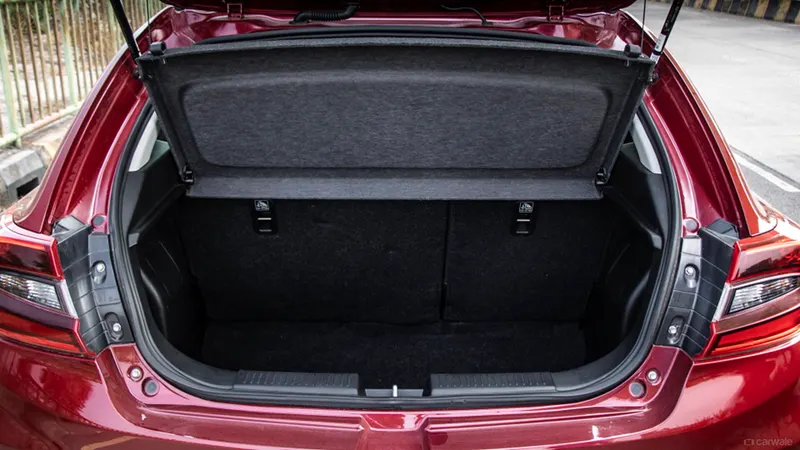
Boot space.
Pro’s:
- The cabin space is good with enough legroom.
- The performance of this model is good when compared to Tata punch, Hyundai aura and Renault triber.
- The kerb weight is 935 kg which is low compared to Tata punch and Hyundai aura.
- Also has good ground clearance.
- The driving range is 849 km, this gives more advantage for this model than the Tata punch, Hyundai aura and Renault triber.
Con’s:
- Poor boot space.
- Not tested by global NCAP gives no star for safety.
- Poor head room.
- There is no manual override option in automatic transmission system.
- There are no other options to look in this budget range.
- Priced considerably more than Tata punch, Hyundai aura, Maruti Suzuki dzire and Renault triber.
3.Hyundai Aura:
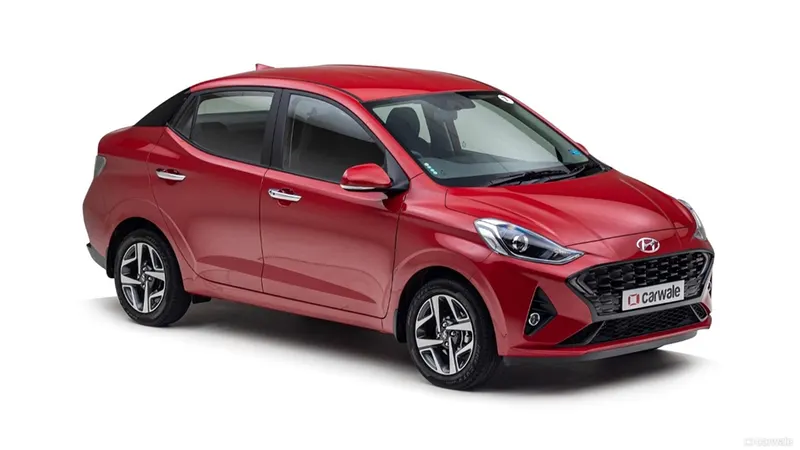
Manufacturer: Hyundai Motor Company, often abbreviated to Hyundai motors and commonly known as Hyundai, is a south Korean multinational automotive manufacturer headquartered in seoul, south korea. Hyundai Motor India limited is currently the second largest auto exporter from India.
Model description: Hyundai aura is a subcompact car. It is a sedan based on third generation Hyundai i10 (Hyundai Grand i10 Nios in India). The aura was launched on 21 January 2020 in India.
- Hyundai aura is an evolution of the Xcent.
- It is powered by a 1.2 kappa petrol four-cylinder engine, which produce 82bhp and 114 Nm of torque.
- Hyundai aura is a front engine, front-wheel-drive car.
- It is tested by the global NCAP and achieved 2-star rating for adult safety.
- The price range of Hyundai aura starts from Rs.7.43 lakhs to Rs.11.51 lakhs in 12 variants and it has also petrol and diesel engine options. Out of those variants Aura S 1.2 AMT petrol comes under the given budget range of 8-10 lakhs. It has no other options for AMT in this budget range.
- The Hyundai aura is well equipped with comfort features such as wireless charging, rear AC vent, rear centre armrest.
- The specifications and features are compared with all the following models in the benchmarking table to make a decision or come to a conclusion.
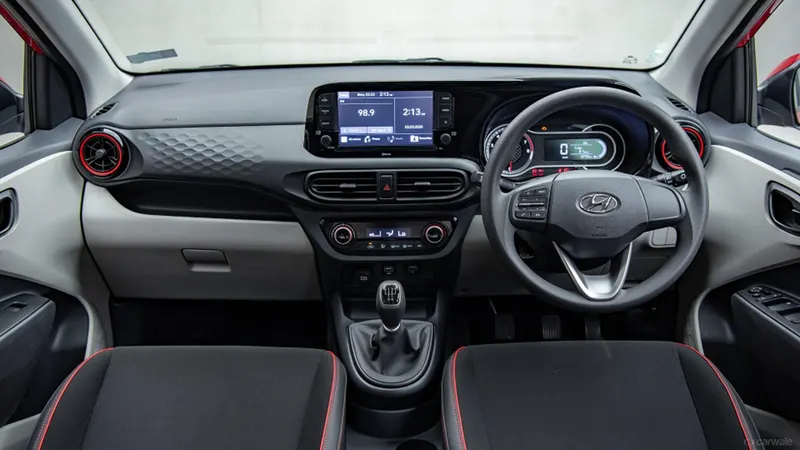
Dashboard.
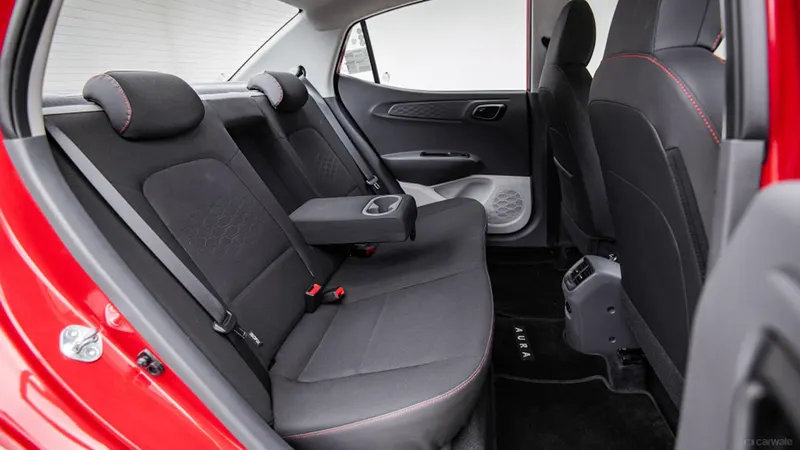
Rear seats.
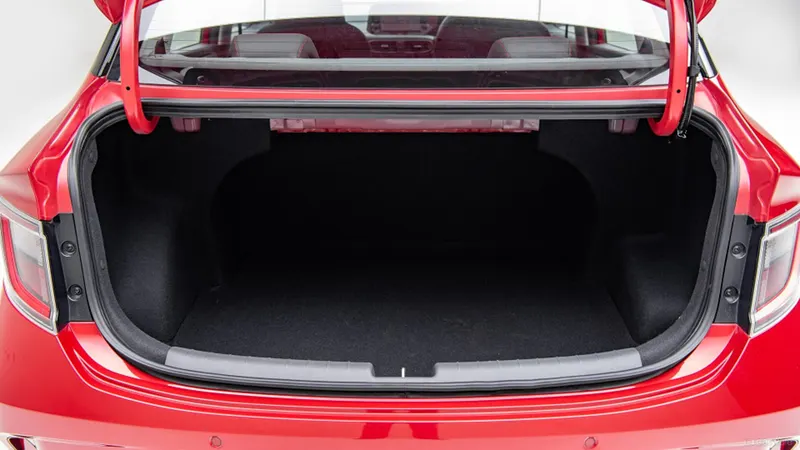
Boot space.
Pro’s:
- The mileage was good compared to Tata punch and Renault triber.
- With its 1.2 kappa petrol engine it gives required power and performance.
- The automatic transmission allows the manual override option.
- In safety it posses 2-star and also has child seat anchor points.
- The boot space is good enough with 402 litres capacity.
- The legroom is good and the thigh support gives comfort for long journeys.
Con’s:
- The kerb weight is 1030-1050 kg, it is way higher than the other models which affects the fuel efficiency.
- There is no options to pick in this segment within the budget.
- It has only petrol variant for automatic transmission (AMT) segment.
- In high-speed ride it is bouncy, this gives a drawback for this model.
- The head room for tall persons is not good.
4.Maruti Suzuki Dzire:
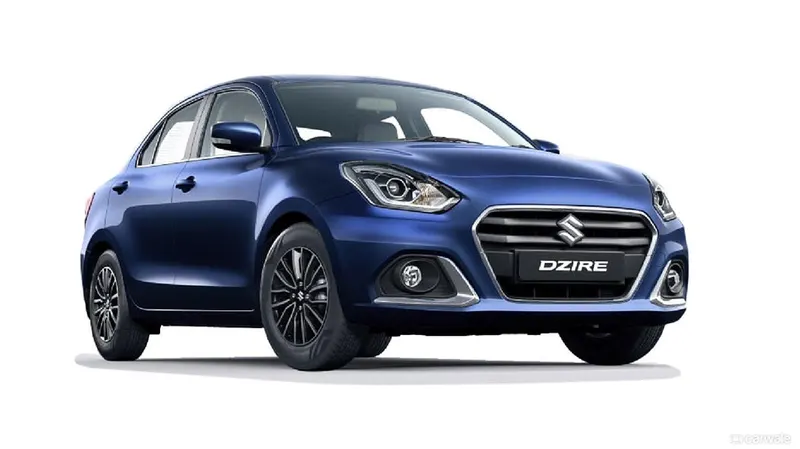
Manufacturer: Suzuki Motor Corporation is a Japanese multinational corporation, head quartered in Minami-ku, Hamamatsu, Japan. Suzuki manufactures automobiles, motorcycles, all-terrain vehicles (ATVs), outboard marine engines, wheel chairs and a variety of other small internal combustion engines. Suzuki Motor Corporation offers affordable cars in the budget segments for Indian customers through its subsidiary Maruti Suzuki India Limited.
Model description: the Suzuki dzire is a subcompact sedan made by Suzuki. It was developed as a sedan variation of the swift hatchback. The dzire is built on HEARTECT B platform.
- It is powered by 1.2L dual jet four-cylinder engine, which produce 89bhp and 113 Nm of torque.
- Suzuki dzire is a front engine, front-wheel-drive car.
- It is tested by the global NCAP and achieved 2-star rating for adult safety.
- The price range of Maruti Suzuki dzire starts from Rs.7.66 lakhs to Rs. 11.19 lakhs in four variants that include LXi, VXi, ZXi and ZXi+. Out of these Dzire VXi AGS comes under the given budget range of 8-10 lakhs. It has no other option for AMT in this budget range.
- The specifications and features are compared with all the following models in the benchmarking table to make a decision or come to a conclusion.
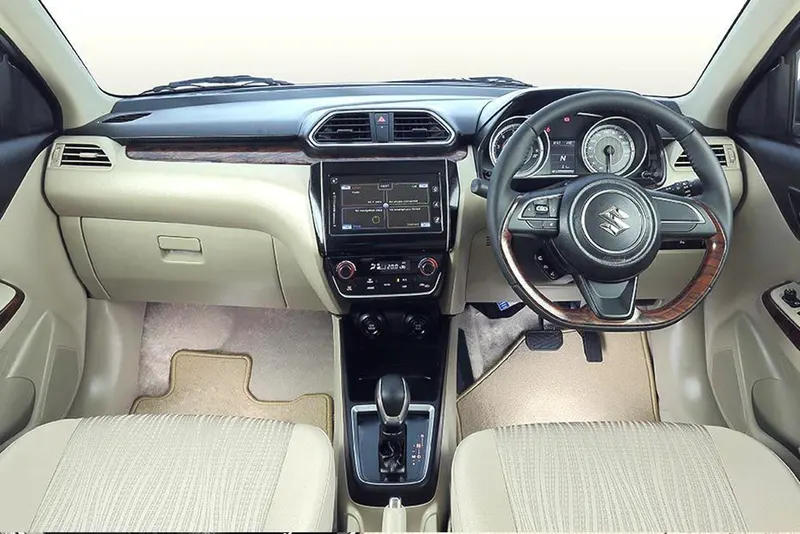
Dashboard.
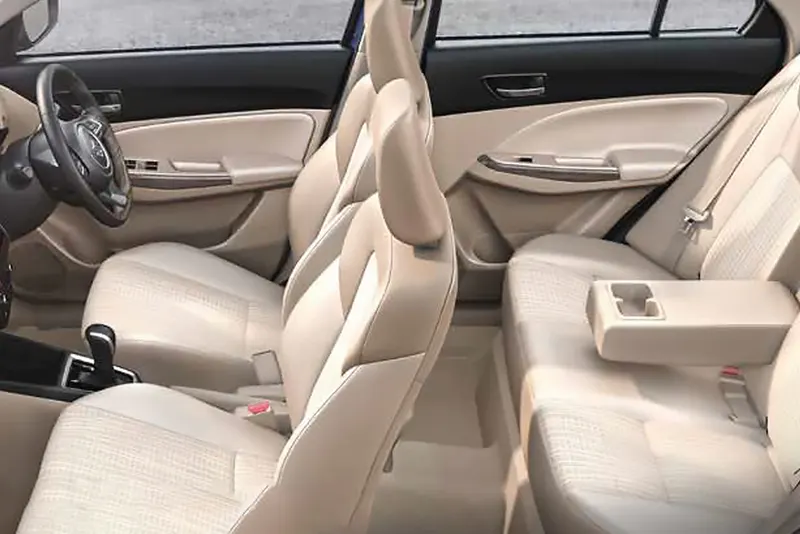
Cabin space.
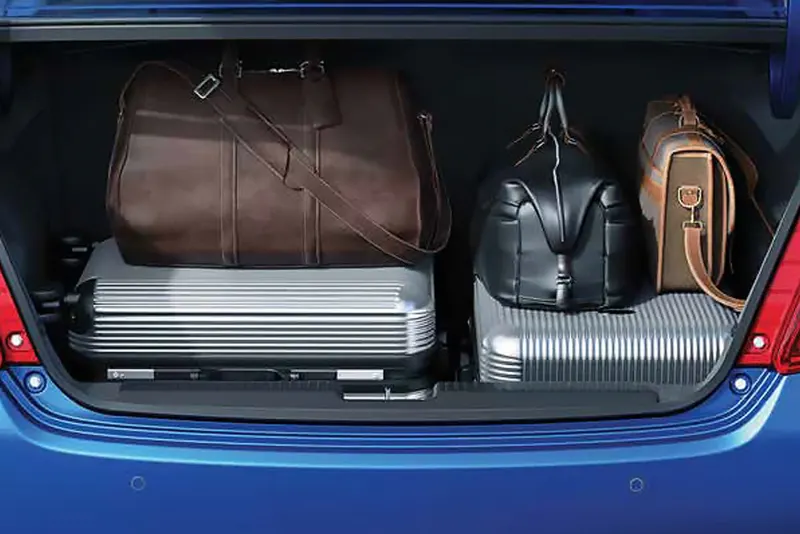
Boot space.
Pro’s:
- The mileage of 24.1 kmpl is too good for city use and long journeys.
- The 1.2 dual jet engine gives enormous power and performance for the vehicle.
- Again, the driving range is higher than the other models in the list.
- The automatic transmission gives the manual override option.
- The kerb weight of 892 kg is less than the other models and it boosts the fuel efficiency.
- It has secured 2-star and child seat anchor points in terms of safety.
- The boot space of 378 litres is comparatively good.
Con’s:
- Bad head room for tall passengers and driver.
- Ground clearance is comparatively low.
- No options for choosing the fuel type in variants.
- Price is comparatively high.
5.Renault Triber:
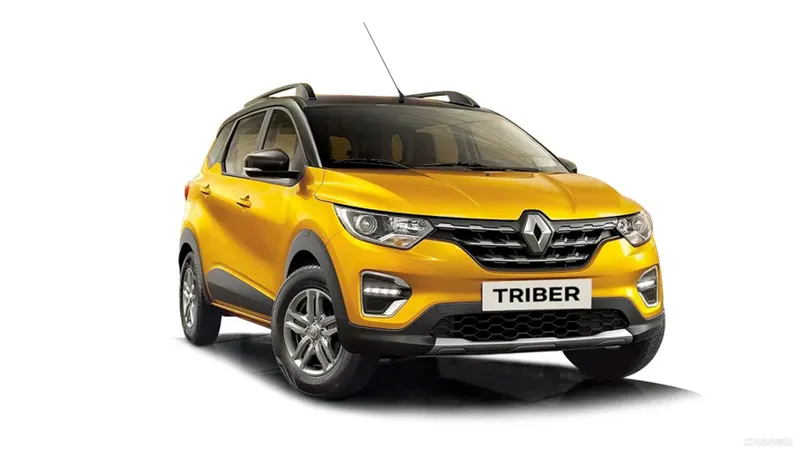
Manufacturer: Renault Group is a French multinational automobile manufacturer established in 1899 headquartered in Boulogne, France. The company produces a range of cars and vans, and in the past has manufactured trucks, tractors, tanks, buses/coaches, aircraft and aircraft engines and auto rail vehicles.
Model description: the Renault triber is a mini MPV with three-row seating produced by the French car manufacturer Renault through its Indian subsidiary Renault India. It was introduced in India on 19 June 2019.
- It is powered by a 1.0 litre three-cylinder energy engine which produce 71bhp and 96 Nm of torque.
- The triber is built on top of the CMF-A platform like the kwid.
- Renault triber is a front engine, front-wheel-drive car.
- The Indian-manufactured triber was tested in its most basic safety specification for India (double frontal airbags, no ISOFIX) by global NCAP and secured 4-star rating for adult occupant protection and 3-stars for child occupant protection.
- The price range of Renault triber starts from Rs.7.13 lakhs to Rs.10.17 lakhs in four variants that includes RXE, RXL, RXT and RXZ. Out of these Renault triber RXT EASY-R AMT comes under the given budget range of 8-10 lakhs. It has 2 more options in variants within the budget range.
- The third row can be removed altogether to liberate up to 625 litres of boot space.
- The specifications and features are compared with all the following models in the benchmarking table to make a decision or come to a conclusion.
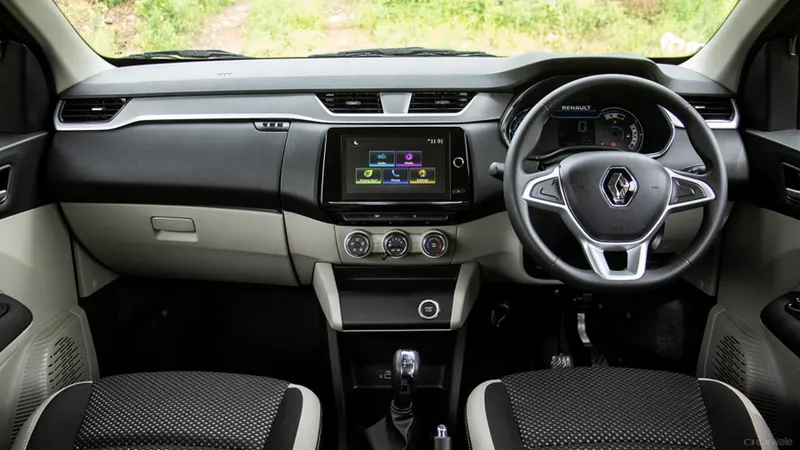
Dashboard.
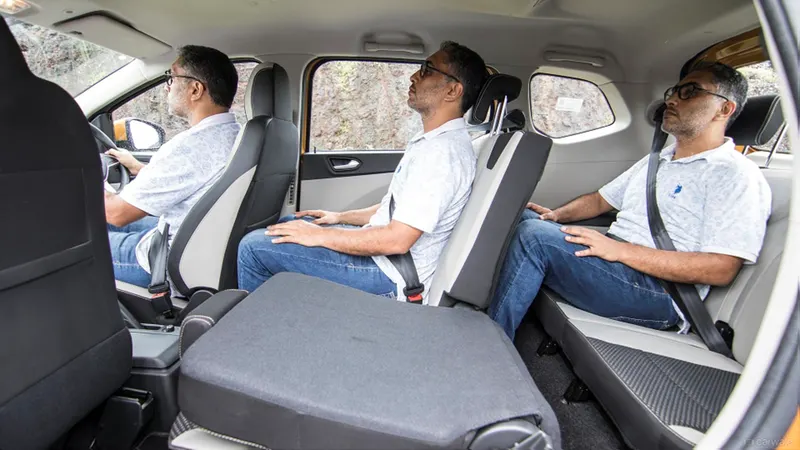
Cabin space.
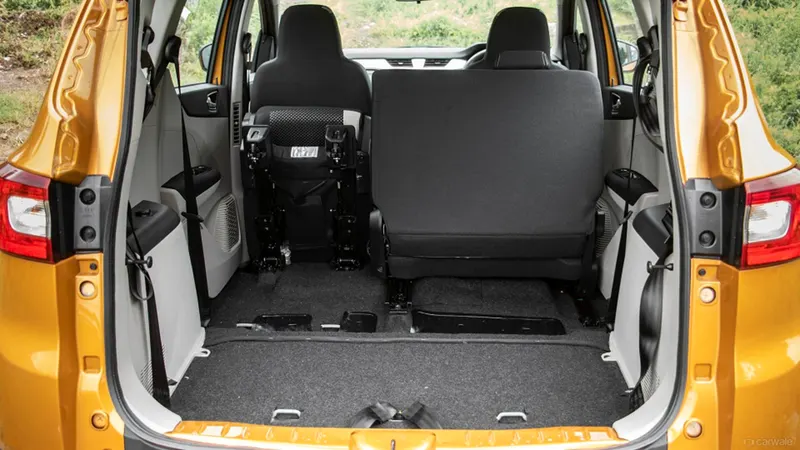
Boot space.
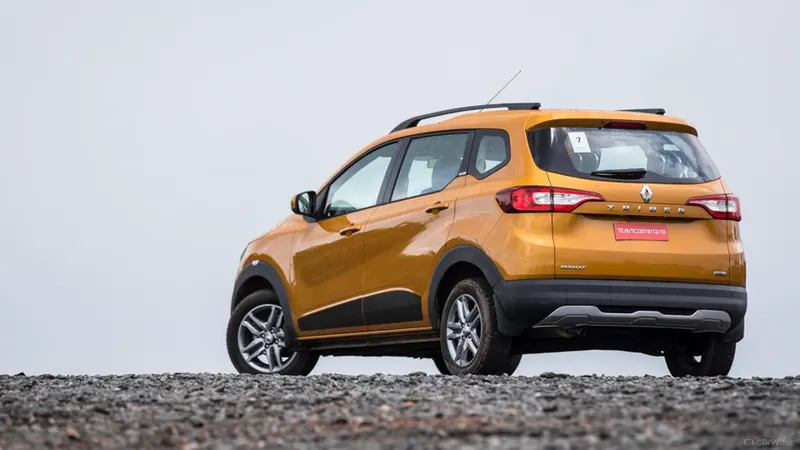
Pro’s:
- We get a MUV in this budget segment.
- It has 3-seating rows which accommodates 7 persons.
- The third row is foldable which gives enormous boot space of 625 litres capacity.
- It has 2 more options in variants.
- The ground clearance is comparatively high with 182 mm clearance.
- It secured 4-star global NCAP rating in terms of safety.
- The comfort and convenience features are good in terms of seats, practicality and space.
- It has two glove-boxes and big front door pockets which is designed well to hold large bottles.
Con’s:
- The mileage and driving range is comparatively low.
- Poor legroom for passengers in third row.
- The 1.0 litre energy engine provides low power and performance when compared to other models in the list.
- No child seat anchor points.
- It has only petrol variant, there is no other option.
Benchmarking table:
|
Cars in automatic transmission segment for benchmarking |
||||||
|
Models in various body types |
TATA Punch Adventure AMT |
Toyota Glanza S AMT |
Hyundai Aura S 1.2 AMT Petrol |
Maruti Suzuki dzire VXi AGS |
Renault triber RXT EASY-R AMT |
|
|
Specifications & Features |
On-road price (BANGALORE) |
₨.8.86 lakhs |
₨.9.55 lakhs |
₨.9.03 lakhs |
₨.9.50 lakhs |
₨.9.26 lakhs |
|
Engine |
1199cc, 3 cylinders inline, 4 valves/cylinder, SOHC |
1197cc, 4 cylinders inline, 4 valves/cylinder, DOHC |
1197cc, 4 cylinders inline, 4 valves/cylinder, DOHC |
1197cc, 4 cylinders inline, 4 valves/cylinder, DOHC |
999cc, 3 cylinders inline, 4 valves/cylinder, DOHC |
|
|
Engine type |
1.2 Revotron |
1.2 L VVT |
1.2 kappa petrol |
1.2 Dual jet |
1.0 litre Energy Engine |
|
|
Fuel type |
Petrol |
Petrol |
Petrol |
Petrol |
Petrol |
|
|
Max power (bhp @ rpm) |
84 bhp @ 6000 rpm |
88 bhp @ 6000 rpm |
82 bhp @ 6000 rpm |
89 bhp @ 6000 rpm |
71 bhp @ 6250 rpm |
|
|
Max torque (Nm @ rpm) |
113 Nm @ 3300 rpm |
113 Nm @ 4400 rpm |
114 Nm @ 4000 rpm |
113 Nm @ 4400 rpm |
96 Nm @ 3500 rpm |
|
|
Mileage (ARAI) |
18.8 Kmpl |
22.9 Kmpl |
20 Kmpl |
24.1 Kmpl |
18.2 Kmpl |
|
|
Driving range |
696 km |
849 km |
740 km |
892 km |
731.6 km |
|
|
Transmission |
AMT – 5 gears, Manual override |
AMT – 5 gears |
AMT – 5 gears, Manual override |
AMT – 5 gears, Manual override |
AMT – 5 gears, Manual override |
|
|
Length |
3827 mm |
3990 mm |
3995 mm |
3995 mm |
3990 mm |
|
|
Width |
1742 mm |
1745 mm |
1680 mm |
1735 mm |
1739 mm |
|
|
Height |
1615 mm |
1500 mm |
1520 mm |
1515 mm |
1643 mm |
|
|
Wheel base |
2445 mm |
2520 mm |
2450 mm |
2450 mm |
2636 mm |
|
|
Ground clearance |
187 mm |
170 mm |
165 mm |
163 mm |
182 mm |
|
|
Kerb/curb weight |
1010 kg |
935 kg |
1030 – 1050 kg |
892 kg |
947 kg |
|
|
Safety |
||||||
|
Global NCAP rating |
5 star |
Not tested |
2 star |
2 star |
4 star |
|
|
Air bags |
2 Air bags (driver, front passenger) |
2 Air bags (driver, passenger) |
2 Air bags (driver, passenger) |
2 Air bags (driver, passenger) |
2 Air bags (driver, passenger) |
|
|
Child seat anchor points |
Yes |
Yes |
Yes |
yes |
No |
|
|
Capacity |
||||||
|
Doors |
5 doors |
5 doors |
4 doors |
4 doors |
5 doors |
|
|
Seating capacity |
5 persons |
5 persons |
5 persons |
5 persons |
7 persons |
|
|
No.of. seating rows |
2 rows |
2 rows |
2 rows |
2 rows |
3 rows |
|
|
Boot space |
366 litres |
318 litres |
402 litres |
378 litres |
625 litres |
|
|
Fuel tank capacity |
37 litres |
37 litres |
37 litres |
37 litres |
40 litres |
|
With help of these details Maruti Suzuki dzire and Renault triber is taken into consideration. Out of these 2 cars, Renault triber scores more points than Maruti Suzuki dzire except in terms of mileage, power and performance. But in the sedan type Maruti Suzuki is best choice and in MUV type Renault triber is unbeatable within this price segment. So, Renault triber is perfect for city use, accommodate family with extra space and also suitable for long travels.
Conclusion:
Through this benchmarking I suggest Renault triber as a primary car in this budget range according to the given case and Mr. Pughazhyendhii’s desire.