Assignment 7-Side Pole Crash Simulation Challenge
Aim- To run the side crash Biw Simulation and request the outputs as asked.
Question -
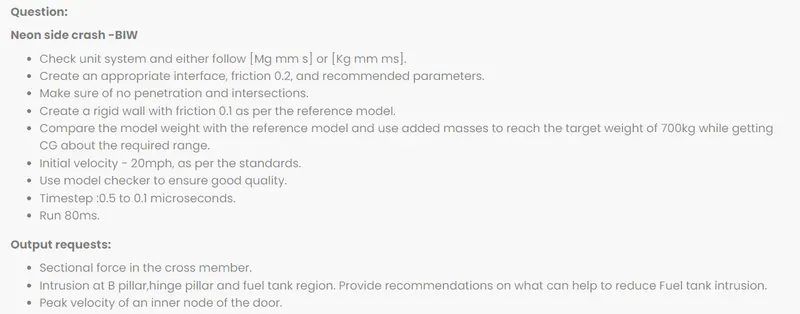
Procedure -
1. Import the given model in hypermesh as shown below:
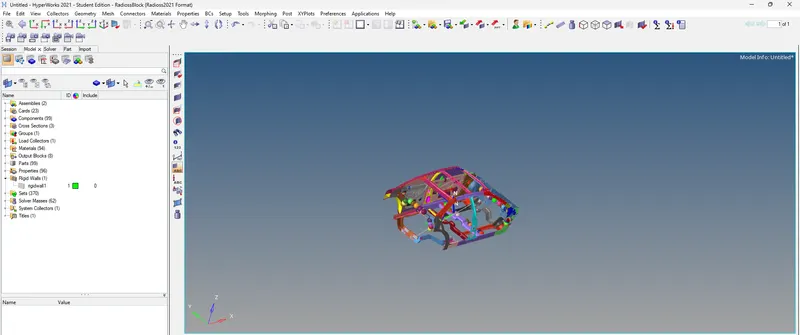
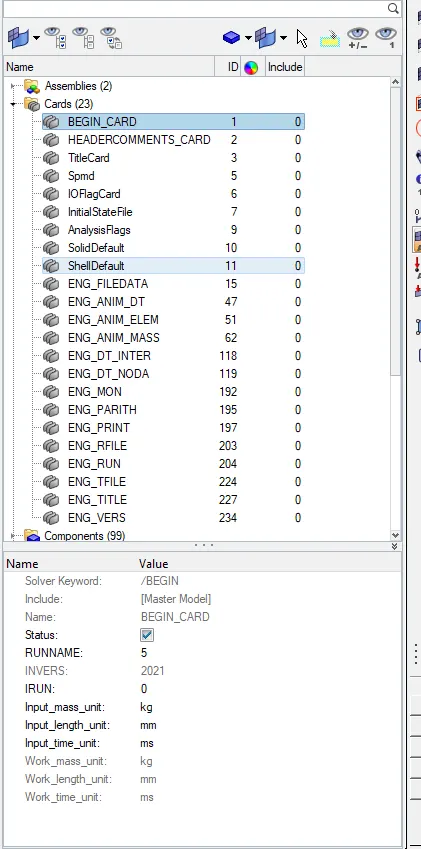
2. Check for the unit system, in this case, the kg/mm/ms system is followed as shown -
The units can be checked by two methods, either by the starter file or the beginning card in the solver deck:
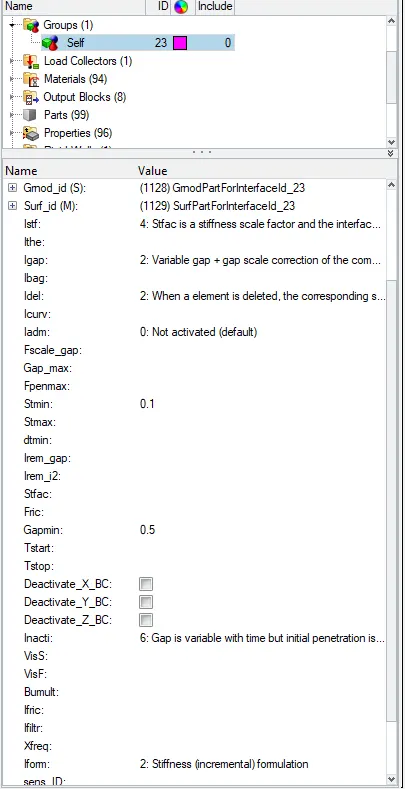
3. Create the type 7 contact with friction 0.2 and recommended parameters as shown :
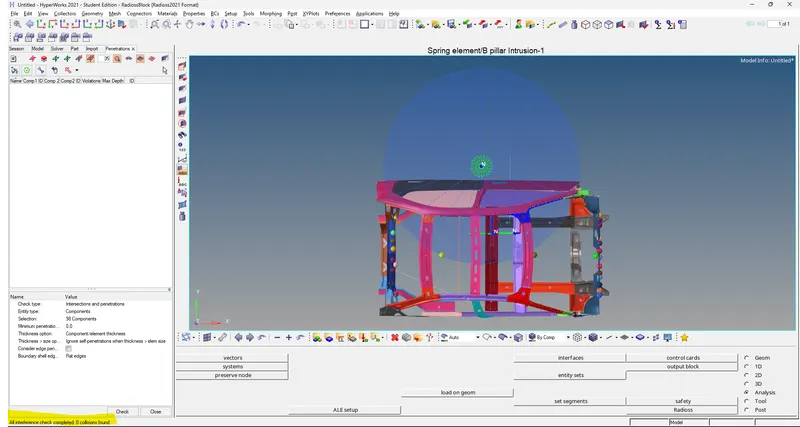
4. Now, we check for any intersections and penetrations present in the model :
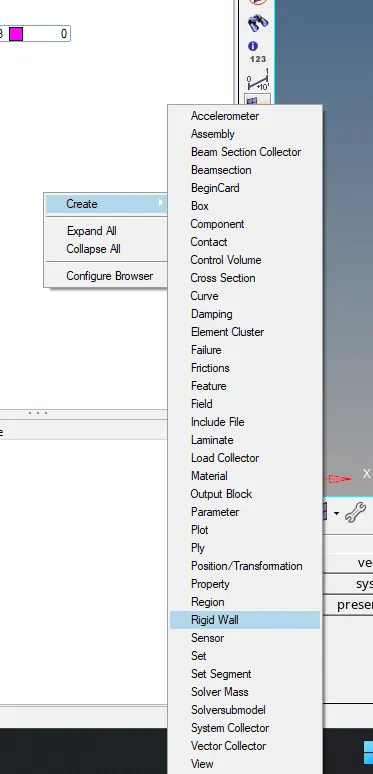
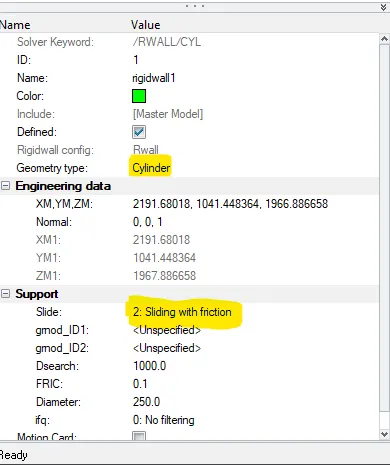
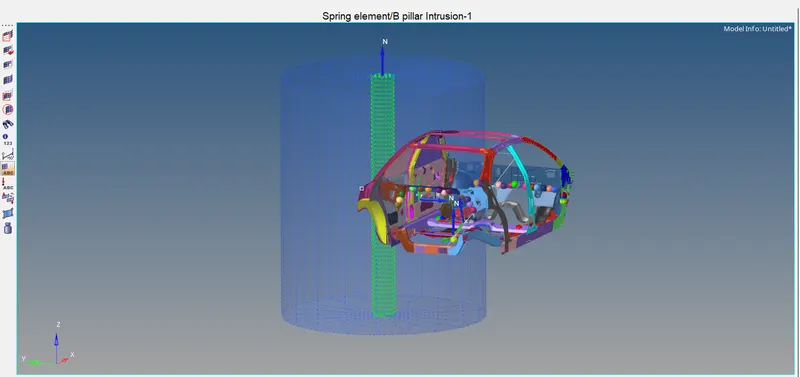
5. Now we create a rigid wall with friction 0.1 as shown below :
6. The mass of the model is compared with the full-scale model and we add mass on nodes to reach the target weight of 700Kgs as shown:
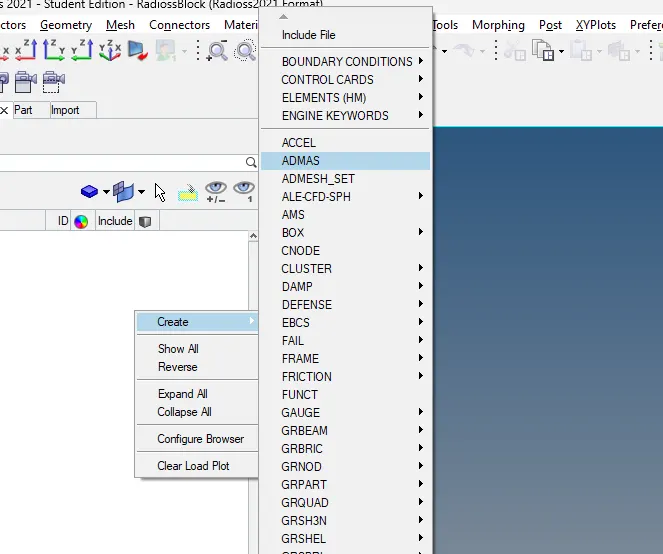
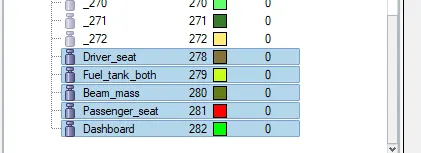
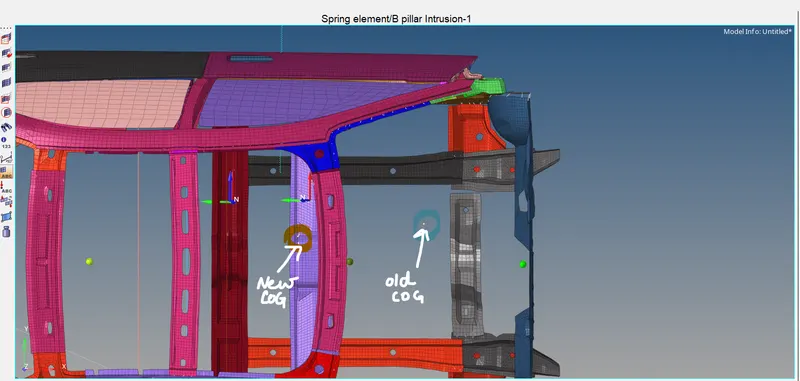
While adding mass we also check for the COG & add mass accordingly to adjust the COG to the required position:
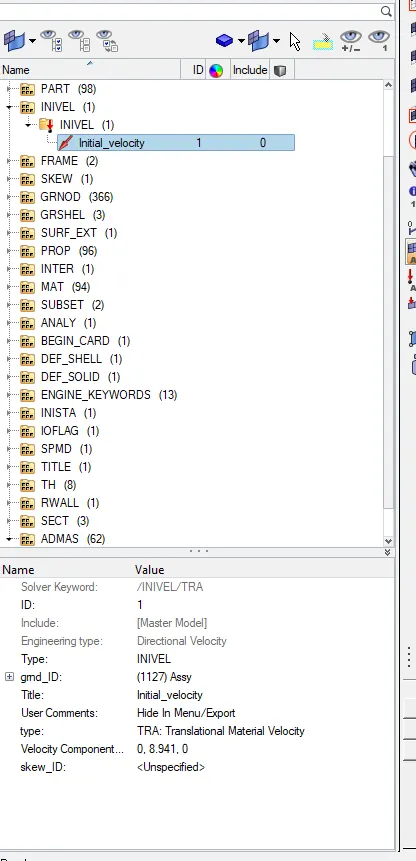
7. Now we create the given boundary conditions in the model as shown below:
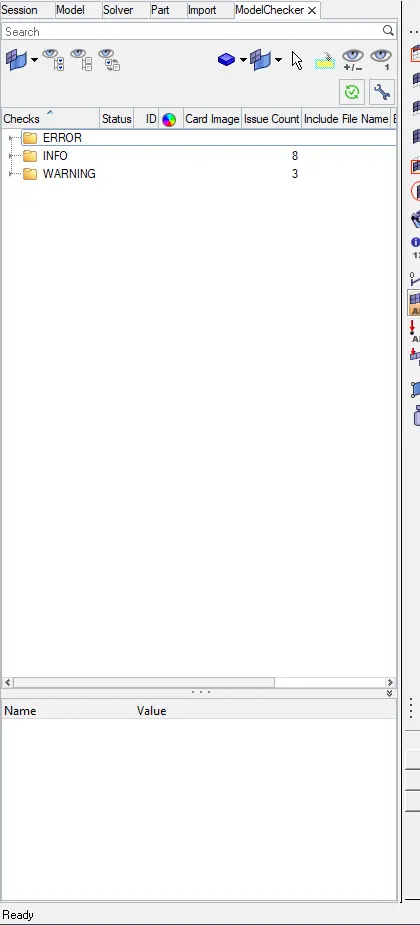
8. Run the Model Checker to ensure the best quality of the model as shown below:
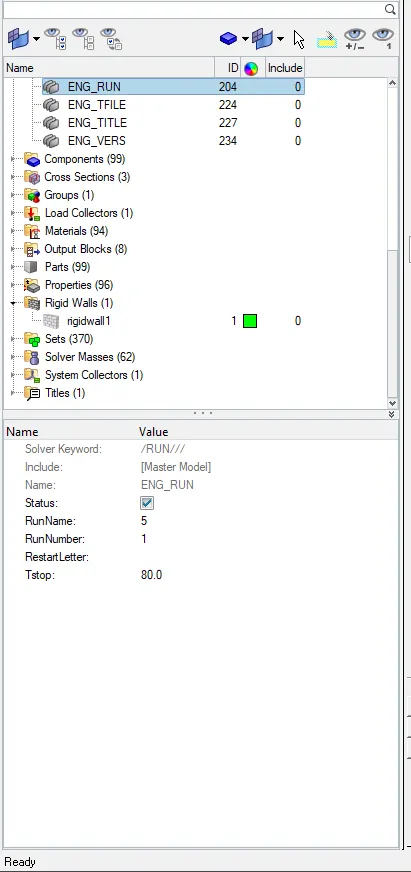
9. Create an engine run card of 80ms as shown below:
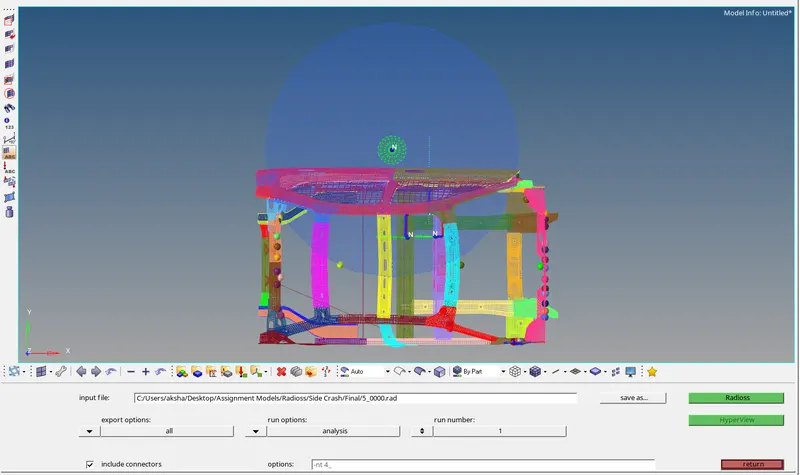
10. Run the simulation as shown:
The animation of the simulation is as shown:
11. Output Requests:
Sectional Force in the cross member:
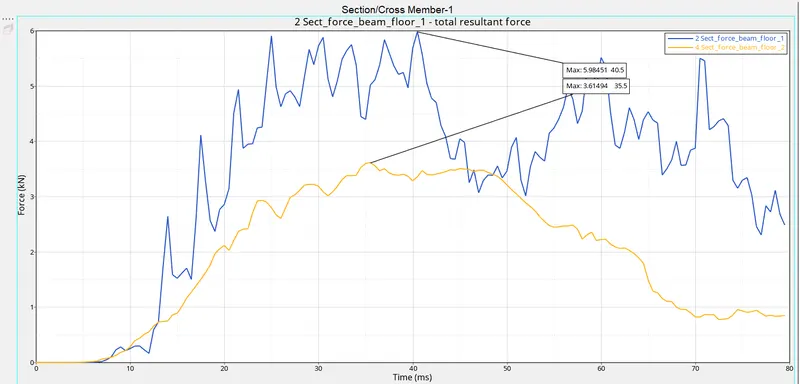
Cross-members are essential in the side-impact analysis as these components prevent the body to shrink or deform inward.
A maximum amount of force will pass through the cross-member, and forces acting on the BIW eventually pass from the cross-member.
The max sectional force at the B-pillar cross member is 3.61 KN at 35.5 ms and for the driver's seat cross member is 5.98 KN at 40.5 ms.
The intrusion at B Pillar:
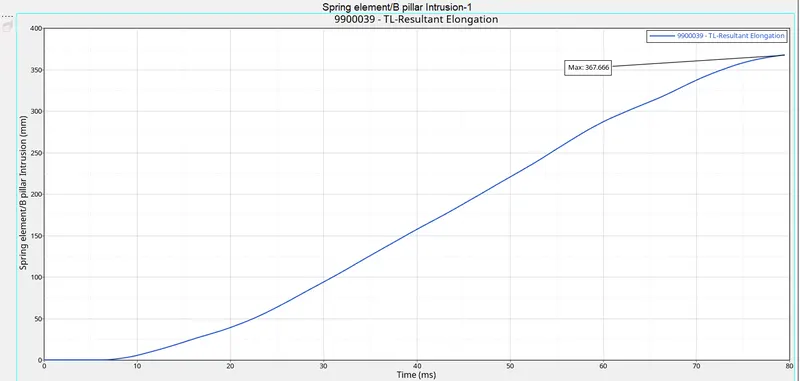
The peak Intrusion recorded at the B Pillar is 367.666 mm
The intrusion at Hinge Pillar:
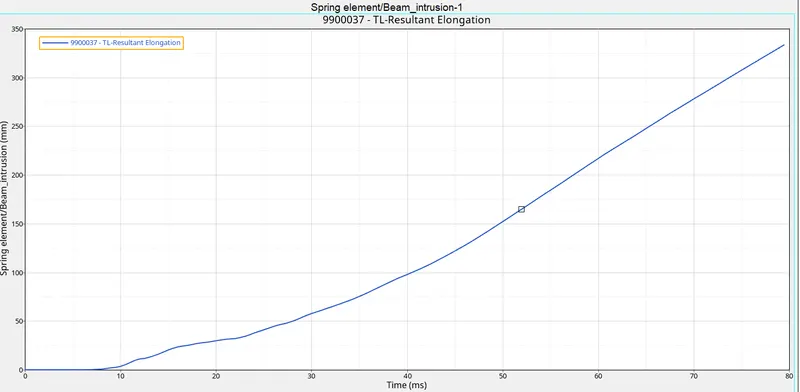
The peak Intrusion recorded at the hinge pillar is - 333.641mm
The intrusion at Fuel Tank Region:
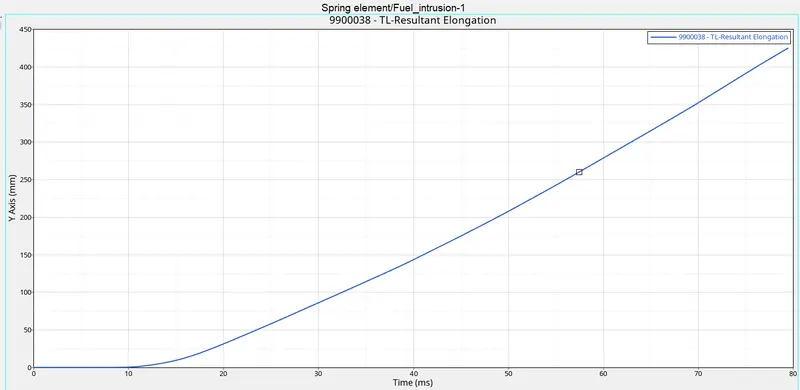
The peak Intrusion recorded at the Fuel tank region is - 424.829mm, this is a substantial amount of deformation. To overcome this deformation an extra reinforcement can be provided at the floor which will provide more stiffness to the structure and result in lesser deformation.
The velocity of the Inner Node on the door:
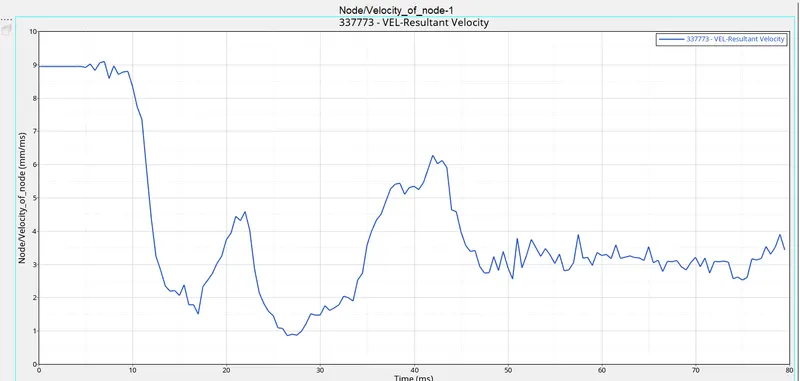
The peak Velocity recorded at the inner node of the door is - 9.0932 mm /ms.
The velocity remained constant in the initial stage before the impact, after the impact the velocity decreases as the kinetic energy of the BIW starts dissipating.
Conclusion:
The side crash simulation of the reduced BIW was successfully executed and the output requests were analyzed for the deformation.