Assignment 6-Frontal Crash Simulation Challenge
Aim :
To perform frontal crash analysis on BIW part of car using the hypermesh and solving with the radioss.
Objective :
1. Import the mesh part of BIW car part to the hypermesh.
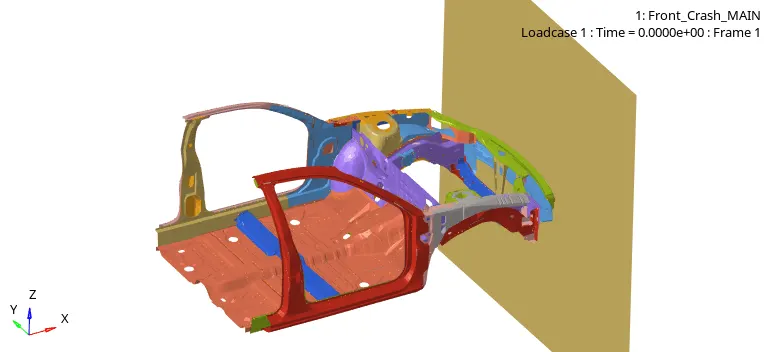
2. Create rigidwall for the crash analysis.
3. Create a intial velocity for the model.
4. Create section cards, accelometer on A-Pillar, B-pillar, and rails of bumper.
5. Create intrusions on specified nodes using skews.
6. Add the required mass in the model and maintain the cog correctly.
7. Run the file and extract the results.
Theory :
What is Crash test on a car?
The front and rear end of an automobile is generally made up of predominantly steel members. These steel structural members influence the crash performance of an automobile. Crash performance of a vehicle is typically evaluated using a crash test or a crash analysis. In crash analysis, the mechanical behavior of steel is represented using the properties obtained from quasi-static tests.
A crash event is a high speed event and will cause material points to move at a higher strain rate than used in the quasi-static test. Dynamic tests are normally required to evaluate the strain rate related properties of steel. Strain rate related properties of steel have not
been available, so quasi-static test properties were generally used in the crash analysis. Recently, Auto-Steel Partnership (A/S P) obtained the strain rate properties of four different types of automotive steel. These findings were used in several component studies to quantify the effects of strain rate in impact and crush analysis. However, no investigation has been performed to quantify the
effects of strain rate of steel in a full vehicle crash analysis. This study investigates the effect of strain rate in full vehicle frontal crash analyses using two full vehicle models and test results.
Although vehicles in general are much safer in collisions than they used to be, more than 20,000 people traveling in passenger vehicles still die in crashes every year. Many factors contribute to fatal crashes, including hazardous driving, failure to wear safety belts, poor road conditions, and the vehicle's crash-avoidance capabilities. But, the actual vehicle you're sitting in when a crash occurs can make a life-or-death difference.
Crash tests provide insight into the protection offered by the vehicle itself. As a secondary benefit, the published crash ratings encourage automakers to make ongoing improvements. But with two primary testing organizations (government and insurance industry), multiple tests conducted on each car, and competing manufacturer claims, it can be difficult to make sense of it all. This crash-test primer will enable you to understand the information that matters most.
Structural design and safety systems determine how well a vehicle protects its occupants. But it is only independent crash testing under controlled conditions that differentiates one car from another and tells us how well its key components work together. A crash test may reduce the vehicle to a shattered wreck, yet good structural design keeps passenger-space intrusion to a minimum. Important safety systems such as safety belts, air bags, and head restraints serve a vital role, by restraining, positioning, and cushioning occupants while a collision takes place.
What is front crash?
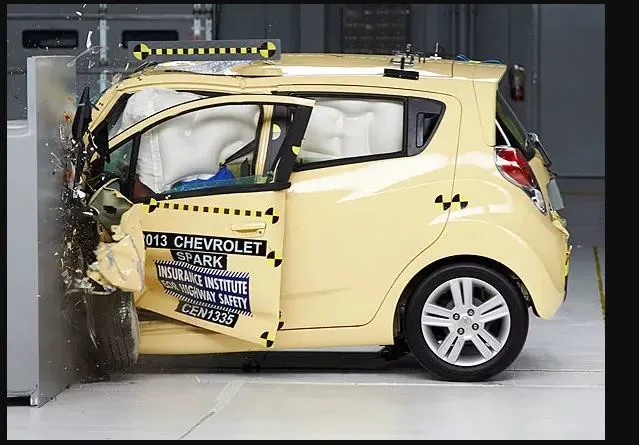
Front-crash test accelerates a car straight into a rigid barrier at 35 mph, with the entire width of a vehicle's front end hitting the barrier. Instrument-bearing, seat-belted crash-test dummies in the two front seats record the level of crash forces on the head, neck, chest, and legs. Those measurements correlate with injury, but formerly only the head and chest results formed the basis of the star rating. Individual star ratings are assigned to the driver and the front passenger. Some automotive experts have criticized NHTSA's full-frontal, rigid-barrier test as unrealistic because such head-on crashes into a flat, solid wall are relatively rare. Others argue that real-world or not, flat-barrier testing is a good way to gauge the effectiveness of the restraint systems, primarily the safety belts and air bags.
Procedure :
Step 1: Import the model to the hypermesh which is in .rad file, these file can be imported using import solver deck option.
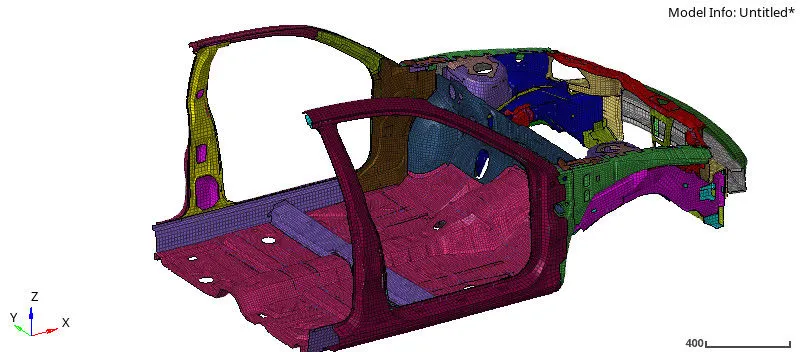
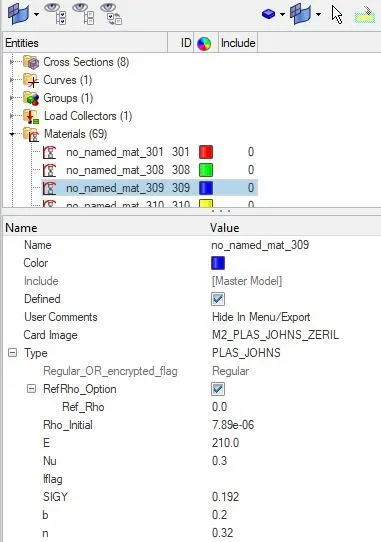
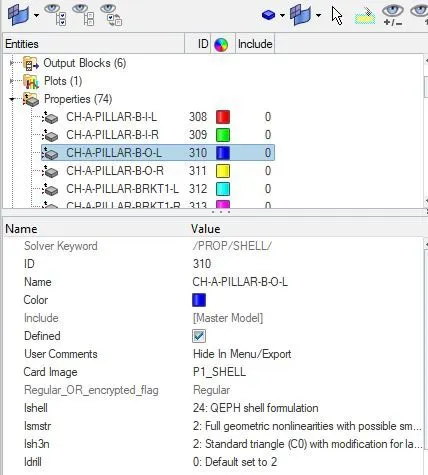
Step 2: Now open the model tab and all material properties and element properties are defined to the all biw parts.
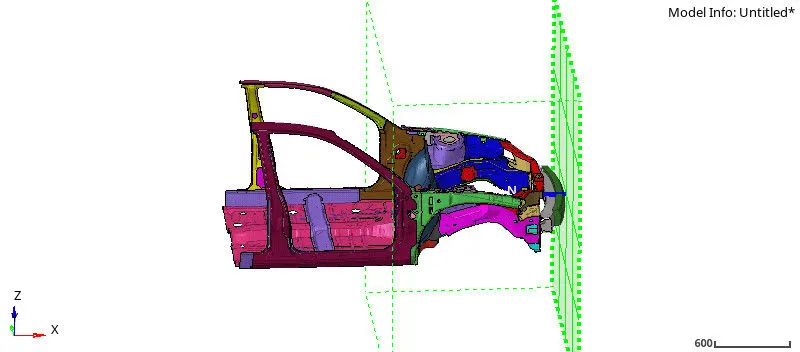
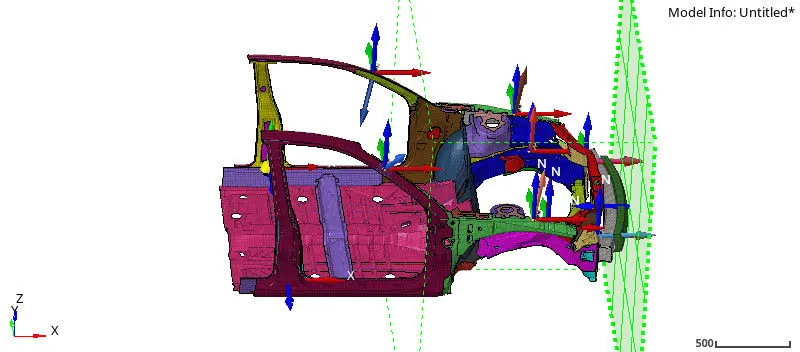
Step 3: Now create a rigidall with help of rwall card and select the node to specifies the direction rigidwall and give friction as 0.1.
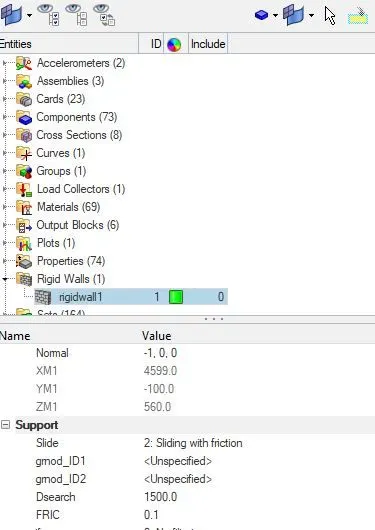
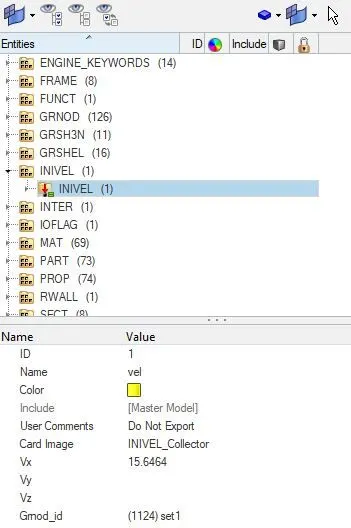
Step 4: Now create a velocity card using invel card and specify the velocity in x-direction as 15.6464 mm/ms.
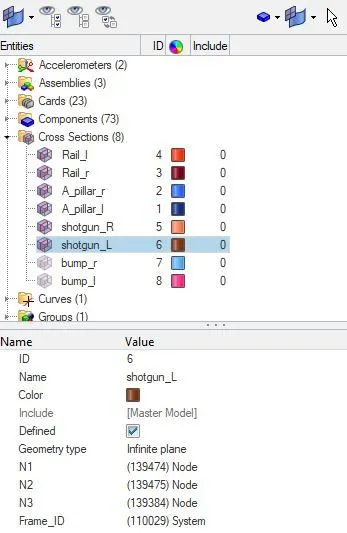
Step 5: Now create a crossection cards in A pillar, bumper rails and shotguns. To create a section card first we need to create a frame, so go to frame select move option and select three nodes which represents the x,y and centre point and proceed. After creating it go to the section card and select the three nodes which is selected for frame and select the frame abd three rows of shell elements in the direction of frame.
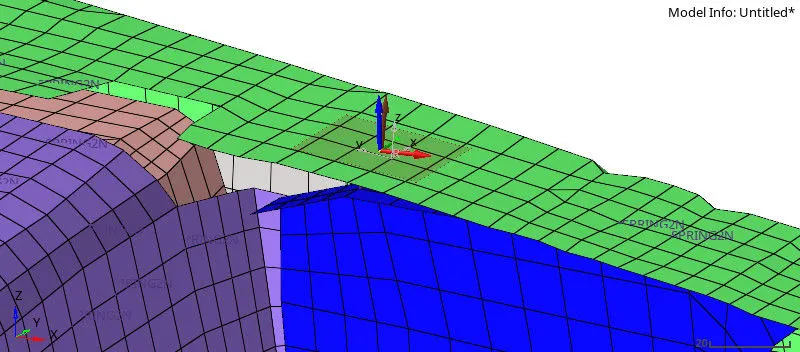
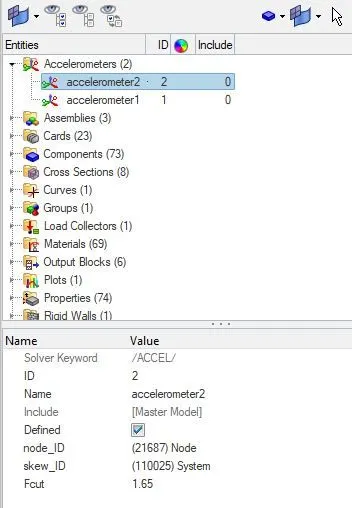
Step 6: Now create a accelometer on the B pillar. To create accelometer first we need to specify the skew and then create the accel card. Skew is created same as frame.
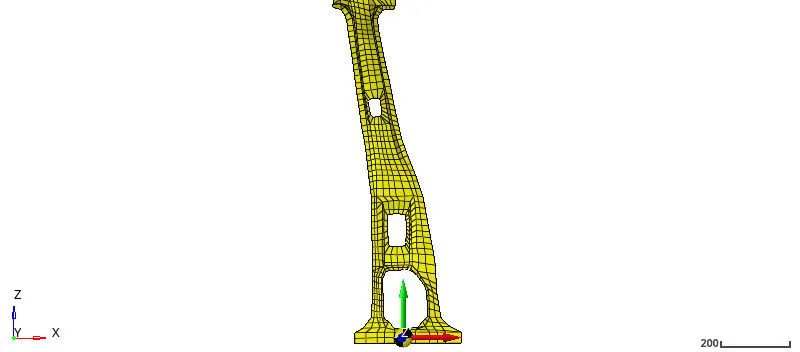
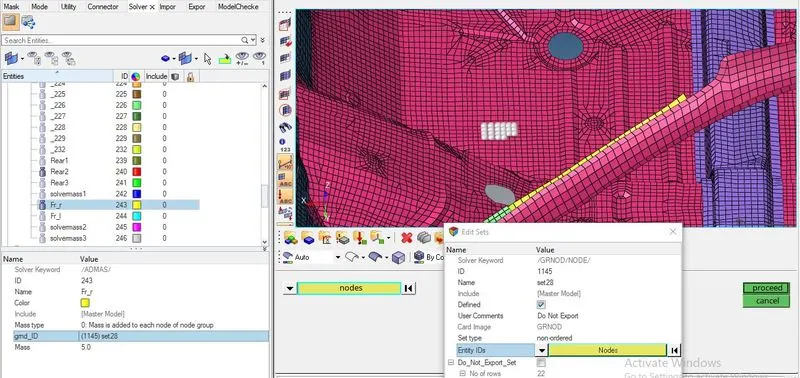
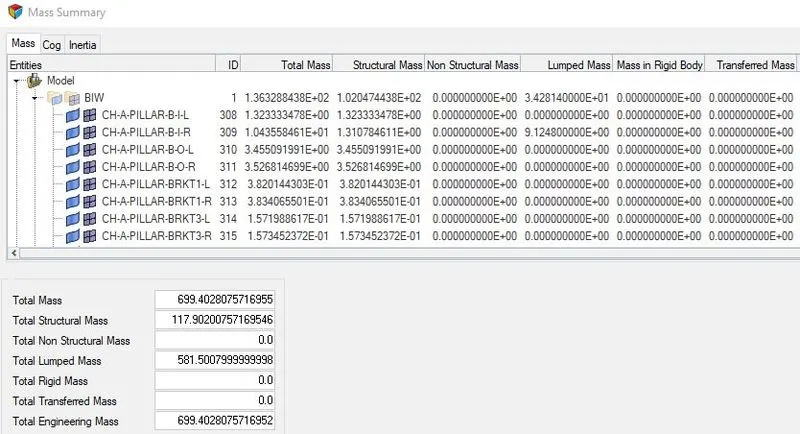
Step 7: To balance the centre of gravity add mass on the front seating area and rear seating area by using the add mass option and total mass of the biw car part has to be in 700 kg so add mass carefully. Here mass is added on the each node.
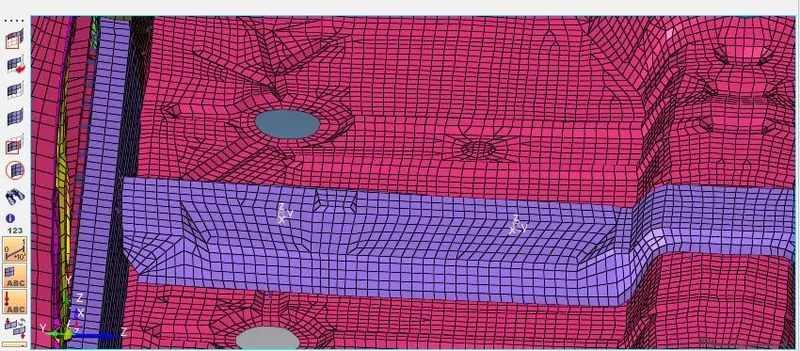
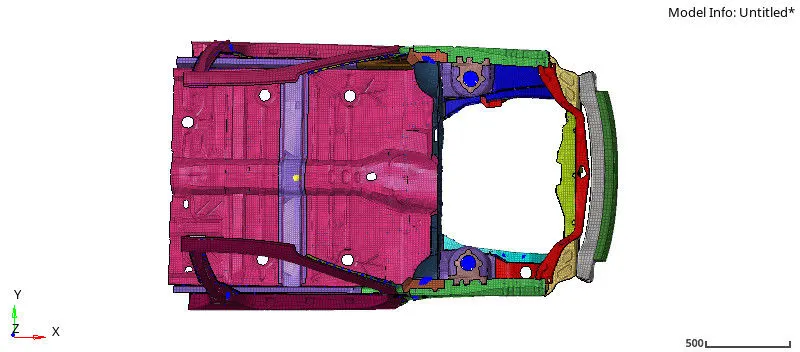
Step 8: Now create intrusions by creating skew on the floor rail side and then create a output card for intrusion and there specify the skew and node where the intrusion is needed.
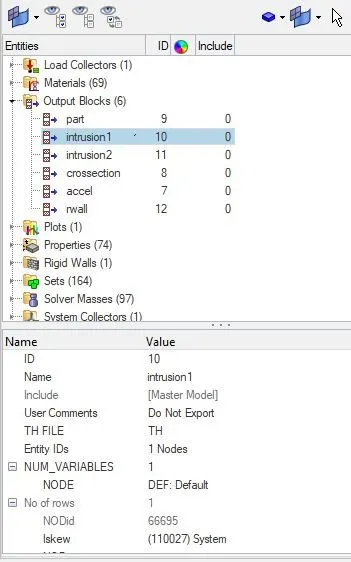
Step 9: Now create a output cards for accel, crossections, parts and intrusions where these cards can helpful to extract the results.
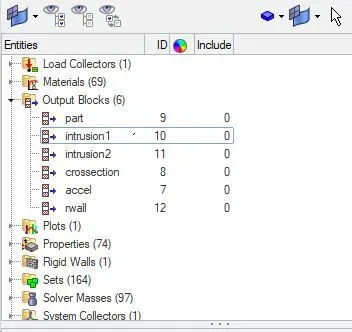
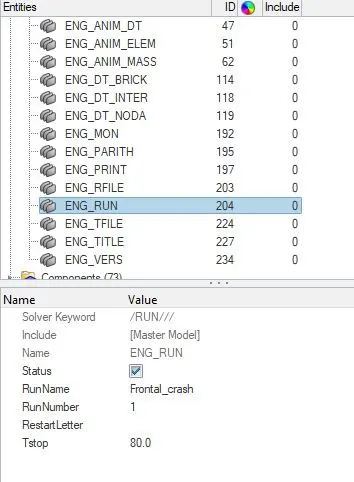
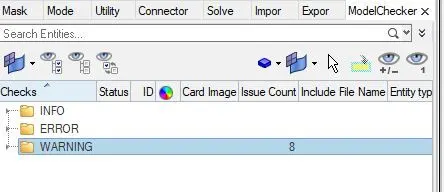
Step 10: Now check the run time and model check for radioss solver deck, here errors can be find out before solving the problem and after clearing all errors and warnings we can go for solving the pr0blem.
Errors :
1. Before solving the model check the solver deck and somer errors are occured. For my model I did not specify the element property for the rigid body which is connected to inner and outer inner panel. This can rectified by adding property card to the rigid body component.
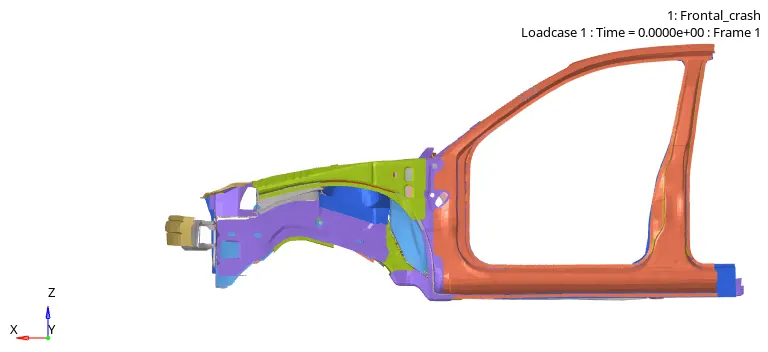
From simulation we can see that inner part of A pillar is not connected properly which we did not defined this will cause the damage to the passenger, so before solving check the solver deck properly and go for the run.
Results&Discussion :
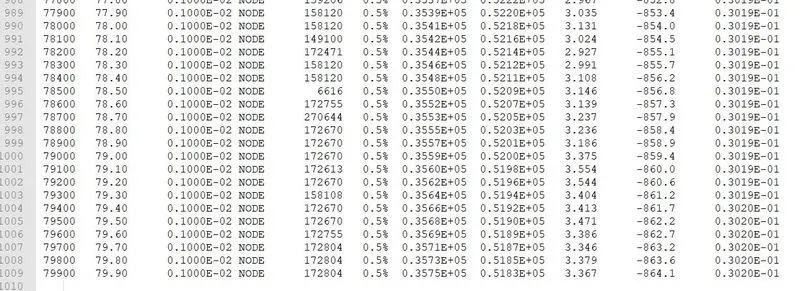
1. Now check the enrgy error and mass error in the simulation and also check the simulation time for the model. For our model energy error is 0.5% and mass added to the model is 3.02 % and these value indicates oyr simulation is perfect and no hourglass energy is created in the simulation. Time taken to solve this model is 2hrs 56 mins and the reason for this is we did not use multi core run and we use single core or single thread run.
2. After that switch the application into hyper view and open the .h3d file which is an animation file output.

3. Now open the contour plot and apply the displacement, and von misses animation parts.

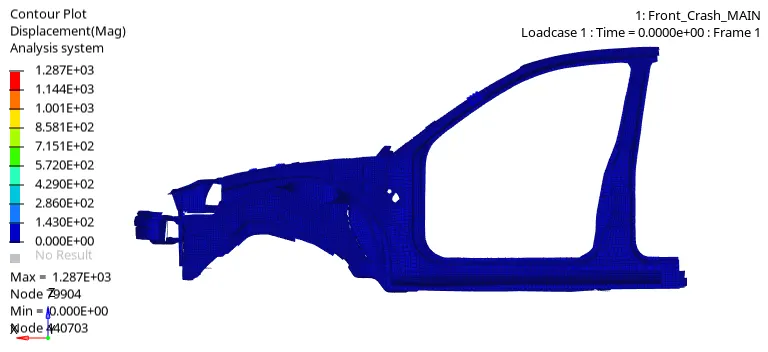
From the displacement animation we can observe that maimum displacement is occured at the end of the floor panel with 1.287E+03 mm.
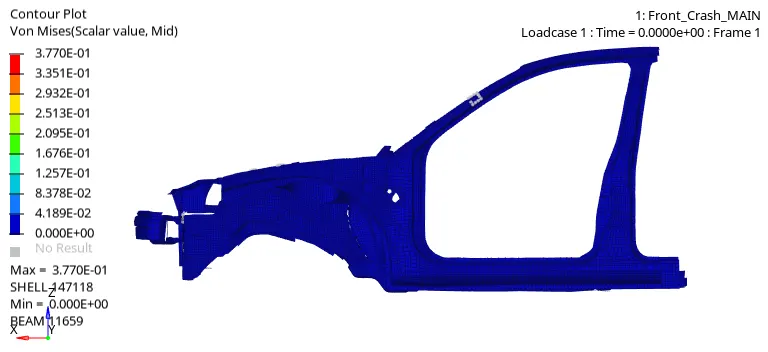
Maximum stress is occured at the front rail bumper part and stress is distriburted along the whole biw part and materials applied in the model is john zeril and all strain value and hardening values are defined.
3. Now switch hyperview to hypergraph and slect the plots of cross sections, accelometer at A pillar, B pillar, rails of bumper and shotguns.
i. First plot the crossection force for A pillar right and left, rail right and left, Bumper rail right and left, and shotgun right and left.
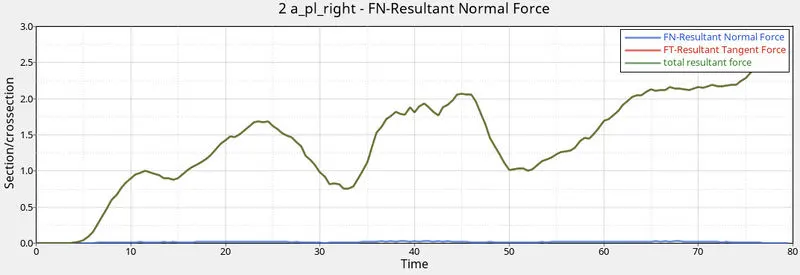
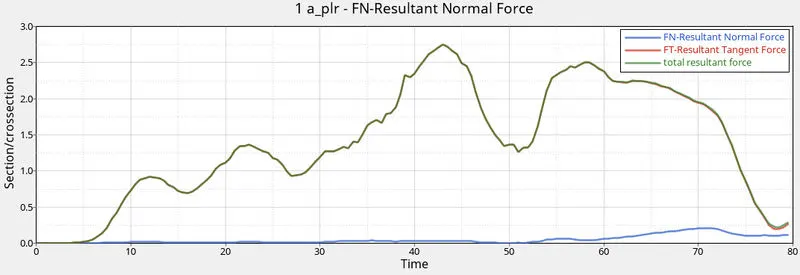
From both sides maximum force is 2.7KN and reduced to zero after complete crash.
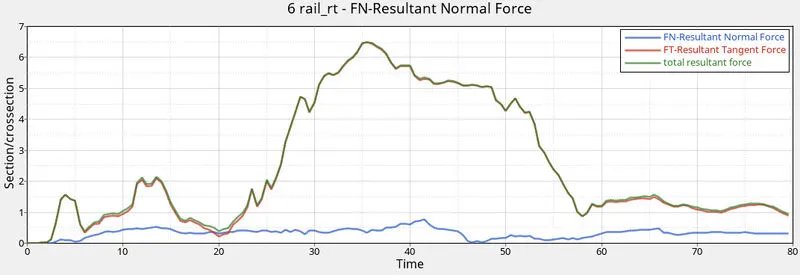
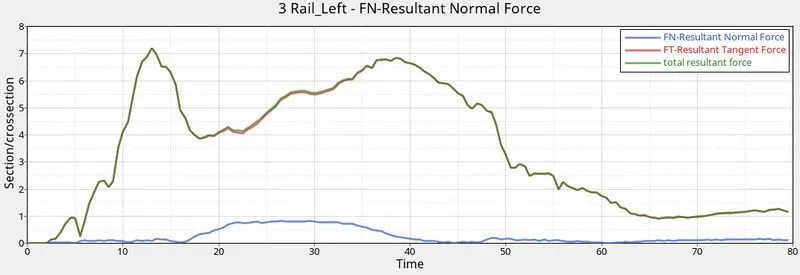
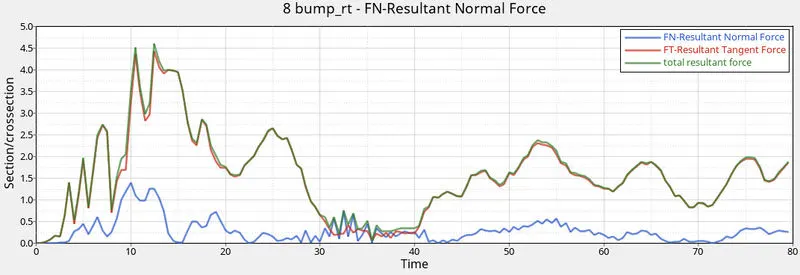
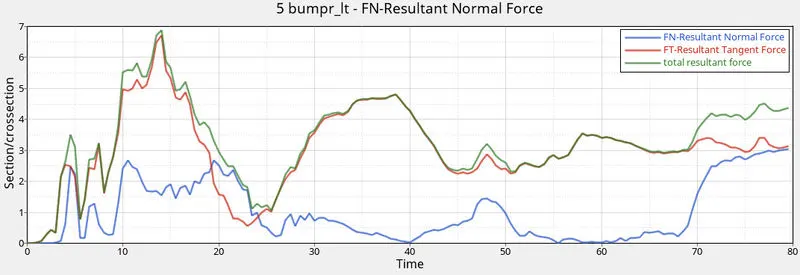
Maximum force created on rail part is 7.0kN approximately and here force is distributed to the next connected part and peak force is occured at when the bumper completely crashes into the rigidwall at 12ms.
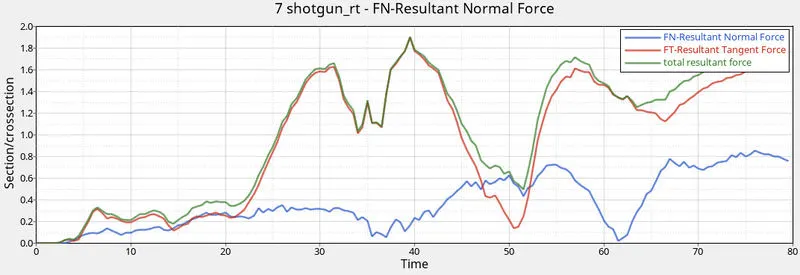
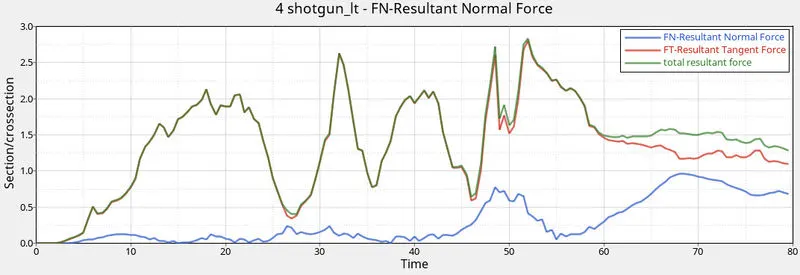
For shortgun maximum force is 2.8KN at 55ms and here we can observe that force is ditsributing part to part and it is decreasing while absorbing the force. This indicates that most of the impact is absorbed at the front bumpers.
ii. Now extract the accelerations on the B pillar using accelometer plots.
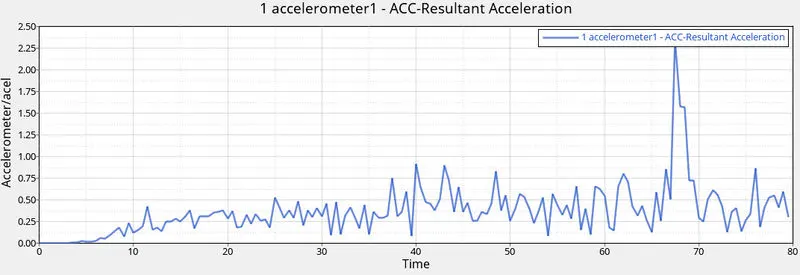
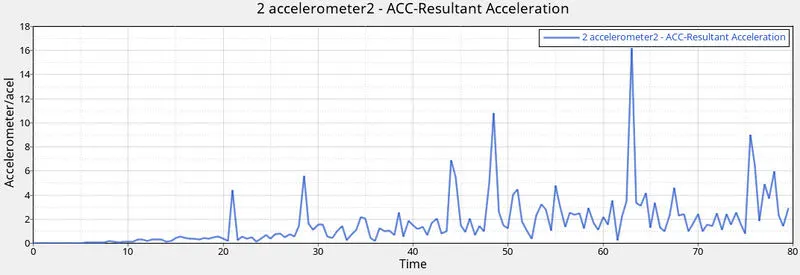 Here we can observe that maximum acceleration occurs at 65ms for left side and 69ms for right side and 2.5mm/ms2 for right side and 16 mm/ms2 for left side. This indicates that acceleration is generated more at the left side of the model.
iii. Now extract the intrusion values of the model.
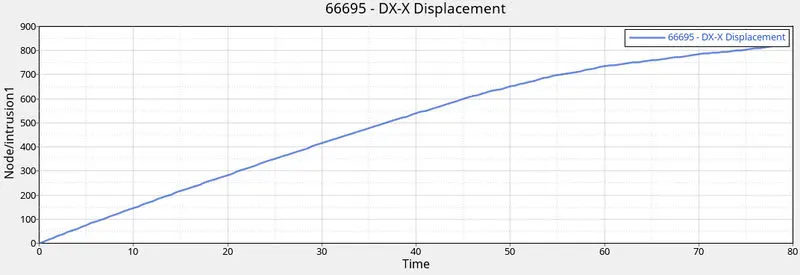
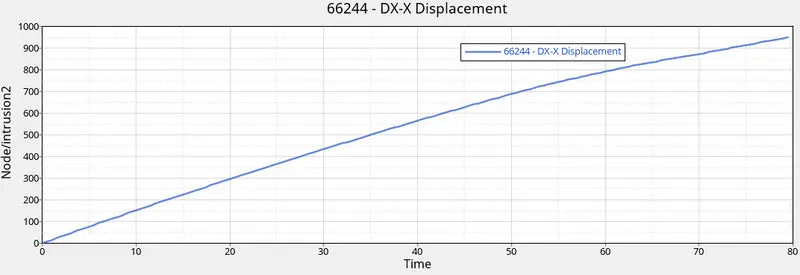
From intrusion plot we can suggest that less displacement is generated at the begining of the crash and takes 80ms to reach the value of 900mm displacement .
4. Now extract the energy plot and check whether it is balanced or not.
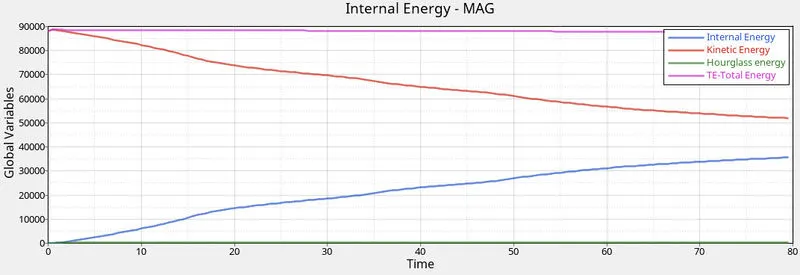
From the graph we can observe that energy is completely balanced and there is no hourglass energy is created in the model. This indicates that we have simulated our model in perfect.
Conclusion :
Thus Frontal crash simulation is performed on the BIW part of neon car model and extracted the results. From results we can say that maximum impact is generated at the bumper rail (7.0KN apprx) and it is distributed along the parts and reaches to the A pillar and crosssectional forces are also decreased. Acceleration is extracted at the B pillar and conclude that more acceleration is generated at passenger side. Intrusions are also extracted at the break point and conclude that less displacement is created at starting of crash and increases rapidly. Hourglass energy is stabilized and mass scaling is maintained to 3.2%, but single core cpu is used to solve the problem which has taken 2hrs 52mins.