Assignment 4
Objective:
1 To learn various materials and their properties in detail from structural deformation consideration.
2 To learn material failure criteria, Crack propagation criteria, and Ultimate strength point variations.
3 To learn Interrelation between practical failure and Simulation breakage of the model.
4 To learn the Cycle time response over the various Input changes.
Case 1: Esp max =0 & No failure.
Setup:
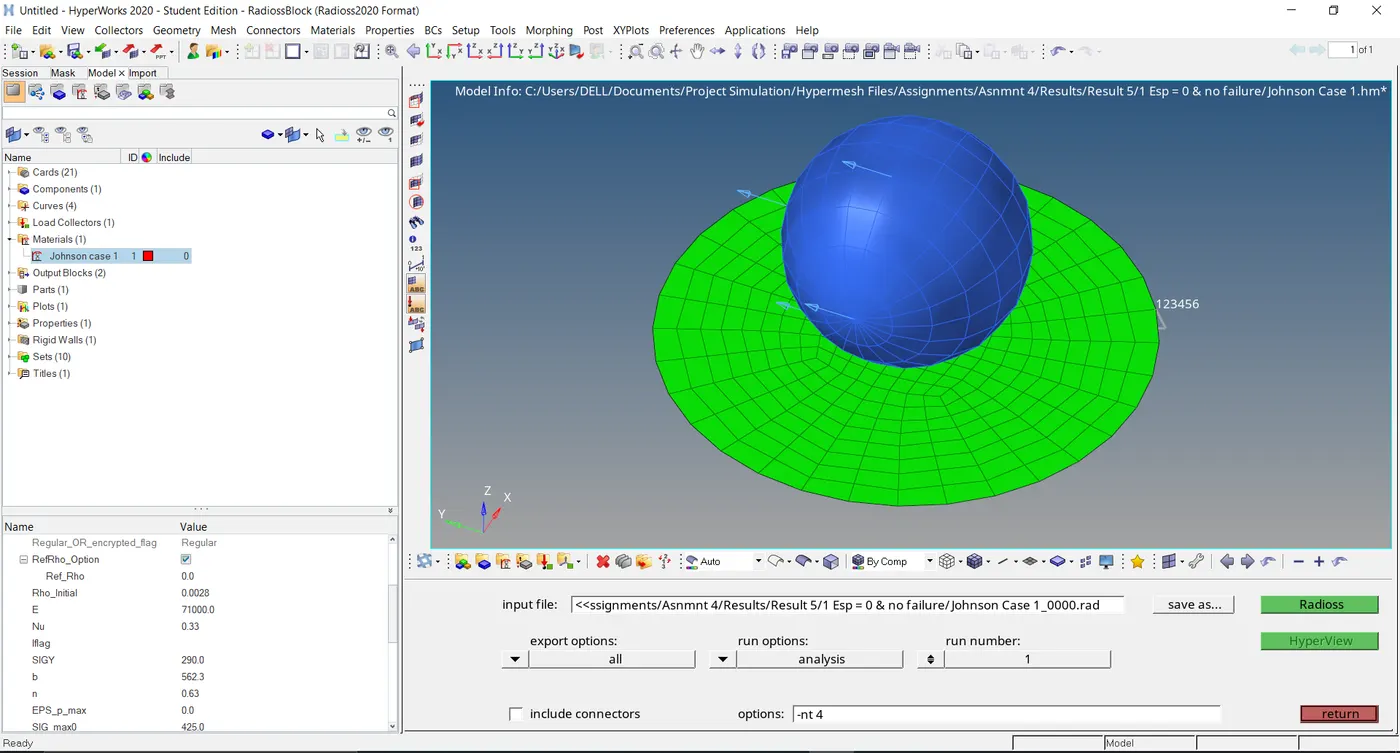
- Imported the Johnson 0000.rad model
- Deleted the Failure Johnson card & updated the Eps max value to 0.
- Run the model & obtained various results.
Results & Discusion:
- Eps Max = 0 means Ultimate tensile strength point shifted to the default value which is infinite that indicates material is never gonna get failed.
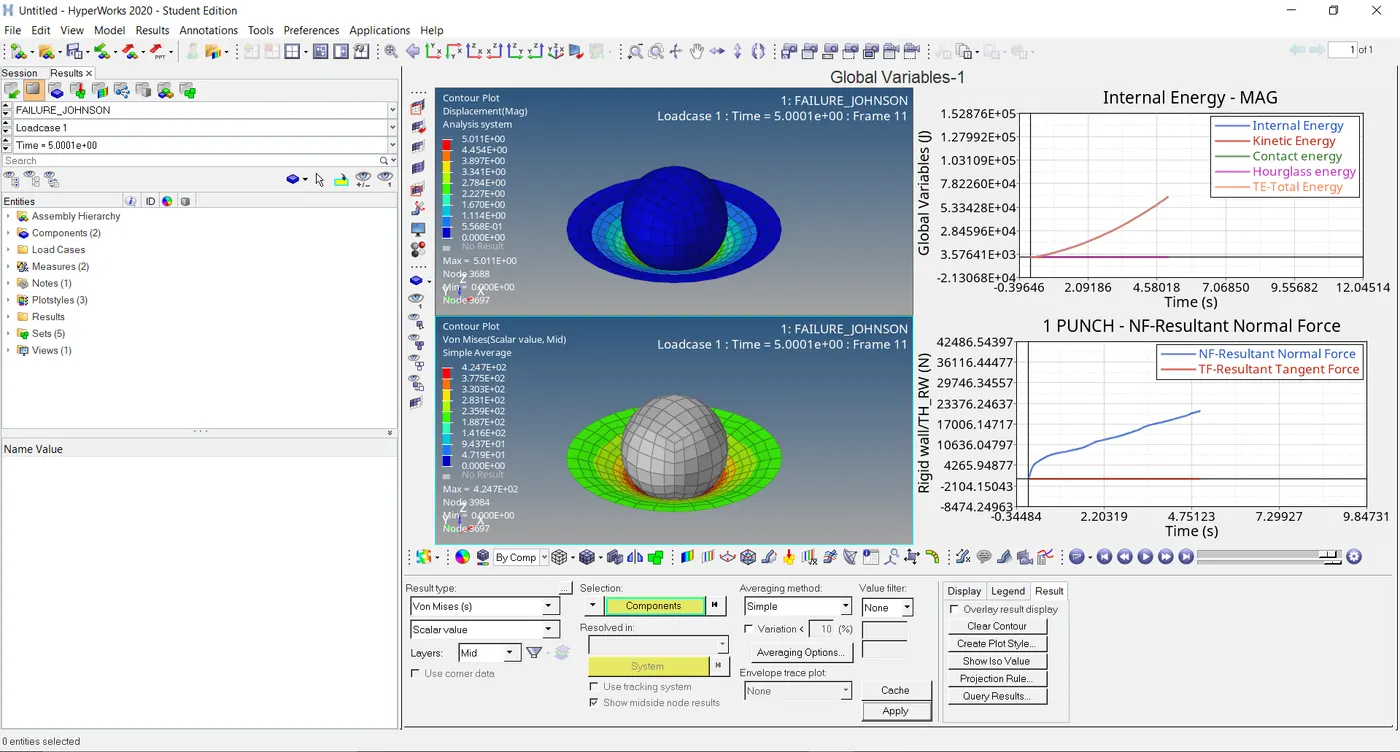
- Material behaviour found to be similar to the elastic body causing Stress value increased to 424Mpa.
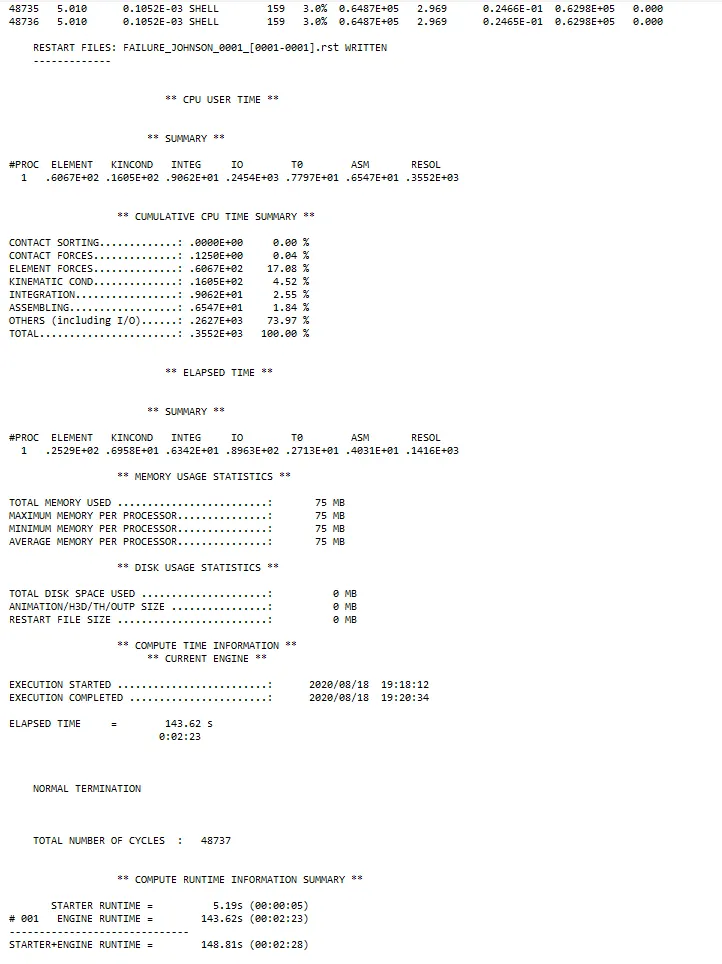
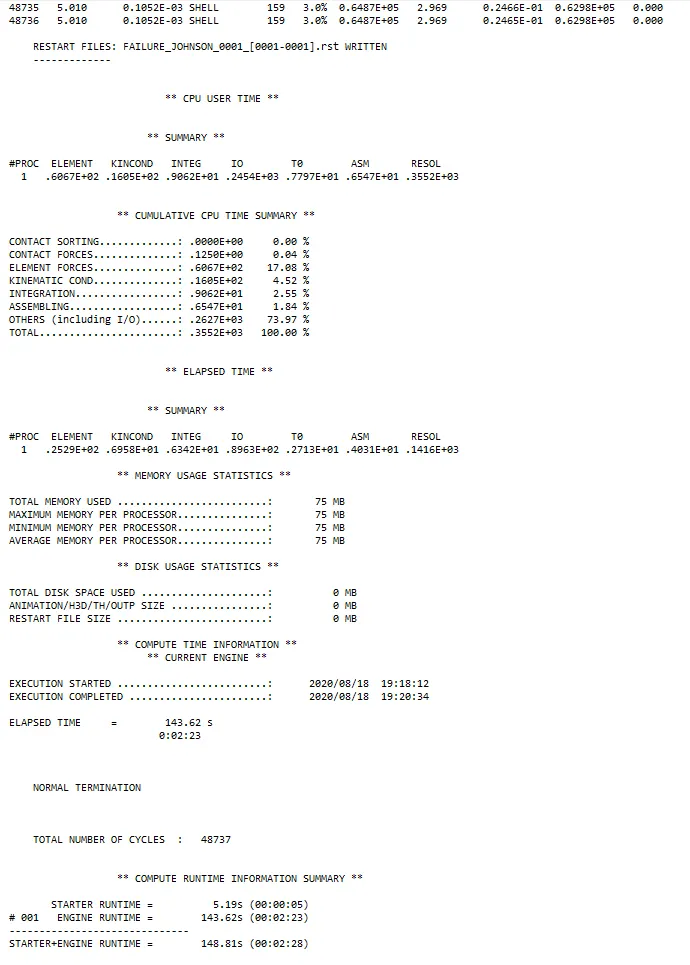
- Cycle time found to be 148.81 S with 48737 cycles.
Case 2: Esp max =0.40 & No failure.
Setup:
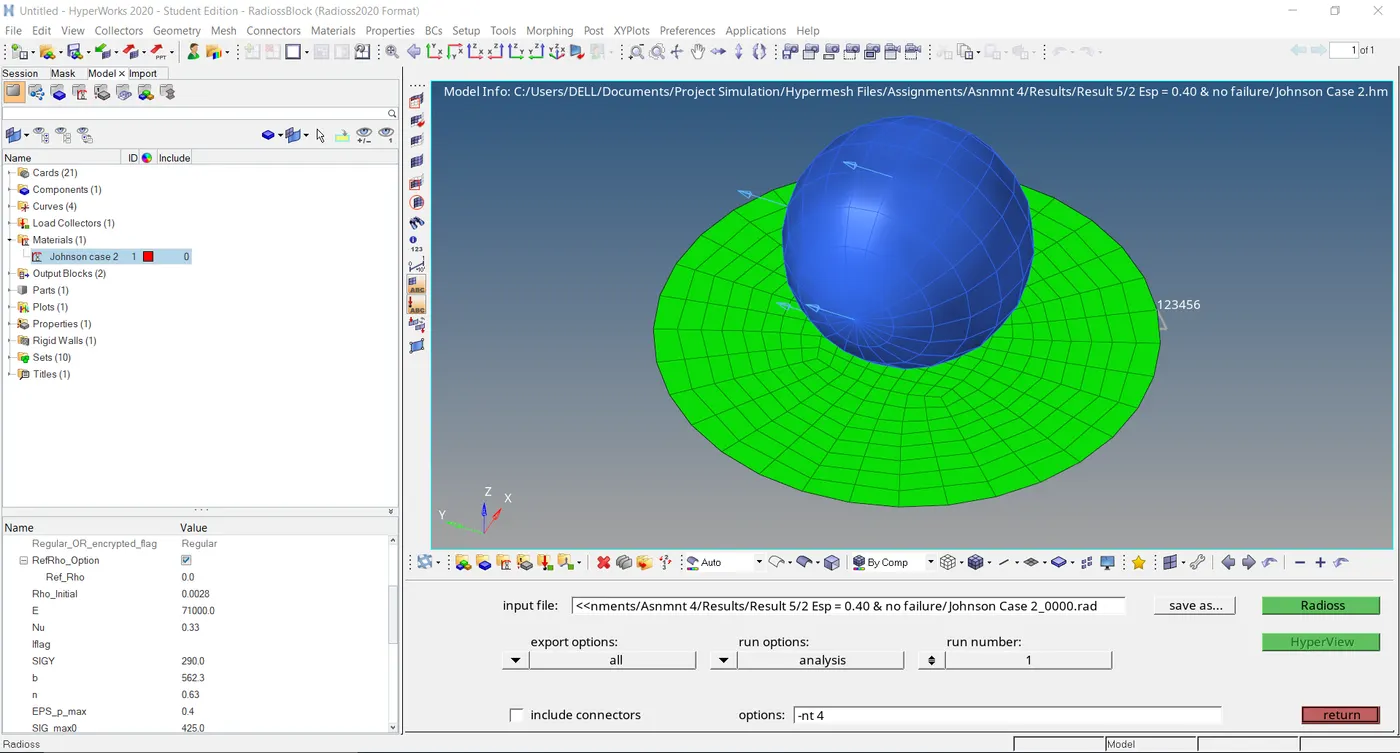
- Imported the Johnson 0000.rad model.
- Deleted the Failure Johnson card & updated the Eps max value to 0.40.
- Run the model & obtained various results.
Results & Discusion:
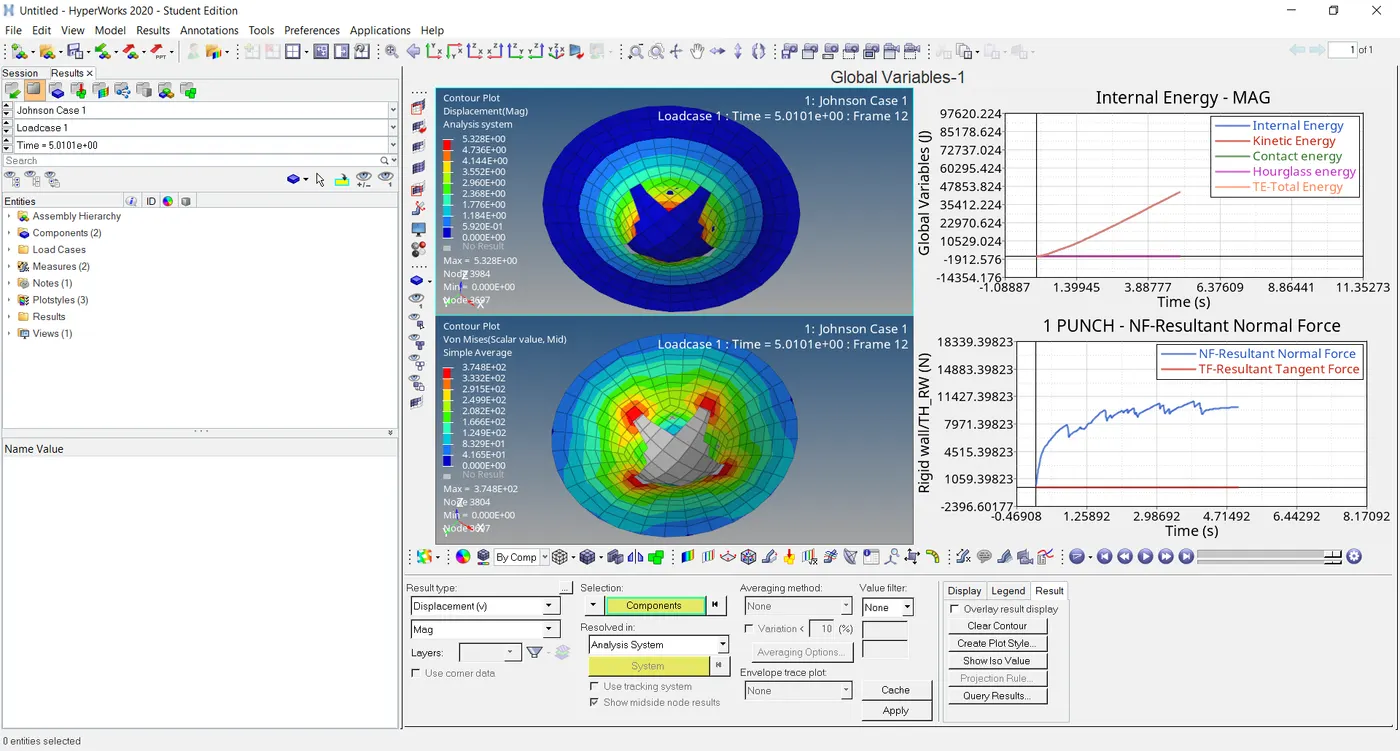
- Eps Max = 0.40 means that material will fail once its stress value reaches 40% beyond its yield stress which is nothing but its Ultimate tensile strength point.
- Material behaviour found to be Elasto Plastic body with a Stress value of 374 Mpa.
- Material collapsed like a tearing effect while sudden vanishing or deletion of elements was observed. Crack propagation was not smooth.
- Cycle time found to be 148.81 S with 48737 cycles.
Case 3: Esp max =0.40 & Default failure.
Setup:
- Imported the Johnson 0000.rad model.
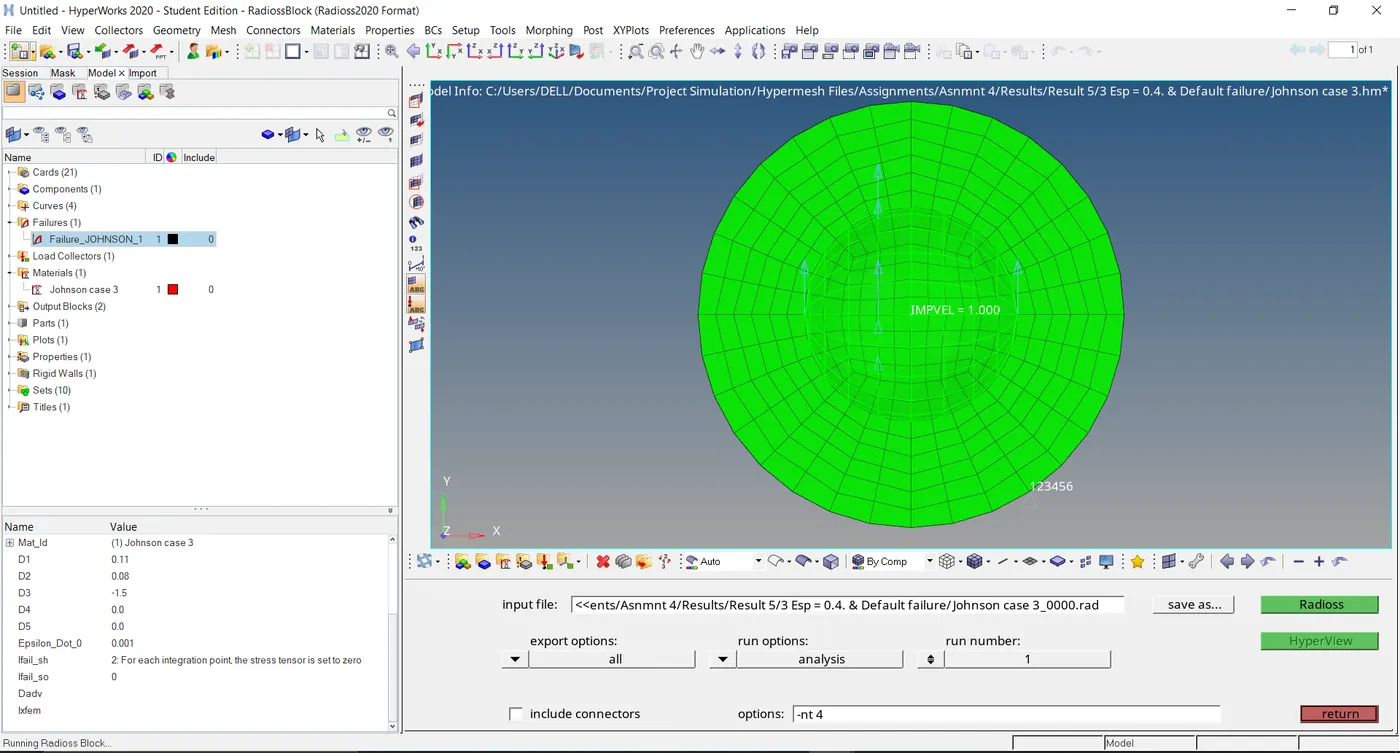
- Updated the Eps max value to 0.40 & Kept Failure Johnson card in the default state.
- Run the model & obtained various results.
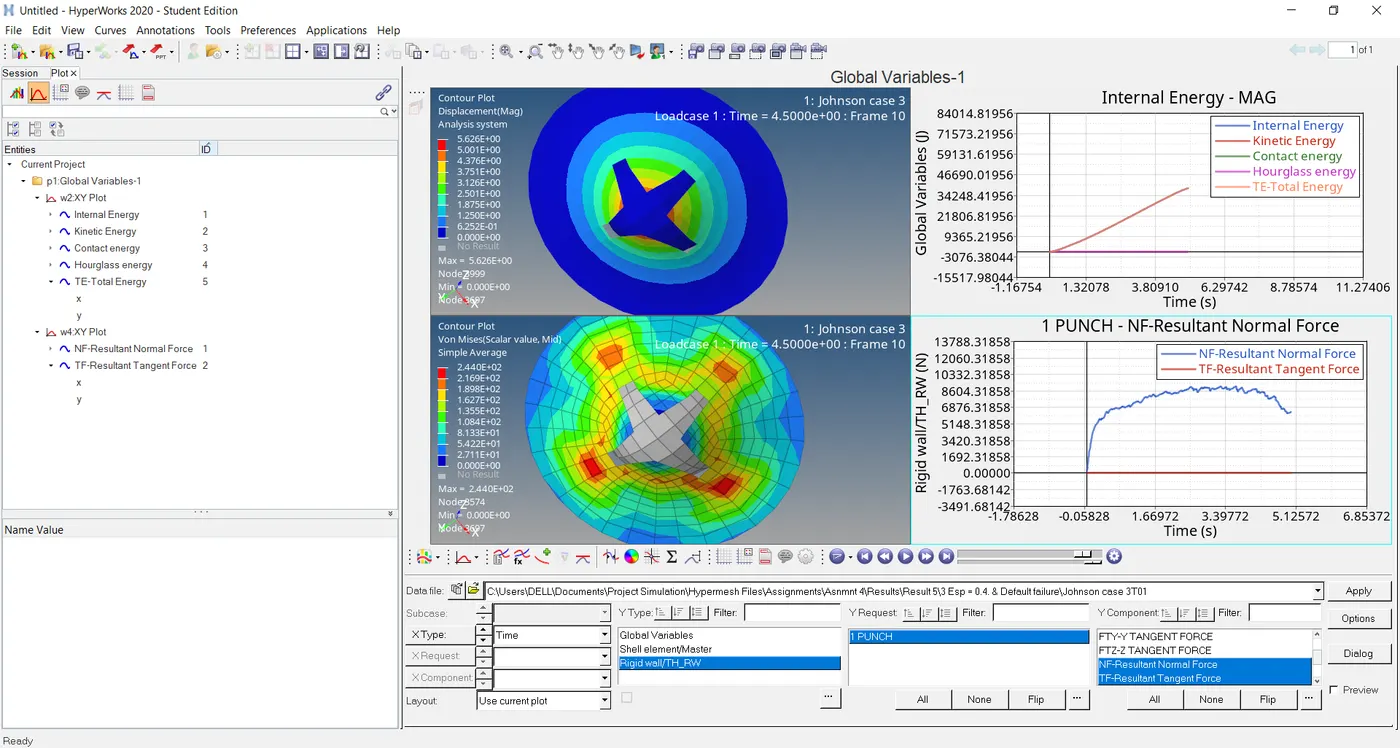
Results & Discusion:
- Eps Max = 0.40 means that material will fail once its stress value reaches 40% beyond its yield stress which is nothing but its Ultimate tensile strength point But now material was under constrained of Johnson failure card.
- Material behaviour found to be Elasto Plastic body with a Stress value of 244 Mpa.
- Material collapsed like tearing effect while few vanishing or deletion of the element was observed. Crack propagation was quite smooth.
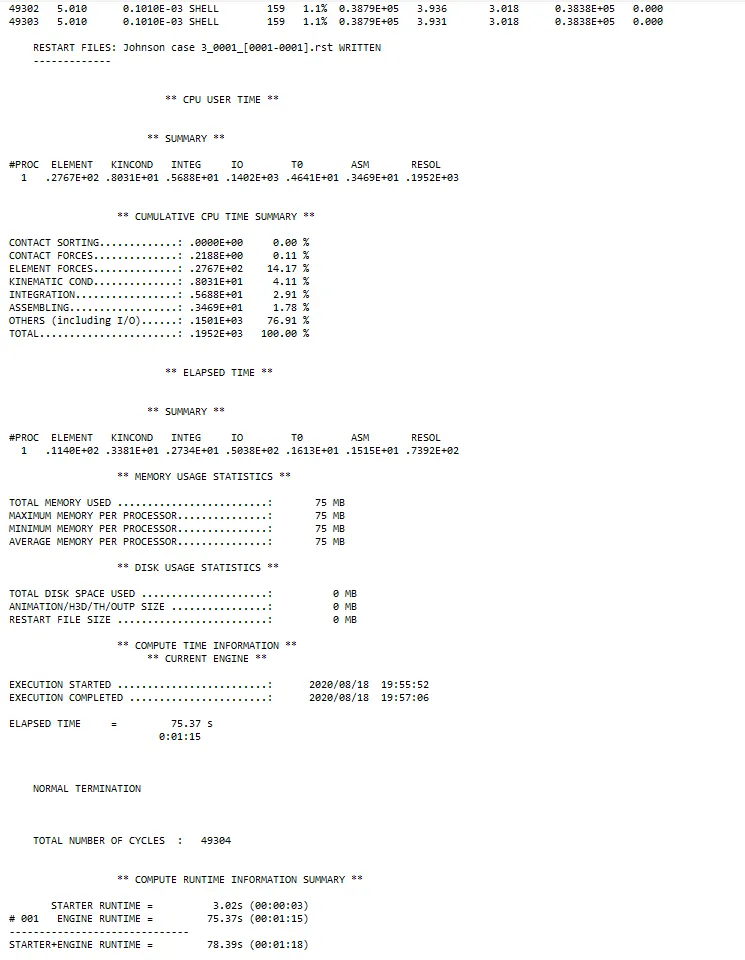
- Due to Johnson failure tremendous reduction in Cycle time was found equals to 4 S with 49304 cycles.
Case 4: Esp max =0.40 & IEXM failure.
Setup:
- Imported the Johnson 0000.rad model.
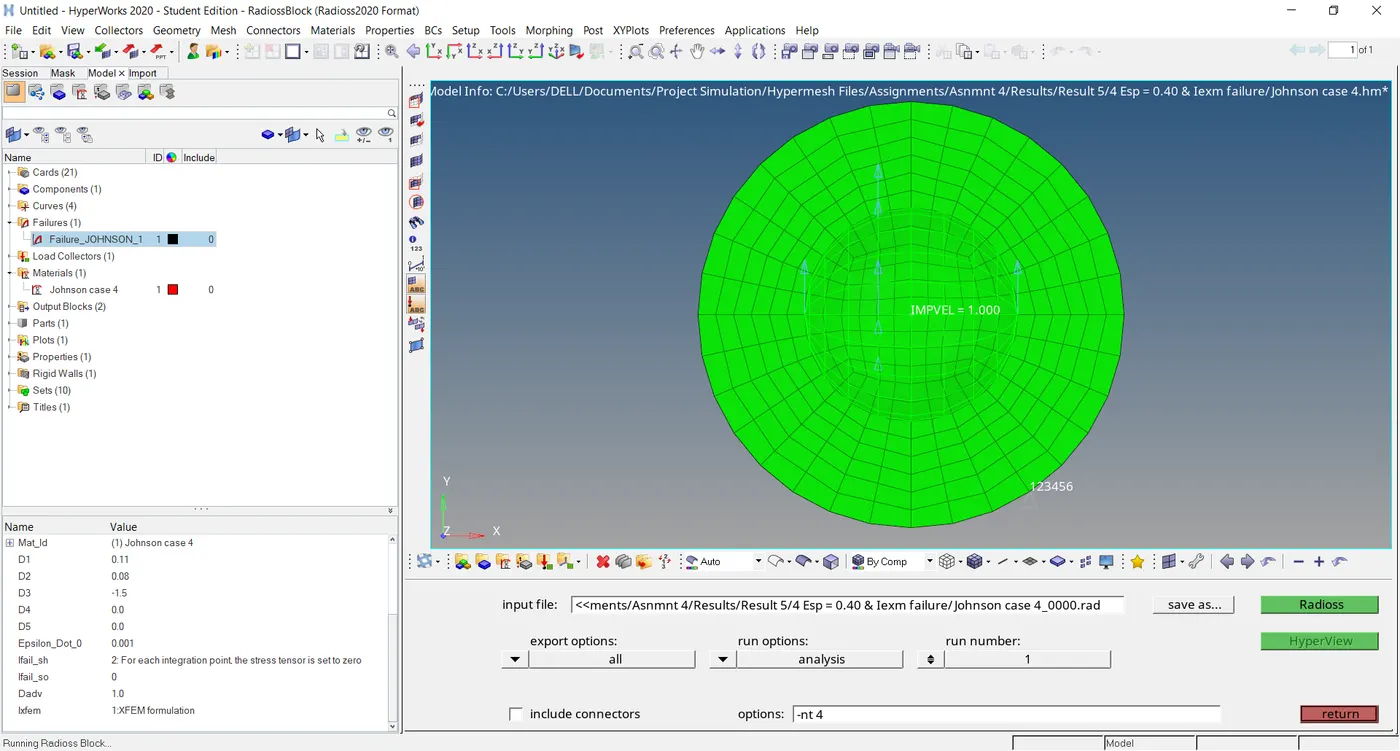
- Changed the Eps max value to 0.40 & updated Failure Johnson card by IEXm = 1 & Dadv=1.
- Run the model & obtained various results.
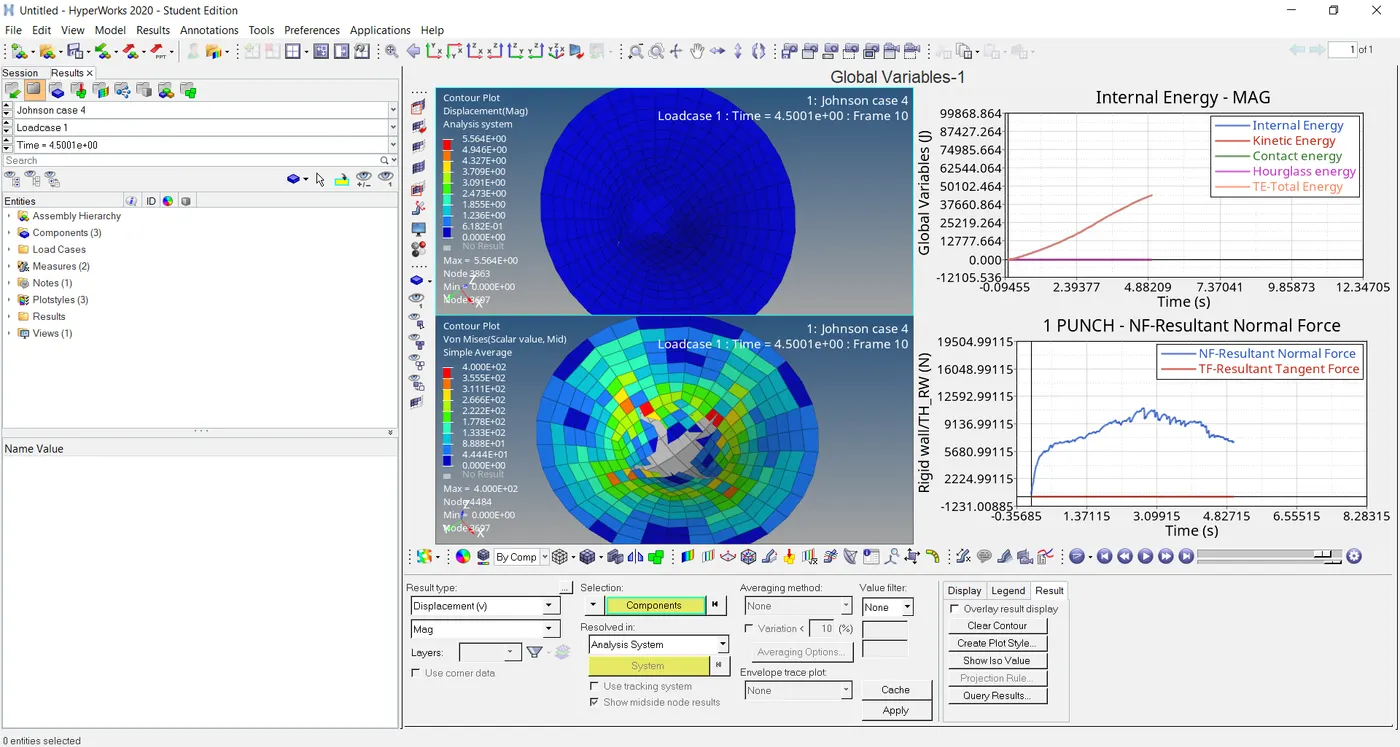
Results & Discusion:
- Eps Max = 0.40 means that material will fail once its stress value reaches 40% beyond its yield stress which is nothing but its Ultimate tensile strength point But now material was under constrained of Johnson failure card.
- Material behaviour found to be Elasto Plastic body with a Stress value of 400 Mpa.
- Material collapsed like tearing effect with no vanishing or deletion of the element was observed. Crack propagation was very smooth.
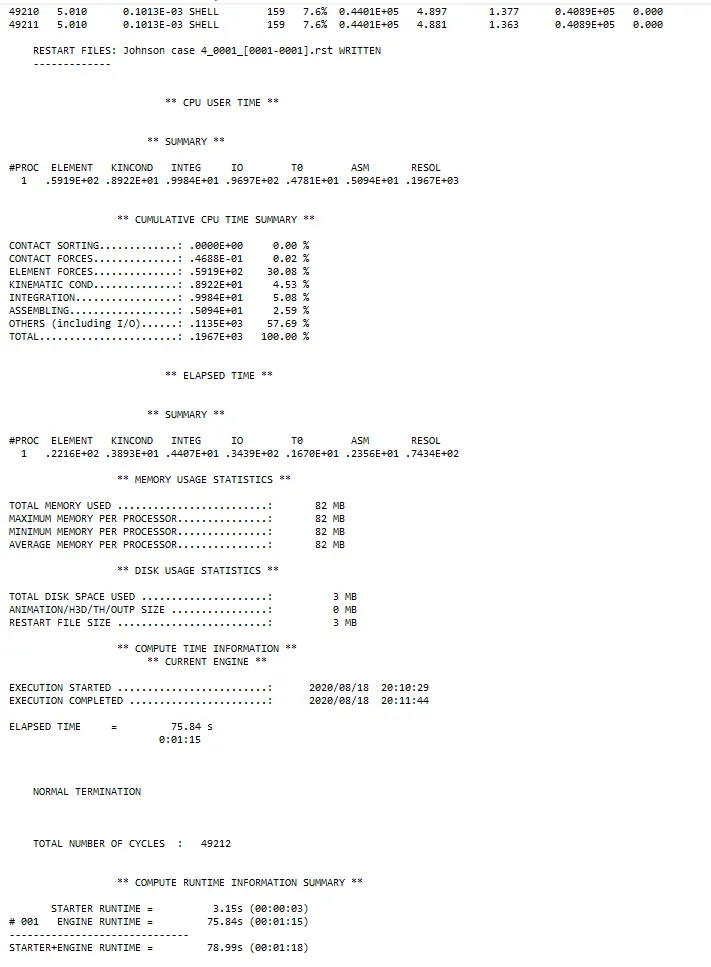
- Due to Johnson failure tremendous reduction in Cycle time was found equals to 9 S with 49212 cycles.
Case 5: Law 1 Elasto
Setup:
- Imported the Johnson 0000.rad model.
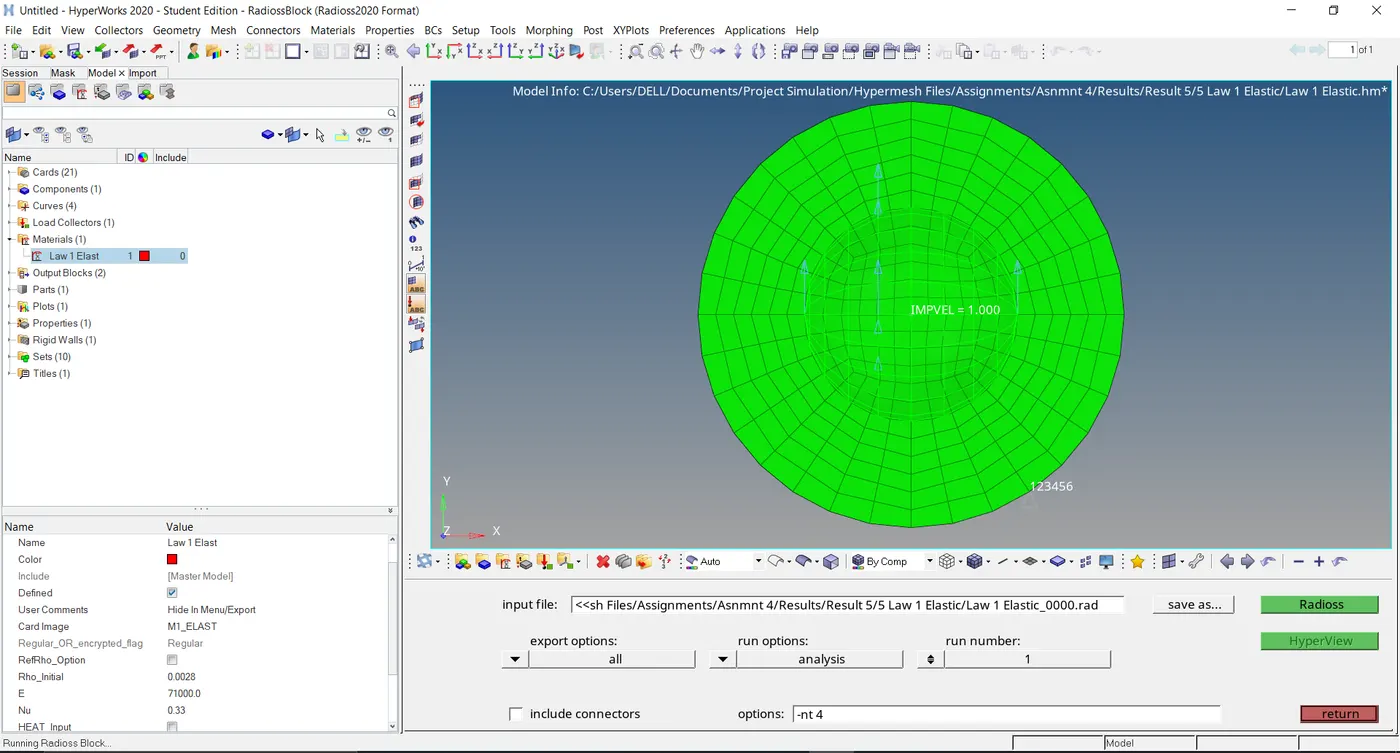
- Deleted the Failure johnson card & Updated the material card with Law 1 Under which Rho = 0.0028, E = 71000, Nu = 0.33 values
- Run the model & obtained various results.
Results & Discusion:
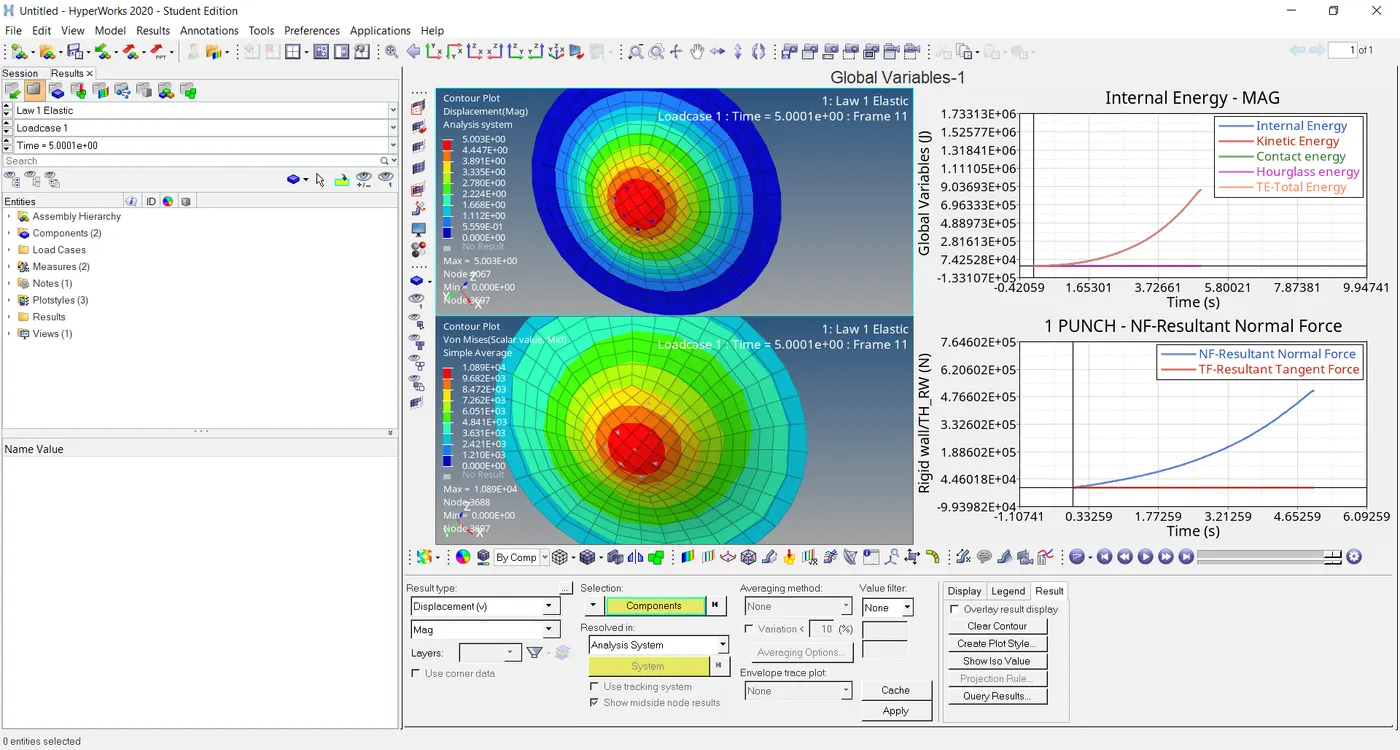
- Material behaviour was found to be Elastic body like rubber with a Stress value of 10890 Mpa.
- Elemental collapsing doesn’t happen cause the material to undergo such a huge stress value.
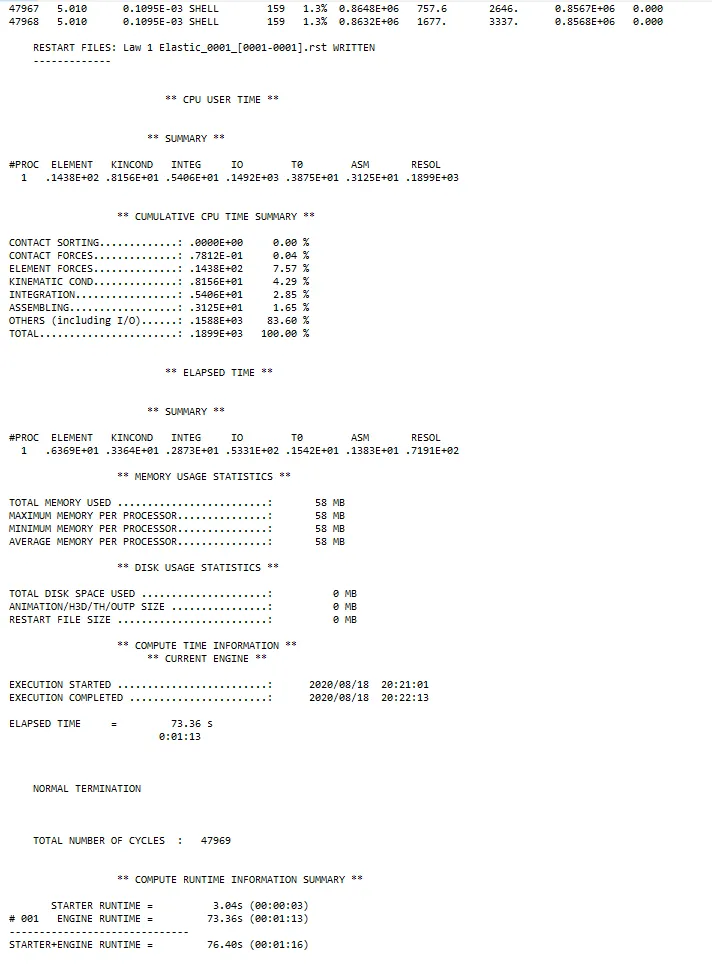
- Cycle time observed was 76.4 S with 47969 cycles.
Case 6: Law 36 Plas
Setup:
- Imported the Johnson 0000.rad model.
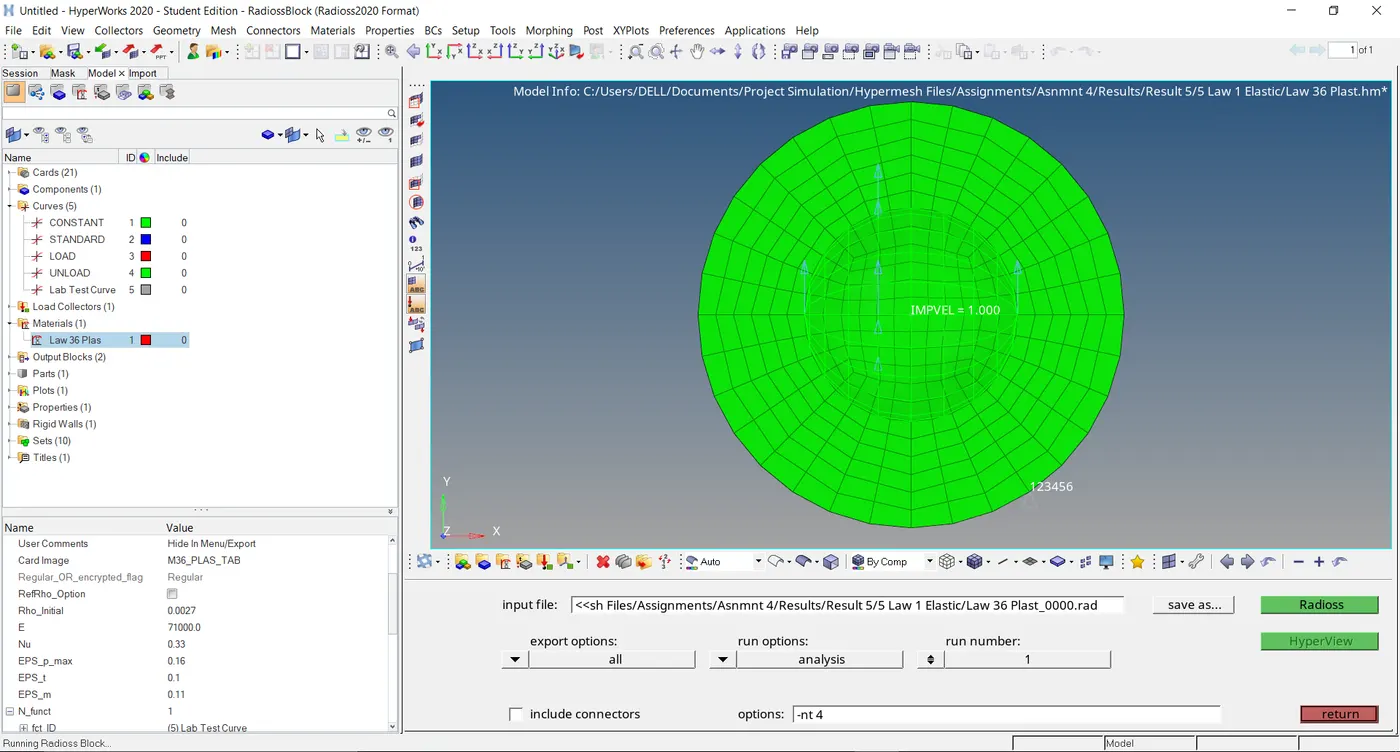
- Deleted the Failure johnson card & Updated the material card with Law 36 Under which Rho = 0.0028, E = 71000, Nu = 0.33 values
- Updated N func library by adding Lab tested Curve tab for stress-strain values.
- Run the model & obtained various results.
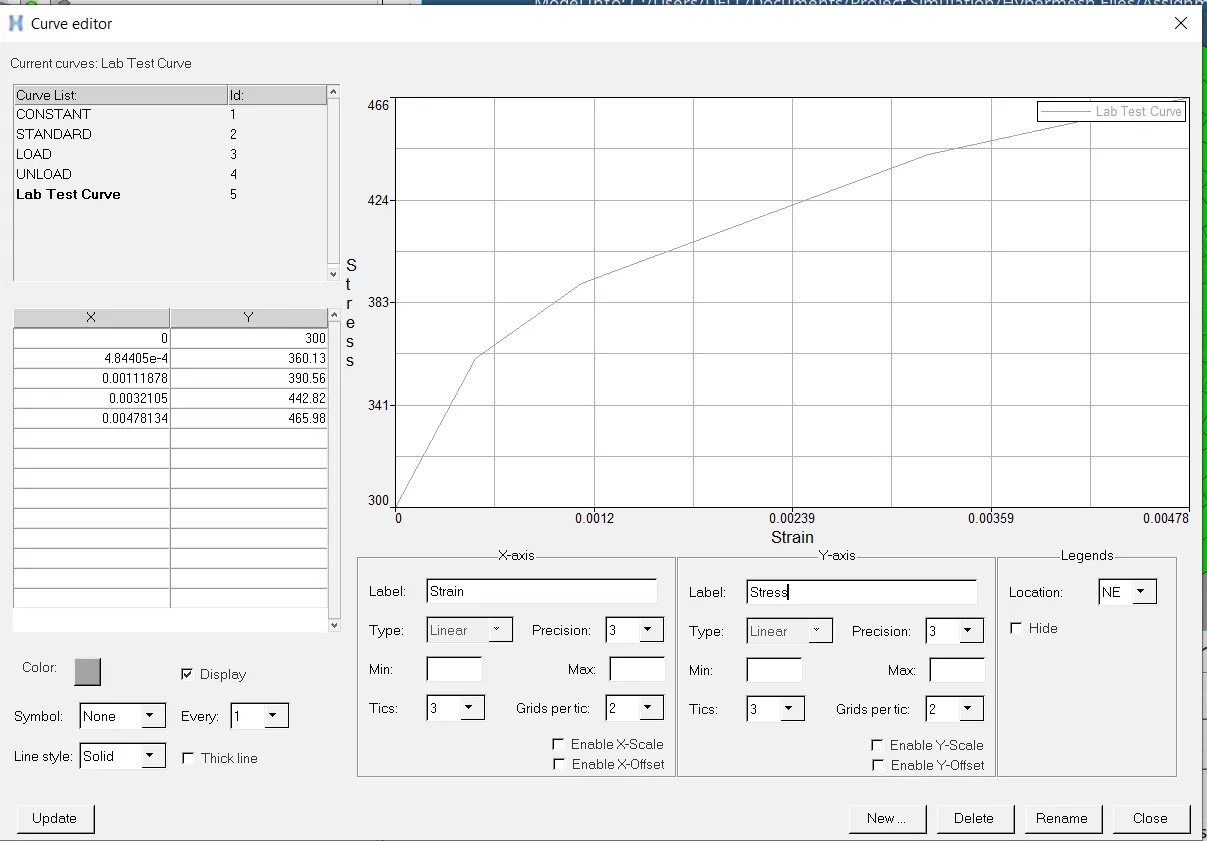
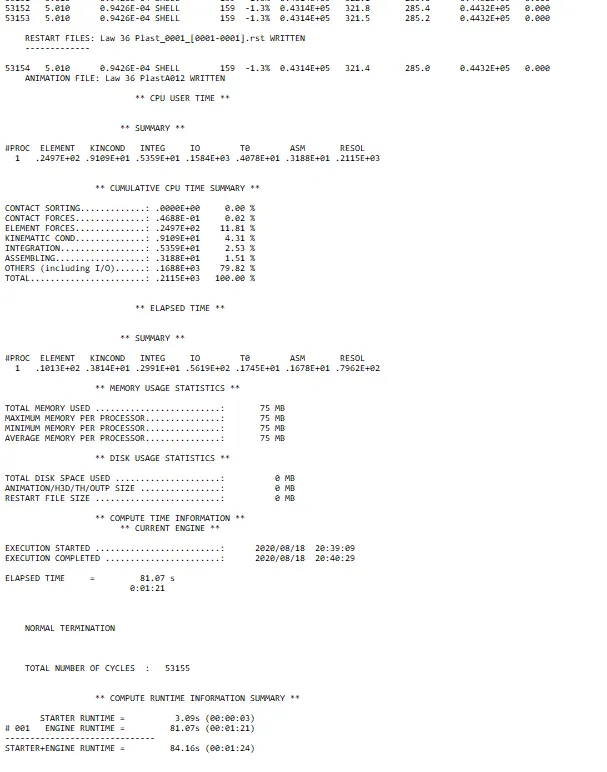
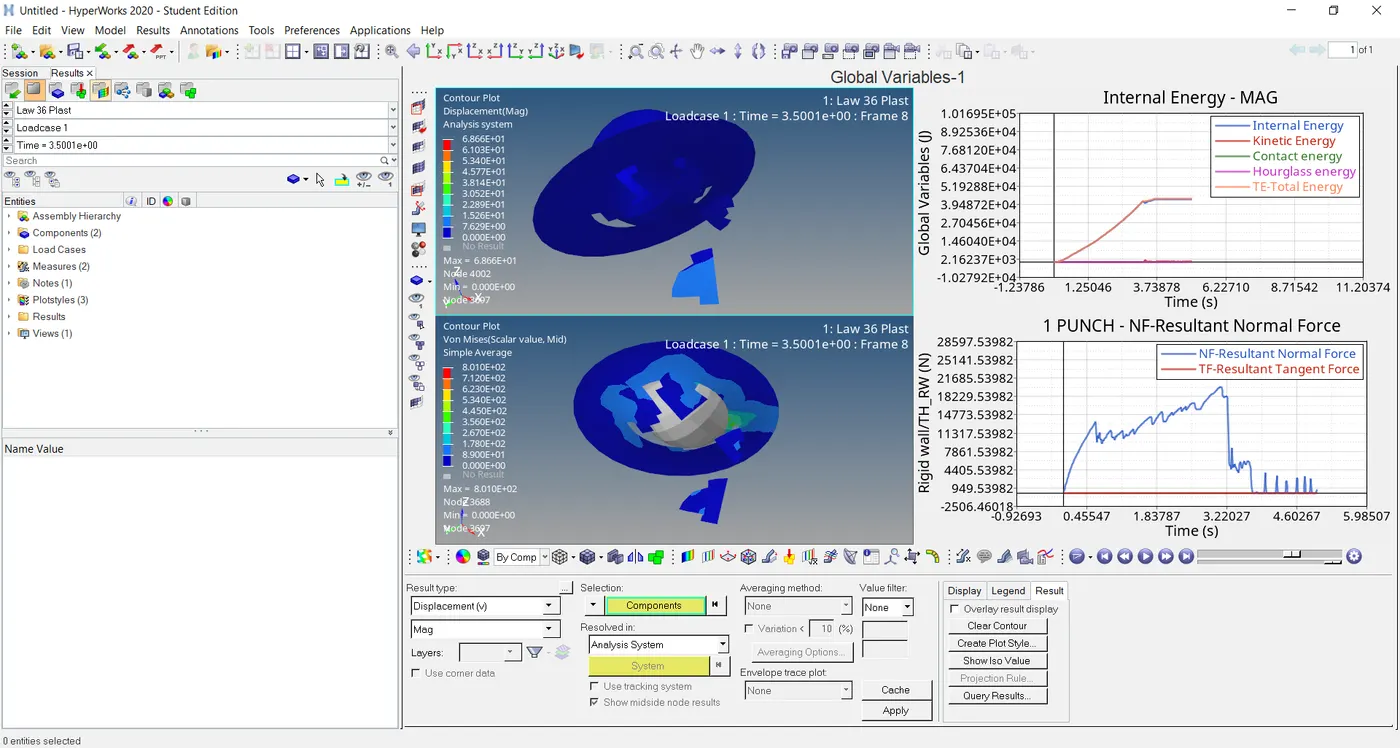
Results & Discusion:
- Material behaviour was found to be Real Elastoplastic body with a Stress value of 801 Mpa.
- Elemental collapsing happen with realistic effect and response.
- Cycle time found to be 84.16 S with 53155 cycles.
Case 7: Law 27 Plas Brit
Setup:
- Imported Law 27 0000.rad model.
- All the required plas brit data was available in material tab While updated the property tab by desired shell properties like 24 QEPH Smstrn = 2, Ish3n =2, N=5, Ithick = 1 & iplas = 1.
- Run the model & obtained various results.
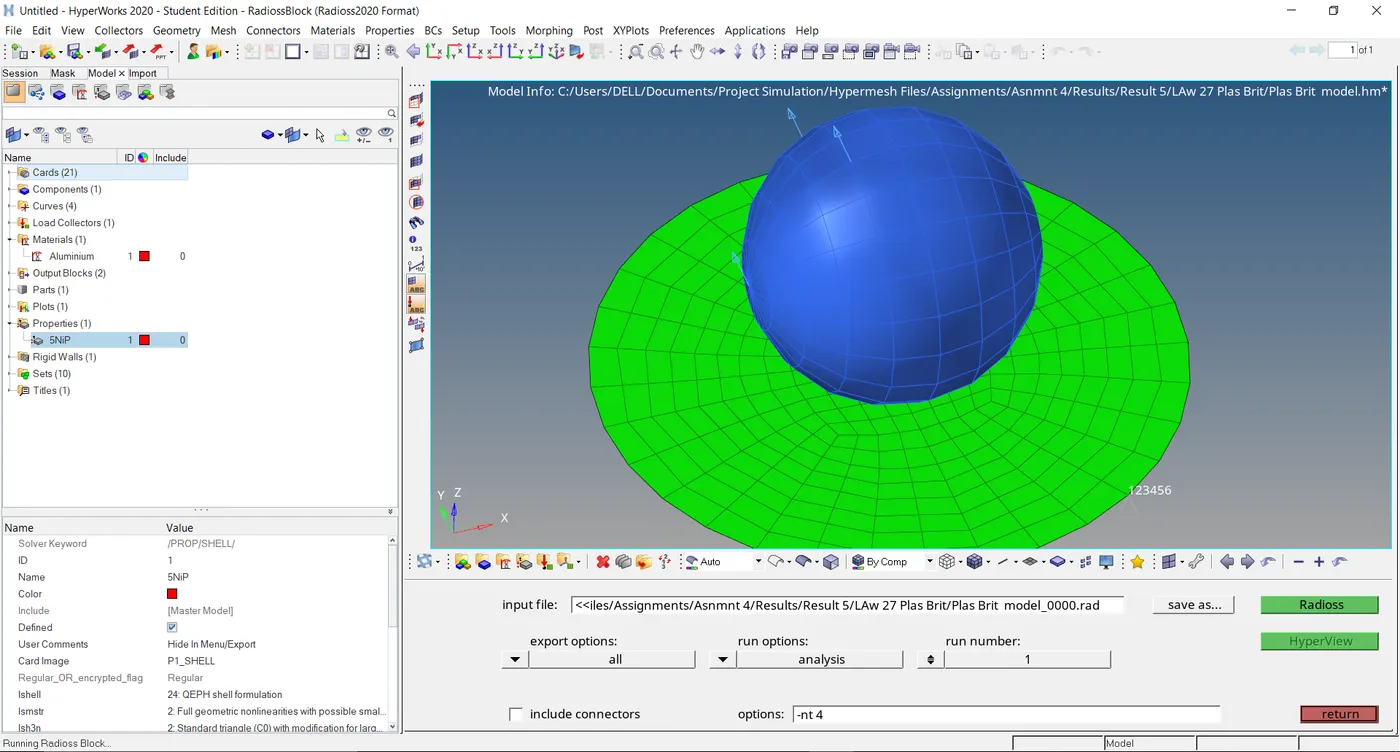
Results & Discusion:
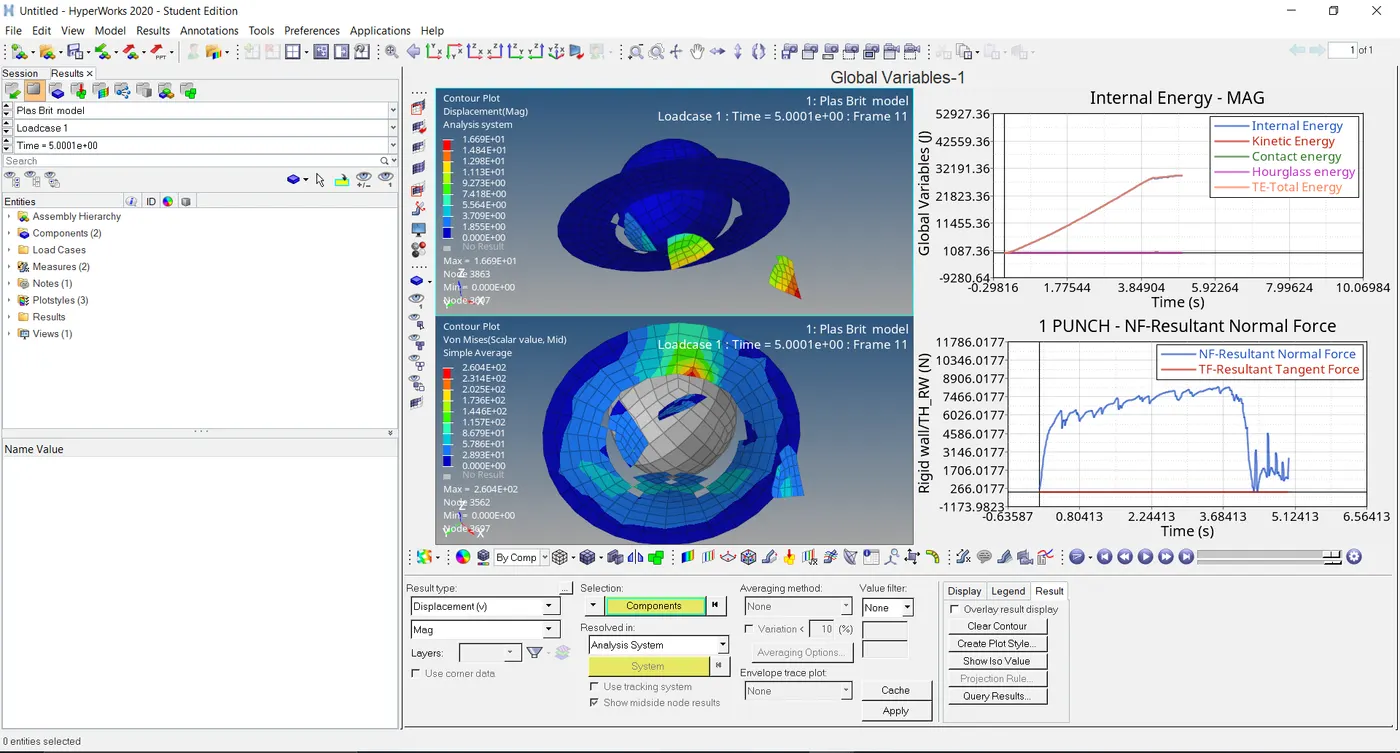
- Material behaviour was found to be perfect brittle crystalline material with a Stress value of 260 Mpa.
- Elemental collapsing happen with realistic effect and response.
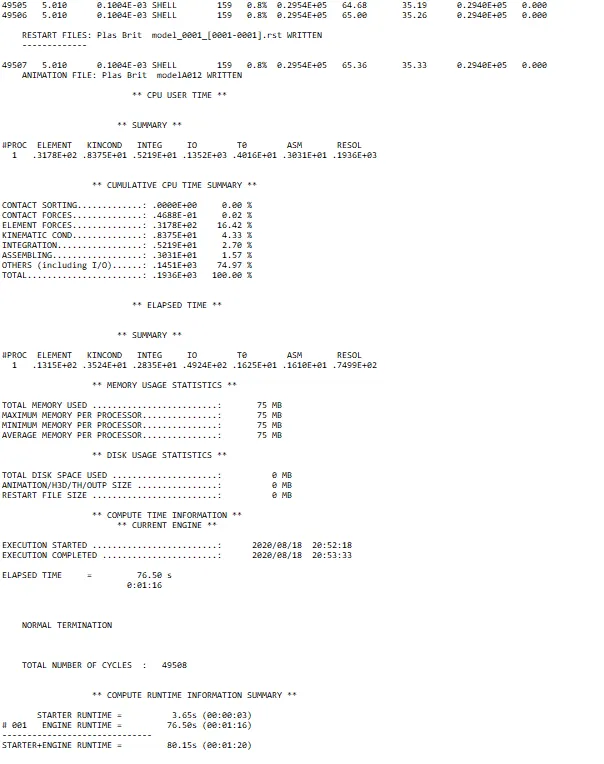
- Cycle time found to be 80.15 S with 49508 cycles.
Final Conclusion & Tabulation:
- Espmax value tells us the ultimate strength shift with respect to yield point. As Value goes away from 0, Ultimate strength value increases causing an increase in stress generation. While 0 is default value indicating infinite strength means material never gonna fail.
- Presence of Failure johnsons card neglects the presence of material esp card value. IEXm = 1 value prevents sudden element deletion and exhibits proper crack propagation.
- Law 1 explains Elastic behaviour, Law 2 gives Elaso plastic, Law 36 Real elastoplastic while Law 27 explains Plastic brittle material.
|
Model Name |
Cycle time (S) |
No. of cycles |
Energy error |
Mass error |
Displacement (mm) |
Von Misses Stress(MPa) |
Energies(J) TE,IE |
Forces(N) NF |
|
1) Esp = 0 & no failure |
148.81 |
48737 |
3% |
0.62e5 |
5.01 |
424 |
7000 |
20000 |
|
2) Esp = 0.40 & no failure |
148.8 |
48737 |
3% |
0.62e5 |
5.32 |
374 |
45000 |
10000 |
|
3) Esp = 0.4. & Default failure |
78.4 |
49304 |
1.1% |
0.38e5 |
5.62 |
244 |
40000 |
9000 |
|
4) Esp = 0.40 & Iexm failure |
78.9 |
49212 |
7.6% |
0.40e5 |
5.56 |
400 |
40000 |
11000 |
|
5) Law 1 Elastic |
76.4 |
47969 |
1.3% |
0.85e6 |
5 |
10890 |
900000 |
500000 |
|
6) Law 36 Plas |
84.16 |
53155 |
-1.3% |
0.44e5 |
68.6 |
801 |
40000 |
20000 |
|
7) LAw 27 Plas Brit |
80.15 |
49508 |
0.8% |
0.29e5 |
16.7 |
260 |
30000 |
8000 |