Assignment 3
OBJECTIVE
Perform a base simulation and extract important results like total, kinetic, internal, contact and hourglass energies, rigid wall forces
Modify the properties (as shown in the below image) and rerun the simulation and compare the results.
Determine if both the simulation are acceptable or not.
PROCEDURE
Requried
Total simulation time = 55 ms
no of animation steps = 55 (1 frame per second)
Case 1 - Base simulation
- Use given file. Change the total simulation time to 55 ms and change the frequency of animation steps i.e. ANIM/DT to 1. There will be total 55 animation steps
- Go to analysis -> Radioss -> select the path -> Radioss. This is will perform analysis
- To check the animation file open .h3d file in Hyperview. One can extract details like stress, strain and deformation undergone.
- Open Hypergraph to extract open binary data. T01 file is used to extract data points. Energy, forces etc can be extracted here.
Case 2 - Modified Simulation
- Edit the property file as per the below image.
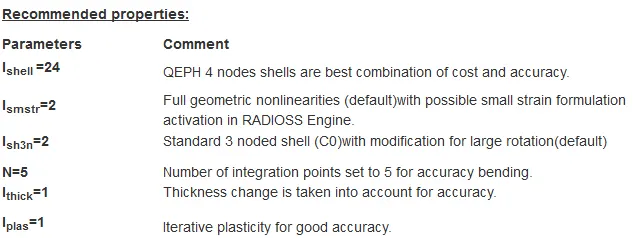
- Here the shell formation is edited and non linearities are taken into consideration.
- Re run the simulation with different name. Follow the procedure discussed above. and extract relevant data.
RESULTS
Following values are extracted and compared.
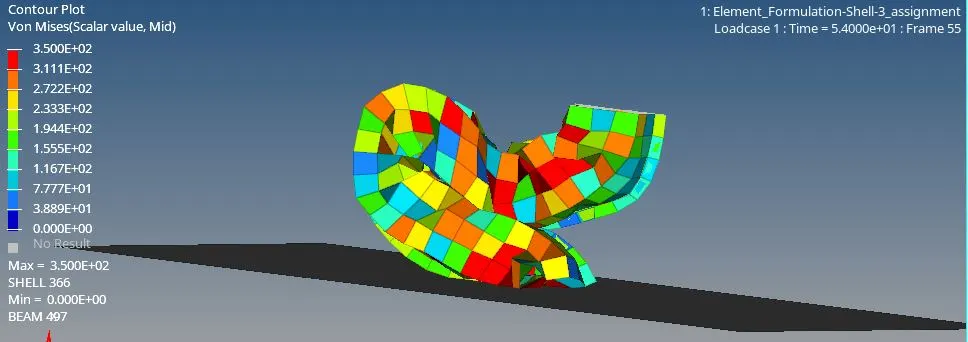
Stress
Base
Modified
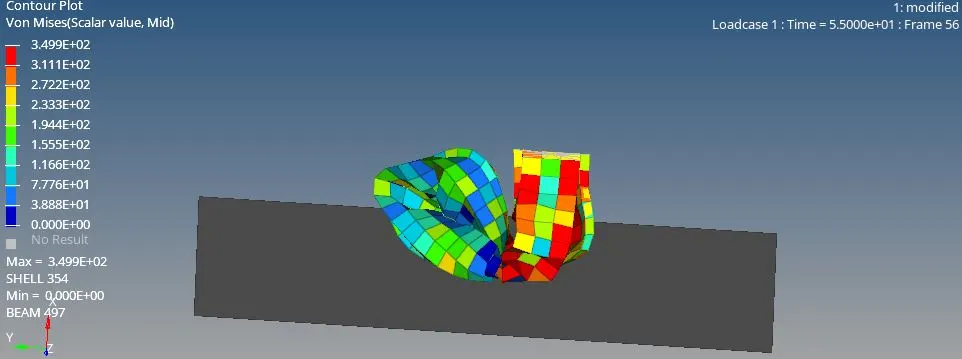
The max stress in both the case is same representing the same impact phenomena in both cases.
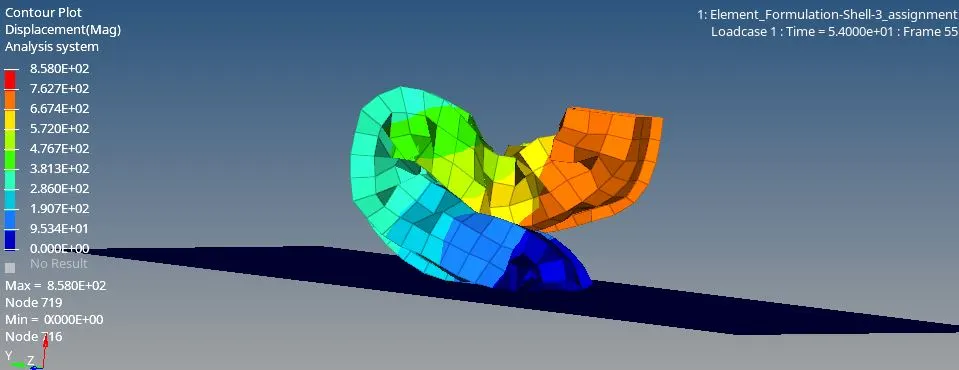
Displacement
Base
Modified
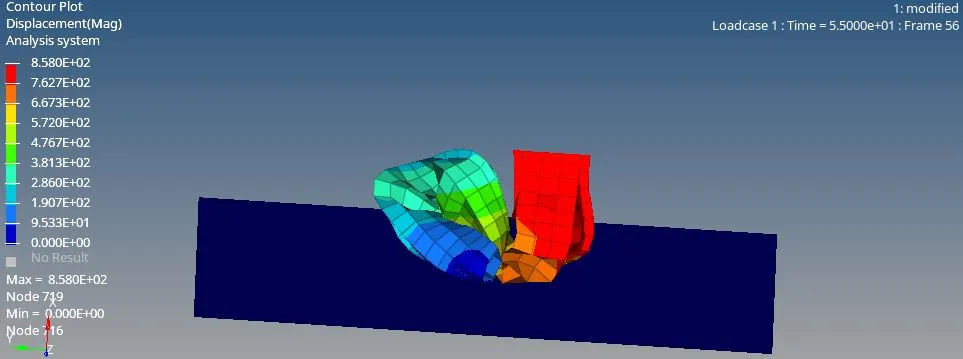
The element which undergoes the max dsiaplacement is same. also the value is same.
Hourglass energy
Base
Modified
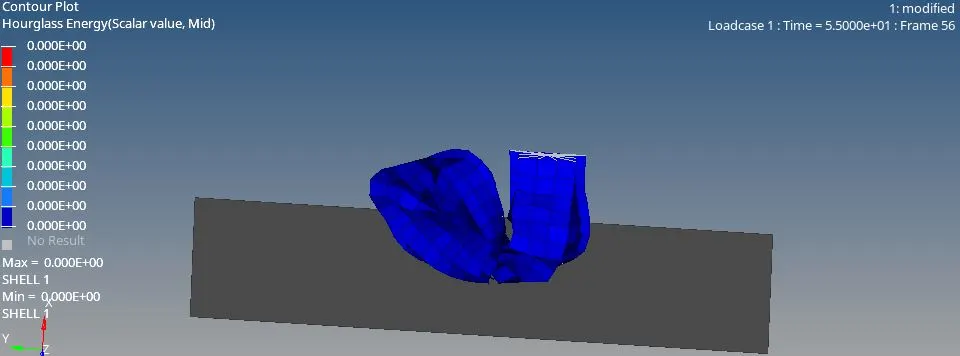
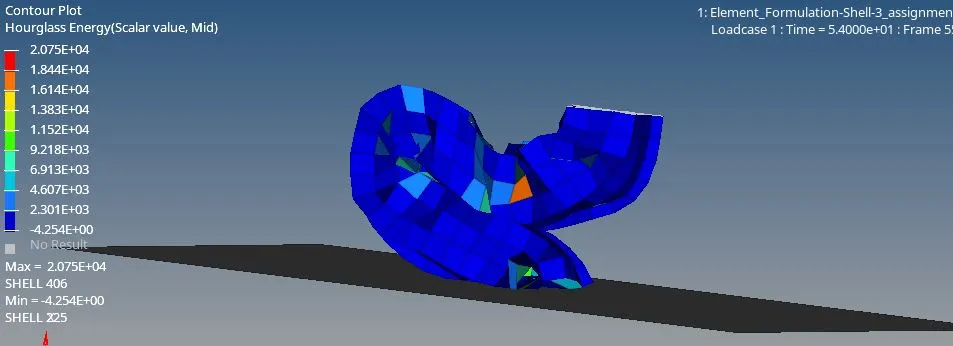
Base simulation has very coarse mesh and thus the element have deformed in unwanted manner. This problem is resolved in modified case due to the use of better shell card i.e. QEPH which is modified card and have 4 integration point and thus a proper solution is captured as oppose to only 1 integration point in base simulation.
Energy
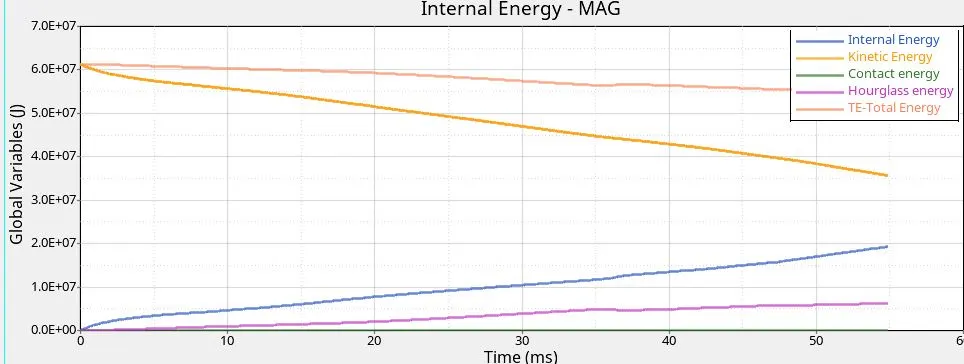
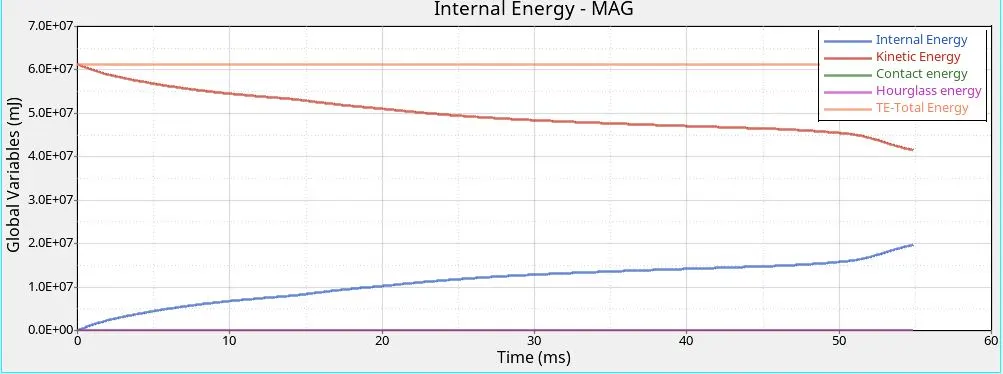
Based on the images and the rise and drop in internal energy and kinetic energy respecctively and total energy being conserved we can say that our intended simulation was successful.
The total energy starts at almost same value and thus confirming the same physics employed for both the simulation. In base simulation we see the drop in total energy which is due to the error accumulated due to improper use of shell card and not considering the non linearities in the simulation. Due to this we have hourglass energy. Whereas in modified case due proper shell formulation and non linearilities being captured the error in simulation has reduced and the total energy remains almost constant. Also there is no or very little hourglass energy which shows there is no unwanted elemental deformation.
Contact energy
Base
Modified
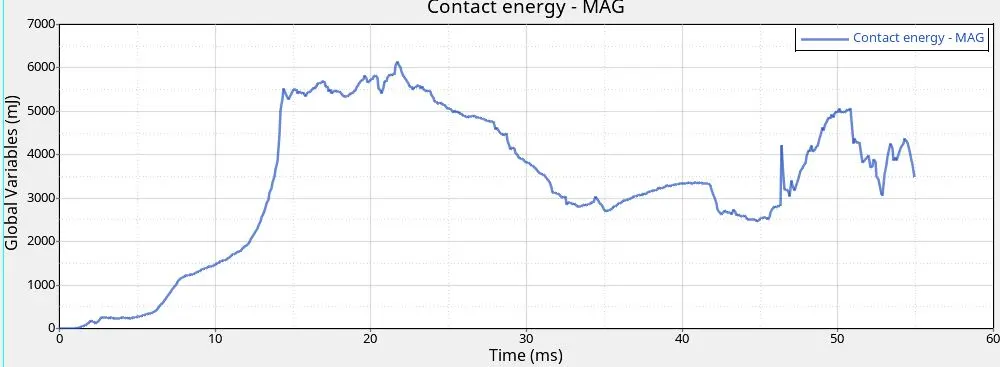
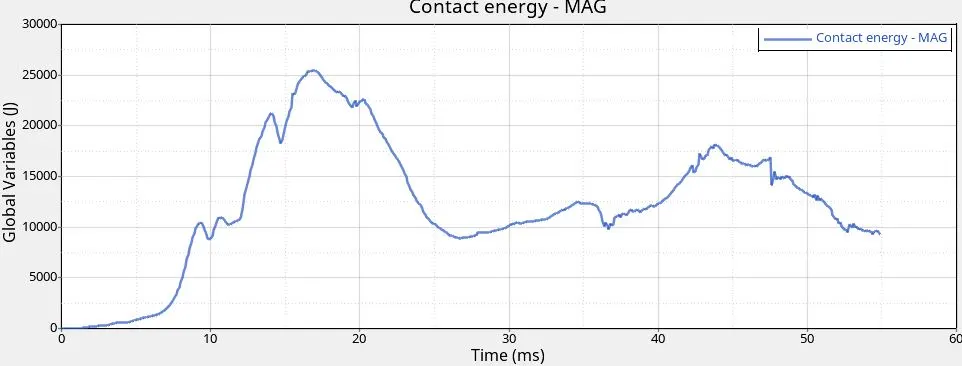
We can see that there is considerable drop in the contact energy which again is caused due to more integration point in modified and thus the correct value is being captured.
.Out File output
Base

Modified
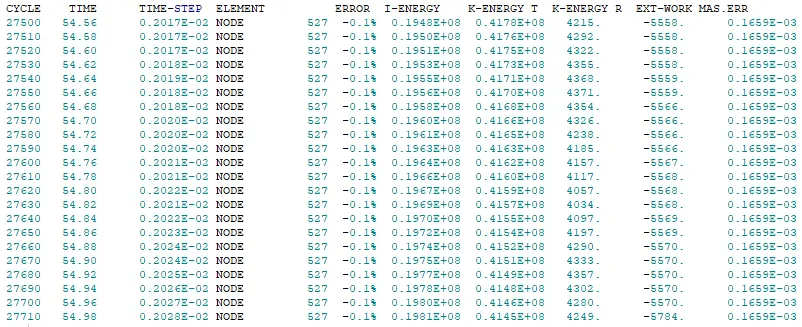
We can see that the error of 10% in enerrgy in base simulation is reduced on only 0.1% in modified case which shows the effect of using correct formulation and cards can improve the accuracy of our results. But since the error is less than 15% both results may be acceptable.
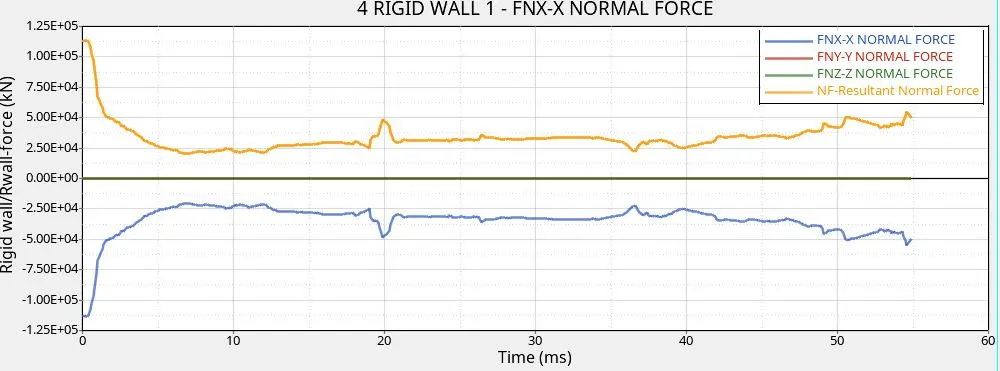
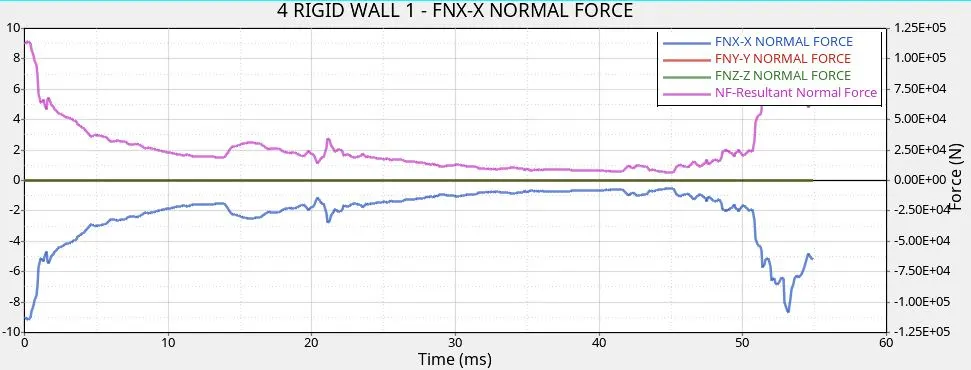
Rigid Wall Force
CONCLUSION
From the above excercise we learnt the basic process involved in running and editing the simulation and postprocessing the results.
It also showed the impact of using correct cards can have on the accuracy of the results. Also the accceptable error in the simulation and how they can be worked with was learnt in this activity