Assignment 3-2D Element Formulation Challenge
Aim: To run the simulation, study the 2D element formulation and compare the results.
Objective:
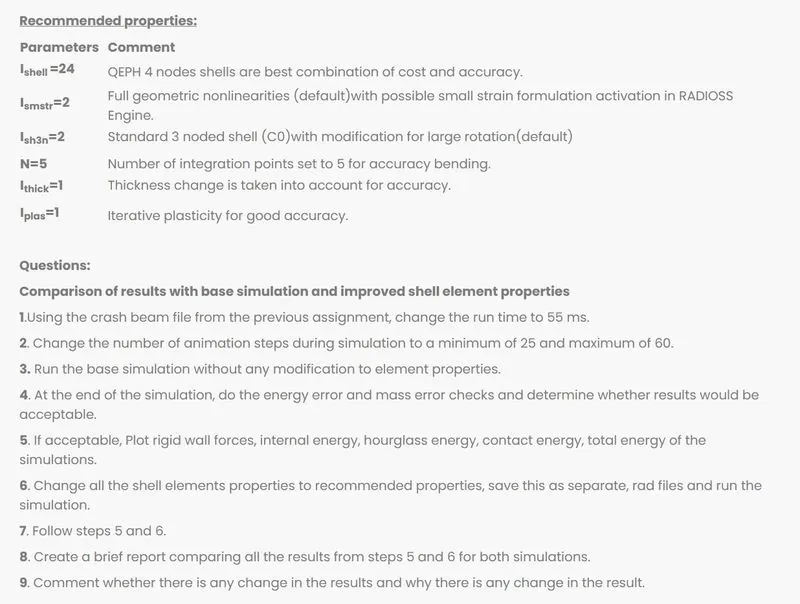
Procedure:
For Case 1
- Let us first import the .rad file using import solver deck.
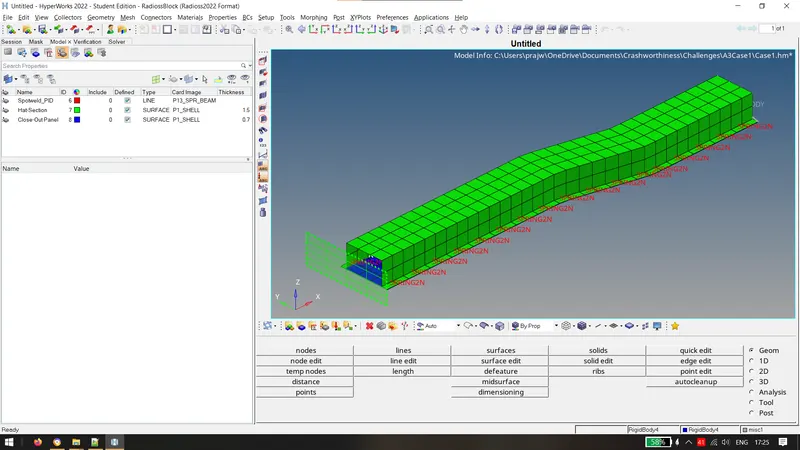
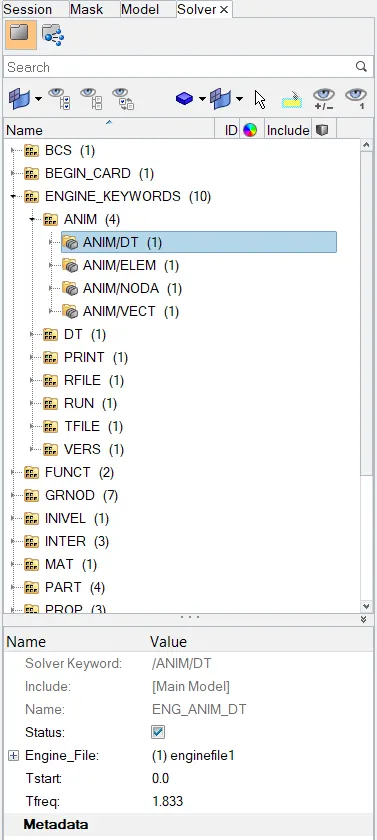
- In the solver deck change the following settings for 30 frame steps:
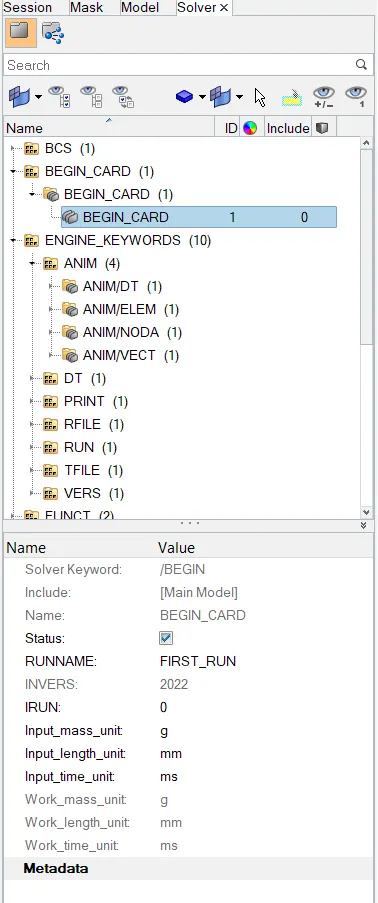
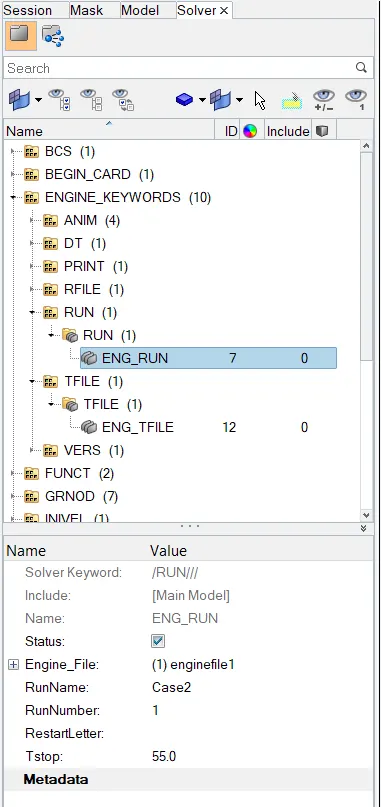
- Following settings have been used for the model:
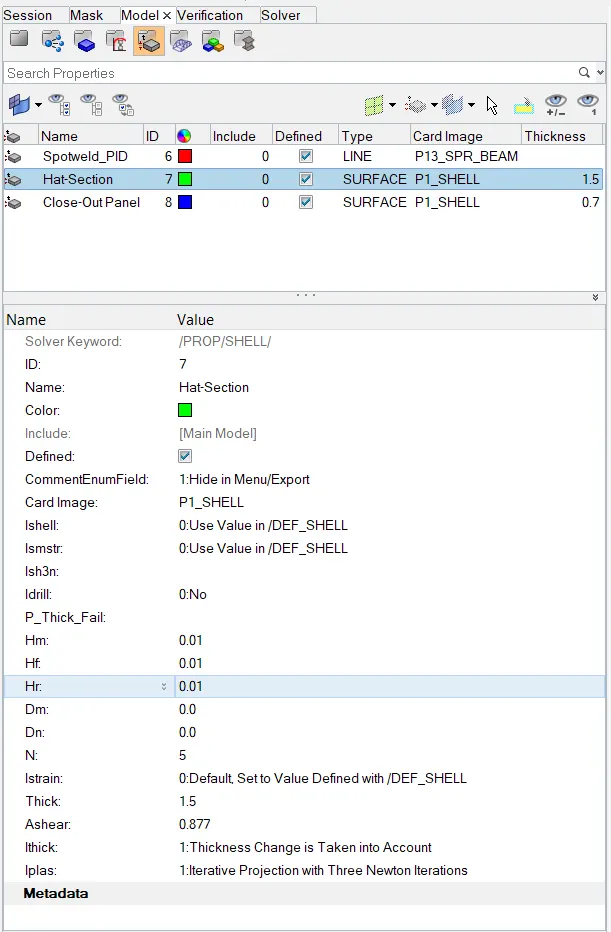
- Now, save the model and run the analysis. (analysis > radioss > following settings below > Radioss)
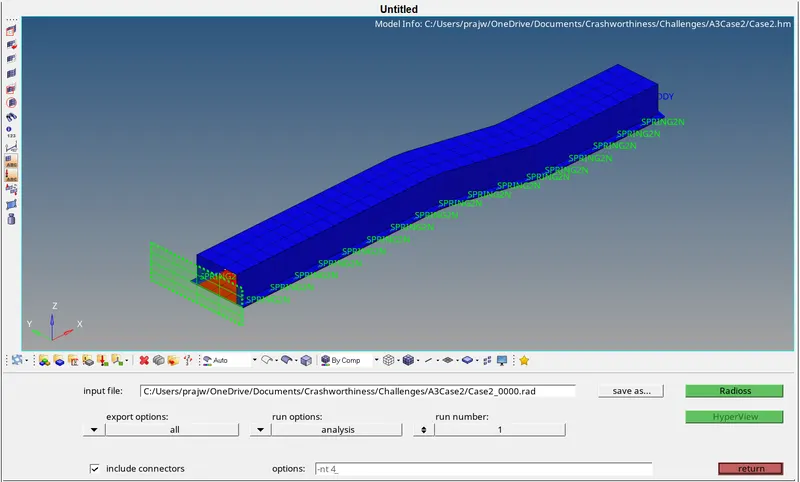
- After running analysis open the results:
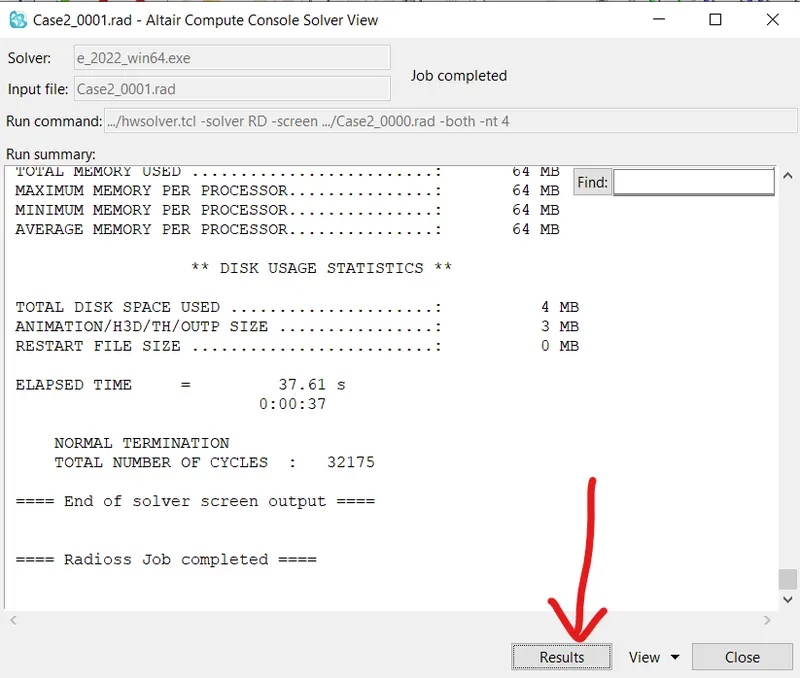
Now for Case2:
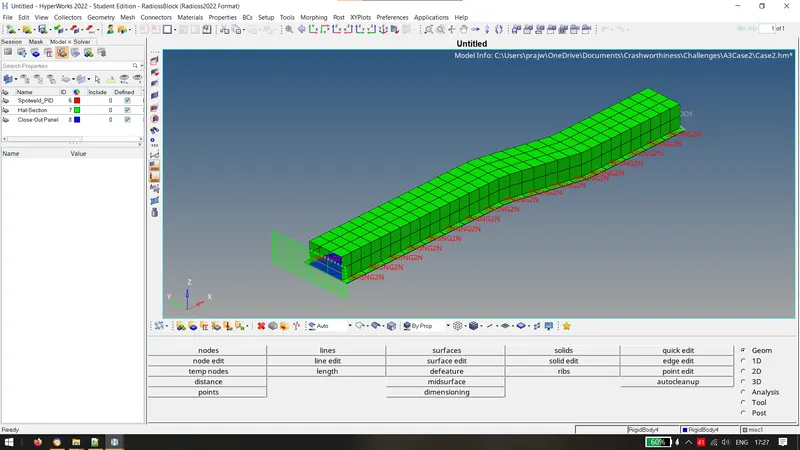
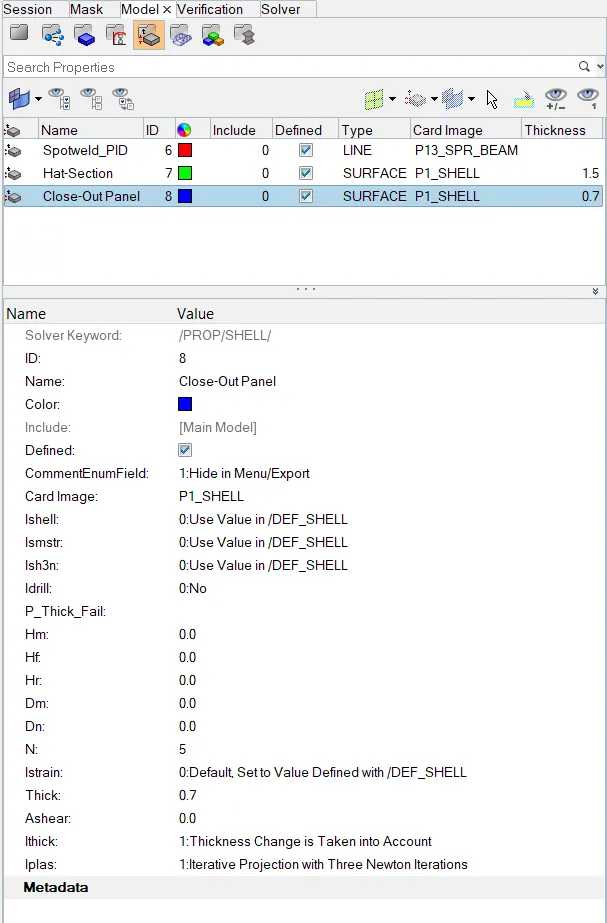
Model Properties for case 2:
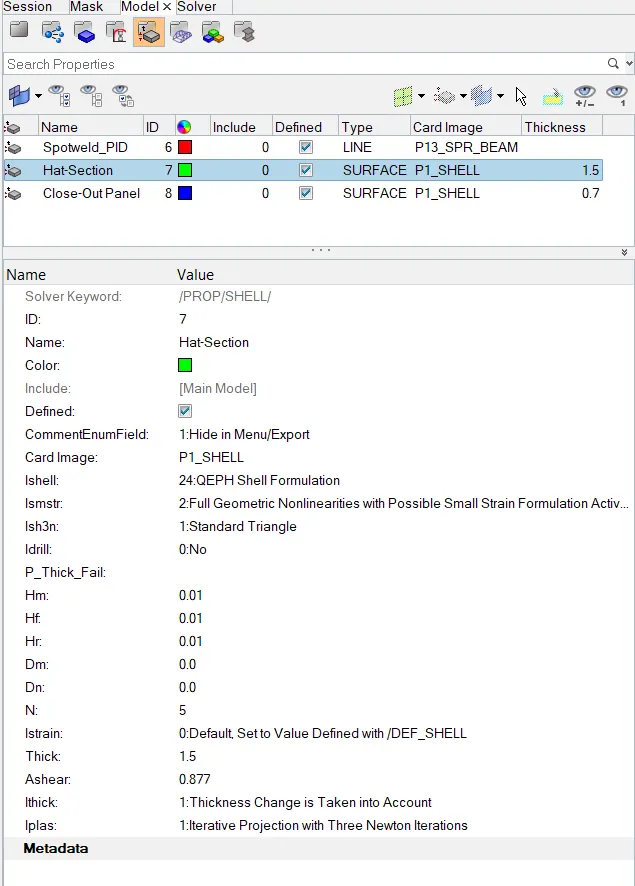
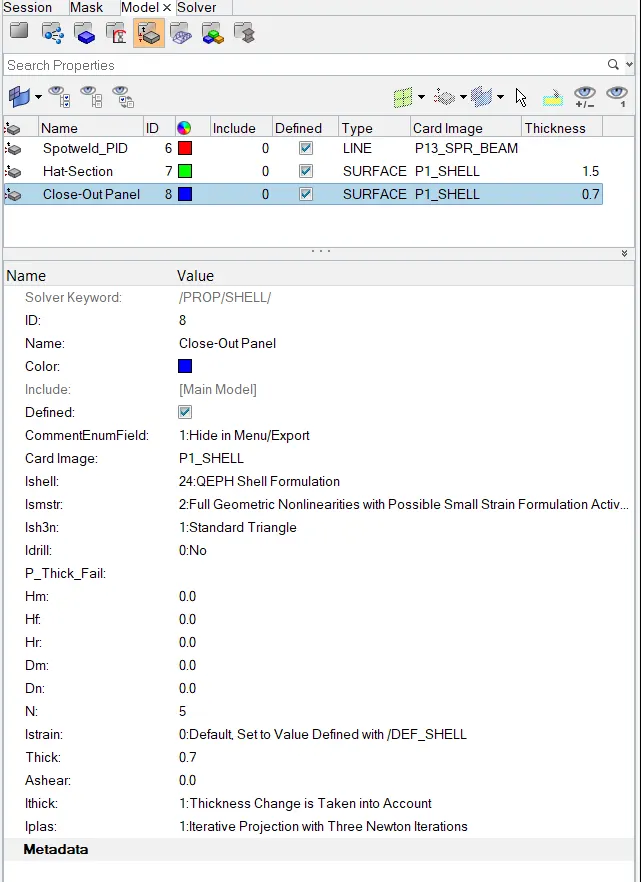
- Now, similarily perform analysis as done above and get the results:
Divide the window into 4 parts and plot the graphs and animations for the results required as shown in the objective. Use Hyperview and Hypergraph 2D for Plotting Vonmises Stress, Hourglass energy, time vs rigid wall forces, time vs energies stated below:
Note: Only 7 frames are visible from 30.
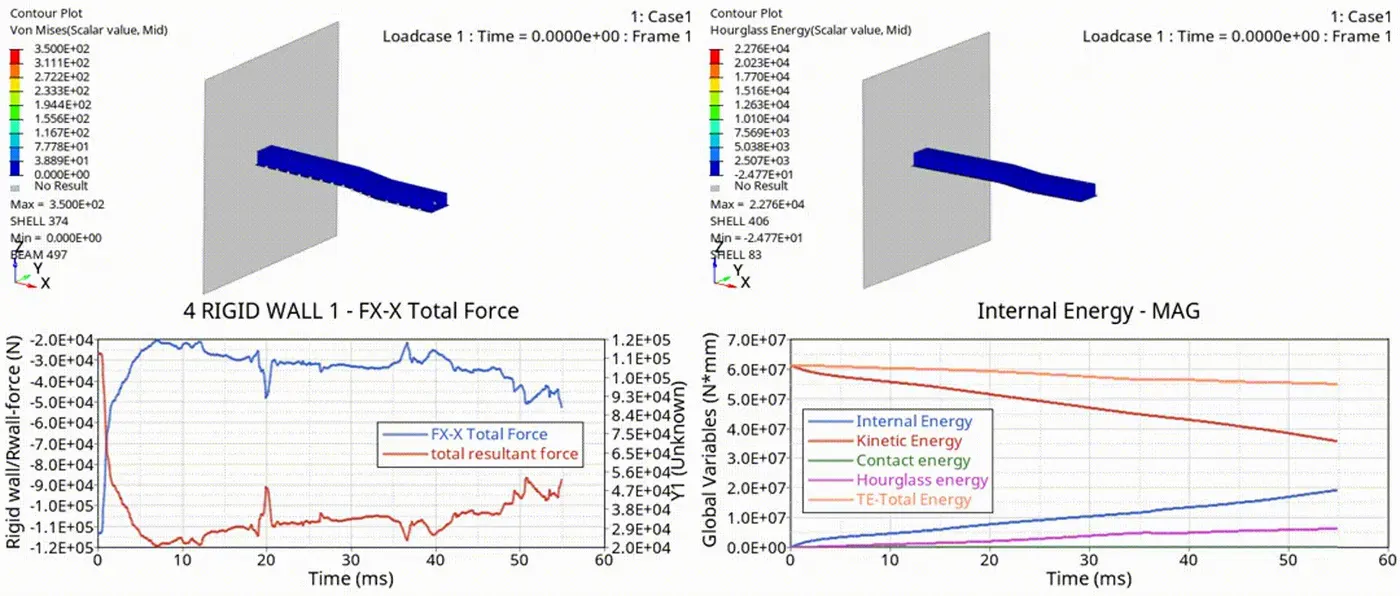
For Case 1:
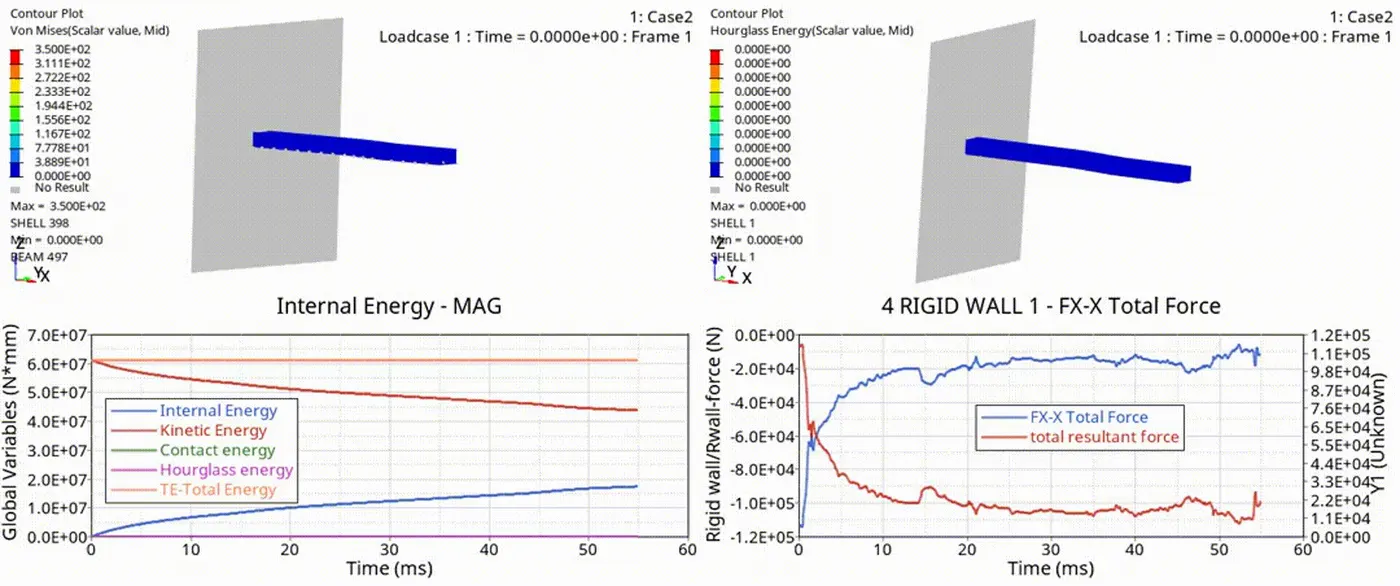
For Case 2:
Also for energy error and mass error, we open the 0001.out file in notepad:
For case1:

For case2:

Conclusion: (Checkout the information provided in the beginning for results conclusion)
About Energy Errors and Mass Errors: We can see that the energy errors in the first case is seen to be -10.3% whereas in case 2, the energy error is -0.1%. The lesser the energy error, the better are the results. The mass error is also seen to be almost same in both the cases i.e. 0.165E-3 which is acceptable. The mass added is same throughout the process.
For Hourglass Energy: We can say that the max hourglass energy for the first case is 2.267e4 and for the second case it is 0 as seen in the plots. The result for hour glass energy in second case is ideal.
For Rigid Wall Forces: The X total forces in case 1 is seen to be increasing uptill 6ms and decreasing after it and vice versa for total resultant forces. Also, the X total forces in case 2 is seen to be increasing and and decreasing for total resultant forces.
For Energies: From the plots and the output file, we can conclude that: The total energy in case 1 is decreasing and in case 2 it seems to be constant. The internal energy is lesser in case case 2. The kinetic energy is greater in case 2. The contact energy is same in both the cases.