Ahmed Body Challenge
OBJECTIVE
Setup a case for external flow dynamics over an ahmed body. Air flow velocity is 25m/s. Extract following data
- Pressure and Velocity contour
- Drag and lift coefficients
- Vector plot for the wake region
Also perform grid independece study to optimum output
THEORY
Ahmed body is benchmark body speccifically used for validating different turbulence model and simulation tools under varying input conditions. It is a simple geometry that depicts the car geometry and capture the flow around this features efficiently. The main objective of performing ahmed body study is evaluating drag, lift and pressure coefficients on the body and determine the vortex formation under differnt working conditions. Different accessories like spoiler and hoods are tried using some standard geometries and upon confirmation of having positive effect are tried out in actual automobile.
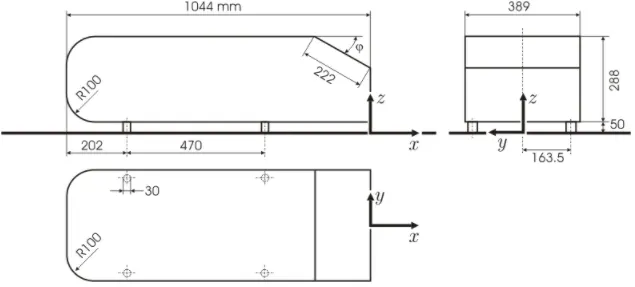
The dimensions of ahmed body are as follows
PROCEDURE
Simulation is done for different mesh sizes and results are discussed in detail. The typical procedure for setting up the simulation remains same and is discussed for one case only. This is as follows.
Geometry Setup
- open spaceclaim -> import geometry
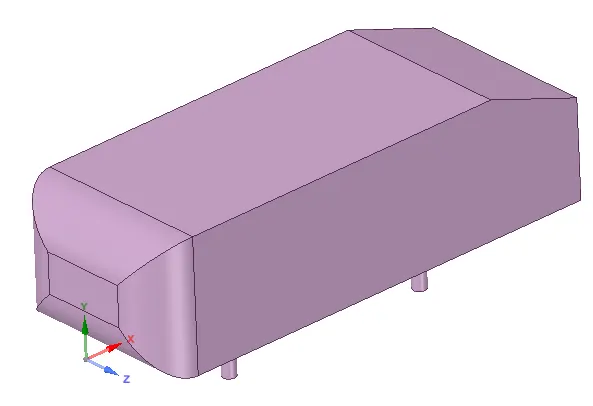
- Since Ahmed body is a symmetrical object, the simulation can be done using symmtery option using only one half of symmetric portion.
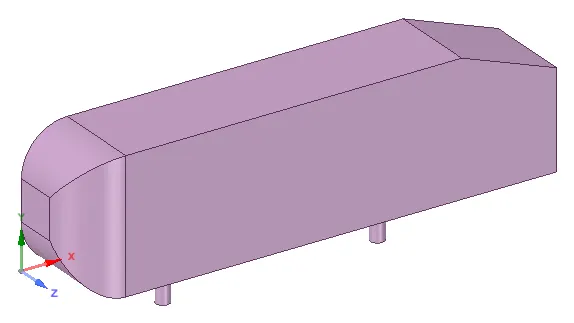
- Ahmed body is split into half using Split body option.
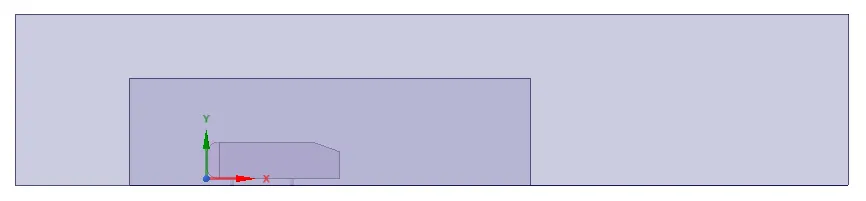
- Enclosure -> we will build two different enclosures one to replicate surrounding environment/wind tunnel and one to capture the results in the close proximity of the body. Suppres ahmed body for physics
Mesh
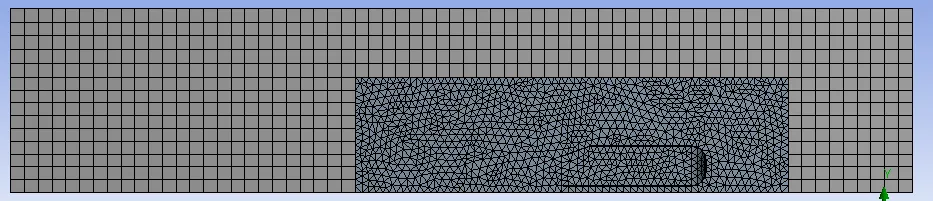
- Use Mesh-> Method -> multizone for outer enclosure to control the element type in oter enclosure. Since hexa mesh are better choice and element size in outer enclosure will not affect the simulation.
- Use Body sizing option to control the mesh size in smaller enclosure
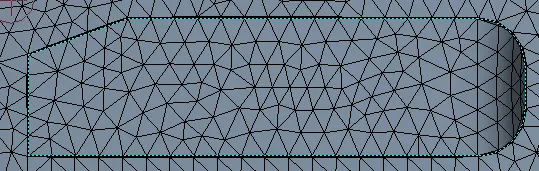
- Use Face sizing to capture the close feature of car body
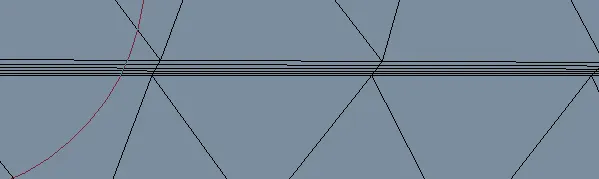
- Use inflation layers to establish close mesh following the carbody. The thickness of inflation is decided based on Y+ value which. The target Y+ value for our simulation is 100 and thus we get the wall thickness as approx 0.003 m.
Setting up Physics
- General -> Steady/ Pressure based (mach no is < 0.3 so the flow is incompressible)
- Model - Turbulence model - Kepsilon.
- Material - default material air, density = 1.225 kg/m3 and viscosity = 0.00001794
- Boundary Condition - inlet -> velocity= 25m/s, outlet -> pressure = 0, left,right and top wall -> symmetry, bottom wall -> wall (no slip condition acting as a road)
- Definition - Drag coefficient and Lift coefficient on ahmed body walls
- Initialization -> Hybrid (to create initial condition in geometry)
- Solve -> Run Calculation
Results
- Residuals, Cd and Cv plots
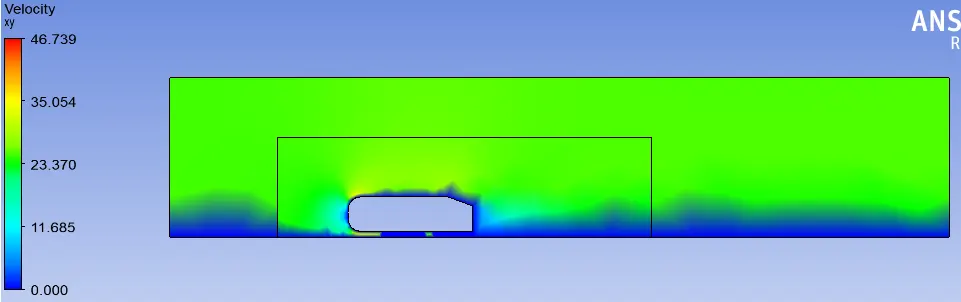
- Pressure and Velocity contours
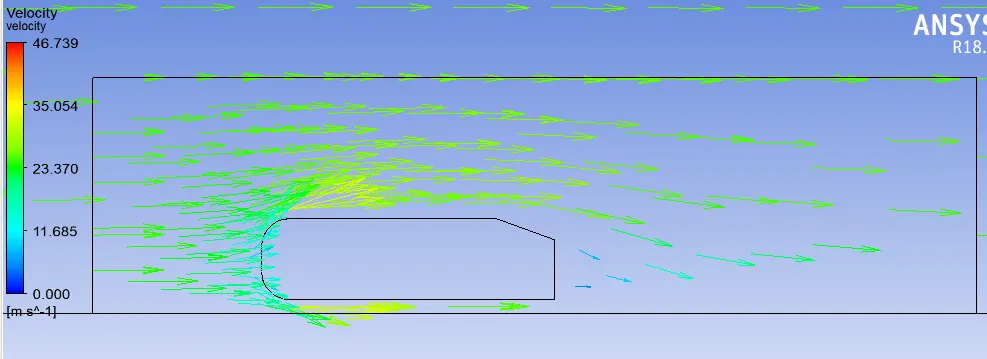
- Velocity vector near the wake region of ahmed body
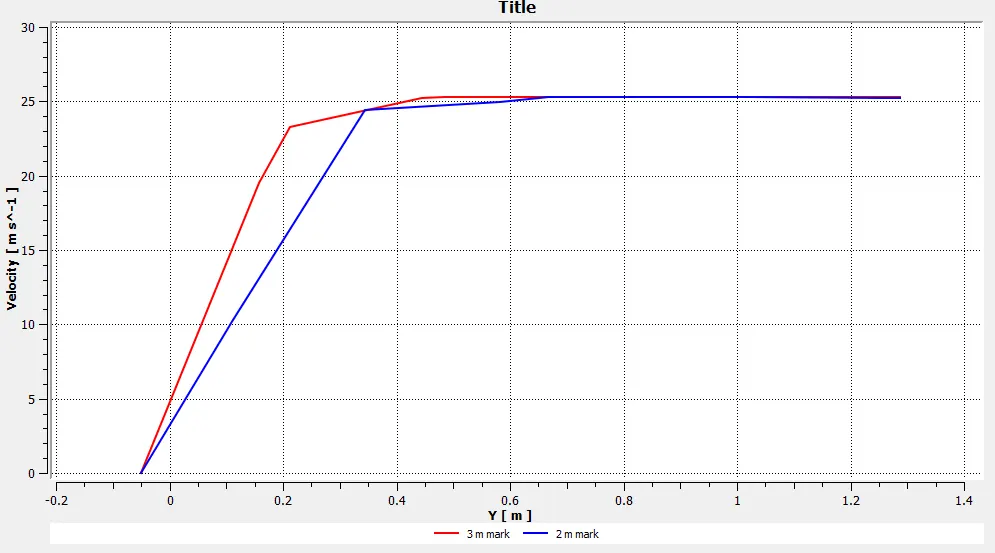
- velocity at 2 different positions of the windtunnel
RESULTS
Case - 1 Automesh (default mesh size)
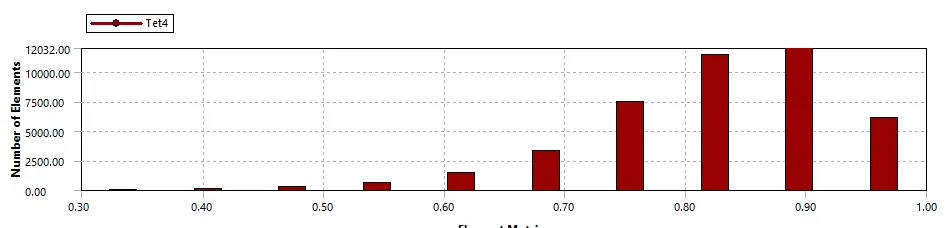
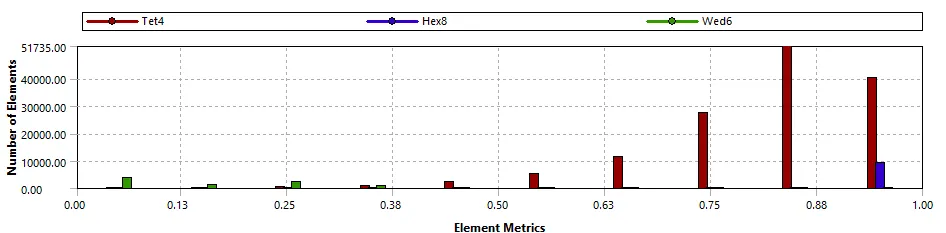
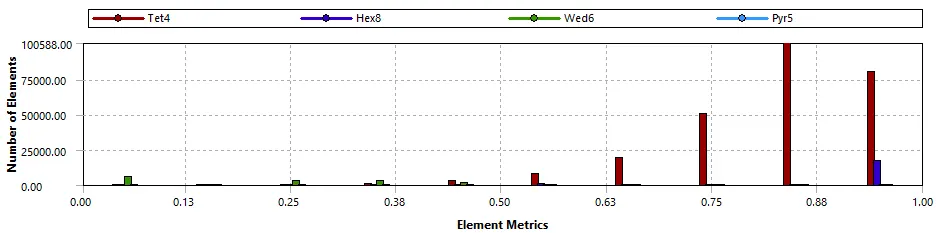
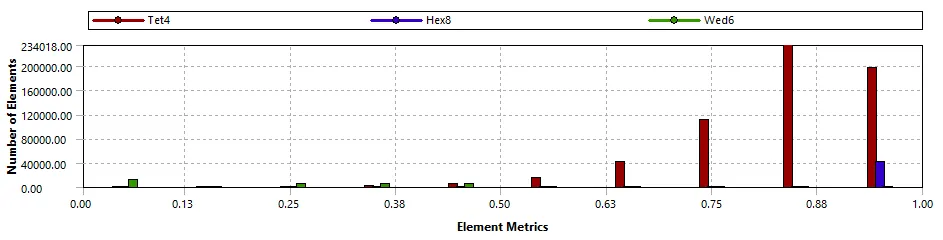
Mesh quality
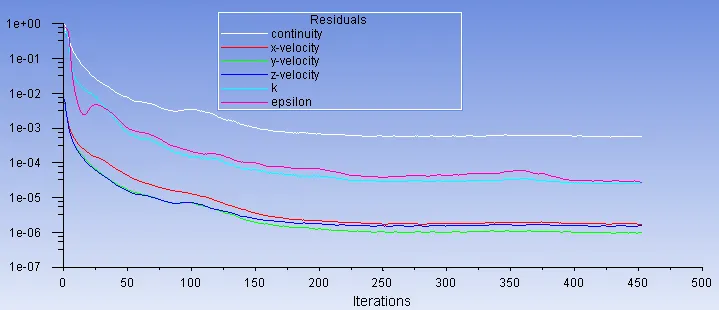
Residual Plot
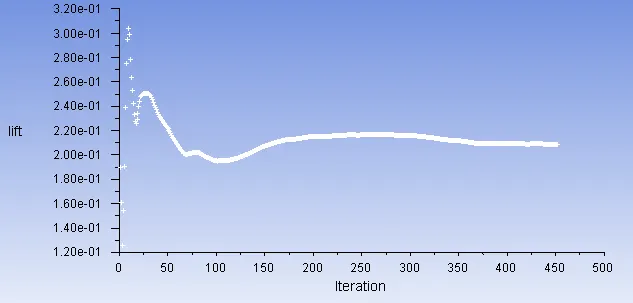
Drag and lift plot
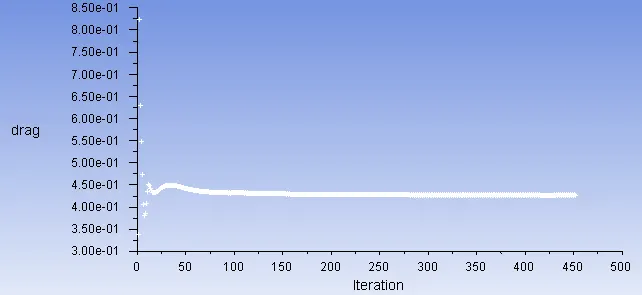
Cd = 0.42680838
Cl = 0.20841402
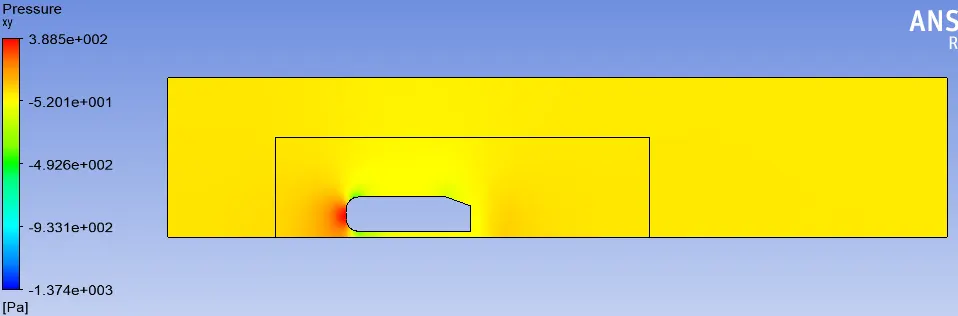
Pressure and Velocity contour
Velocity vector
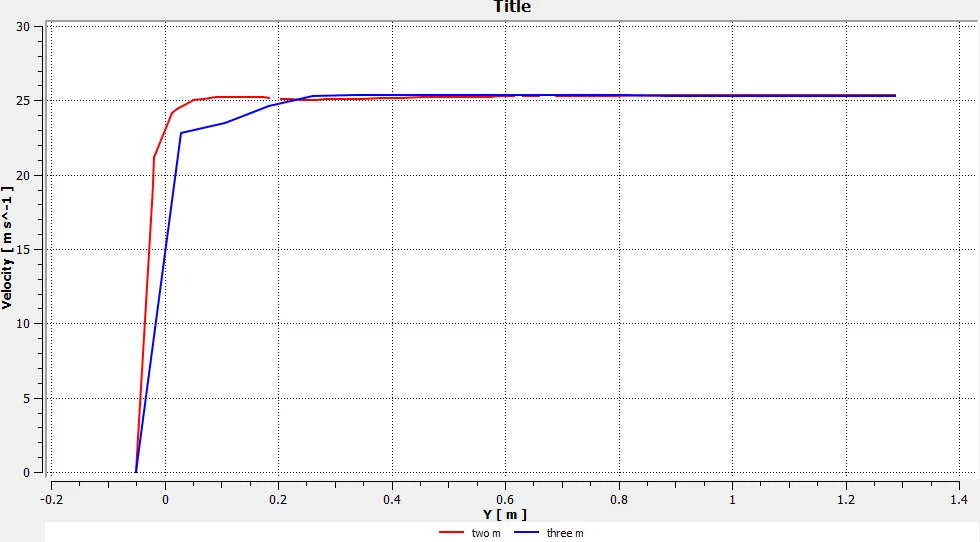
Velocity Profile -> @2m and @3m from the front of ahmed body
Case - 2
Mesh size -> outer enclosure = 0.1m, inner enclosure = 0.05m, facce sizing = 0.005m
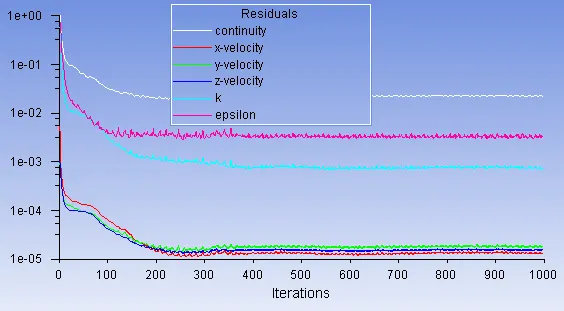
Residual Plot
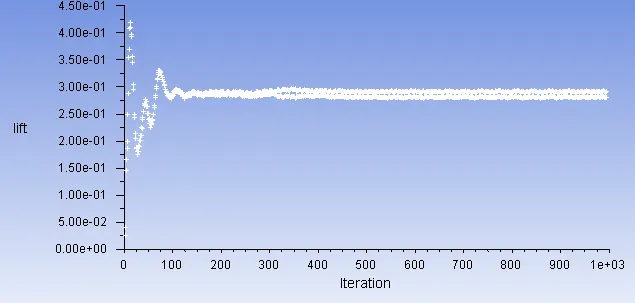
Drag and lift plot
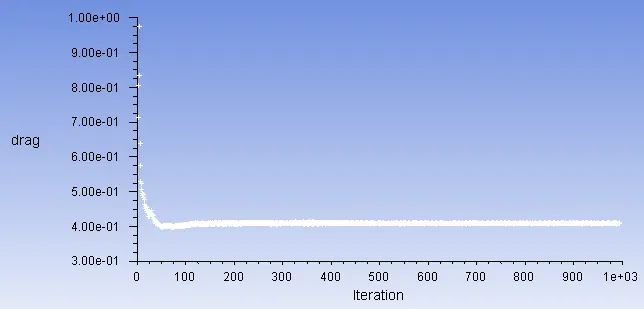
Cd = 0.41029596
Cl = 0.28060966
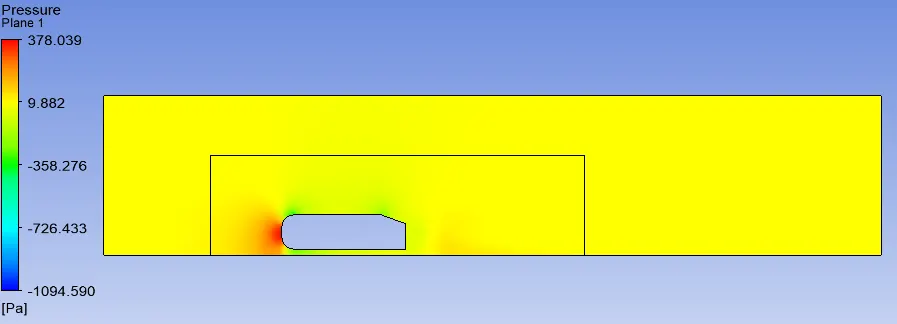
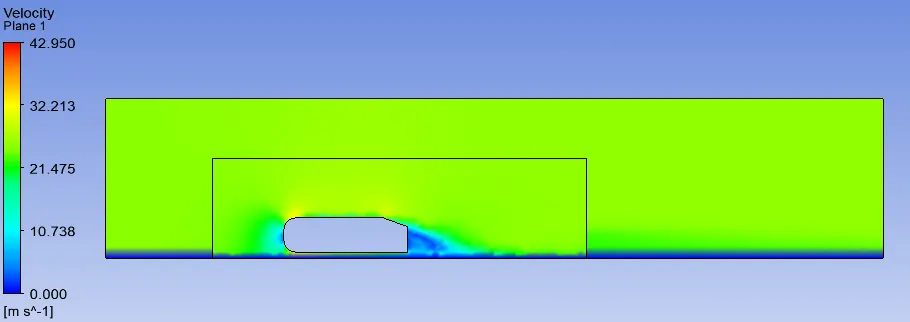
Pressure and Velocity contour
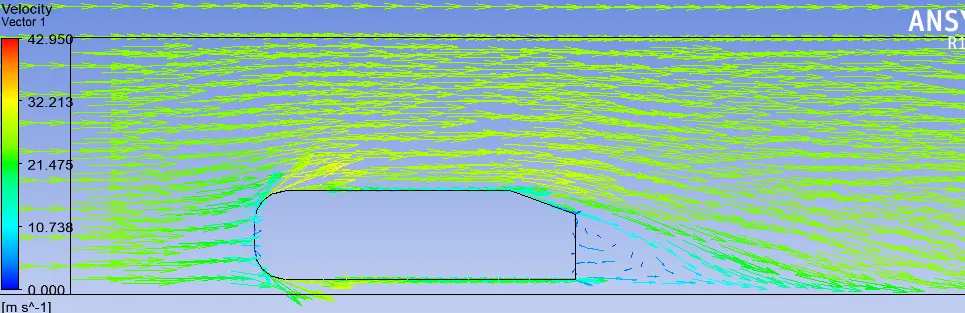
Velocity vector
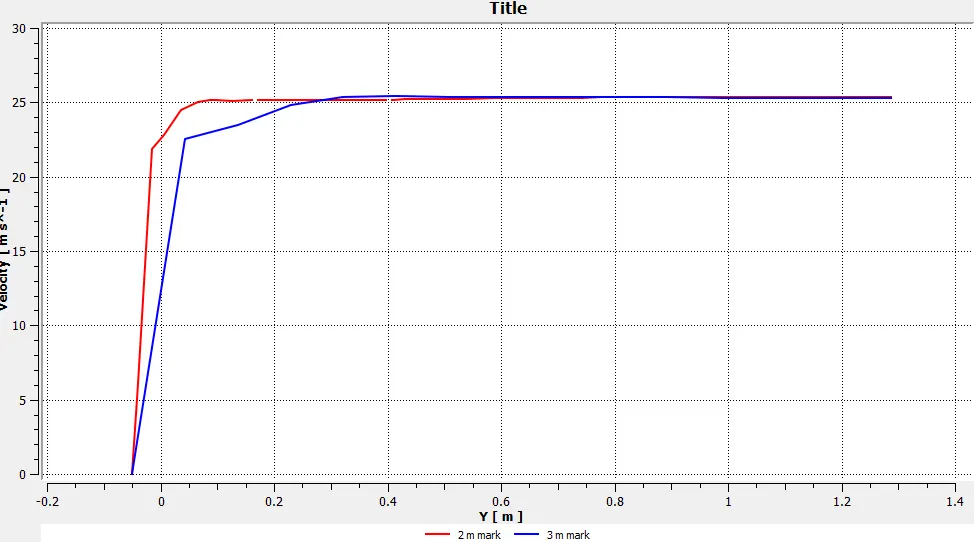
Velocity Profile -> @2m and @3m from the front of ahmed body
Case - 3
Mesh size -> outer enclosure = 0.08m, inner enclosure = 0.04m, facce sizing = 0.004m
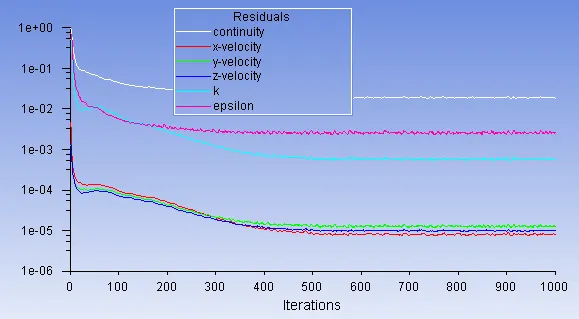
Residual Plot
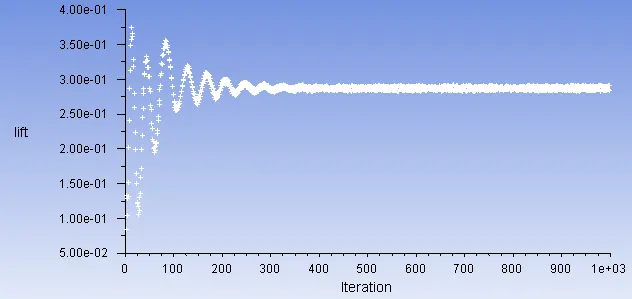
Drag and lift plot
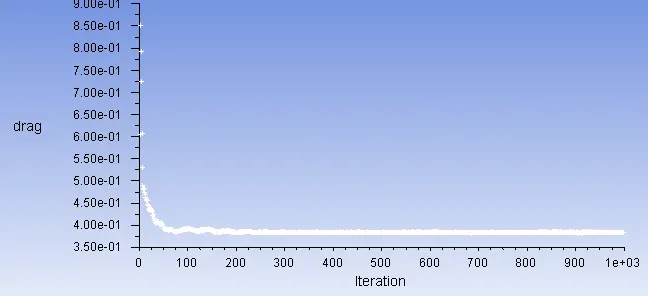
Cd = 0.38382815
Cl = 0.28445464
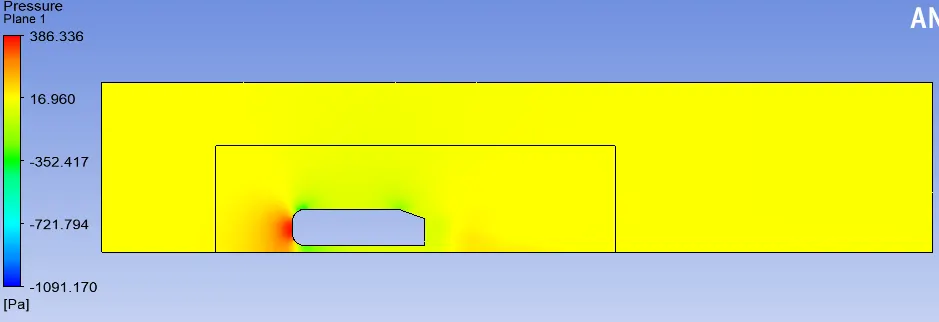
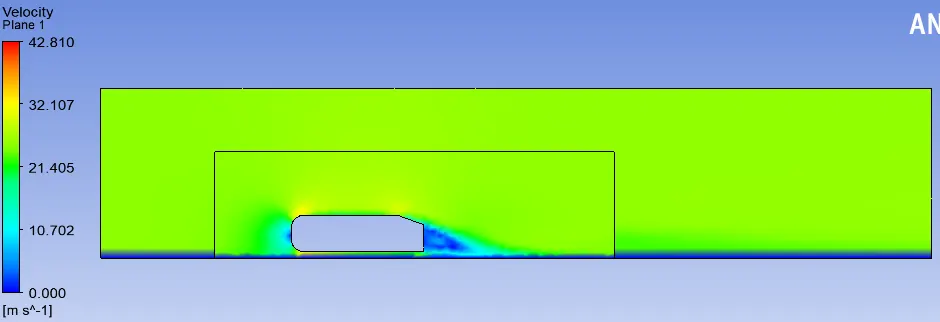
Pressure and Velocity contour
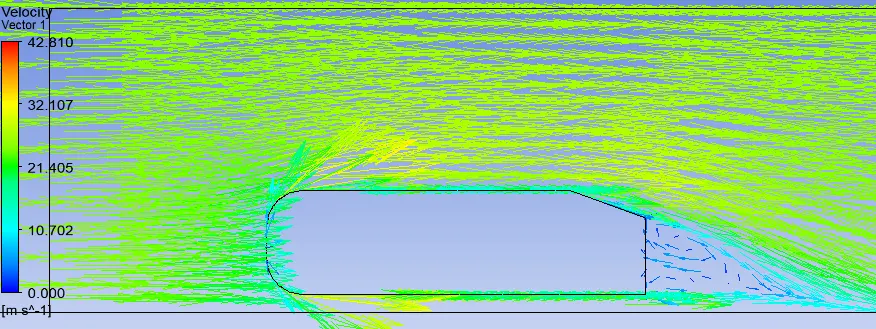
Velocity vector
Velocity Profile -> @2m and @3m from the front of ahmed body
Case - 4
Mesh size -> outer enclosure = 0.06m, inner enclosure = 0.03m, facce sizing = 0.003m
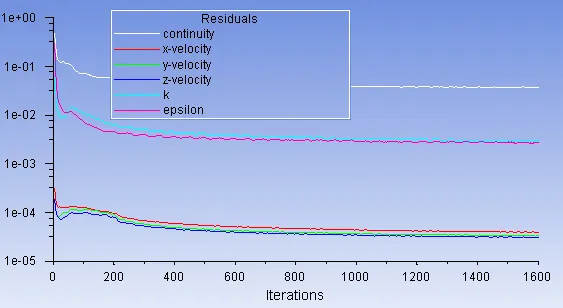
Residual Plot
Drag and lift plot
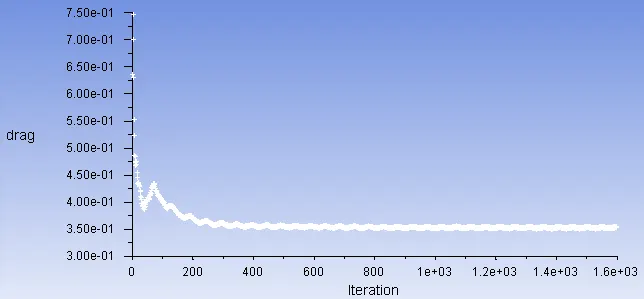
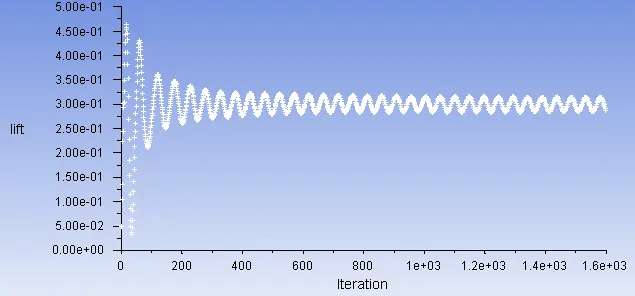
Cd = 0.35509463
Cl = 0.28834715
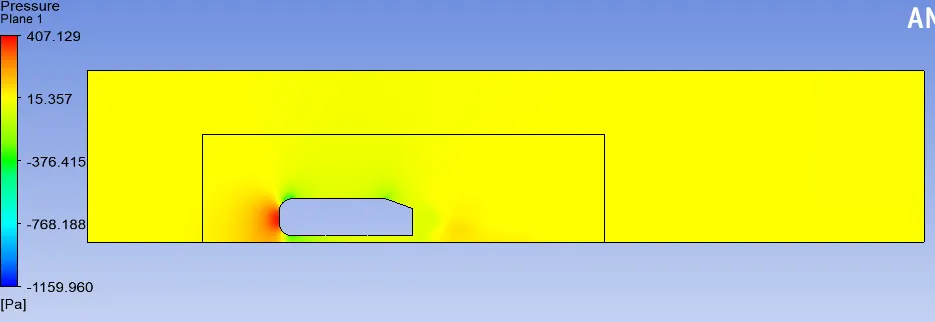
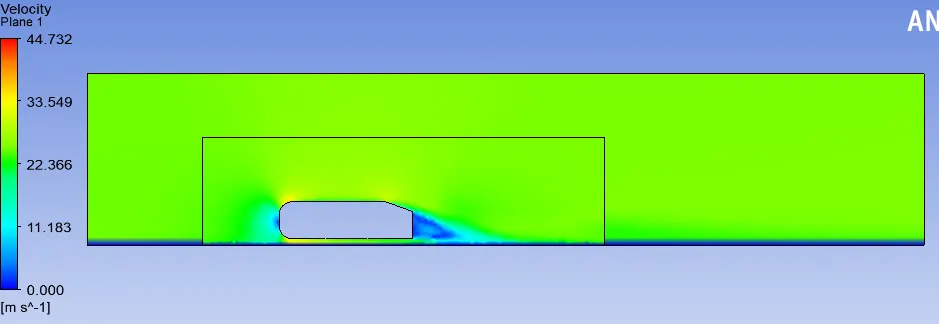
Pressure and Velocity contour
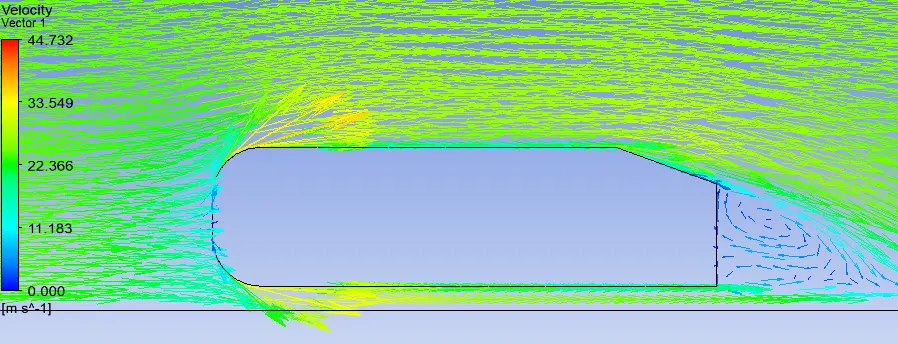
Velocity vector
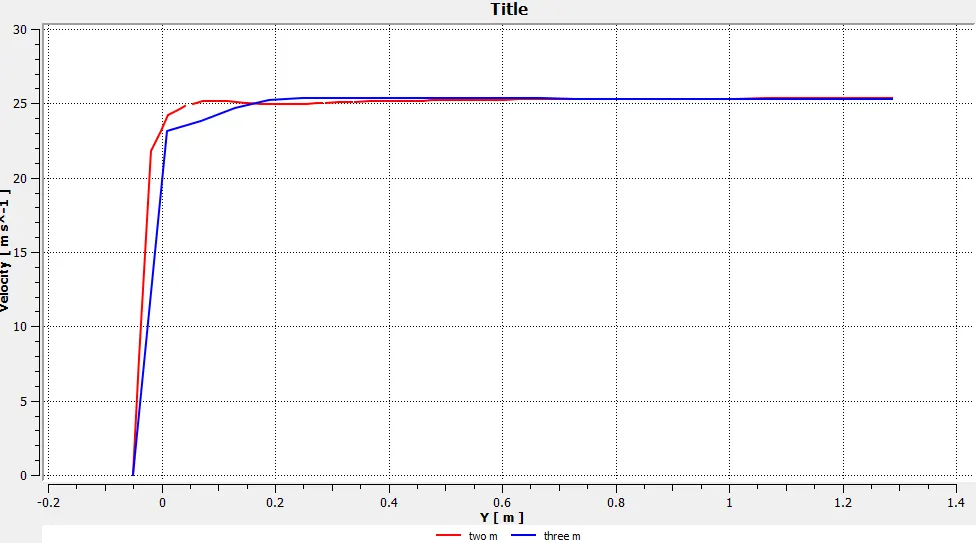
Velocity Profile -> @2m and @3m from the front of ahmed body
Below table shows a cummulative details for drag and lift coefficient for each case.
| Case | Turbulence Model | Mesh - Outer Enclosure | Mesh - Inner Enclosure | Mesh - Face sizing | Nodes | Elements | Cd | Cl |
| 1 | K Ɛ | Default | default | default |
8704 |
42680 |
0.42680838 |
0.20841402 |
| 2 | K Ɛ | 0.1 m | 0.05 m | 0.005 m |
41301 |
155822 |
0.41029596 |
0.28060966 |
| 3 | K Ɛ | 0.08 m | 0.04 m | 0.004 m |
76113 |
293780 |
0.38382815 |
0.28445464 |
| 4 | K Ɛ | 0.06 m | 0.03 m | 0.003 m |
168943 |
670134 |
0.35509463 |
0.28834715 |
Due to computational limitations, further refinement has not been done.
CONCLUSION
Following conclusion can be drawn from the study
- Default mesh only provides a baseline for the study. It gives the basic idea of wake region and region where mesh refinement is required.
- As the mesh improves the values of both drag and lift seem to get constant. This can be seen from the above table. More refinement is avoided due to computational limitations
- The flow velocity at the bottom surface (road) is almost zero depicting that our simulation has captured our no slip boundary condition
- When the flow hits the ahmed body, the pressure rises and at that point velocity decreases. Flow seperates causing an acceleration.
- After suddedn initial acceleration, the velocity decreases over the constant geometry. However the flow speeds up when the geometry changes at the end of top surface. Also pressure decreases in the region where there is increase in the velocity.
- Now when the flow approaches the end of rear end, recirculation of flow takes place due to sudden change in geometry. This creates flow seperation and formation of wake region.
- The wake region causes a significant pressure drop.The recirculation of flow can be clearly seen in case 4 velocity vector.
Why Negative Pressure?
-
Now the pressure captured is actually positive but since our gauge pressure is zero, the results are shown in respect to that.
-
Also when velocity increases to maintain the flow, the pressure drops resulting in negative value
- There are shear stress effect along the surface of the body and to compensate these effect the pressure drops.