Advanced Sheet Metal Design Using NX Cad Challenge_6_Bracket
Title of the Project:
Design and Development of a 3D Model Casing Using NX Software
1. Objective:
The primary objective of this project is to design a functional and aesthetically pleasing casing using 3D modeling techniques within Siemens NX software. The casing is intended to enclose a specific device or product, providing protection, support, and
enhancing its overall appeal.
2. Introduction:
In today's highly competitive market, product design plays a crucial role in the success of any product. A well-designed casing not only provides physical protection to the internal components but also contributes to the overall user experience and brand
perception. With the advancement of technology, 3D modeling software like Siemens NX offers engineers and designers powerful tools to create intricate and innovative designs with precision and efficiency.
The purpose of this project is to demonstrate the capabilities of Siemens NX software in designing complex 3D models, particularly focusing on casing design. Through this project, we aim to showcase the design methodology, tools, and features used in the
creation of a 3D model casing, highlighting the iterative design process and the considerations involved in achieving an optimal design solution.
3. Design Methodology / Approach:
The design process began with a thorough analysis of the requirements and constraints of the casing. This involved understanding the dimensions, functionality, and aesthetic preferences specified for the project. The next step involved conceptualizing various
design ideas and evaluating their feasibility based on factors such as manufacturability, cost-effectiveness, and user-friendliness.
The initial stage of the design process focused on gathering requirements from stakeholders and conducting research to understand industry standards and user expectations. This information was used to define the design objectives and establish the criteria
for evaluating design concepts.
Once the design objectives were established, the ideation phase began, where multiple design concepts were developed through brainstorming sessions and sketching exercises. These concepts were then evaluated against the established criteria to determine
their feasibility and suitability for further development.
Following the selection of a preferred design concept, the focus shifted to the detailed design phase, where the selected concept was refined and developed into a fully realized 3D model. This phase involved iterative prototyping, feedback gathering, and
refinement to optimize the design for performance, functionality, and aesthetics.
Throughout the design process, close collaboration between designers, engineers, and stakeholders was maintained to ensure alignment with project objectives and requirements. Regular design reviews and checkpoints were conducted to assess progress,
identify issues, and make necessary adjustments to the design direction.
4. Description:
Siemens NX software offers a comprehensive set of tools and features tailored for advanced 3D modeling and design. Some of the key tools utilized during the design process include:
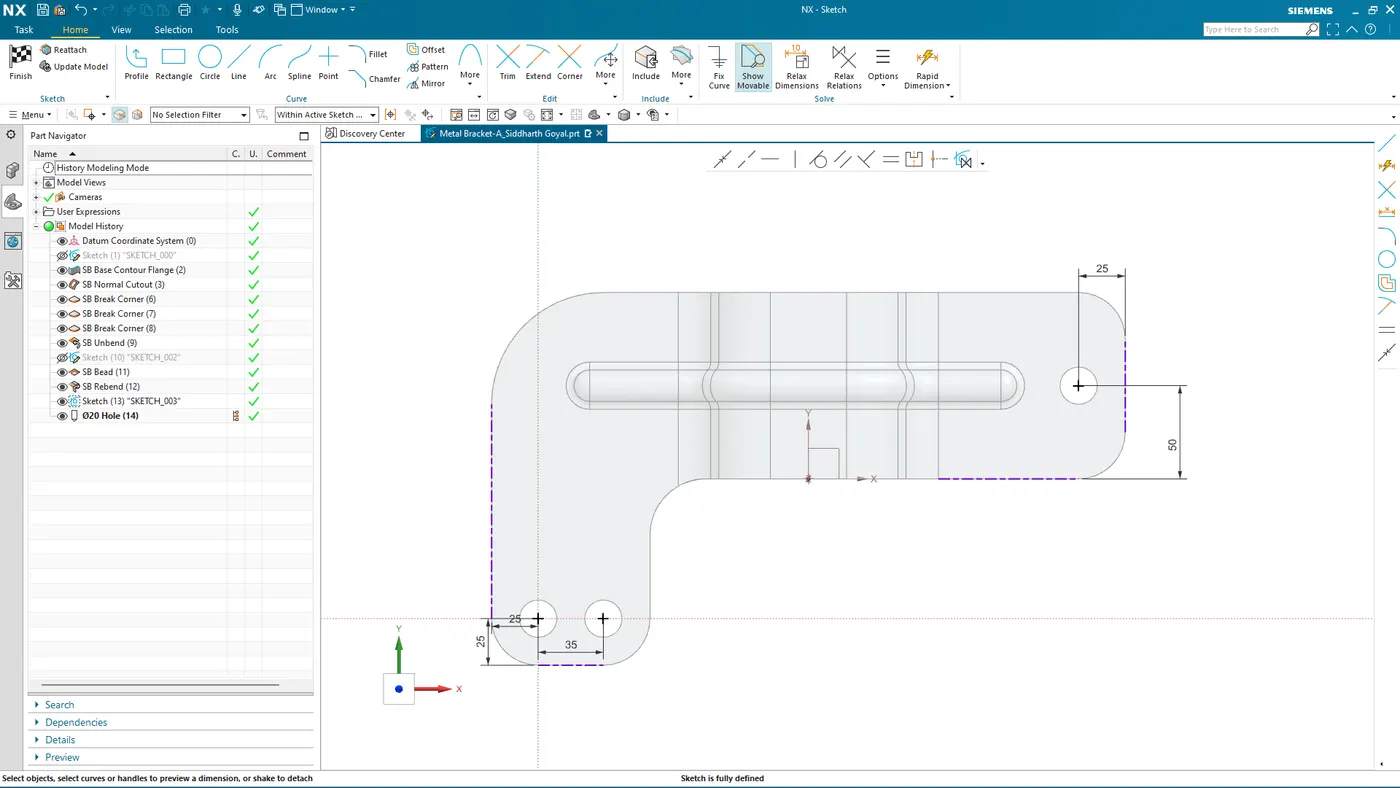
- Sketching: Sketching tools were used to create 2D profiles representing the basic shapes and contours of the casing. These sketches served as the foundation for the subsequent 3D modeling operations.
- Extrude and Revolve: These features were employed to extrude or revolve the 2D sketches into 3D solids, forming the basic structure of the casing. By specifying the desired extrusion or revolution parameters, such as depth or angle, complex geometries
could be easily achieved.
- Fillets and Chamfers: Fillets and chamfers were added to smooth out edges and corners, enhancing both the visual appeal and functionality of the casing. By applying fillets or chamfers to sharp edges, stress concentrations could be reduced, improving the
overall structural integrity of the design.
- Shell: The shell feature was utilized to hollow out the interior of the casing, reducing material usage while maintaining structural integrity. By specifying the desired shell thickness, the interior space of the casing could be optimized for accommodating
internal components while minimizing material waste.
- Pattern: Pattern tools were used to replicate features or components across the casing, ensuring consistency and efficiency in design. By defining the pattern type (e.g., linear, circular) and specifying the desired spacing and orientation, repetitive design
elements could be quickly generated with precision.
- Assembly: In cases where the casing consisted of multiple components, assembly features were utilized to combine individual parts into a cohesive unit. By assembling components together using mating relationships and constraints, the overall fit and
functionality of the casing assembly could be validated and optimized.
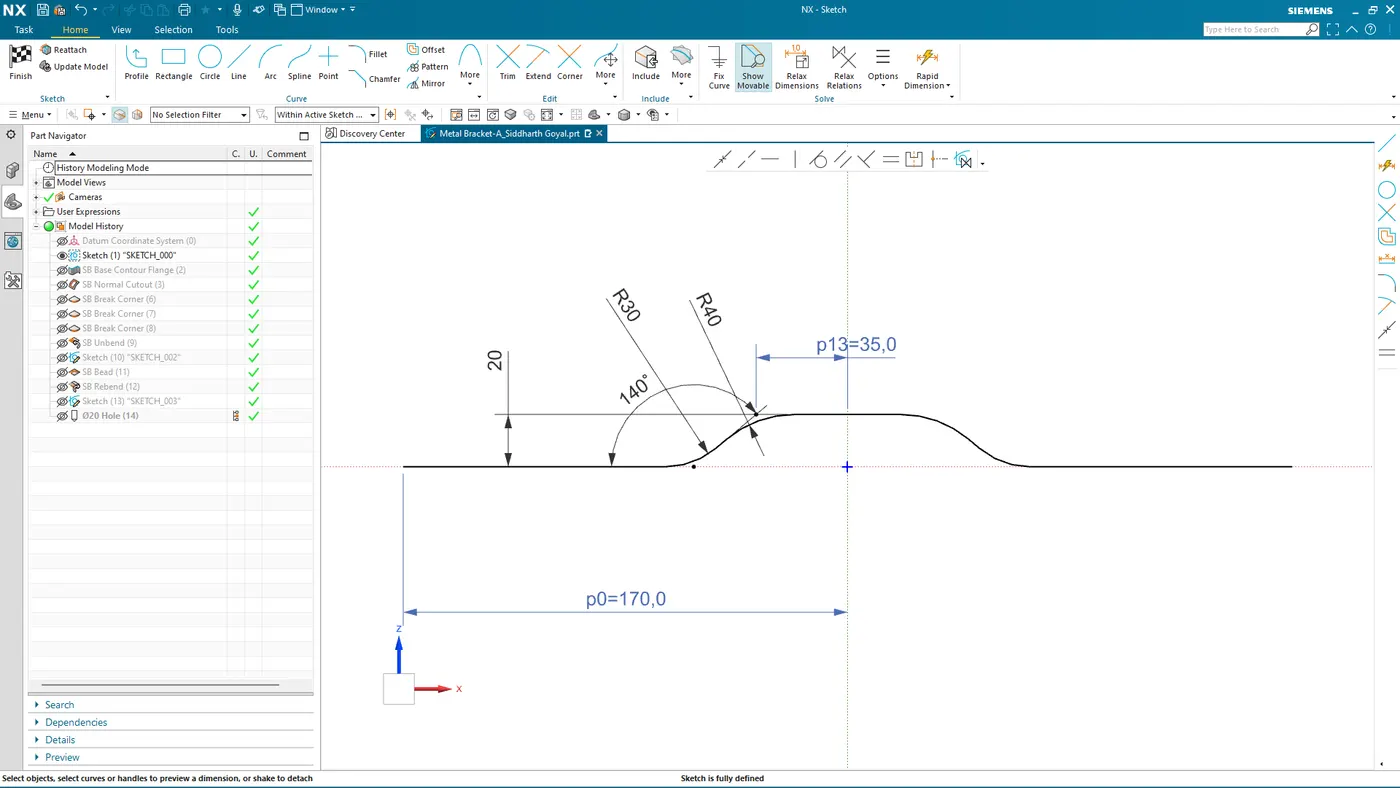
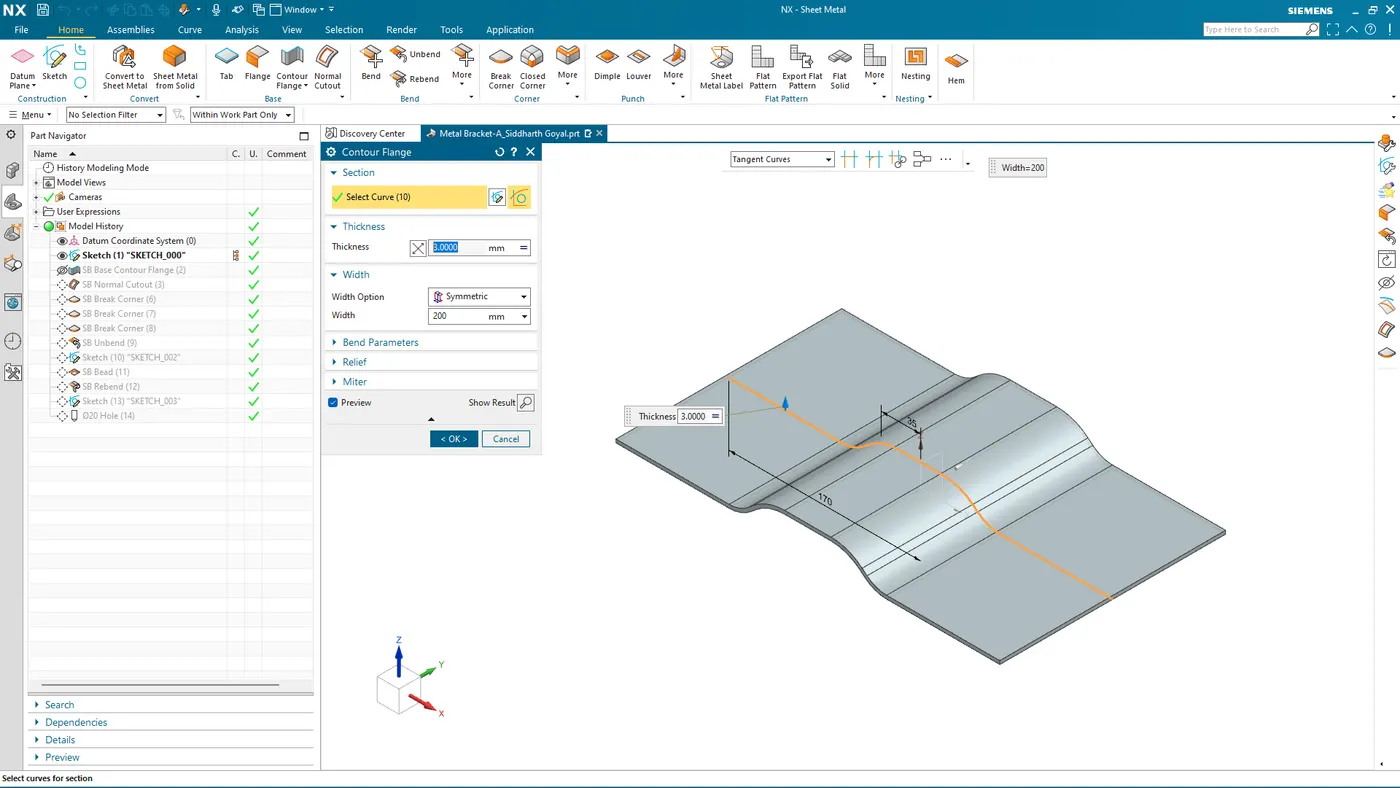
Step -1 Step -2
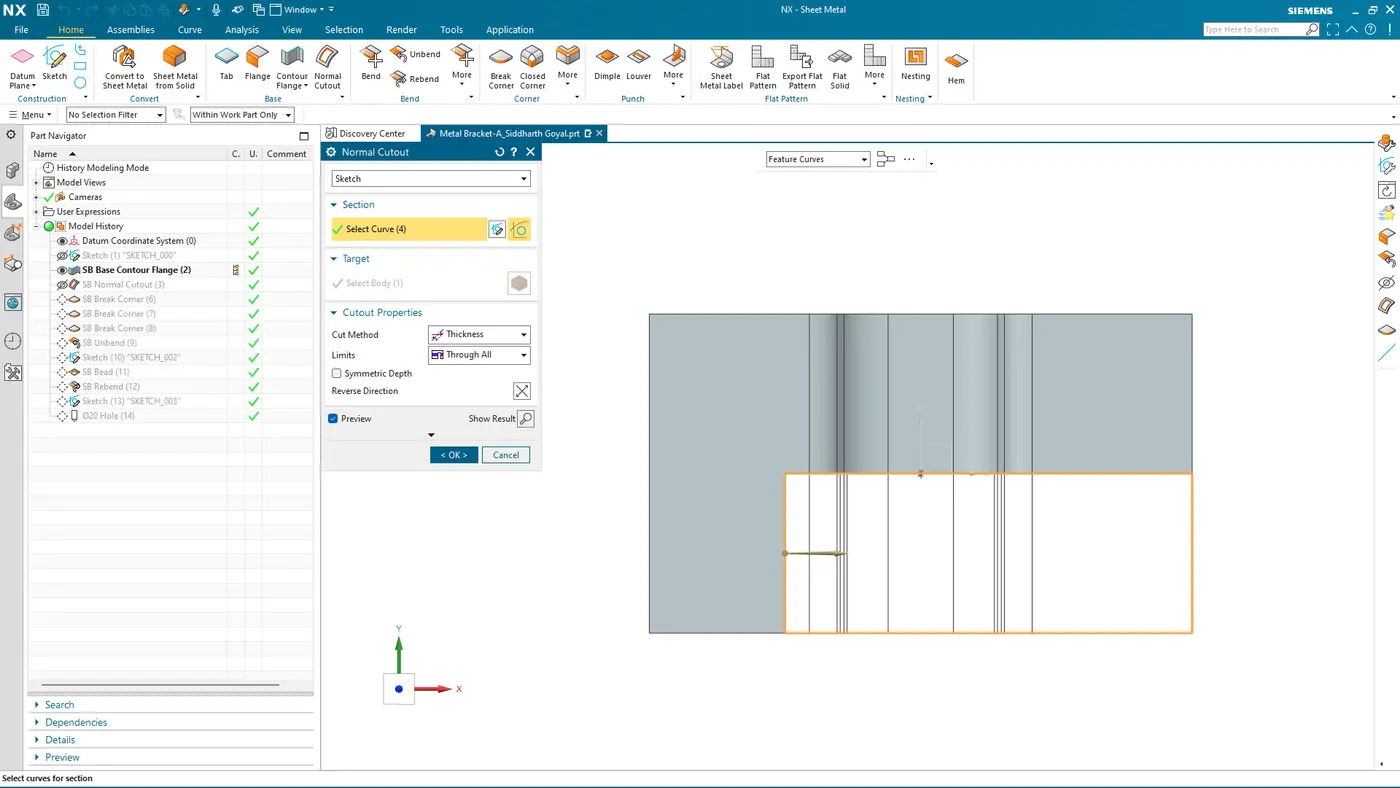
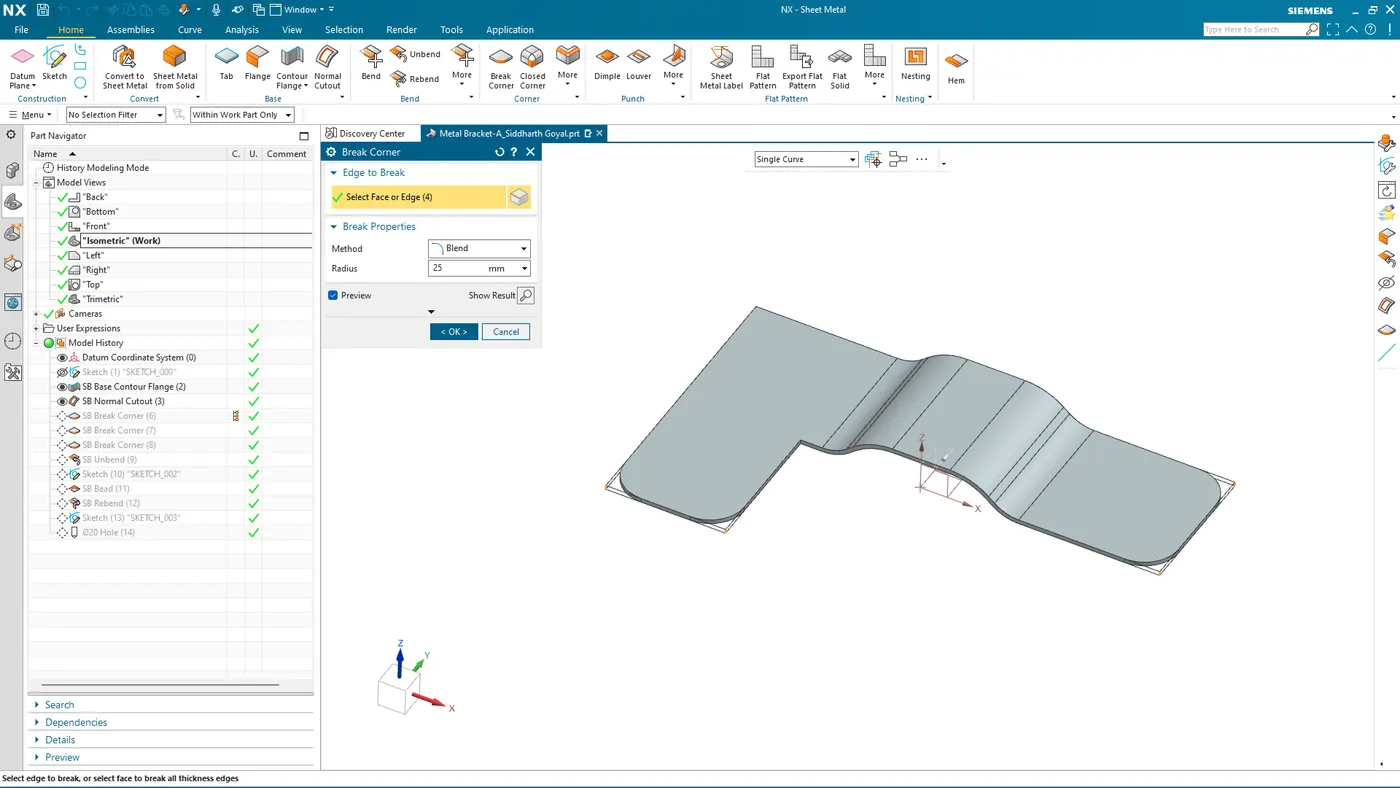
Step -3 Step -5
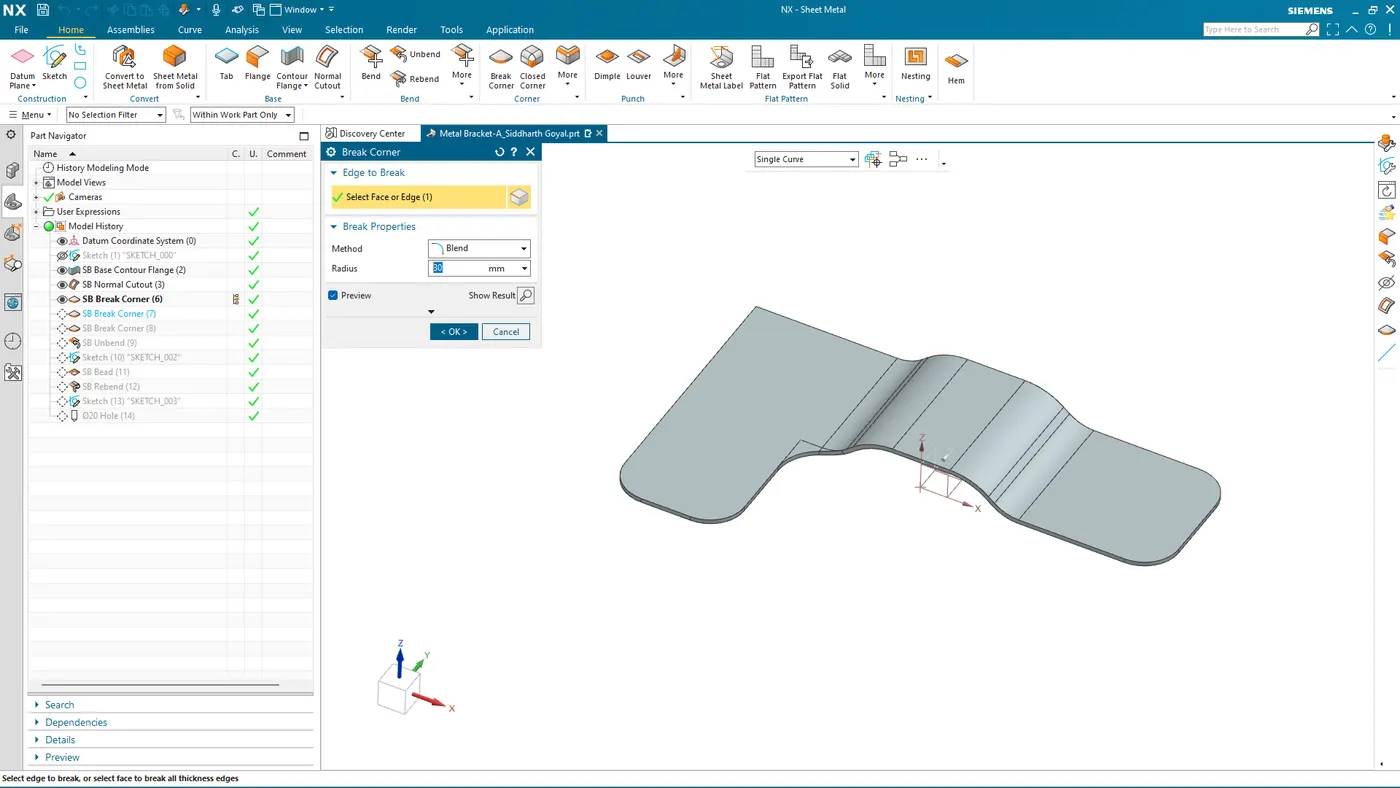
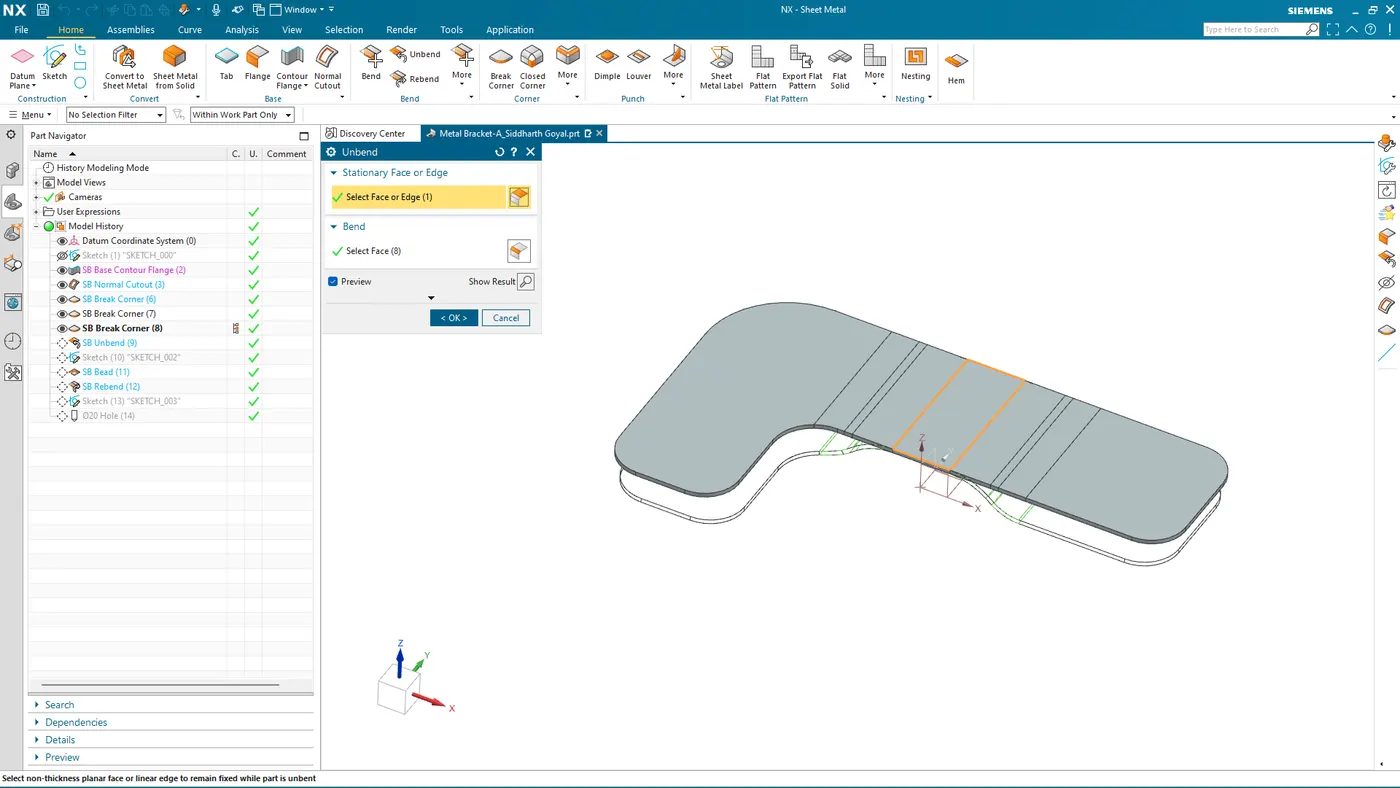
Step -6 Step -7
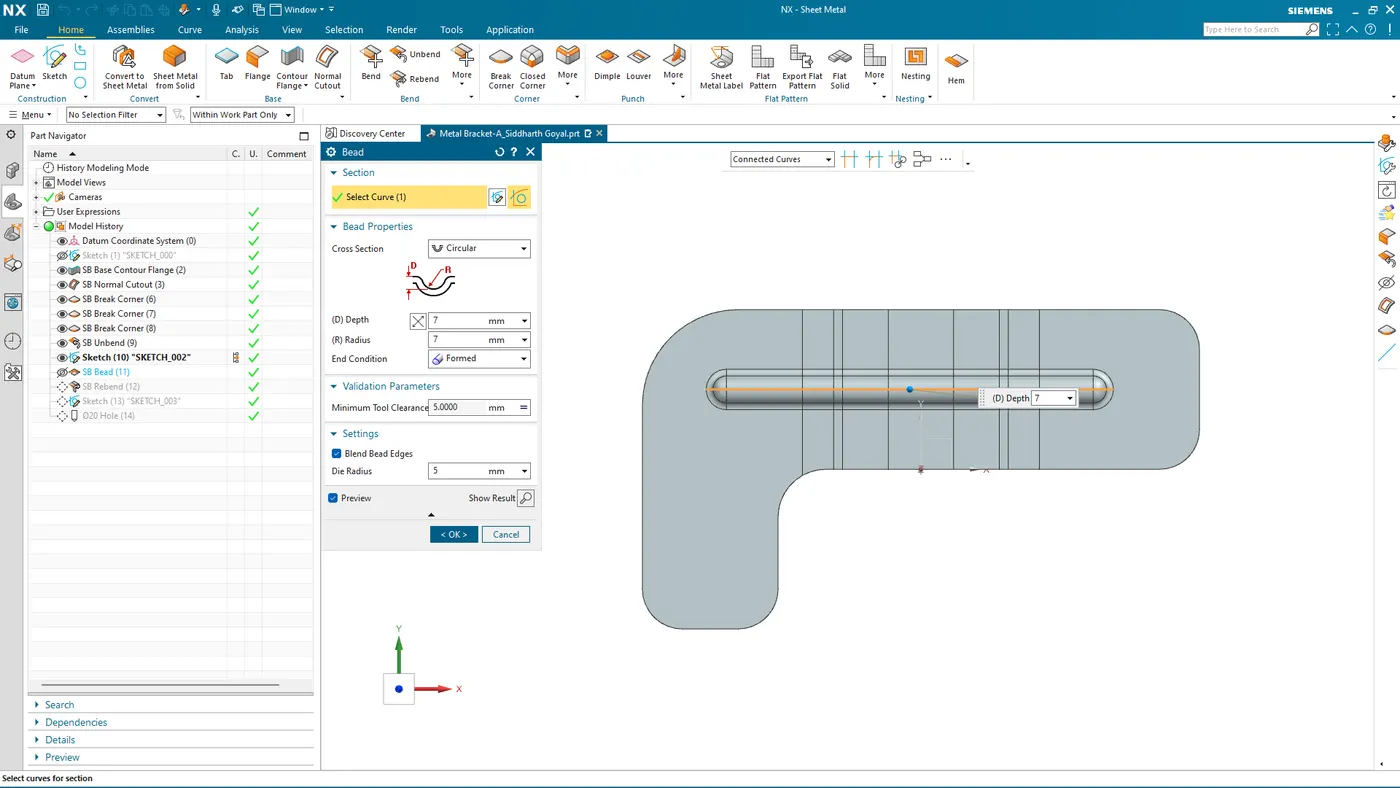
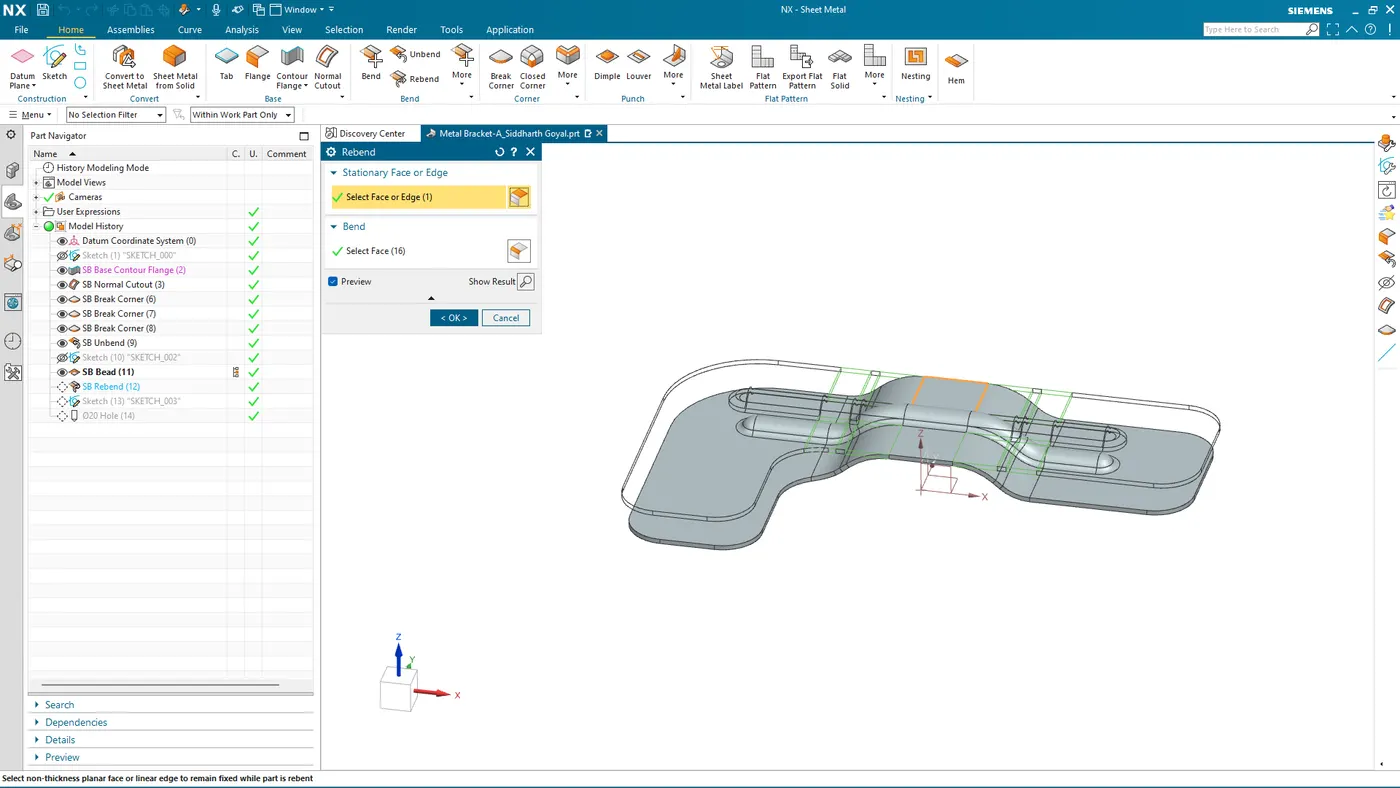
Step -8 Step -9
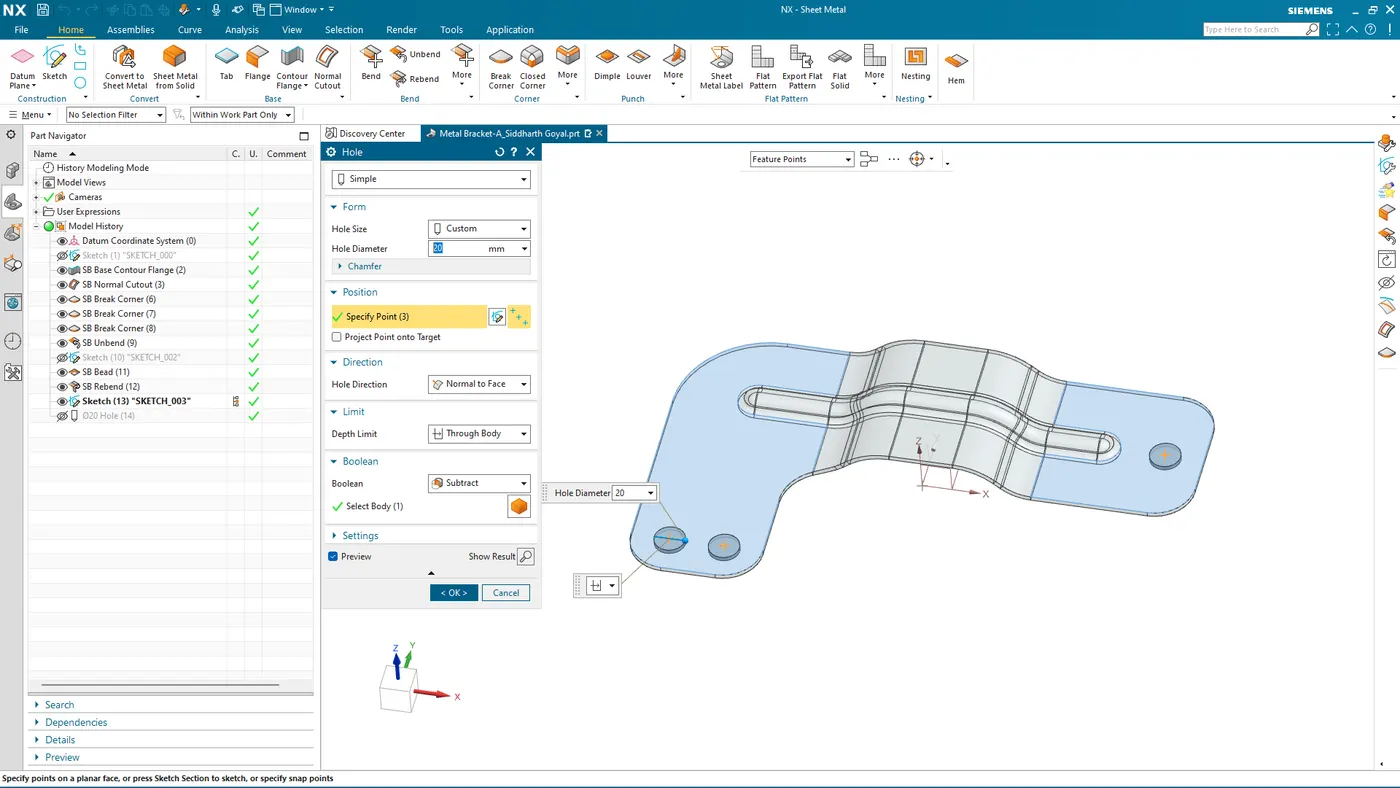
Step -9 Step -10
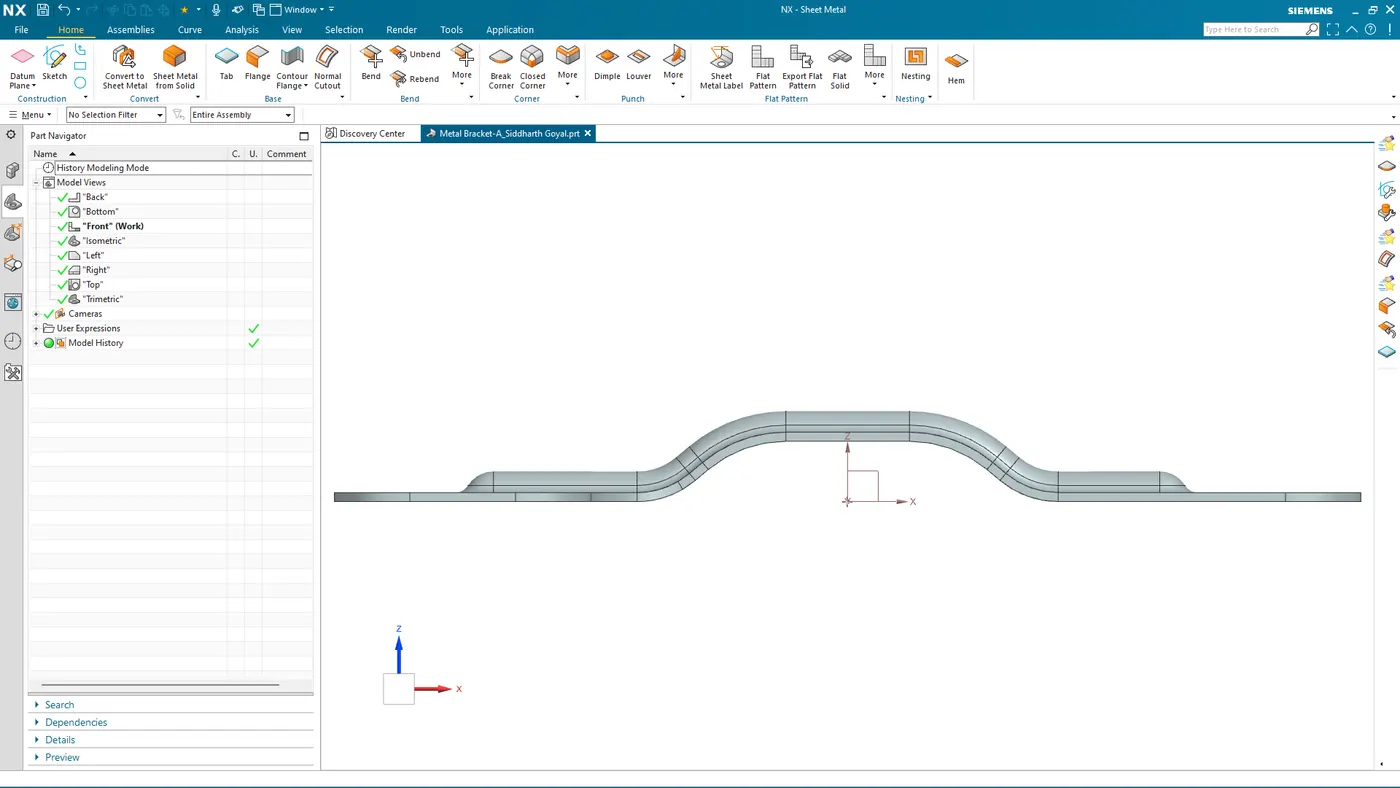
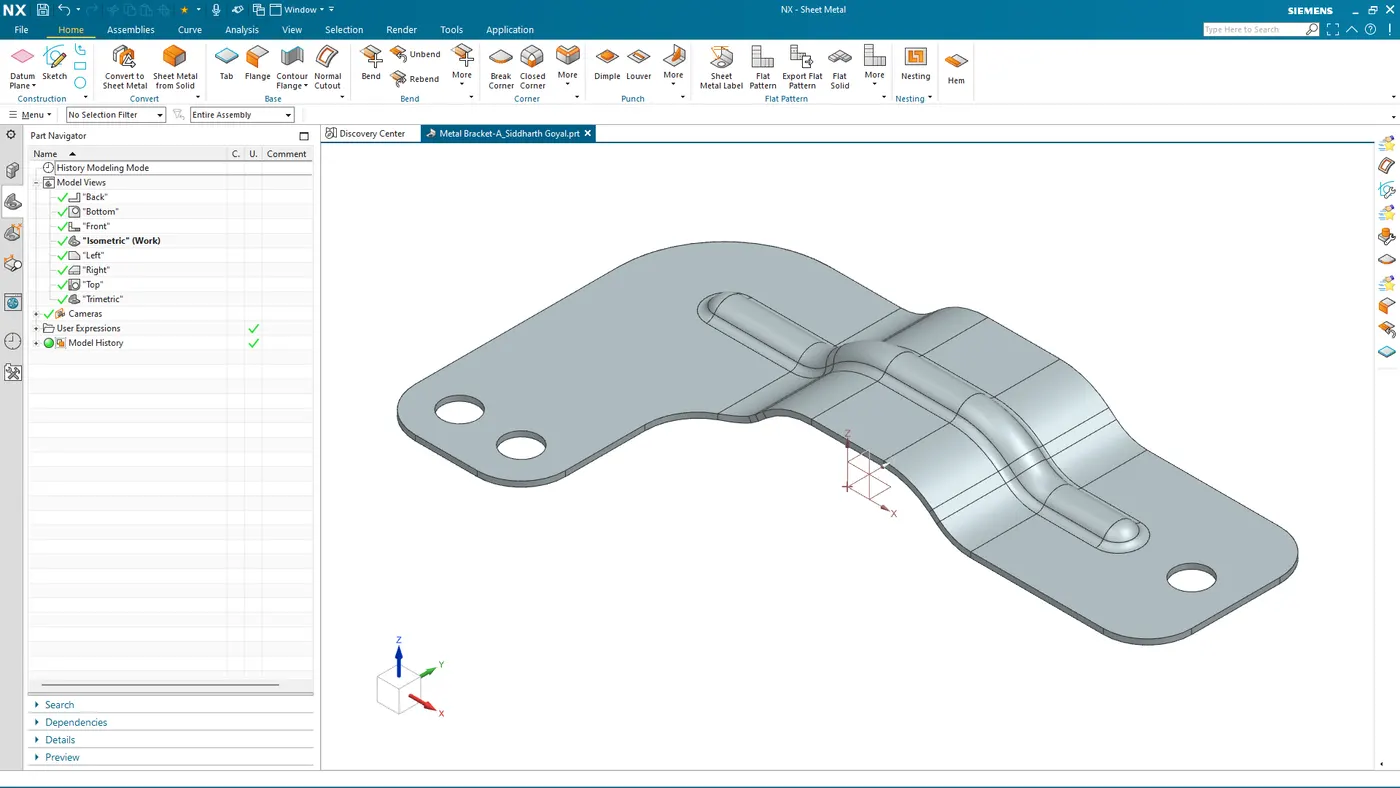
Front View Isometric View
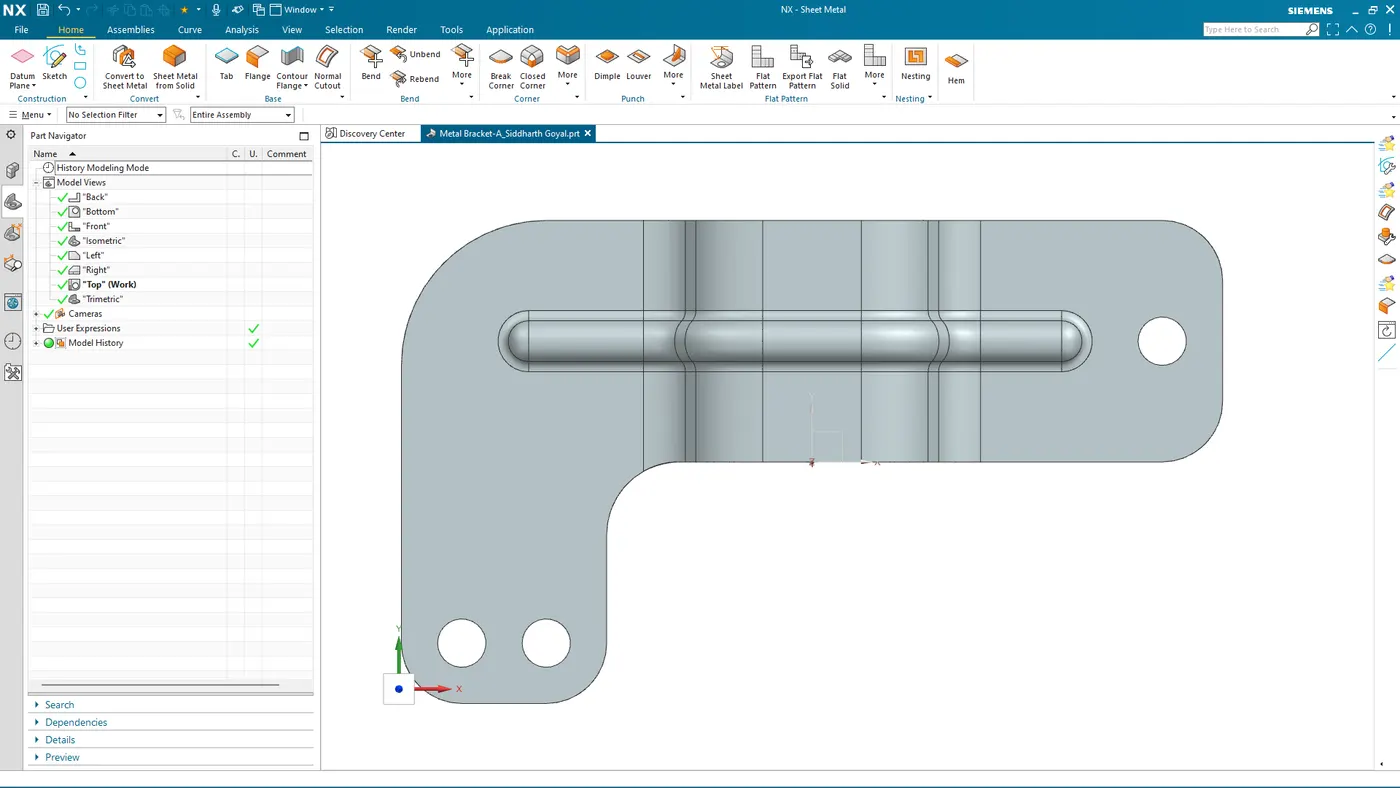
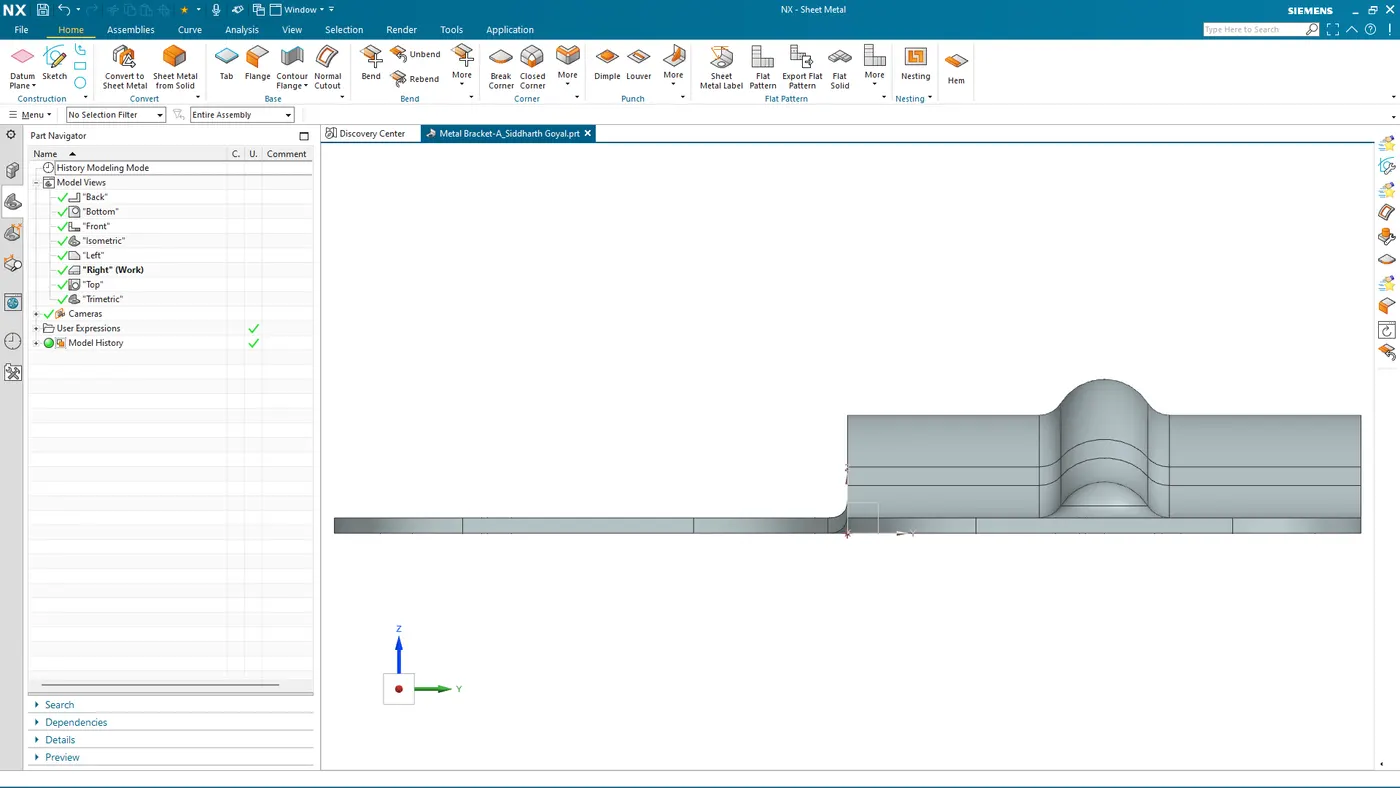
Top View Side View
5. Conclusion:
In conclusion, the design and development of the 3D model casing using Siemens NX software has been a successful endeavor. By leveraging the advanced capabilities of NX, we were able to create a functional and visually appealing casing that meets the
specified requirements and constraints. The iterative design process allowed for continuous improvement and refinement, resulting in a final design that is both innovative and practical.