Advanced Sheet Metal Design Using NX Cad Challenge_6_Bracket
Bracket
Objective -
To Design a bracket using NX sheet metal workbench
Introduction -
Sheet metal is metal formed by an industrial process into thin, flat pieces. Sheet metal is one of the fundamental forms used in metalworking, and it can be cut and bent into a variety of shapes. Countless everyday objects are fabricated from sheet metal. Thicknesses can vary significantly; extremely thin sheets are considered foil or leaf, and pieces thicker than 6 mm (0.25 in) are considered plate steel or "structural steel".Sheet metal is available in flat pieces or coiled strips. The coils are formed by running a continuous sheet of metal through a roll slitter.In most of the world, sheet metal thickness is consistently specified in millimeters. In the U.S., the thickness of sheet metal is commonly specified by a traditional, non-linear measure known as its gauge. The larger the gauge number, the thinner the metal. Commonly used steel sheet metal ranges from 30 gauge to about 7 gauge. Gauge differs between ferrous (iron-based) metals and nonferrous metals such as aluminum or copper. Copper thickness, for example, is measured in ounces, representing the weight of copper contained in an area of one square foot. Parts manufactured from sheet metal must maintain a uniform thickness for ideal results.There are many different metals that can be made into sheet metal, such as aluminium, brass, copper, steel, tin, nickel and titanium. For decorative uses, some important sheet metals include silver, gold, and platinum (platinum sheet metal is also utilized as a catalyst).Sheet metal is used in automobile and truck (lorry) bodies, airplane fuselages and wings, medical tables, roofs for buildings (architecture), and many other applications. Sheet metal of iron and other materials with high magnetic permeability, also known as laminated steel cores, has applications in transformers and electric machines. Historically, an important use of sheet metal was in plate armor worn by cavalry, and sheet metal continues to have many decorative uses, including in horse tack. Sheet metal workers are also known as "tin bashers" (or "tin knockers"), a name derived from the hammering of panel seams when installing tin roofs.
DESCRIPTIONS:
Sketching - Making a 2d drawing such as curves, arcs, cirlces, points, rectangles and many options to create a drawing or tocreate features for upcoming designing.
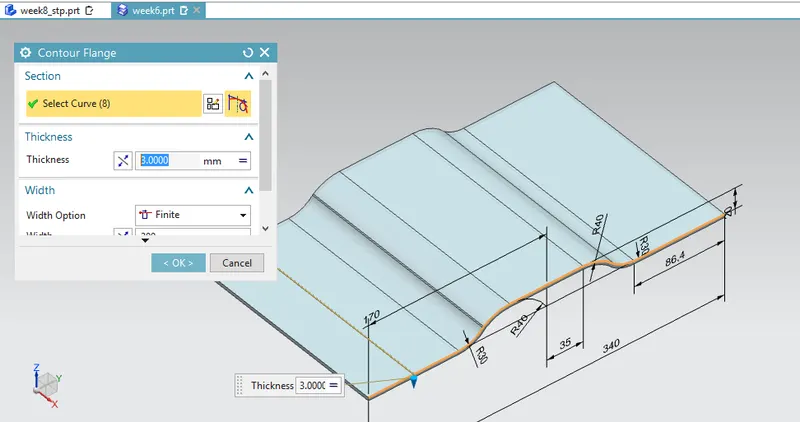
Counter flange - It is created by extending the sketch on its respective axis with thickness as required from the base.
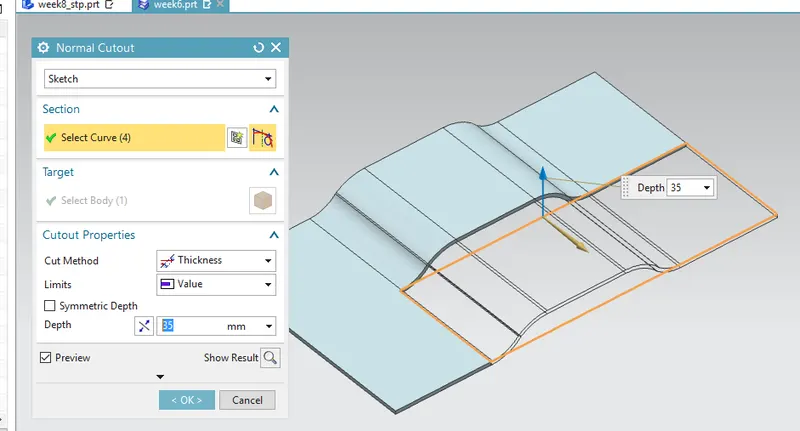
Normal cutout - It is used to create a cut portion or a gap on the sketch where there is a requirement.
Break corner -
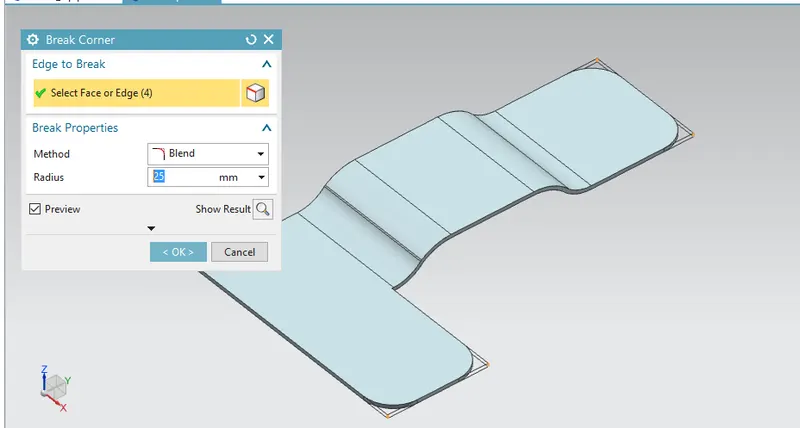
This feature is for making the corner blend with some self dimensioned radius in order to make the cornersmooth.
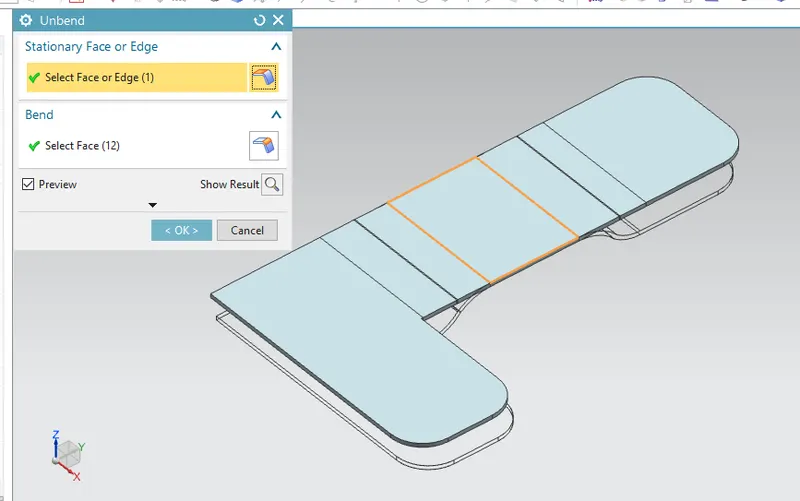
Unbend - It is to flatten the bend sheet metal to form a flat sheet. It helps in making a extra features like bead, normalcutout on the sheet metal after bending
 .
.
Bead -
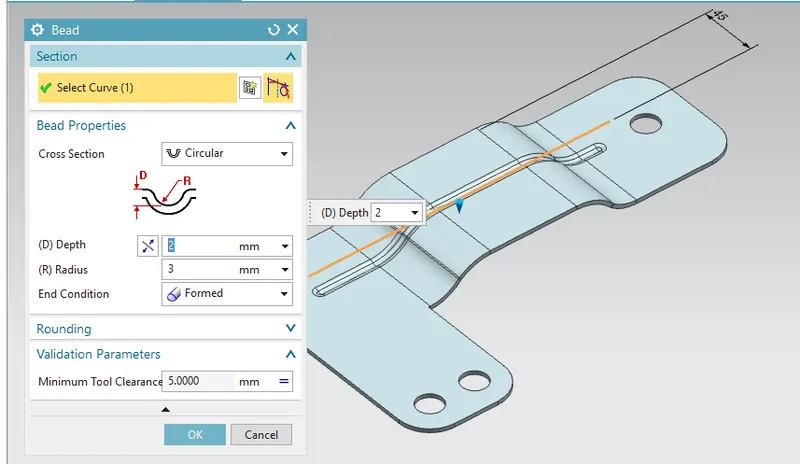
This is to create a contour shaped accordingly to their sketch in the required direction with required punch/dieradius,
Rebend
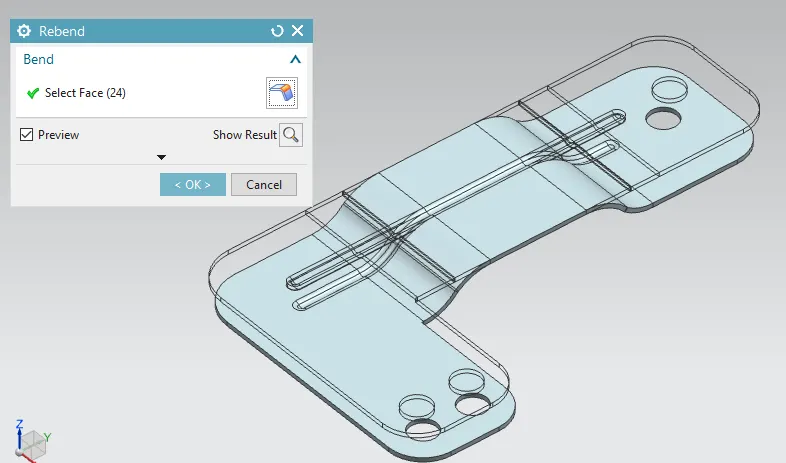
- It is to make flat surface that is bend previously to do some extra features like holes, bead back to its originalform.
Hole -
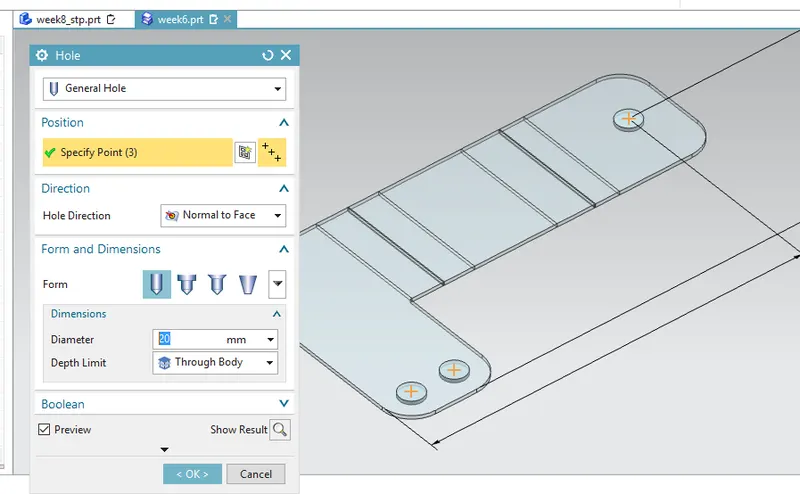
It is to create a hole on sketch, or to create a counter bored, counter sink and several hole options to do.
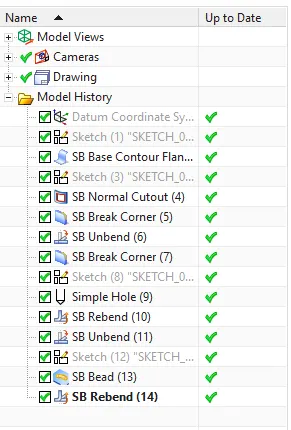
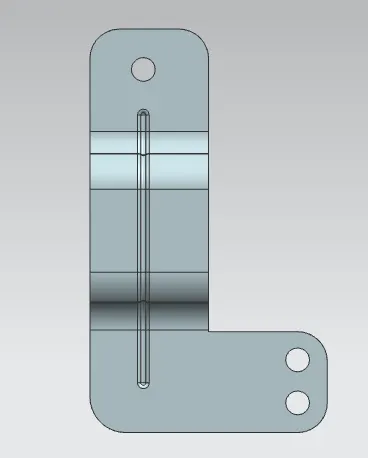
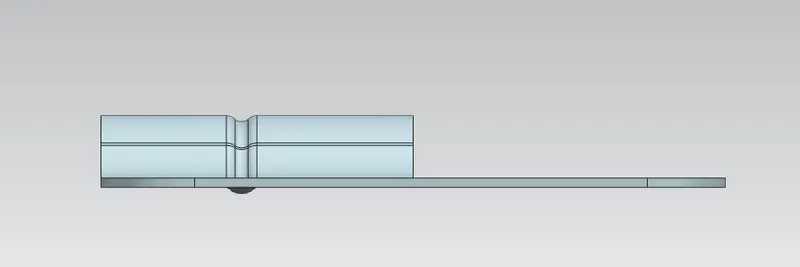
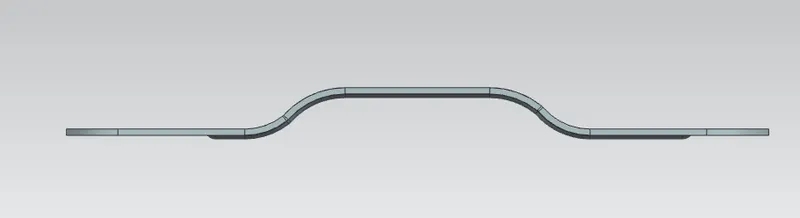
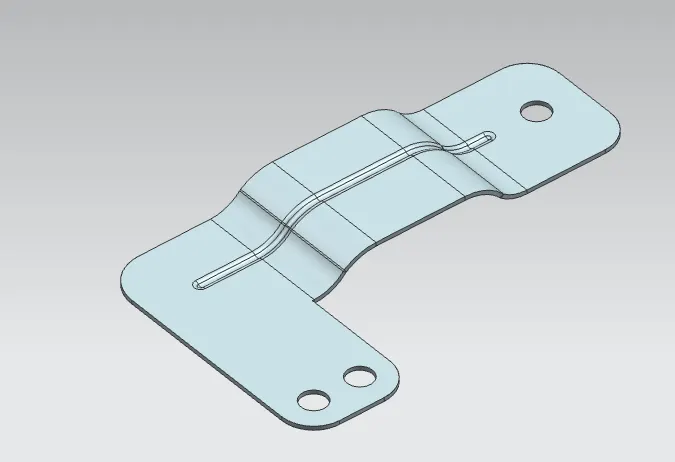
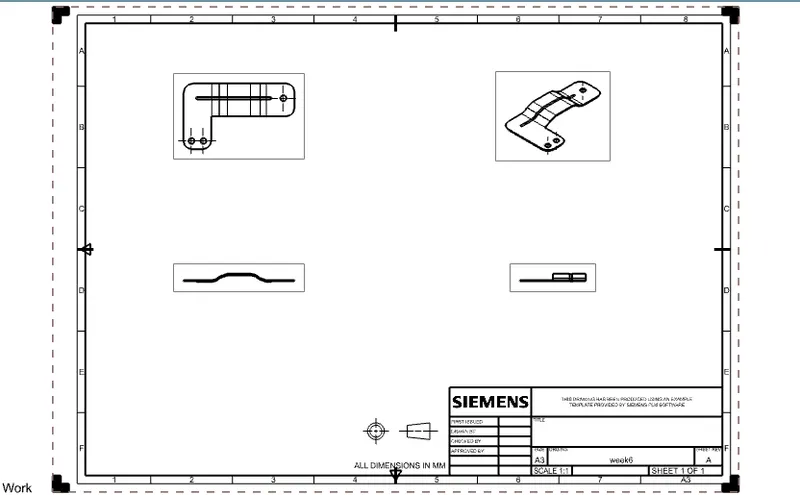
Drawing sheet
Conclusion -
By doing this project I have learned some new NX sheet metal work bench tools like Hem flange, Closed corner. Understood
the Design Methodology to create this type of sheet metal parts.