ADAMS - Project - Hardpoint tuning to achieve pitch gradient targets using suspension “anti” characteristics
Target:
- Hardpoint tuning to achieve pitch gradient targets using suspension “anti” characteristics.
Introduction:
- Anti-Geometry consists of anti-dive, anti-squat, anti-lift. Anti-geometry refers to the at the front and rear wheels that controls the amount of the travel in spring (either compression or rebound) due to acceleration or braking conditions.
- The anti-geometry doesn't alter the amount of longitudinal load transfer that occurs in braking or accelerating as the load transfer is function of wheel base, accelerating or braking force, height of CG.
Squat:
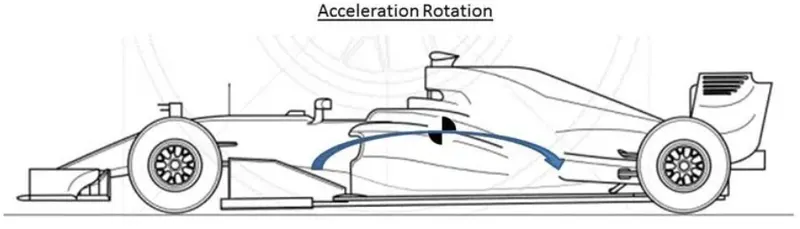
- When the car is accelerating, a longitudinal force is applied, due to the acceleration there is a load transfer in which the front wheel is lightly loaded and the rear wheel are heavily loaded. The front wheels will be in rebound and the rear wheel will be in compression.
Dive:
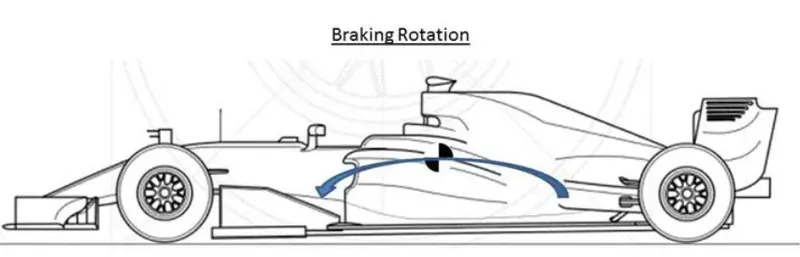
- When the car is deceleration or braking, a longitudinal force is applied, due to braking there is a load transfer in which the front wheel is heavily loaded and the rear wheels are lightly loaded. The front wheels will be in compression and the rear wheels will be in rebound.
Project:
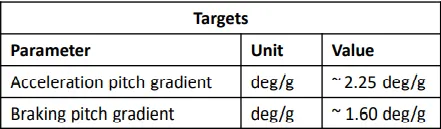
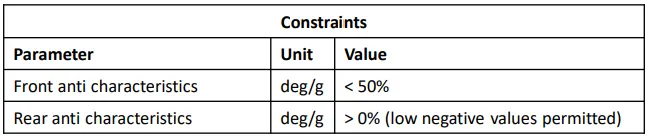
- The objective of this project is to perform hardpoint tuning to achieve the target acceleration and braking pitch gradients.
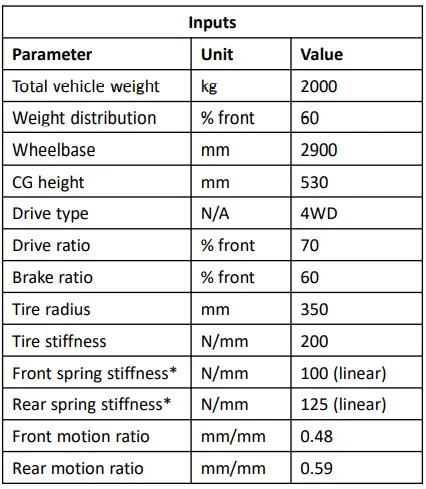
Given Parameters:
Targets:
Constraints:
Calculations:
Weight Distribution: Given, Total weight=2000kg.
As it is given 60:40, front:rear, the weight on front axle is 1200kg and the weight on the rear axle 800kg.
Load Transfer: The acceleration is considered to be 1g = 9.81m/s^2.
The load transfer is calculated using `{(m*a)*h_m}/{WB}`= 3585.72N.
Front axle load after load transfer = 8186.28N
Rear axle load after load transfer = 11433.72N
Motio Ratio:
Motion ratio is a geometric measure that relates the change in displacement of a force element (spring, damper and roll bar etc.) to change in vertical wheel centre movement. It is the inverse of mechanical advantage and used to relate wheel centre rate to spring rate.
Wheel Rate:
Kw=Ks*(Motion Ratio)^2.
Ride Rate:
Ride rate is given by `k_r={k_w*k_t}/{k_w+k_t}`
obtained ride rate, Front ride rate is 20.66N/mm
Rear ride rate is 35.74N/mm
Adams Simulation:
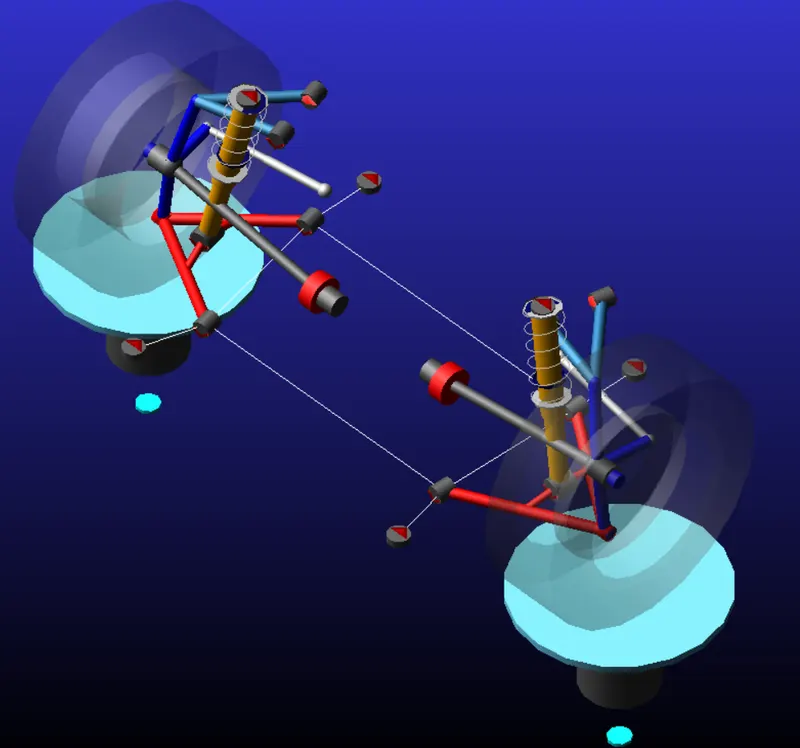
Front Suspension Model: Double Wishbone
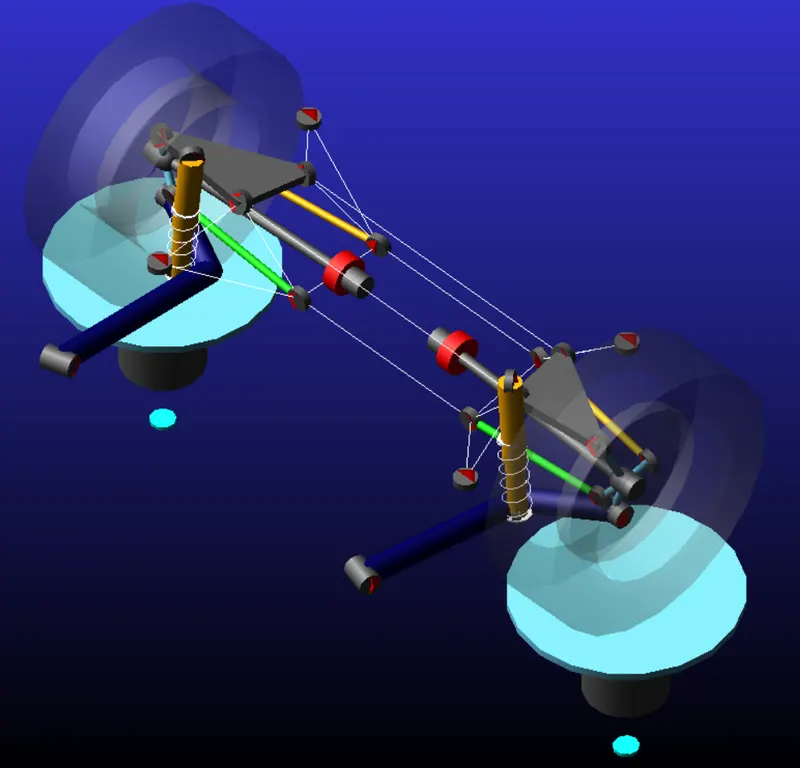
Rear Suspension: Multi Link Suspension
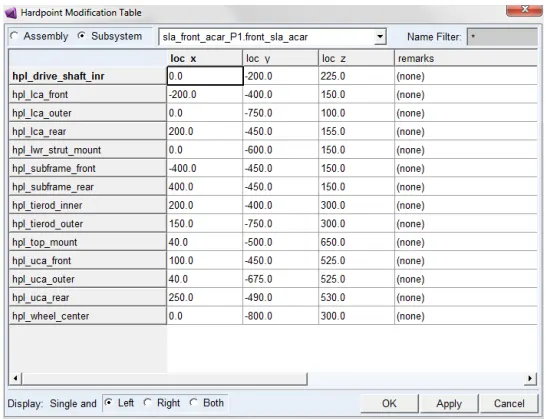
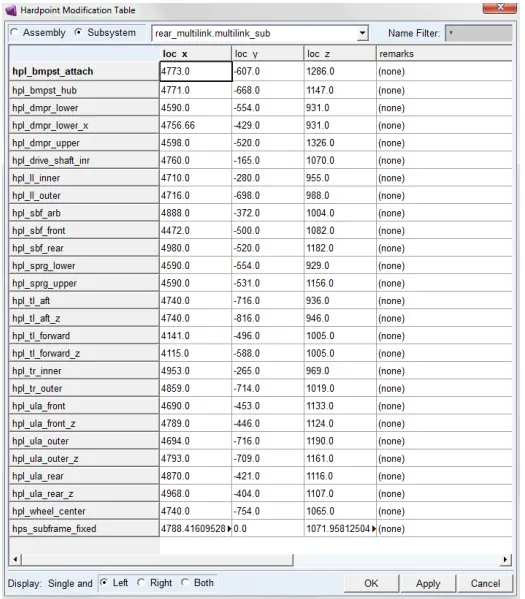
Initial Hardpoints:
Double Wishbone:
Multi Link Suspension:
Simulation:
Each suspension model is put through a parallel wheel travel simulation of 100mm in jounce and 100 mm in rebound.
Using the ride rates form adams the deflection in the springs is calculated
Front end deflection is `{load transfer}/{2*k_f}`
Rear end deflection is `{load transfer}/{2*k_r}`
Where `k_f` and `k_r` are ride rate.
by using the formula, the deflections are calculated to be Front End of 51.33mm/g, Rear End of 75.47mm/g.
Pitch Gradient is given by `theta=tan^{-1}({D_f+D_r}/{WB})` for small angles of `theta` ,`tantheta approx theta`
which is found out to be 2.50 deg/g.
From the simulations the side view swing arm length and angle are obtained
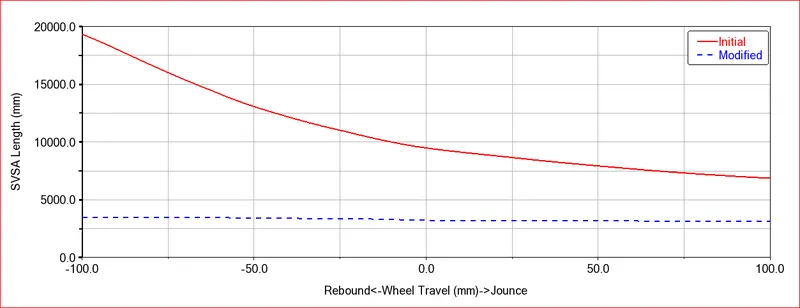
For Front end the SVSA length is found out to be 9488.17mm, SVSA angle is obtained as -0.63deg
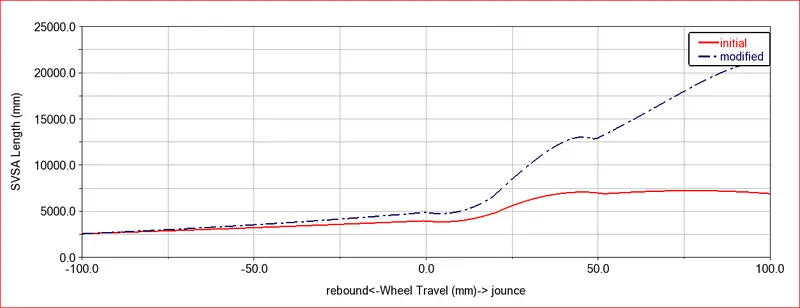
For Rear end the SVSA length is found out to be 3940.46mm, SVSA angle is obtained as 4.62 deg
using SVSA, Instant Center is located
Front end IC is 245.62mm in vertical and 9487.59mm in Horizontal, Rear end IC is 667.11mm in vertical and 3927.28mm in horizontal.
Anti-Characteristic:
For breaking the calculations are done using the parameters calculated as contact patch as reference.
Front End anti-dive angle is found out to be 1.48deg.
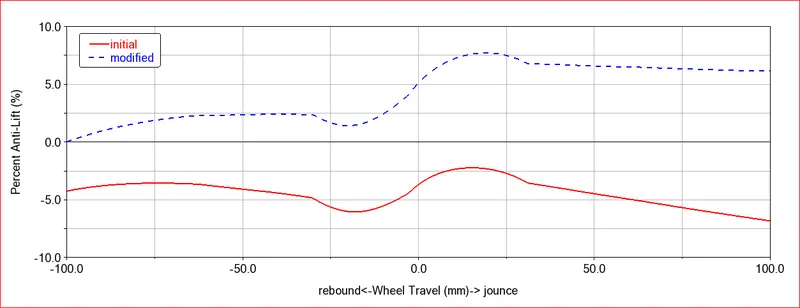
Rear End anti-lift angle is calculated to be 9.64deg.
For Acceleration the calculations are carried out using the parameters calculated front the contact patch as reference.
Front End anti-lift angle is found out to be -0.63deg
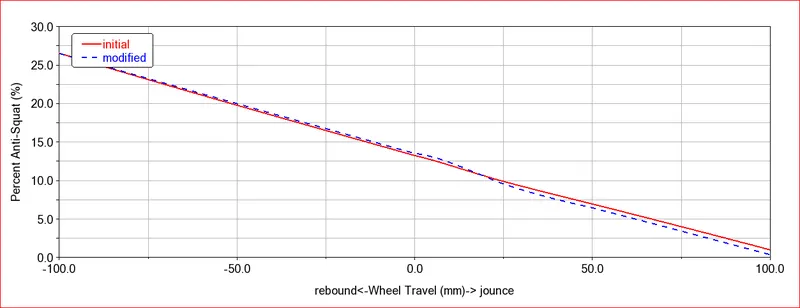
Rear End anti-squat angle is calculated to be 4.62deg.
For 100% Anti characteristics the angle is found to using the wheel base and center of gravity.
the 100% anti angle is found out to be 10.36deg.
In Breaking the front-end deflection with compensation is 46.92mm, the rear end deflection with compensation is found out to be 47.38mm.
In Acceleration the front-end deflection with the compensation is 53.52mm, the rear end deflection with compensation is 65.38mm.
Pitch gradient under braking with compensation is calculated to be 1.86deg/g and during acceleration 2.34.
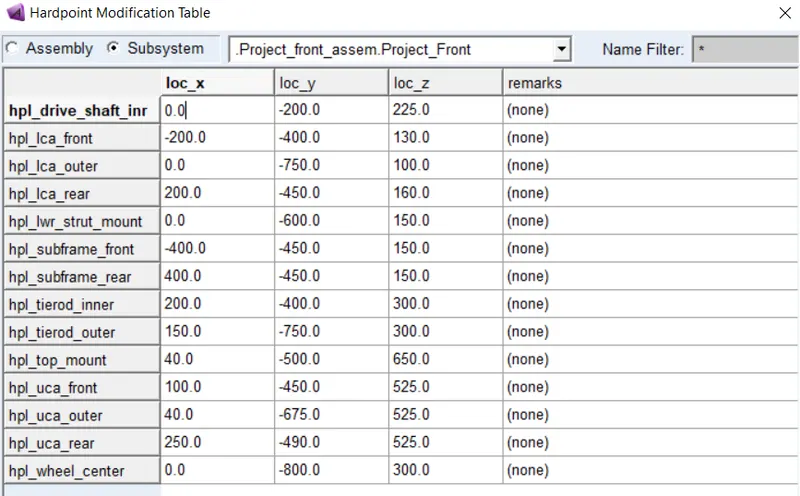
Tuning Suspension:
Front End Hard Point Changes:
Rear End Hard Points Changes:
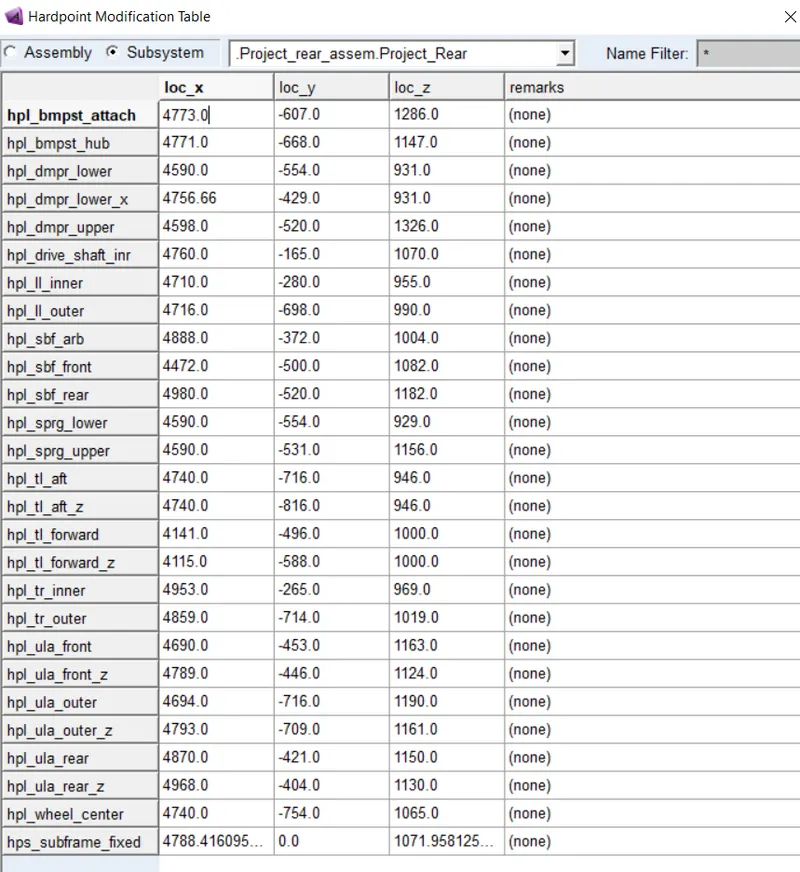
The previous calculation are againg carried out using the new paramenters and following graphs are obtained.
Graphs:
Front End:
SVSA Length
SVSA angle:
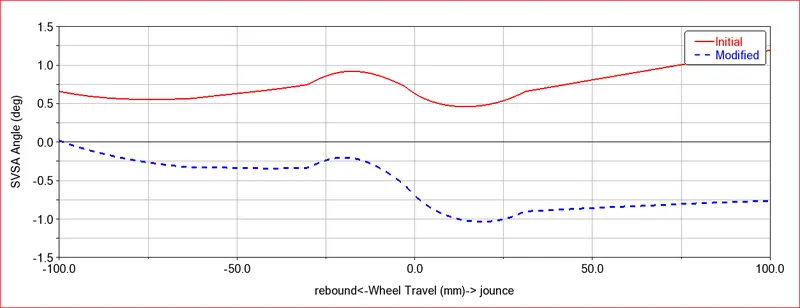
Sign convention: The angle of the swing arm is the angle it makes to the horizontal. A positive angle for a positive length is when the arm slopes downward from the wheel center. A positive angle for a negative length arm is when the arm slopes upward from the wheel center.
Rear End:
SVSA length:
SVSA Angle:
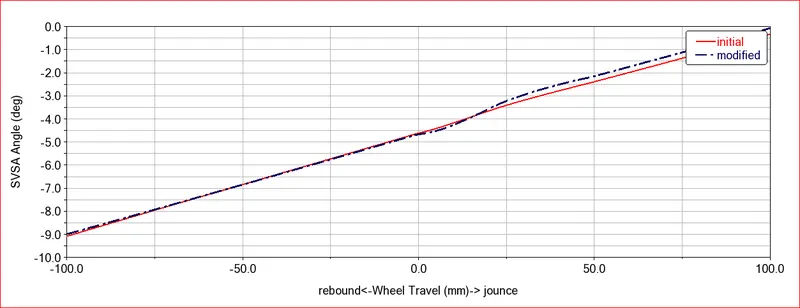
Sign convention: The angle of the swing arm is the angle it makes to the horizontal. A positive angle for a positive length is when the arm slopes downward from the wheel center. A positive angle for a negative length arm is when the arm slopes upward from the wheel center.
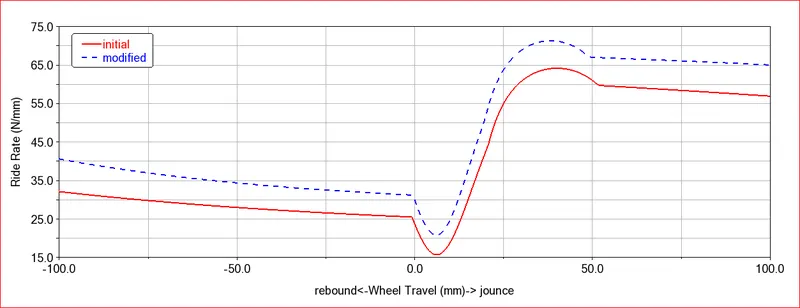
Ride Rates:
Front End:
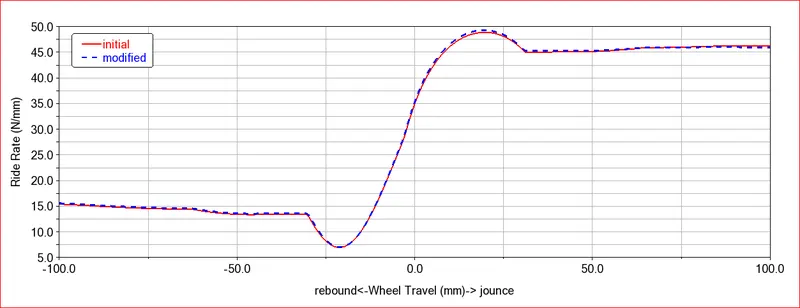
Rear End:
Anti Characterstics:
Braking:
Front End Anti Dive:
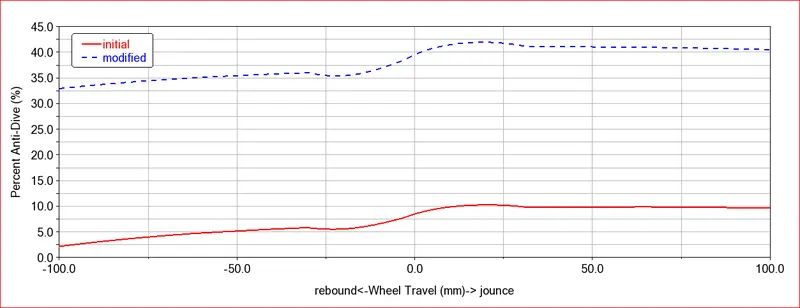
Rear End Anti Lift:
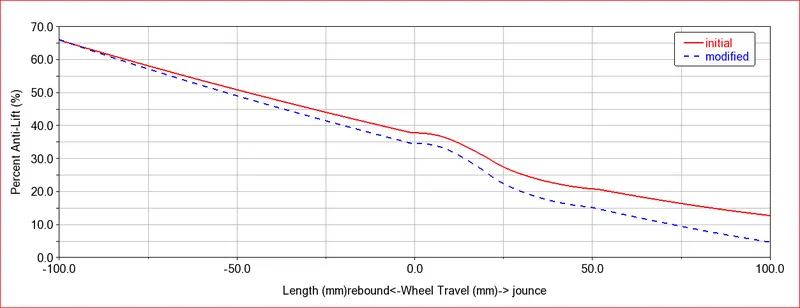
Acceleration:
Front End Anti Lift:
Rear End Anti Squat: