#2 WOT Condition
Question
1. What is the ratio of hill-climbing power required by fully loaded tata ultra truck to the half-loaded one?
2. A flyover is planned to be constructed on a national highway. Keeping in mind about the gradeability for trucks, how much can be the minimum length of the flyover, considering the minimum height at the summit should be 5.5 meters? State your assumptions.
3. Refer to below link for vehicle modelling using Simulink:
Prepare a new drive cycle excel file for the model and also include a hill-climbing angle to it. Revise the model file “Driver_Glider.slx” and comment on the results
4. Model the WOT (Wide Open Throttle) response of GM EV1 car. Compare it with the official figures of the performance of a real vehicle. Prepare a table showing variation in acceleration time with a 5% change in vehicle parameters.
Use the "INSERT CODE SAMPLE" option to paste your code.
SUBMISSION RULES
Use the "INSERT CODE SAMPLE" option to paste your code and attach screenshots of the output. 10 points will be reduced for not doing so. Just showing the code and not explaing the results. 20 points will be reduced if this happens.
If your program or model fails to compile then you will score 0, in that particular challenge. This is applicable only for challenges where you are asked to code or submit the model files
Create a zip file with all the necessary .m files model files etc. in google drive and them as a single zip file.
Copying code from others - If you copy code from others, your score will be 0. If you copy from others on more than 1 assignments your challenges will no longer be graded. You can still access the course but your challenges will not be graded.
If you have attached links to images or videos, make sure that they work before you hit submit. At the time of grading broken links will not be taken into account.
Once graded future submissions will not be valid
Make sure you provide open links while attaching Google Sheets file
Make sure you follow the constraints given in the question, violating them will results in 0 marks.
GENERAL INSTRUCTIONS:
The codes, plots, images, GIFs, and videos should be submitted only through the answer box.
Use the Google Drive to share only the cad models or other answers which couldn't be done through the answer box.
NOTE:
Violating the above instructions will lead to ZERO marks.
Link sharing should be enabled while sharing the Google Drive link, else the challenge will be awarded ZERO marks.
Your Answers
1. What is the ratio of hill-climbing power required by fully loaded tata ultra truck to the half-loaded one?
Hill Climbing Force:
Fhc= m g Sin ϴ
where m-Total mass of the vehicle (kg)
g-Acceleration due to gravity (m/s2)
The Specifications of TATA truck model T.11 ultra day is
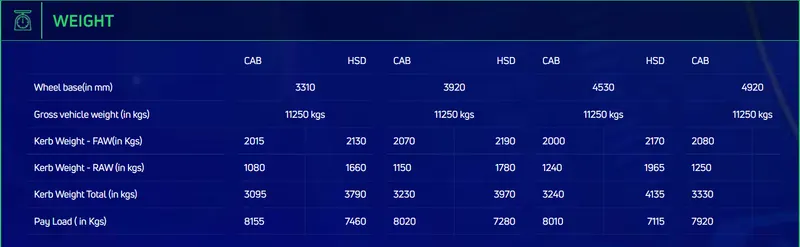
The Hill climbing power calculation is
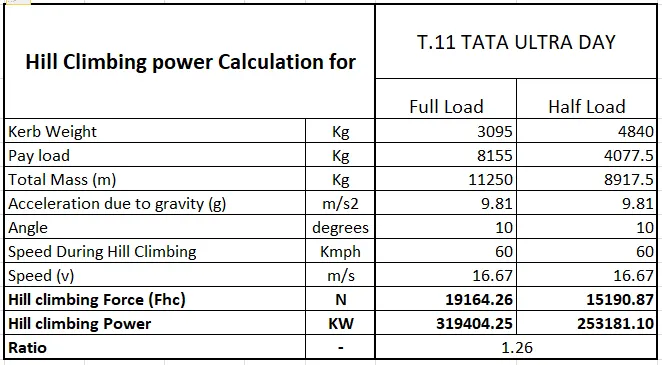
The ratio of hill climbing power for fully loaded and half loaded truck for T.11 ultra day is 1.26.
2. A flyover is planned to be constructed on a national highway. Keeping in mind about the gradeability for trucks, how much can be the minimum length of the flyover, considering the minimum height at the summit should be 5.5 meters? State your assumptions.
Gradeability:
The capacility of the vehicle to overcome a hill climbing at contant speed.
It can be expressed in two ways.
- percentage
- degree
Percentage of gradeability = Rise/Run *100
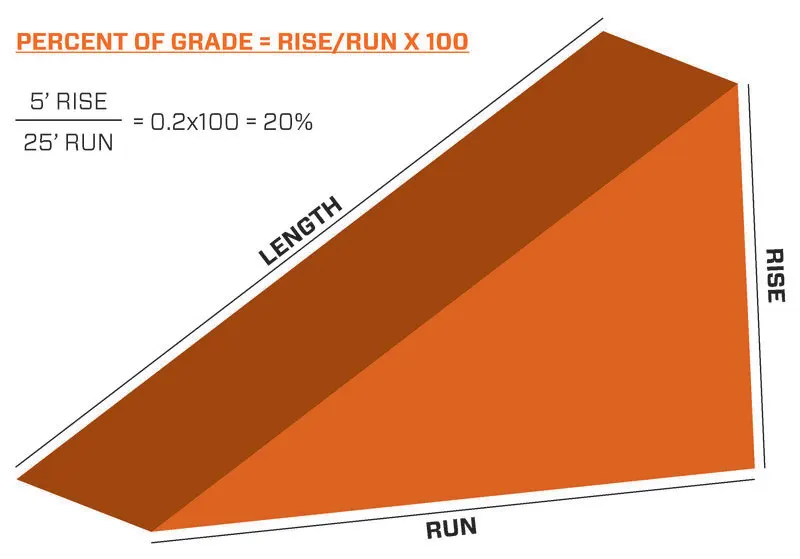
Degree od gradeability =tan inverse of (y/x).
here, Rise =5.5m
then i assume the gradeability as 10deg,
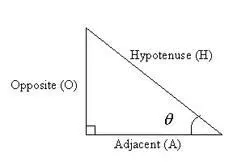
tan ϴ = opposite/ adjacent
tan 10deg=5.5/ adjacent
adjacent = 5.5/0.6484 = 8.48m
Run=8.48m
To calculate the minimum length of the flyover
sin ϴ = opposite/hypo
sin 10 deg = 5.5/ hypo
hypo=5.5/0.1736 = 31.68m
Minimum length of the flyover =31.68m
While constructing a flyover, one has to consdier the minimum gradeability of the truck at fully loaded condition so that the truck can overcome the hill climbing more efficiently.
3. Refer to below link for vehicle modelling using Simulink:
Prepare a new drive cycle excel file for the model and also include a hill-climbing angle to it. Revise the model file “Driver_Glider.slx” and comment on the results
I have created my Own drive cycle and added it to the model unsing From spreadsheet block.
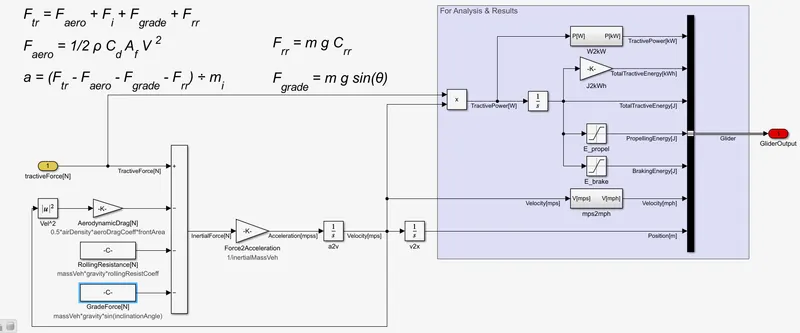
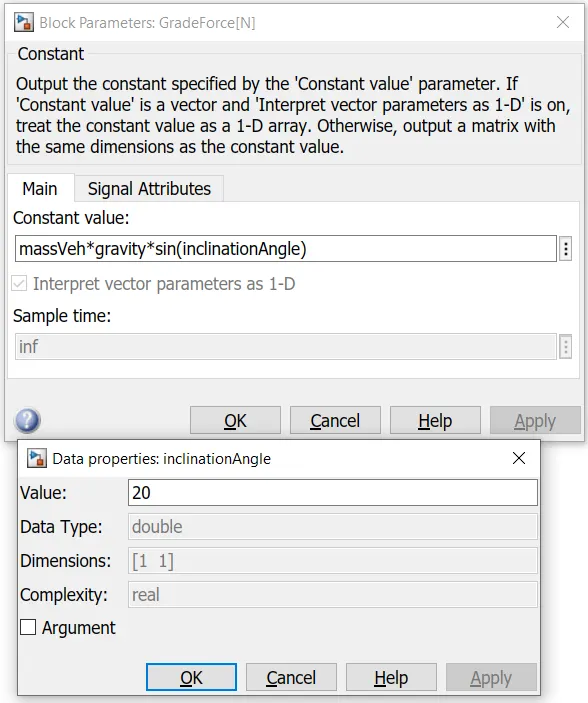
In the model, the hill climbing force is representted as the Gradeforce is equal to mg sin ϴ. Initially the value of ϴ is zero, which is changed into 20
The Obtained results are
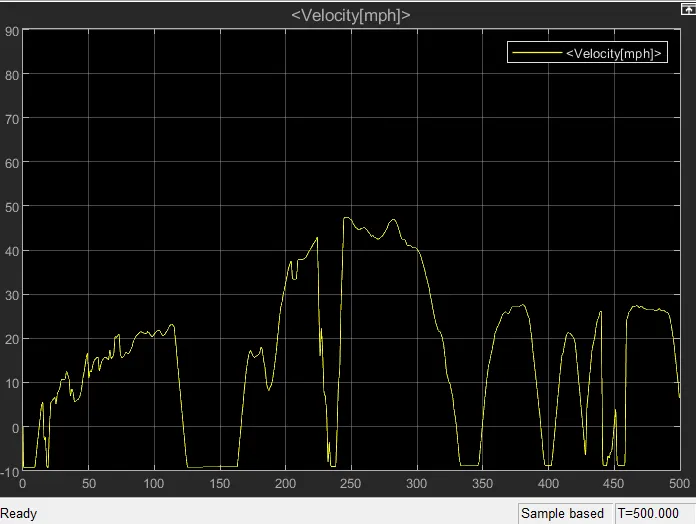
The plot of velocity with respecto to time is obtained corresponding to my input drive cycle.
I have observed no change in the plot when implementing the inclination angle.
4. Model the WOT (Wide Open Throttle) response of GM EV1 car. Compare it with the official figures of the performance of a real vehicle. Prepare a table showing variation in acceleration time with a 5% change in vehicle parameters.
Wide Open Throttle (WOT): WOT is the high acceleration case where the vehicle initially at rest and starts accelerating to reach its top speed in a short period of time.
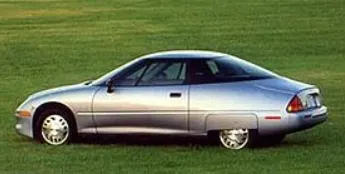
The Specifications of GM EV1 car is
Drag Co-efficient (Cd)= 0.19
Co-efficient of rolling resistance (µrr) = 0.0048
Motor Speed=12000rpm
Frontal area (A) = 1.8m2
Efficiency of speed drive = 0.95
Mass of the vehicle = 1560 Kg
Gear ratio =11:1, G=11
Tire radius (r)=0.30m
critical velocity (ν)=19.8m/s
Motor torque Tmax=140Nm
Angular velocity (ωc)=733 rad/s
constant power=102KW
Maximum velocity=35.8m/s
Calculation:
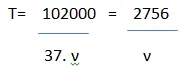
We know the equation,

The maximum torque of the electric vehicle is a simple equation of angular speed. In most cases at low speed, maximum torque is constant untill the motor speed reaches the critical speed after which torque falls

Then the equation is

Applying the known values in the equation,
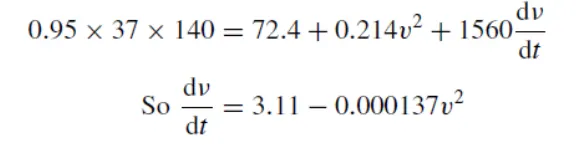
Once the speed has reached 19.8m/s, then the velocity equation is
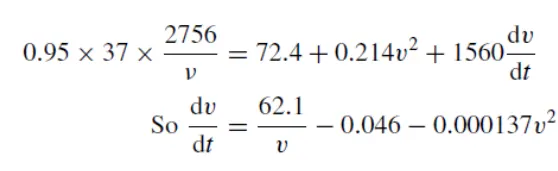
the two equation becomes
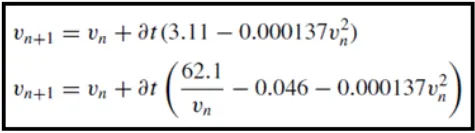
The acceleration is calculated using the excel calculator, the excel file is attached.
when 5% increase in EV parameters,
Drag Co-efficient (Cd)= 0.1995
Co-efficient of rolling resistance (µrr) = 0.00504
Motor Speed=12600rpm
Frontal area (A) = 1.89m2
Efficiency of speed drive = 0.9975
Mass of the vehicle = 1638 Kg
Gear ratio =11:1, G=11.55
Tire radius (r)=0.315m
critical velocity (ν)=20.79m/s
Motor torque Tmax=147Nm
Angular velocity (ωc)=769.65rad/s
constant power=107.1KW
Maximum velocity=37.59m/s
Then the two equations becomes,
 When the velocity is less than critical velocity
dv/dt = 3.263-0.000143v^2
Vn+1=Vn + dt(3.263-0.000143Vn^2)
 When the velocity is greater than critical velocity
dv/dt=(65.23/v) - 0.000144v^2-0.049
Vn+1 =Vn +dt((65.23/Vn)-0.000144Vn^2-0.049)
The compared results of both the cases is
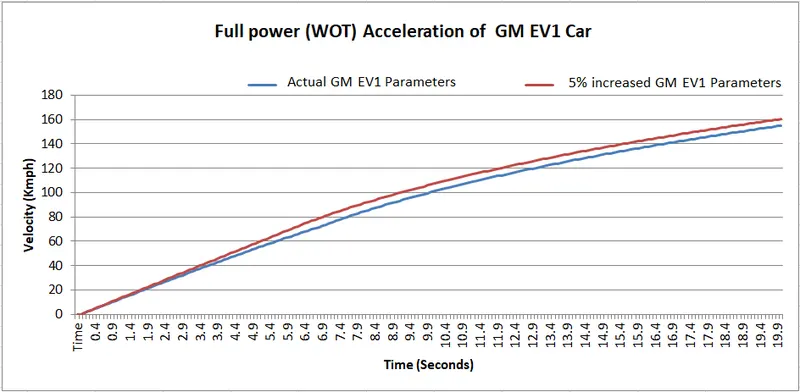
It is observed that the 5% increased parameter takes more time to reach the critical speed when compared to the actual GM EV1 parameters
Your Assets
| Filname | Size | Action |
|---|---|---|
| TATAUlt…nge.xlsx | 13.27 KB | |
| Myowndr…cle.xlsx | 15.46 KB | |
| WOTcalc…EV1.xlsx | 41.56 KB |