Forces Acting on a Vehicle
Question
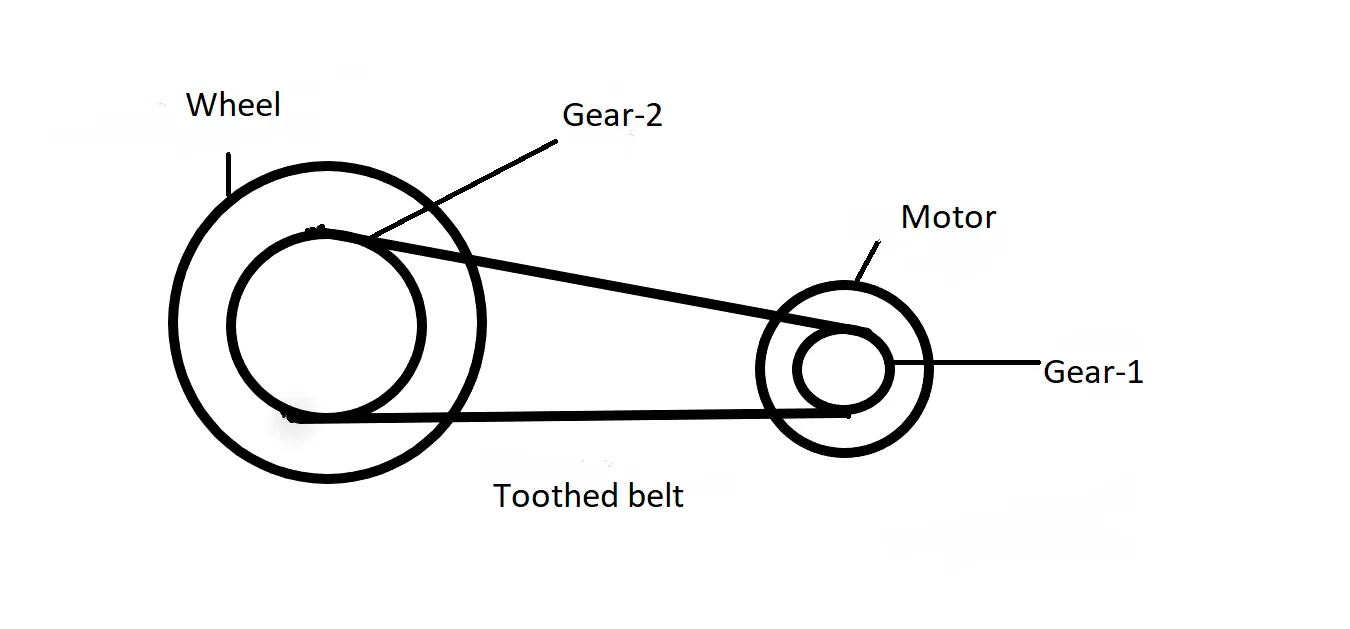
1. What should be the maximum speed of the motor used in an electric scooter capable to run at 90 kmph, if the fixed gear ratio is 7 and tire size is 90/100 R10 53J? Assume the following arrangement from motor to wheel.
Refer to below image to read a tire.
Recalculate the same value if tire code is 90/90 R18 51P.
2. Prepare a simple excel calculator to identify vehicle propulsion power based on given inputs and outputs. Implement formulas in cells.
Inputs: Kerb Weight (kg), Payload (kg), Coefficient of rolling resistance, Air density (kg/m3), Width (m), Height (m), Drag coefficient, Acceleration (0 to top speed in specified seconds), Hill climbing angle, Speed
Output: Total power in kW
What are the limitations of this calculation?
3. Assuming that tire pressure reduction by 15% results in increase of rolling resistance effect by two times, how much will be the difference in total traction power keeping all other parameters same?
4. See the video of Range rover sport dragon challenge. How much is the gradeability? What was the average speed? Which are the forces acting on car?
Link to the video: https://www.youtube.com/watch?v=EUwzWHD3Htg
Use the "INSERT CODE SAMPLE" option to paste your code.
SUBMISSION RULES
Use the "INSERT CODE SAMPLE" option to paste your code and attach screenshots of the output. 10 points will be reduced for not doing so. Just showing the code and not explaing the results. 20 points will be reduced if this happens.
If your program or model fails to compile then you will score 0, in that particular challenge. This is applicable only for challenges where you are asked to code or submit the model files
Create a zip file with all the necessary .m files model files etc. in google drive and them as a single zip file.
Copying code from others - If you copy code from others, your score will be 0. If you copy from others on more than 1 assignments your challenges will no longer be graded. You can still access the course but your challenges will not be graded.
If you have attached links to images or videos, make sure that they work before you hit submit. At the time of grading broken links will not be taken into account.
Once graded future submissions will not be valid
Make sure you provide open links while attaching Google Sheets file
Make sure you follow the constraints given in the question, violating them will results in 0 marks.
GENERAL INSTRUCTIONS:
The codes, plots, images, GIFs, and videos should be submitted only through the answer box.
Use the Google Drive to share only the cad models or other answers which couldn't be done through the answer box.
NOTE:
Violating the above instructions will lead to ZERO marks.
Link sharing should be enabled while sharing the Google Drive link, else the challenge will be awarded ZERO marks.
Your Answers
1. What should be the maximum speed of the motor used in an electric scooter capable to run at 90 kmph, if the fixed gear ratio is 7 and tire size is 90/100 R10 53J? Assume the following arrangement from motor to wheel.
Formula for speed of the motor ω = G*v\r
where, G- Gear Ratio
v-Velocity
r-Radius of the Tyre
We have known the values for G and V.
To convert velocity into m/s
1Kmph = 1000m\36000s = 5/18m/s
Then for 90Kmph, 90*5/18 = 25m/s
Velocity v= 25m/s.
We have to find the radius of the Tyre,
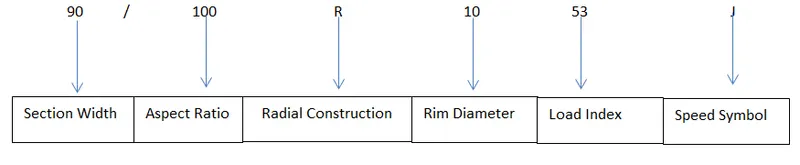
Tyre Specifications are
To convert the Rim diameter(d) into mm
1 inch =25.4mm
Then for 10 inch = 25.4*10 = 254mm
Rim diameter d = 254mm.
To calculate the Tyre Diameter (D)
D = 2W (AR/100)+ d
where, W- Section Width,
AR- Aspect Ratio
d- Rim diameter.
D= 2*90(100/100)+254
= 180+254
= 434mm
Diameter of Tyre (D) = 434mm
Radius of Tyre (r) = 217mm = 0.217m
Formula for speed of the motor ω = (G*v)/r
= (7*25)/0.217
ω = 806.45 rad/s
To convert into rpm
ω = 806.45*60/2π = 7704.94 rpm
Therefore the maximum speed of the motor is 7704.94rpm.
For Tyre code 90/90 R18 51P.
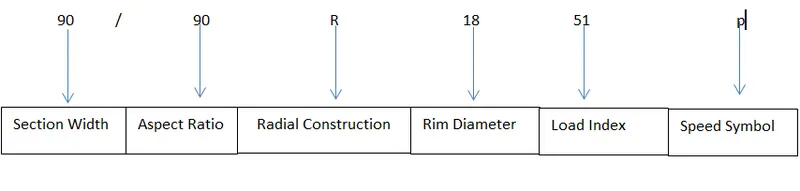
Gear ratio and velocity are same, only the radius of the tyre will change
To convert the Rim diameter(d) into mm
1 inch =25.4mm
Then for 18 inch = 25.4*18 = 457.2mm
Rim diameter d = 457.2mm.
To calculate the Tyre Diameter (D)
D = 2W (AR/100)+ d
where, W- Section Width,
AR- Aspect Ratio
d- Rim diameter.
D= 2*90(90/100)+457.2
= 162+457.2
= 619.2mm
Diameter of Tyre (D) = 619.2mm
Radius of Tyre (r) = D/2 = 309.6mm = 0.3096m
Formula for speed of the motor ω = (G*v)/r
= (7*25)/0.3096
ω = 565.245 rad/s
To convert into rpm
ω = 806.45*60/2π = 5400.43 rpm
Therefore the maximum speed of the motor is 5400.43rpm.
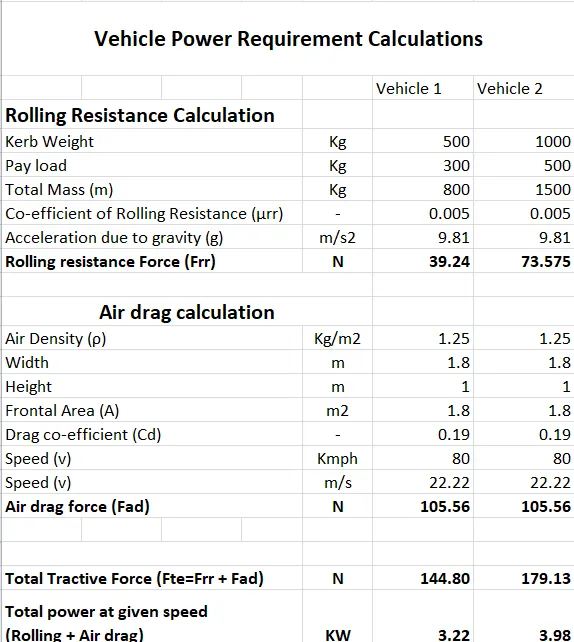
2. Prepare a simple excel calculator to identify vehicle propulsion power based on given inputs and outputs. Implement formulas in cells.
Inputs: Kerb Weight (kg), Payload (kg), Coefficient of rolling resistance, Air density (kg/m3), Width (m), Height (m), Drag coefficient, Acceleration (0 to top speed in specified seconds), Hill climbing angle, Speed
Output: Total power in kW
What are the limitations of this calculation?
The screenshot of the excel calculator
The Limitations of the above calculation is,
It is difficult to use for large data, because we have to enter the values manually.
We have to repeat the same data multiple times to get the power requirement for various speeds instantaneously.
3. Assuming that tire pressure reduction by 15% results in increase of rolling resistance effect by two times, how much will be the difference in total traction power keeping all other parameters same?
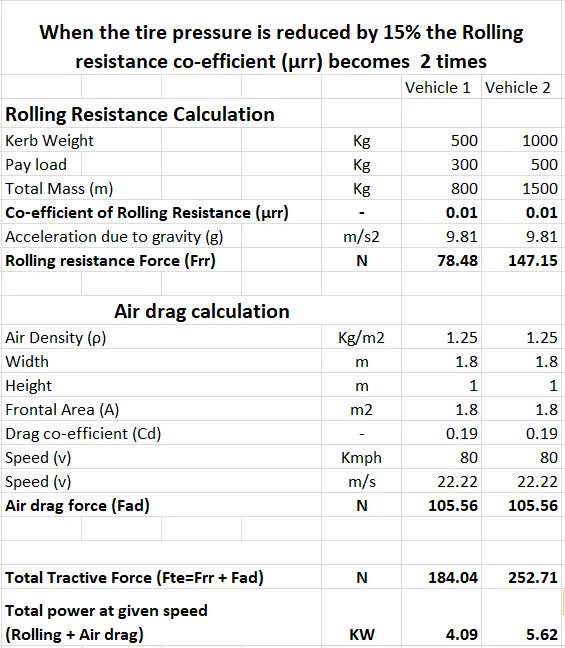
In vehicle1, the total power is increased by 21%.
In vehicle2, the total power is increased by 29%.
4. See the video of Range rover sport dragon challenge. How much is the gradeability? What was the average speed? Which are the forces acting on car?
Link to the video: https://www.youtube.com/watch?v=EUwzWHD3Htg
Gradeability:
Gradeability is defined as the highest grade a vehicle can go up maintaining a particular speed.
In the above case, the gradeability is 45deg
In percentage tan(45)=100
So the gradeability is 100%
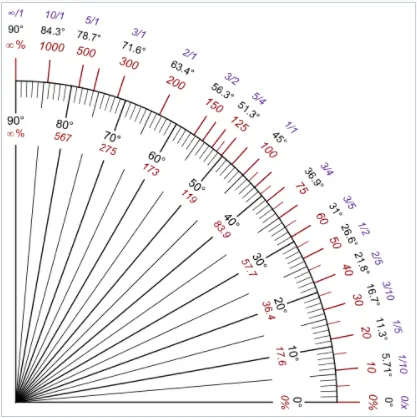
The chart shows 45 degrees =100% and having 1:1 gradient ratio.
Average speed of the car (in the above case)= Distance/time =11.26km/0.368h = 29.7Kmph
The average speed of the car = 29.7kmph.
Forces acting on the Range rover car:
- Rolling resistance force
- Aerodynamic drag force
- Hill climbing force
- Acceleration force
Your Assets
| Filname | Size | Action |
|---|---|---|
| Vehicle…ion.xlsx | 17.57 KB |
- Mayur SalunkheThank you for your reference