 Free · 6 lessons · no payment
Frontiers in Biomedical Engineering: 6 free lessons
Six free lessons from Skill-Lync's Frontiers in Biomedical Engineering course, from two modules. The physiology lessons cover anatomical planes, body organisation and the main organ systems with common disorders and homeostasis. The instrumentation lessons cover how medical instruments are classified, biopotential signals and their ranges (ECG 0.5 to 4 mV), and data acquisition with sensors and alarms.
Last updated 16 Nov 2026 · 6 free lessons (2 h 13 min) · full course: 57 lessons (20 h 27 min), paid · ₹40,000
 Free lesson 1 · 22 minPhysiology Basics, Anatomical Planes, Body Organization and Systems
What will you learn in the free Frontiers in Biomedical Engineering lessons?
- Anatomical planes, directional terms and levels of body organisation
- Digestive, respiratory, cardiovascular, nervous and endocrine systems and their common disorders
- Homeostasis through negative and positive feedback
- Classification of biomedical instruments and the man-instrument system
- Biopotential signal ranges, sensor selection and alarm limits
Free lessons you can watch now
- Lesson 1 · 22 minPhysiology Basics, Anatomical Planes, Body Organization and SystemsThe instructor recaps the endocrine glands from the previous module, then defines physiology and its link to pathology. The lesson covers anatomical planes and directional terms, the levels of organization from cell to organ system, basic cell structure including eukaryotic and prokaryotic cells, and a list of the major physiological systems.
 Lesson 2 · 28 minDigestive, Urinary, Respiratory, Cardiovascular and Endocrine SystemsThe instructor walks through the digestive tract from the mouth to the intestines, then the urinary, respiratory, cardiovascular and endocrine systems. Each system is paired with common disorders, including GERD, urinary tract infection, kidney stones, airway obstruction, arrhythmia, myocardial infarction, atherosclerosis, diabetes and thyroid disease.
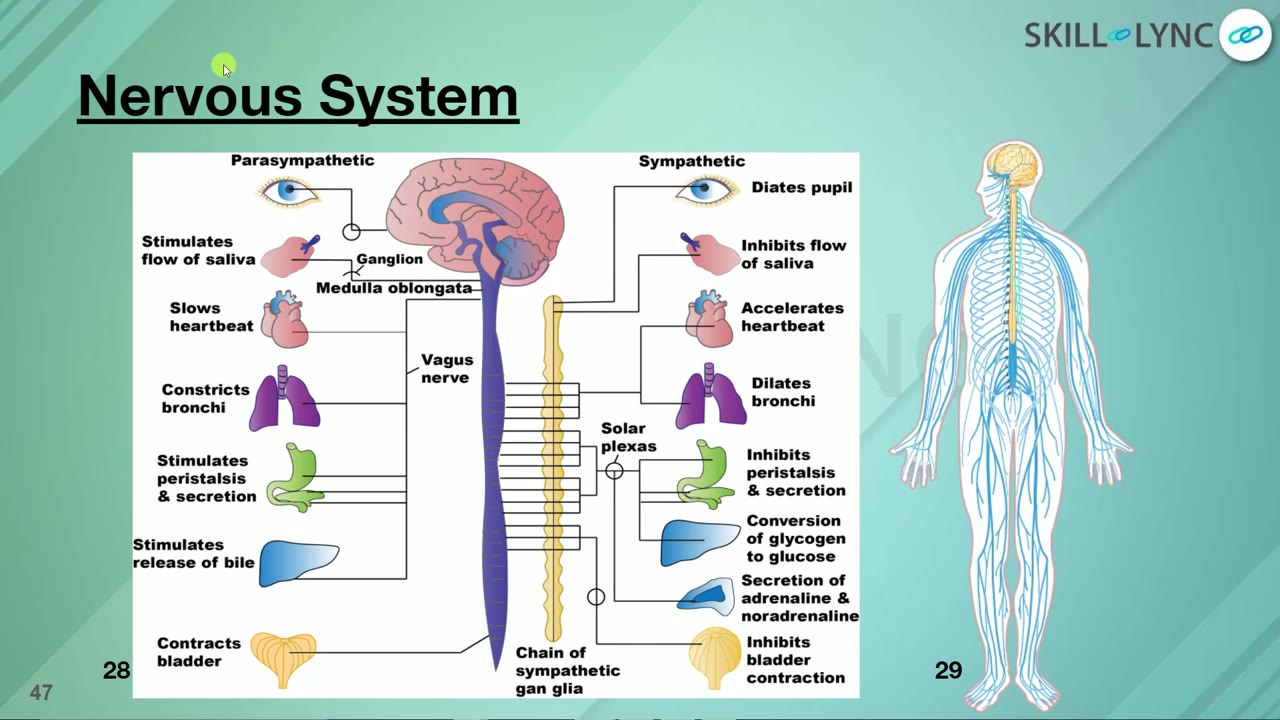 Lesson 3 · 17 minNervous System, Common Disorders and Homeostasis Feedback ControlThe instructor describes the central and peripheral nervous system, the four brain regions and the sympathetic and parasympathetic actions of the autonomic system. It covers neuron types, stroke, and homeostasis through negative and positive feedback, using blood calcium control as an example, and closes with a recap of the week.
 Lesson 18 · 24 minBiomedical Instrumentation Basics, Instrument Elements and ClassificationThe instructor sets out the module objectives and defines biomedical engineering as engineering applied to diagnosis, monitoring and therapy. Everyday instruments such as a car instrument cluster and a washing machine lead into a measurement block diagram, then medical instruments are classified by function and by body area.
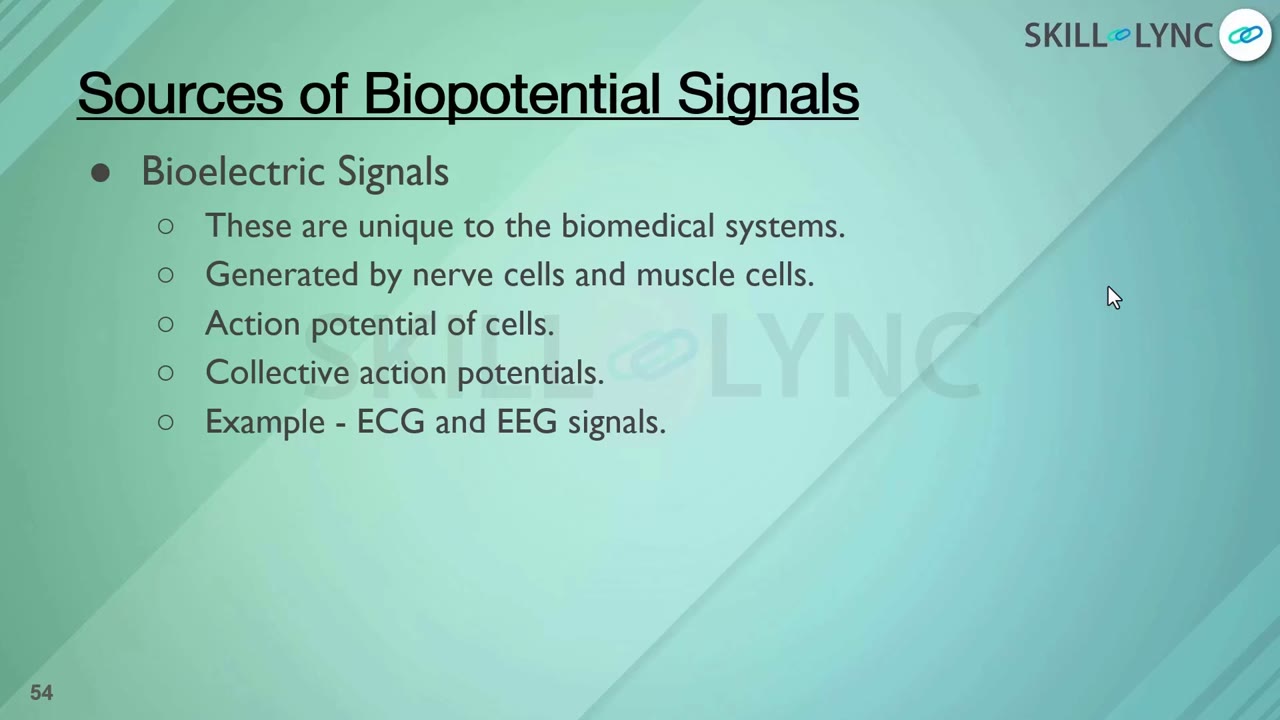 Lesson 19 · 17 minBiopotential Signal Sources, Signal Ranges and the Man-Instrument SystemThis part covers bioelectric, bioacoustic, biomechanical and optical signals, including pulse oximetry using red and infrared light. It gives typical amplitude and frequency ranges, such as ECG at 0.5 to 4 millivolts and EEG at 5 to 300 microvolts, and introduces the man-instrument system with stimulus, transducer and signal conditioning.
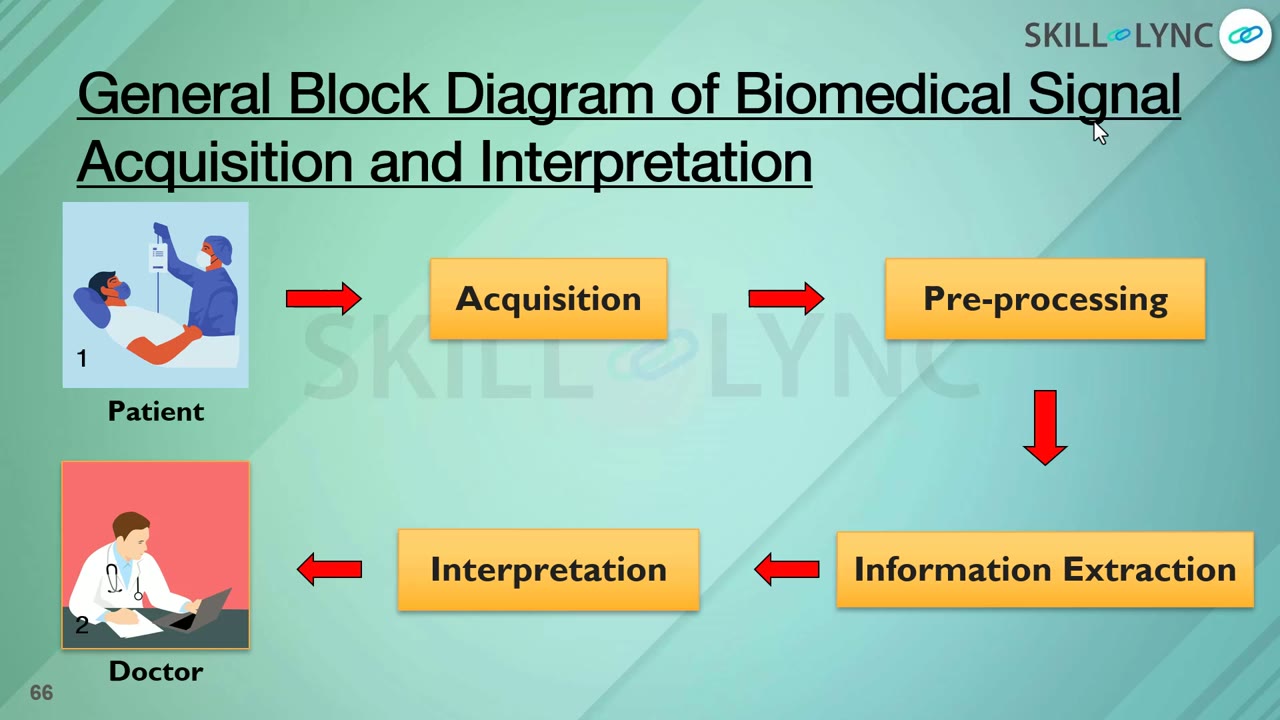 Lesson 20 · 24 minBiomedical Data Acquisition, Sensors, Alarms and Instrument CharacteristicsThe instructor draws the block diagram of a biomedical acquisition system, from sensors and amplifiers through filtering to display for the doctor. It compares active and passive sensors, lists sensor selection factors such as linearity and response time, explains alarm design with heart rate limits, and ends on static and dynamic characteristics.
Which lessons of Frontiers in Biomedical Engineering are free?
The first 6 lessons are free on Grow by Skill-Lync: 2 h 13 min of video from Skill-Lync's Frontiers in Biomedical Engineering course that you can watch here at no cost: leave your name and phone number once and they play (as of 16 Nov 2026). The full course is paid (₹40,000); its other 51 lessons are listed in the outline below so you can see what each one covers.
How long is the Frontiers in Biomedical Engineering course?
The full course has 57 lessons and 20 h 27 min of recorded video, plus the projects and assignments that come with enrolment. The free lessons alone take about 2 h 13 min, so you can finish them in an evening and decide whether to continue.
What comes after the free lessons?
Lesson 4 onwards is in the paid Frontiers in Biomedical Engineering course on Skill-Lync, with mentor support and a certificate. A counsellor can tell you which course or program fits your goal.