Breaking Down The Complexities Of Car Design Through Solid Surface Modelling
From the streamlined curves of an iconic sports car to the rugged power of a pickup truck, modern cars have evolved into complex works of art. But how can engineers design these vehicles in ways that are both beautiful and functional?
 Navin Baskar·28 Feb 2023·3 min read
Breaking Down The Complexities Of Car Design Through Solid Surface Modelling
From the streamlined curves of an iconic sports car to the rugged power of a pickup truck, modern cars have evolved into complex works of art. But how can engineers design these vehicles in ways that are both beautiful and functional? The answer lies in a process known as solid surface modelling. In this article, we will look at how this method is used to break down the complexities of car design.

What is Solid Surface Modelling?
Solid surface modelling is the process of creating a three-dimensional representation of a physical object. This can be done using various software applications, such as Computer-Aided Design (CAD) CATIA, NX or Solidworks. The advantage of solid surface modelling over other methods, such as wireframing solid modeling is that it allows for a more accurate representation of the final product. This is because all the dimensions and proportions are set in advance, meaning any changes made during the design process can be easily implemented.
Benefits of Using Solid Surface Modelling for Car Design
Some of the benefits of using solid surface modelling for car design include:
- Increased Accuracy
- Solid surface modelling allows for high precision and accuracy when designing cars.
- This is essential in ensuring that each component fits together perfectly and works as intended.
- Improved Communication
- The three-dimensional nature of solid surface models makes them much easier to communicate than traditional two-dimensional drawings.
- This can be helpful when working with other design team members or when presenting the design to clients or investors.
- Enhanced Visualisation
- Seeing the finished product in 3D can help designers spot potential problems and make necessary changes early in the process.
- This can save a lot of time and money further down the line.
- Greater Flexibility
- Solid surface modelling makes it easy to make changes to the design at any stage of the process.
- This means that designers can experiment with different ideas and options without having to start from scratch each time.
Overview of the Car Design Process with Solid Surface Modelling
First, the designer creates a base model of the car using Computer-Aided Design (CAD) software. This model includes all of the car's major components, such as,
- Chassis
- Engine bay
- Body
- interior
Next, the designer adds intricate details to the model, such as the car's exterior features and trim. Once this is complete, the 3D model is ready to be sent to a manufacturing facility for production.
Solid surface modelling makes the car design process much simpler and more efficient. With this technology method designers can easily make changes to their models and see how those changes will affect the final product. This helps to ensure that the finished product meets all of the customer's expectations.
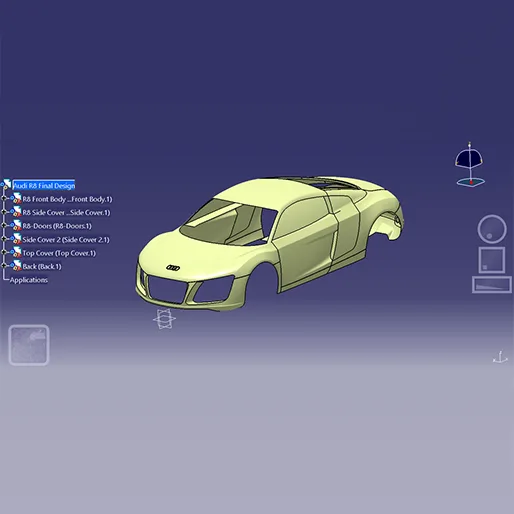
Examples of Car Designs Created Using Solid Surface Modelling
Many software packages are available for solid surface modelling, each with its own strengths and weaknesses. Some popular options include,
- Autodesk Inventor
- SolidWorks
- CATIA
- NX
- Alias
Each has its way of representing objects, so designers must be familiar with the software they're using.
Once a model has been created, it can be viewed from any angle and rotated in three dimensions (3D). This allows designers to understand better how the final product will look and function. It also makes it possible to identify potential problems early on before they become costly mistakes.
Designers can also use solid surface modelling to create animations or still images of their designs. This can be helpful when presenting ideas to clients or shareholders.
Conclusion
Solid Surface modelling has revolutionized car design and opened up a world of possibilities. Solid Surface modelling is now an integral part of vehicle design, and its importance cannot be overstated; without it, car design would still be in its infancy. To learn more about these tools and technologies, visit Skill-Lync. We offer courses in various topics related to the automobile industry, from design to testing. Some of our courses include Hybrid Electric Vehicle Design and Analysis, PG Program in CAD, Computational Fluid Dynamics, and Automation & Pre-Processing for FEA & CFD Analysis. So start your learning journey with Skill-Lync!