Wiring harness routing & packaging Rules Week 3 Challenge
P clamp-
P clamps is used for mounting the bundle of wires.
Engineered for lean manufacturing, the high performance P-Clamps were developed to replace and outperform traditional P-Clamps and Saddle Clamps. Featuring an overmold silicone cushion with PEEK polymer, these clamps are completely non-conductive/non-corrosive, lightweight, and very durable.
Uses-
The Ratchet P-Clamp is used in photovoltaic installations and wind turbine towers, in trains, on ships and on all kinds of heavy duty vehicles like mobile cranes or agricultural machinery for mounting the bundle of wires.
Properties-
- Completely Non-Corrosive & Non-Conductive.
- Improved Strength & Stability.
- Lighter than Traditional P-Clamps by up to 40%.
- Withstands constant vibrations and shock load.
Back shell connector-
Backshells are connector attachments that are designed to provide strain relief. They are commonly used with high-reliability connectors, such as military-specification (Mil-Spec) connectors. Backshells fit onto the back of connectors where they offer protection against strain-related damage.
Working of back shell-
You might be wondering how backshells work exactly. While available in different types, they all work by forming a physical shell-like structure around the back of connectors.
Wires can still be exposed to various forces, including pulling forces. Backshells, though, protect connectors from damage caused by these forces. When fitted with a backshell, connectors will have a physical structure around the back where they connect to devices. The backshell will protect the enclosed connector from strain-related damage.
Material for backshell-
The materials and finishes used on backshells must meet guiding standards and requirements, as such as:
- AMS
- ASTM
- MIL-SPEC
Some commonly used, corrosion-resistant materials are aluminum alloy, stainless steel, elastomers, and NiAl-Bronze.
Mounting type of backshell-
The shell's mounting style is usually related to its intended use. Common mounting styles include:
- Wall mounted.
- Line/in-line.
- Box mounted.
- Surface-mount.
- Straight plug.
- Lanyard release plug.
- Solder mount.
- Flange mounted.
- Jam nut receptacles.
Protective covering-
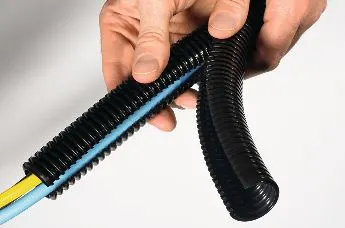
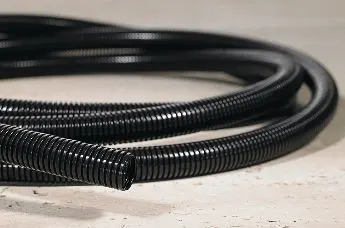
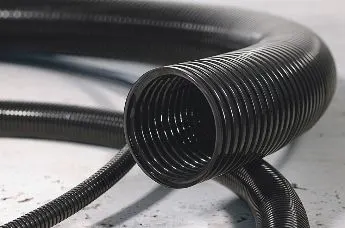
A cot tube is a non metallic protection covering which is used to protect from the bundle of wires.
Here is a different types of cot tubes available in the market as per standard-
1). HG-LW
2). HG-SW
3). HG-FR
4). HG-DC
1). HG-LW-
The HG-SW cable protection conduit provides very good resistance to abrasion, compression and impact, is highly flexible and has high fatigue-life. It is also very resistant to solvents and oils and is free of halogen, sulphur and phosphorous.
Machine building, plant construction, control panels, public buildings.
2). HG-SW-
The HG-LW cable protection conduit is light weight and very fleixble with a small bending radius. It provides good resistance to abrasion, compression and impact, is highly flexible and has high fatigue-life. It is also very resistant to solvents and oils and is free of halogen, sulphur and phosphorous.
Machine building, plant construction, control panels and public buildings, wherever lower mechanical protection is required.
3). HG-FR-
The HG-FR cable protection conduit is highly flame-retardant, has low smoke and toxicity, is highly flexible and has high fatigue-life. The cable protection conduit is also resistant to abrasion, compression and impact. It is also very resistant to solvents and oils and is free of halogen, sulphur and phosphorous.
Railway vehicles, railway tunnels, underground stations and public buildings, where high fire protection is required.
4). HG-DC-
The HG-DC cable protection conduit can be open and closed repeated and offers excellent abrasion resistance. Cables are easily inserted laterally. The cable protection conduit is resistant to abrasion, compression and impact. It is also very resistant to solvents and oils and is free of halogen, sulphur and phosphorous.
Control panels, machine building, plant construction and wherever retrofitting is a requirement.