Wiring harness routing & packaging Rules Week 3 Challenge
Wiring harness routing & packaging Rules
Cable harnesses are usually designed according to geometric and electrical requirements. A diagram is then provided (either on paper or on a monitor) for the assembly preparation and assembly.
- routing wires through sleeves,
- taping with fabric tape, in particular on branch outs from wire strands,
- crimpingterminals onto wires, particularly for so-called multiple crimps (more than one wire into one terminal),
- inserting one sleeve into another,
- fastening strands with tape, clamps or cable ties.
Process:
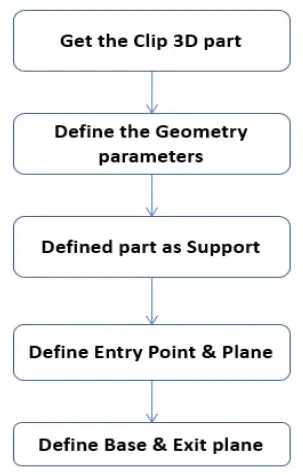
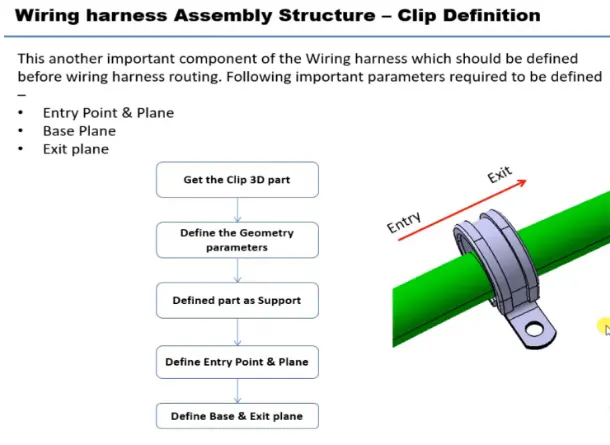
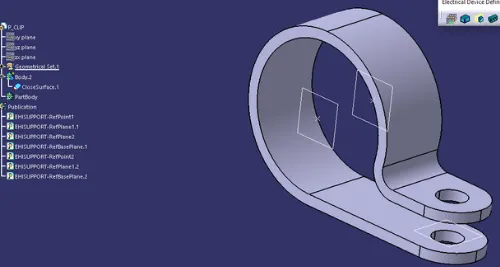
Create points as entry and another as exit point.
Create planes at two points and another at base.
Switch to Electric part desgn Click on support defination - select part - select entry point - select entry plane, exit and base plane. Again Click on support defination - select part - select exit point - select exit plane and base plane as secondary plane is automatically taken.
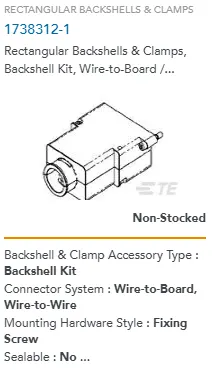
- TE Internal #:1738312-1
- TE Internal Description:BACKSHELL KIT,STRAIGHT,GPRB1
· Backshell & Clamp Accessory Type : Backshell Kit
· Connector System : Wire-to-Board, Wire-to-Wire
· Mounting Hardware Style : Fixing Screw
· Sealable : No
· Connector & Contact Terminates To : Wire & Cable
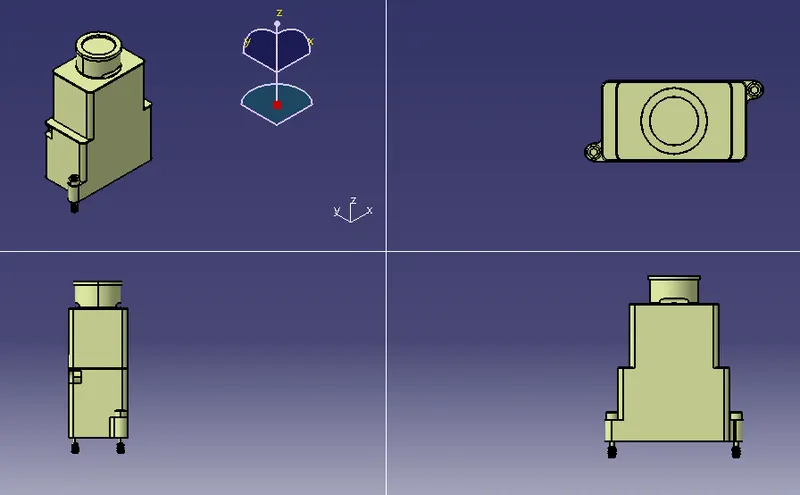
Catalogue Creation:
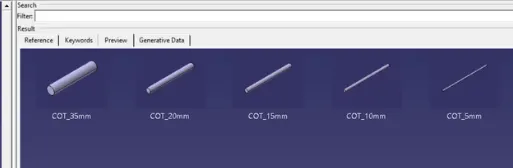
Create Follow Corrugated tubes & Add them in Catalogue under “Slit COT” family.
|
Name |
ID (mm) |
OD (mm) |
Thickness (mm) |
|
15mm COT |
12 |
15 |
1.5 |
|
20mm COT |
17 |
20 |
1.5 |
|
35mm COT |
32 |
35 |
1.5 |
|
10mm COT |
7 |
10 |
1.5 |
|
5mm COT |
3 |
5 |
1 |