Section Modulus calculation and optimization
Section modulus is a geometric property for a given cross-section used in the design of beams or flexural members. Other geometric properties used in design include area for tension and shear, radius of gyration for compression, and moment of inertia and polar moment of inertia for stiffness. Any relationship between these properties is highly dependent on the shape in question. Equations for the section moduli of common shapes are given below. There are two types of section moduli, the elastic section modulus and the plastic section modulus. The section moduli of different profiles can also be found as numerical values for common profiles in tables listing properties of such.
Section modulus
For a beam which has been bent, the maximum stress σmax will occur at the maximum distance ymax from the neutral axis. Thus:
σM=Iymaxσmax
The quantity I/ymax is a purely geometric function and is termed the section modulus Z. Thus we can write:
(5.4.8)σM=Zσmax
with:
(5.4.9)Z=I ymax
Figure gives values for typical sections. Standard section handbooks give values of the second moment of area and section modulus for different standard section beams,
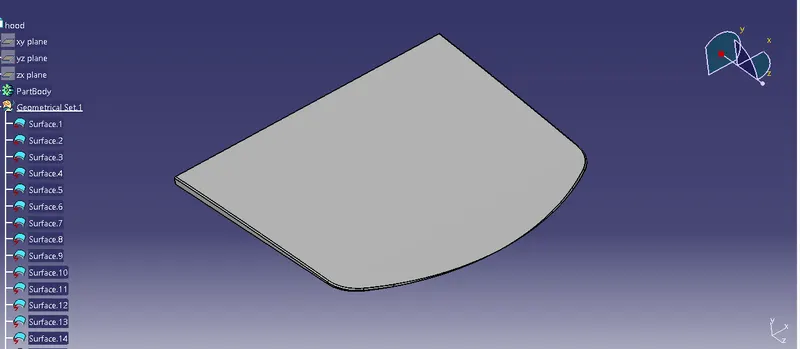
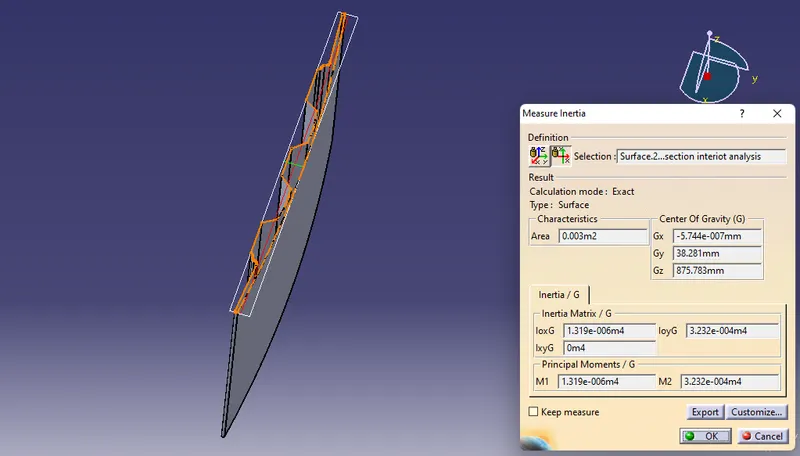
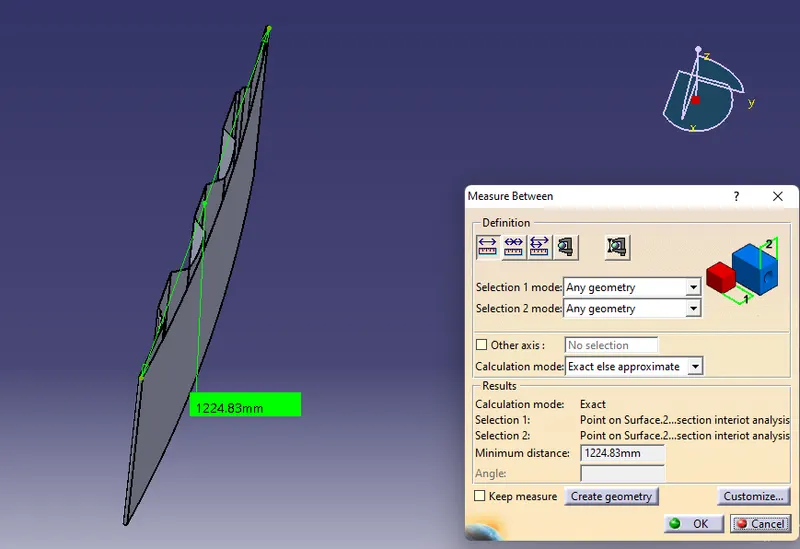
Hood design
Here,
Moment of inertia(max) = 3.232×10^-6×mm^4
Moment of inertia(min) = 1.319×10^-6×mm^4
Y=1224.83/2=612.415 mm
S=I/Y
S=1.319×10^6 / 612.415 =2153.8 mm^3
Conclusion
So, here the difference can be seen in the moment of inertia and the change in the section modulus can be seen by the change in the design(depth).