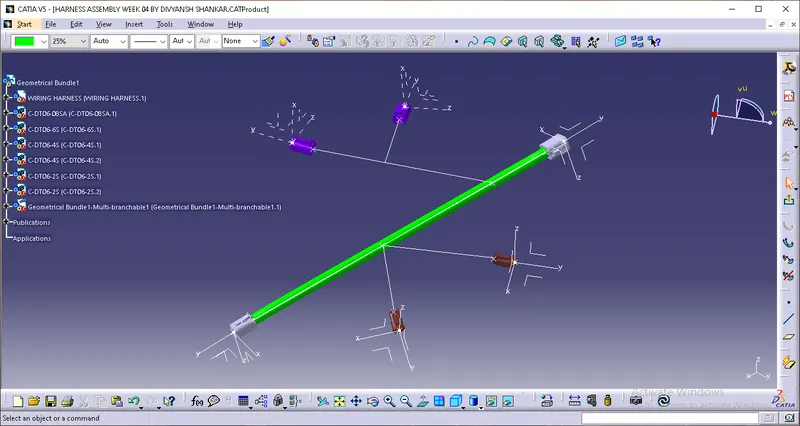
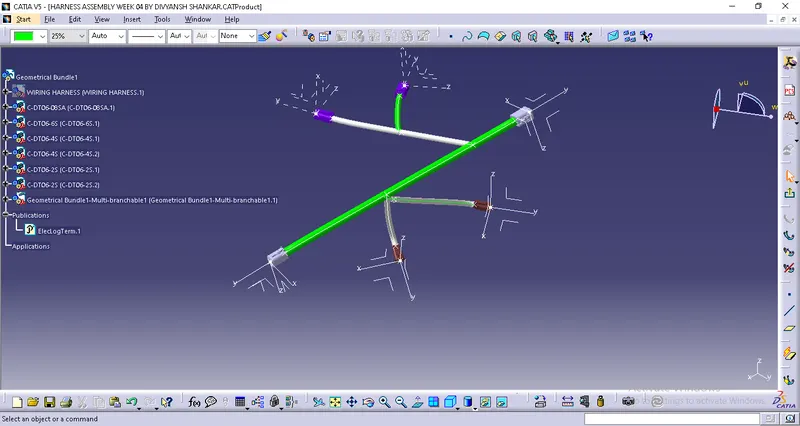
Wiring harness design in CATIA V5 - 3D modeling Week 4 Challenge
Wiring harness design in CATIA V5 - 3D modeling Week 4 Challenge
ROUTING THE DEUSTCH CONNECTORS
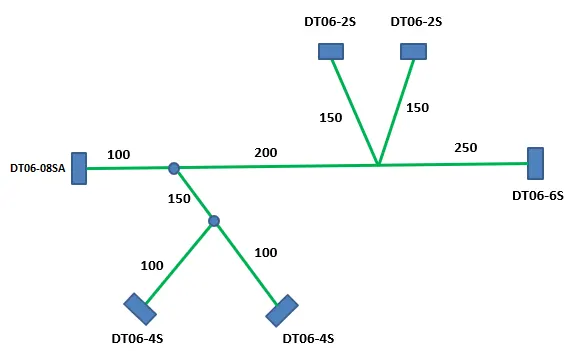
AIM-To route the the listed connectors according to the diagram provided for positioning of the connectors and their respective routing,add the connectors in the catalog and even provide the corrugated tube for the two connectors connecting branch check the bundle connectivity to ensure connectors are connected electrically.
INPUT:
- The positioning drawing of all the connectors.
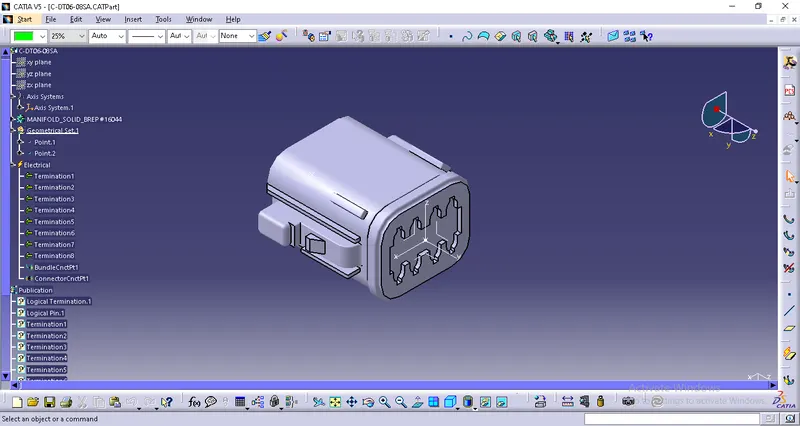
- The connector cad files, which need to be defined electrically.
1)Download all the input files and store it in a single folder to manage your product in single file., the downloaded connectors must be electrically defined using the electrical part design workbench.
IMPORTANT NOTE: While defining the connectors make sure you list out all the terminals properly as later the terminals definition cannot be altered, once defined.
The connection control point and the bundle entry point is essential in all the connectors as it is pivotal at the time of routing.
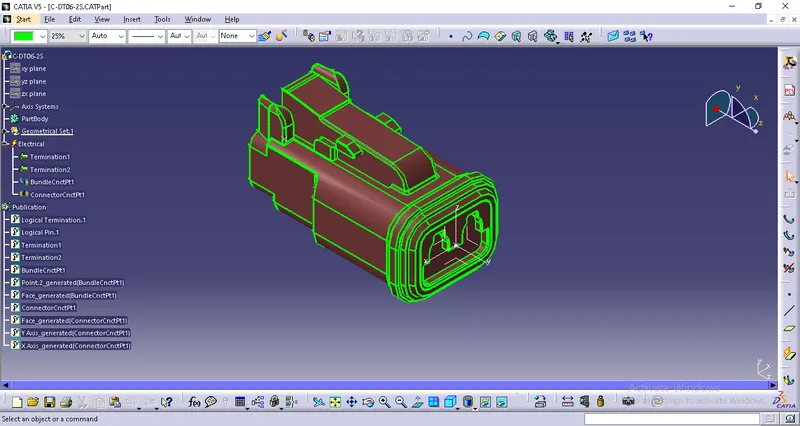
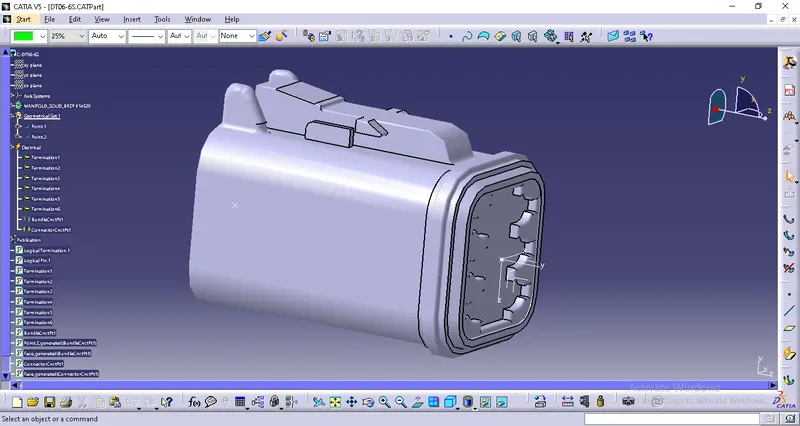
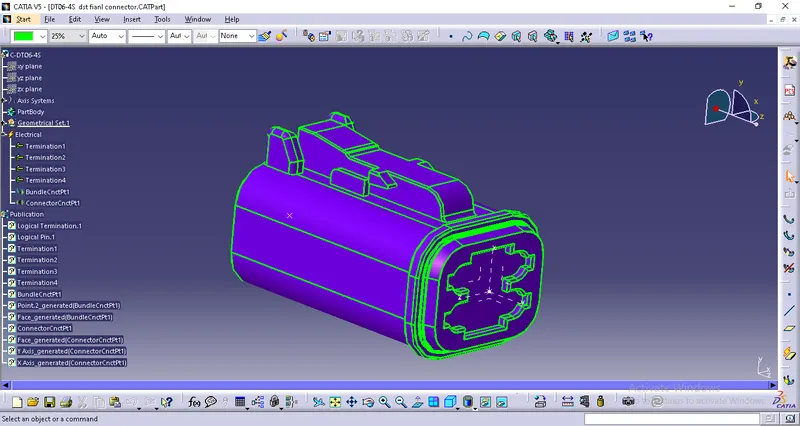
Create a main product and name it as a context assembly in which create two more product file by the name of geometrical bundle and skeleton drawing, the skeleton drawing is used just for the reference of positioning of the connectors they do not have any significance as such in routing. In the geometrical bundle assembly jump to electrical harness assembly workbench and define assembly/product as geometrical bundle.
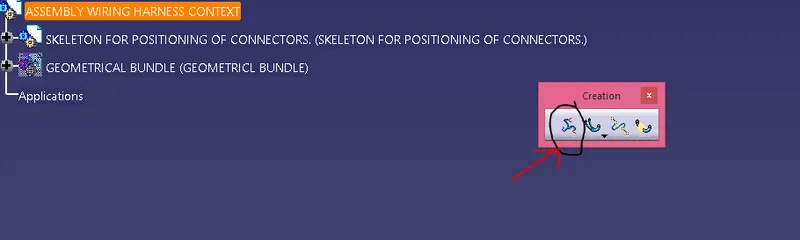
The geometrical bundle assembly i.e geometrical bundle consist of all the conectors which are required in the respective harnesses, make sure you add those electrically defined connectors into geometrical bundle assembly.
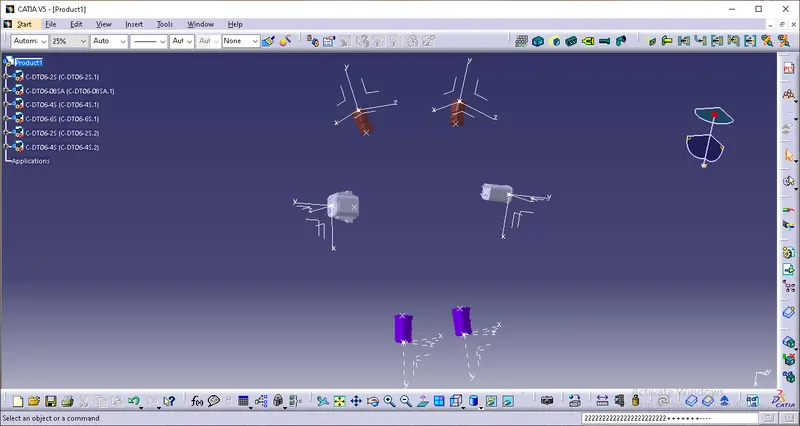
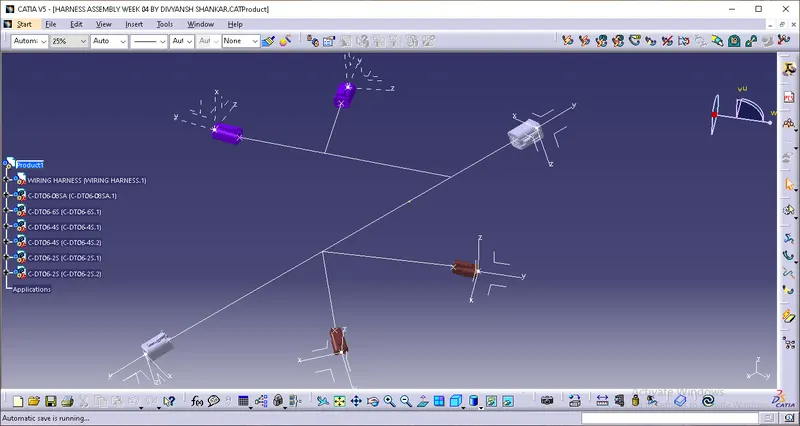
After positioning of the connectors in the respective positions routing can be done, following the electrical harness assembly workbench command called MULTI-BRANCHABLE , where you can define the branch defination.The path is selected between the selected connectors, we can alter the path of routing by changing or defining the path by various possible outcomes of tools like tangency, exterior path,automation with clearance etc.
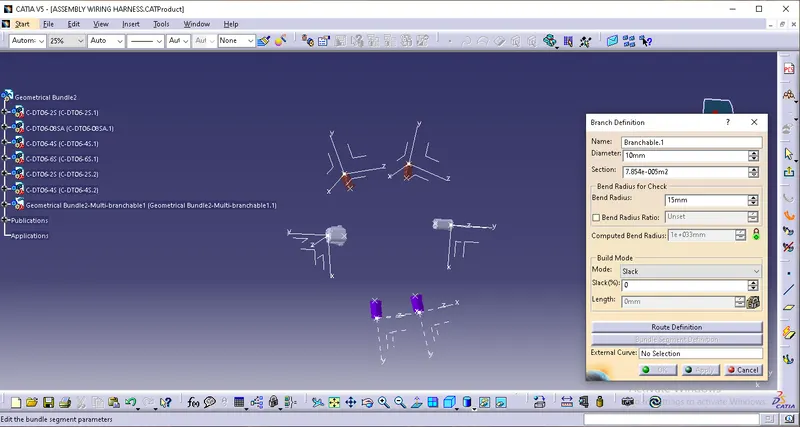
There will be one main branch and by creating the branch point we can create the sub-branches as well and repeat the same procedure for routing the components.