Week 9 Tension and Torsion test challenge
REPORT
TENSION TEST
OBJECTIVE
To perform a tension test on a specimen and to find stress, deformation and temperature developed.
PROCEDURE
To perform this analysis we use explicit dynamics.
The model is loaded in mechanical GUI and that is shown below,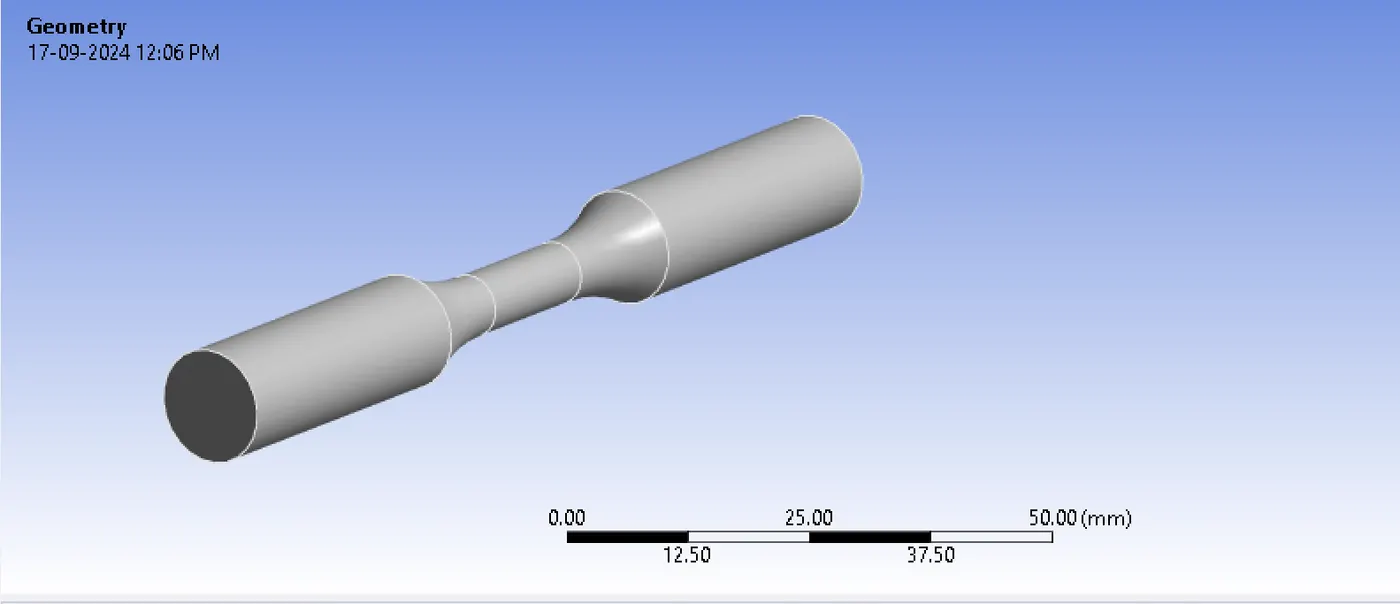
We need to extend one side of the geometry while other end is fixed.
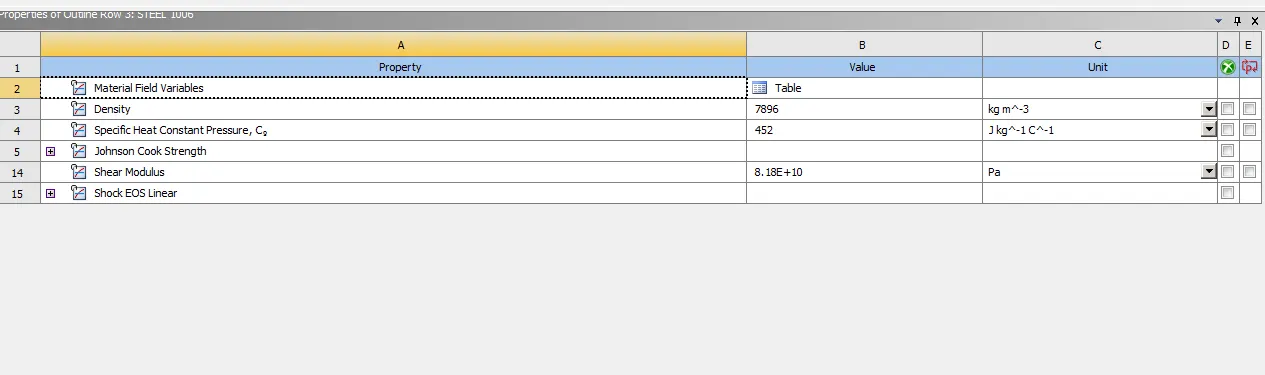
Here we use steel 1006 as the material. The properties of the material is shown below,
MESH
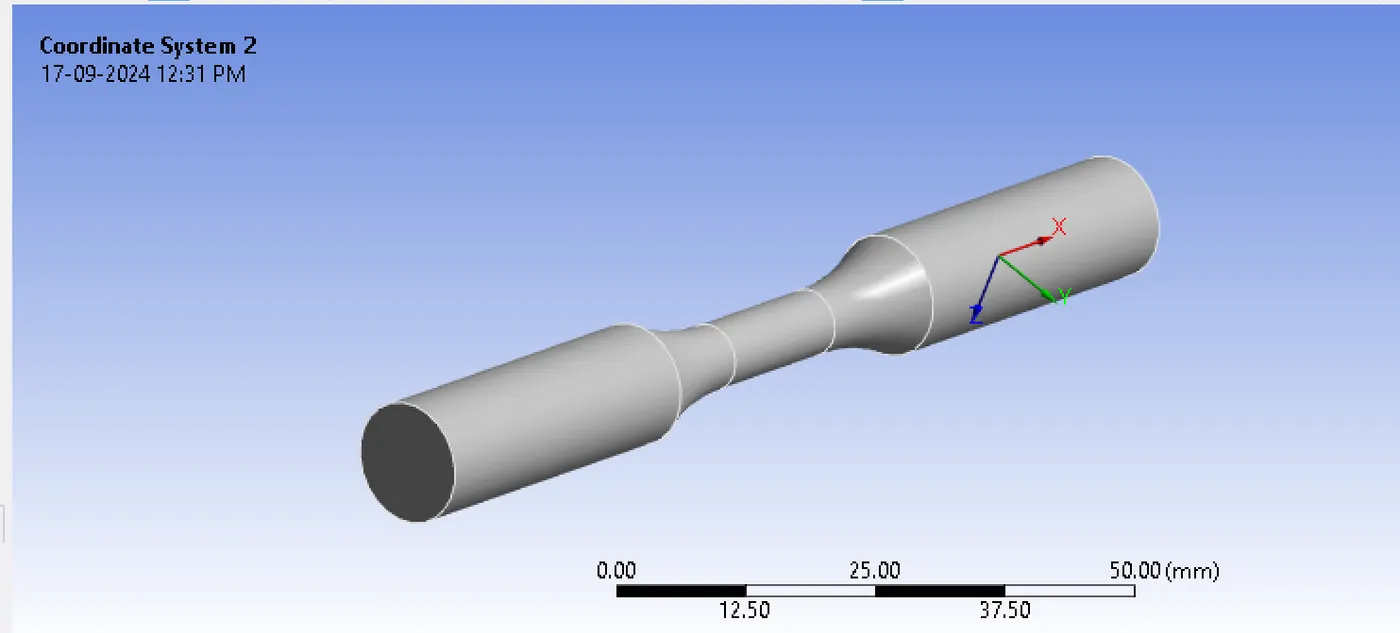
Applied the method to be tetrahedron for the whole geometry. Created a coordinate system in one face of the model
For mesh-sizing, used the coordinate system as centre.
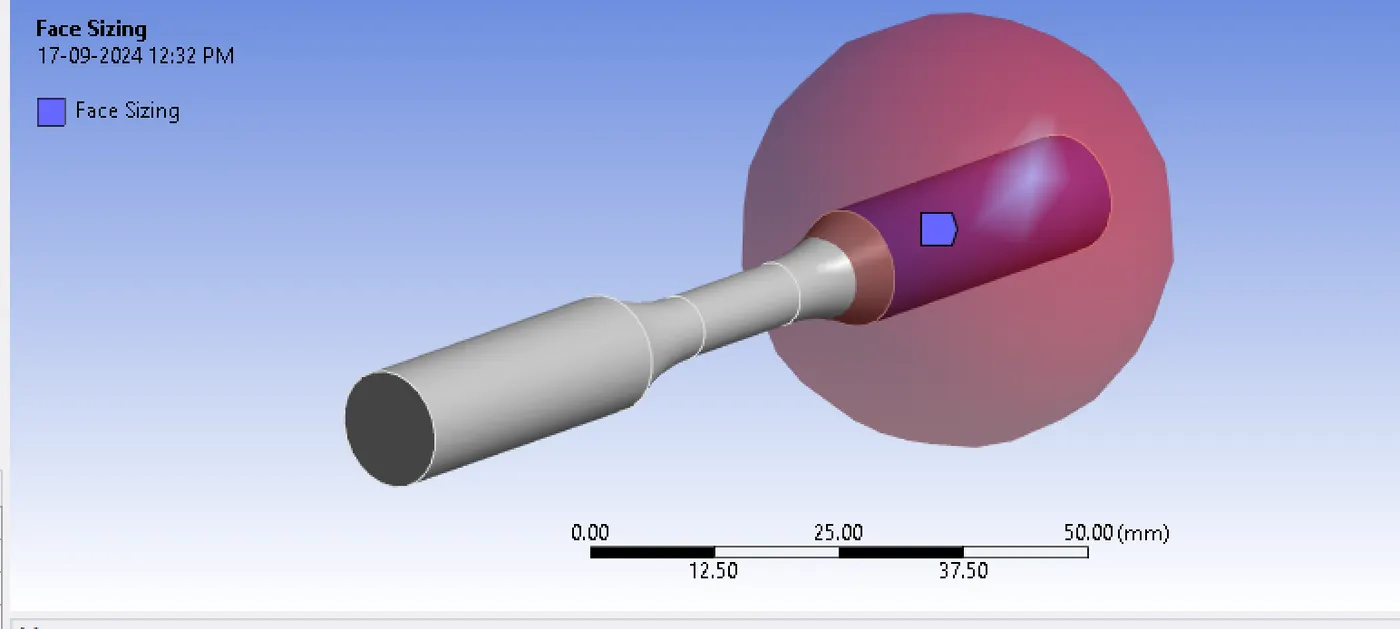
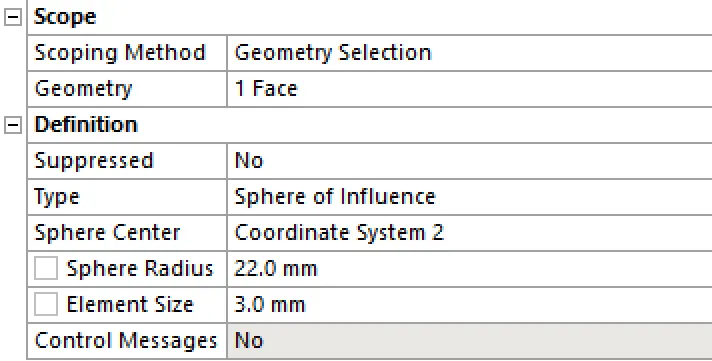
Repeated the same process for the other side and the mesh is shown below,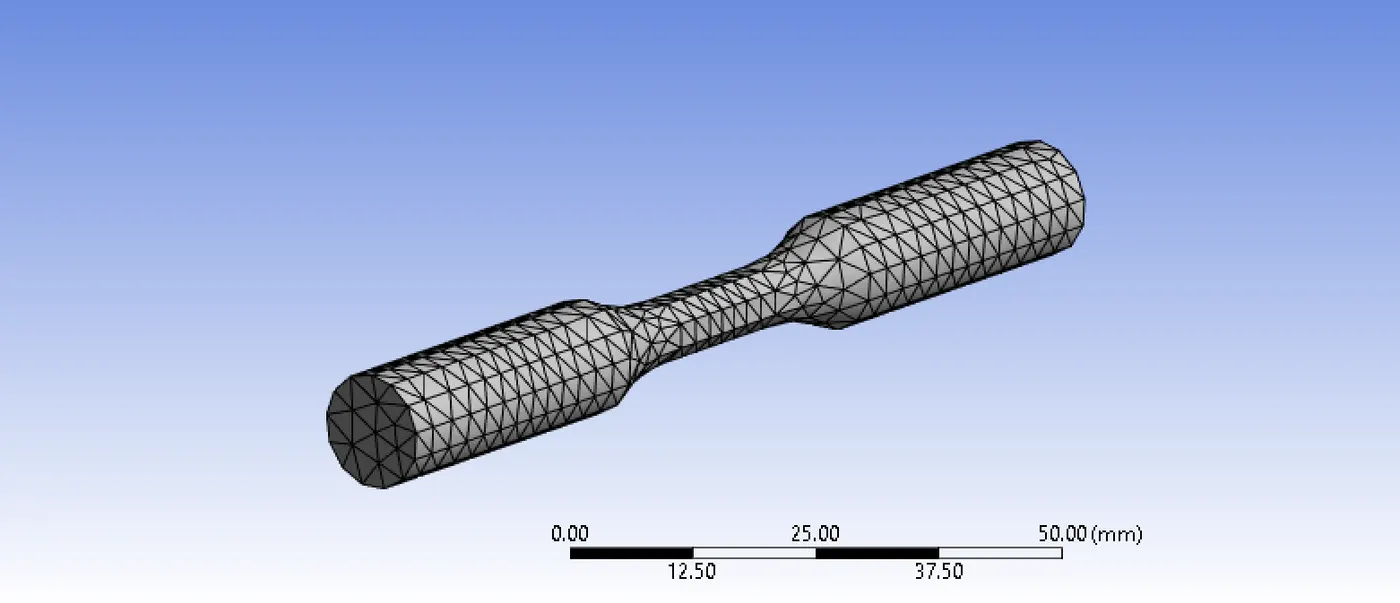
ANALYSIS SETTING
Set the end time to be 1e-3.
One side of the model is fixed and a displacement of 18mm is applied to the other side.
RESULT
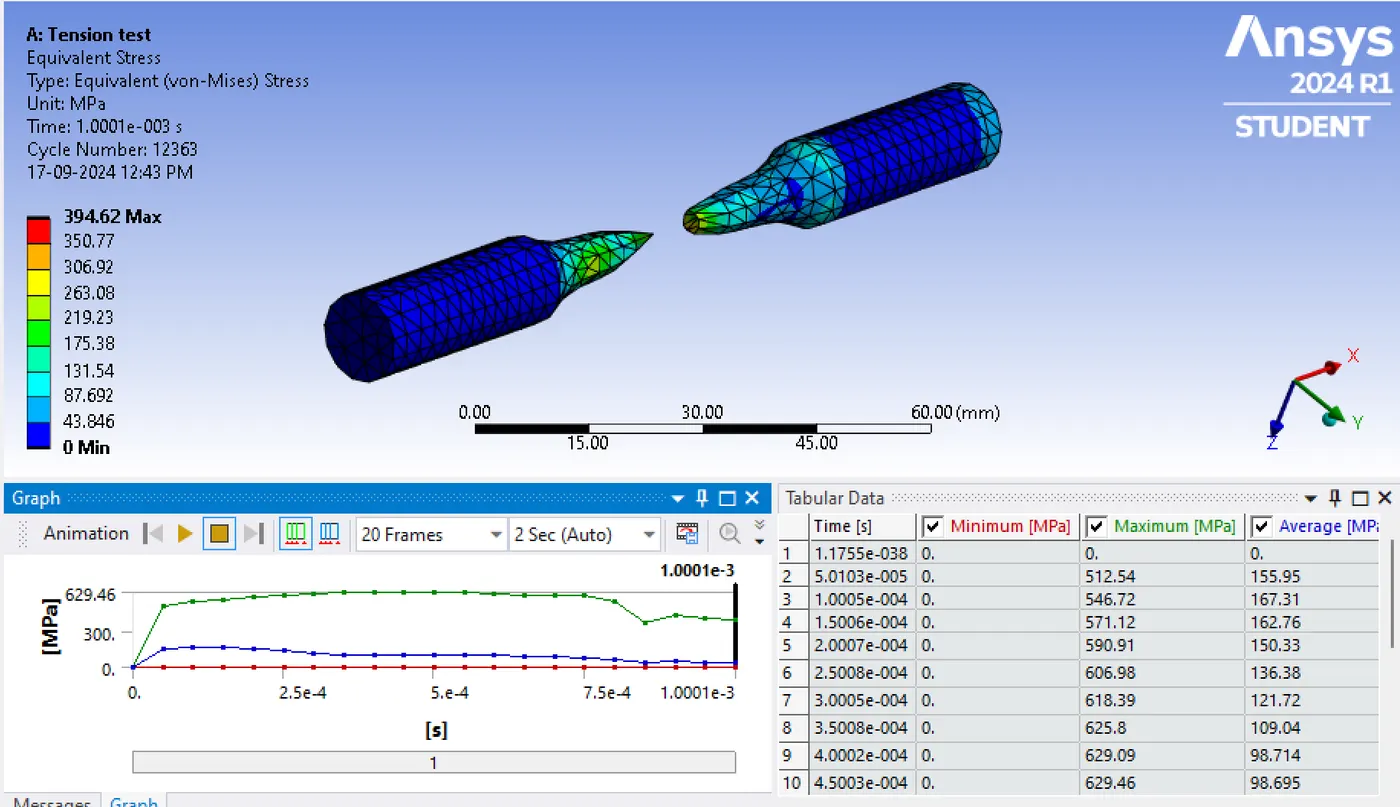
The equivalent stress is shown below,
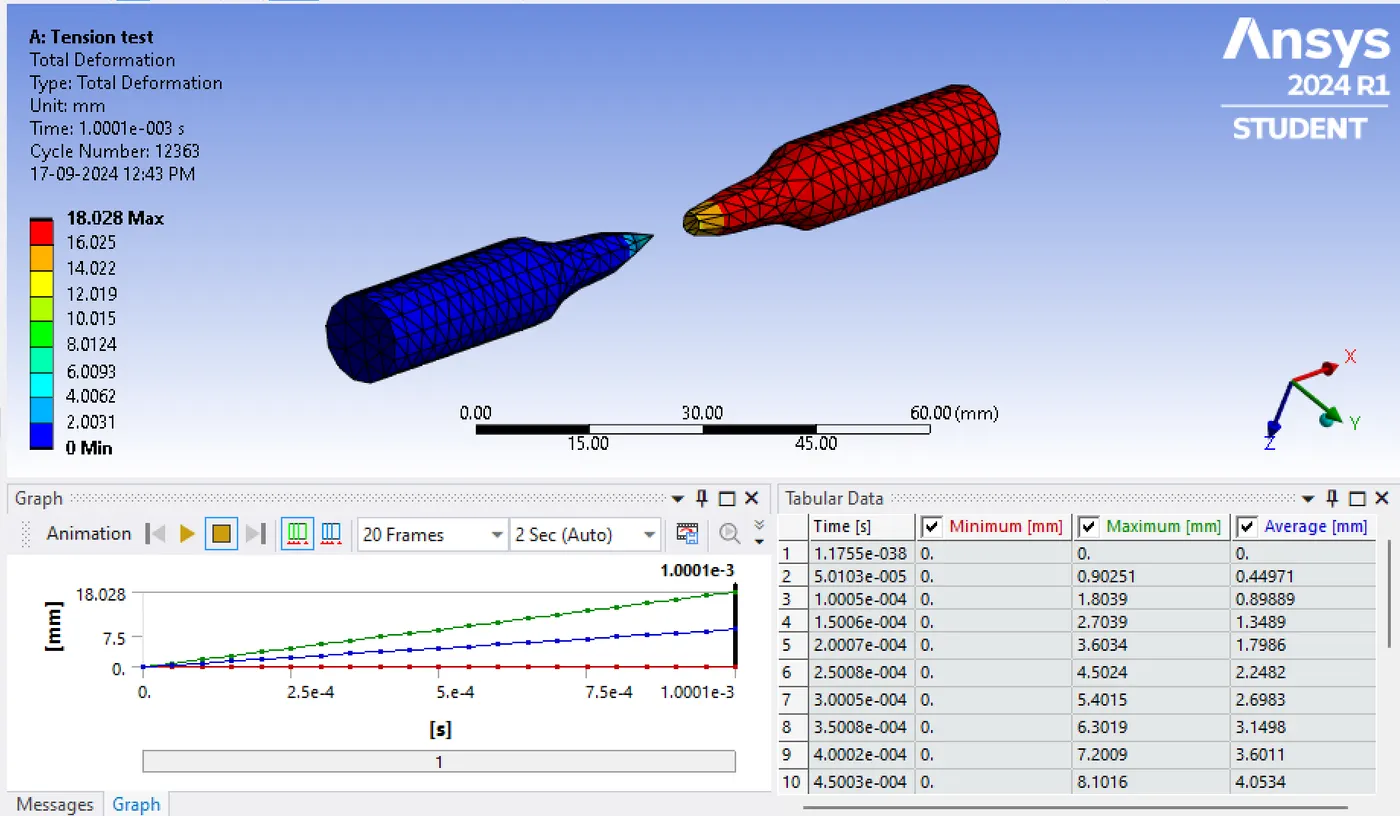
The total deformation is shown below,
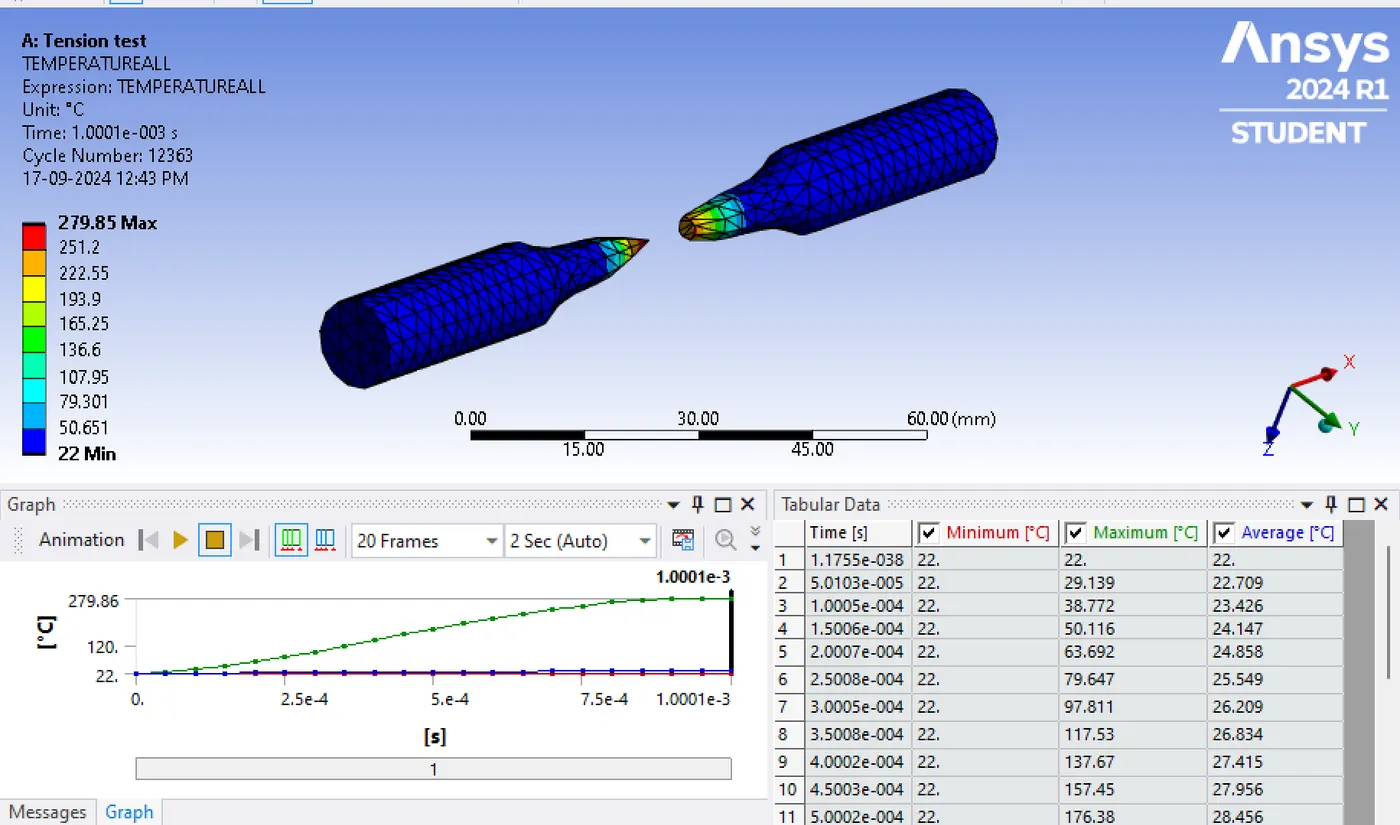
The temperature developed is shown below,
CONCLUSION
The model is extended to 18mm, due to this elongation the element failed and that is shown in the results. The material is ductile so during after failing cup and cone fracture is formed. During elongation necking happened, the cross sectional area reduces and finally it breaks.
TORSION TEST
Duplicated the tension test model and made some changes.
In addition to the mesh in torsion test, a face sizing of 1.5mm is given to the faces shown below.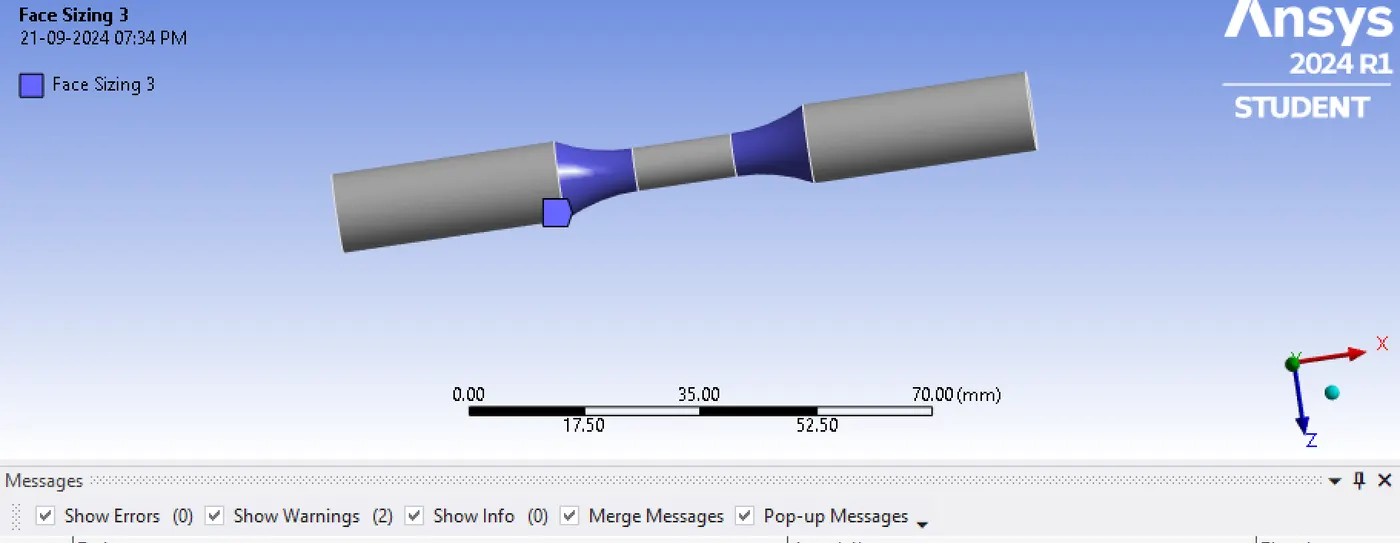
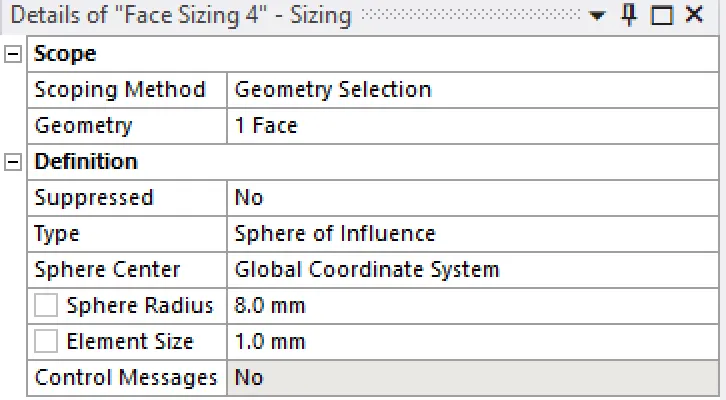
A sizing of 1mm is given to the area showing below,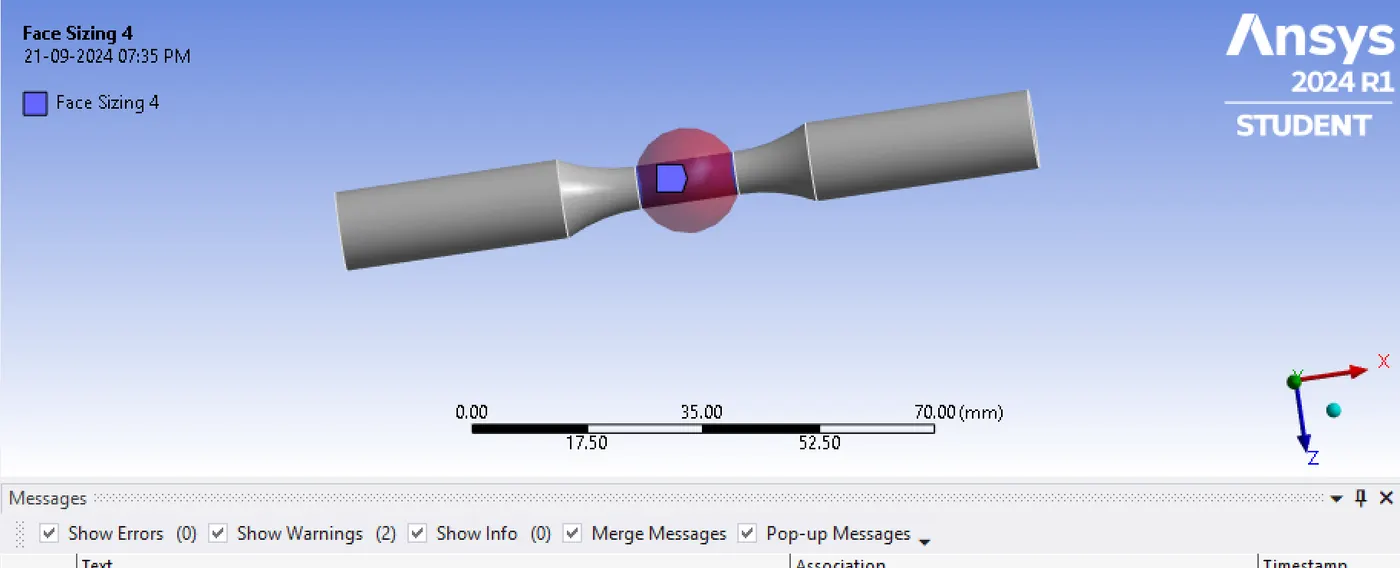
 Finally the mesh looks like this,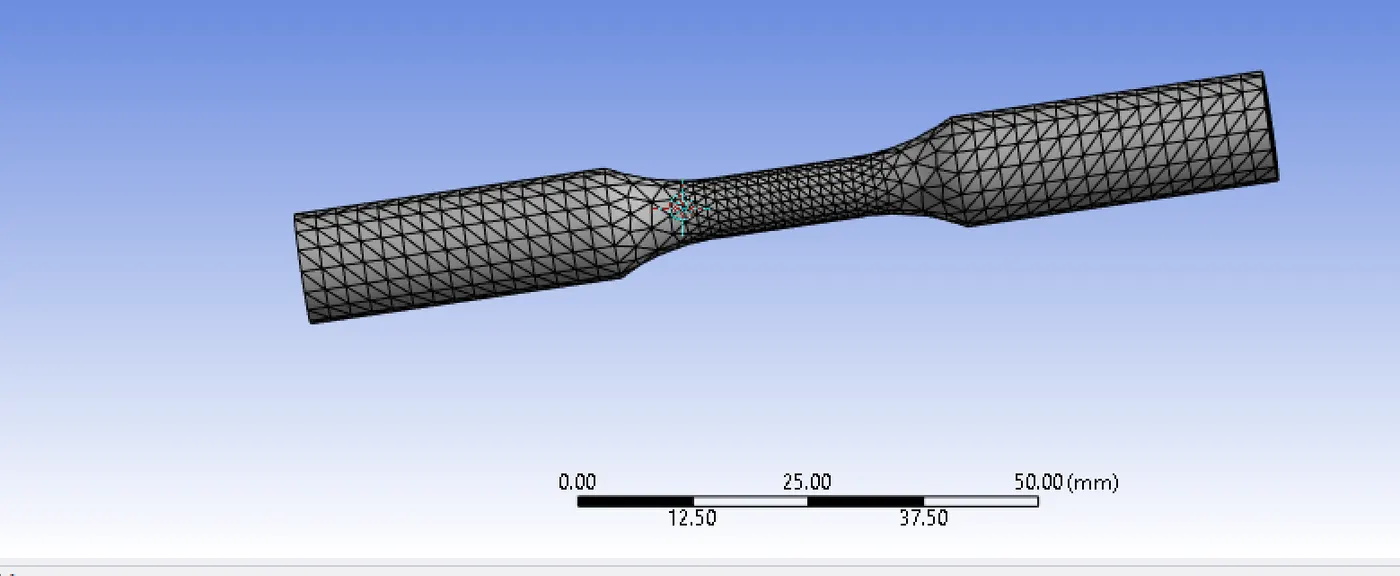
To apply torsion, create a new cylindrical coordinate system.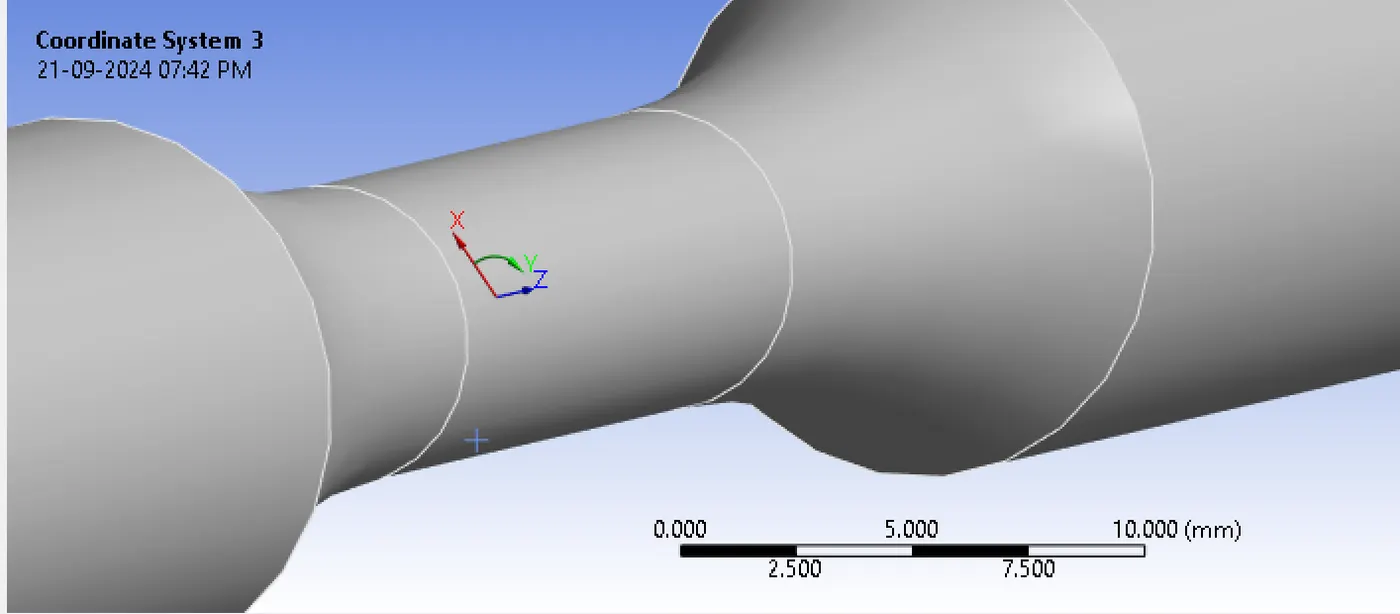
A torsion of 1200 degrees is applied to the model. All other settings are same as tension test.
RESULTS
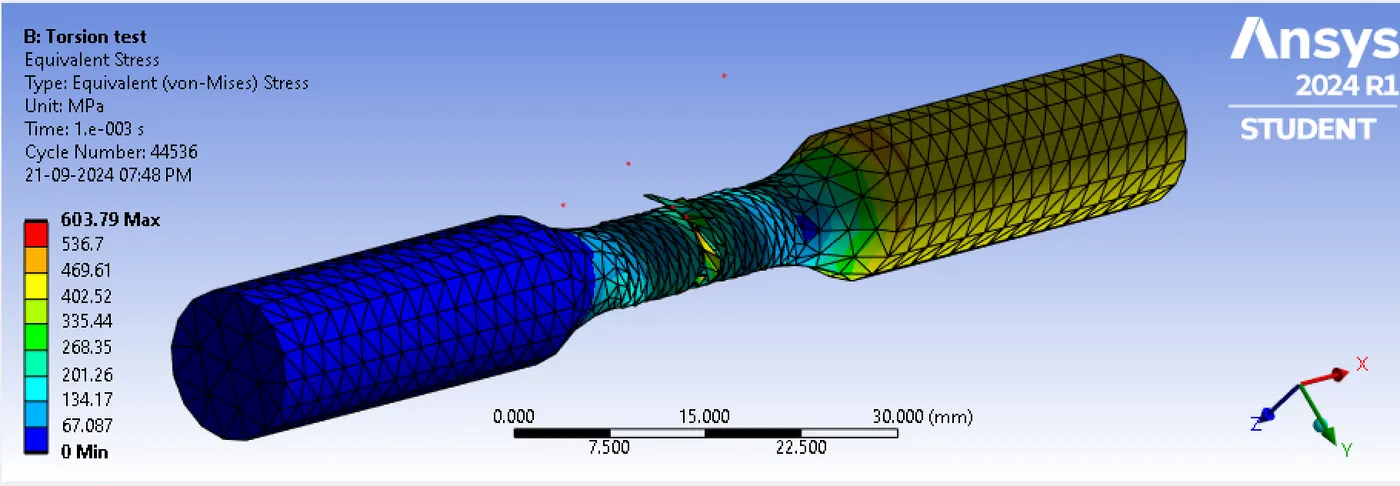
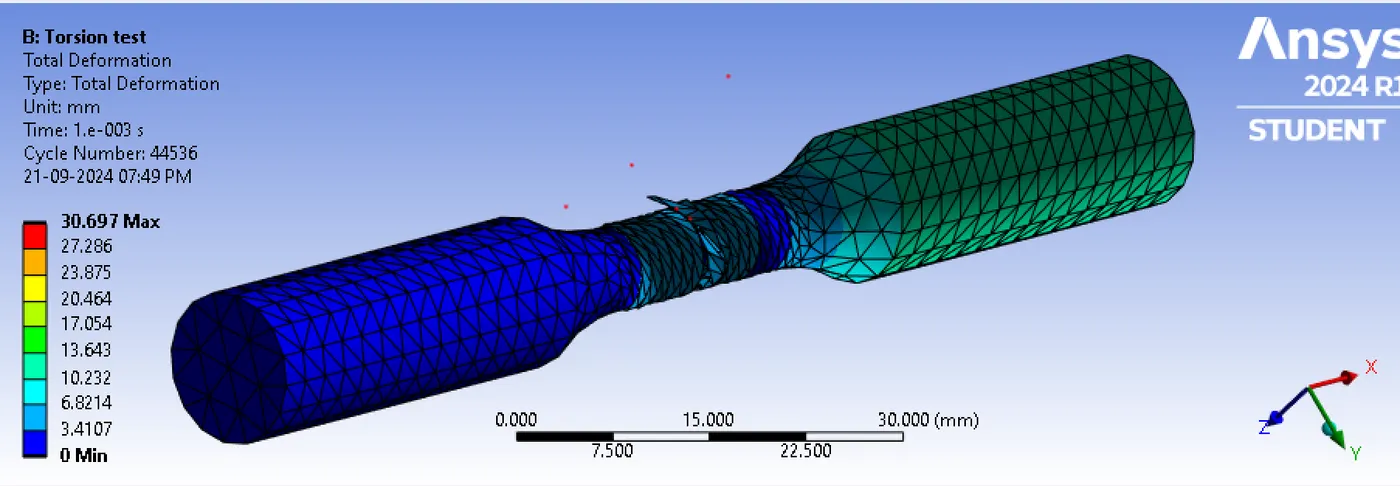
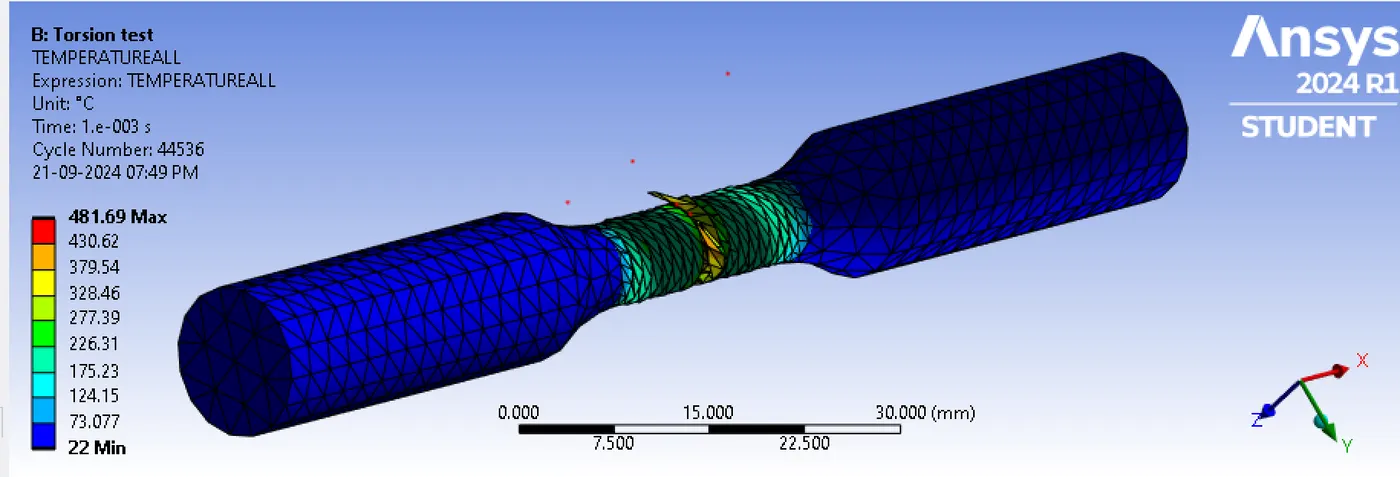
CONCLUSION
We can see that the torsional stress is been transformed and failure happened. The area near the failure happened, the elements are deformed. The material failed due to shear stress.