Week 9 - Project 1 - Door Trim Lower with Engineering Features
ALL REPORTS AND REQUIRMENTS :
TOOLING AXIS :
The tool axis is a rotated an Angle 1 about the x-axis, then rotated an Angle 2 about the y-axis.
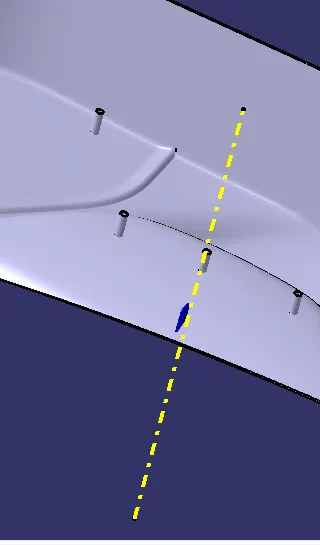
The Tooling Direction is basically the direction that the mold pulls apart. The mold is built in two
separate pieces, basically. You have a Cavity side and you have the Core side. The Core pulls apart from the
Cavity and that's the Dyeline or the Tooling Direction.
The direction in which the mold or core and cavity opens is the tooling axis. Connectivity of
Class-A surface: Checking the connectivity of the surface, this can be done by creating boundaries or by
simply using the join option such that any openings can be easily visualized.
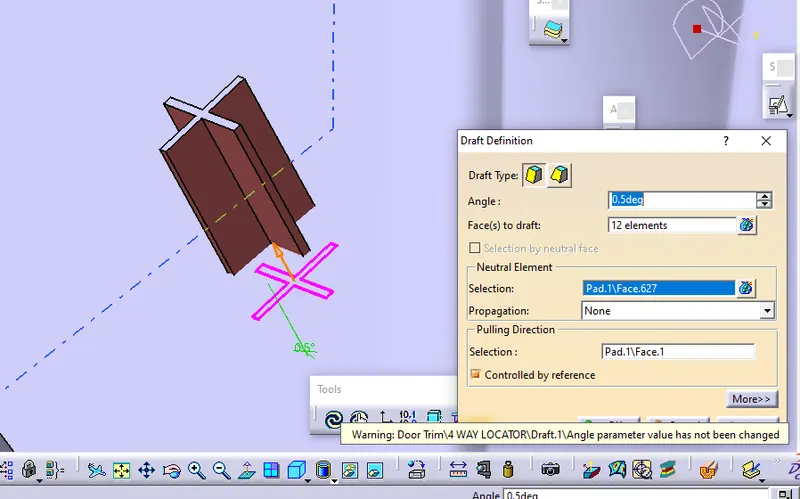
DRAFT ANALYSIS :
This type of analysis is performed based on color ranges identifying zones on the analyzed element
where the deviation from the draft direction at any point.
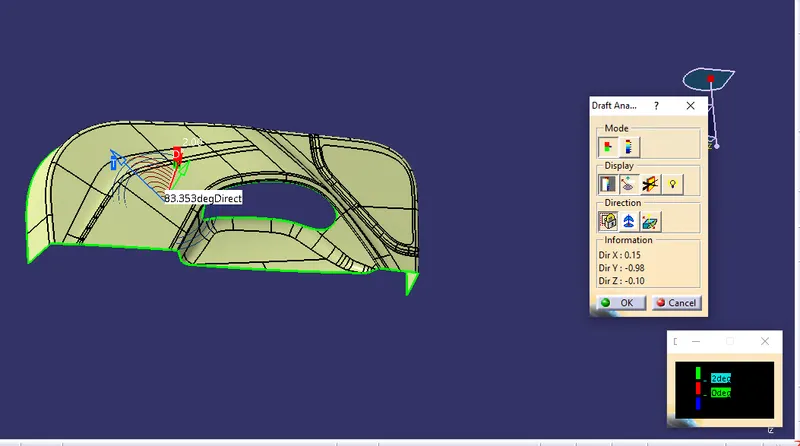
The draft analysis technique is used to analyze whether our part model created in CAD is
manufacturable based on the draft condition applied. Here the part should get easily removed from the panel
dies.
The draft analysis button within CATIA V5 will helps you quickly gather the draft angle on multiple
surfaces without the need for tedious manual measurements. Here is a quick rundown of how the icon works
when you have a given die direction.
LOCATOR :
Locators. Carr Lane precision locating pins can be used to locate a workpiece on a fixture, or to align two
pieces of a fixture. One round fixture locating pin and one diamond pin are often used together to locate two
holes without binding, because the diamond pin is relieved to locate in only 1 axis.
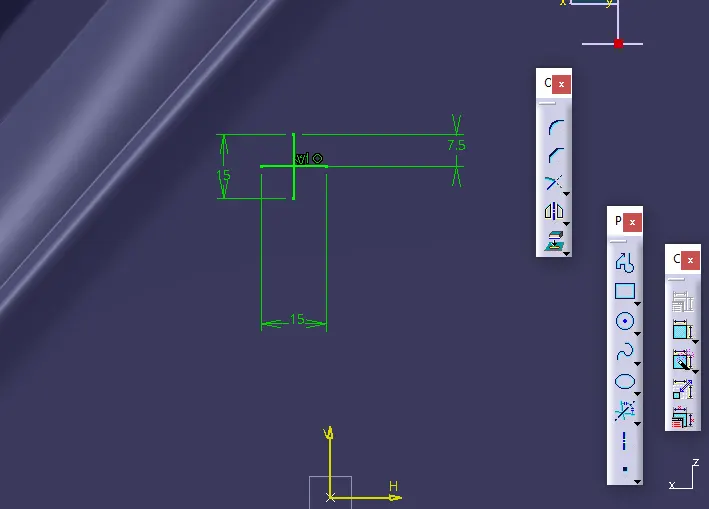
THERE ARE TWO LOCATOR,
- 2 WAY LOCATOR,
- 4 WAY LOCATOR,
IMAGE:
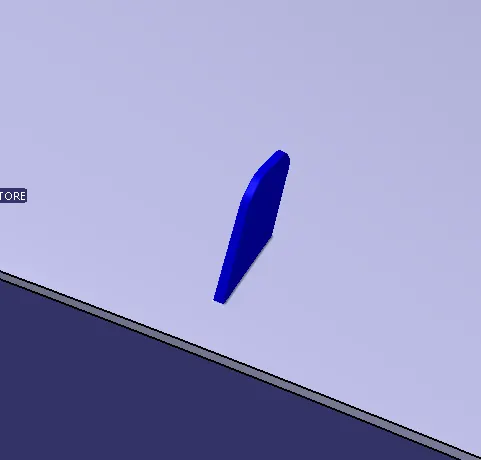
2 WAY LOCATOR
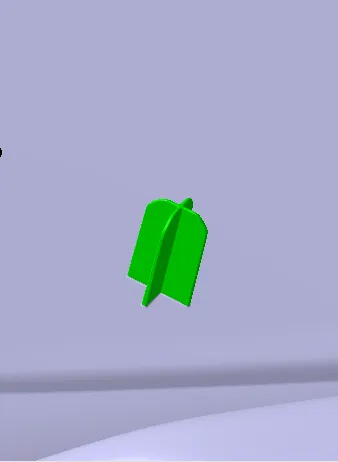
4 WAY LOCATOR
A 2-way locating pin restricts motion along 1 axis (or 2 degrees of Freedom), like a round pin in a
slot. Likewise, a 4-way pin restricts 4 degrees of freedom along 2 axes. A round locating pin located
concentrically in a hole is a common application of a 4-way pin, and helps to further secure the piece.
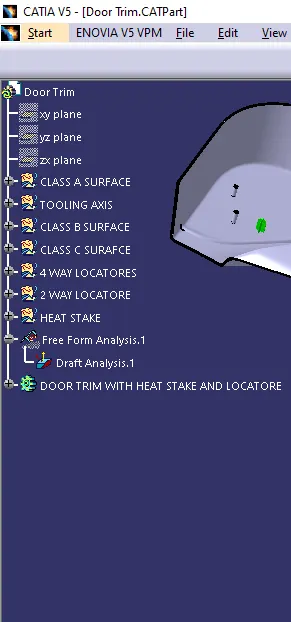
TREE STRUCTURE AND CLASS B & CLASS C :
THE PROCEDURE IS STEP BY STEP PROPERLY STAGES IS CALLED TREE STRUCTURE.
HEAT STAKES :
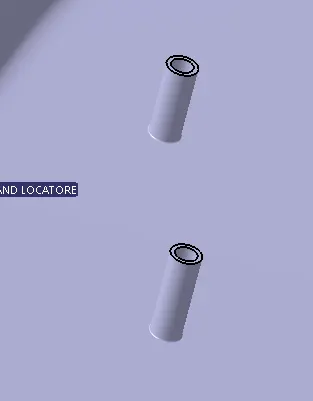
Heat staking also known as thermoplastic staking is the process of joining two dissimilar materials
together. In heat staking we use local heating and cooling to raise the temperature of plastic components and
allow plastic reforming to be carried out. This reforming can be used in a wide variety of applications.
ALL IAMGES :
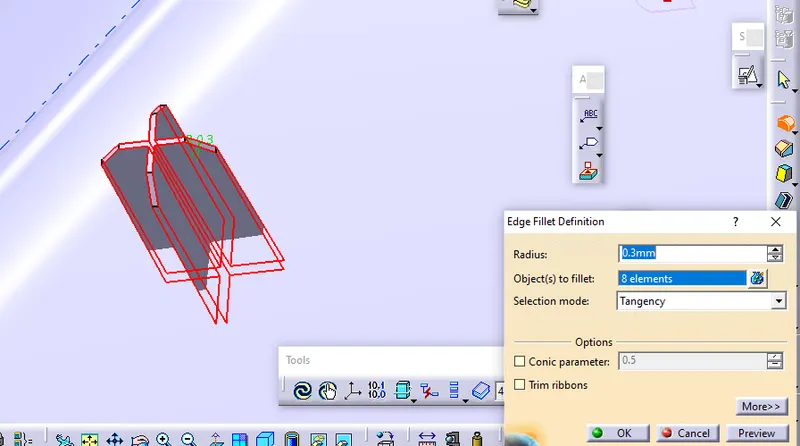
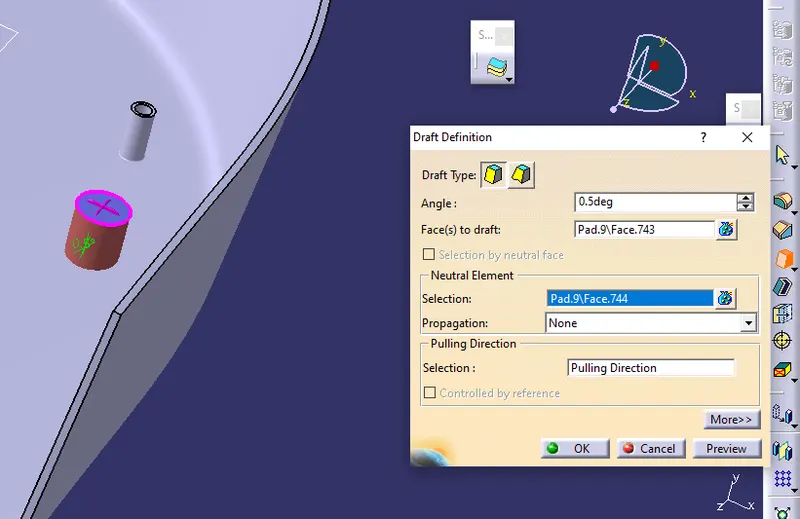
FINAL PART IMAGE :
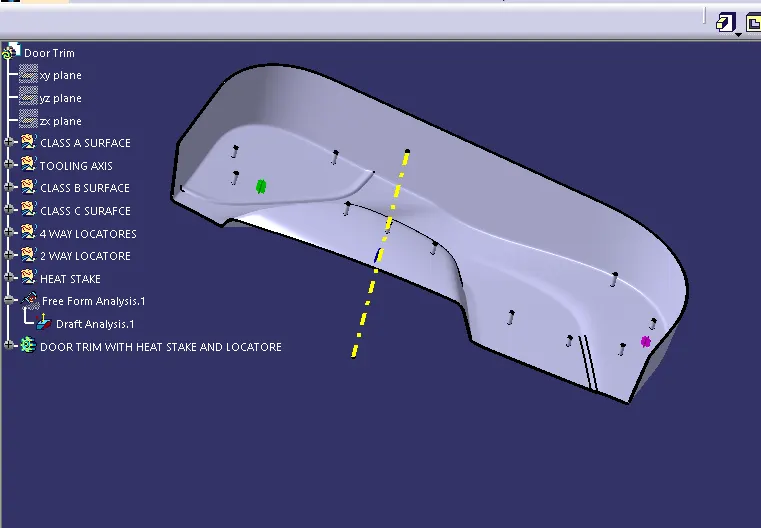
CAT PART FILE :
The CATPART file is inserted.