Week 9 - Project 1 - Door Applique Design with Engineering Features
CONSTRUCTION of DOOR APPLIQUE DESIGN WITH ENGINEERING FEATURES and DRAFT ANALYSIS
Heat Staking is a pulsed-heat process to join two or more parts out of which one at least is made of plastic. The process is to deform the plastic material using heat and force at a set process time.
Locators a body has 12 degrees of freedom. In order to arrest these degrees of freedom locators are used. Ex 4-way locators , 2-way locators etc.
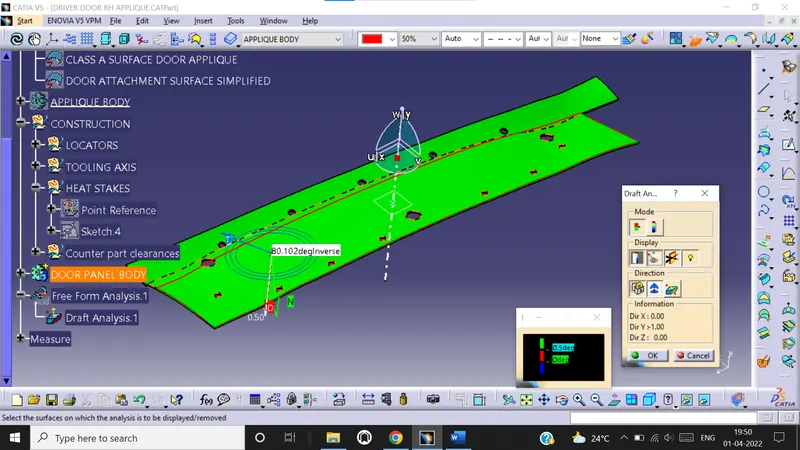
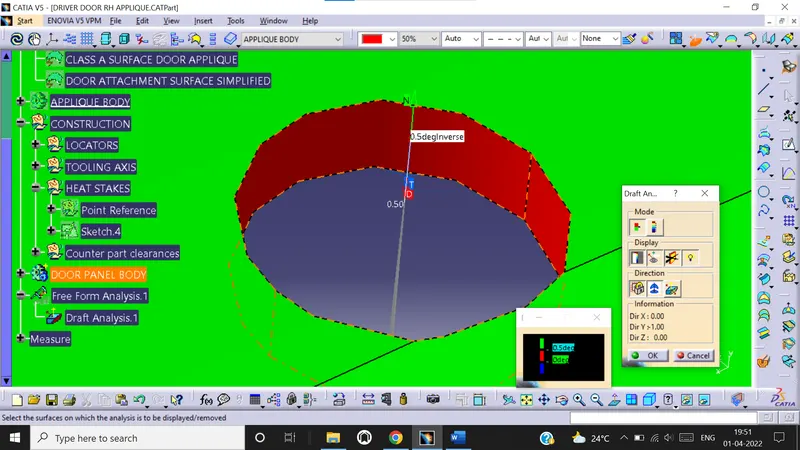
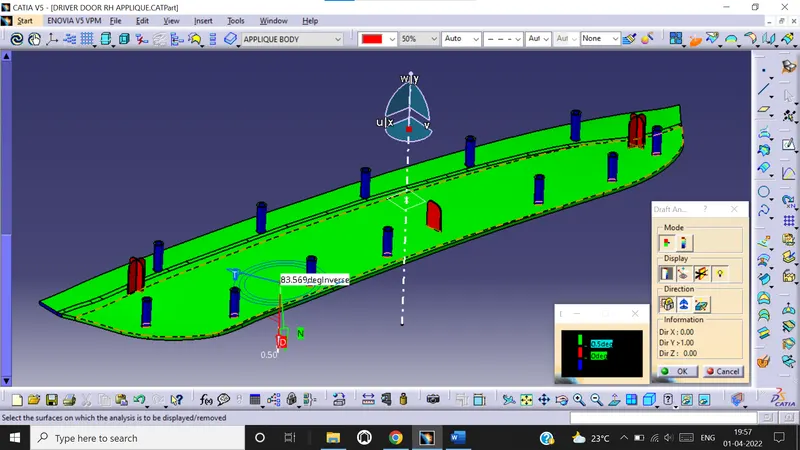
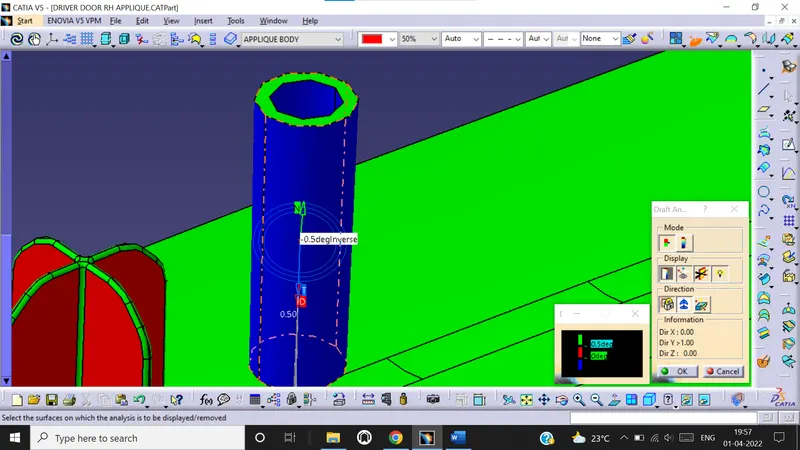
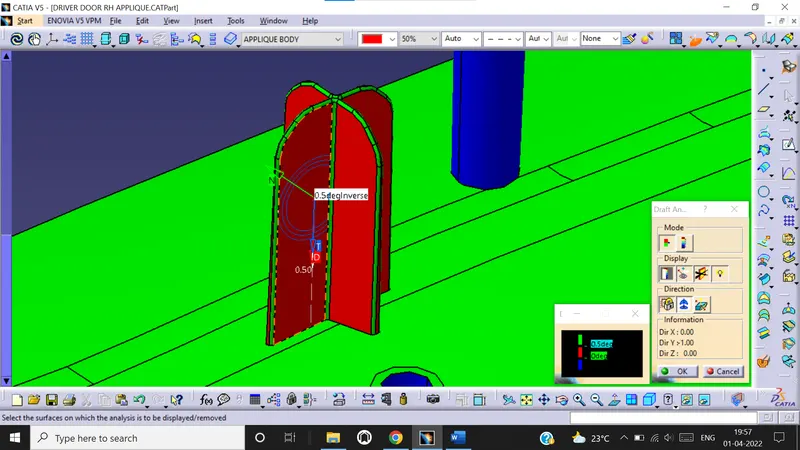
Draft analysis technique is used to analyze whether our part model created in CAD is manufacturable or not. The part should get easily removed from the mould or die. No part can be ejected from the tool if it is having straight 90 degree angle from its base surface. A small draft angle is provided to each and every area of the component and we are providing a direction in which components should eject in order to easily remove the component from the tool.
Draft Angle is the amount of taper given to the molded parts perpendicular to the parting line. As the plastic cools it shrinks and sticks to the mould surface and therefore need draft angle while ejecting, and to avoid damage. Normal draft angle is 3 degree. Increasing draft value will increase manufacturing cost.
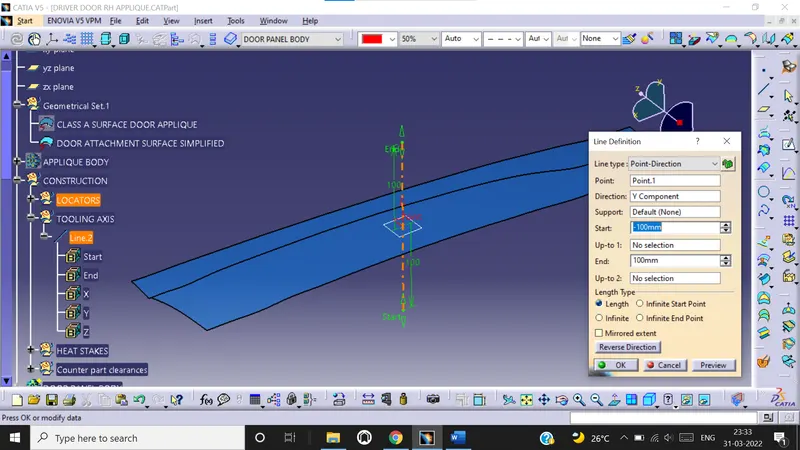
TOOLING AXIS
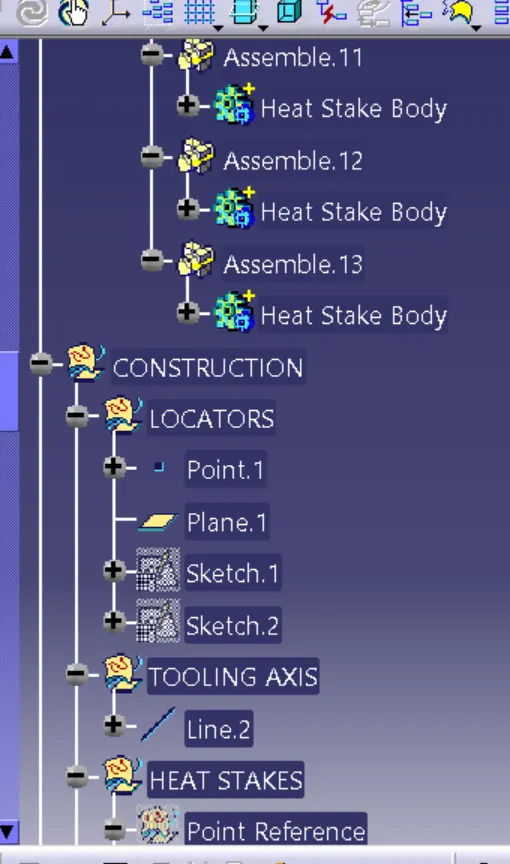
In order to perform analysis, we need to create tooling axis and in order to do that we need to check class A surface first. We need to check whether all the surfaces are closed or not using boundary option. Once inspection is complete, we need to create separate geometrical set for tooling axis. We need to choose the axis in such a way that all the pockets, holes, sections etc. should get covered. For example, once inspection is completed, we concluded that Z axis is the tooling axis. Now we create reference point at the centre of door panel surface and create tooling axis at that point.
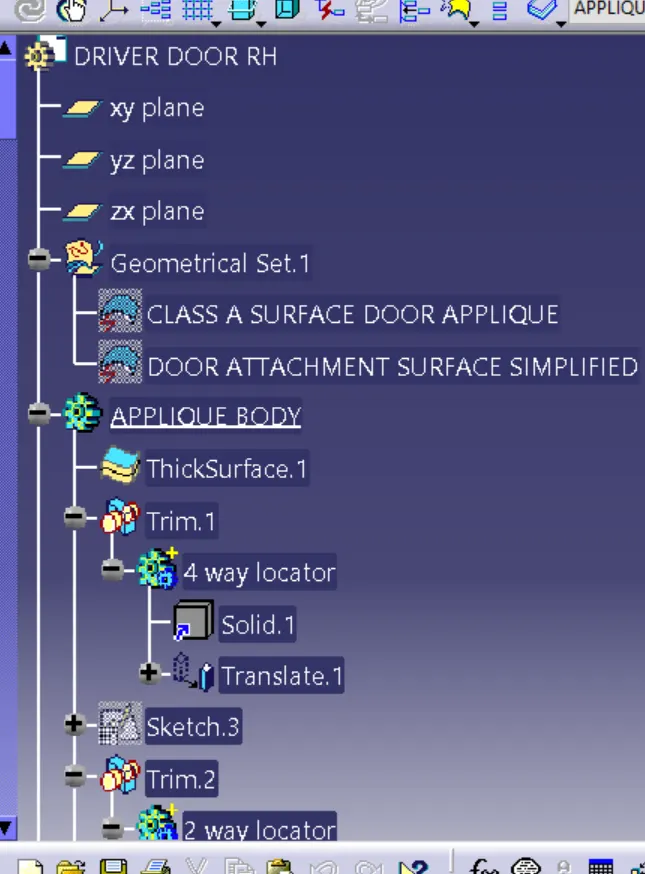
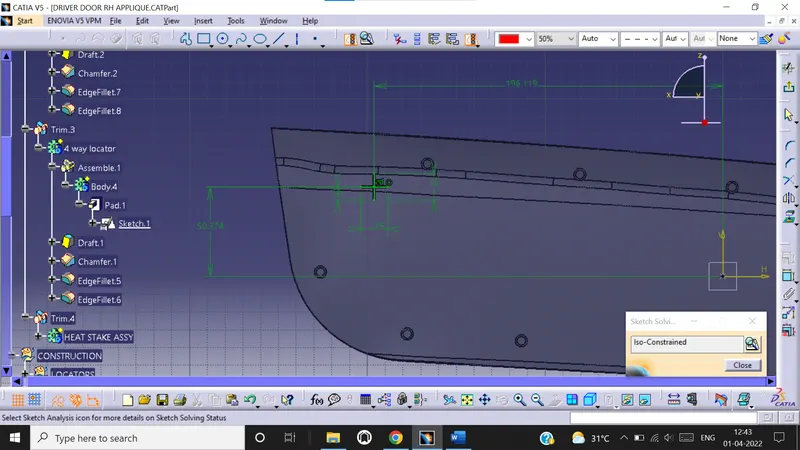
4-way locator
First create solid from given surface component. Now we create a plane on door panel surface. Then we select that plane to create sketch for 4-way locator.
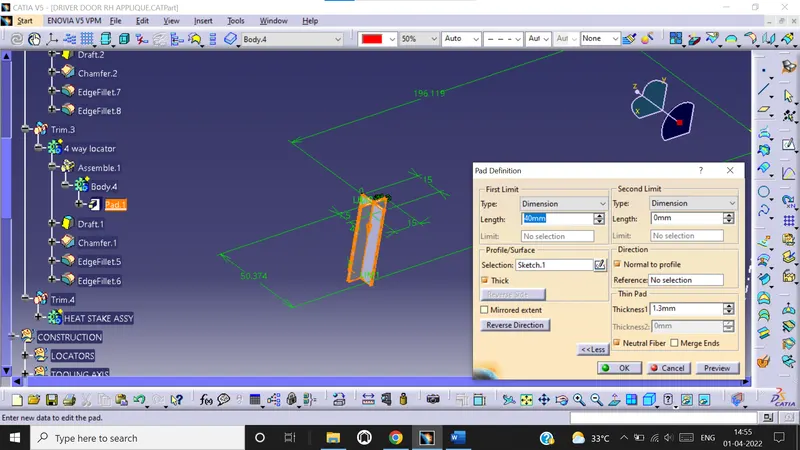
Now use that sketch and do pad in part workbench.
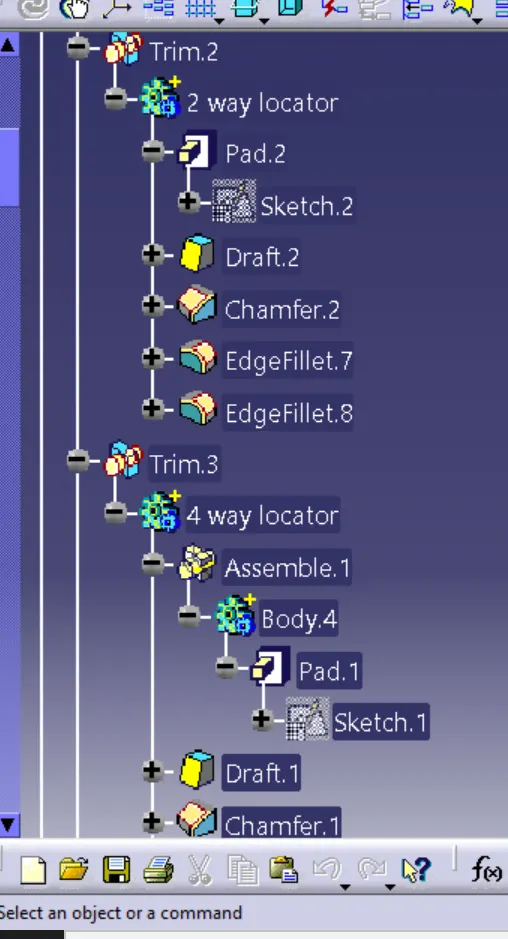
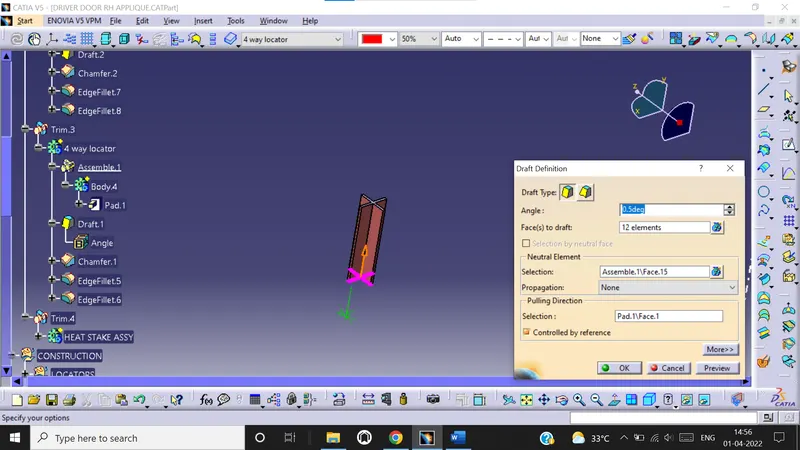
 After the pad is done give draft of 0.5 degree, chamfer of 3mm*45 degree and edge fillet of 3mm.
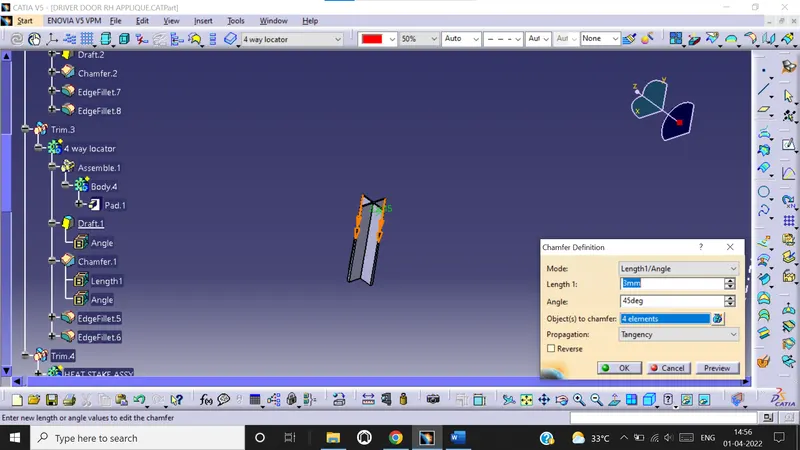
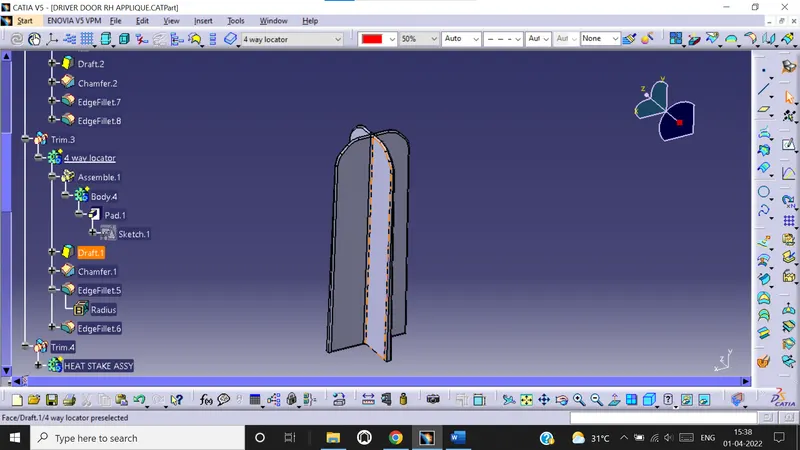
Now use translate option to create one more 4-way locator.
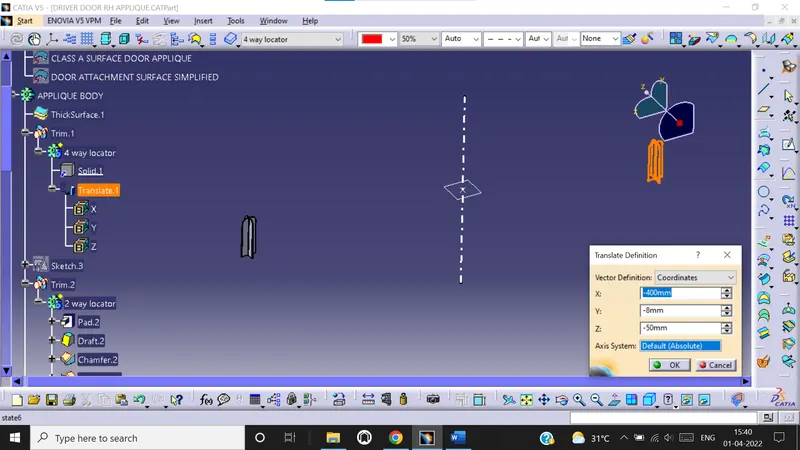
2-way locator
Now use same plane to create sketch for 2-way locator. Use pad option to create solid and then use draft of 0.5 degree and use chamfer & edge fillet.
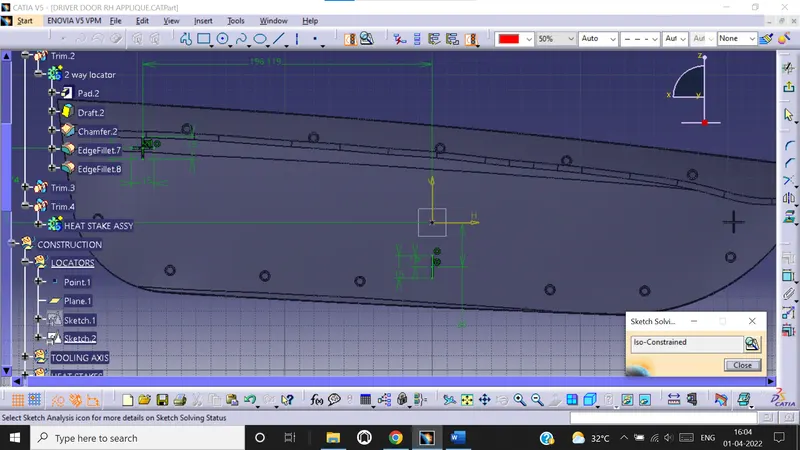
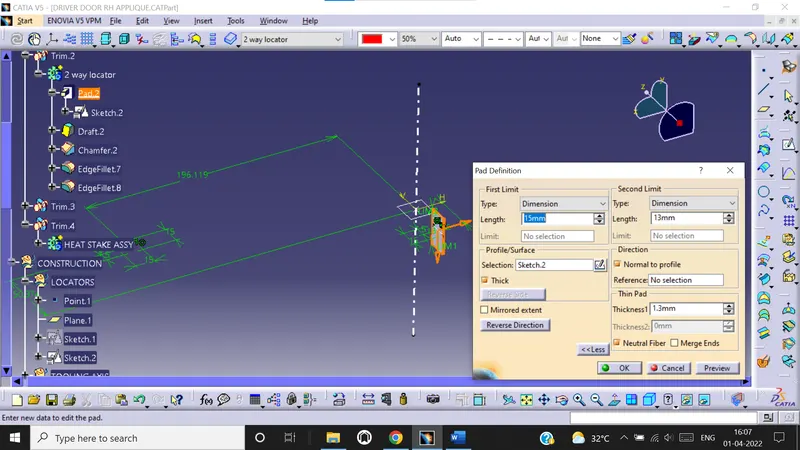
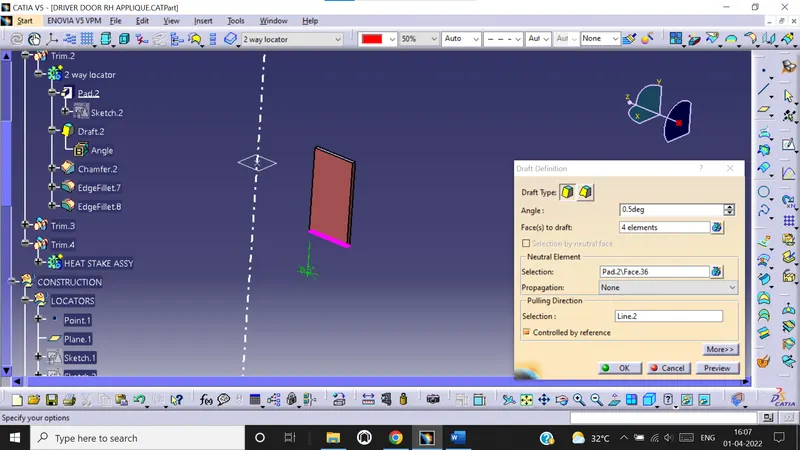
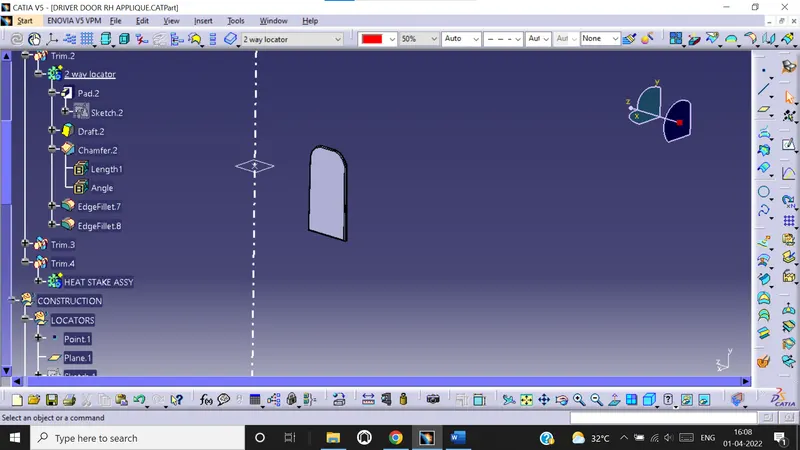
Now trim all the locators with the applique body.
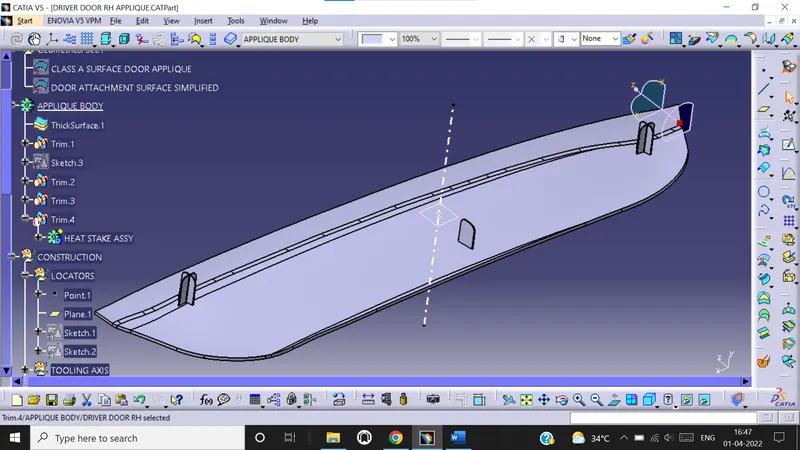
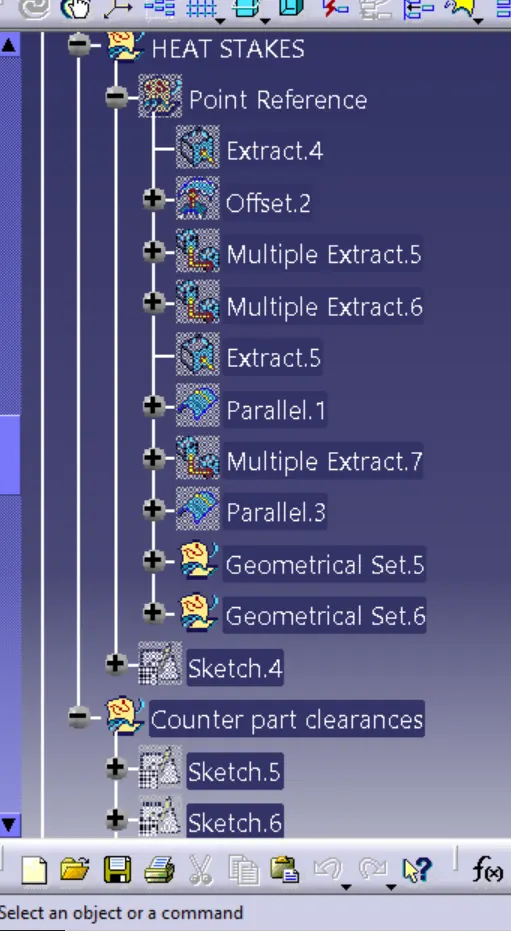
Now extract the Class A surface of applique body and offset it to 2.5mm.
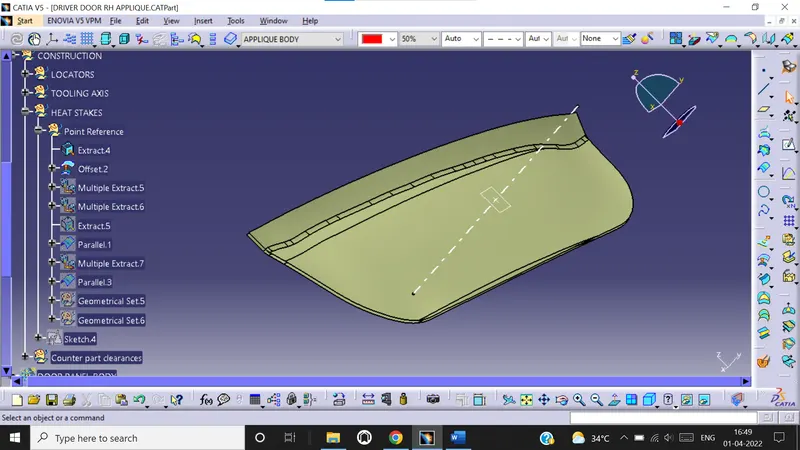
Now extract the outer boundaries of the surface.
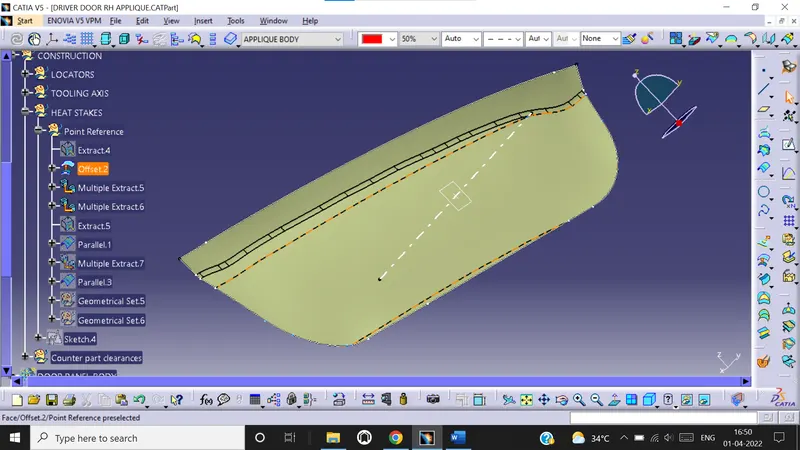
Now extract the top portion of the surface and use parallel curve option to offset the curve. Do the same for bottom portion of the surface.
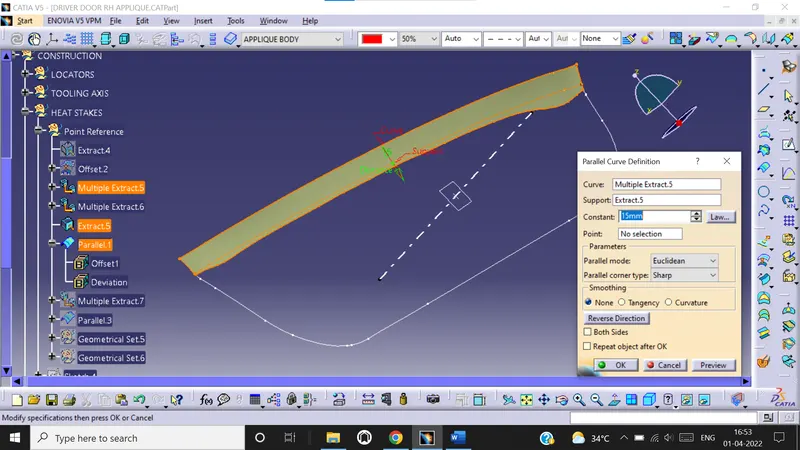
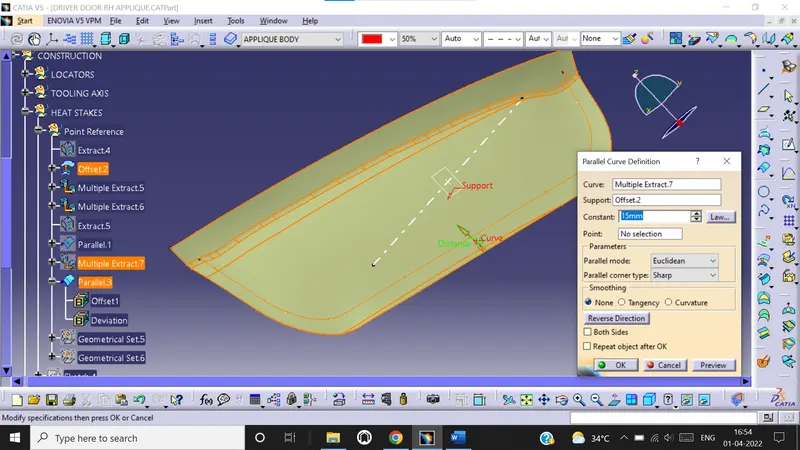
Now create set of points on both the parallel curves which will help in creating heat stakes.
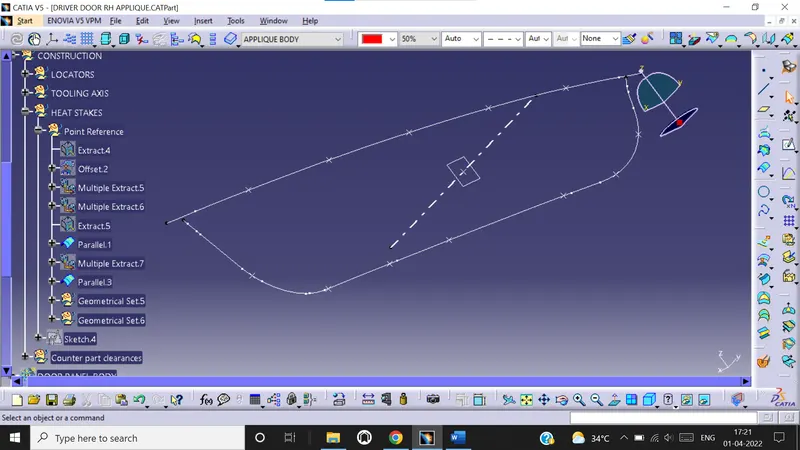
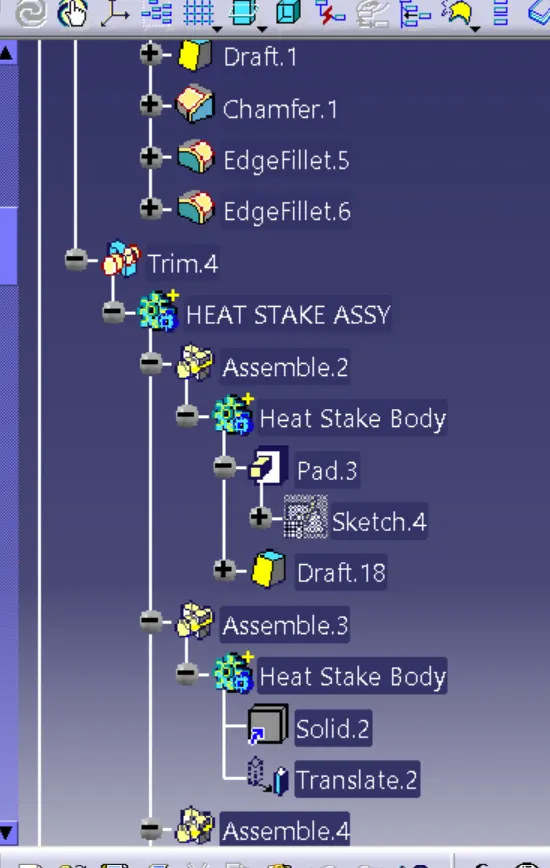
Heat Stakes
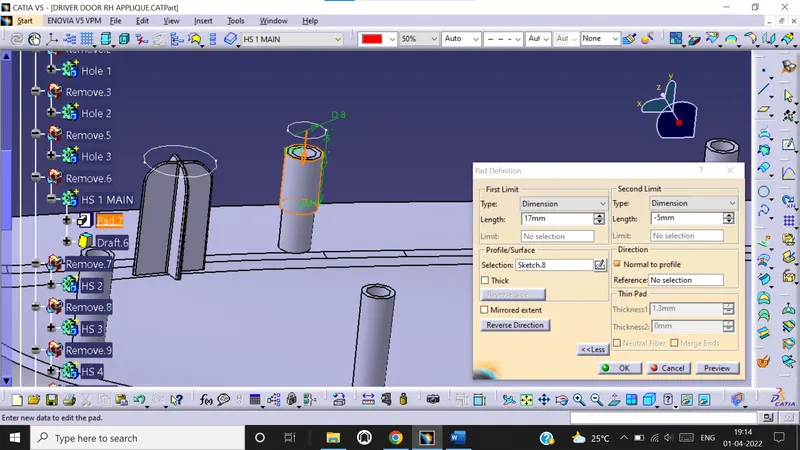
Now create a sketch on the plane and pad it.
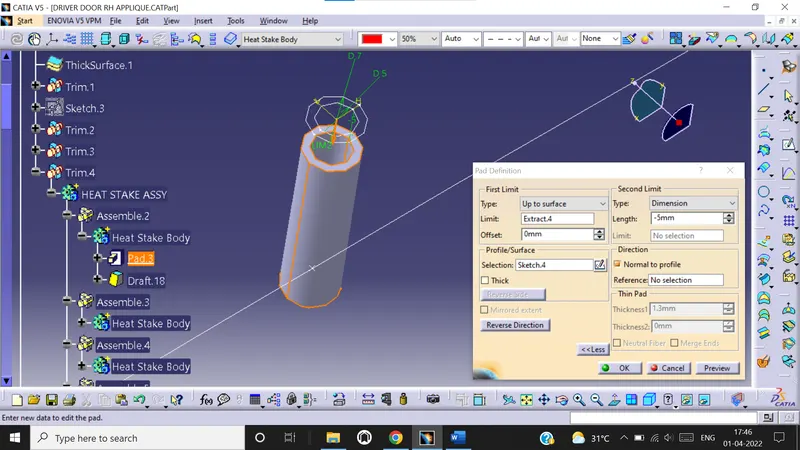
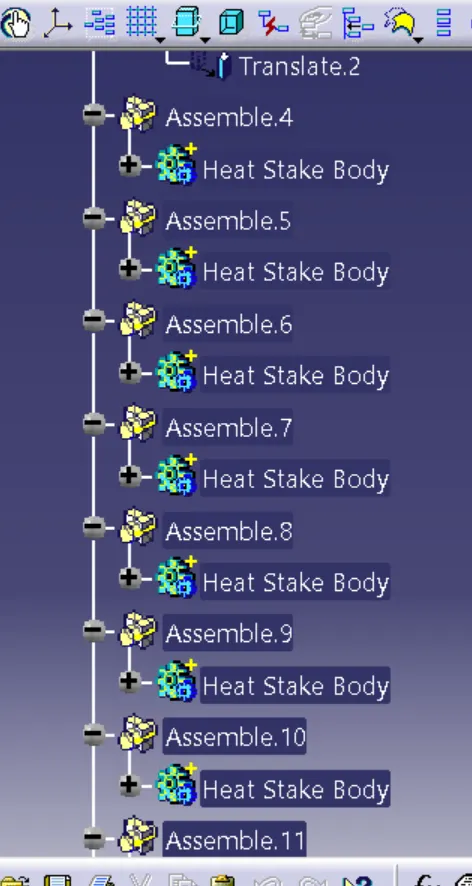
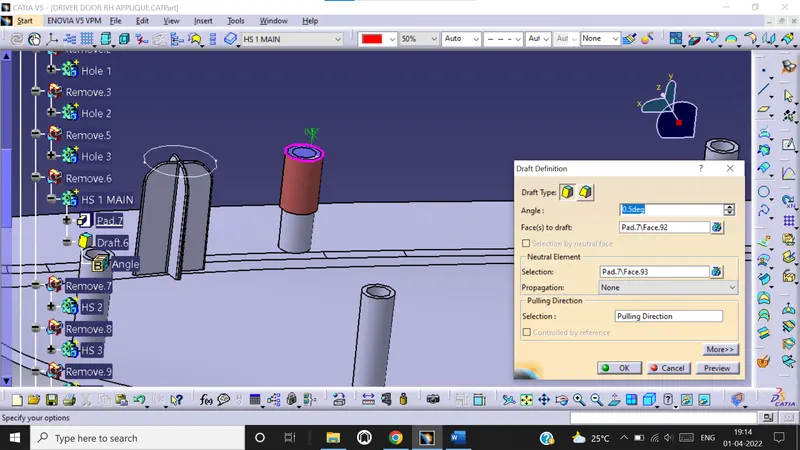
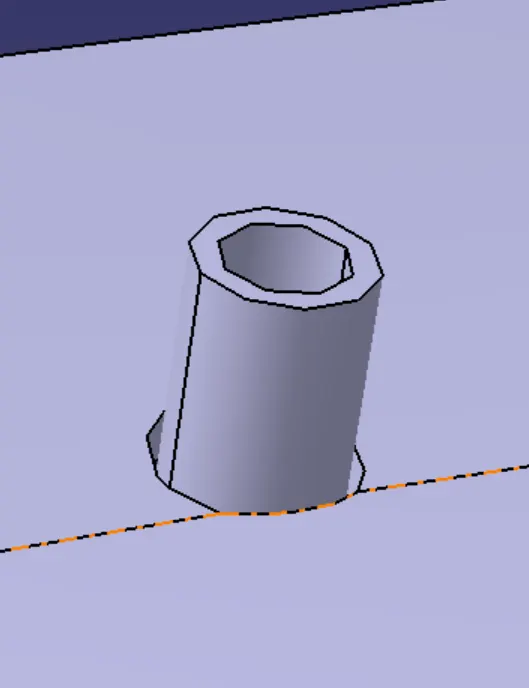
Now give a draft of 0.5 degree. Now assemble this heat stake body with the applique body. Copy the heat stake body and paste it into the specification tree. Now use that body and translate it . Use the set of points created in earlier step for position. repeat this same steps to create as many heat stakes as you want and assemble them with main body.
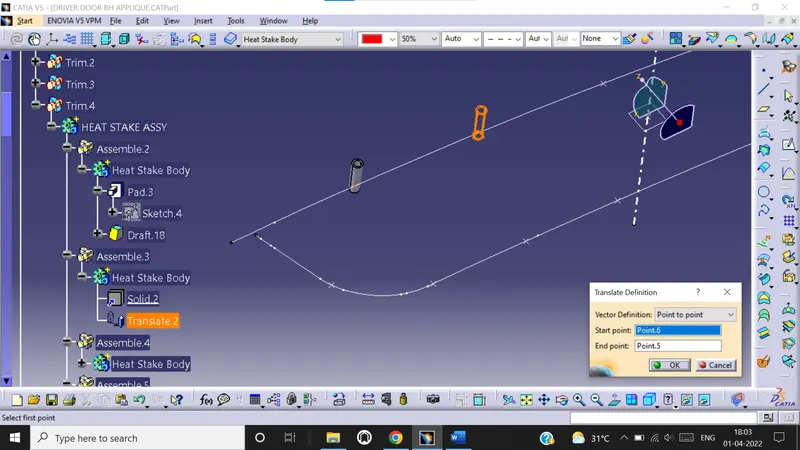
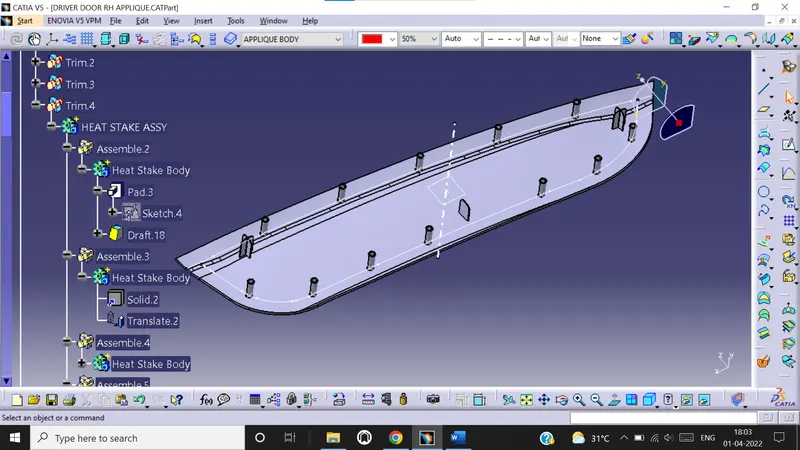
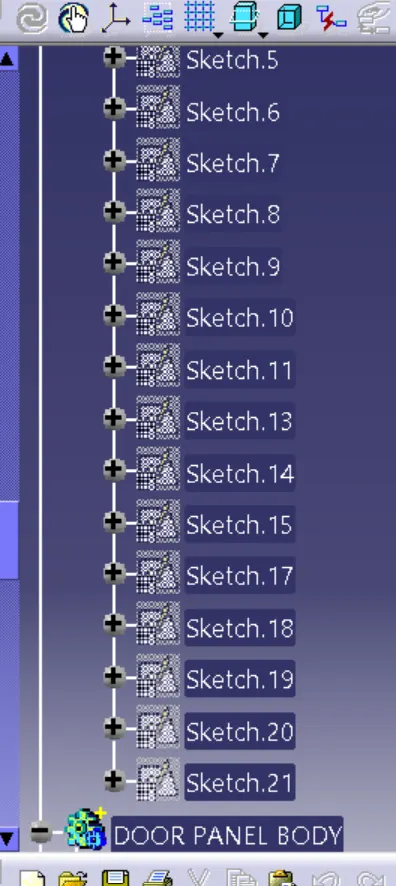
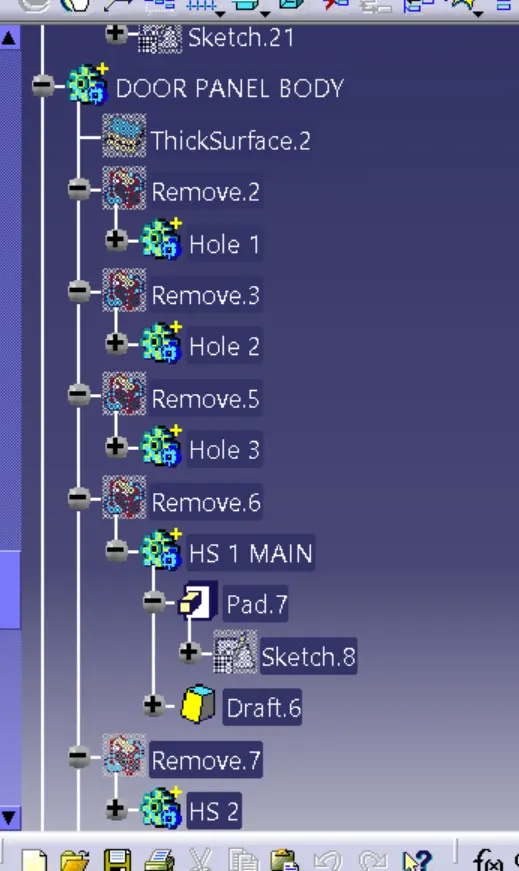
Now we need to create holes on the door panel body opposite to heat stakes and locators on applique body. First create sketch on the plane. The outer dia of heat sketch is 15mm so the hole dia should be 15.2mm . There should be a clearence of 0.1mm on each side.
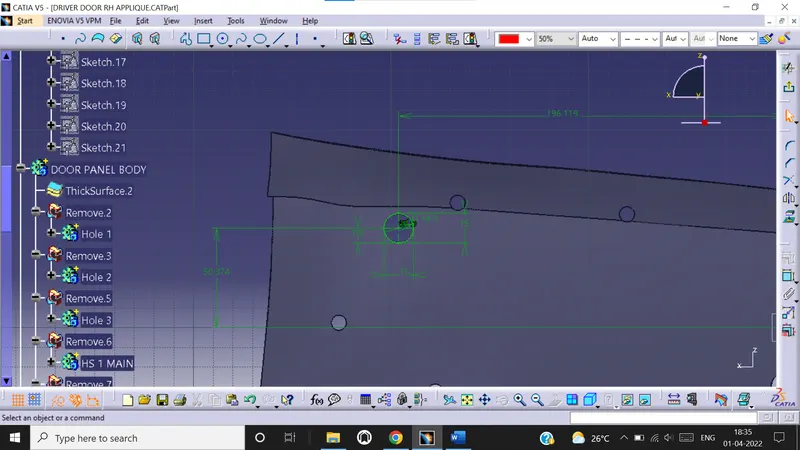
Now pad it and give a draft of 0.5 degree so that the hole formed should have a draft angle of 0.5 degree. Then later union trim it with door panel body.
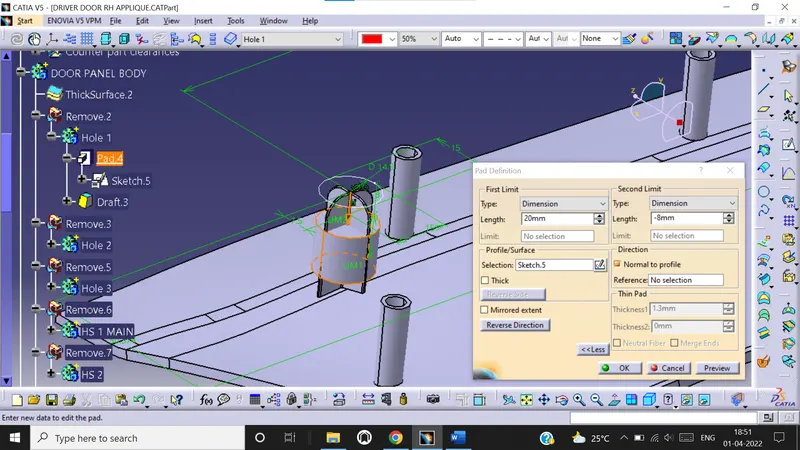
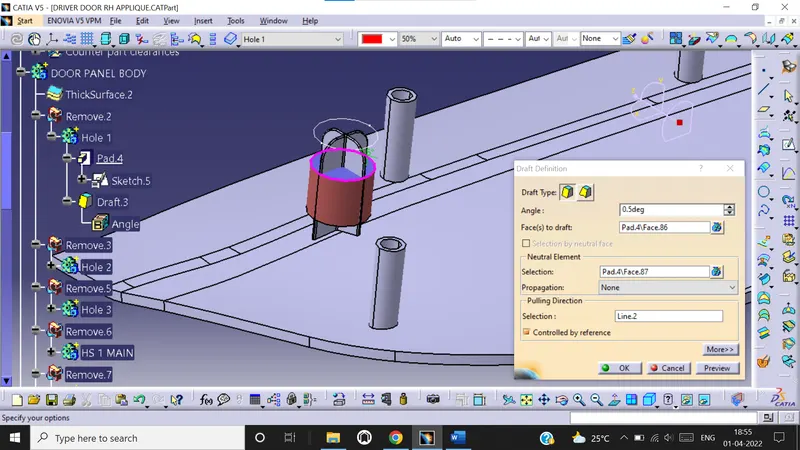
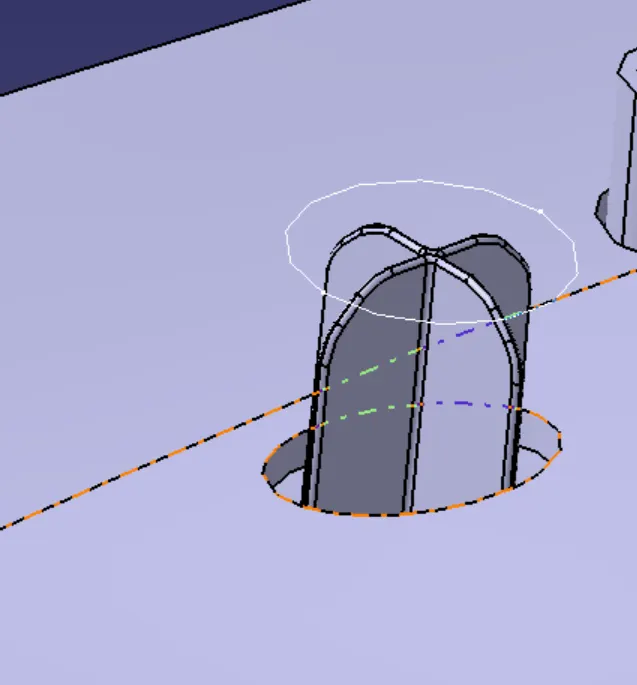
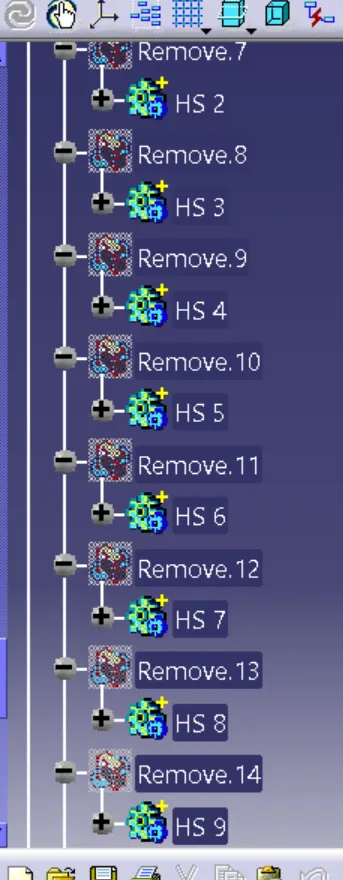
Now perform the same operation for other locators and all the other heat stakes.
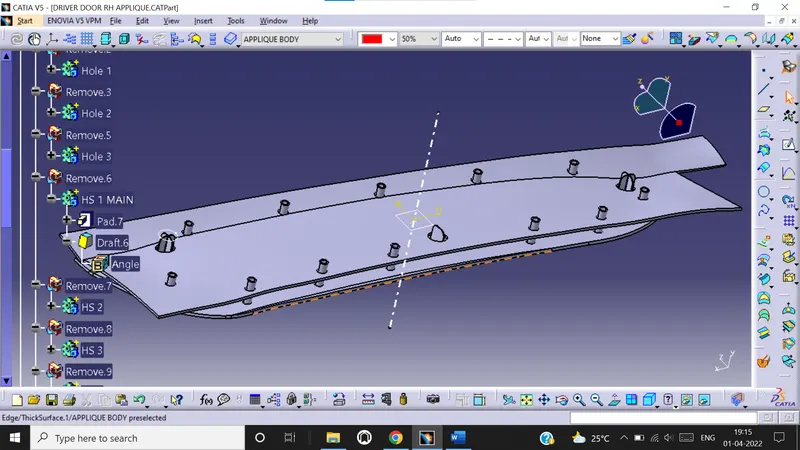
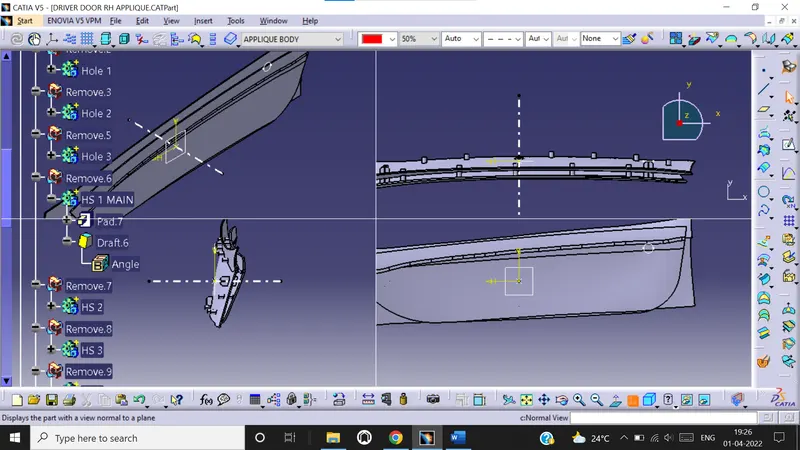
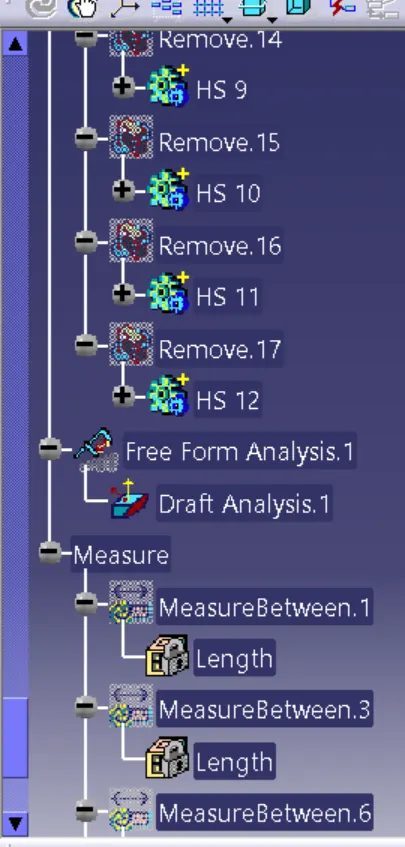
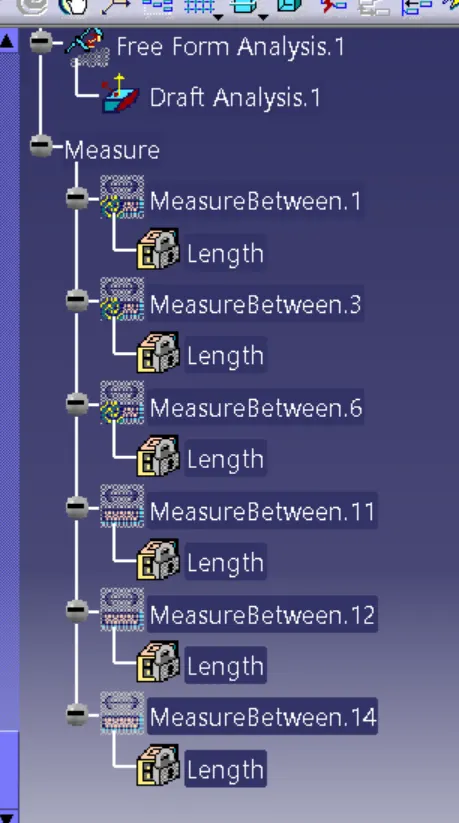
Now we do draft analysis on the both applique body & door panel body.