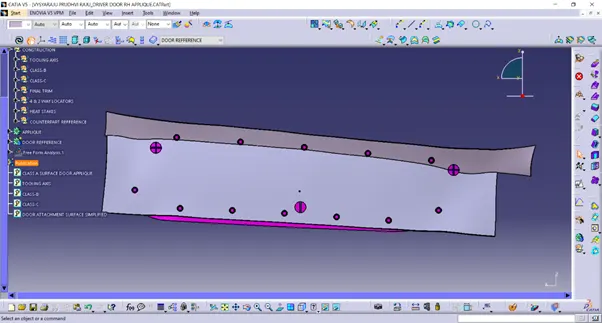
Door Applique Design with Engineering Features-Heat Stakes & Locators
CREATION OF HEAT STAKES & LOACTORS FOR DOOR APPLIQUE
OBJECTIVE: The main objective of this challenge is to create tooling axis for the Door Applique surface considering the draft and to create class-B and C surfaces using class-A and adding heat stakes and locators to the final solid component and to perform draft analysis.
Taking the Thickness of the component to be 2.5 mm
Tooling axis: The direction in which the mold or core and cavity opens is the tooling axis.
Tooling axis creation:
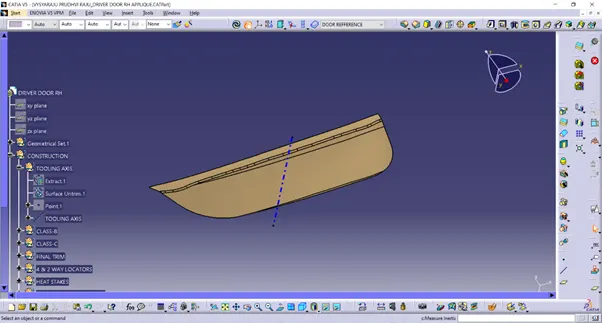
Draft analysis for class-A:
As the surface has flatness in most the draft is not a major role for this surface as we can see the surface turned in to green satisfying the draft.
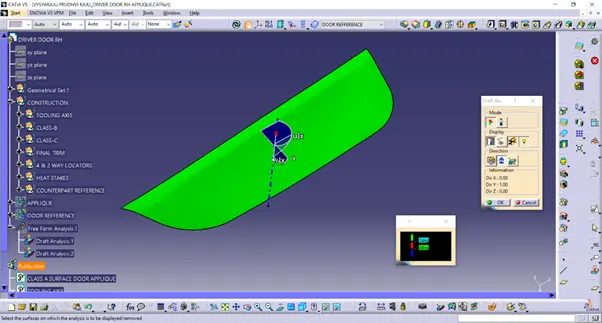
Creation of Class-B:
Class-B is created using Class-A by simply offsetting the surface and extrapolating.
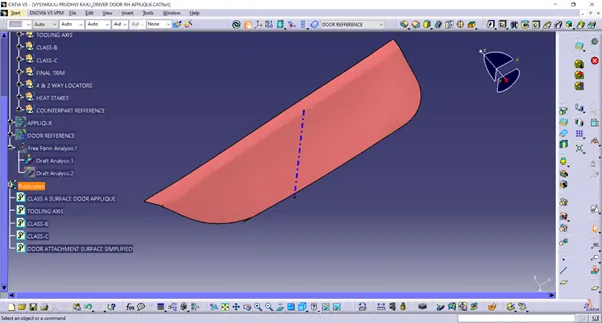
Creation of class-C:
Class-C is created to connect Class A&B, so it is created using class-A boundary using the sweep command swept in the direction of tooling axis with draft.
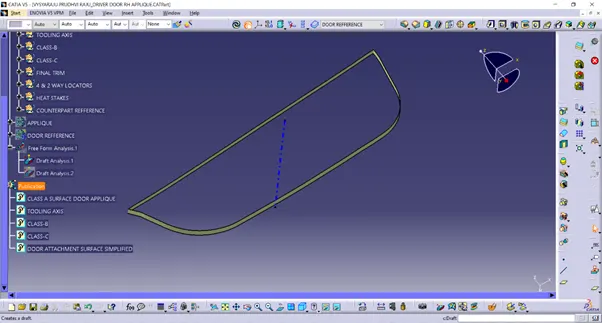
Final trim:
The final closed surface of the plastic component is formed by trimming the class-A,B & C such that a closed surface will be formed.
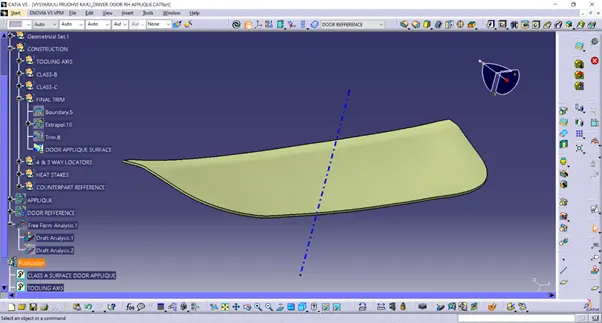
The final closed surface is converted in to a solid body using close surface in part body work bench
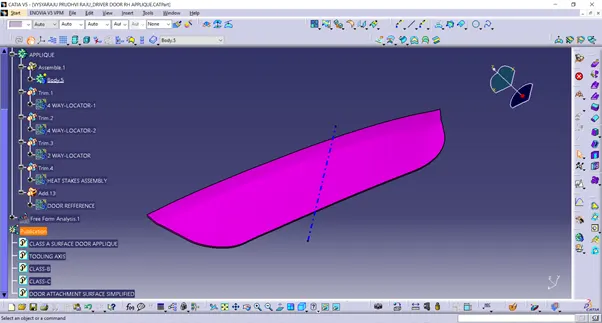
Creation of Locators:
Locators are used to arrest the degrees of freedom of a component, there are many ways of creating locators based on the model, here for this model 3-2-1 type of locator are designed.
Sketch for creation of locators:
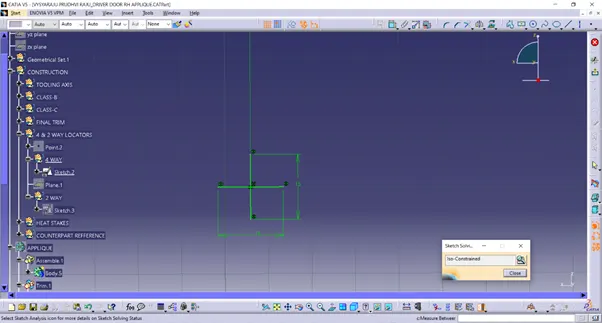
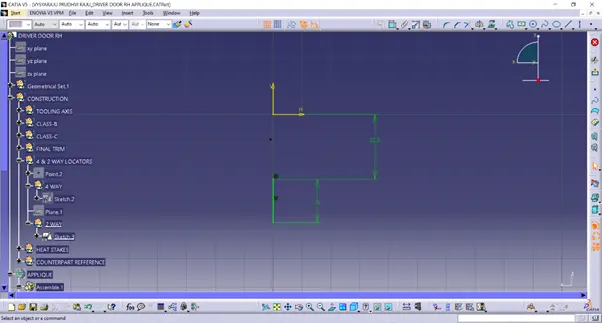
The locator sketch is padded along the tooling axis direction with thickness to obtain the locators.
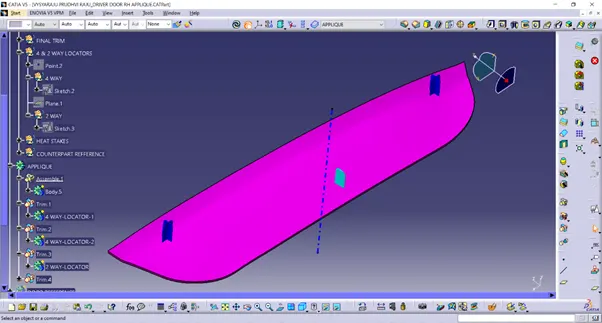
Creation of Heat stakes:
Heat stakes are uses to rivet the plastic component to the environment that is the reference surface provided, it is riveted by melting the heat stakes such that the extra part of the heat stakes will be melted and acts as rivet.
Sketch for Heat stakes:
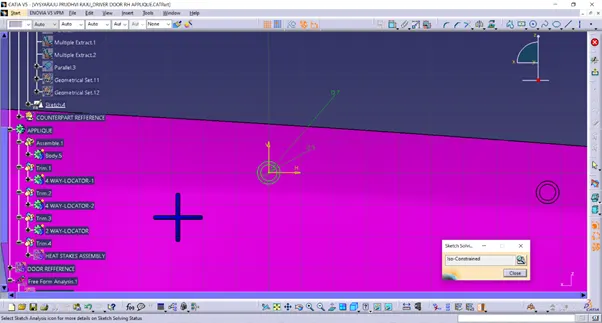
A single heat stake will be created by padding the sketch along the tooling axis and the other stakes will be created using copy and paste special options along the points created.
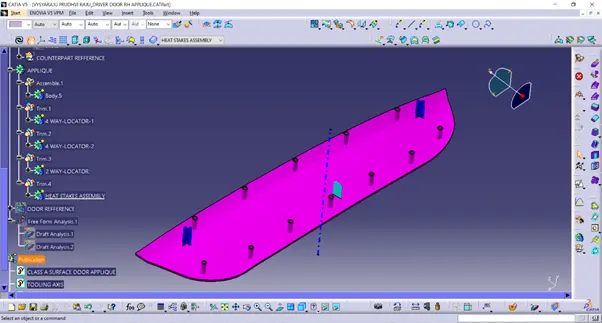
Draft Analysis of Door Applique:
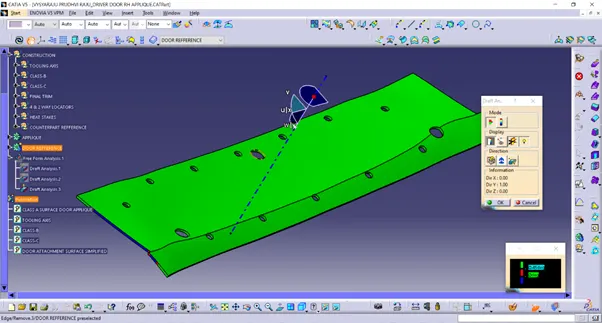
We can see that all the solid is green so it is satisfying the draft.
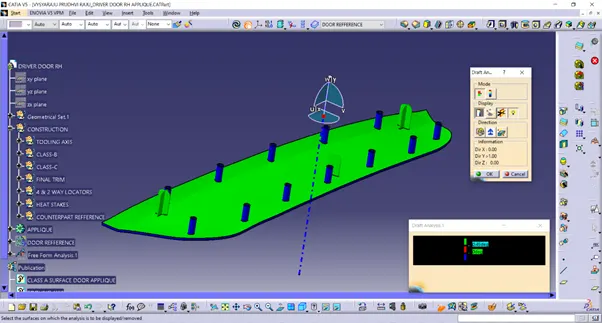
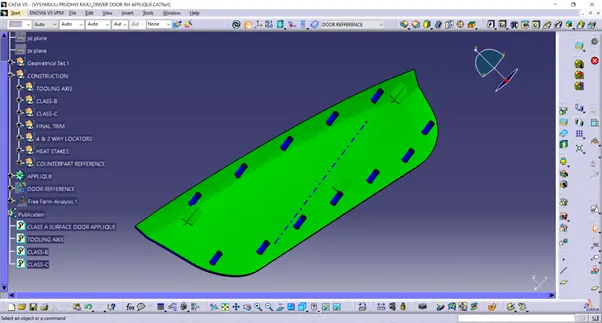
As the Door Applique to be connected with reference we should makes some holes in the environment for the applique to set in the correct position.
Sketches:
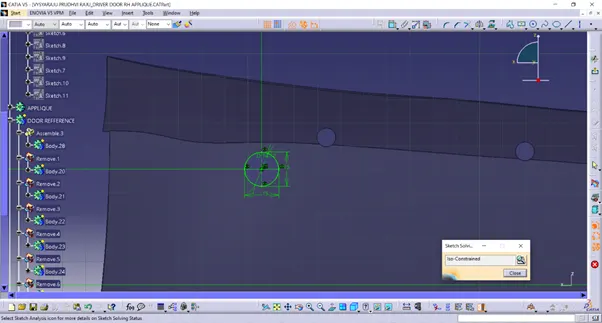
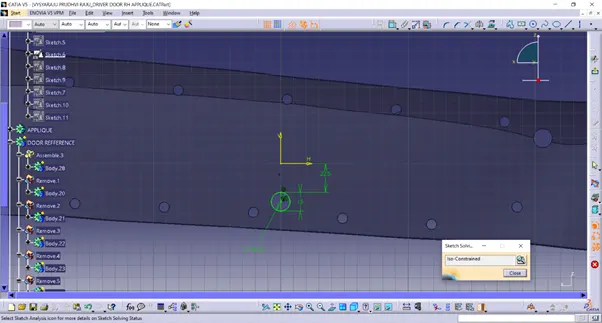
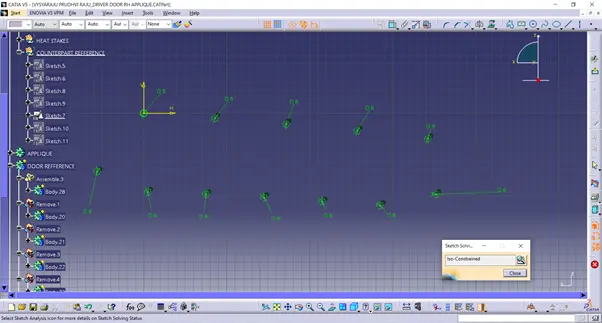
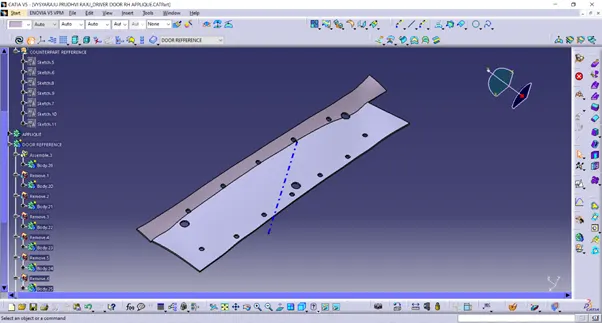
After all necessary hole’s creation, the final reference where door applique will be seated is
Draft analysis for reference:
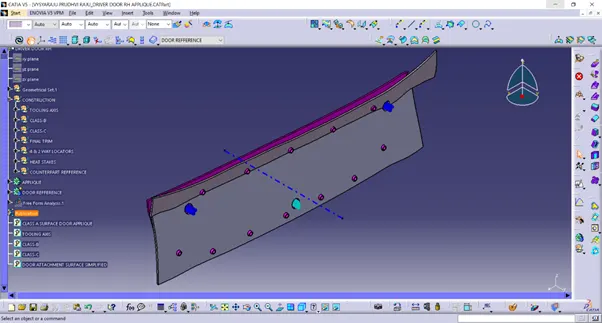
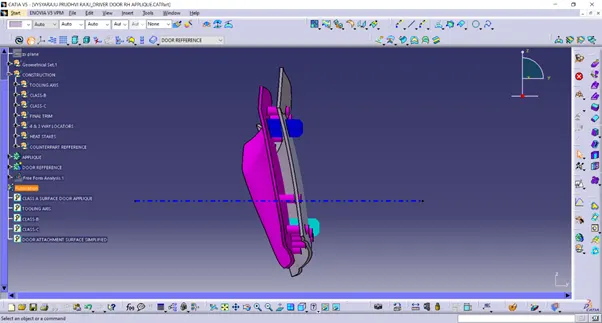
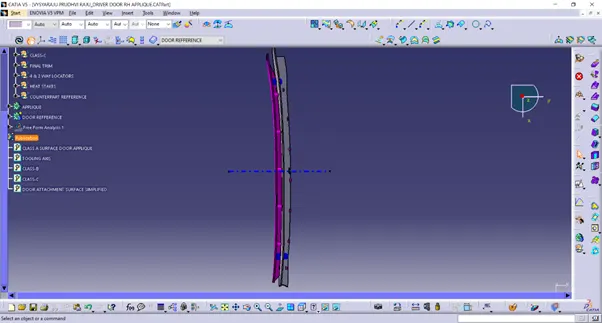
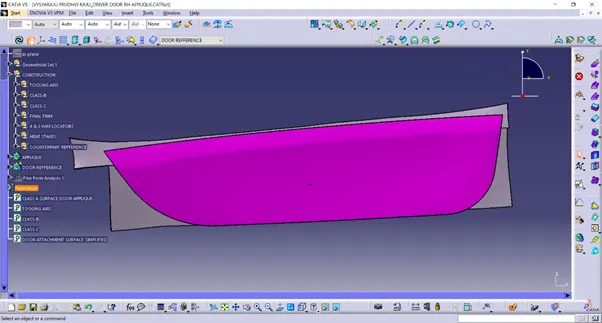
The final views of the door applique after connecting to reference are: