Week 9 Machining with Planer Challenge
Objective: To perform an explicit dynamic analysis of maching operation with a planar cutting tool
Case1: cutting velacity of 20,000mm/s
case2: cutting velacity of 15,000mm/s
find out the equivalent stress, total deformation and temp of the body
procedure-
case1-cutting velacity of 20,000mm/s
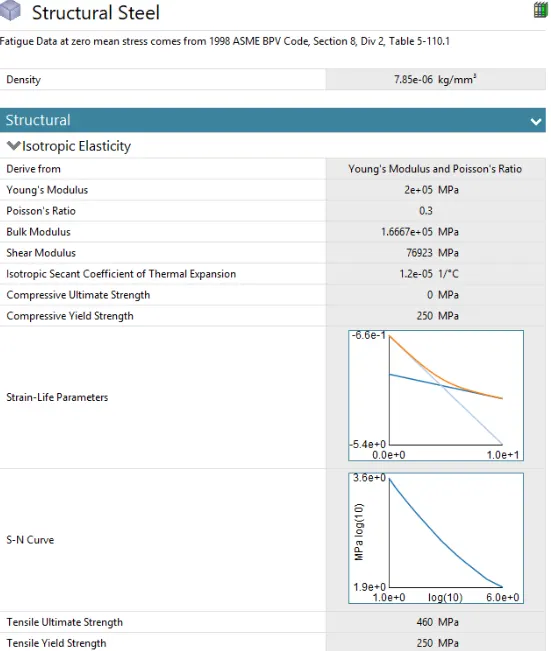
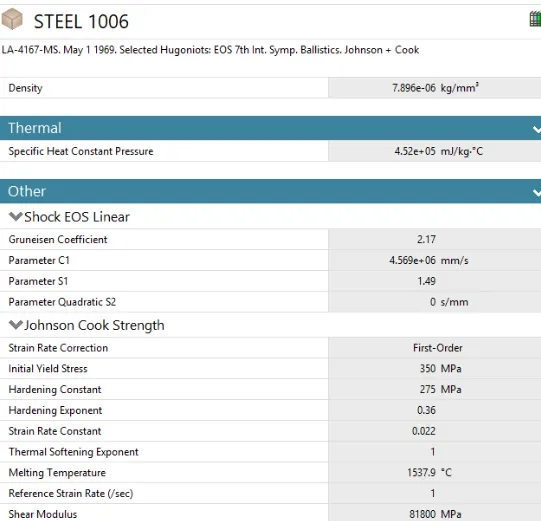
create explicit dynamics in ansys work bench and in engineering data select the material steel 1006 from explicit material and structural steel
Structural steel
Steel1006
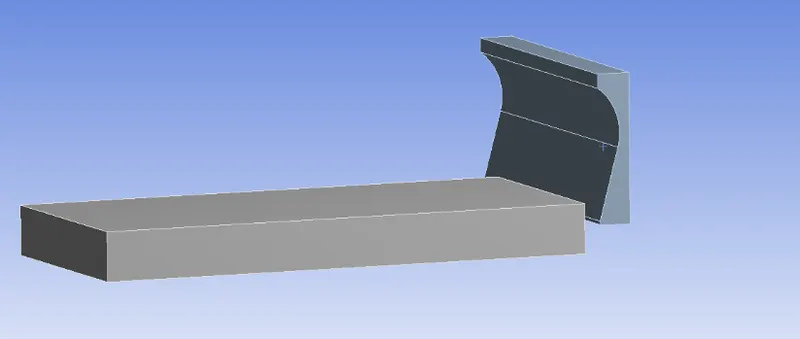
import the geometry and check in space claim for any irregularities.
Then open ansys mechanical and rename the component as workpiece and cutting tool then assign the steel 1006 material to the workpiece and structural steel material to the cutting tool and change the stiffness behaviour of the cutting tool to rigid.
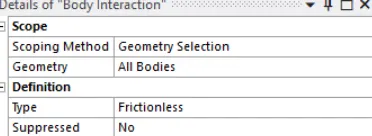
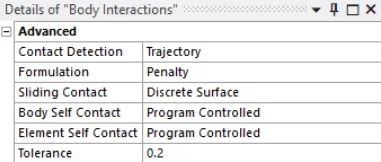
Body interaction - no contact are defined instead a body interaction is introduced , the parameter of which are set shown.
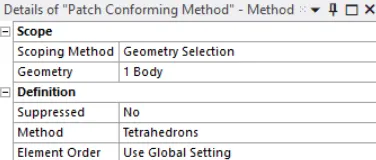
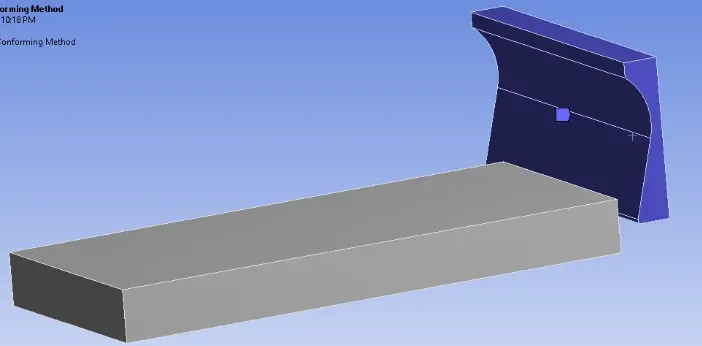
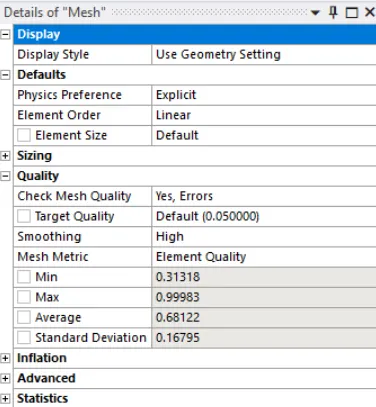
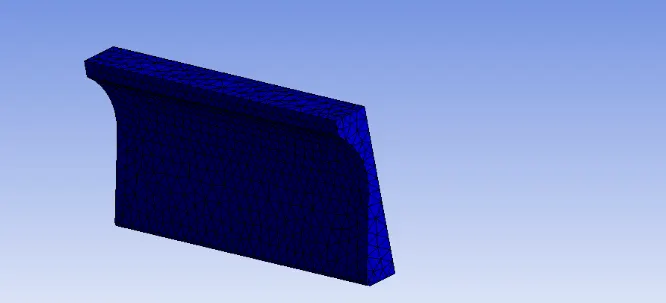
Mesh - The cutting tool is meshed by patch conforming method using tetrahedron element
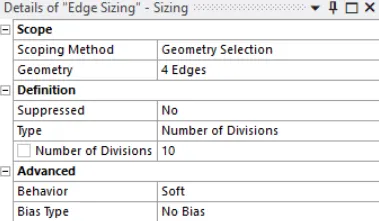
Edge sizing - The work piece is meshed by defining to element along its edge.
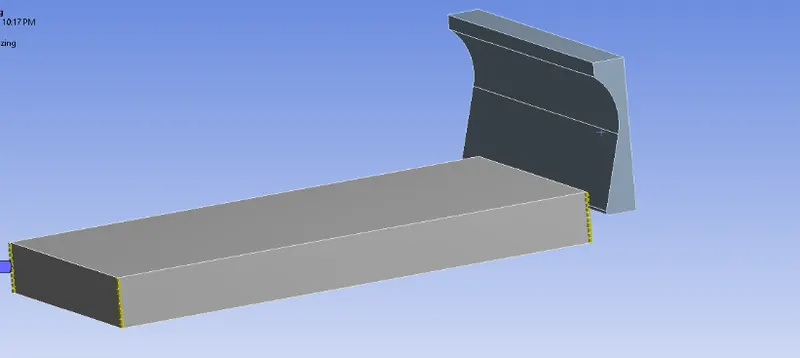
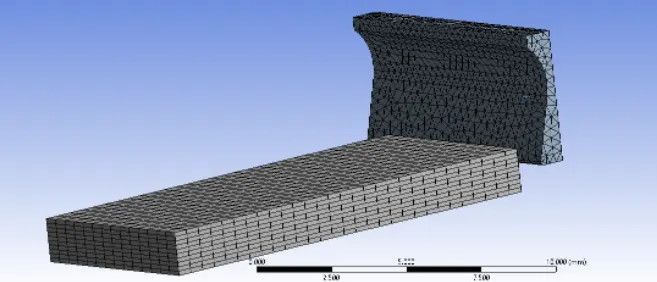
Mesh
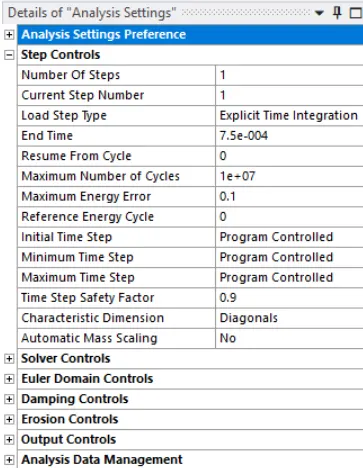
Analysis setting - set end time as 7.5e-4 with max no of cycles as 1e+7, Max error set to 0.1
Fixed support - work piece is fixed
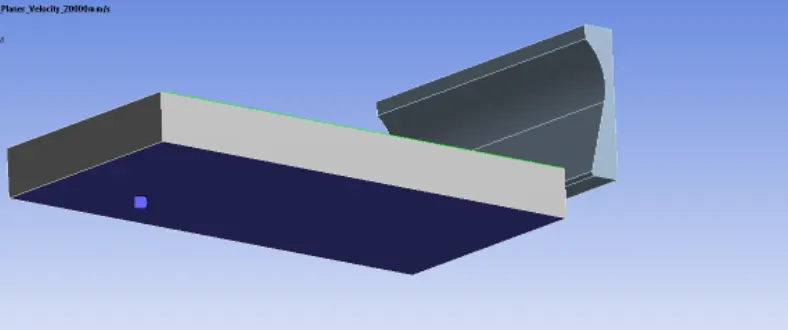
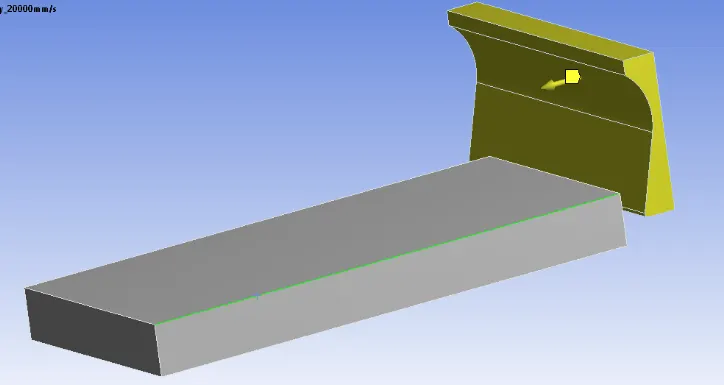
Velacity - cutting tool provides the velacity of 20,000 mm/s
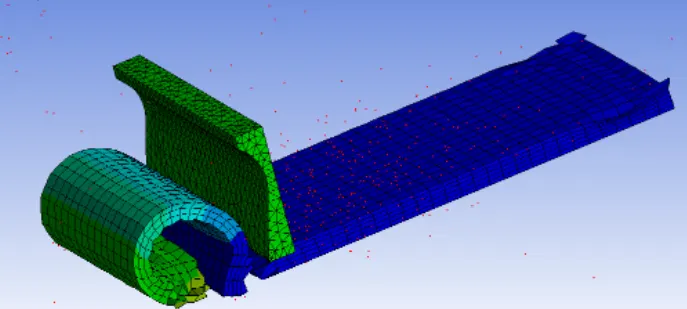
run the simulation and result obtained
Result - the analysis run successfully and result obtained
Total deformation Max - 29.259mm
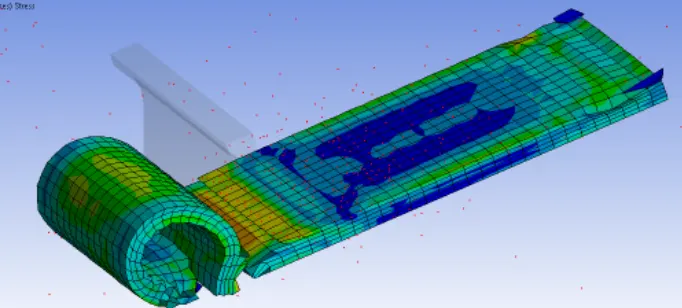
Equivalent stress Max - 492.21Mpa
Temperature Max - 376.95 degree celsius
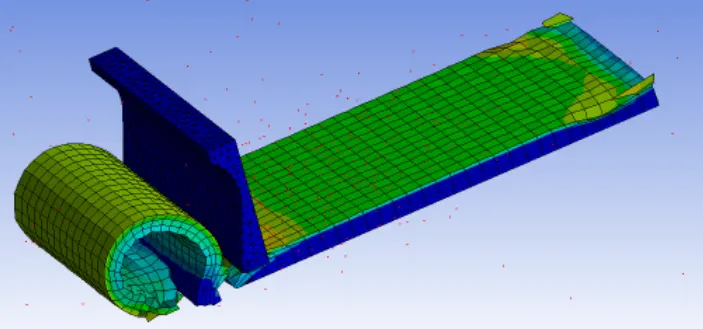
Cutting tool displacement-15mm
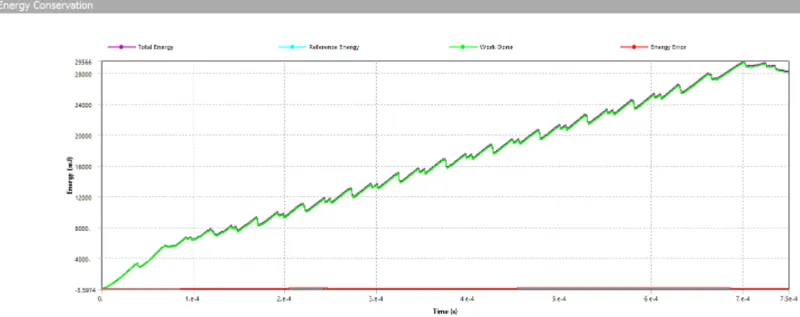
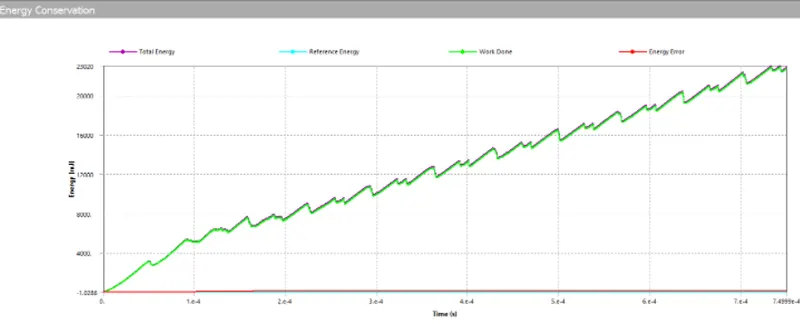
Energy conversion plot
case2- cutting velacity of 15000mm/s
velacity- cutting tool provide the velacity of 15000mm/s
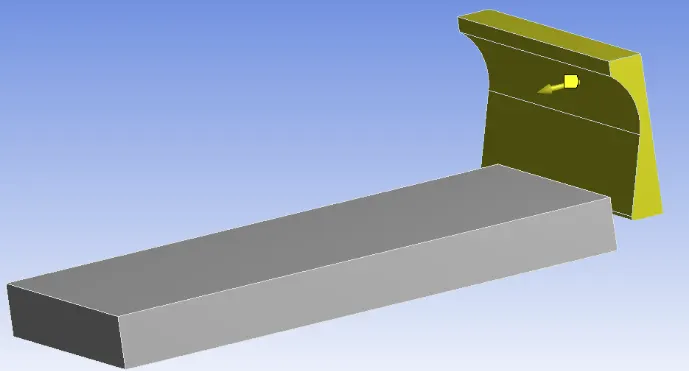
In analysis setting- set end time as 7.5e-4, with maximum number of cycles as 1e+7, Maximum error set to 0.14
other setup same as case1
run the simulation and result obtained.
Result- The analysis run successfully and results obtained.
Total deformation- 23.175
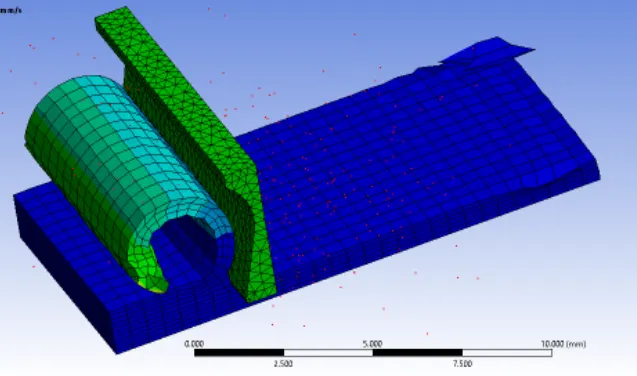
Equivalent stress Max - 634.3Mpa
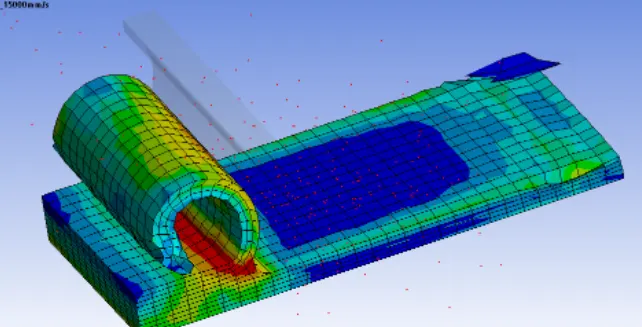
Temperature Max - 363.51 degree celsius
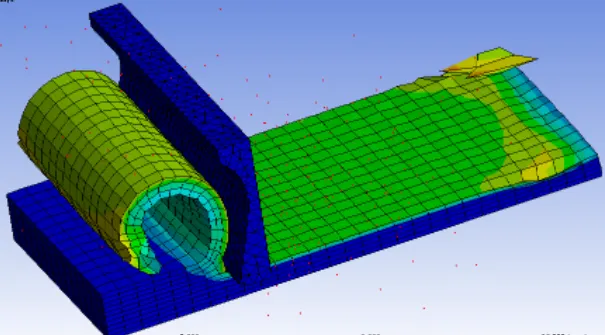
Cutting tool displacement-11.25mm
Energy conversion plot
conclusion:
equivalent stress is lower in case 1 as the cutting tool has already removed intended amount of the material from the specimen due to high velacity.
The case 1 has higher temperature as compared to case 2 as it removes more material as compared to case 2.
Run time is constant in both cases, a reduction in the feed velacity reduces the amount of material removed from the workpiece. This evident from the total displacement of the cutting tool, which displaces 15mm in case 1 and 11.25mm in case 2.
Both the simulation run successfully with maximum energy error of 0.1 and 0.14 for case1 and case2 respectively.