Week 9 - FVM Literature Review
Objective:-
1. What is Finite Volume Method.
2. What are the major differences between FDM and FVM.
3. Need for interpolation and flux limiters in FVM.
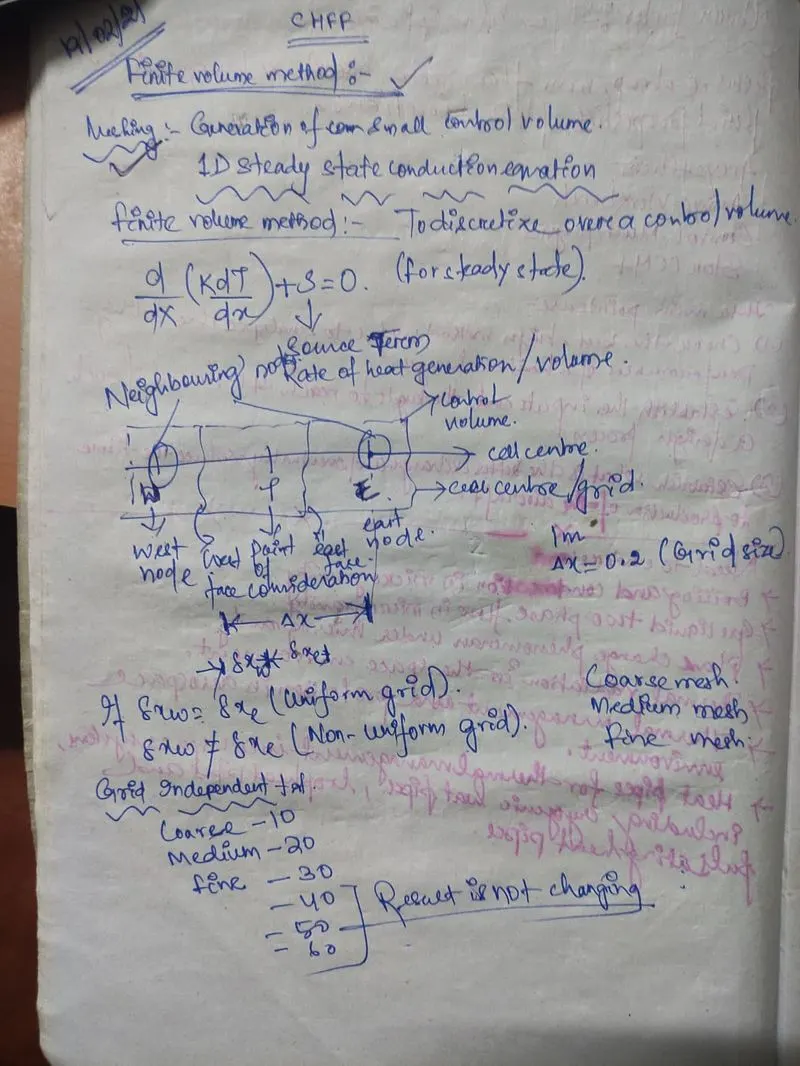
Finite Volume Method:- It is a method of representing and evaluating partial differential equations in the form of algebraic equations. In the Finite Volume Method, volume integrals in a partial differential equation that contain a divergence term are converted to surface integrals, using the divergence theorem. These terms are then evaluated as fluxes at the surface of each finite volume.
Flux entering a given volume = Flux leaving (So this is a conservative method).
It can be easily formulated for unstructured meshes. It refers to a small volume around each node on a mesh.
Difference between FDM and FVM:-
1. Finite Difference Method is the most direct method of discretizing partial differential equations. You consider a point in space and apply conservation laws and then apply Taylor series expansion and truncate the series up to desired order so that we get a set of algebraic equations whereas Finite Volume Method is based purely on flux conservation i.e what goes inside a volume must come out of the same volume. This method has been very successful in solving fluid flow problems. The Finite Volume Method is based on the divergence theorem.
2. Finite Difference Method requires structured mesh whereas Finite Volume Method can be used for both structured as well as unstructured mesh.
3. In the Finite Difference Method, boundary conditions for curved boundaries are a problem. Boundary conditions are needed to truncate the computational problem. These conditions communicate with the surrounding which is not required in the simulation part while in the finite volume method mesh can be made fine near the boundary or shock region to capture the effects.
4. On the overall, Finite Difference Method is based on a differential approach whereas the finite volume method is based on an integral approach.
Need for interpolation schemes and flux limiters in FVM:-
The Gauss or divergence theorem simply states that the outward flux of a vector field through a closed surface is equal to the volume integral of the divergence over the region inside the surface. So we have nodal values but face value is required. So face value is calculated by intepolation techniques.
Some of the famous interpolation techniques used in FVM:-
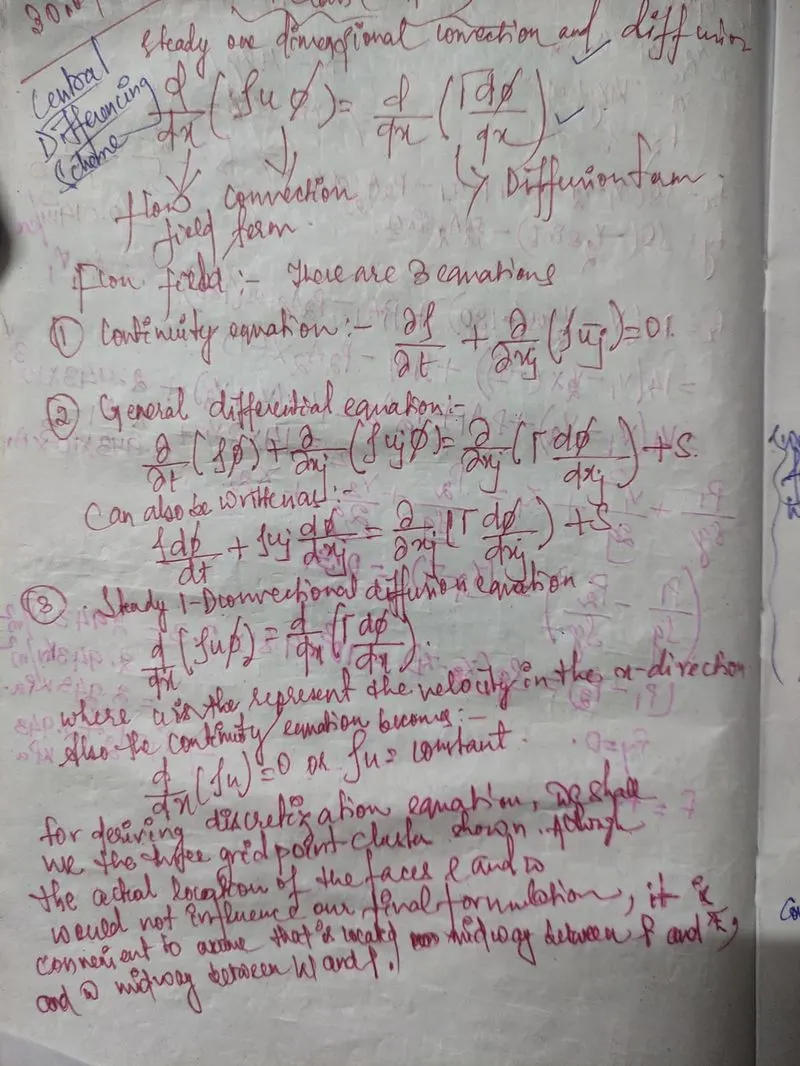
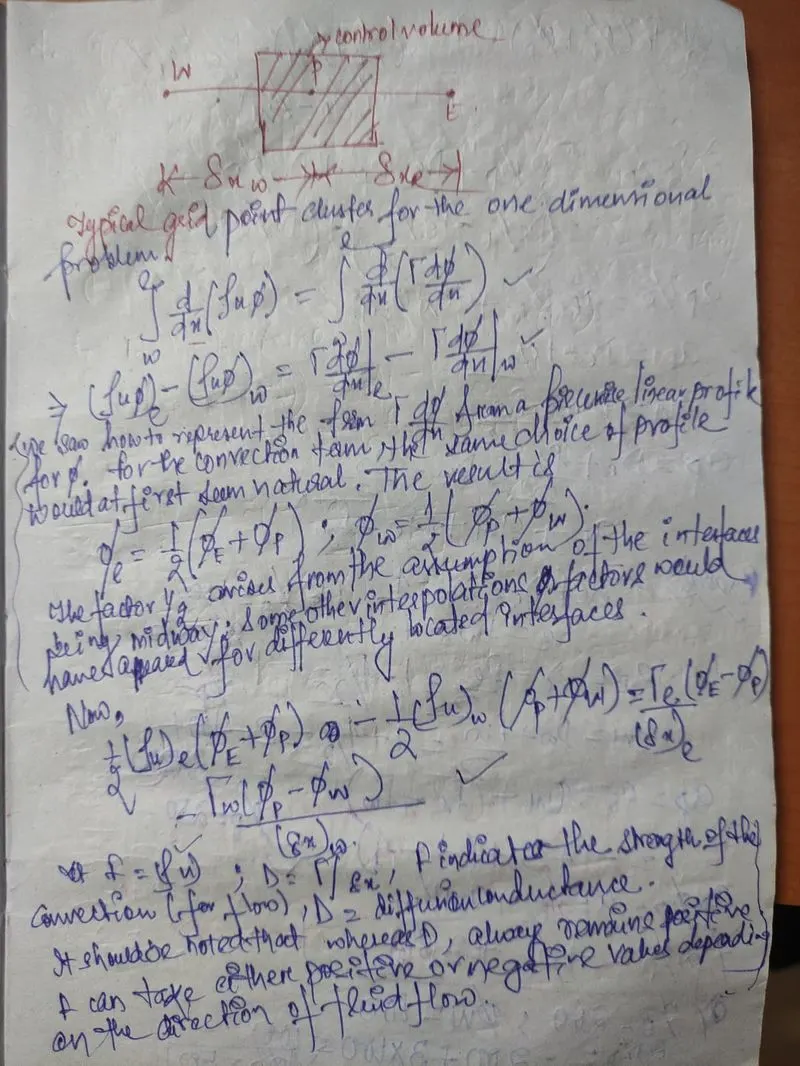
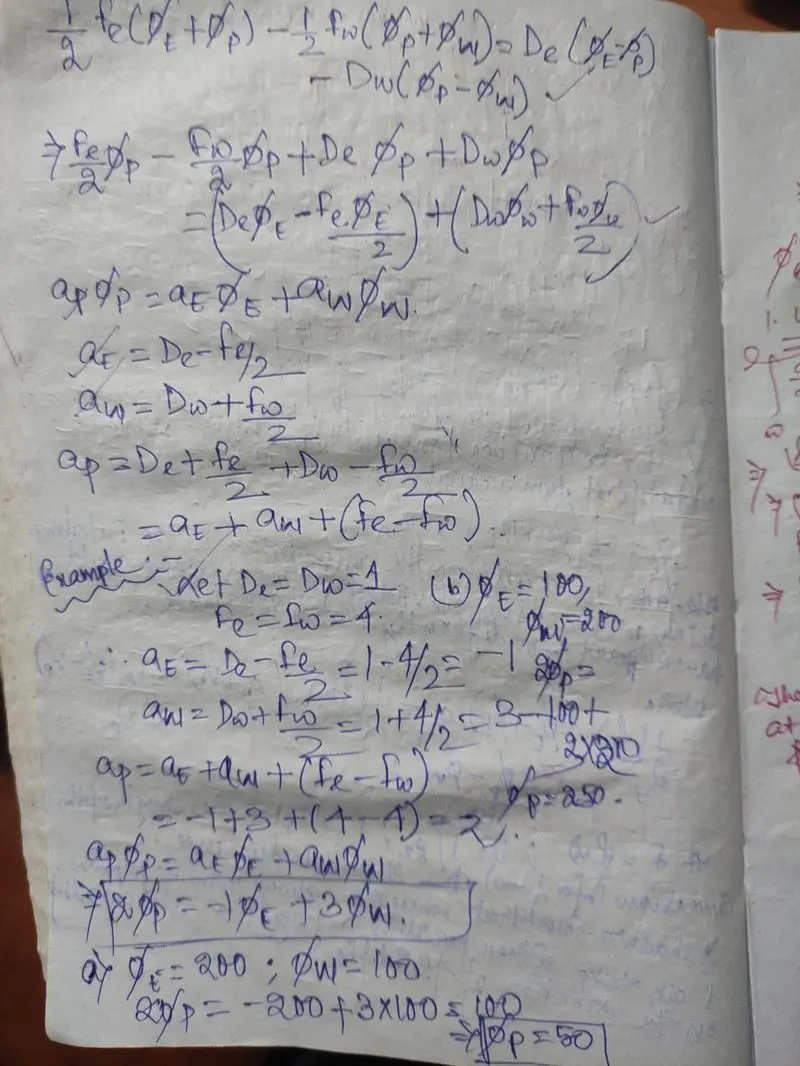
1. Central Differencing Scheme
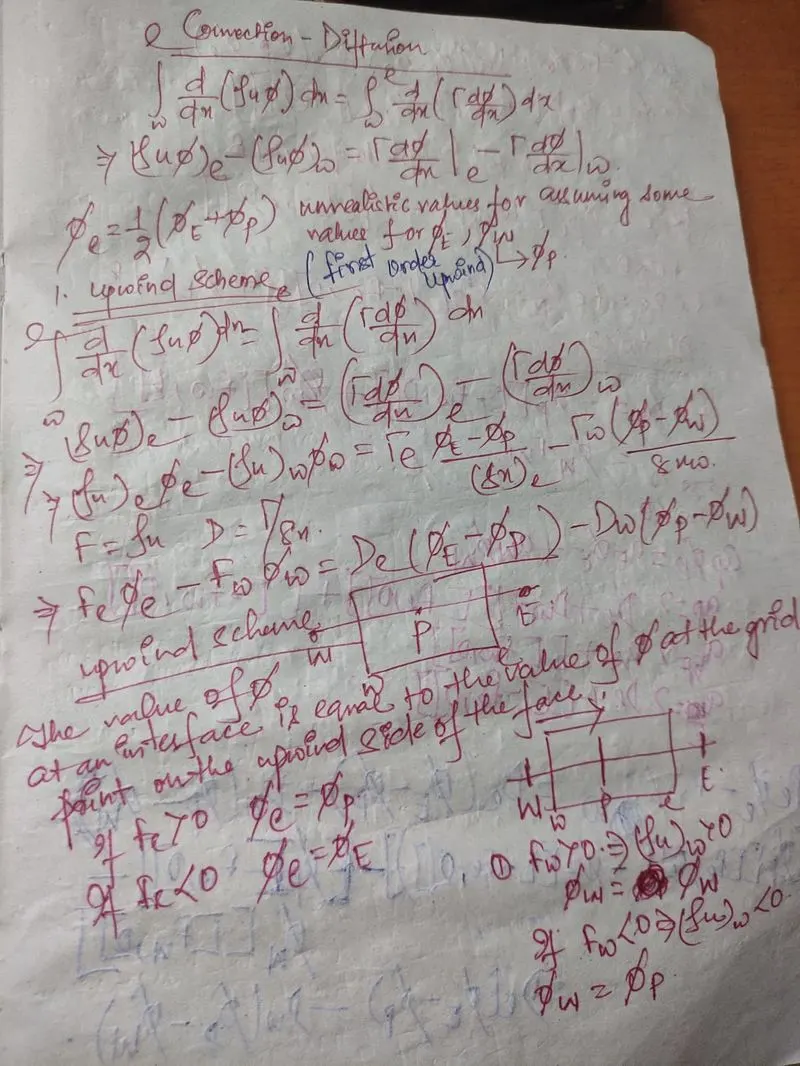
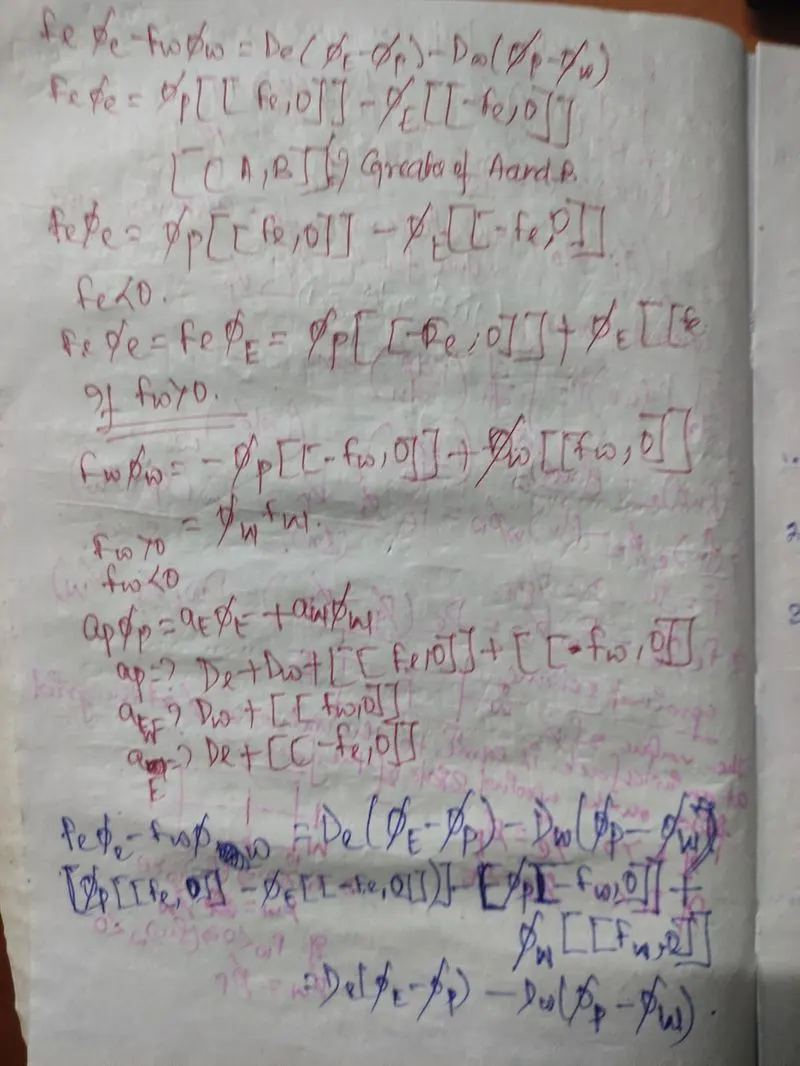
2. Upwind Scheme
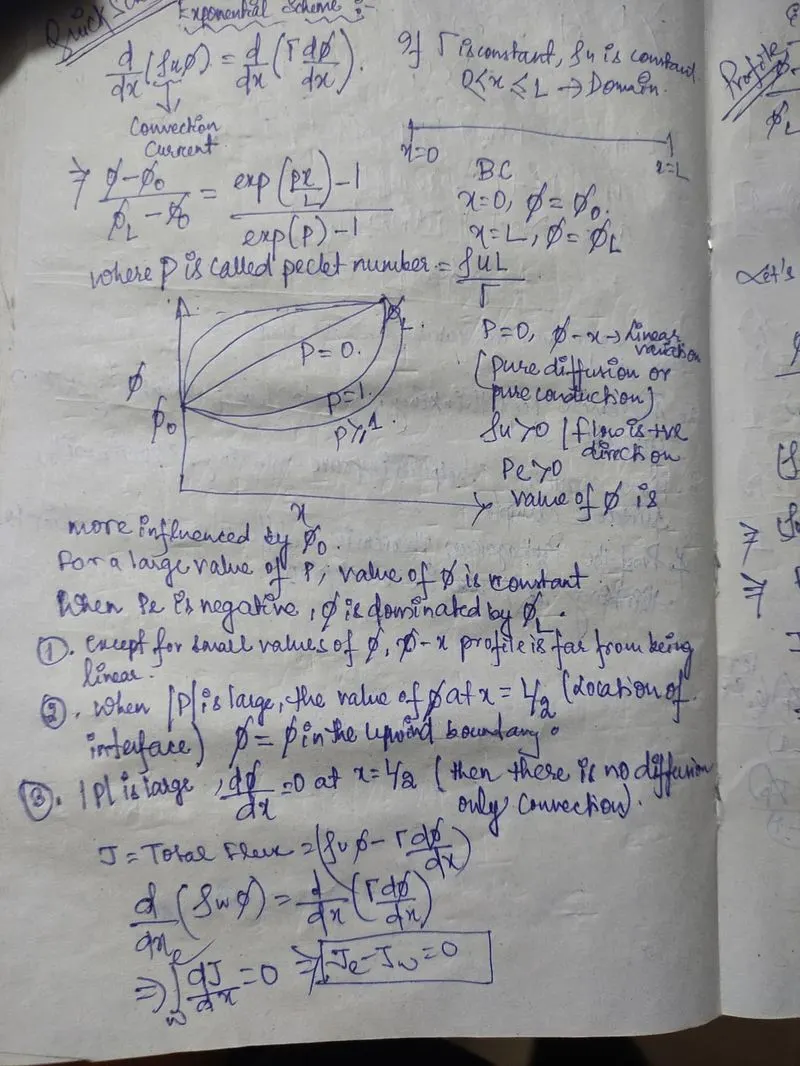
3. Exponential Scheme
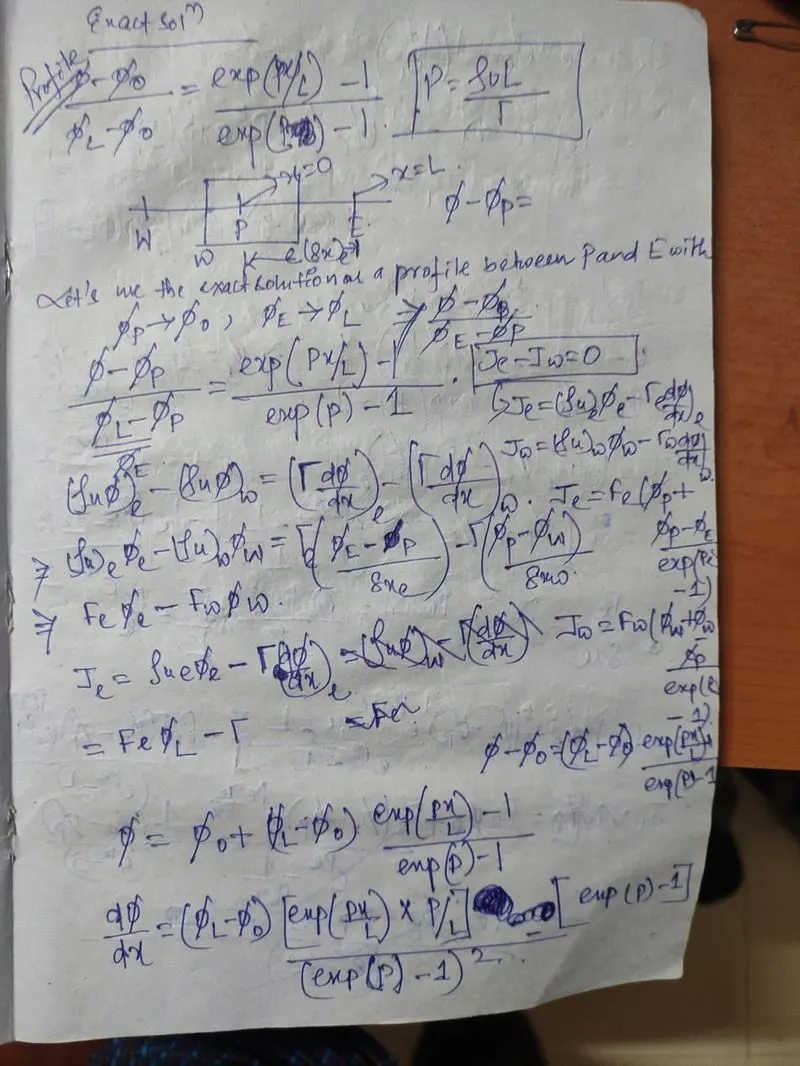
4. Hybrid Scheme
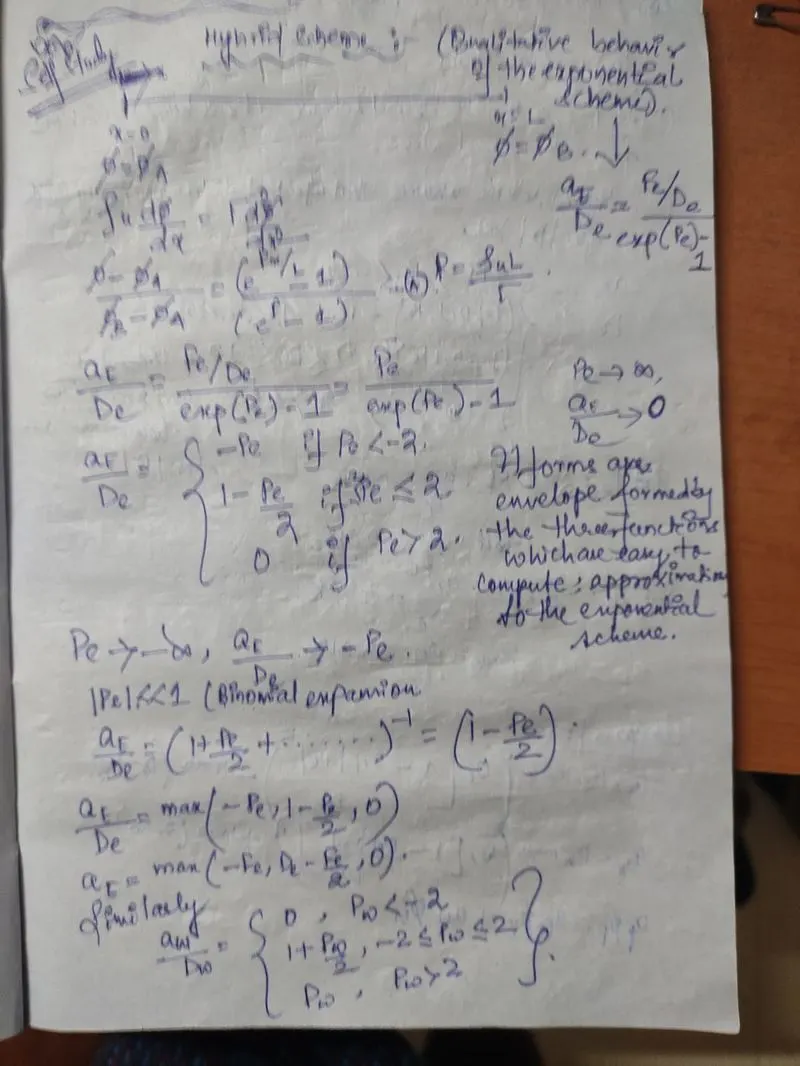
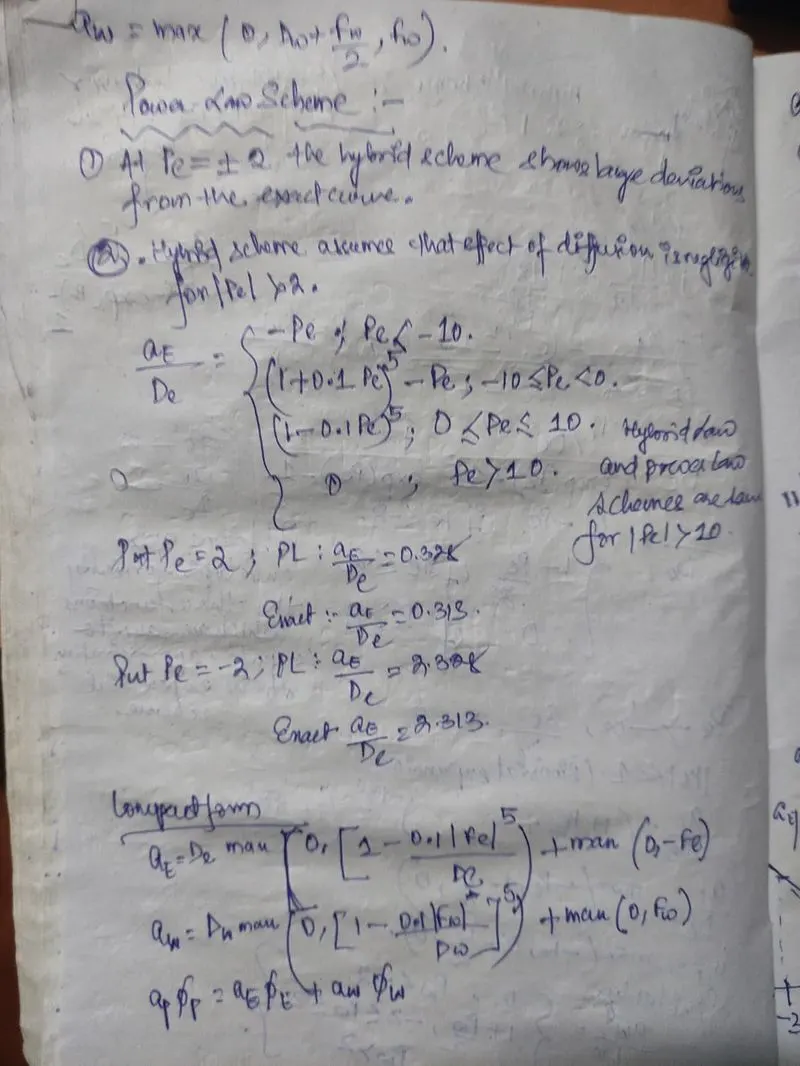
5. Power Law Scheme
6. Simple Algorithm
7. Simpler Algorithm
Flux Limiter:-
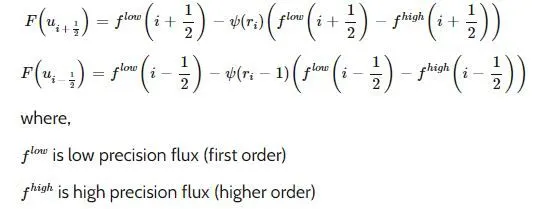
For convective fluid flow,lower-order schemes are usually stable but are dissipative around the regions of discontinuity or shocks while higher-order schemes show oscillation.

Flux limiter functions are used to fine tune higher order schemes so that it gives a higher order accuracy in the vicinity of smooth flow and first order accuracy in the region of discontinuity or shock.
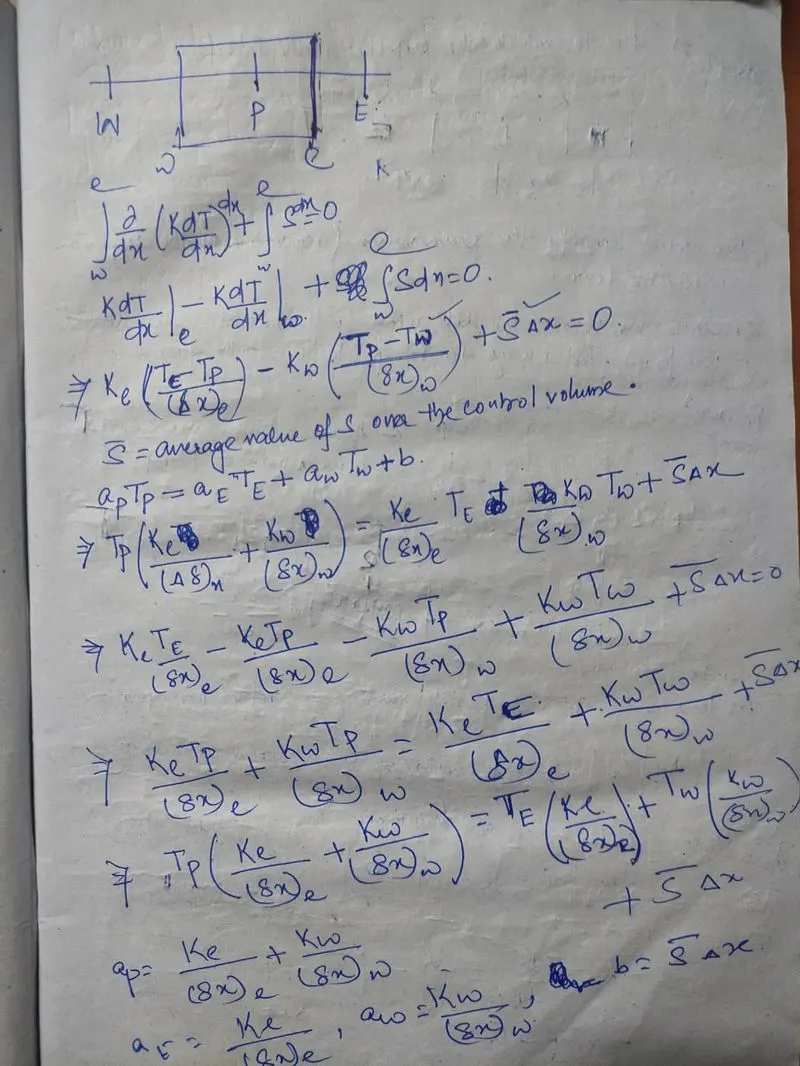
1D heat conduction equation using Finite Volume Method:-