Week 9 - Challenge 2 - Switch Bezel Design
DESIGN AND DRAFT ANALYSIS OF SWITCH BEZEL
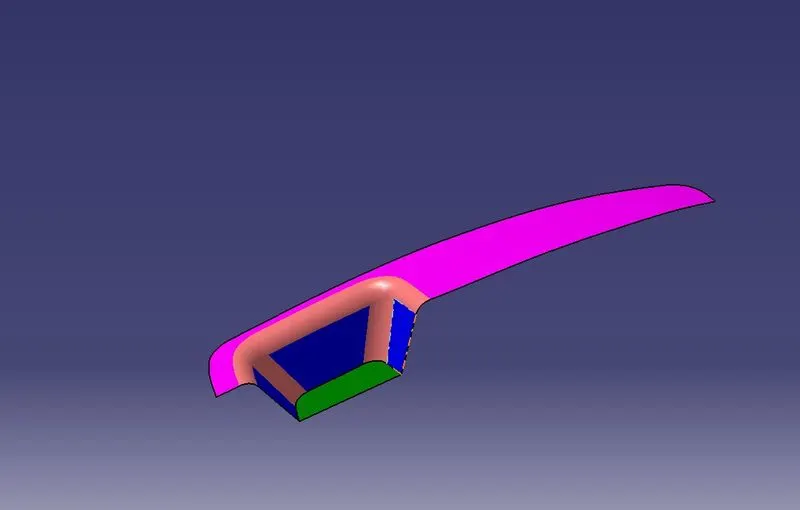
Aim: To create a Switch Bezel plastic component using the given Class A surface and perform Draft Analysis.
Introduction:
Class A surface: This is used in the automotive design industry. It describes the final production surface data for the asthetic parts.
Class B surface: The second surface that has certain thikness from the Class A surface. This surface contains certain Engneering aspects of a model. These must be smooth and error free as well but are not held to the standards that Class A surface are.
Class C surface: The Class C finishes allows more imperfection than Class A or B. Class Cis often specified for interior surface not readily visible, surfaces that will be converted by another part when assembled or surfaces.
Objective:
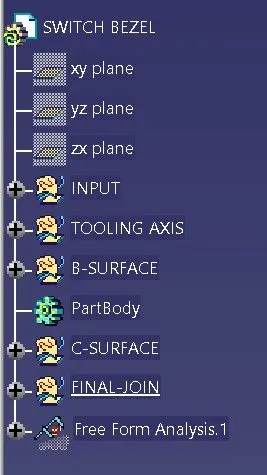
1. Ensure proper tree structure.
2. Geometrical sets shpuld have a proper name based on the sketches present inside them.
3. All the sketches should be created under the Geometrical set.
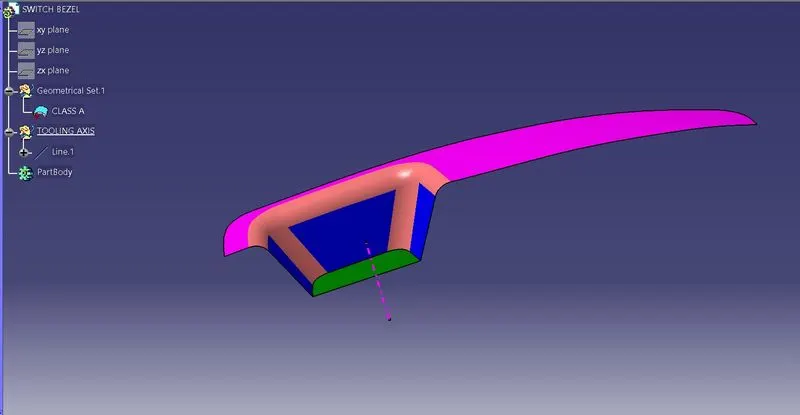
4. Create the Tooling axis for Class A, for perfect Draft analysis.
Class A surface:
Creating a Tooling axis:
- Create a point on the surface with out any coordinate system.
- Draw a line along the point normal to the surface we have choosen.
- Then make that line as a thick dashed line .
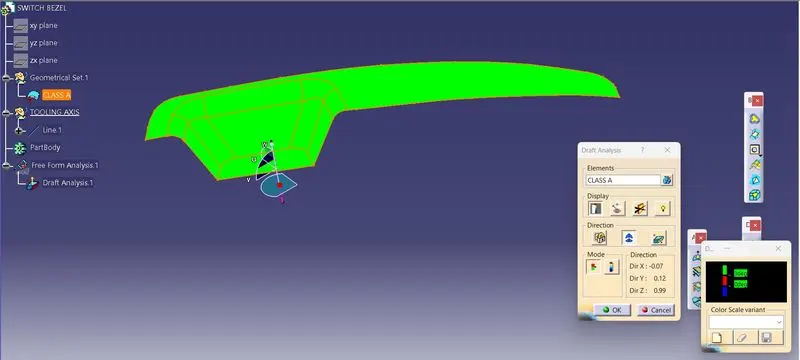
Draft Analysis:
- Go to insert > analysis> feature draft analysis.
- Align the Tooling axis with the compass.
- Click on the surface and see that the surface is with in the permissible limit of the draft values.
- The surface should be green and in the column nominal value 3 Deg given as input. Hence the draft analysis on the Class A surface is successfully performed
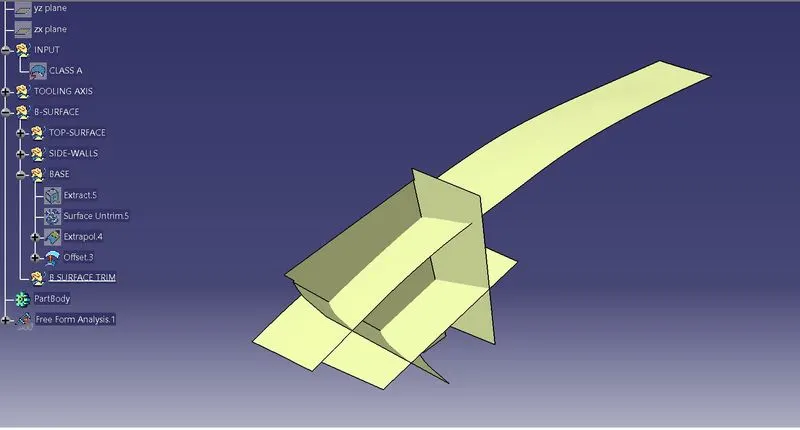
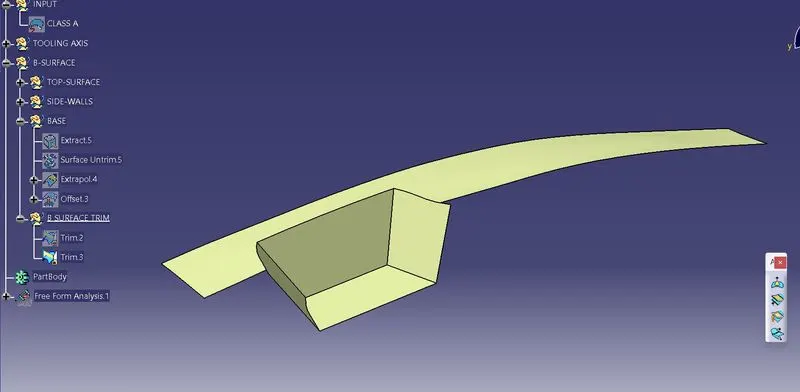
Creation of Class B surface:
- Devide the Class A surface as Top surface, Side walls and Base.
- Then extract the each surface step by step.
- Then untrim the surfaces.
- Then extrapolate the extracted surfaces for trimming according to the shape of Class A.
- Trim the surfaces with each other.
- Then off set the Extracted surfaces for the given thickness.
- Then do the edgeblend for the created surface then we get Class B surface.
Creation of Class C surface:
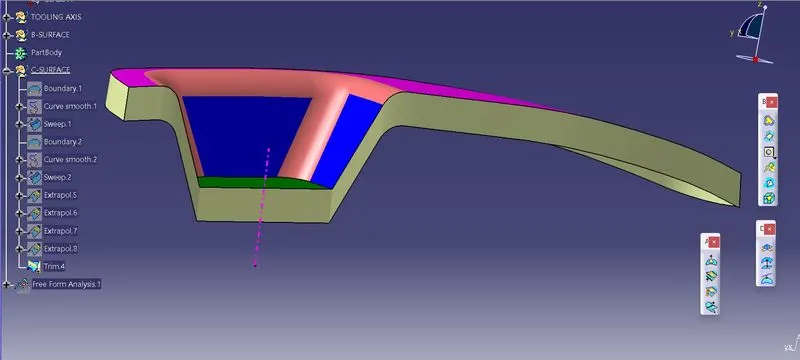
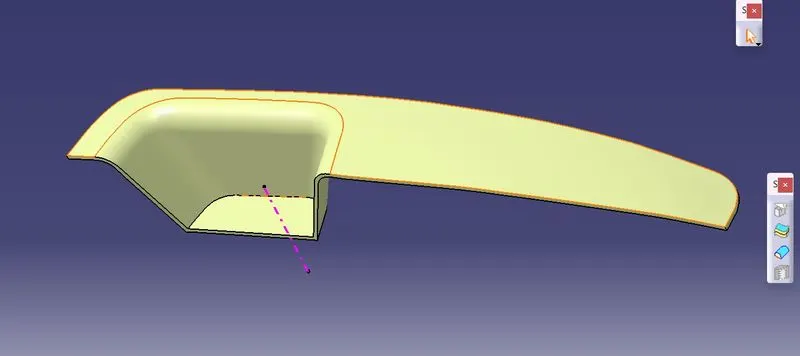
Draft Analysis of Created Switch Bezel:
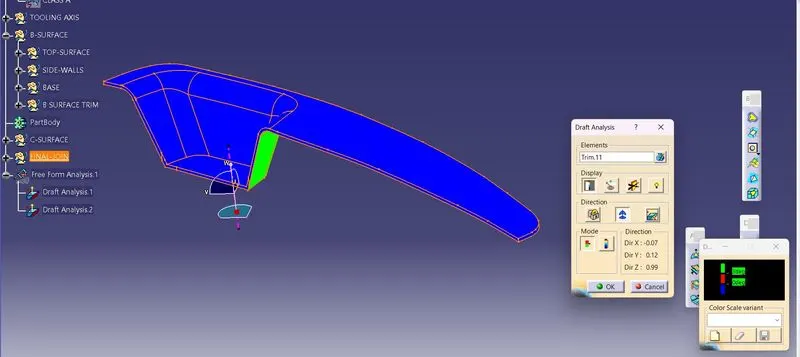
Different views of created Switch Bezel:
Front view:
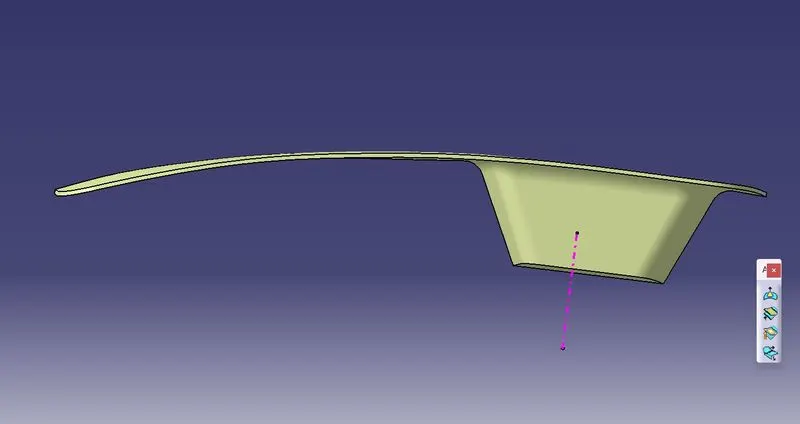
Top view:
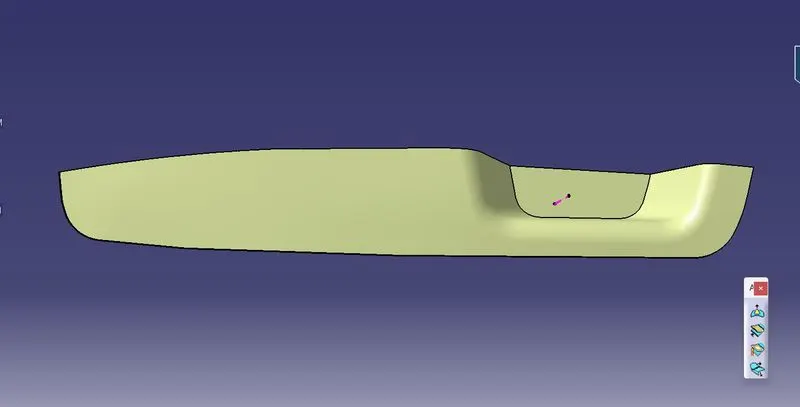
Isometric view:
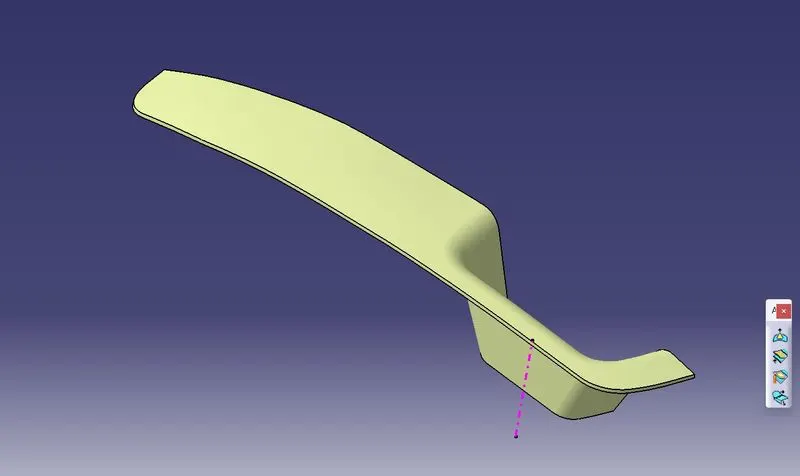
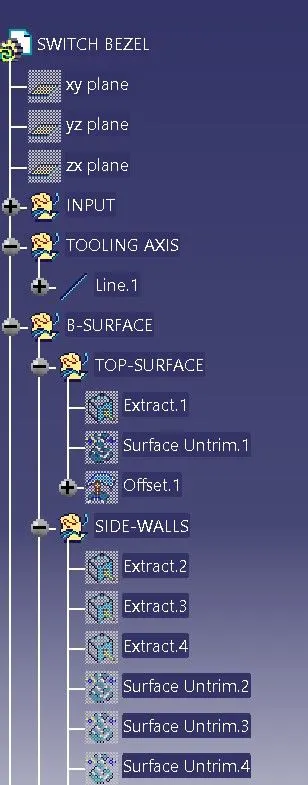
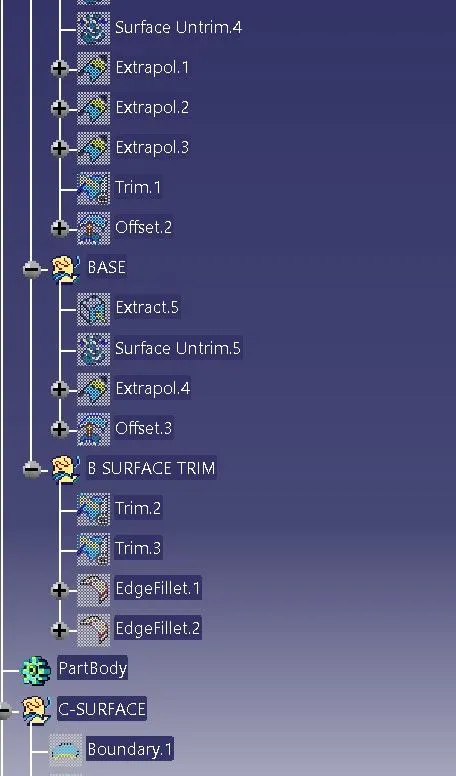
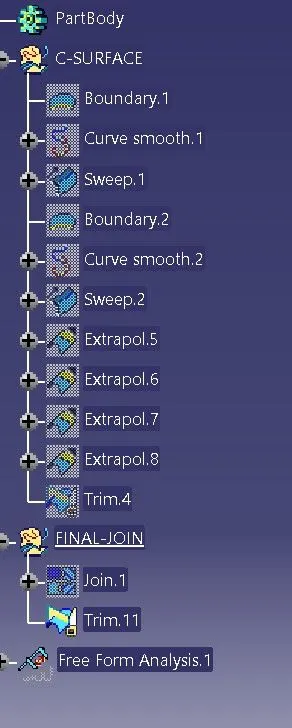
Design Tree is as follows:
Conclusion: Thus the Design of Switch Bezel with the given Class A surface and performing draft analysis for Class A and final component is completed.