Hood design-Week 2
Aim:-
To Design a Hood outer panel, inner panel and the necessary reinforcements by the given master section and design parameters.
Theory:-
Hood is a main component of front portion of s car. It is an opening body panel that covers the engine in front engine vehicle. It consists of an outer panel and inner panel. The inner panel provides the strength while the outer panel is the metal cover. It is an access panel to the engine compartment to enable maintenance of the power train, drive belts Etc.
Design considerations:-
The Human comfort factor for automobile design is first consideration . It is a method to safeguard and protect space for the user and necessary componentesthat makes up the vehicle being designed. All safety regulations are ensured during this process. Ergonomical consideration consists of Hood clearance, Hood opening angle and location of support rod or gas stay. Hood opening angle is different for different contries, it is decided by the average height of the human in that perticular country.
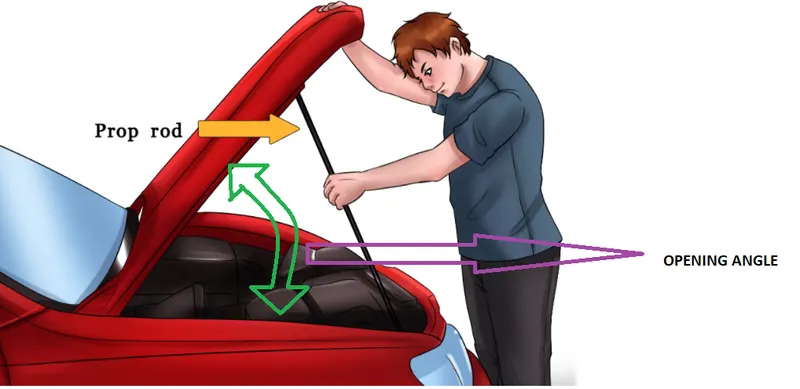
There are two types of hood stays, which supports the hood to be in opened condition at a certain angle, they are
- Support rod
- Gas stay
Support rod:-
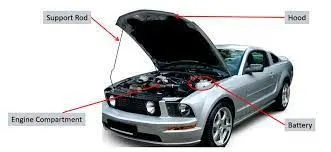
It's a simple metallic rod, which is usually made of steel or iron but the length from line connecting support rod retaining point with body side retaining point to maximum bending point should be less than 35 mm to ensure the strength of support rod. It should have sufficient clearance with other engine components to avoid ratting noise. Gourmets or provided to keep the support rod in rest condition.
Advantages:-
- Light in weight.
- available anywhere
- cheap in cost
Disadvantages:-
- It is very hot to touch when hood is opened immediately after the vehicle has been stopped.
- It will get rust early because of metalic in nature.
Gas stay:-
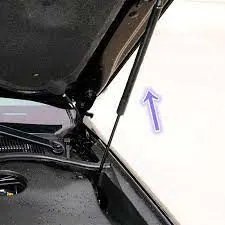
It is used for supporting the engine hood of the vehicle same like support rod but the difference is it is actuated automatically with the help of actuator which is actuated by gas.
It requires only initial force to open the hood then it automatically opens the hood at desired angle with the extension of pneumatic piston in cylinder of gas stay assembly.
Advantages:-
- No human effort is required to lift hood.
- eay to operate.
Disadvantages:-
- Heavy in weight
- cost is more
- required more mainteinance
Safety requirement:
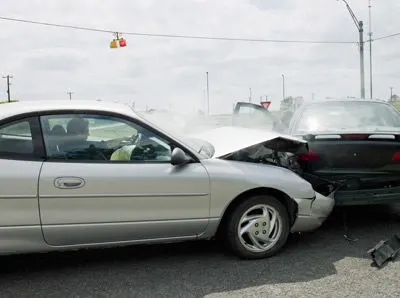
It should withstand the higher collision forces as well as it should divert the forces in outward direction so intensity of collision forces would be reduced to inner side of the car.
Pedestrian safety:
The height weight and age of the pedestrains all will play a role in safety requirements while designing a car hood. Most fatalities for the younger population are related to brain damage caused by head impact on the bannet. for older peaple additional risks include rupture of arteries in the lower limbs and pelvis from the bumper and bannet leading edges. Impact frequency and seriousness of injury has been studied for may years, resulting in rating systems and improved design.
Evaluation of pedestrain safety for a bannet must be carried out in the contextof its surrounding elements like vehicle staying, size (wrape arround distance) and under bannet clearance to other elements.Local bannet stiffeness isinfluenced by mounting point stiffness such as hinges, bump stops and latches. This is better understood by super imposing the kinematics of a dummy onto the test conditions
Wrap Arround Distance(WAP): It is a measurement of distance from the ground to the head impact zone over the outer surface of the car. It is measured longitudinally in the centre of the vehicle from the ground.
Child Head impact zone:- 1000 WAD to 1500 WAD
Adult Head impact zone:- 1500 WAD to 2100WAD
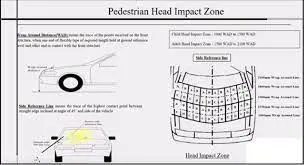
Besides functioning as an engine compartment cover, the hood of modern vehicles can also help manage the impact energy of a pedestrains head in a vehicle pedestrain impact.
for example for a given hood design, the hoods ability to obsorb impact energy through deformation can be significantly reduced when the hood and engine blocks are in close proximity. so, a large underhood clearance would be prefered for pedestrain protection.
Master section:
Master section is a prefered sketch which will be adoptable for different situations.
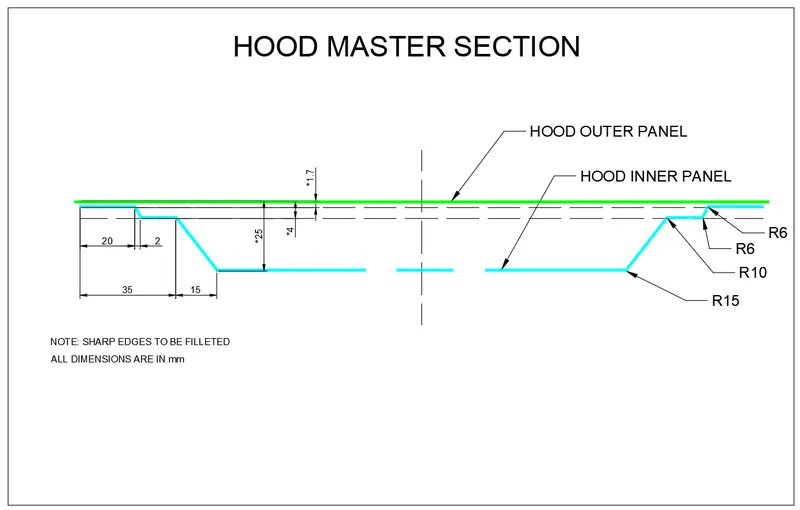
The four main parts of hood assembly are as follows
- Outer panel
- Inner panel
- Striker system
- Hinge system
Hood thickness information
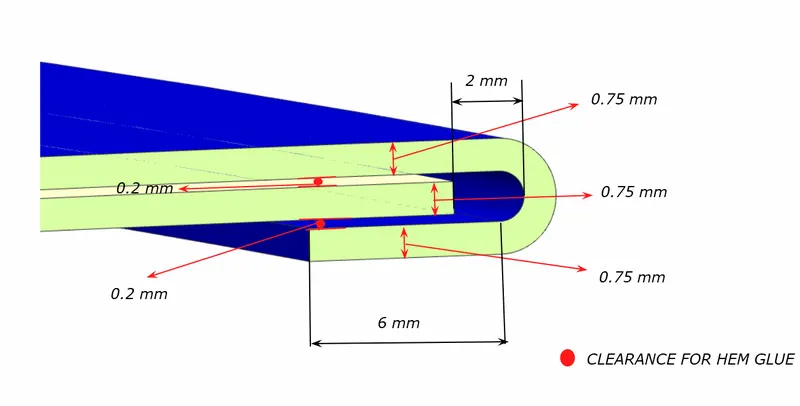
- Outer panel Thickness = 0.75mm
- Inner pannel Thickness = 0.75mm
Outer panel:-
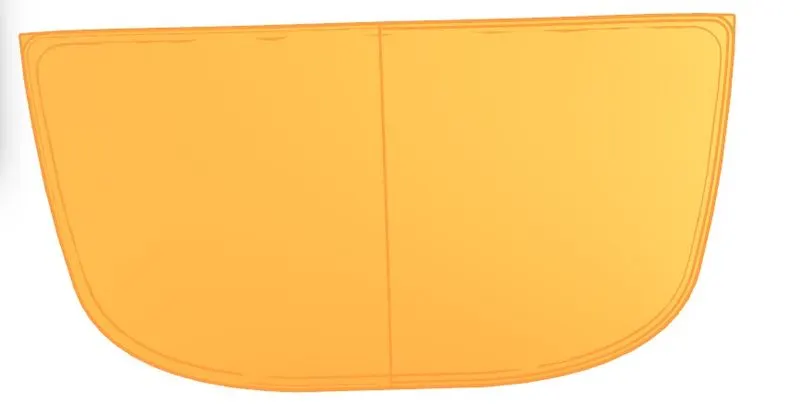
We get outer panel skin surface from style department with proper aesthetic look, gap etc. The shape of the outer panel is made aerodynamic in order to minimize the air effect. Shape of outer panel is reffered as a base to design a inner panel.
Inner panel:
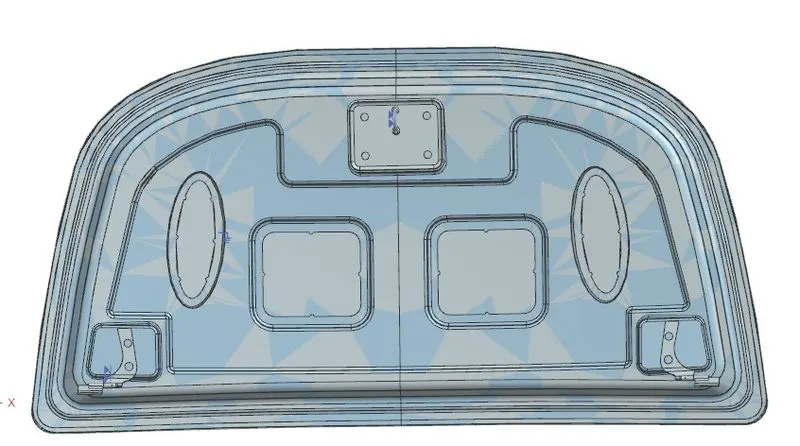
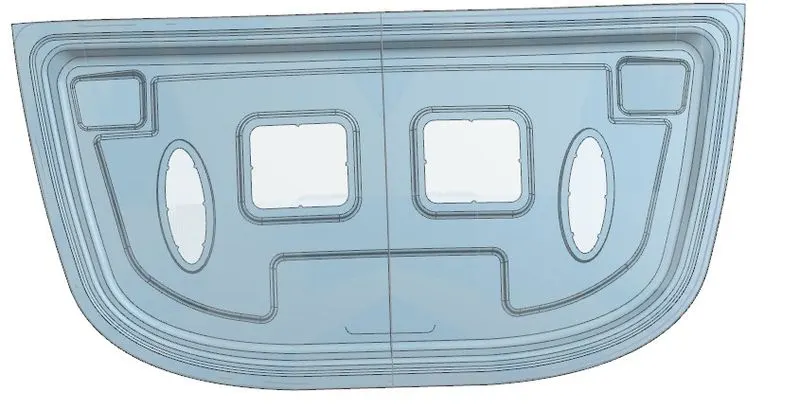
Hood inner panel is main functional part in hood design. It gives structural support and strength to the outer panel of hood. The outer and inner panels of hood are typically attached together using a hemming operation at the edges.
Stricker:-
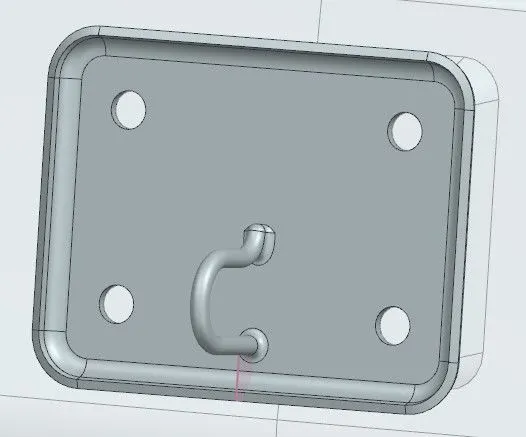
This system is the attachment of the hood assembly and vehical body the hood latch system must be able to catch the stricker of the hood upon closing an instantaneously, as well as automatically, lock. Once in the locked state, it must be remain locked and only unlock upon the operator controle.
Hinge assembly:-
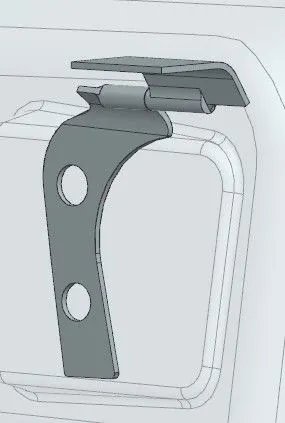
The hinges are used to guide and hold the hood when open and close. Hinge assembly consists of two parts one is connected to the hood inner panel and second is connected to the vehicle body.
Reinforcements:-
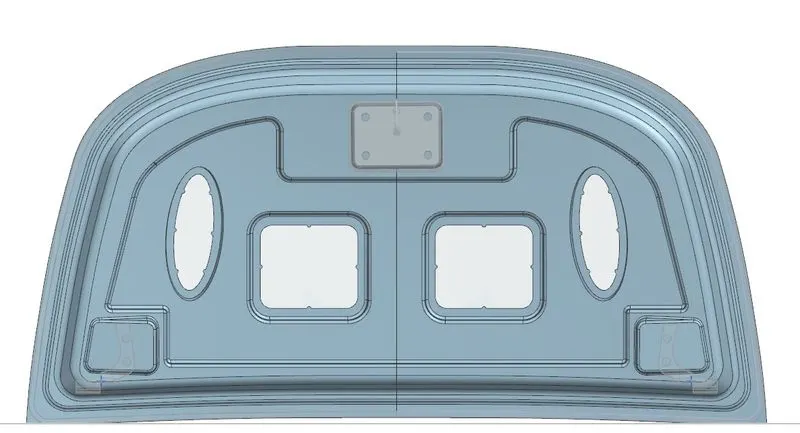
Reinforcement are provided mainly in higes and latch region. When hinge and latch assemblies are attached to inner panel, strength of that area reduces locally so we add some additional material to increase the strength of the area locally. Thickness of reinforcement material is provided according to the design requirements. in thes project, 1.5mm thickness has been given to both latch and hinge reinforcement.
Emboss:-
Embosses are provided to increase the strength of inner panel. Shape of emboss also determined the direction of collision force distribution. The shape of the embose should be designed in such a way that the collision forces should be directed towards side of the car
Mastic:-
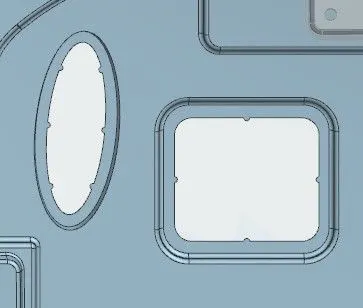
Mastics are used between the outer panel and innerpanel. Mastic sealents are the rubber like elastic compounds which connects the outer and inner panels of car hood at specified points. Mastic sealents are used in the region between inner and outer panel because other joining process like welding or revetting are not good for car asthetic design. It also helps in improving NVH(Noise, Vibrations, harness).
Manufacturing aspects:
The most important design consideration of any component is manufacturing aspect. In sheet metal, the component is manufactured by the press tools, dies etc. The main facus of manufacturing aspects is to manufacture hood assembly with minimum operation sequence and process time.
Deep drawing:-
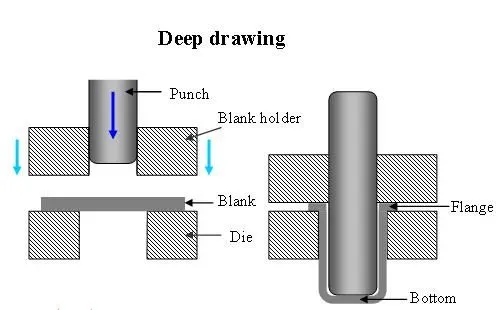
The process involves a punch with a round corners and die with large radious. The punch-die clearance is slightly larger than the thickness of the sheetmetal to be deep drawn, as rhe load applied through the punch the sheet metal is forced to flow radially and snk into the die cavity to form a cup. the process is best suitable for a complex shaped problems
In this process a flt sheet metal blank is formed into hollowed body open on one side or a hollow body with a smaller cross section. Thes process creates a seamless effect on metal allowing for the creation of a smooth curved edges, It is one of the most used process in sheet metal forming. Apart from its use in many other sectors, it is applied in the automotive industry for the manufacturing of car body parts.
Piercing:-
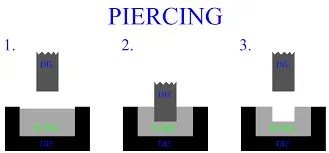
Piercing is a shearing process in which raw metal is pierced with a machining tool, resulting in the creation of a circular or other shaped hole.
Hemming:-
Hemming is a sheet metal forming process in which sheets are joined by bending it usually to 180degrees. This method is used in the final stages of production of automobile hood and doors etc
Inthis process the edge of the sheet metal over and onto itself, essentially creating an area of two layers. During this process, the edge of sheetmetal is folded over. the two newly formed layers then lie flushed with each other.

Roll Hemming:
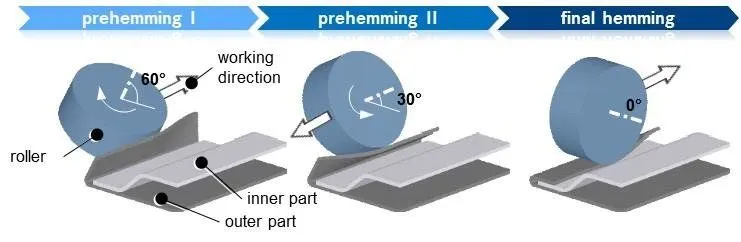
Roll hemming is carried out incrementally with a hemming roller. An industrial robot guides the hemming roller and formes the flange. Roll hemming operation can alsobe divided into several pre-hemming and final hemming process steps. Roll hemming is very flexible to use and tool costs are also usually low.
Final assembly:-
Conclusion:-
In this challenge i learned to design the hood inner panel, outer panel with the help of master sketch and the styling surface. And also learnt the assembly of hood inner and outer panel.