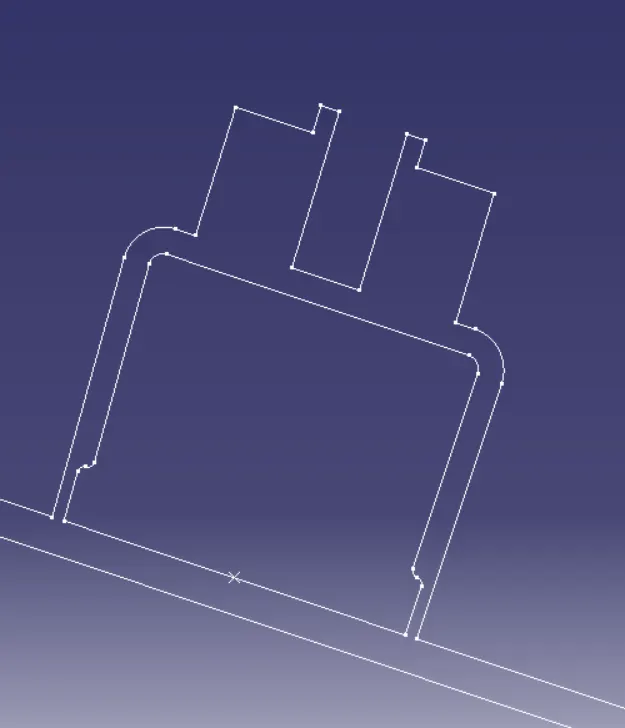
Week 9 - Attachment Feature Creation - Challenge 2
AIM-Create the boss and Dog House for the Centre console coin holder considering the design rules
THEORY-
SCREW BOSS DESIGN
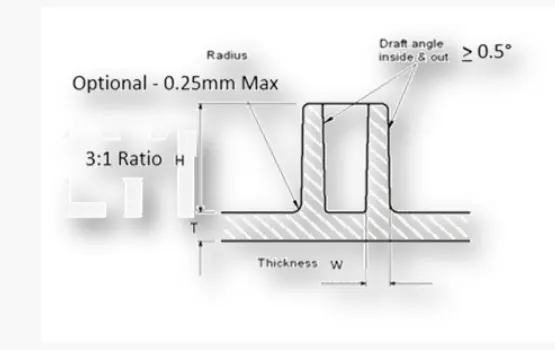
Bosses find use in many part designs as points for attachment and assembly. The most common variety consists of cylindrical projections with holes designed to receive screws, threaded inserts, or other types of fastening hardware. As a rule of thumb, the outside diameter of bosses should remain within 2.0 to 2.4 times the outside diameter of the screw or insert. To reduce stress concentration and potential breakage, bosses should have a blended radius, rather than a sharp edge, at their base. Larger radii minimize stress concentration but increase the chance of sink or voids. Specifying smaller screws or inserts often prevents overly thick bosses. If the boss-wall thickness must L exceed the recommended ratio, consider adding a recess around the base of the boss to reduce the severity of sink.Avoid bosses that merge into sidewalls because they can form thick sections that lead to sink. Instead, position the bosses away from the sidewall, and if needed, use connecting ribs for support. Consider using open boss designs for bosses near a standing wall.Normally, the boss hole should extend to the base-wall level, even if the full depth is not needed for assembly. Shallower holes can leave thick sections, resulting in sink or voids. Deeper holes reduce the base wall thickness, leading to filling problems, knit lines, or surface blemishes. The goal is to maintain a uniform thickness in the attachment wall Because of the required draft, tall bosses - those greater than five times their outside diameter - can create a filling problem at their top or a thick section at their base.
DESIGN RULES FOR SCREW BOSS
- Draft
- Thickness
- Height to Diameter Ratio
- Optional Radii
- Boss gussets
- Coring out bottom
- Planning ahead for type of ejection
General guidelines of boss
- Draft - 0.5 degrees on walls of boss
- Thickness - Typically 40%* of nominal wall at base.
- height to Diameter Ratio - 3:1
- Radii - 0.25mm maximum radii.
- Boss gussets must meet rib guidelines
- Need to plan ahead for type of ejection.
- if less than 25mm tall, draft is not required when sleeve ejection is used
- Over 25 mm tall, draft is required on outside wall only if sleeve ejection is used
- If sleeve ejection not used, draft is required on all walls
STEPS CREATE DESIGN OF BOSS
- extract the surface and create position sketch
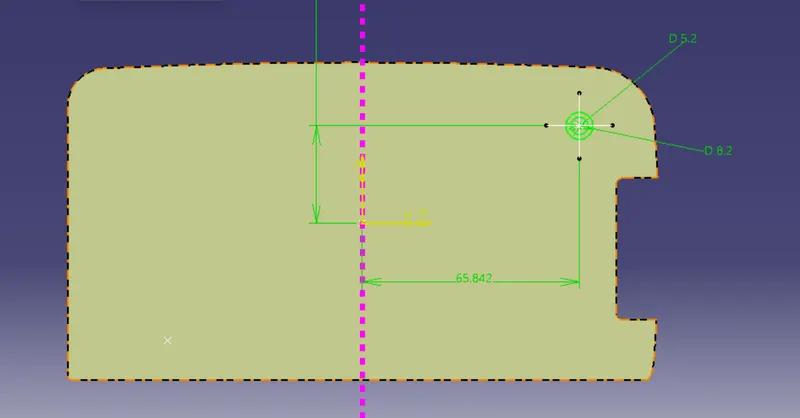
pad it sketch up to 20mm
draft the face 0.5 degree
now create the side rib its draft 0.5 degree each face
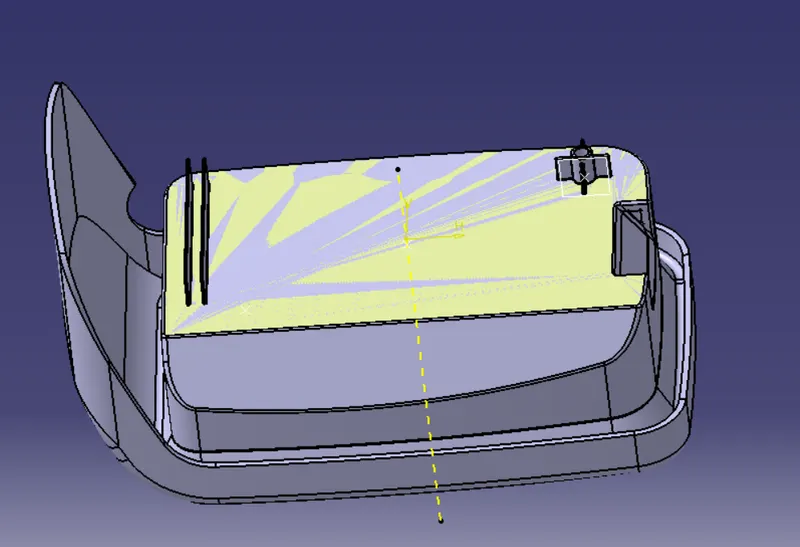
now copy of screw boss & link with paste on co-ordinate
on its plane
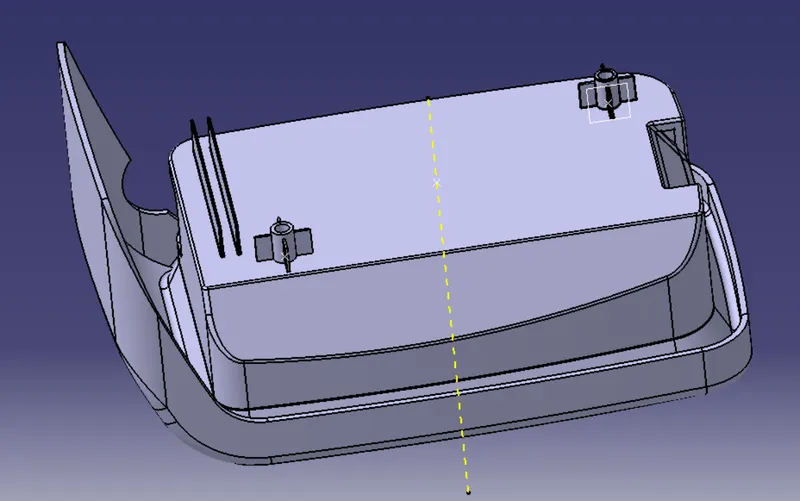
now check the draft angle of design rules
create a plane parrell to xy plane & locate the center of screw boss
generate intersect line for screw boss
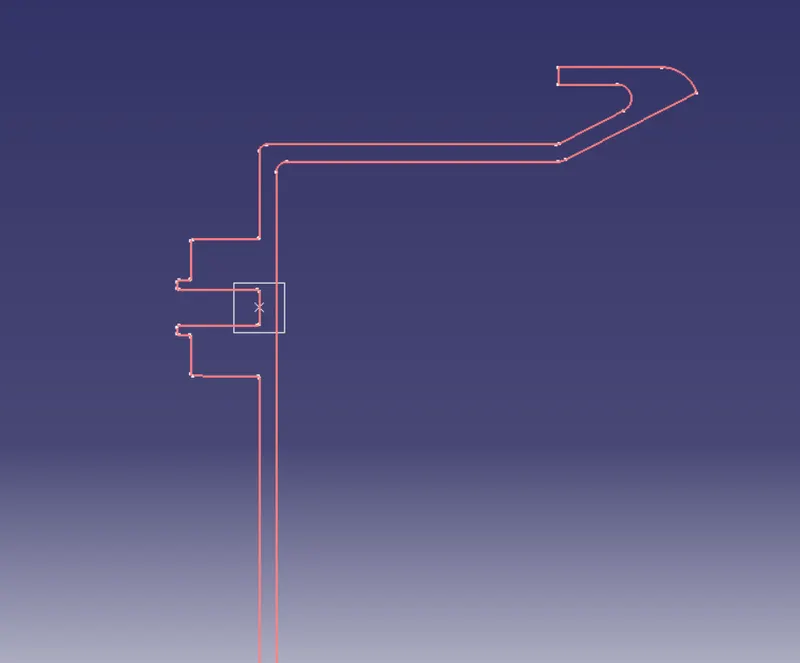
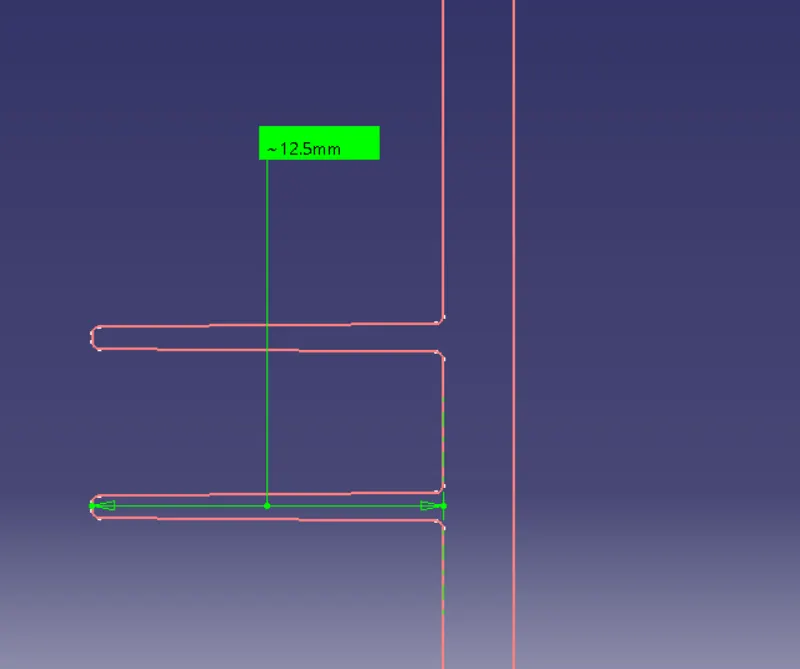
this fig show the different from rib and scre boss intersect line
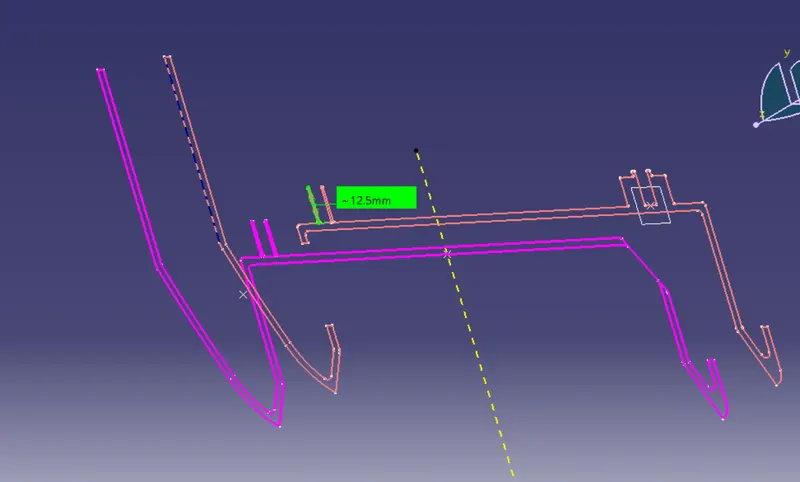
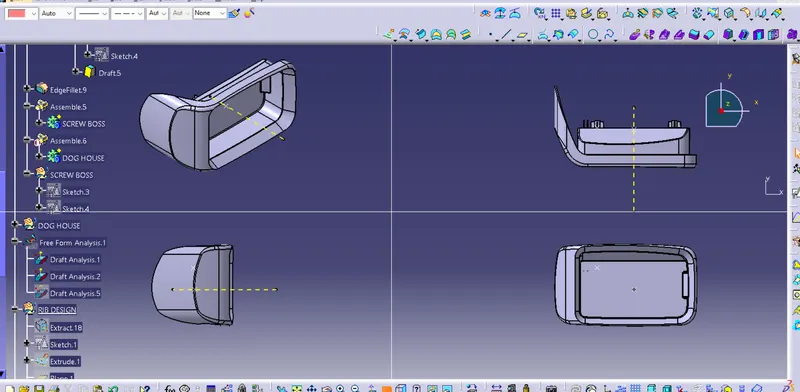
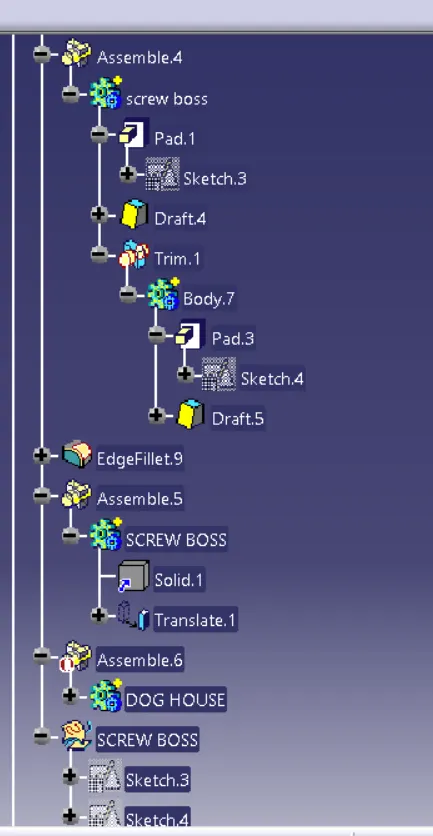
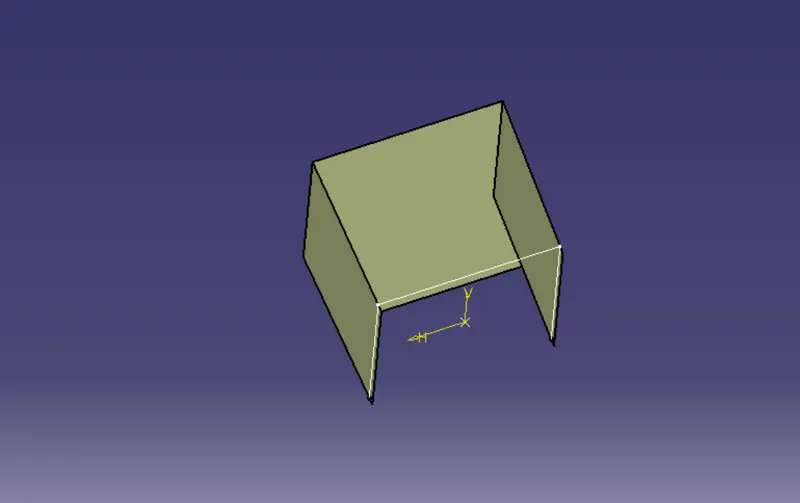
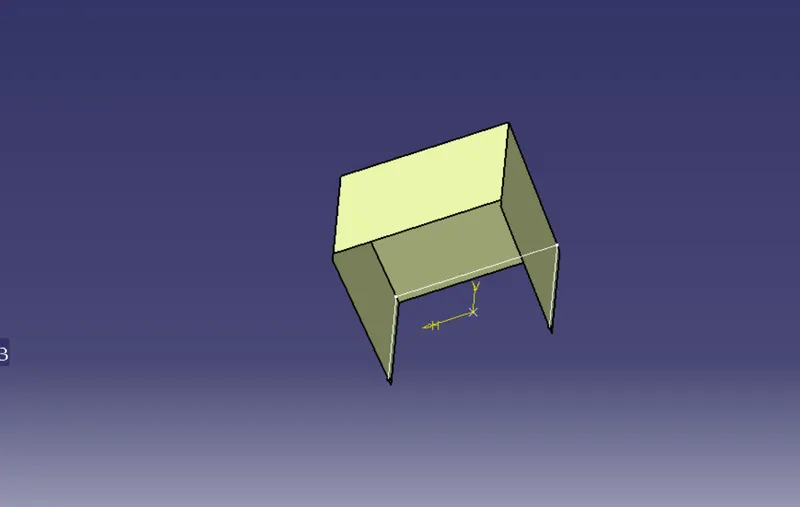
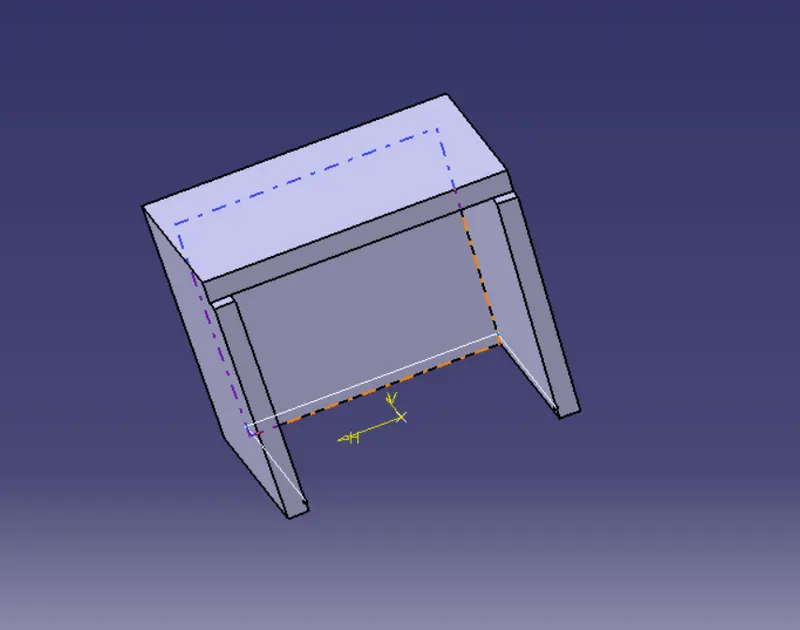
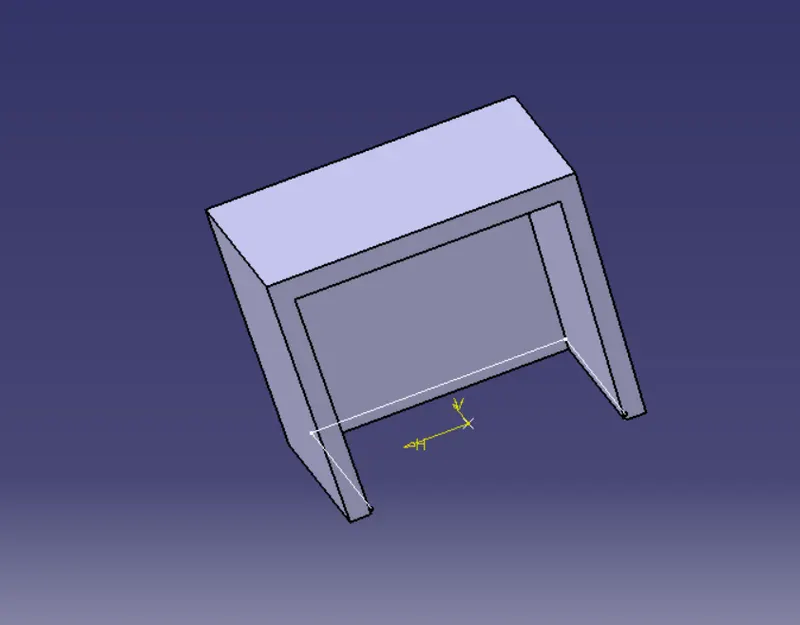
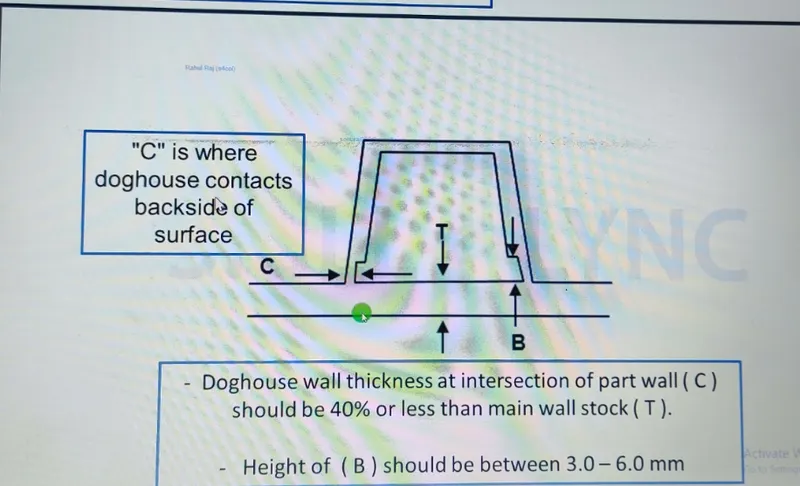
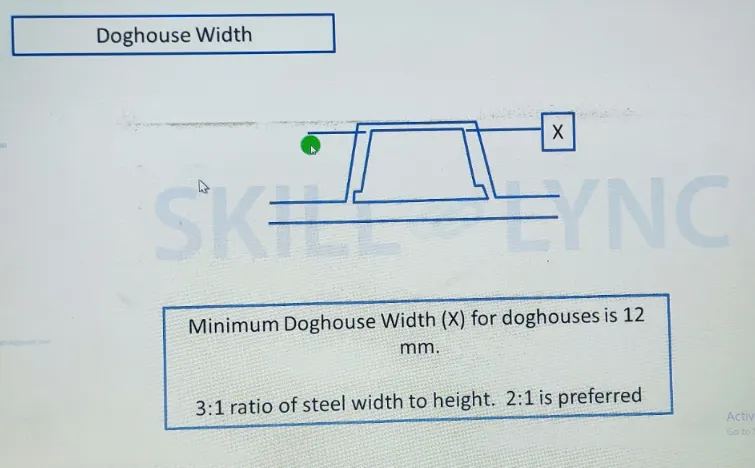
DESIGN OF DOG HOUSE
- Draft
- Doghouse Walls
- Part Surface
- Bottom of Doghouse
- Wall Thickness
- Height and Width
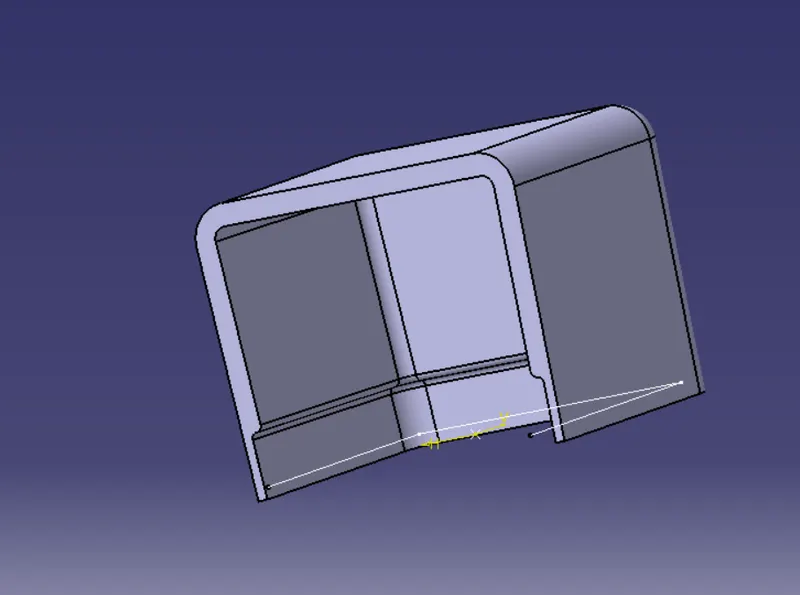
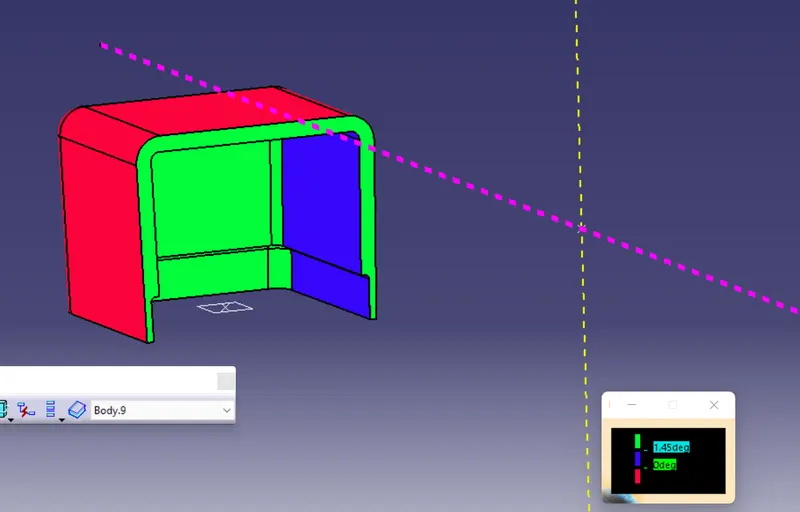
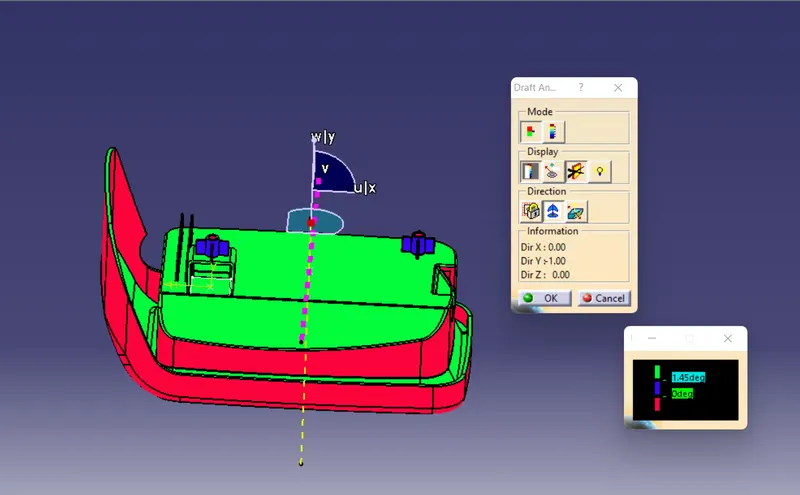
DRAFT ANALYSIS REPORT
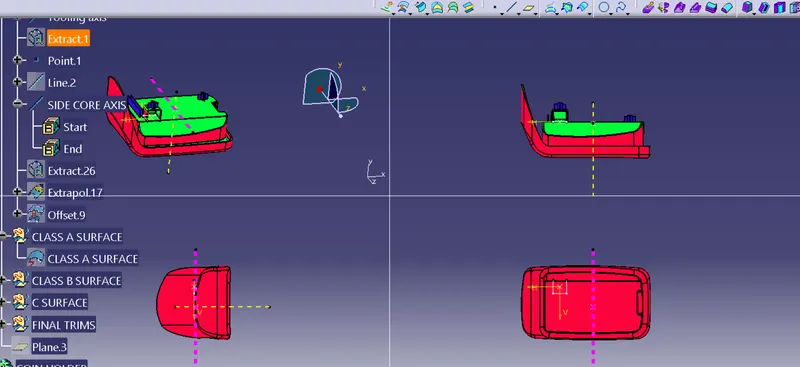
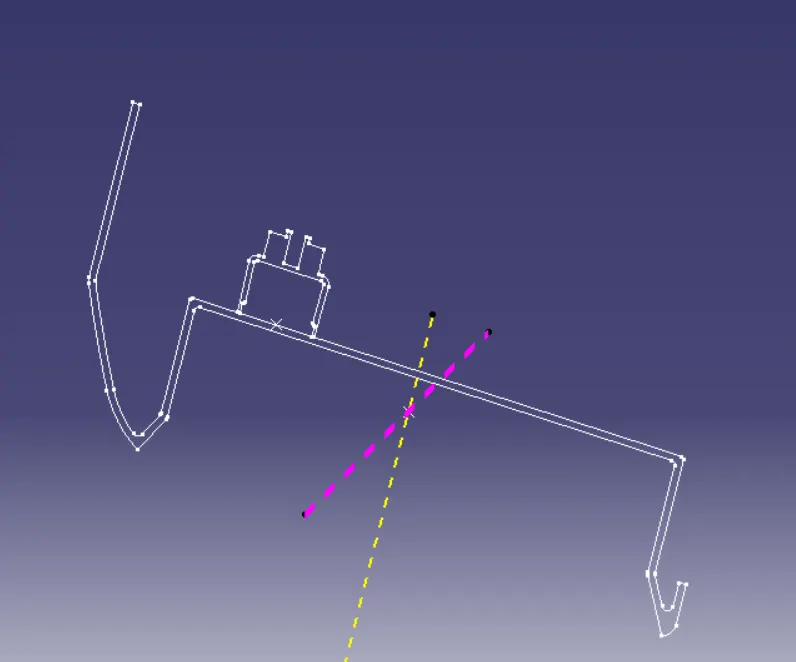
TWO TOOLING AXIS ON CHECK DRAFT ANALYSIS
IST TOOLING AXIS ALSO CREATE
2ND TOOLING AXIS IS NAME AS SIDE CORE AXIS
SIDE CORE AXIS CREATE
SELECT THE POINT ORIGIN PONT 1 AND SUPPORT AXIS ON Z AXIS
SELECT THE DRAFT ANALYSIS AND CHOOSE THE MATERIAL MODE
SELECT DIRECTION ON TOOLING AXIS & SELECT ANY FACE
CHECK DRAFT ANALYASIS ON 1.45 DEGREE