Week 9 - Attachment Feature Creation - Challenge 2
Dog house design for the Door Trim:
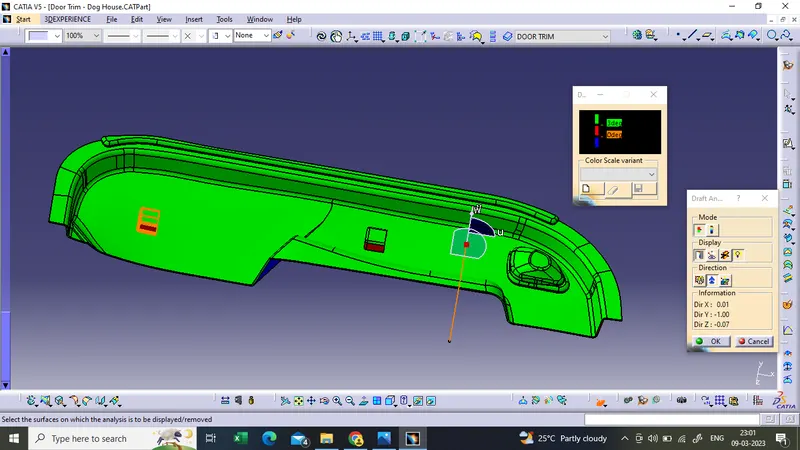
Aim: Create the Dog House for the Door Trim considering the design rules and perform the draft analysis for class A and create the final close body component and perform the draft analysis.
Objective:
- Create the Tooling axis
- Design the class-B and class-C surfaces and join them.
- Use the Close Surface feature to make a solid body from the surface.
- Design the required dog house and analysis them.
- Perform the Draft analysis for the final component.
GIVEN CLASS A SURFACE
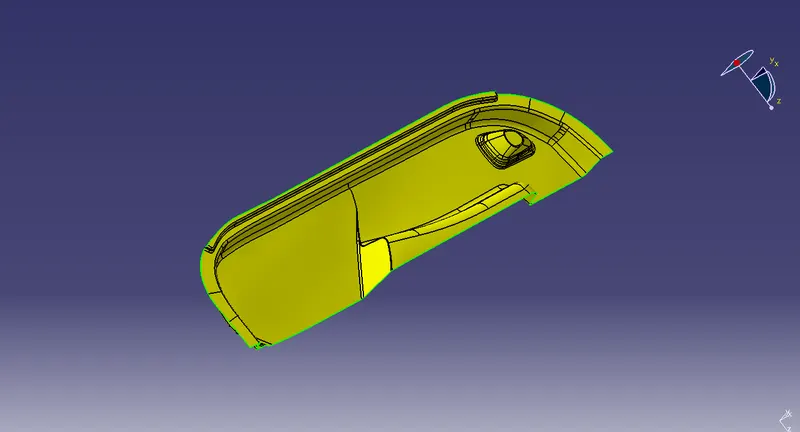
Tooling Axis :
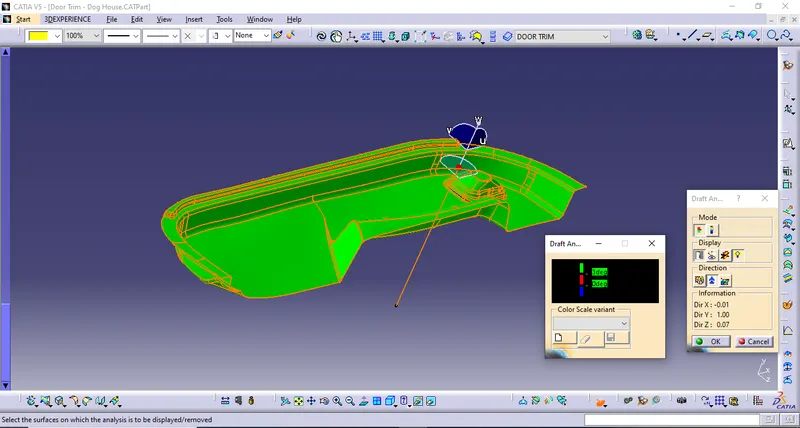
Class-A surface is first analyzed to create the tooling axis. where the molds pull apart in injection molding. Tooling direction is essential for plastic product design as it decides the direction for mold separation.
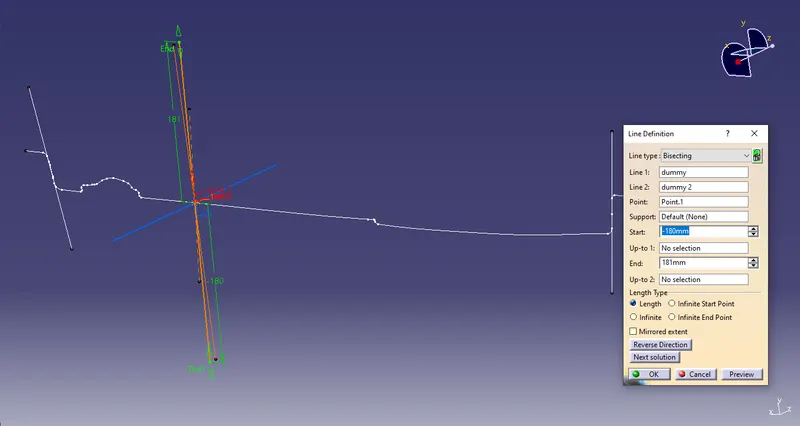
To create the tooling axis first we have to check the best suitable direction for tooling by using the compass. the y direction is suitable for creating the tooling axis because in the y direction most of the surfaces are clearing while performing draft analysis. Generally tooling axis is created using bisecting line method
- Intersection of the class A surface is created in yz plane as well as in xy plane
INTERSECTION IN YZ PLANE
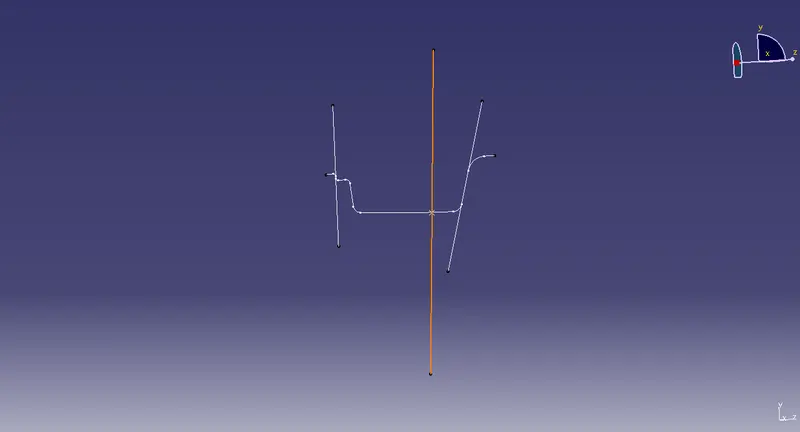
- Lines were created in both the ends of the intersection using the connecting dots
- A bisecting line was created
- Name it as dummy Tooling axis
INTERSECTION IN XY PLANE
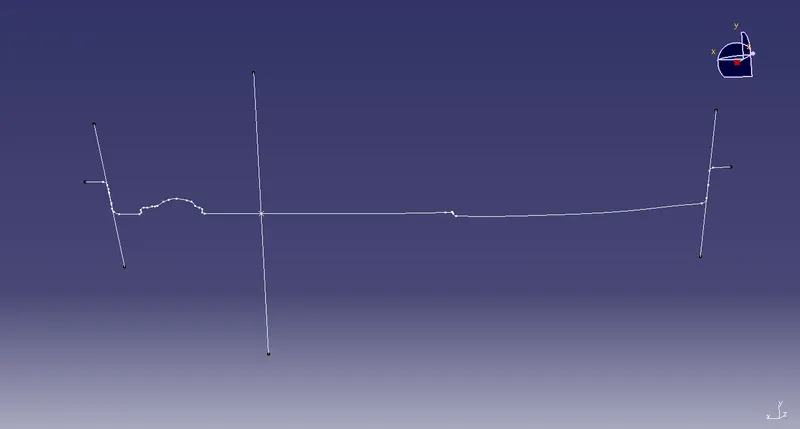
- Lines were created in both the ends of the intersection using the connecting dots
- A bisecting line was created
- Now we got two lines at the same point but with a slight variation in degree
- Now using this two lines create a bisecting line
- That will be your main tooling axis and its clears the 3deg draft
Draft Analysis of class A
CREATION OF CLASS B SURFACE:
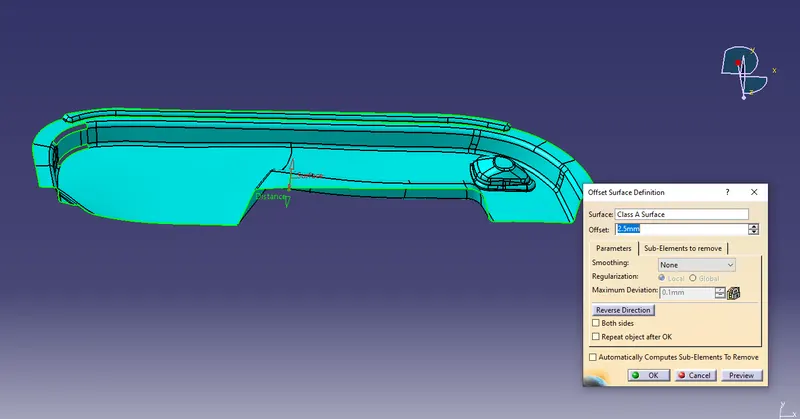
In this component Creation of the class B surface first, we have to offset the entire model by 2.5mm outward some of the surfaces give offset error and ask for offset without these subelements click okay and work on the incomplete surfaces by using the multi-section surface command, sweep and different commands used to complete the class B surface.
Incomplete surface gaps in the offset. so we work on the surfaces and ensure that there is no gap in the class B surfaces.
CREATION OF CLASS C SURFACE:
We first extract the edges from the Class A surface with the help of the multi extract or boundary command which we create the path for a sweep for class C
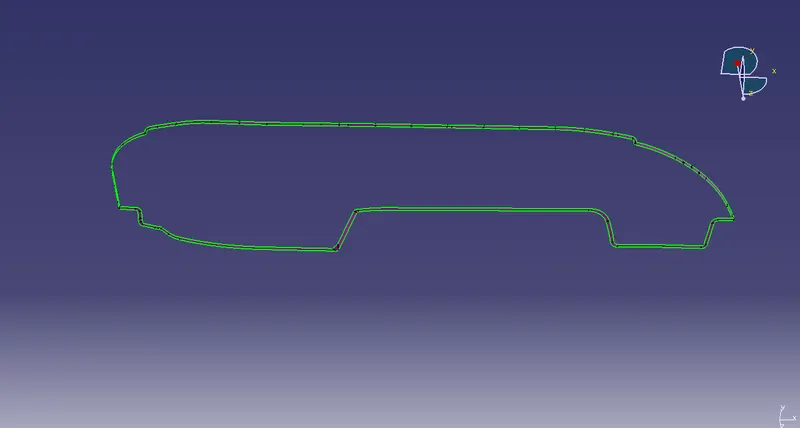
Final produt is formed by joining class A with class C and then joining them with class B
Final product
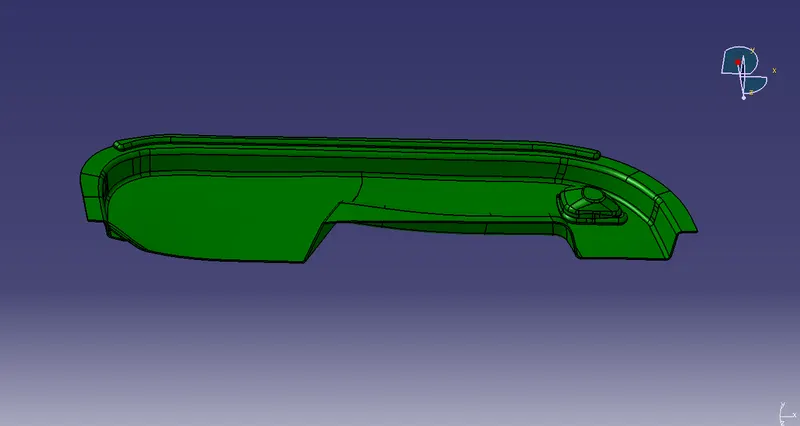
Then We go to the part design workbench and use to closed surface tool to create a solid body.
hence, we created our final Solid component.
DOG HOUSE DESIGN:
Dog house: Dog house is an engineering feature used in the plastic trim design. Dog houses are used as supporting features. Sometimes other engineering features like snaps; locators, etc. are mounded on them to increase their strength. Dog house and other engineering Features are built on B-surface.
Design rules for Dog house creation
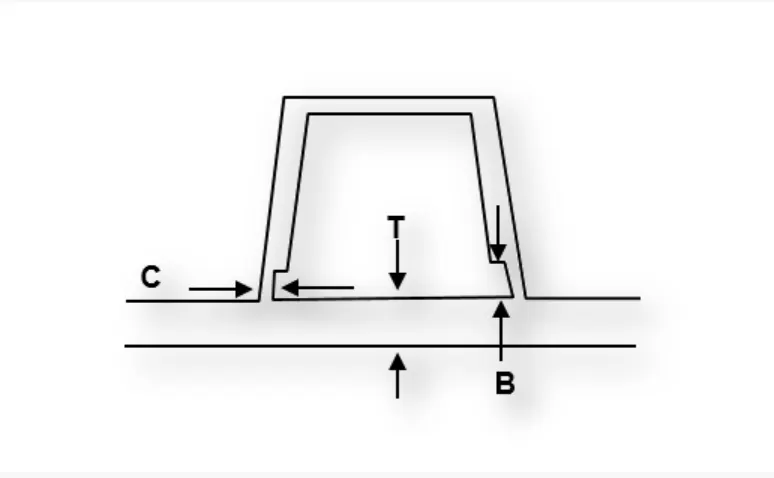
C" is where the doghouse contacts the backside of the surface
Doghouse wall thickness at the intersection of the part wall ( C ) should be 40% or less than the main wall stock ( T ).
The height of ( B ) should be between 3.0 – 6.0 mm
Dog house design procedure by considering the design rules:
Extract the surface on which we want to create the dog house and create a sketch on a plane
Dog House Sketch
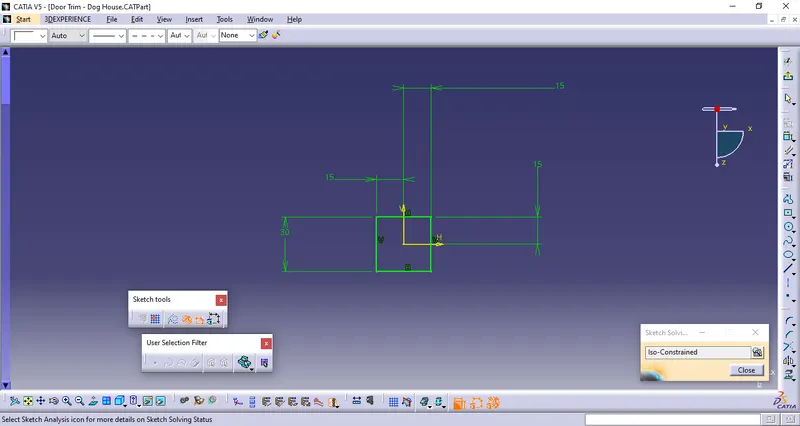
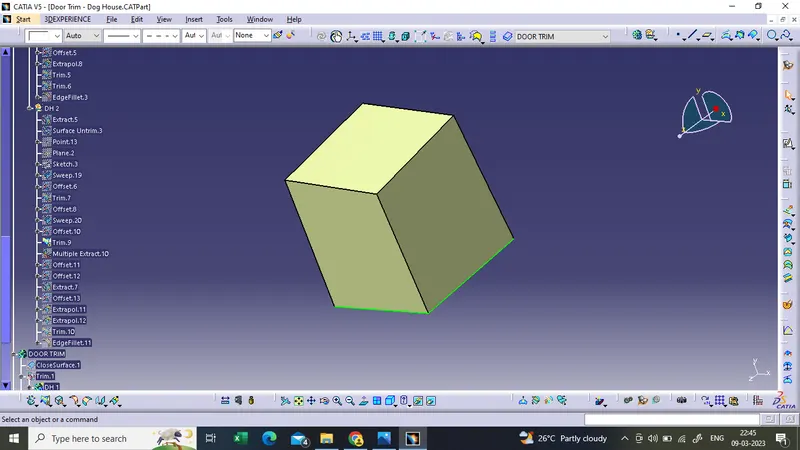
Now using sweep command create a surface at angle of 1.5deg with reference to the Tooling axis
Create a closed surface using offset extrapolation and trim operation
Side core tooling axis creation:
side core axis is created in the x direction on the same point as the main tooling direction created
Give draft on the inner walls using the side core axis
Dog House
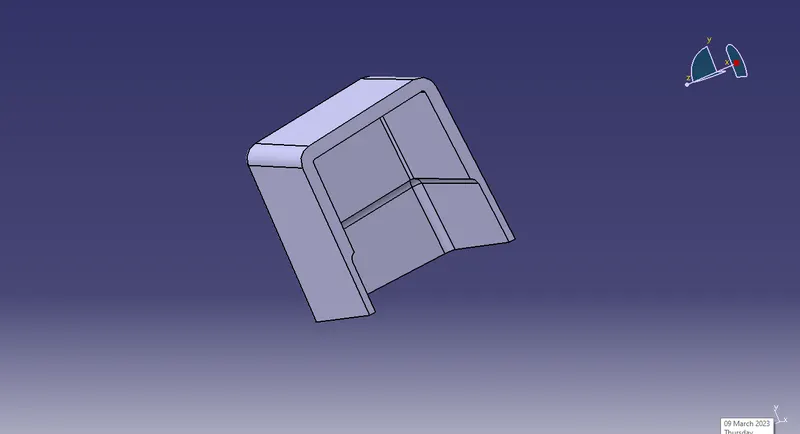
Performing the draft analysis for Dog House it clears 1.45deg on the outer and 045deg in the inner
The dog house was successfully created
using the unio trim option join the base closed surface with the dog house
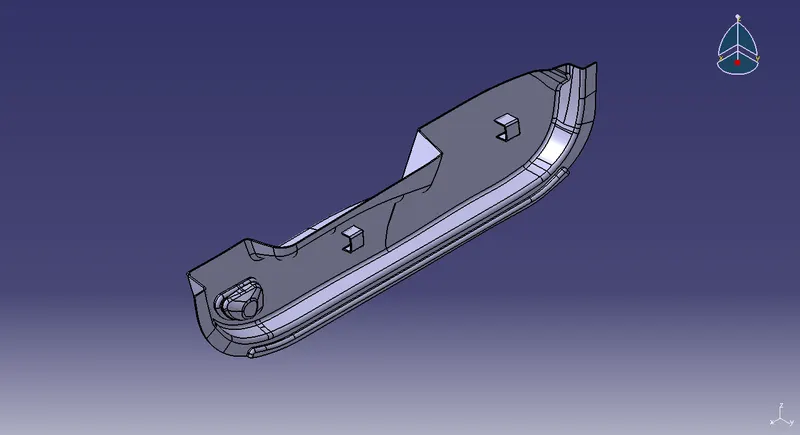
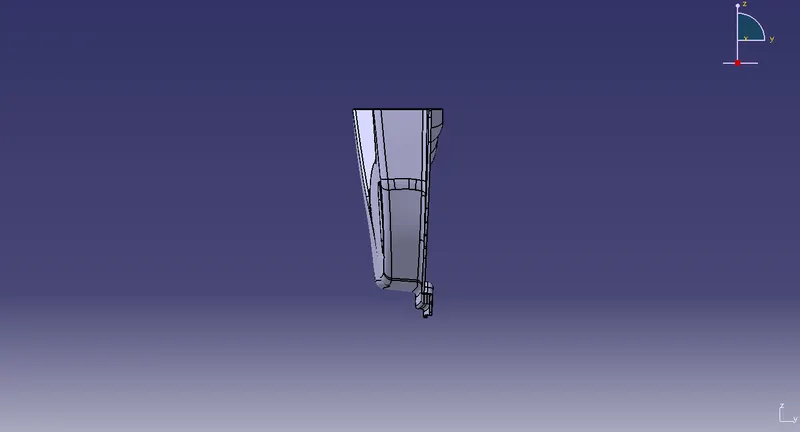
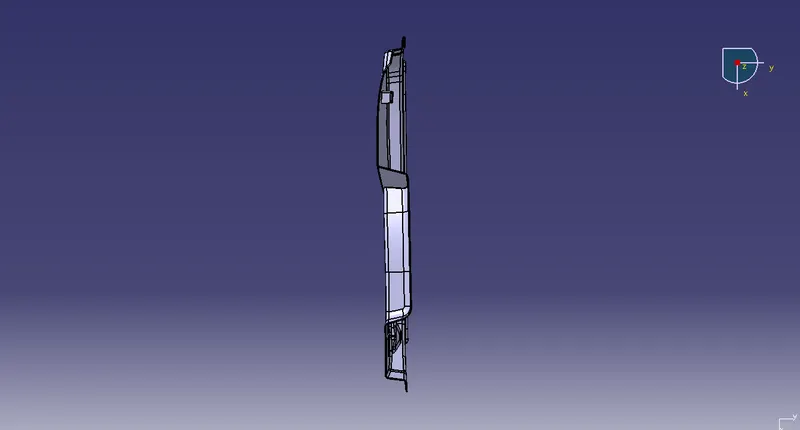
Final Product
Isometric view
Front view
Top view
Draft analysis of final product