Benchmarking
BENCHMARKING
Benchmarking is a process of measuring the performance of a company’s products, services, or processes against those of another business considered to be the best in the industry, aka “best in class.” The point of benchmarking is to identify internal opportunities for improvement. By studying companies with superior performance, breaking down what makes such superior performance possible, and then comparing those processes to how your business operates, you can implement changes that will yield significant improvements.
That might mean tweaking a product’s features to more closely match a competitor’s offering, or changing the scope of services you offer, or installing a new customer relationship management (CRM) system to enable more personalized communications with customers.
There are two basic kinds of improvement opportunities: continuous and dramatic. Continuous improvement is incremental, involving only small adjustments to reap sizeable advances. Dramatic improvement can only come about through reengineering the whole internal work process.
STEP BY STEP BENCHMARKING
Benchmarking is a simple, but detailed, five-step process:
- Choose a product, service, or internal department to benchmark
- Determine which best-in-class companies you should benchmark against – which organizations you’ll compare your business to
- Gather information on their internal performance, or metrics
- Compare the data from both organizations to identify gaps in your company’s performance
- Adopt the processes and policies in place within the best-in-class performers
Benchmarking will point out what changes will make the most difference, but it’s up to you to actually put them in place.
1. Planning
Prior to engaging in benchmarking, it is imperative that corporate stakeholders identify the activities that need to be benchmarked.
For instance, the processes that merit such consideration would generally be core activities that have the potential to give the business in question a competitive edge.
Such processes would generally command a high cost, volume or value. For the optimal results of benchmarking to be reaped, the inputs and outputs need to be redefined; the activities chosen should be measurable and thereby easily comparable, and thus the benchmarking metrics needs to be arrived at.
Prior to engaging in the benchmarking process, the total process flow needs to be given due consideration. For instance, improving one core competency at the detriment to another proves to be of little use.
Therefore, many choose to document such processes in detail (a process flow chart is deemed to be ideal for this purpose), so that omissions and errors are minimized; thus enabling the company to obtain a clearer idea of its strategic goals, its primary business processes, customer expectations and critical success factors.
An honest appraisal of the company's strengths, weaknesses and problem areas would prove to be of immense use when fine-tuning such a process.
The next step in the planning process would be for the company to choose an appropriate benchmark against which their performance can be measured.
The benchmark can be a single entity or a collective group of companies, which operate at optimal efficiency.
As stated before, if such a company operates in a similar environment or if it adopts a comparable strategic approach to reach their goals, its relevance would, indeed, be greater.
Measures and practices used in such companies should be identified, so that business process alternatives can be examined.
Also, it is always prudent for a company to ascertain its objectives, prior to commencement of the benchmarking process.
The methodology adopted and the way in which output is documented should be given due consideration too. On such instances, a capable team should be found in order to carry out the benchmarking process, with a leader or leaders being duly appointed, so as to ensure the smooth, timely implementation of the project.
2. Collection of Information
Information can be broadly classified under the sub texts of primary data and secondary data.
To clarify further, here, primary data refers to collection of data directly from the benchmarked company/companies itself, while secondary data refers to information garnered from the press, publications or websites.
Exploratory research, market research, quantitative research, informal conversations, interviews and questionnaires, are still, some of the most popular methods of collecting information.
When engaging in primary research, the company that is due to undertake the benchmarking process needs to redefine its data collection methodology.
Drafting a questionnaire or a standardized interview format, carrying out primary research via the telephone, e-mail or in face-to-face interviews, making on-site observations, and documenting such data in a systematic manner is vital, if the benchmarking process is to be a success.
3. Analysis of Data
Once sufficient data is collected, the proper analysis of such information is of foremost importance.
Data analysis, data presentation (preferably in graphical format, for easy reference), results projection, classifying the performance gaps in processes, and identifying the root cause that leads to the creation of such gaps (commonly referred to as enablers), need to be then carried out.
4. Implementation
This is the stage in the benchmarking process where it becomes mandatory to walk the talk. This generally means that far-reaching changes need to be made, so that the performance gap between the ideal and the actual is narrowed and eliminated wherever possible.
A formal action plan that promotes change should ideally be formulated keeping the organization's culture in mind, so that the resistance that usually accompanies change is minimized.
Ensuring that the management and staff are fully committed to the process and that sufficient resources are in place to meet facilitate the necessary improvements would be critical in making the benchmarking process, a success.
5. Monitoring
As with most projects, in order to reap the maximum benefits of the benchmarking process, a systematic evaluation should be carried out on a regular basis.
Assimilating the required information, evaluating the progress made, re-iterating the impact of the changes and making any necessary adjustments, are all part of the monitoring process.
Conclusion
As is clearly apparent, benchmarking can add value to the organization's workflow and structure by identifying areas for improvement and rectification.
It is indeed invaluable in an organization's quest for continuous improvement.
BENCHMARKING OF 5 SEATER CARS
Cars used for Benchmarking
- HYUNDAI I20
- SUZUKI CIAZ
- HONDA AMAZE
- TOYOTA GLANZA
HYUNDAI i20
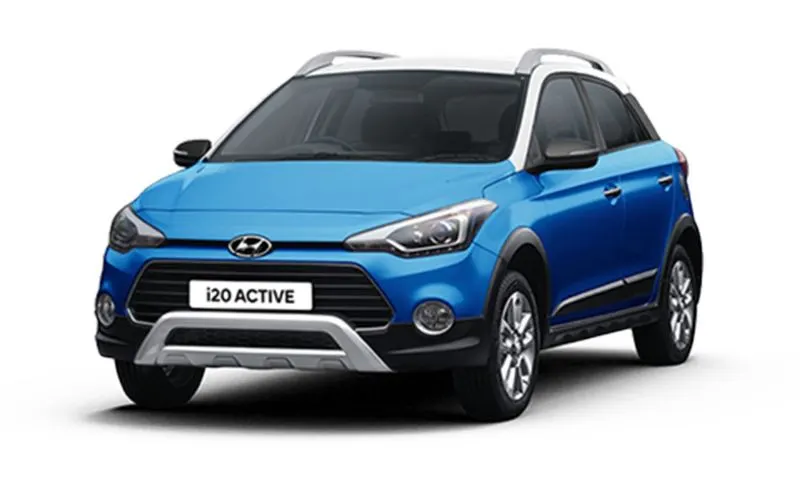
Hyundai i20 is a supermini Hatchback. The car was first launched in 2008 with a 1.2 liter petrol engine and a 1.4 liter Diesel engine both the motors were adequatly peppy and efficient as well
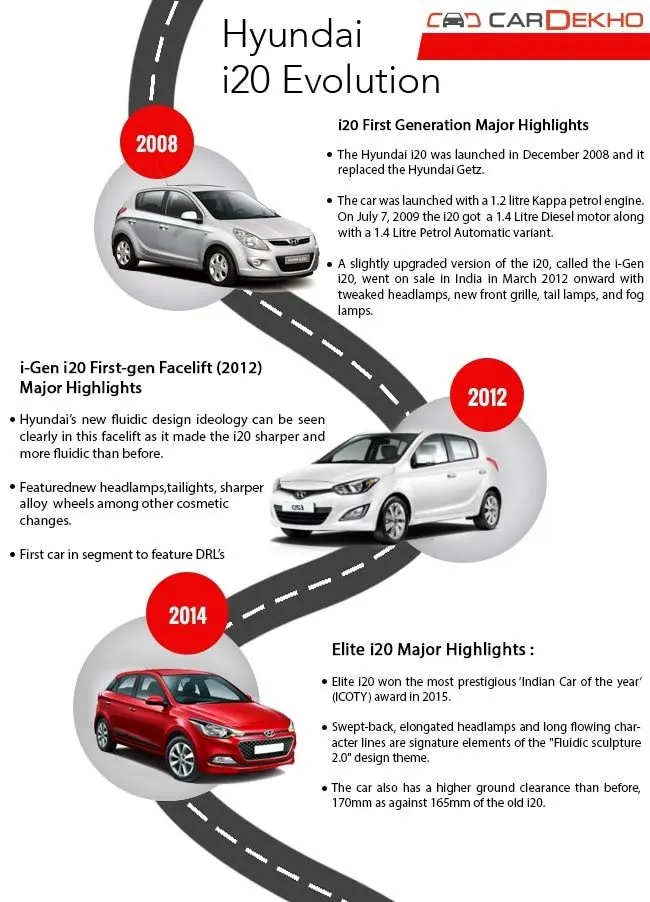
The above shown image potrays the evolution of Hyudai i20
Key Specification of Hyundai i20
ARAI Mileage 20.28 kmpl
City mileage 12.6 kmpl
Fuel Type Petrol
Engine Displacement 998
No:of cylinder 3
Max power 118.36bhp@6000rpm
Max torque 171.62nm@1500-4000rpm
Transmission type Automatic
Fuel capacity 37.0
Body Type Hatchback
Key Features
Some of the key features of Hyundai i20 are power steering,power windows front,Anti lock breaking system,Air conditioner,Driving Airbag,Passanger airbag,Automatic climate control,Fog lights front,Alloy wheels
Pro's:
- Good looking
- Spacious and features loaded cabin
Con's:
- Material build inside the cabin
- Expensive in Hatchback segment
SUZUKI CIAZ
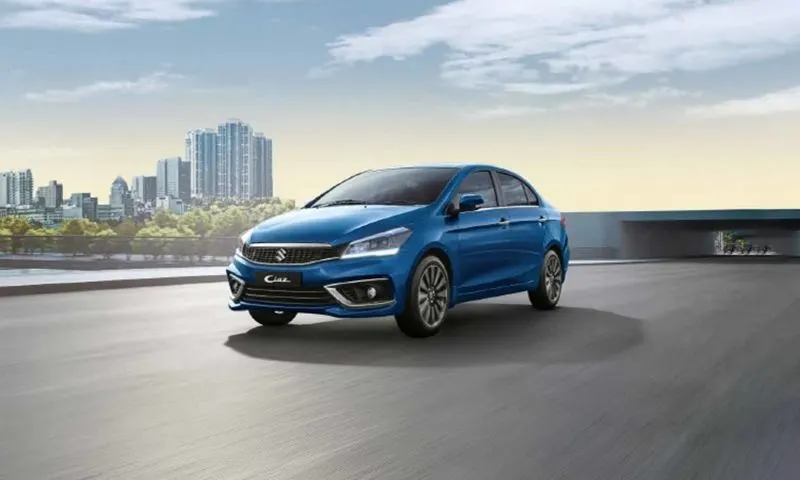
The suzuki ciaz is a subcompat sedan produced by suzuki since 2014.It is developed to replace the suzuki SX4 sedan.The Ciaz has been rebagged and marketed by TOYOTA as TOYOTA BELTA since 2021 for certain middle eastern market
The "Ciaz" name stands for 'Comfort, Intelligence, Attitude and Zeal'
KEY SPECIFICATION OF SUZUKI CIAZ
ARAI Mileage 24.28 kmpl
Fuel Type Petrol
Engine Displacement 1462
No:of cylinder 4
Max power 103.25bhp@6000rpm
Max torque 138nm@4400rpm
Transmission type Automatic
Fuel capacity 43.0
Body Type Sedan
Pro's:
- Excellent mileage
- vast service network
- Good value for money
Con's:
- Ride Quality
- Lacks emotio
- Slow shifting 4-speed autobox
HONDA AMAZE

The Honda Amaze is a 4 door Subcompact sedan produced by Honda since 2013. Slotted below the city sedan it is the smallest Honda sedan model as of 2022 with all generation measured less than 4m in lenght. It is mainly marketed in India, where sub-4-meter cars are given a lower excise duty compared to longer vehicle
KEY SPECIFICATION OF HONDA AMAZE
ARAI Mileage 24.07 kmpl
Fuel Type Diesel
Engine Displacement 1498cc
No:of cylinder 4
Max power 118.36bhp@6000rpm
Max torque 160nm@1750rpm
Transmission type Automatic
Fuel capacity 35
Body Type Sedan
Pro's:
- Comfortable ride for all the surface
- Diesel-CVT is smooth,efficient and well suited for the city
- Comfortable seat front and rear,no issue seating tall passanger behind each other
Con's:
- Cabin noise
- very poor NVH levels in diesel variant
- The cost of servicing is high
TOYOTA GLANGA
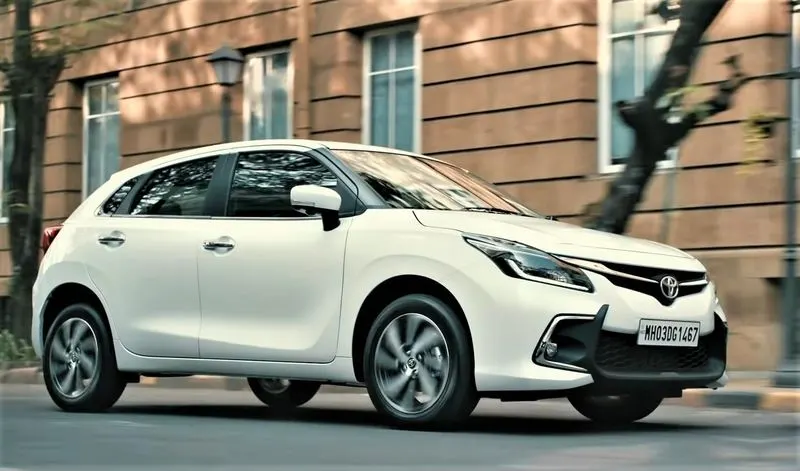
Toyota Glanza is a subcompact car with a hatchback body style which is marketed by TOYOTA in india. The original manufacturer is SUZUKI .They launched SUZUKI BALENO in 2015
ARAI Mileage 22.94 kmpl
Fuel Type Petrol
Engine Displacement 1197
No:of cylinder 4
Max power 88.50bhp@6000rpm
Max torque 113nm@4400rpm
Transmission type Automatic
Fuel capacity 37.0
Body Type Hatchback
Pro's:
- The cabin space is good with enough legroom
- The performance of the model is good when compared to Renault triber
- Also has good ground clearence
Con's:
- Poor Boot space
- Not tested by global NCAP gives no star for saftey
- There no manual override in automatic transmission system
Final Verdit:
From the above study made and comparing the 4 vehicle i came to a conlusion as MR .D.S. Pughazhyendhii was a family man who needs a 5 seater car for daily commute as well as for a long drive once in a while , I would suggest him to By SUZUKI CIAZ which is a sedan sutiable for family and its engine performance is quite impressive services are easy to avail SUZUKI CIAZ is a best option for him which falls under his budget.
https://in.docworkspace.com/d/sICrt_Ikk0KjulgY