Week 8 - Universal Joint
Aim:
The objective of this project is to compare the stress and total deformation results for structural steel, stainless steel and titanium alloy.
Model-setup:
A CAD model of a universal joint was loaded into the transient structural workbench. The model has 5 parts. The spring part is our area of interest.
Connections:
Since our area of interest is spring contacts are not defined. Joints are defined for all the contacts between balls and components as shown in image 1.
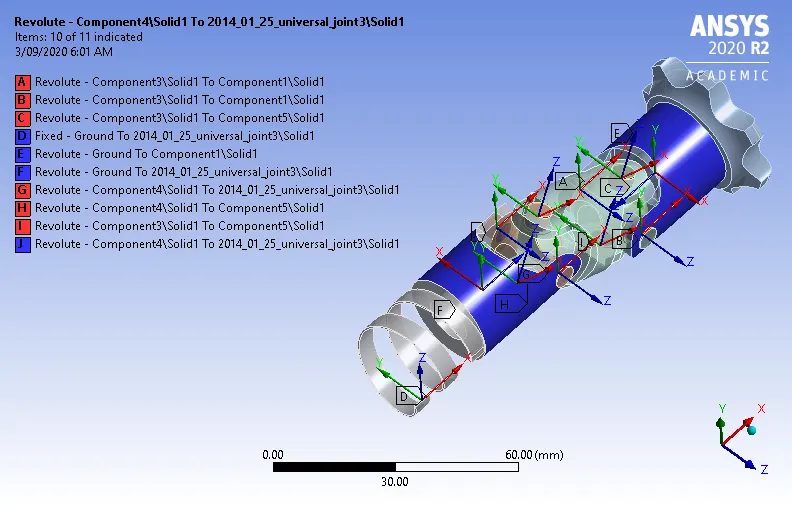
Image 1: Joint definitions
Mesh:
A mesh size of 3mm with adaptive meshing off and low smoothing was used the details are given in image 2.
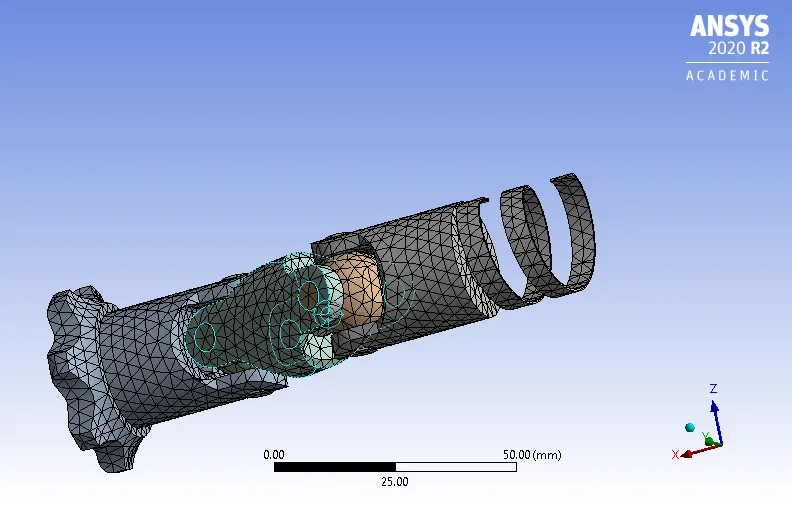
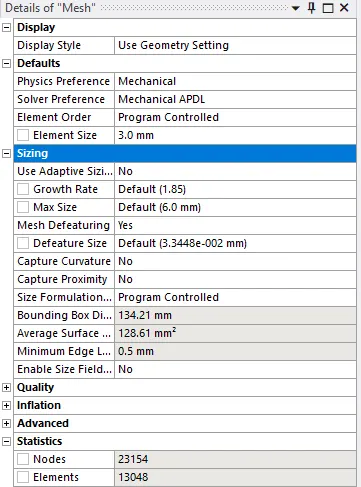
Image 2: Mesh Details
Analysis settings:
The analysis was set for 5steps and the details of analysis settings are given in image 3.
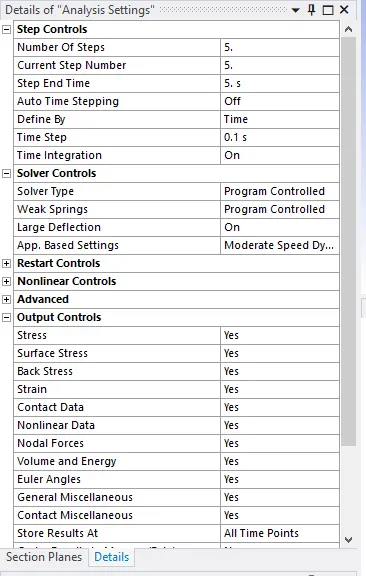
Image 3: Analysis Details
Boundary Conditions: The end of the spring is fixed as shown in image 4.
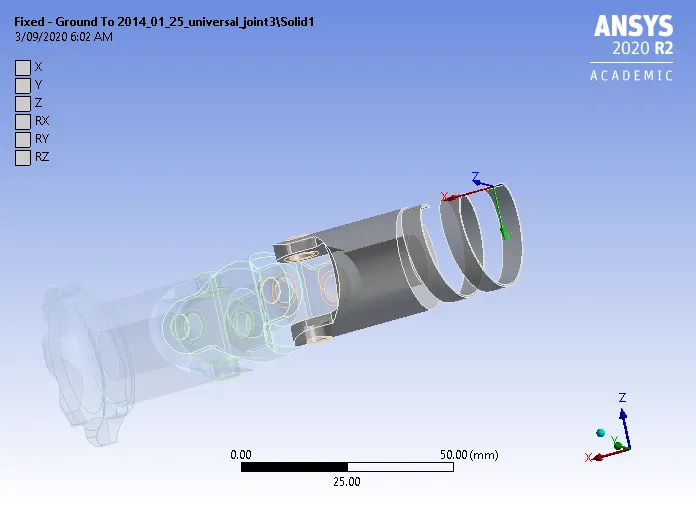
Image 4:Boundary Condition
Load: The ground joint as shown in image 5 is rotated with a load of the magnitude shown in image 6.
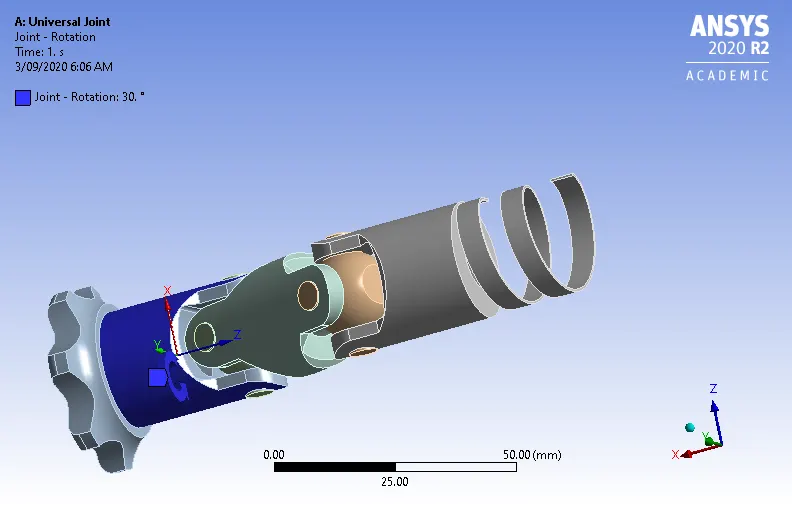
Image 5: Load
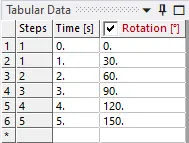
Image 6: Load definition
Results and Conclusions:
The results of total deformation, equivalent stresses for all the cases
Case1: Structural Steel
Case2: Stainless Steel
Case3: Titanium Alloy, are given in table 1,
| Case1 | Case2 | Case3 | |
| Total Deformation(mm) |
Max 38.637 Min 0 |
38.637 0 |
38.637 0 |
| Equivalent Stress(MPa) |
Max 1645.6 Min 1.0963e-8 |
1591.9 1.066e-8 |
802.77 1.0915e-8 |
The results and graphs for stress and deformation of case 1 are given in image 7, 8.
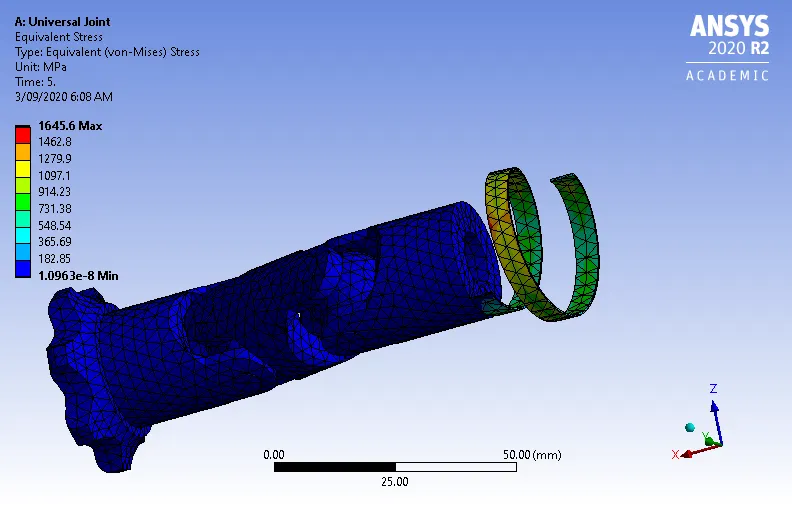
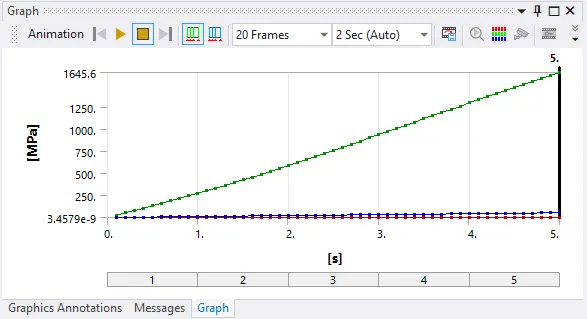
Image 7: Stress results for case1
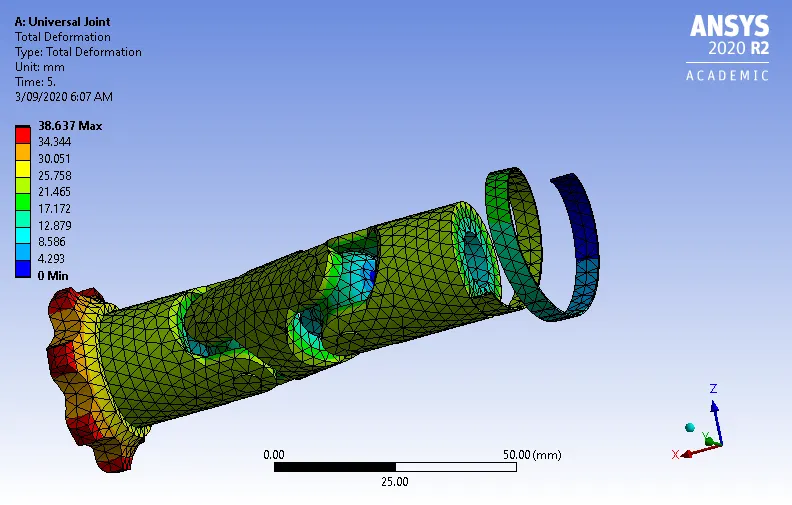
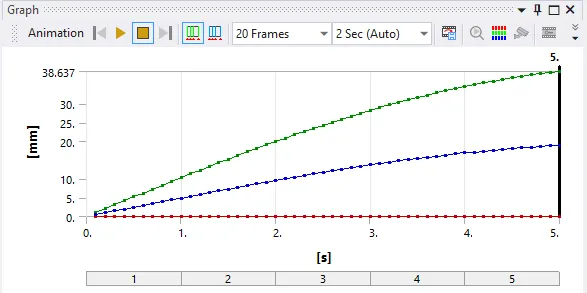
Image 8: Deformation results for case1
The results and graphs for stress and deformation of case 2 are given in image 9, 10.
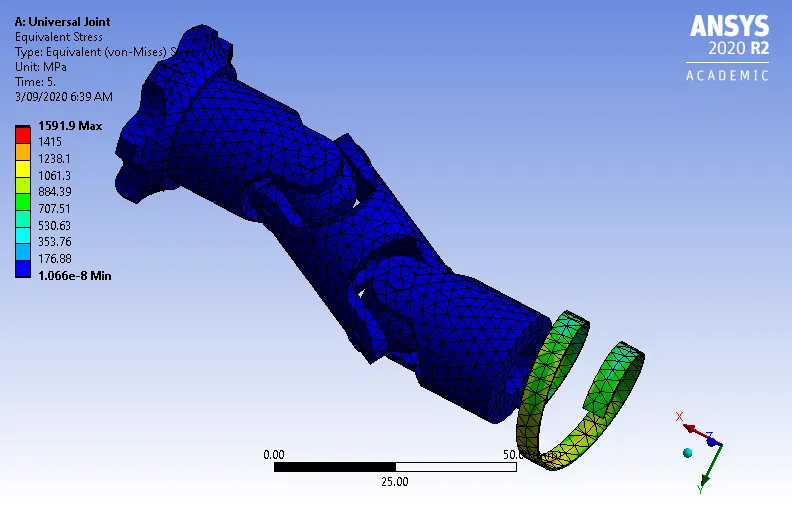
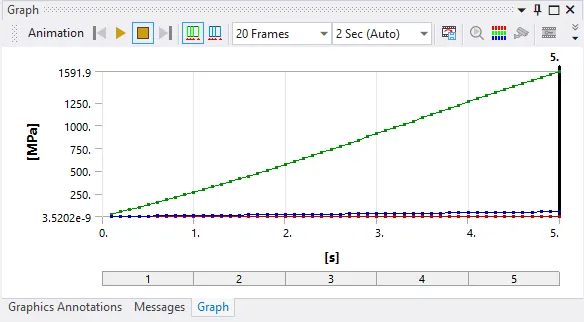
Image 9: Stress results for case 2
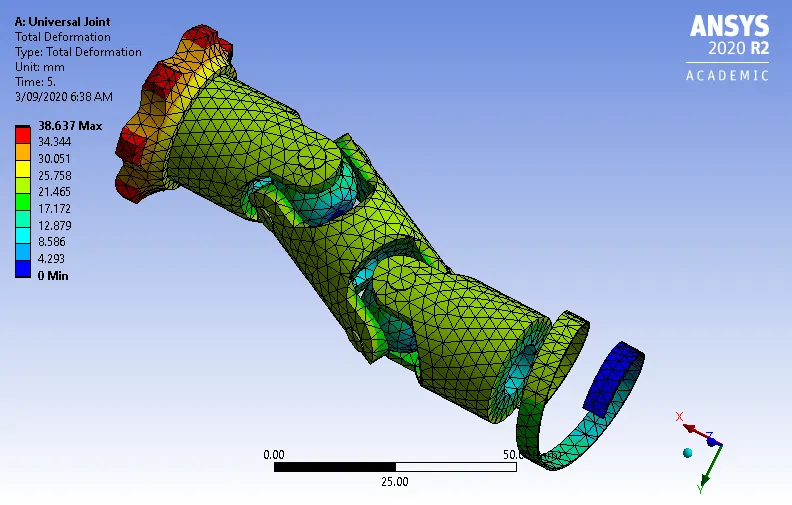
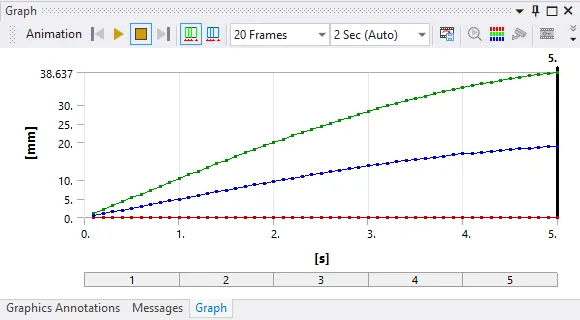
Image 10: Deformation results for case2
The results and graphs for stress and deformation of case 3 are given in image 11, 12.
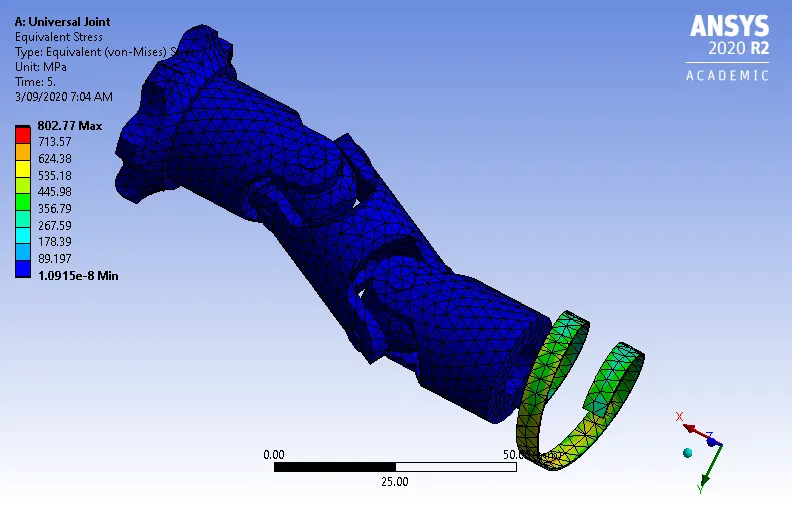
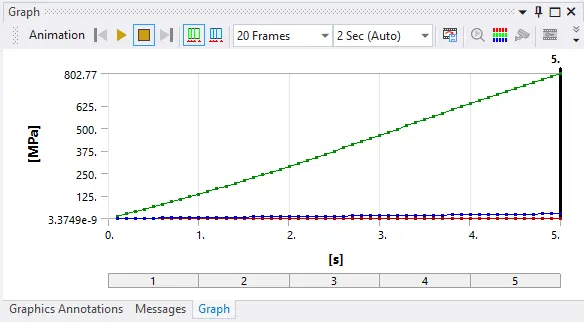
Image 11: Stress results for case3
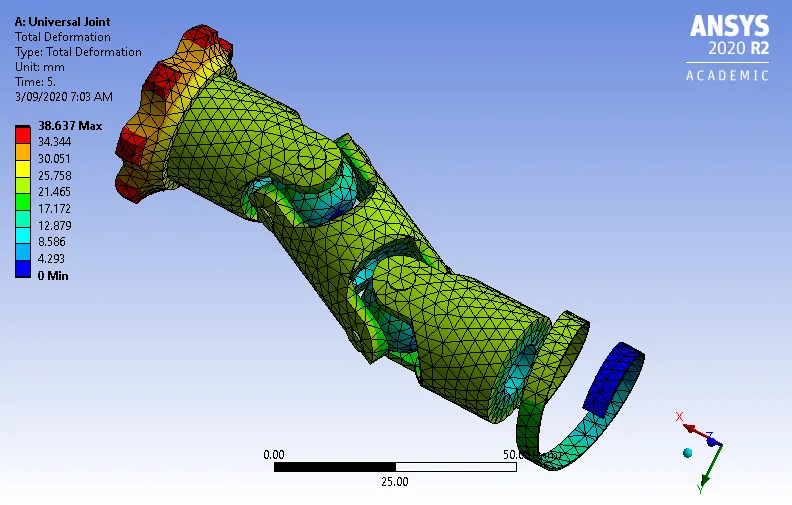
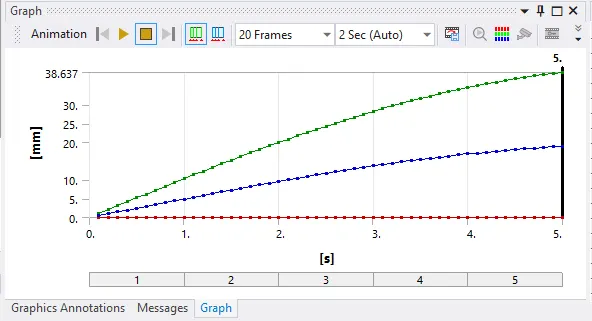
Image 12: Deformation results for case3
From the above results, we can conclude that the deformation is the same in all the cases. The stress is more in case of structural steel and less in case of titanium alloy. The stresses developed in titanium alloy is less than its yield strength which implies it is the best option to be used in this load case.