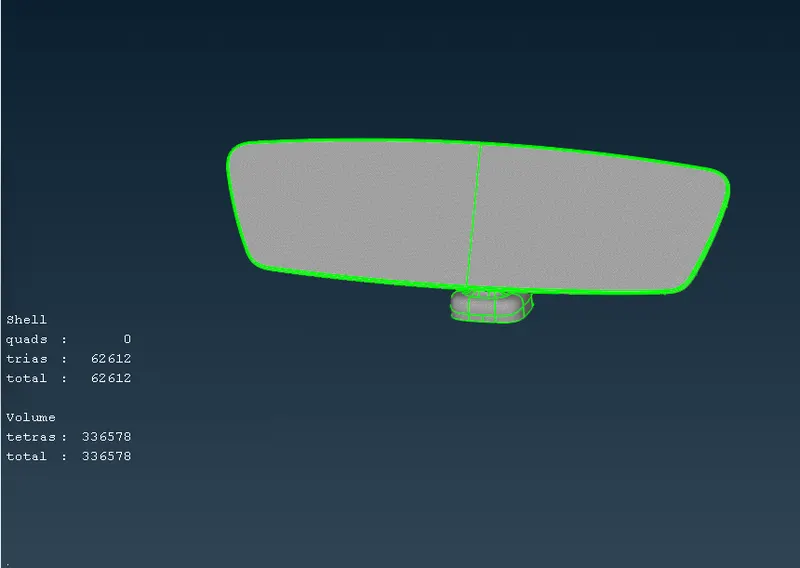
Week- 8 - Solid meshing
For the given Rear view mirror component, check for the geometrical errors and mesh the Surfaces with the given 2D element Quality criterias given below.
|
S.No |
Quality Criteria |
Value |
|
1 |
Target/Average length |
1 |
|
2 |
Minimum Length |
0.5 |
|
3 |
Maximum Length |
2 |
Use tetra elements to mesh the Volumes defined in the model and check for the below quality after Volume meshing.
|
S.No |
Quality Criteria |
Value |
|
1 |
Tet collapse |
0.2 |
Surface Quality after Volume mesh should be good.
Procedure.
The first and foremost step is to import and analyze the CAD geometry.
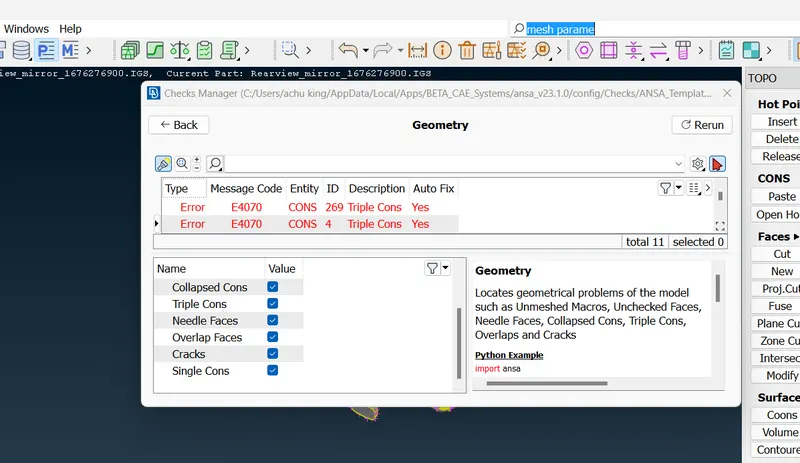
After importing the CAD geometry to ANSA we check for any geometry error that came with the model. To do so we go to the Check-Geometry option in ANSA.
The second step is to Generate 2D Ortho-TRIA & TRIA mesh on the surface of each component.
Before generating mesh we apply the element quality criteria that are mentioned above. For this, we select the mesh parameter command in ANSA.
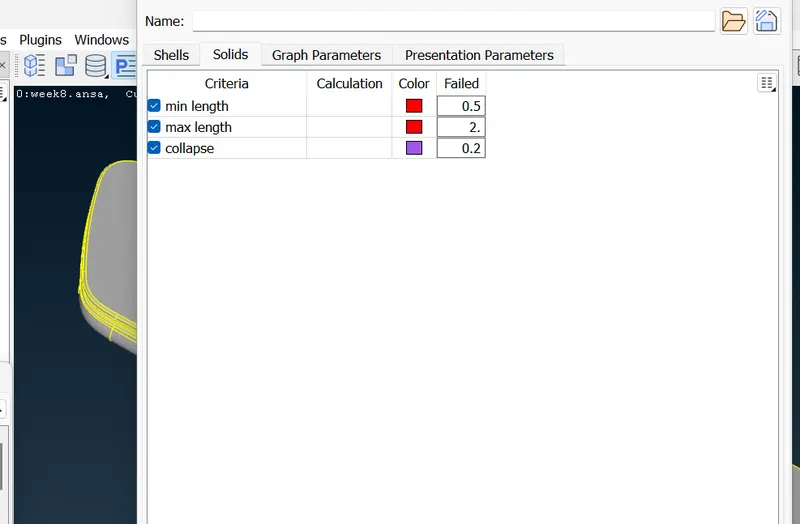
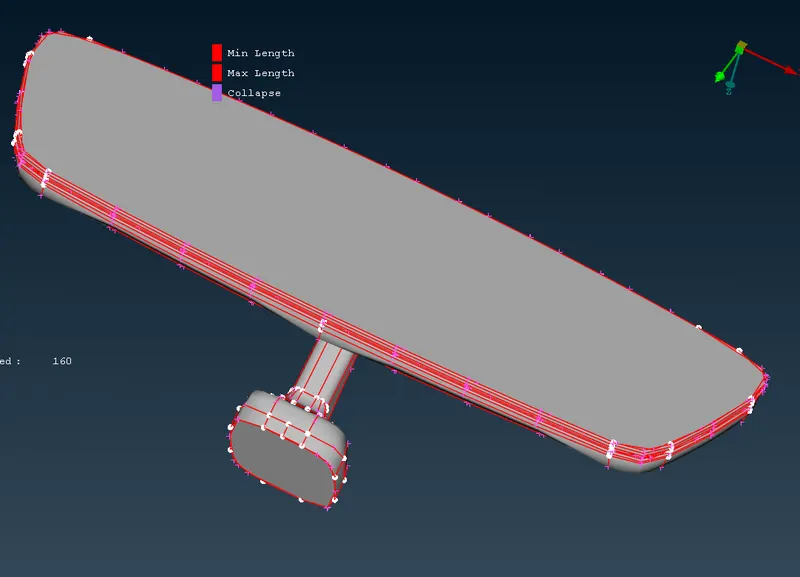
In this command, we will input our target length of the element to be 1mm and a minimum length of the element to be 0.5mm, and a maximum to be 2mm. We keep the mesh type general and we select 1st order Ortho-TRIA element type.
After selecting mesh parameters and quality criteria we will go to the mesh window to apply element length to our component.
Now ANSA will create points on the surface with 1 mm approx. distance between each point.
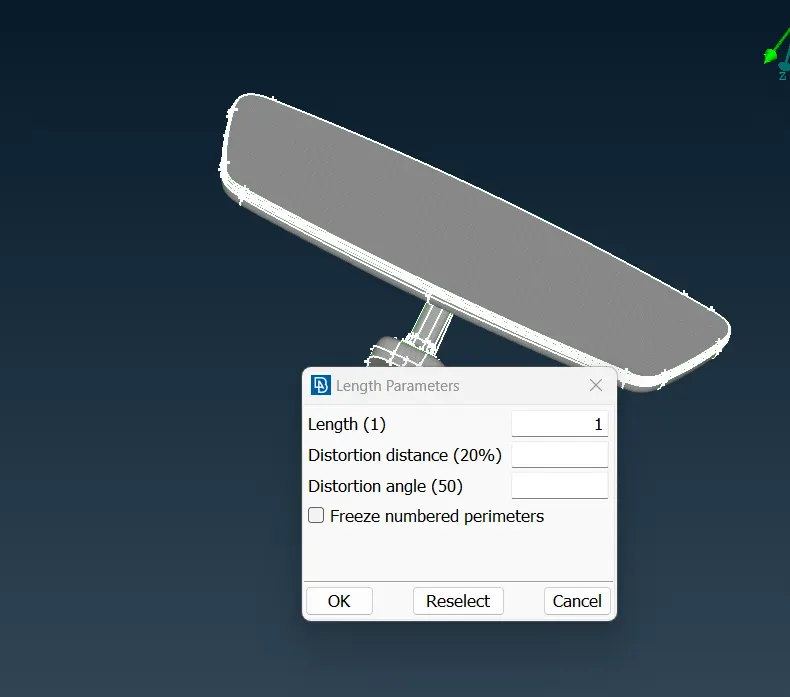
- Mesh critical features like corner radius first using ORTHO-TRIA elements. This can be done by the SPOT MESH command of ANSA.
- Mesh the renaming noncritical feature like flat faces with TRAI elements using the same proce
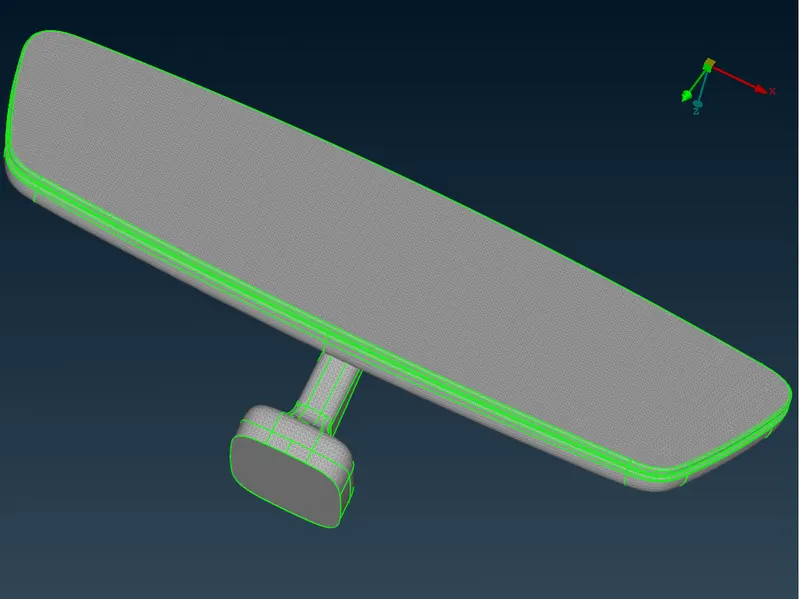
-
The third step is to define the volume of each component and deploy a Tetrahedral volume mesh on all the components.
As ANSA will not recognize the part with the volume, We can use the DEFINE Comand in the Volume mesh section of ANSA to determine the volume of the components.
-
after defining the volume we will re-mesh the empty volume with TETRAHEDRAL elements. ANSA will automatically fill the volume with UNSTRUCTURED TETRAHEDRAL elements, to do so ANSA uses different algorithms out of which 2 are common for this problem
- TETRA RAPID.
- TETRA FEM.
For this challenge, we will be using the TETRA RAPID algorithm.