Week 8 - Simulation of a backward facing step in OpenFOAM
REPORT Week 8 – Simulation of a backwards-facing step in OpenFoam
AIM
- To simulate an incompressible-laminar-viscous flow through the backwards-facing step geometry.
- Perform a transient simulation.
- The solver can be chosen based on the described physics of the flow.
- Choose the inlet velocity such that the flow is laminar.
CASE STUDIES
CASE 1
Simulate the flow without using any grading factor (i.e., GF = 1)
CASE 2
Simulate the flow with a grading factor of 0.2. The cells should be finer near the walls (including the step wall).
Mesh Specification
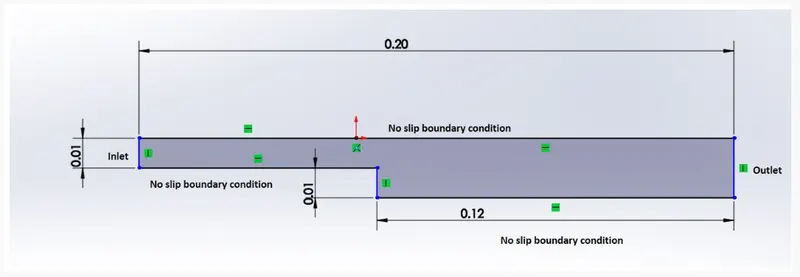
- Number of cells along the x-direction (longer dimension) = 200
- Number of cells along the longer y-direction = 20;
Boundary condition specification
The domain specifications are provided in the following figure.
Desired Output
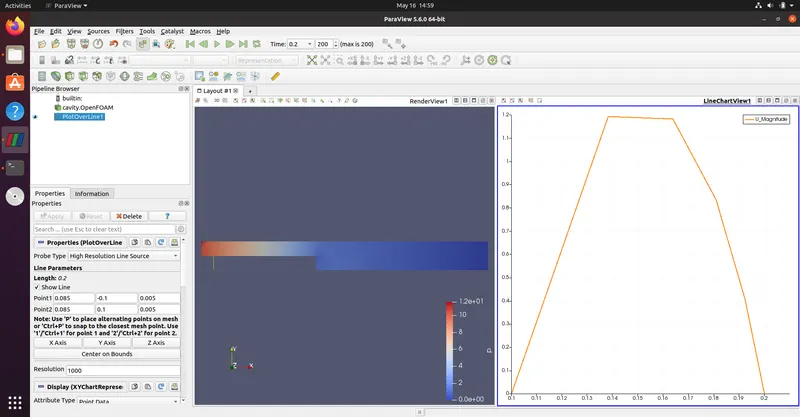
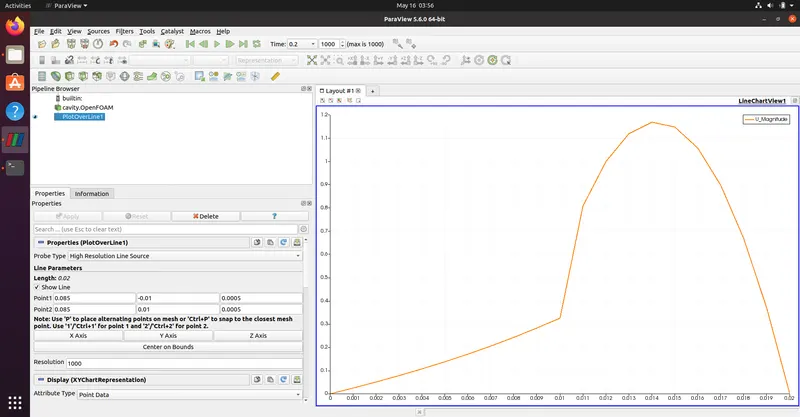
- Measure the velocity profile at 0.085 m from the inlet of the geometry for both case studies and compare. Use the plot overline tool for this.
- Explain why grading/growth factor is essential for meshing.
EXPLANATION
Steps to follow
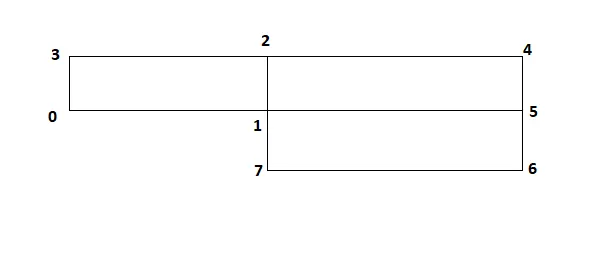
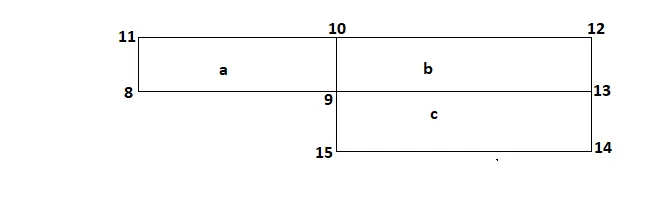
- geometry consideration
- Virtual machine
- Ubuntu
- Open terminal
- To simulate the problem in OpenFoam reference case files are obtained from tutorials.
- Tutorials – cd incompressible – cd icoFoam
- icoFoam solves the incompressible laminar Navier – Stokes equations using the PISO algorithm. The code is inherently transient, requiring an initial condition (zero velocity) and boundary conditions.
- Cavity – cavity
- We have to copy this file to $ FOAM_RUN, to edit these files.
- cp -r command is used to copy a directory
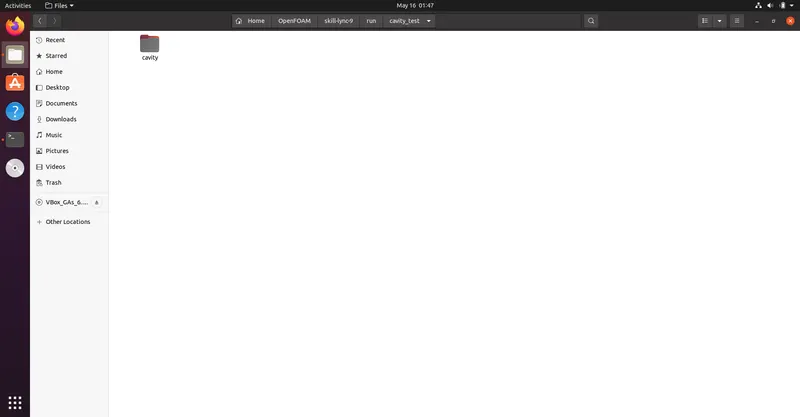
- cavity – there is 4 script file.
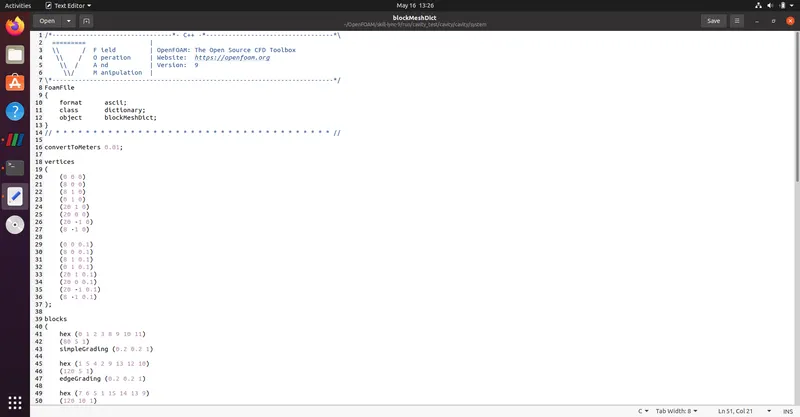
- System – gedit blockMeshdict
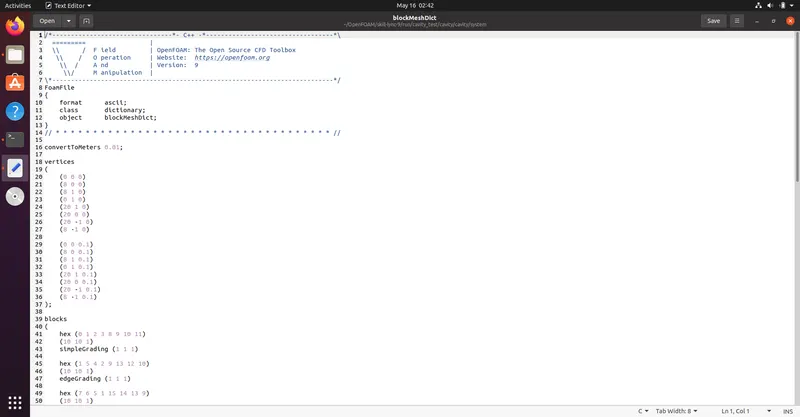
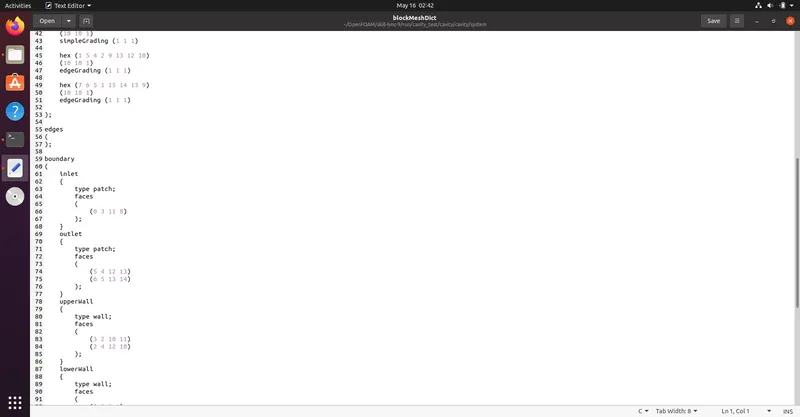
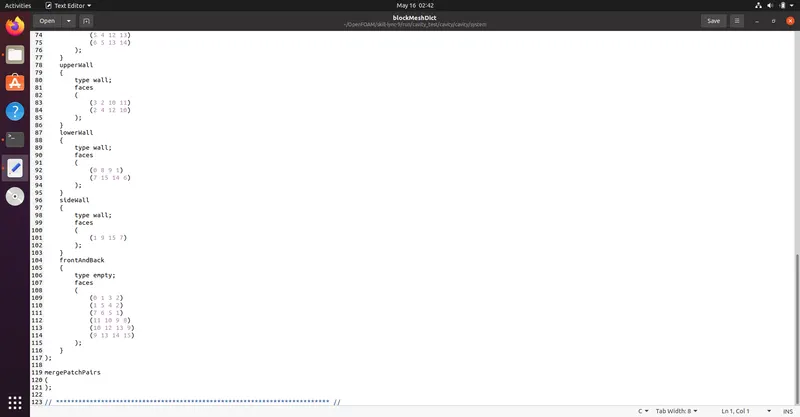
- Gedit controlDict
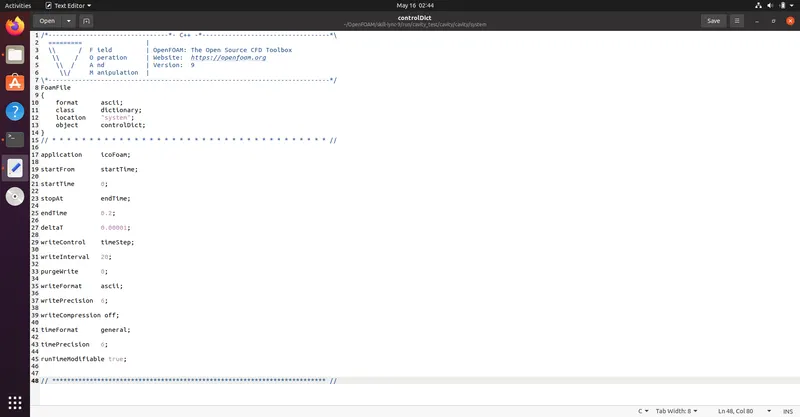
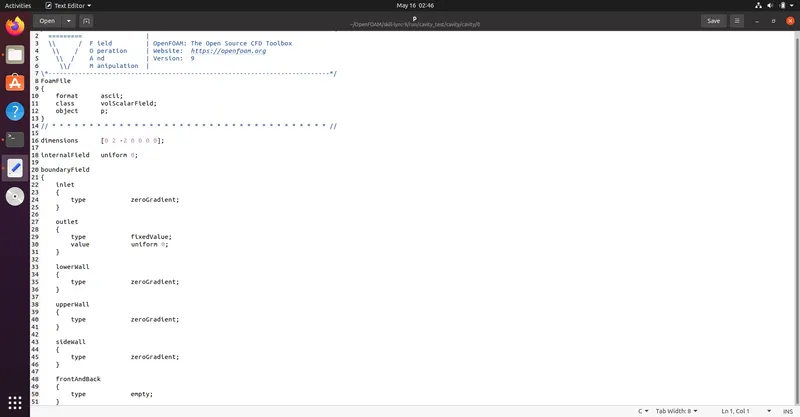
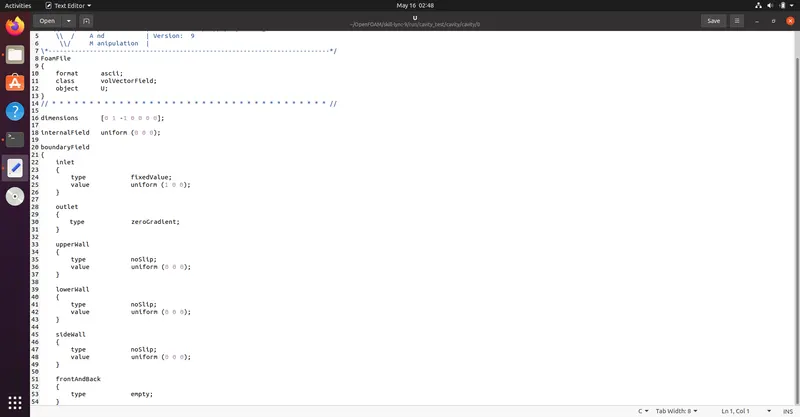
- Provide initial values for pressure and velocity
pressure
velocity
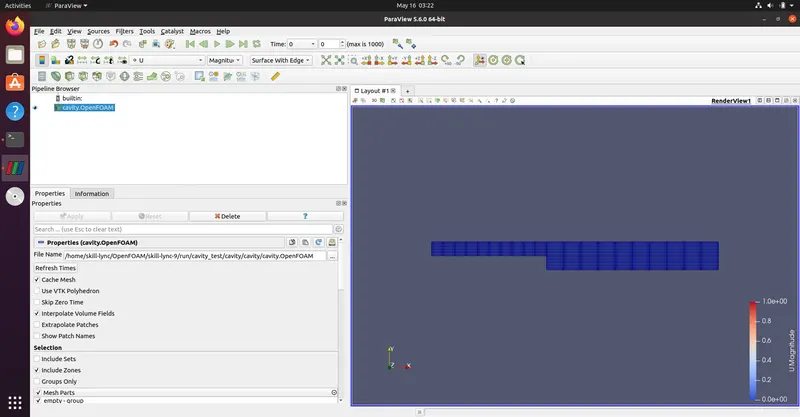
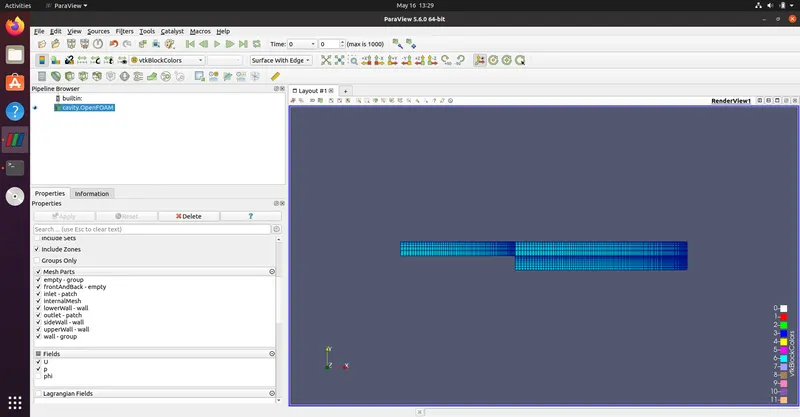
- Deploy mesh using blockMesh command
- paraFoam command to open ParaView.
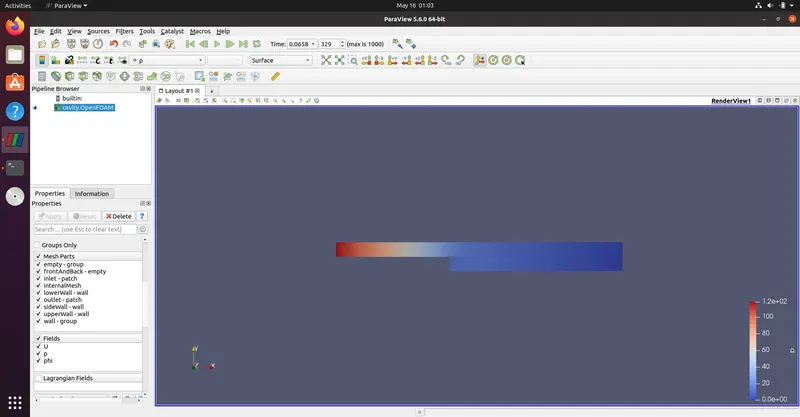
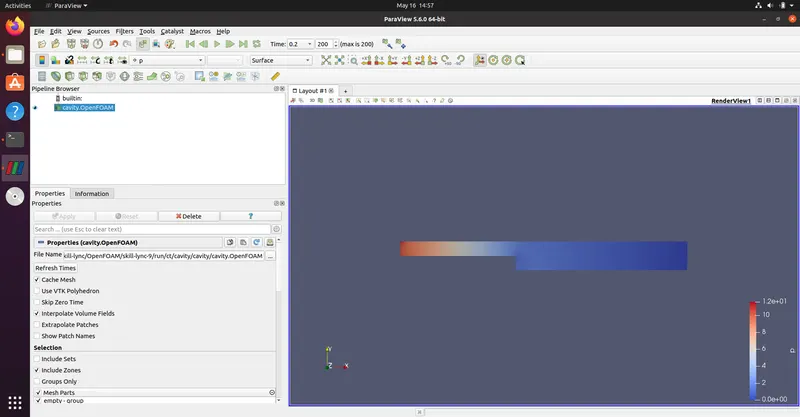
pressure
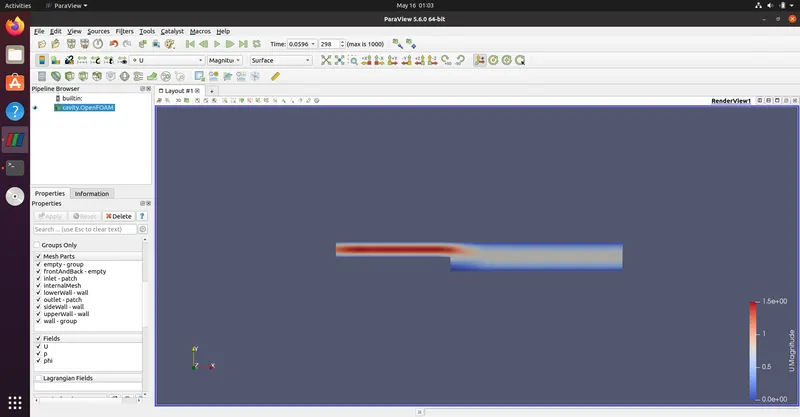
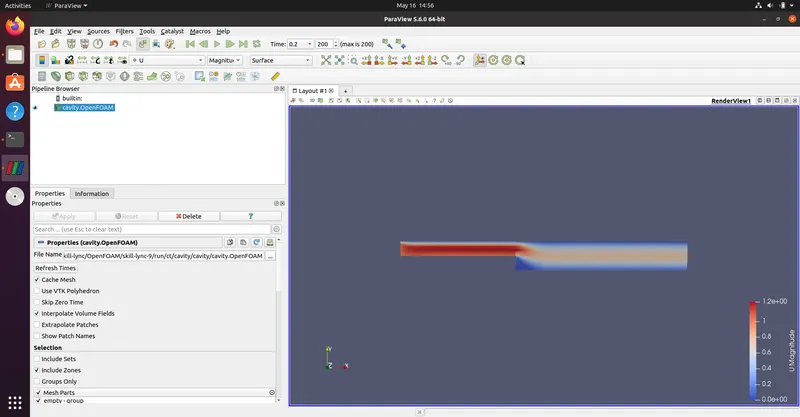
velocity
Velocity Plot
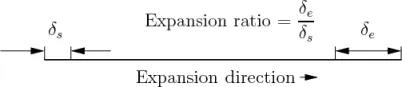
Grading Factor
The expansion ratio enables the mesh to be graded, or refined, in specified directions. The ratio is that of the width of the end cell along one edge of a block to the width of the start cell along the edge.
Expansion ratio = (size of end cell)/ (size of starting cell)
CASE 2
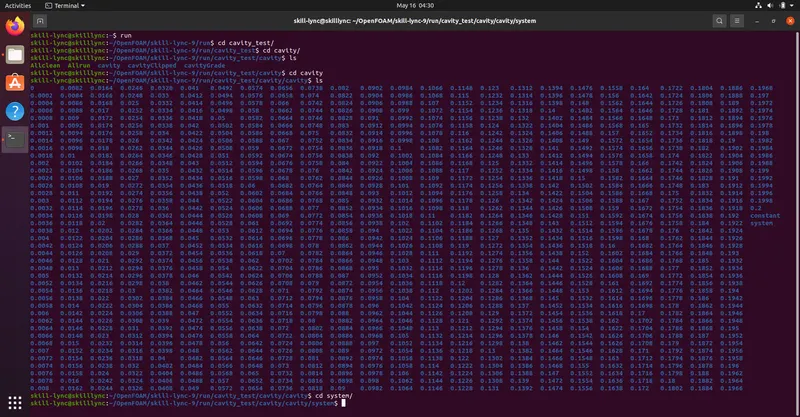
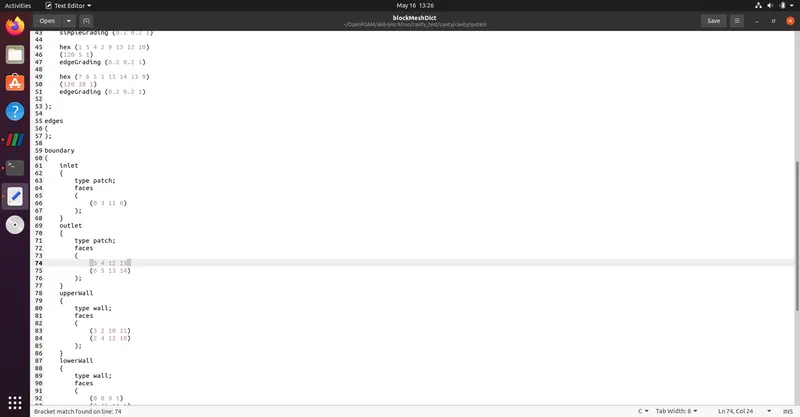
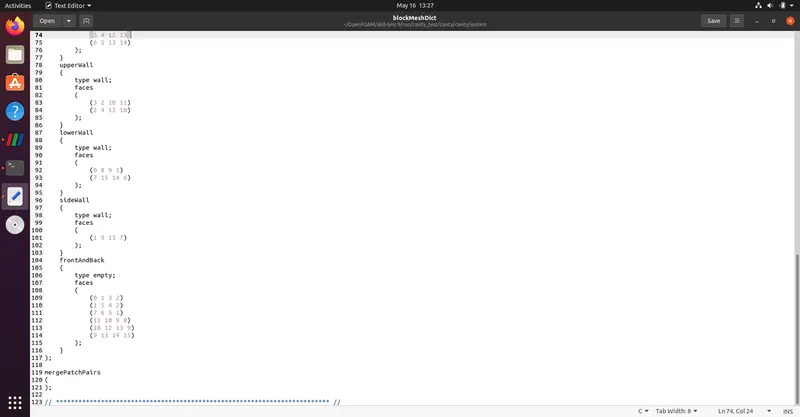
blockMeshDict file
OUTPUT
Mesh
pressure
velocity
graph