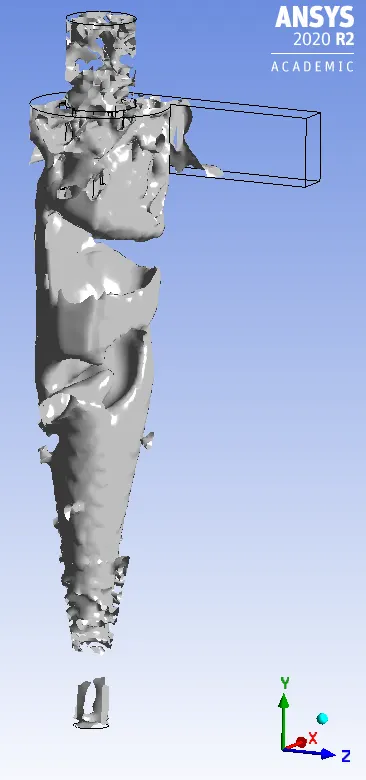
Week 8 - Simulating Cyclone separator with Discrete Phase Modelling
Aim --> To perform analysis on cyclone separator with Discrete Phase Modelling.
Introduction
This project is about cyclone separators. Cyclonic separation is a method of removing particulates from an air-gas, or liquid stream through vortex separation without the use of filters. Inertial forces (rotational and gravity) are used to separate mixtures of solid and liquid. The devices that use this type of separation method are called cyclone separators. These devices can separate solid particles in liquids, liquid droplets from gases, and also solid particulates from the gas stream. Lighter particles have less inertia, are more influenced by the helical vortex, and travel upward while heavier particles fall downwards. Most cyclones are built to control and remove particulate matter that is larger than 10 micrometers in diameter. However, high-efficiency cyclones exist that are designed to be effective on particles as small as 2.5 micrometers. As well, these separators are not effective on extremely large particulate matter. For particulates around 200 micrometers in size, gravity settling chambers or momentum separators are a better option.
Geometry
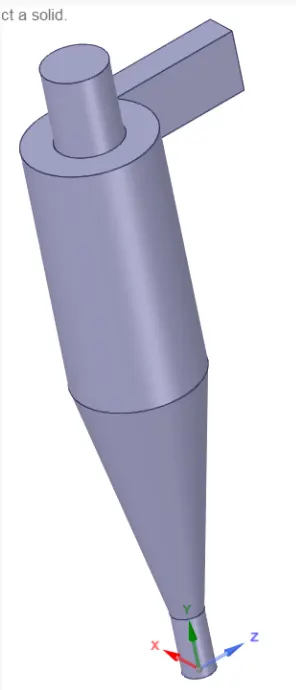
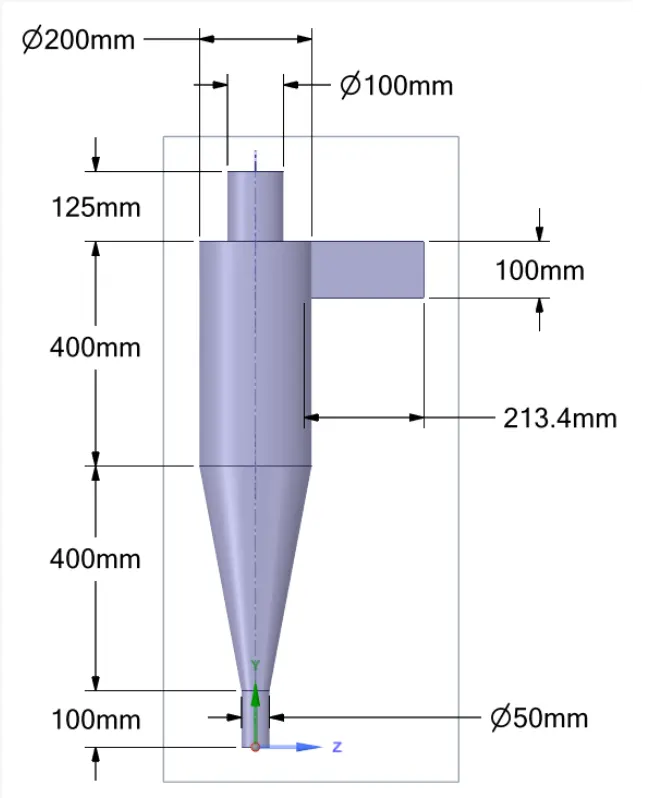
Mesh
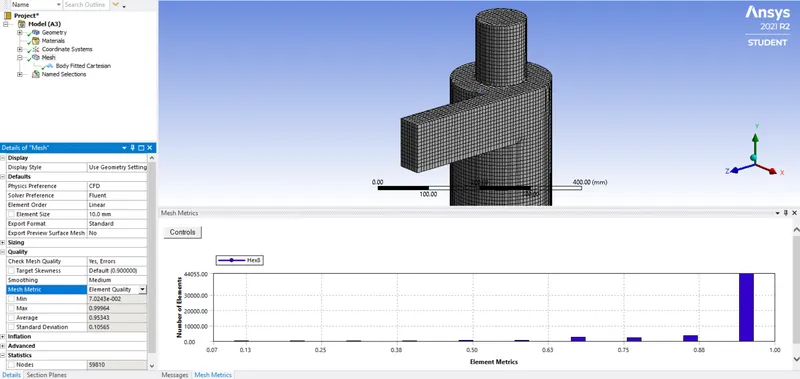
Body fitted cartesian Mesh with mesh size 10 mm. (structural Mesh)
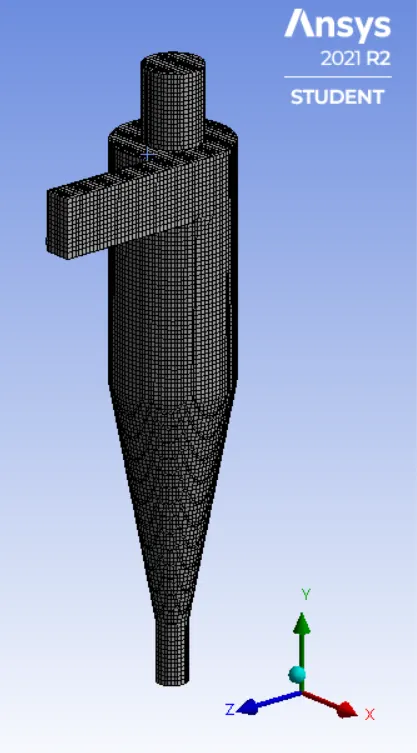
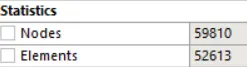
Element quality
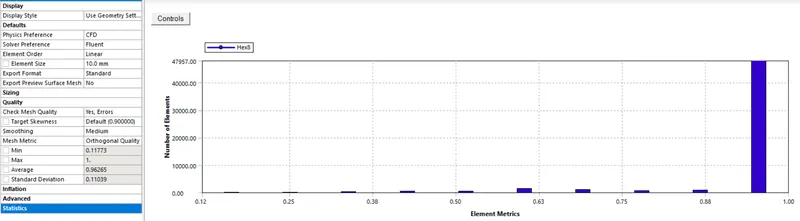
Orthogonal Quality
Name Selections
Inlet
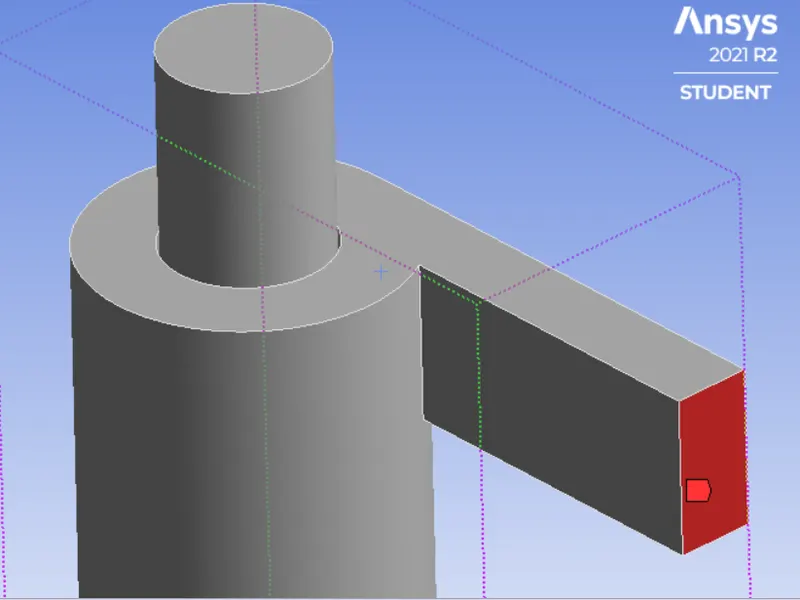
outlet_1
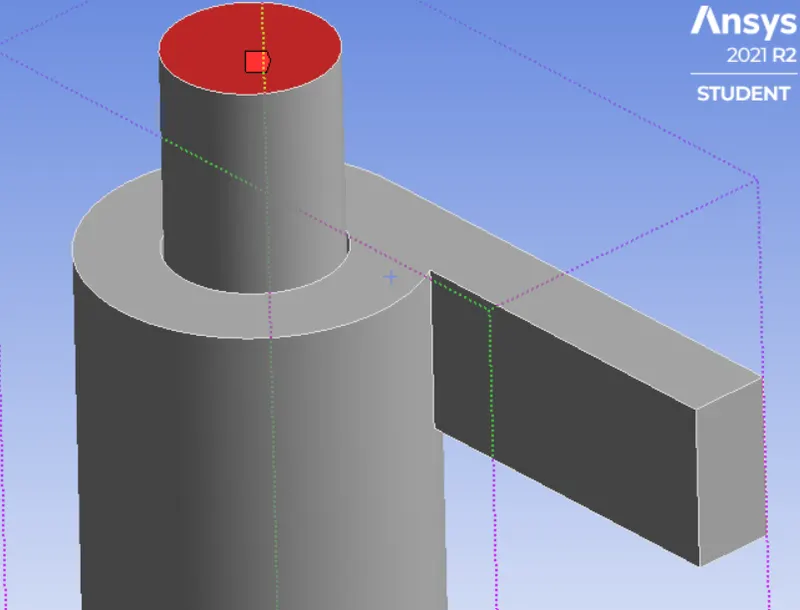
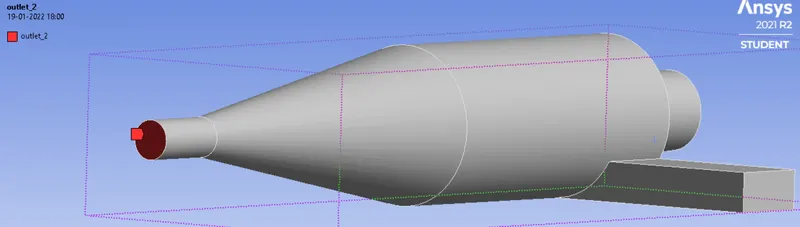
Outlet_2
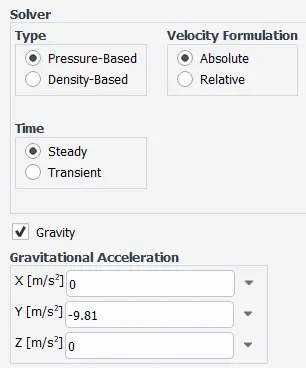
Case-Setup
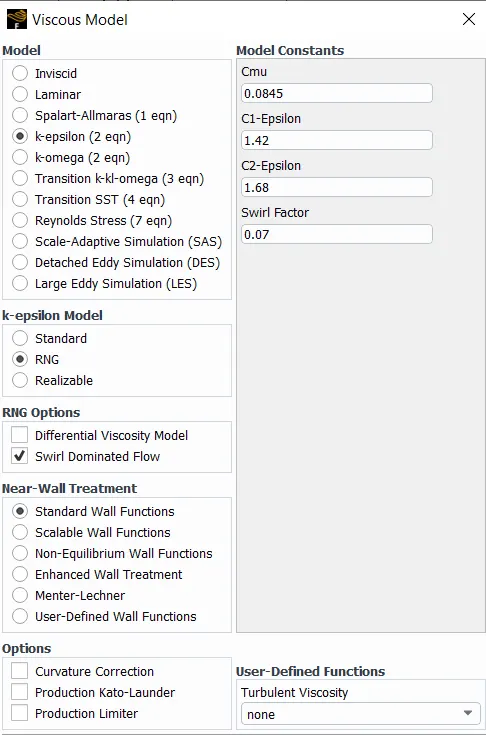
Turbulence Model (k-e RNG Swirl Dominated Flow Standard wall function)
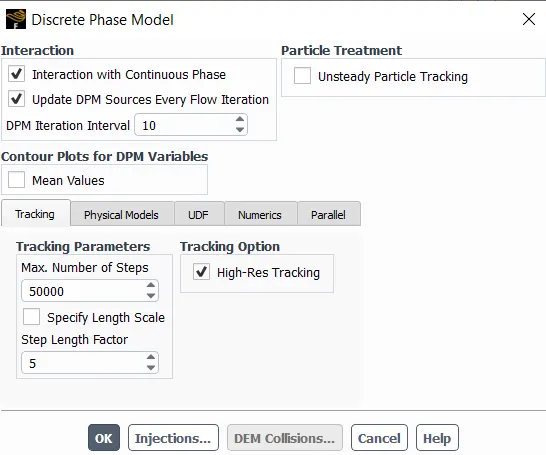
Discrete Phase Model (DPM)
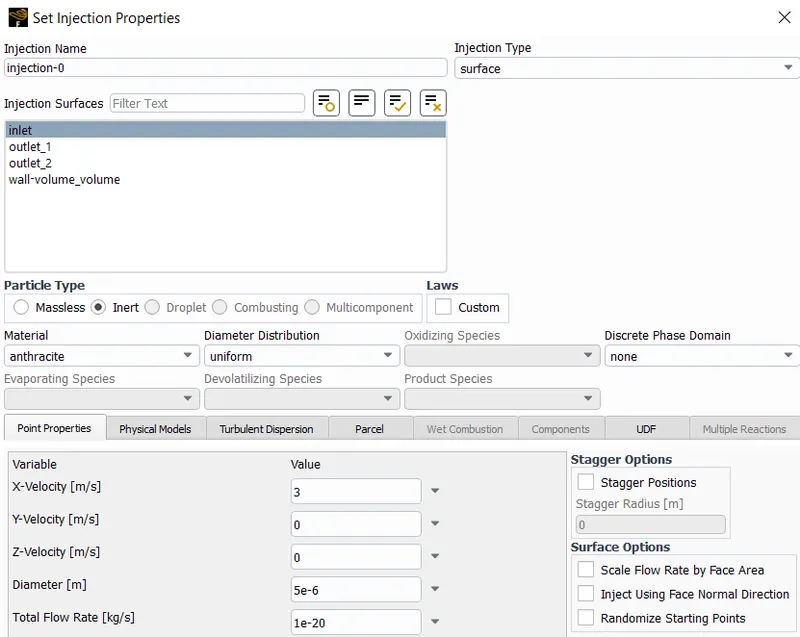
Injections (Antracite Particles)
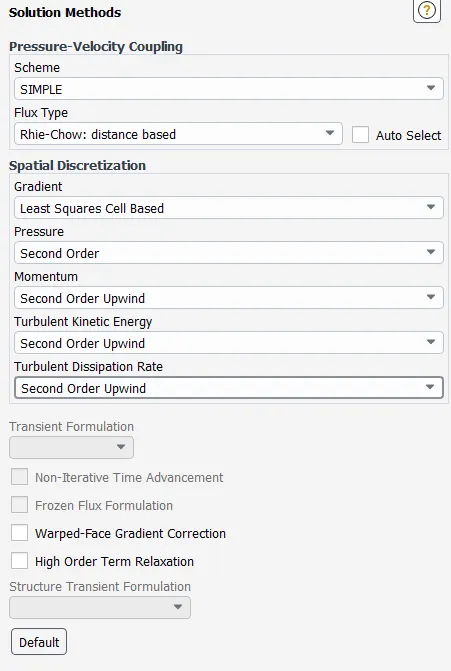
Solution Methods
Boundary Conditions:-
Inlet and wall:- Reflect
Outlet(Top):- Escape
Outlet(Bottom/dustbin) - Trap
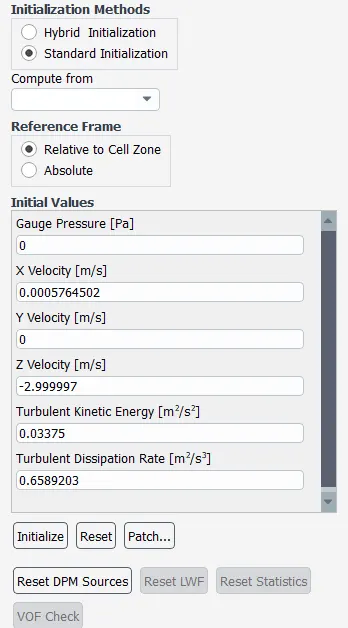
Standard Initialization
Results
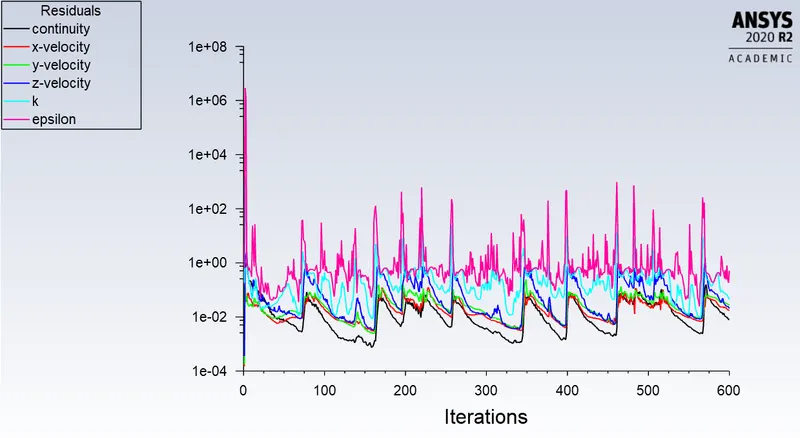
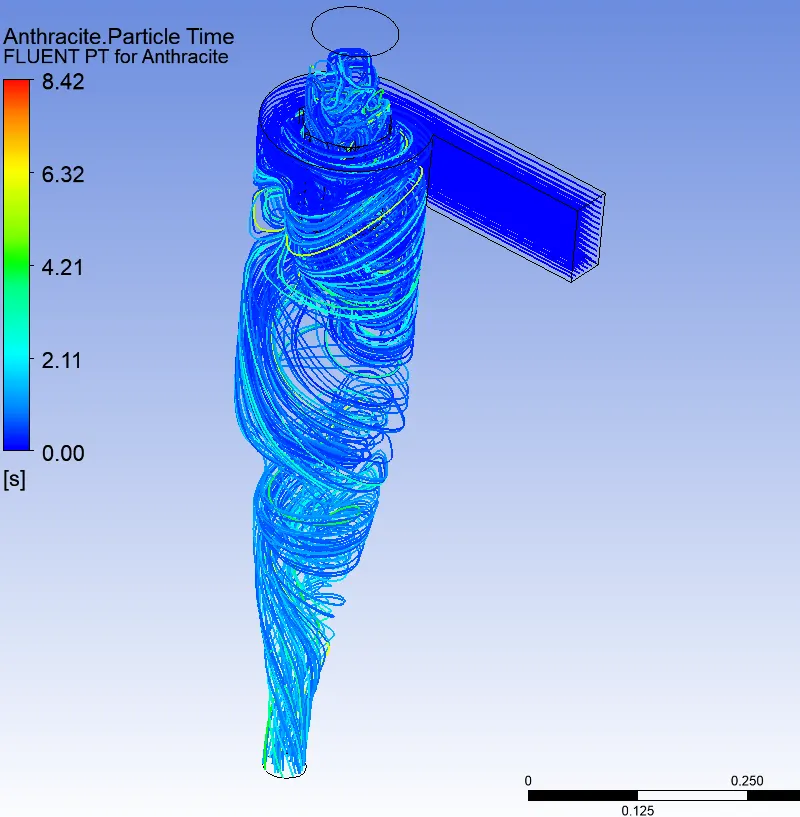
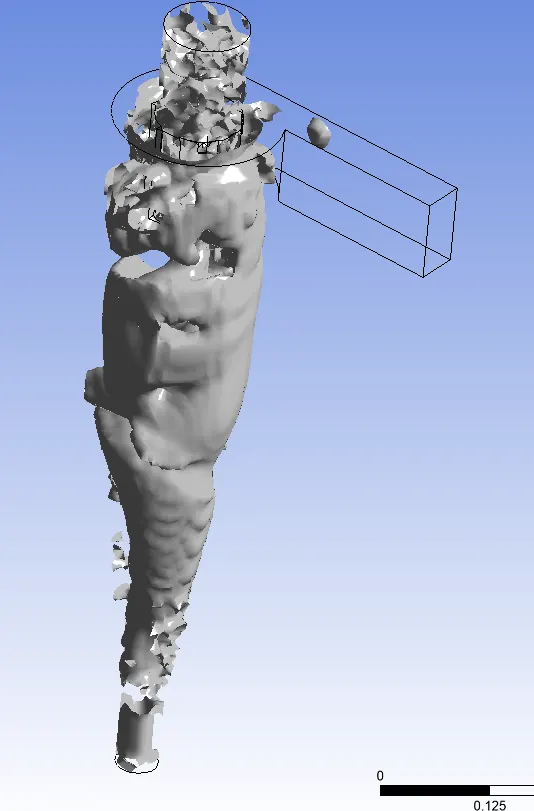
Case 1
Particle diameter = 5 micro meter
particle velocity = 3 m/s
Residual plot
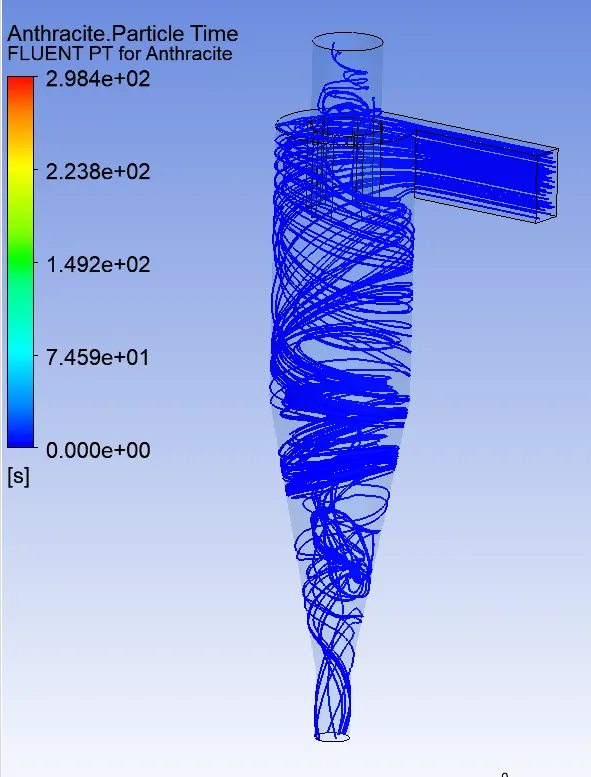
Particle Tracking
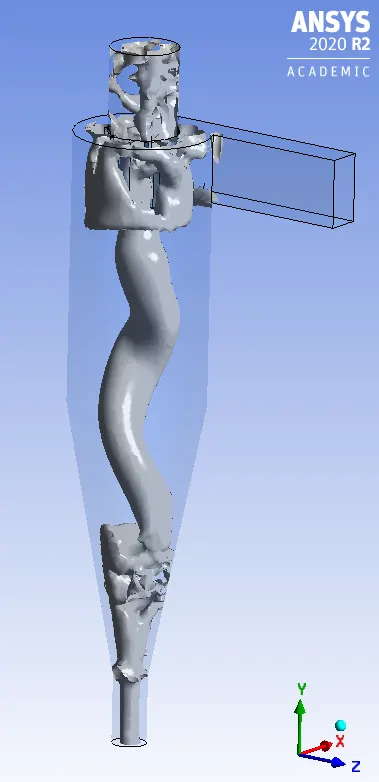
Vortex core
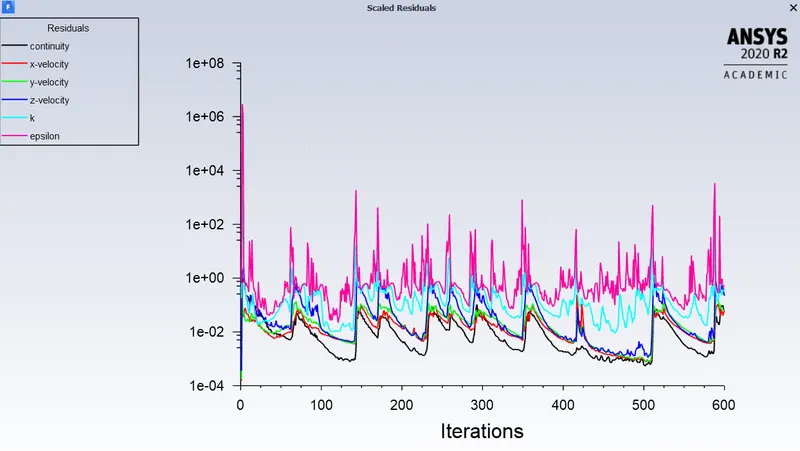
Case 2
Particle diameter = 3 micro meter
particle velocity = 3 m/s
Residual plot

Particle Tracking
Vortex core
Case 3
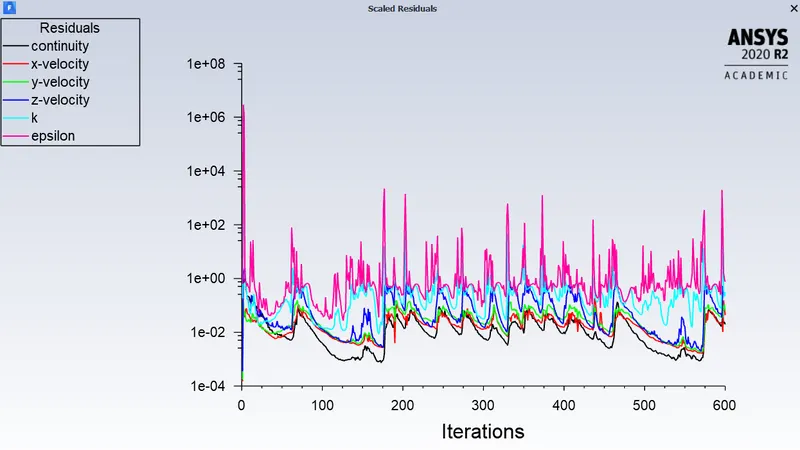
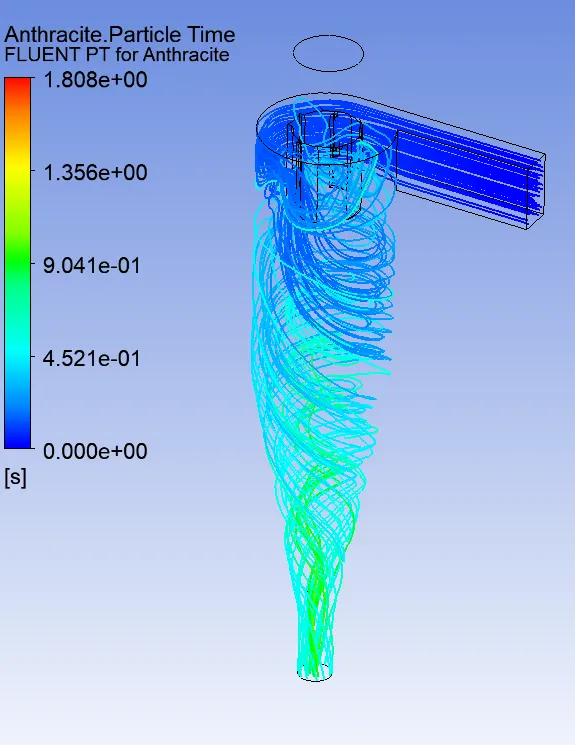
Particle diameter = 1 micro meter
particle velocity = 3 m/s
Residual plot

Particle Tracking
Vortex core
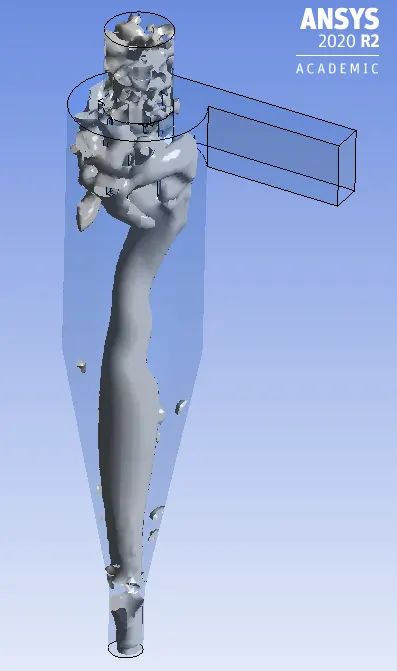
Case 4
Particle diameter = 5 micro meter
particle velocity = 5 m/s
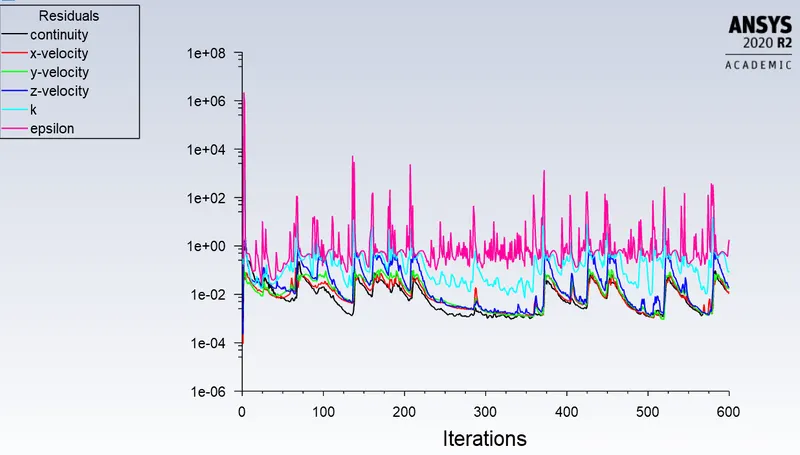
Residual plot

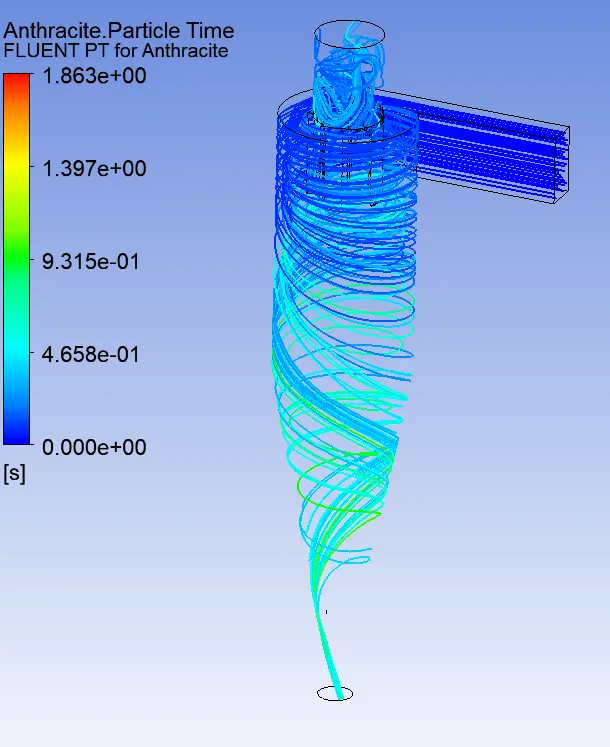
Particle Tracking
Vortex core
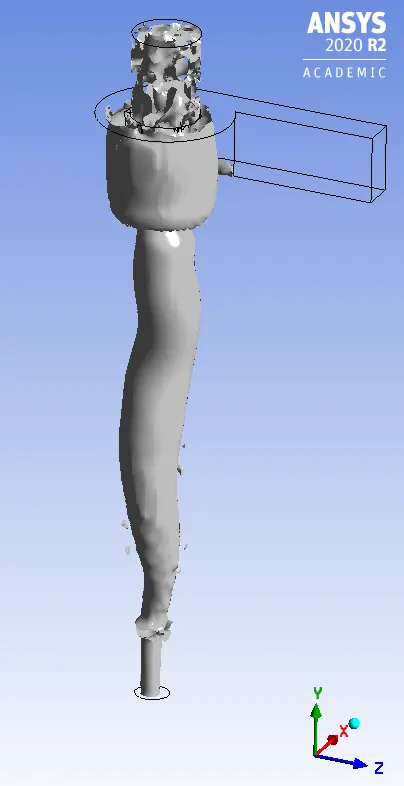
Case 5
Particle diameter = 5 micro meter
particle velocity = 1 m/s
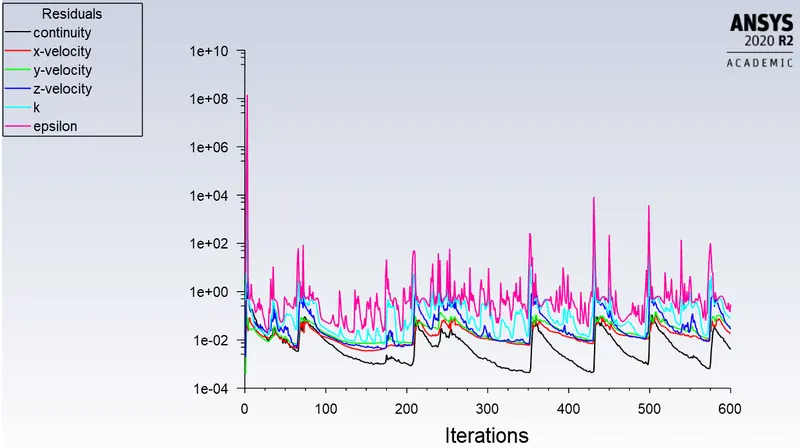
Residual plot

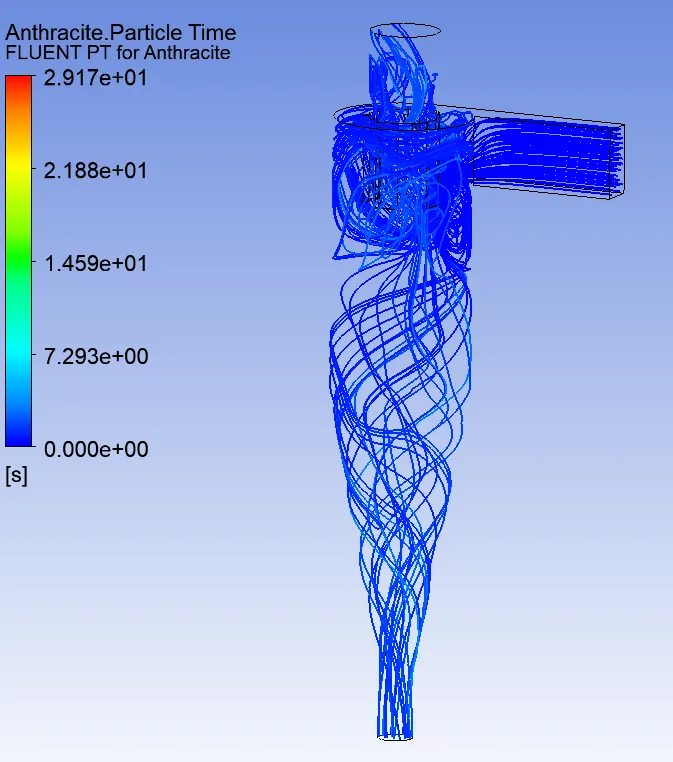
Particle Tracking
Vortex core