Week 8 - Simulating Cyclone separator with Discrete Phase Modelling
Simulating the cyclone separator with Discrete Phase model
Theory :
Cyclone separators are separation devices that use principle of inetrtia to remove particulate matter from flue gases which is unwanted. These are one of the important air pollution control devices known as precleaners since they generally remove heavy matter pieces. There are two types of cyclones namely gas cyclone separator and hydro cyclone. In gas type, it removes entrapped solid particluates from the gas stream and in hydro separator, it differentiates fluids of different densities.
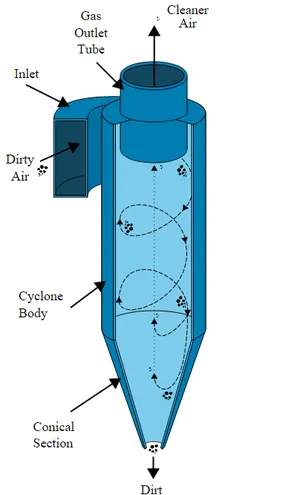
Four emperical methods to calculate cyclone efficiency are below,
1. Iozia and Leith Model
Iozia and Leith logistic model is a modified version of Barth Model, which is developed based on force balance. The model assumes that a particle carried by the vortex endures the influence of two forces: a centrifugal force, Z and a flow resistance, W. The collection efficiency ηi of particle diameter dpi can be calculated from,
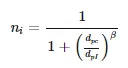
β is an expression for slope parameter derived based on the statistical analysis of experimental data of a cyclone with D = 0.25 m given as

and dpc is the 50% cut size given by Barth
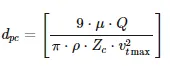
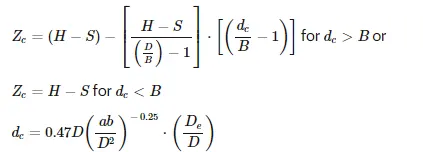
where core length, zc, and core diameter, dc, are given as
2. Li and Wang Model
The Li and Wang [3] model includes particle bounce or reentrainment and turbulent diffusion at the cyclone wall. A twodimensional analytical expression of particle distribution in the cyclone is obtained. Li and Wang model was developed based on the following assumptions:
• The radial particle velocity and the radial concentration profile are not constant for uncollected particles within the cyclone.
• Boundary conditions with the consideration of turbulent diffusion coefficient and particle bounce reentrainment on the cyclone wall are:
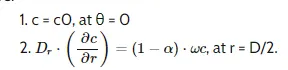
• The tangential velocity is related to the radius of cyclone by: uRn = constant.
The concentration distribution in a cyclone is given as:
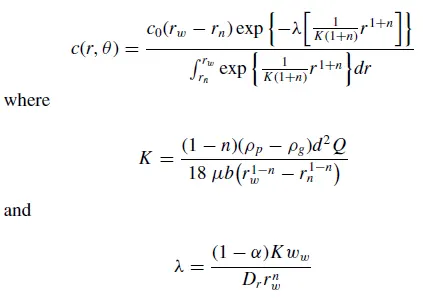
The resultant expression as,
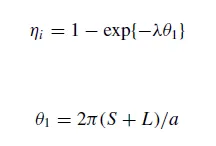
3. Koch and Licht Model
Koch and Licht collection theory recognized the inherently turbulent nature of cyclones and the distribution of gas residence times within the cyclone. Koch and Licht described particle motion in the entry and collection regions with the additional following assumptions:
• The tangential velocity of a particle is equal to the tangential velocity of the gas flow, i.e. there is no slip in the tangential direction between the particle and the gas.
• The tangential velocity is related to the radius of cyclone by: uRn = constant. Aforce balance and an equation on the particles collection yields the grade efficiency ηi
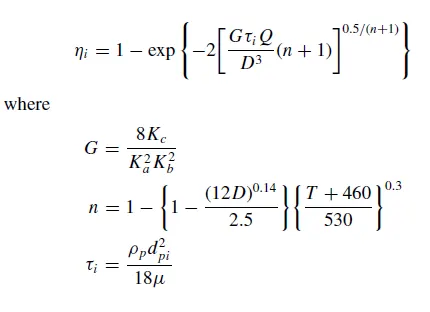
4. Lapple Model
Lapple modelwas developed based on force balance without considering the flow resistance. Lapple assumed that a particle entering the cyclone is evenly distributed across the inlet opening. The particle that travels from inlet half width to the wall in the cyclone is collected with 50% efficiency. The semi empirical relationship developed by Lapple to calculate a 50% cut diameter, dpc, is
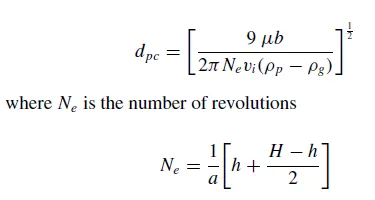
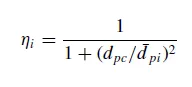
General formula for calculating the cyclone efficiency is as below,

SIMULATION
We consider two cases over here ,
setup(1) Velocity= constant and varying particle size
setup (2) Velocity varies from to m/s and particle size same as 4 microns.
Loading of geometry, meshing and basic setup except velocity and size of particle remains same for both setups.
step 1: Loading geometry
Load .step file in SpaceClaim and extract fluid volume from prepare option , selecting correct edges. Then, suppress the solid for physics as we only are interested in fluid volume.
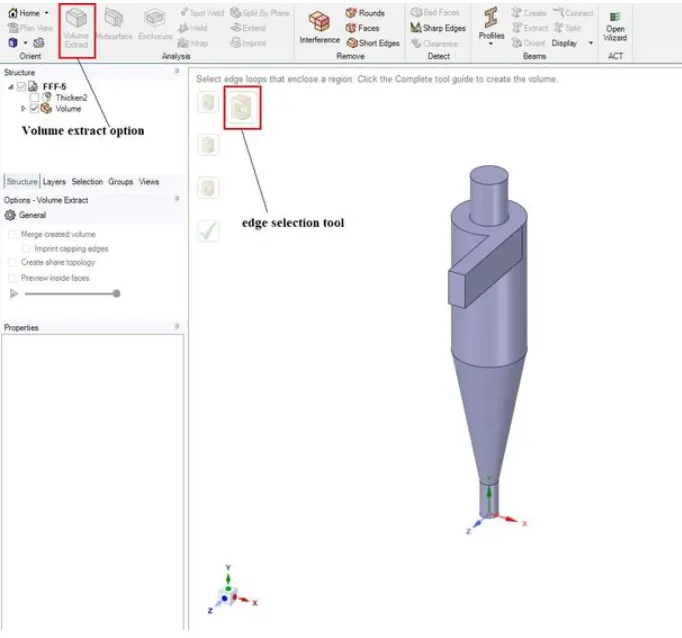
step 2: Meshing
In global meshing, the element size is changed to 10mm and in assemble meshing, cutcell option is enabled.
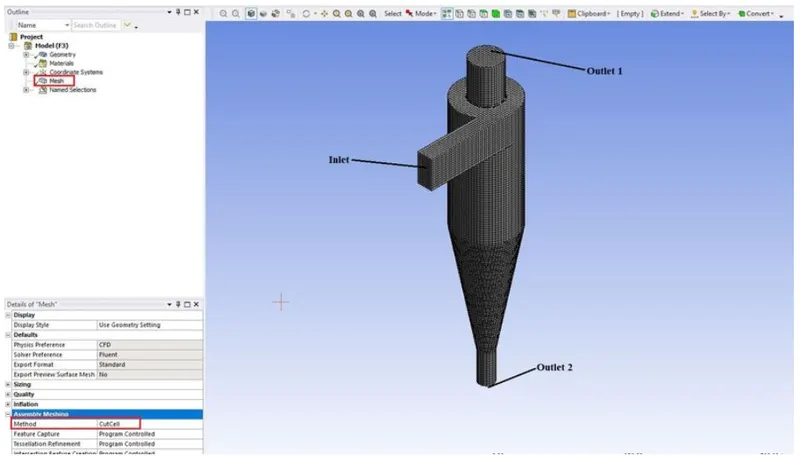
step 3: Setting up Ansys fluent
After launching Fluent, in general tab , set gravity as -9.81 in y direction.
In turbulence model, select k-Epsilon RNG with swirl domianted flow option .
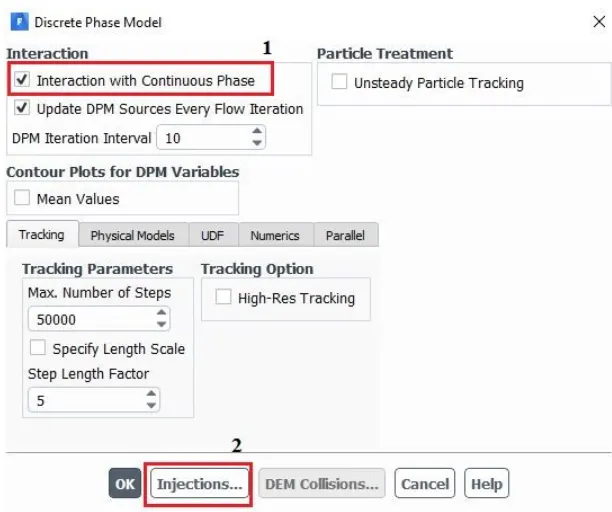
Now, we will set DPM in models, so select discrete phase in models.
We have to define discrete phase , so select injections to do so.
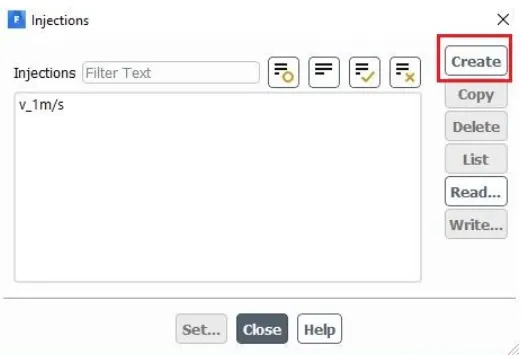
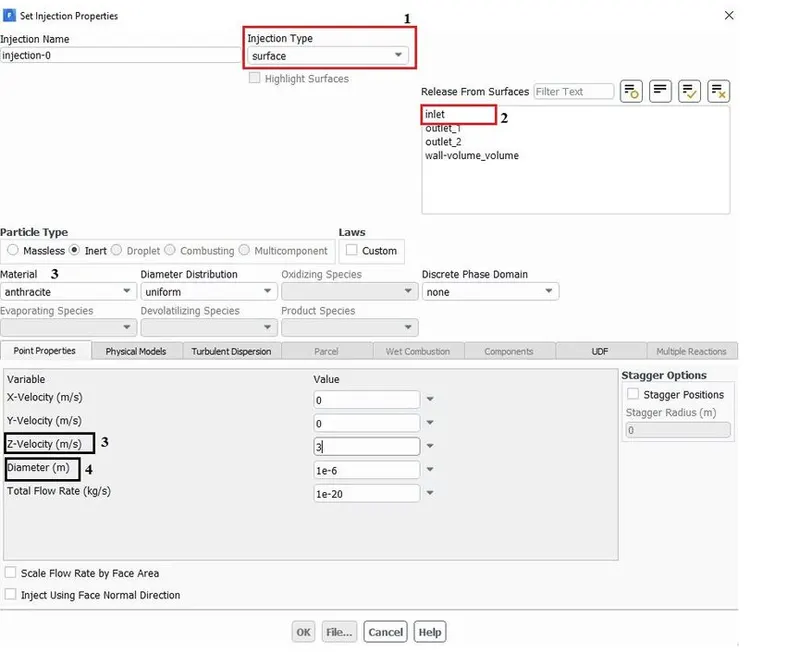
When we select create, another window pops up in which we will set up properties of dispersed phase.
Boundary conditions:
outlet 1(top) : Escape
outlet 2 (bottom) : Trap
Now, initialise the solution by standard method and run simulation for 350 or more simulations .
Results:
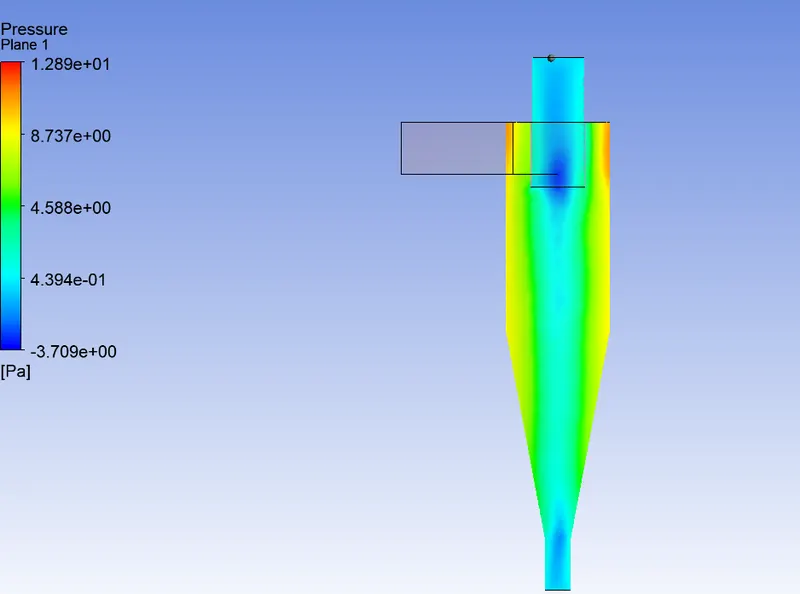
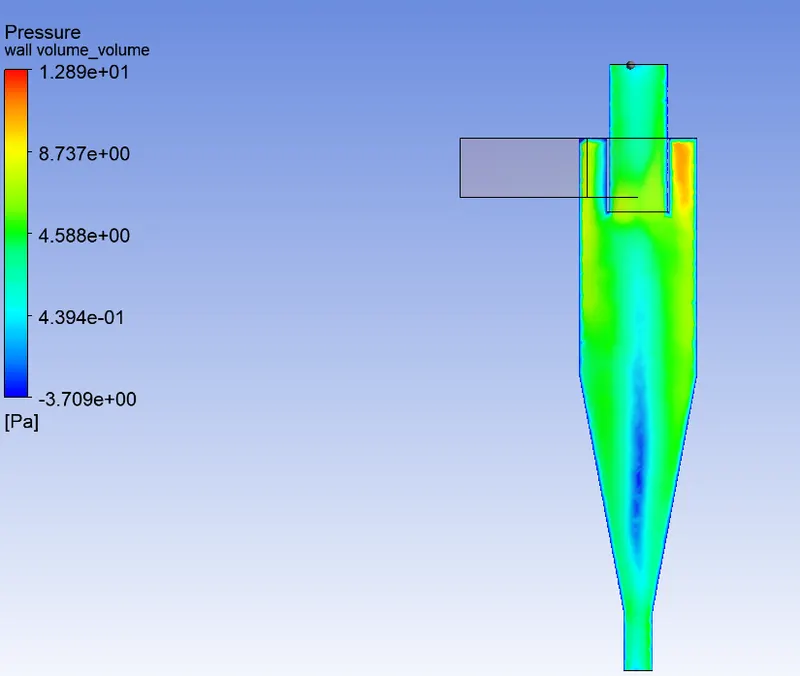
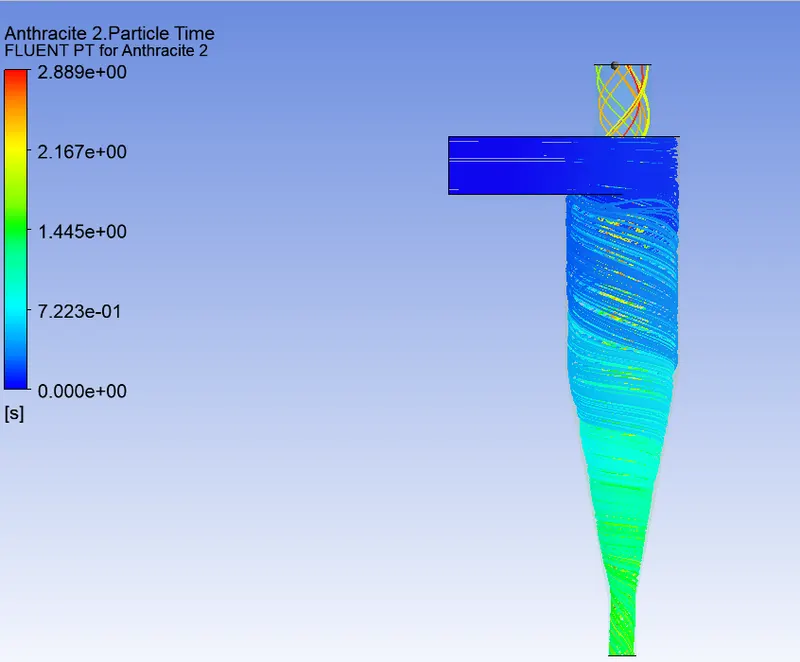
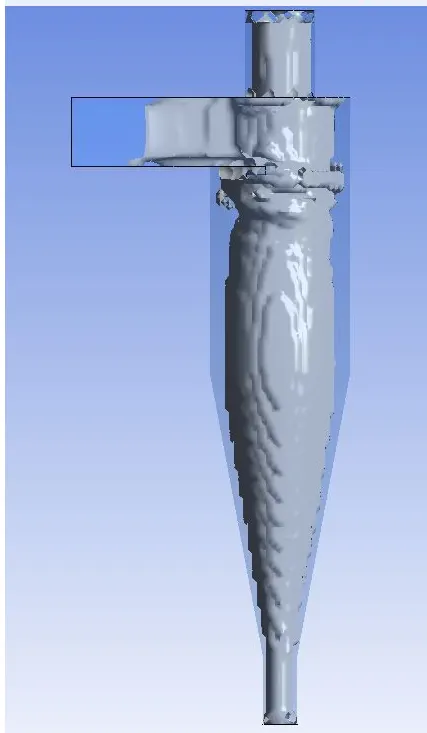
setup 1 - velocity = 3m/s and particle size 1e-6.
i) Pressure contour
ii) Velocity contour
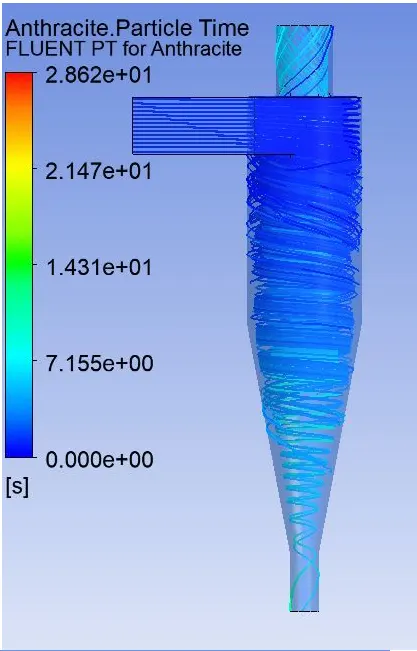
iii) Particle time in cyclone
Vortex core
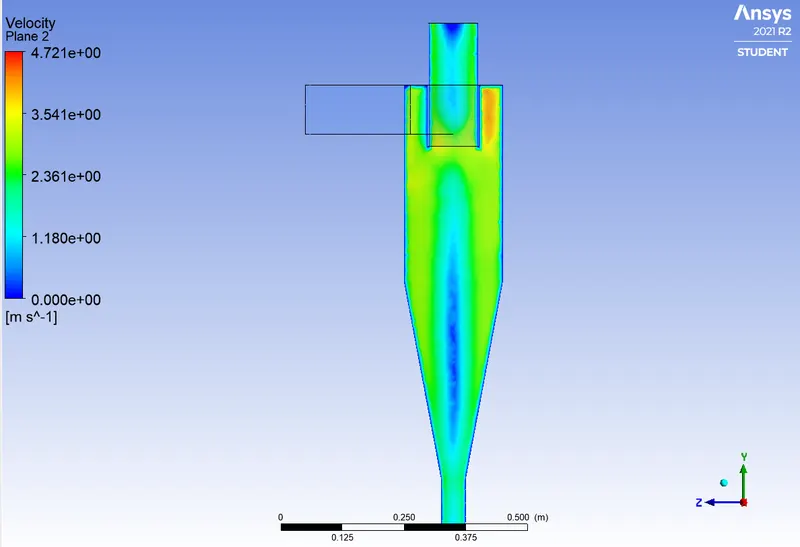
now, particle size 2e-6 and velocity 3 m/s
i) Velocity contour
ii) Pressure contour
iii) Particle time in cyclone
iv) vortex core
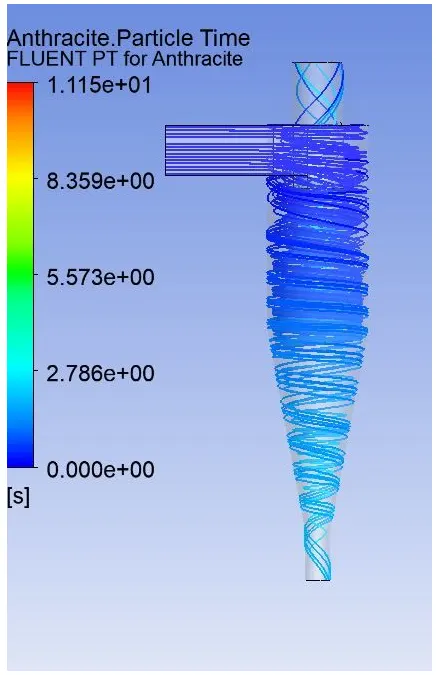
- Particle size 3e-6 and velocity 3 m/s
i) Velocity contour
ii) Pressure contour
iii) Particle time inside cyclone
iv) Vortex core
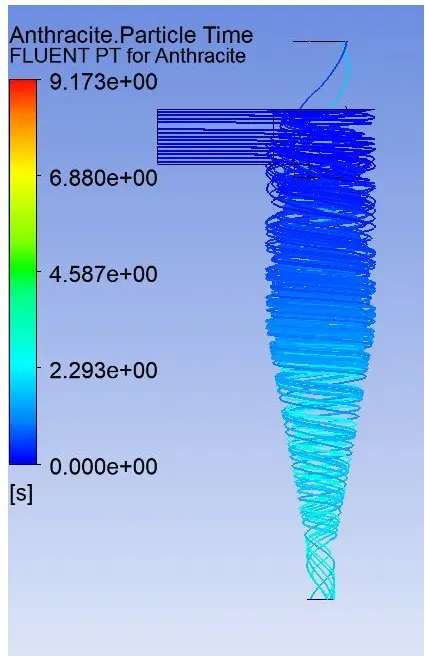
particle diameter : 4e-6 and velocity 3 m/s
i) Velocity contour
ii)Pressure contour
iii) Particle time in cycolne
iv) Vortex core
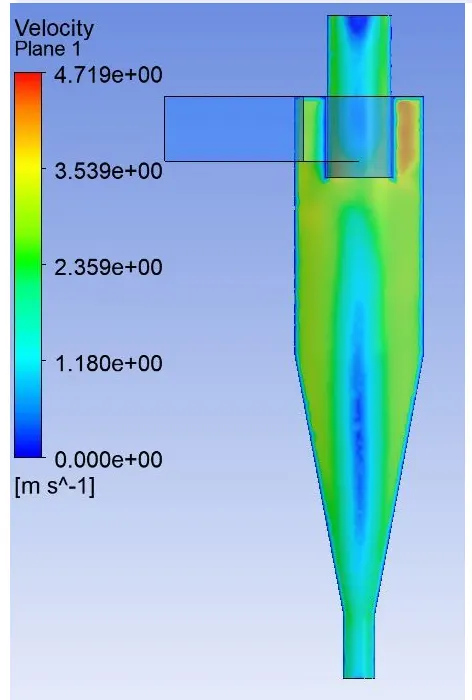
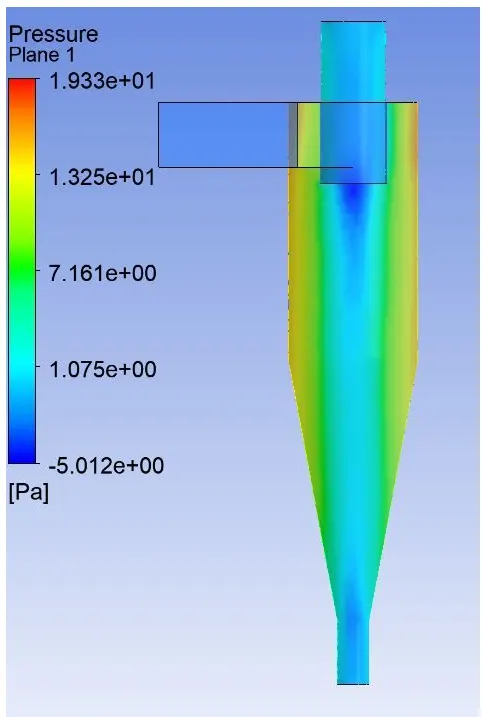
Partcile size 5e-6 and velocity 3m/s
i) velocity contour
ii) Pressure contour
iii) Partcile time in cyclone
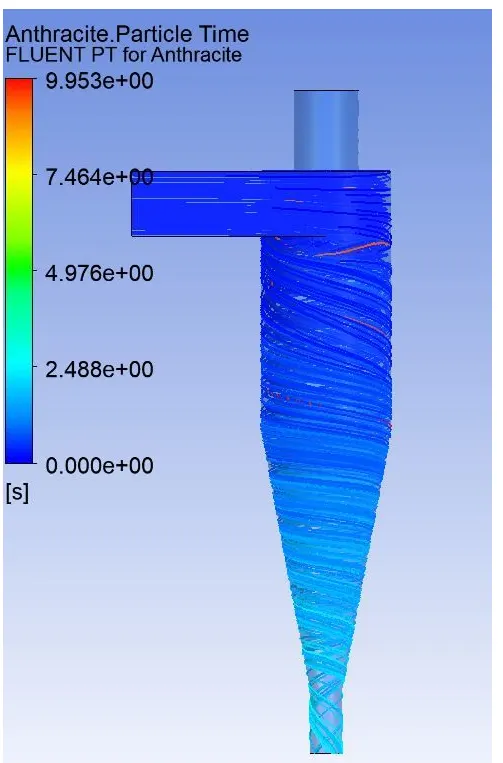
iv) Vortex core
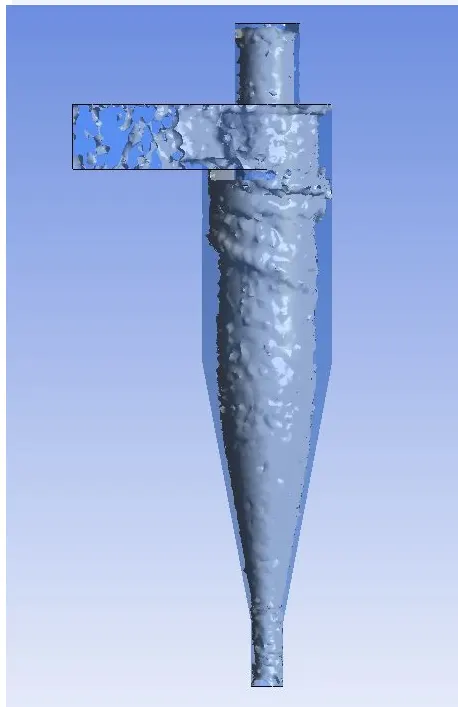
Now , let us see about setup 2. Here particle size remains the same i.e. 5e-6 and velocity varies from 1 m/s to 5m/s.
a. v= 1m/s
i) Pressure contour
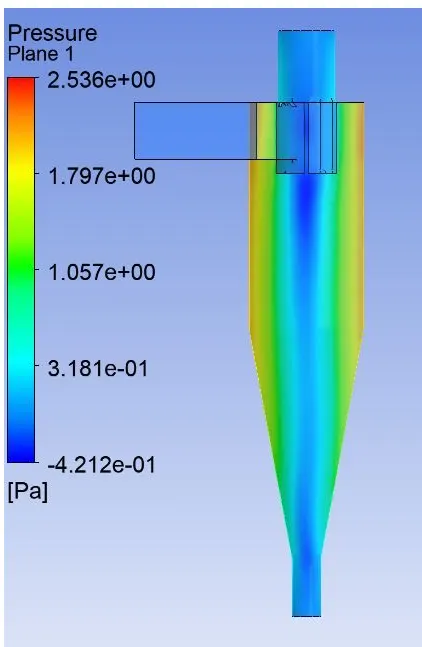
ii) velocity contour
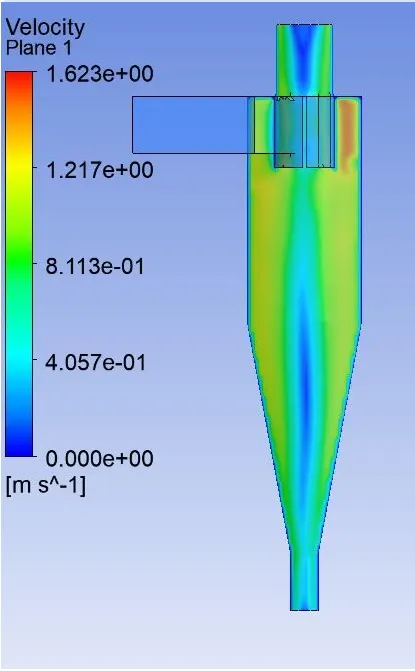
iii) Particle time in cyclone
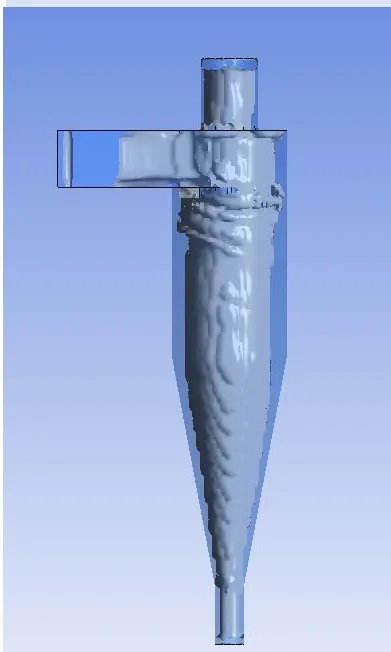
iv) Vortex core
b. v= 2m/s
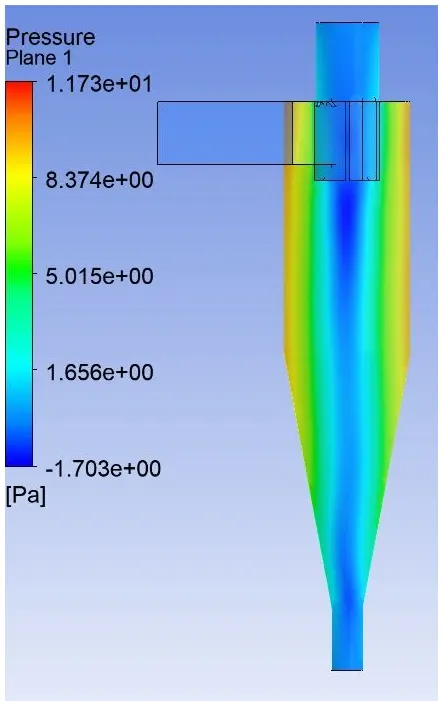
i) Pressure contour
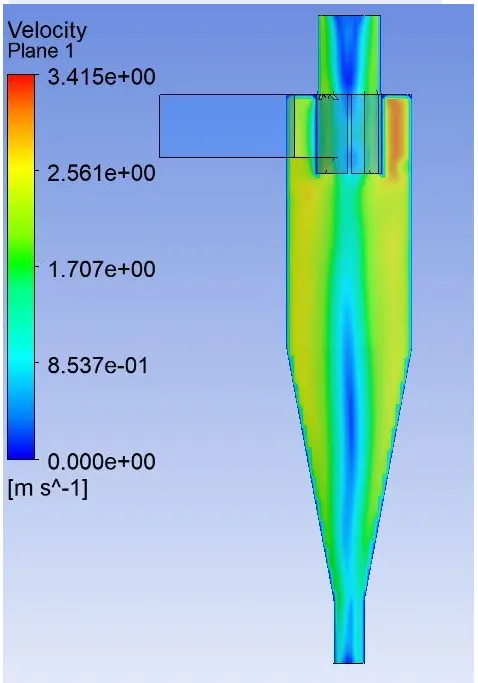
ii) velocity contour
iii) Particle time in cyclone
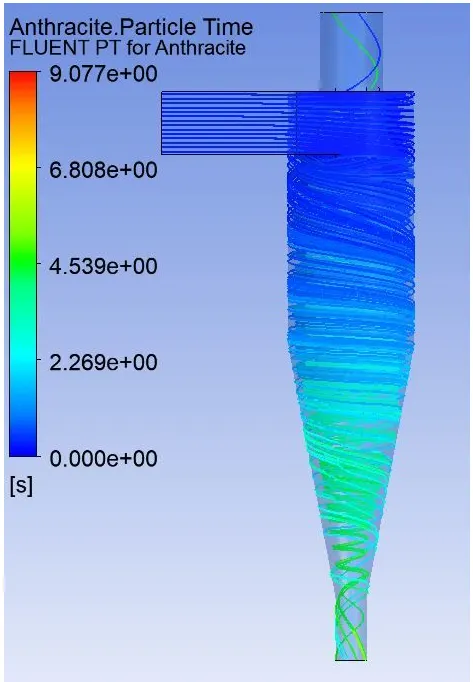
iv) Vortex core
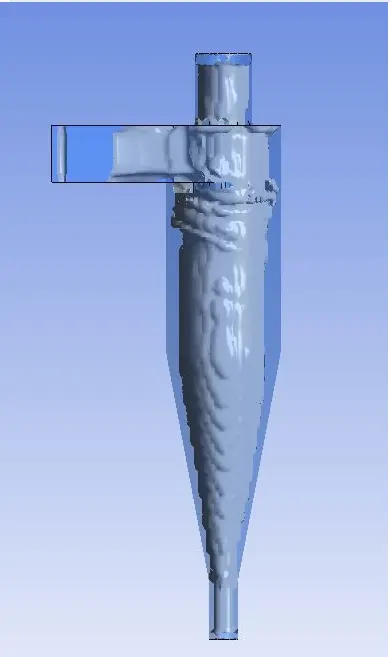
c. v= 3 m/s
i) Pressure contour
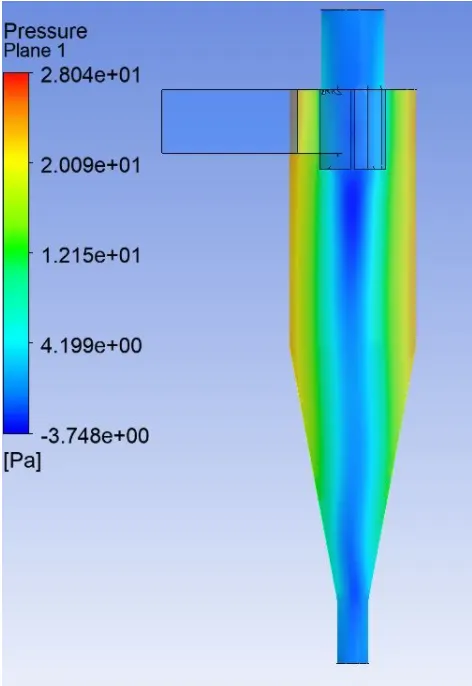
ii) velocity contour
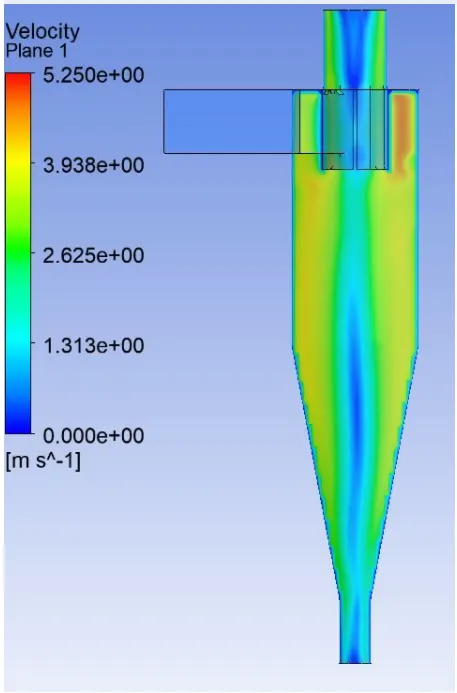
iii) Particle time in cyclone
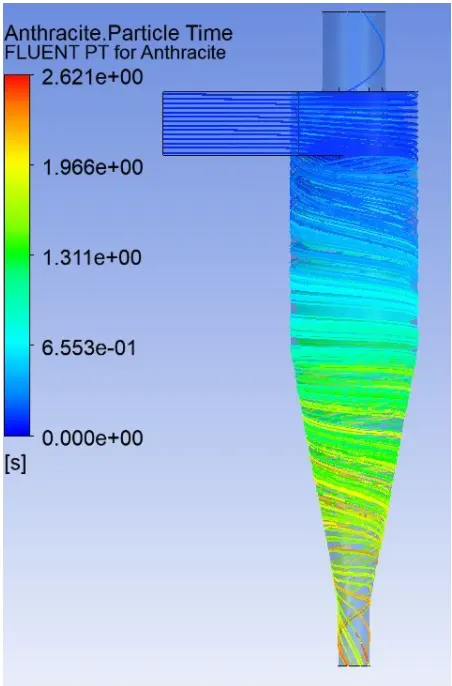
iv) Vortex core
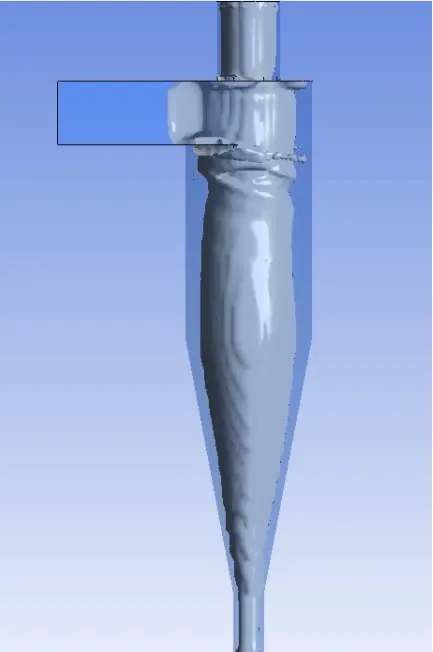
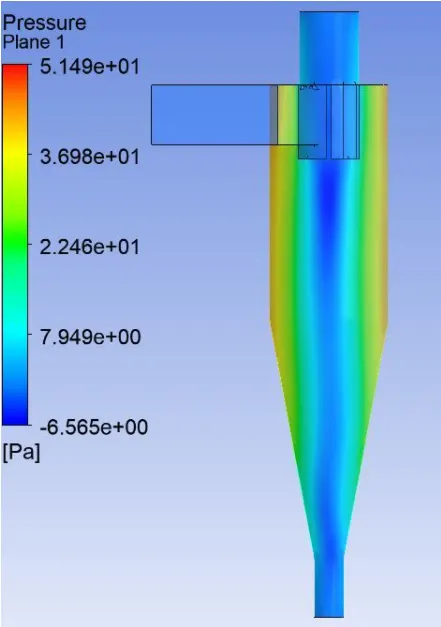
d. v= 4 m/s
i) Pressure contour
ii) velocity contour
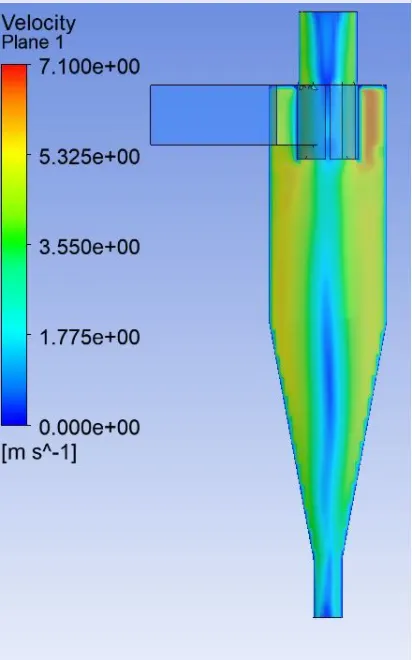
iii) Particle time in cyclone
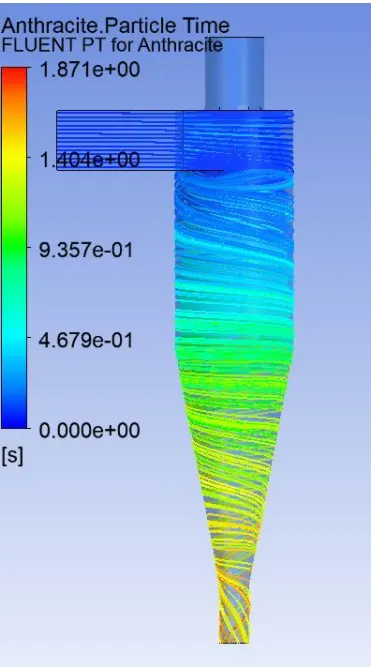
iv) Vortex core
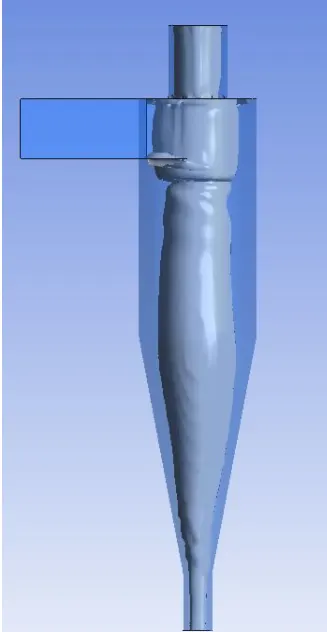
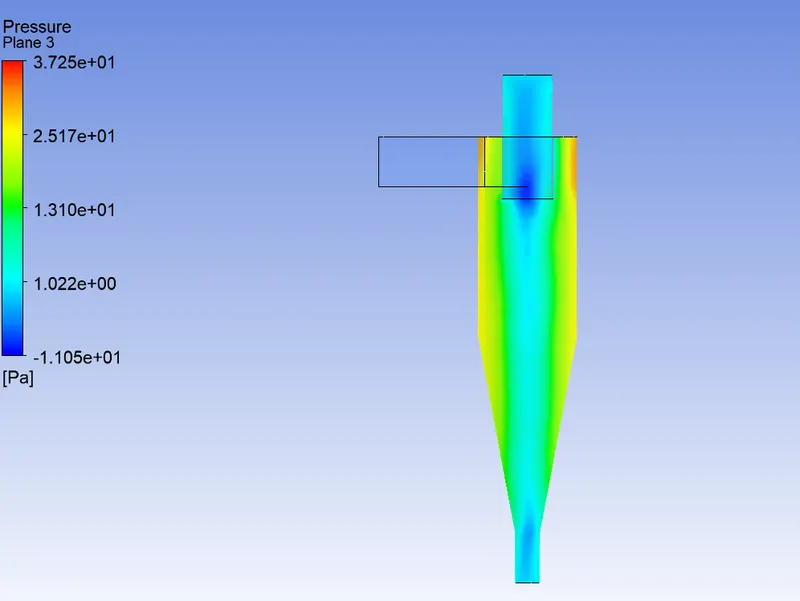
e. v= 5 m/s
i) Pressure contour
ii) velocity contour
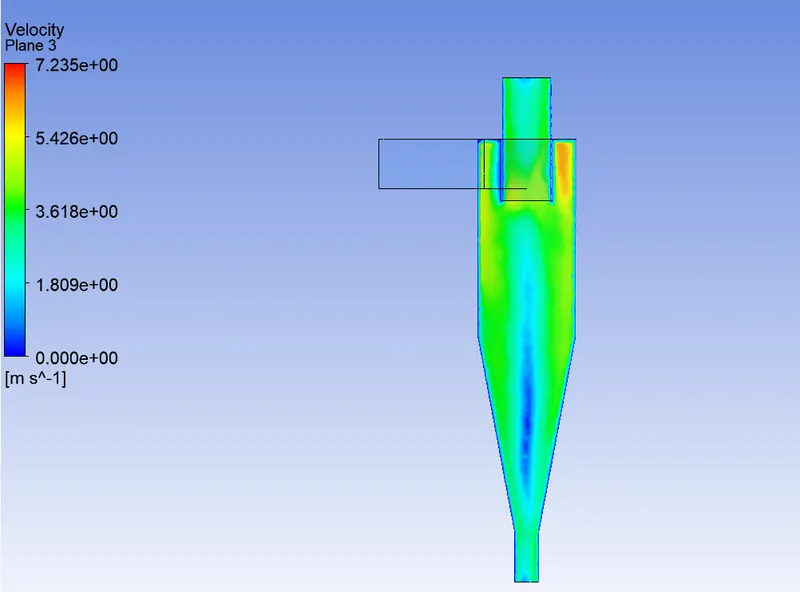
iii) Particle time in cyclone
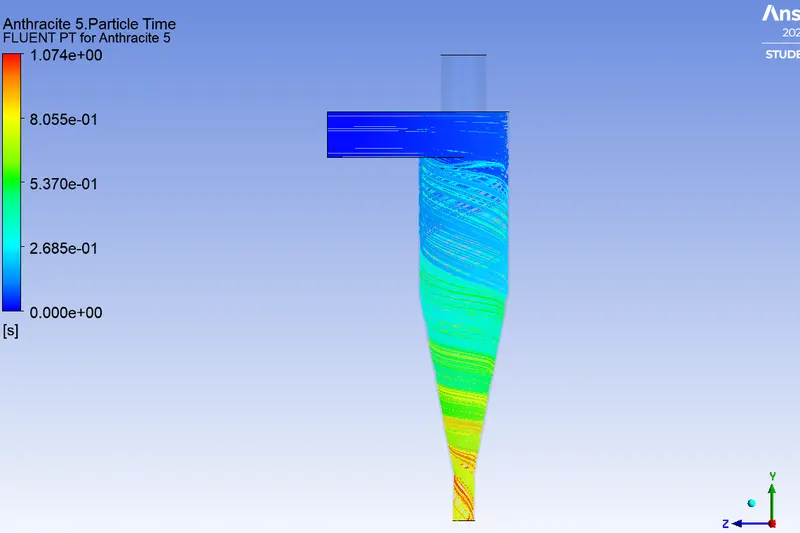
iv) Vortex core
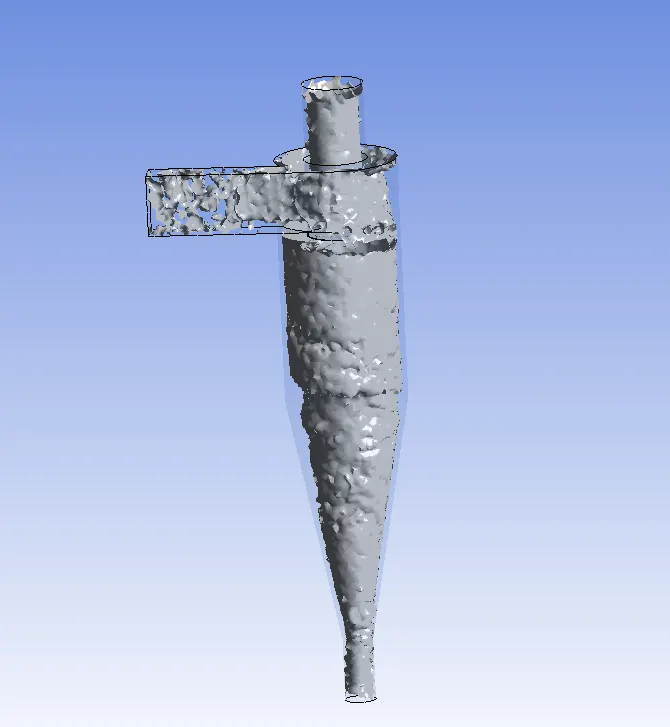
Video link : https://drive.google.com/file/d/1iFiu6f6ps3oUeMDHTj85AGZ3rXNgqOG4/view?usp=sharing
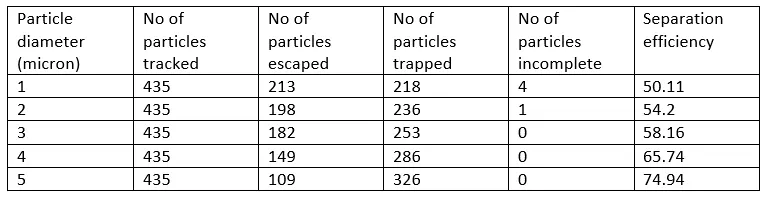
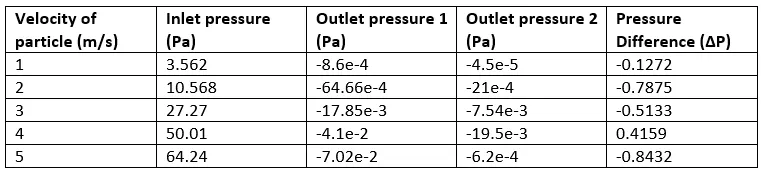
Results in tabular form:
setup 1. Calculation of efficiency of cyclone separator
setup 2. Calculation of Pressure difference
Conclusion:
1. Higher the particle diamter, higher is the separation efficiency of the cyclone separator.
2. Increase in particle speed also increases the separation efficiency of cyclone separator.
3. It can be said that given cyclone separator works best with particles with higher diameter.
References :
1) Cyclone separator - Energy Education
2) [Applied Mathematical Modelling vol. 30 iss. 11] B. Wang_ D.L. Xu_ K.W. Chu_ A.B. Yu - Numerical study of gas–solid flow in a cyclone separator (2006) [10.1016_j.apm.2006.03.011] - libgen.li
3) [International Journal for Computational Methods in Engineering Science and Mechanics vol. 6 iss. 3] Gimbun, Jolius_ Chuah, T. G._ Choong, Thomas S. Y._ Fakhru'l-Raz - A CFD Study on the Prediction of Cyclone Coll