Week - 8 Mass Scaling
Aim:
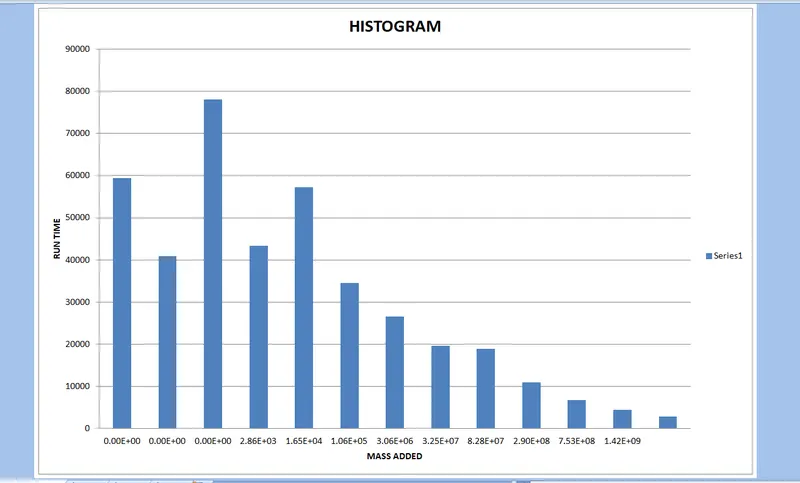
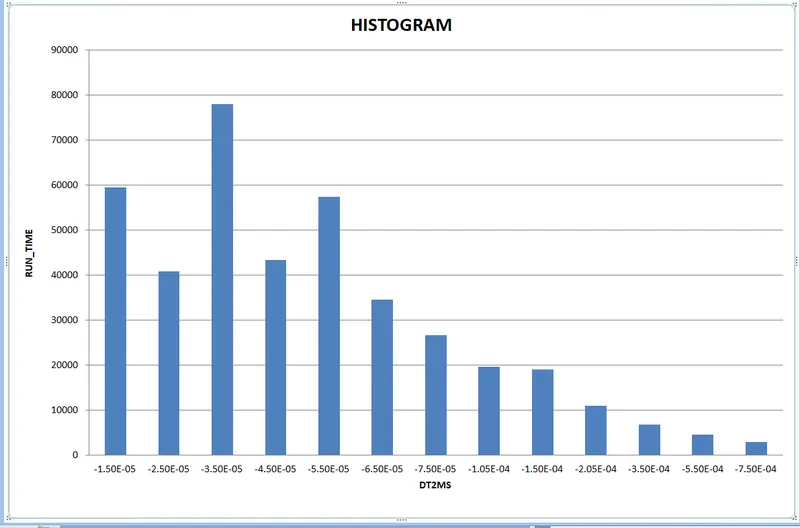
To perform the mass scaling And reduce the simulation time of a model and ensure the stability of mass scaling.the hard limit on mass scaling is 8%and stability should be completely intact.Mass is added by changing the DT2MS and TSSFAC.once the mass scaling objective is reached,a histogram sholud be plotted to compare the run time with the mass sacling trails.
Procedure:
In explicit method,the time step usually is very small to maintain numerical stability. However, small step size prevents this method from being useful for routine analysis work. To reduce the CPU cost and improve the performance, mass scaling is often used to increase the time step size in each cycle. Several methods can be used with LSDYNA to accomplish this. The simplest method is to use a large mass density for the blank. Alternatively, the user may specify a desired minimum time step size in *CONTROL_TIMESTEP.
Increasing the mass too much may cause severe penetration problem and increase the dynamic effect significantly. The results may not be acceptable. Penetrations and kinetic energy must be monitored closely to get good results.
Anytime you add nonphysical mass to increase the timestep in a dynamic analysis, Sometimes the effect is insignificant and in those cases adding nonphysical mass is justifiable. Examples of such cases may include the addition of mass to just a few small elements in a noncritical area or quasi-static simulations where the velocity is low and the kinetic energy is very small relative to the peak internal energy. In the end, it's up to the judgement of the analyst to gage the affect of mass scaling. You may have to reduce or eliminate mass scaling in a second run to gage the sensitivity of the results to the amount of mass added.
The difference between using a positive or negative number for Dt2ms in*Control_timestep is as follows:
Negative: Mass is added to only those elements whose timestep would otherwise be less thanTssfac.When mass scaling is appropriate, we recommend this method.
Positive: Mass is added or taken away from elements so that the timestep of every element is the same. My opinion is there is no advantage to using this method over the negative Dt2ms method.
Trail1:
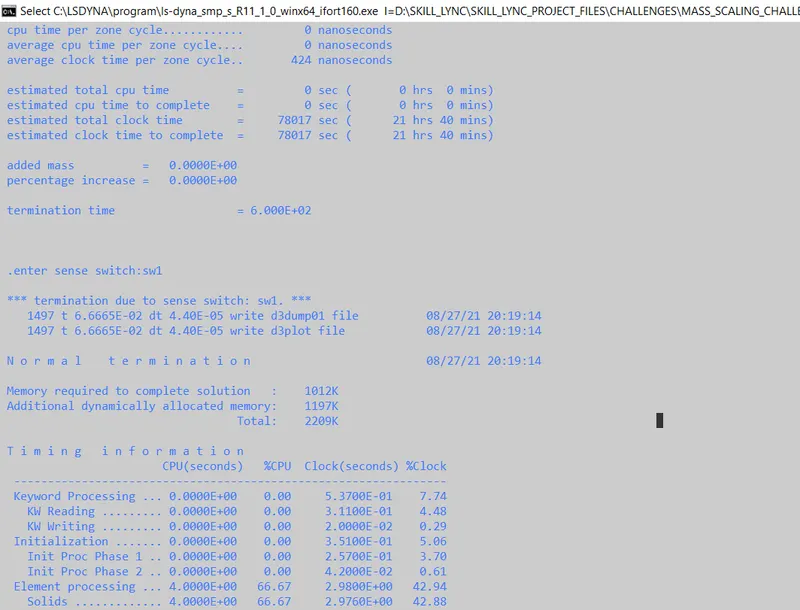
the Model for TSSFAC and DT2MS values are 0.9 and -3.5e-05 as default in the given model.
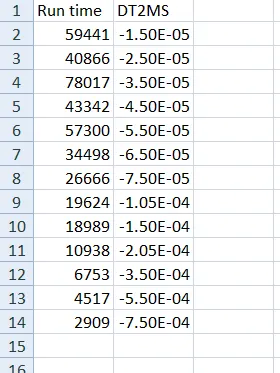
the estimated run time is 21hrs40mins(78017sec).
Trail2:
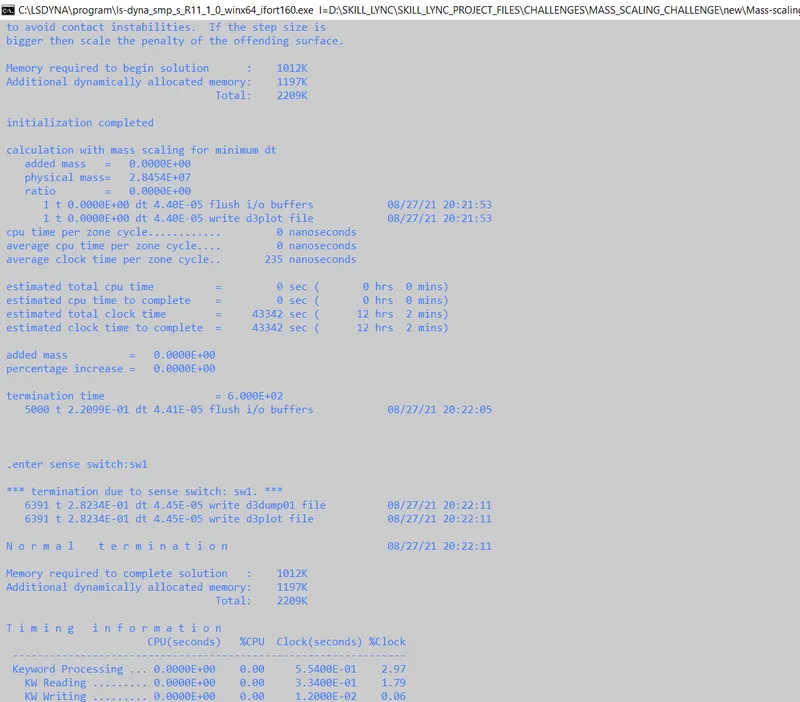
the Model for TSSFAC and DT2MS values are 0.9 and -4.5e-05.
the estimated simulation run time is 12hrs2mins(43342sec).
Trail3:
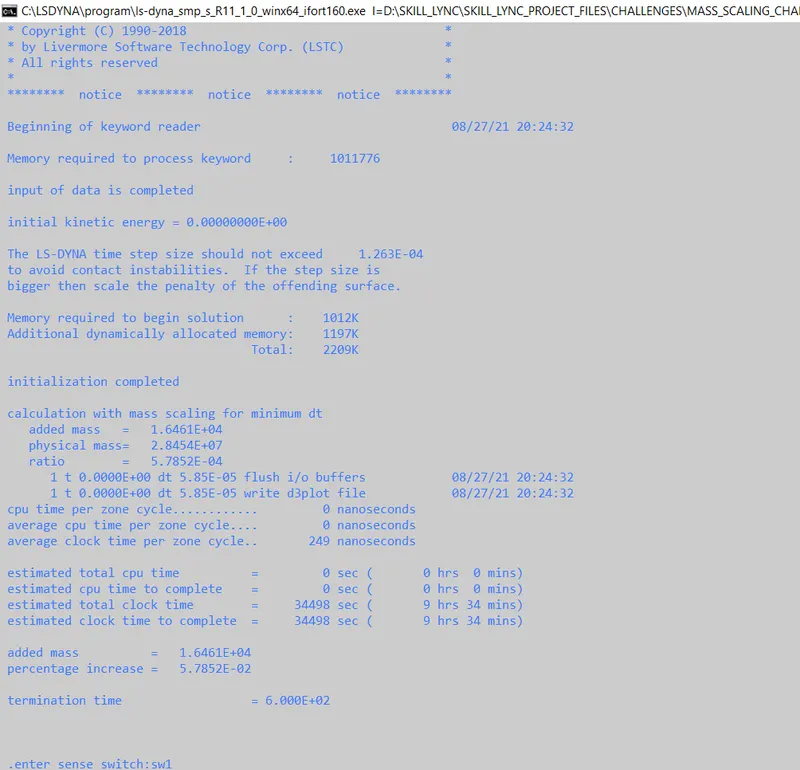
the Model for TSSFAC and DT2MS values are 0.9 and -6.5e-05.
the estimated simulation run time is 9hrs34mins(34498sec).
Trail4:
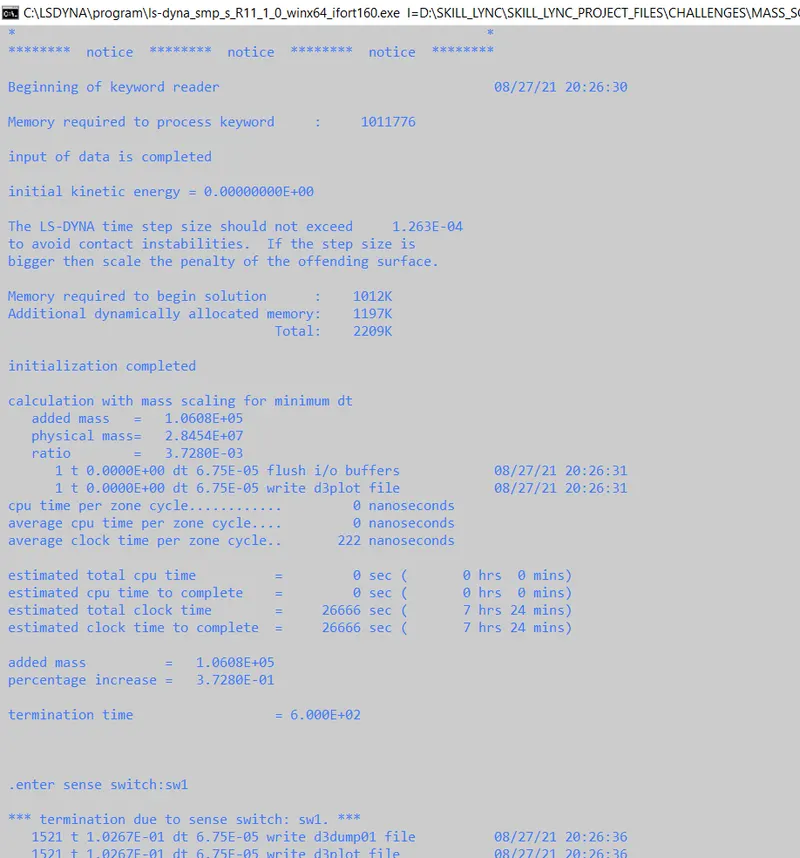
the Model for TSSFAC and DT2MS values are 0.9 and -7.5e-05.
the estimated simulation run time is 7hrs24mins(26666sec).
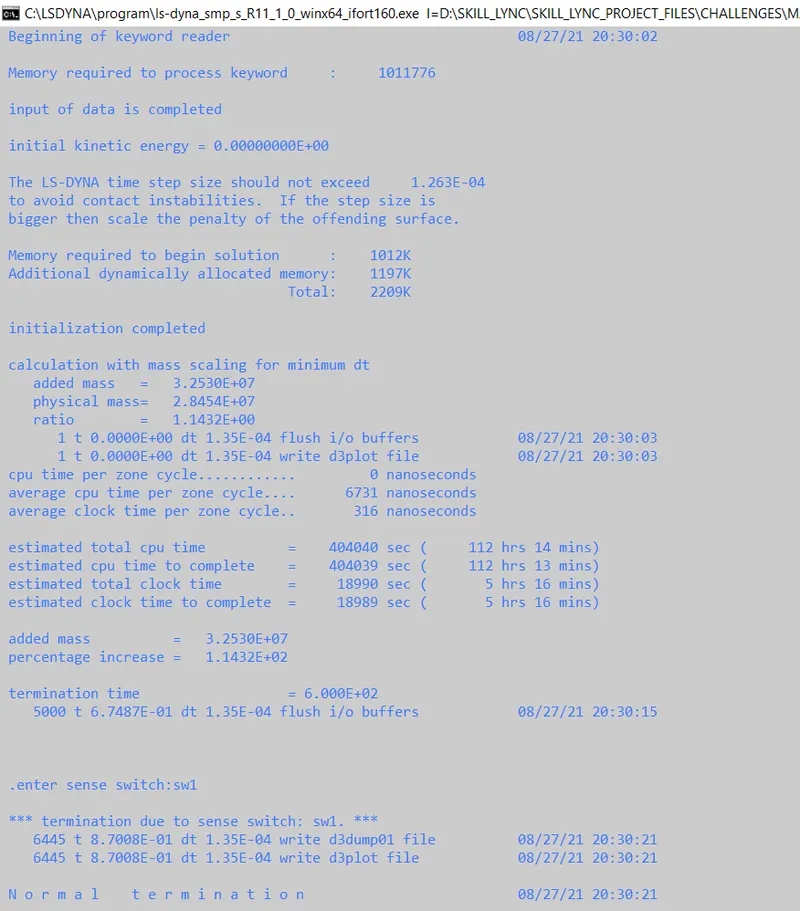
Trail5:
the Model for TSSFAC and DT2MS values are 0.9 and -1.5e-04.
model has run,the estimated simulation run time is 5hrs16mins(18989sec).
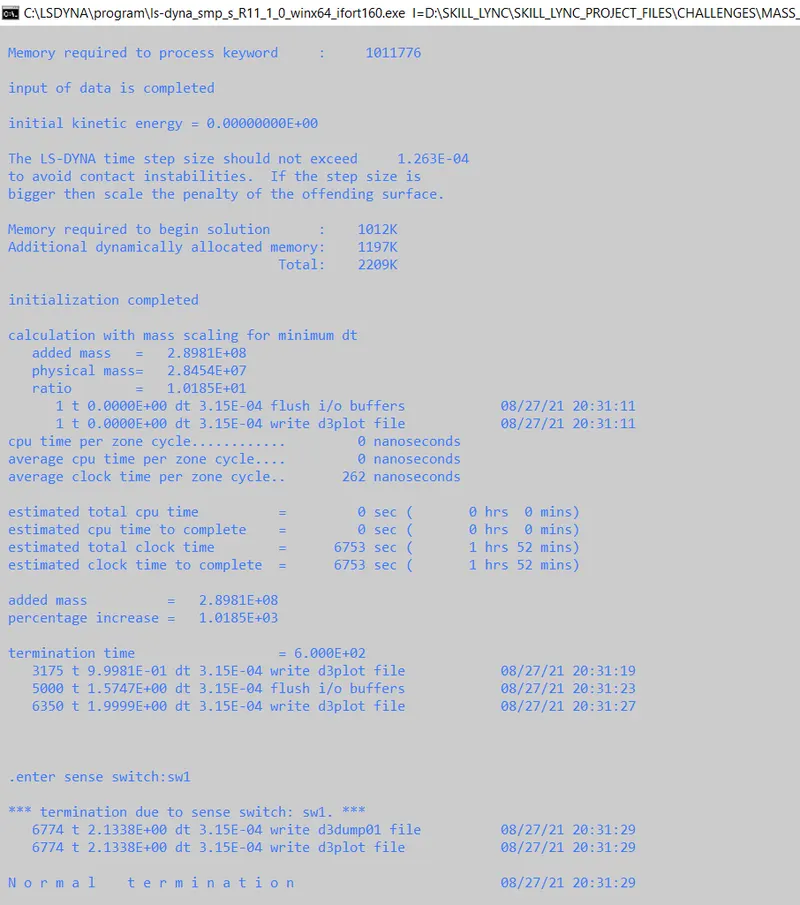
Trail6:
the Model for TSSFAC and DT2MS values are 0.9 and -3.5e-04.
model has run,the estimated simulation run time is 1hr52mins(6753sec).
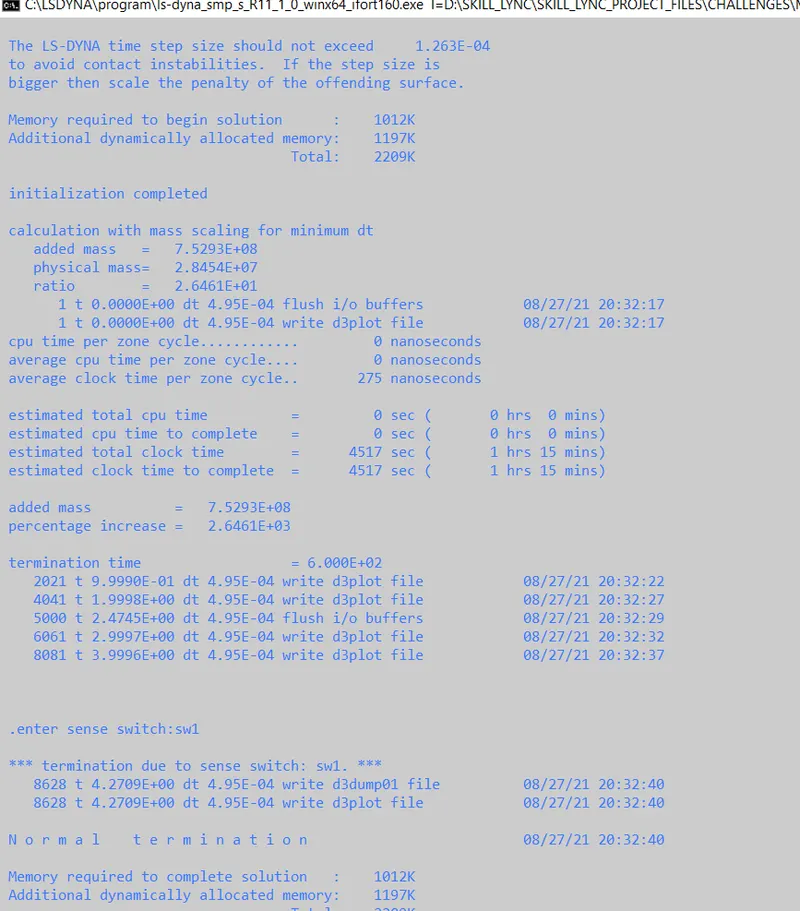
Trail7:
the Model for TSSFAC and DT2MS values are 0.9 and -5.5e-04.
model has run,the estimated simulation run time is 1hr15mins(4517sec).
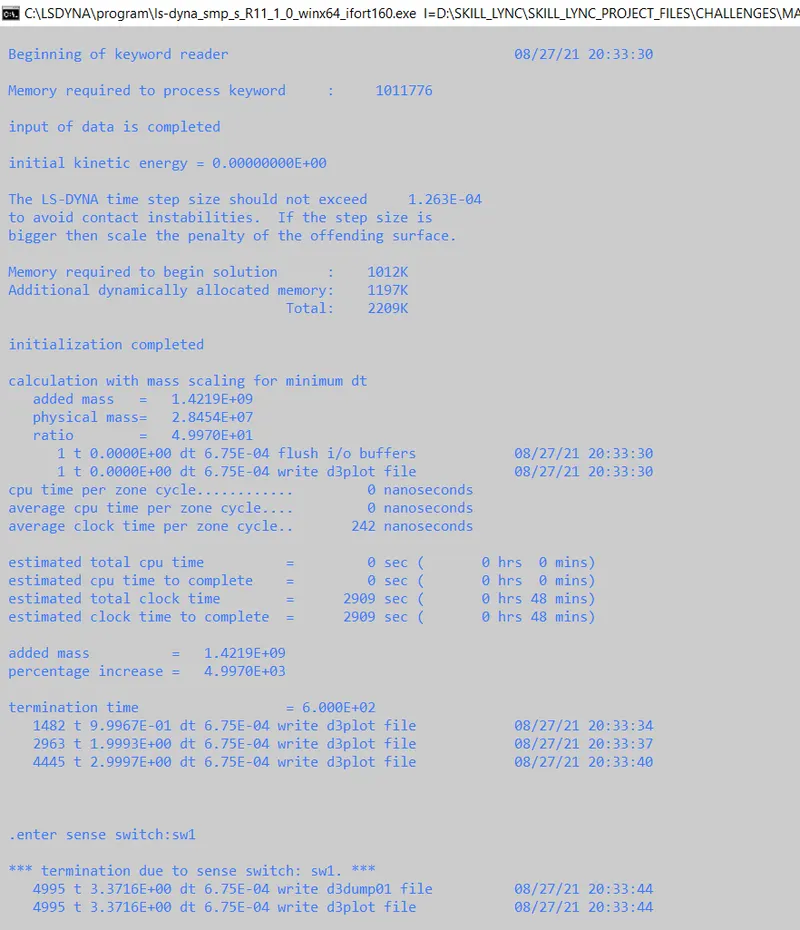
Trail8:
the Model for TSSFAC and DT2MS values are 0.9 and -7.5e-04.
model has run,the estimated simulation run time is 48mins(2909sec).
Trail9:
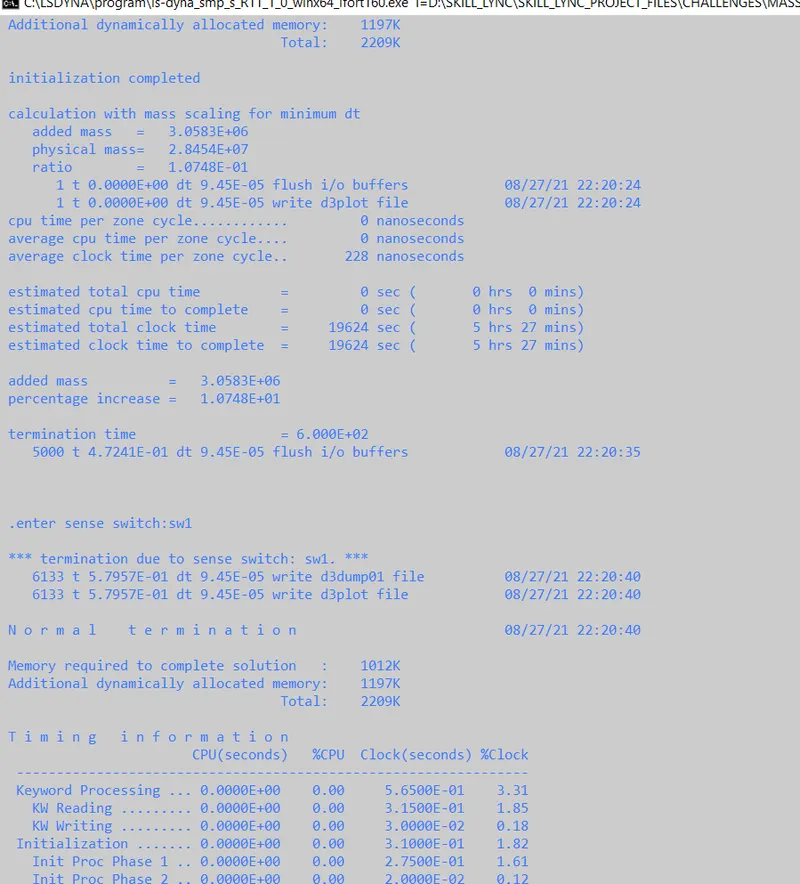
the Model for TSSFAC and DT2MS values are 0.9 and -1.05e-04.
model has run,the estimated simulation run time is 5hrs27mins(19624sec).
Trail10:
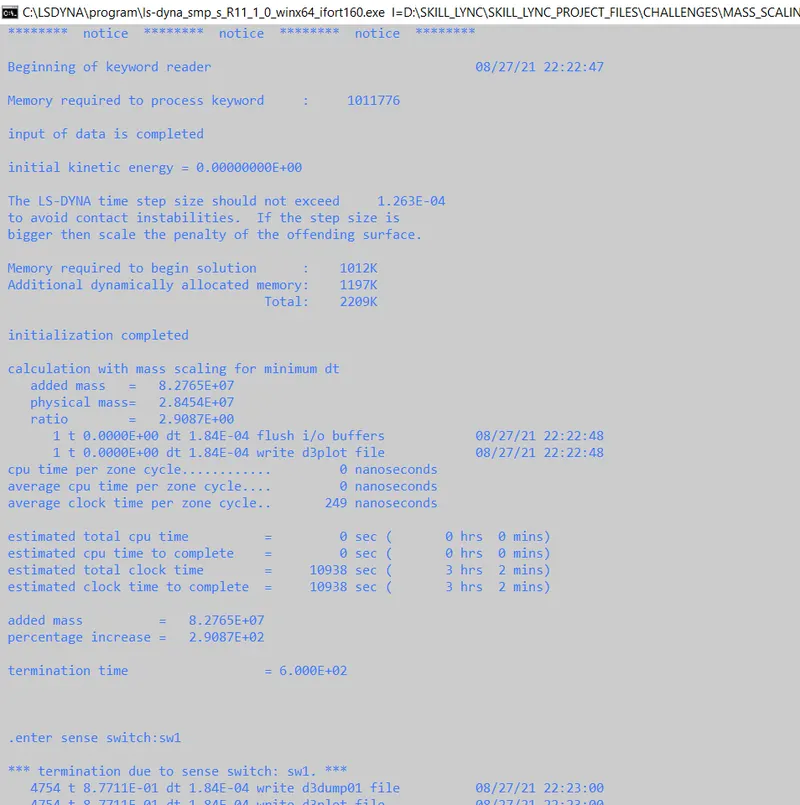
the Model for TSSFAC and DT2MS values are 0.9 and -2.05e-04.
model has run,the estimated simulation run time is 3hrs2mins(10938sec).
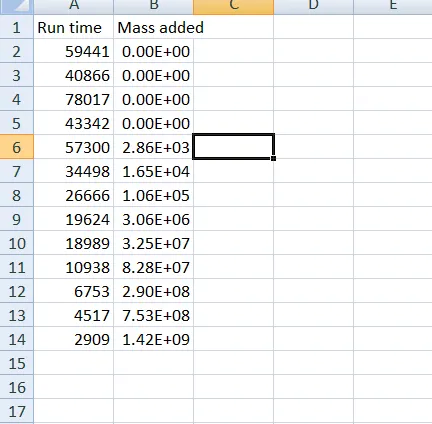
RunTime vs Mass scaling Trails:
Histogram for Run time vs Mass added:
RunTime vs DT2MS:
Implicit analysis trails:
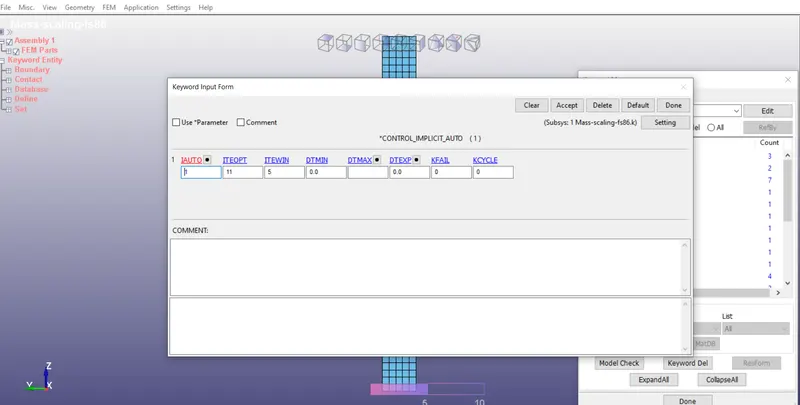
The model is run with implict analysis and control implicit cards are used.
*control_implicit_auto is used to specify how ls-dyna can adjust the time step to achieve a solution.max and min timestep are given on this card along with an optimum number of iteraions(ITEOPT)to solve each time step and an allowable iteration window(ITEWIN). when this card is activated, if Ls-dyna fails to converge for a perticular time step,Rather than error terminating it will try again using a smaller timestep size.
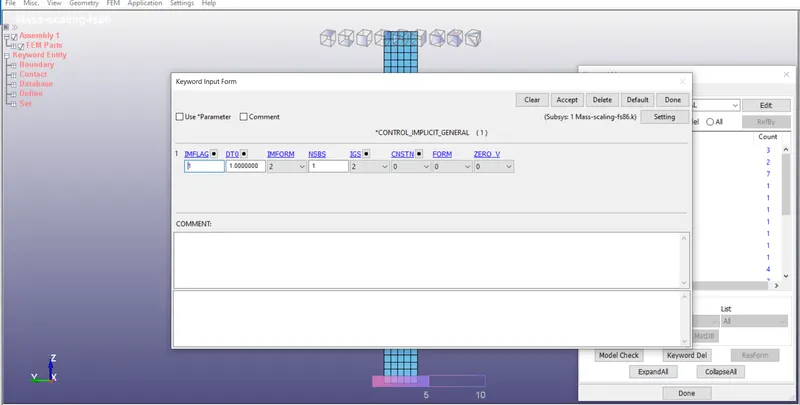
the initial timestep is specified on the *control_implicit_general.
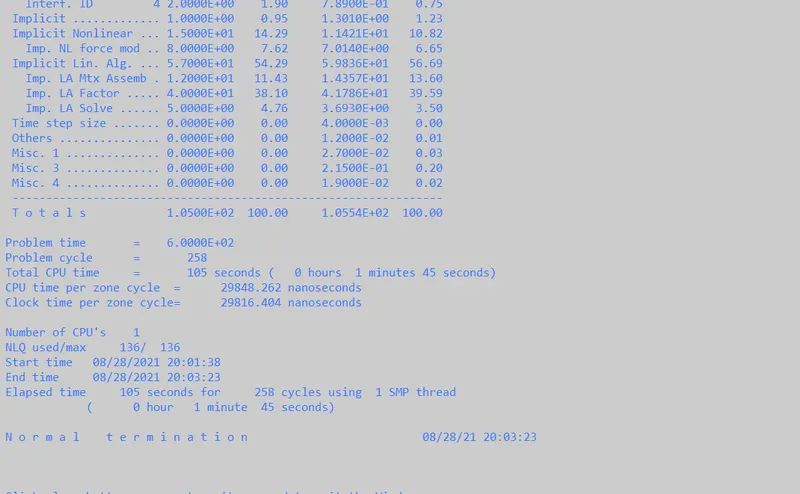
Trail1:
the Model for TSSFAC and DT2MS values are 0.9 and -3.5e-05.
the estimated run time is 1mins 45 sec(105sec).
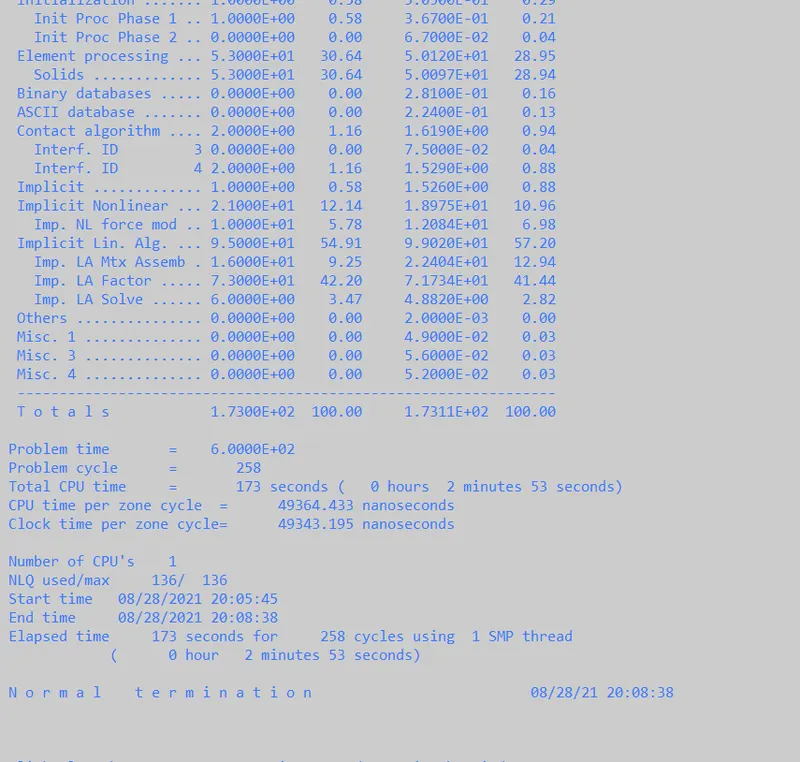
Trail2:
the Model for TSSFAC and DT2MS values are 0.9 and -4.5e-05.
the estimated run time is 2mins 53 sec(173sec).
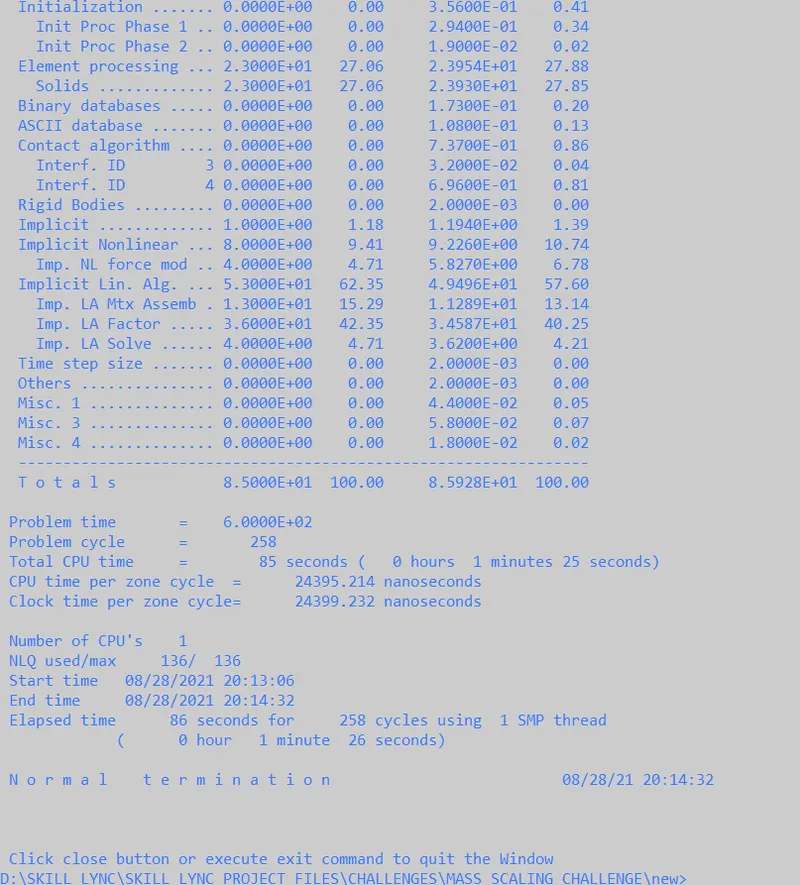
Trail3:
the Model for TSSFAC and DT2MS values are 0.9 and -2.5e-05.
the estimated run time is 1min25sec(85sec).
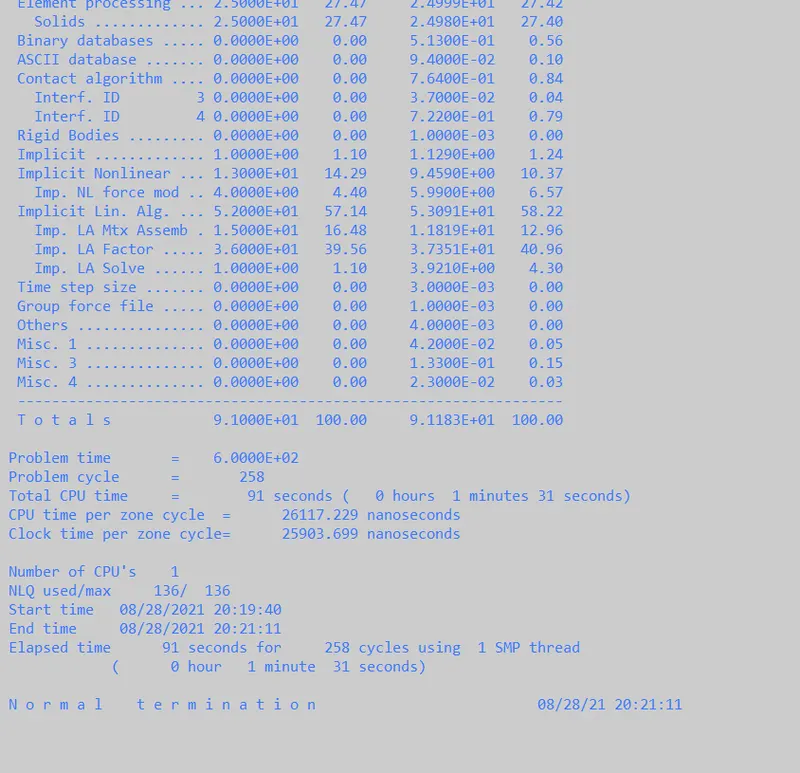
Trail4:
the Model for TSSFAC and DT2MS values are 0.9 and -1.5e-04.
the estimated run time is 1min31sec(91sec).
from the above trails we can observe the implicit analysis run times,its taking the very less time to run the simulation.when compared to the explicit analysis.
we can observe the values which i have given dt2ms and Tssfac values for Explicit as well as implicit analysis.
| TSSFAC | DT2MS | EXPLICIT (runtime) | IMPLICIT (runtime) |
| 0.9 | -3.5E-5 | 21hrs45mins(78017sec) | 1min45sec(105sec) |
| 0.9 | -4.5E-5 | 12hrs2mins(43342sec) | 2min53sec(73sec) |
| 0.9 | -2.5E-5 | 11hrs21mins(40866sec) | 1min25sec(85) |
| 0.9 | -1.5e-4 | 5hr16mins(18989sec) | 1min31sec(91sec) |
Conclusion:
Mass scaling for a given model is carried out through the time step by various values of DT2MS and TSSFAC using trail runs.
implicit method requires numerical solver for solving inverse matrix.this matrix inversion is expensive operation for large models.for explicit it does not have inverse matrix. it solves the problem at current time step.
Time step can be controlled by using the mass of the simulation,by changing the Dt2ms and Tssfac parameters.
mass scaling is useful for Explicit simulations.but not for implicit analysis.
implicit is used for the static and quasi-static process and getting the more stresses for that model.solving will take more time because of the convergence issue.
Explicit is used for the dynamic process.solving will be easy for this simulation.