Week - 8 Mass Scaling
Objective : To study the effect of mass-scaling on a simulation and to understand the use of the parameters of CONTROL_TIMESTEP card in controlling the added mass percentage and run time on a simulation.
Procedure :
Open the keyword file and open control_timestep card for the given simulation file.
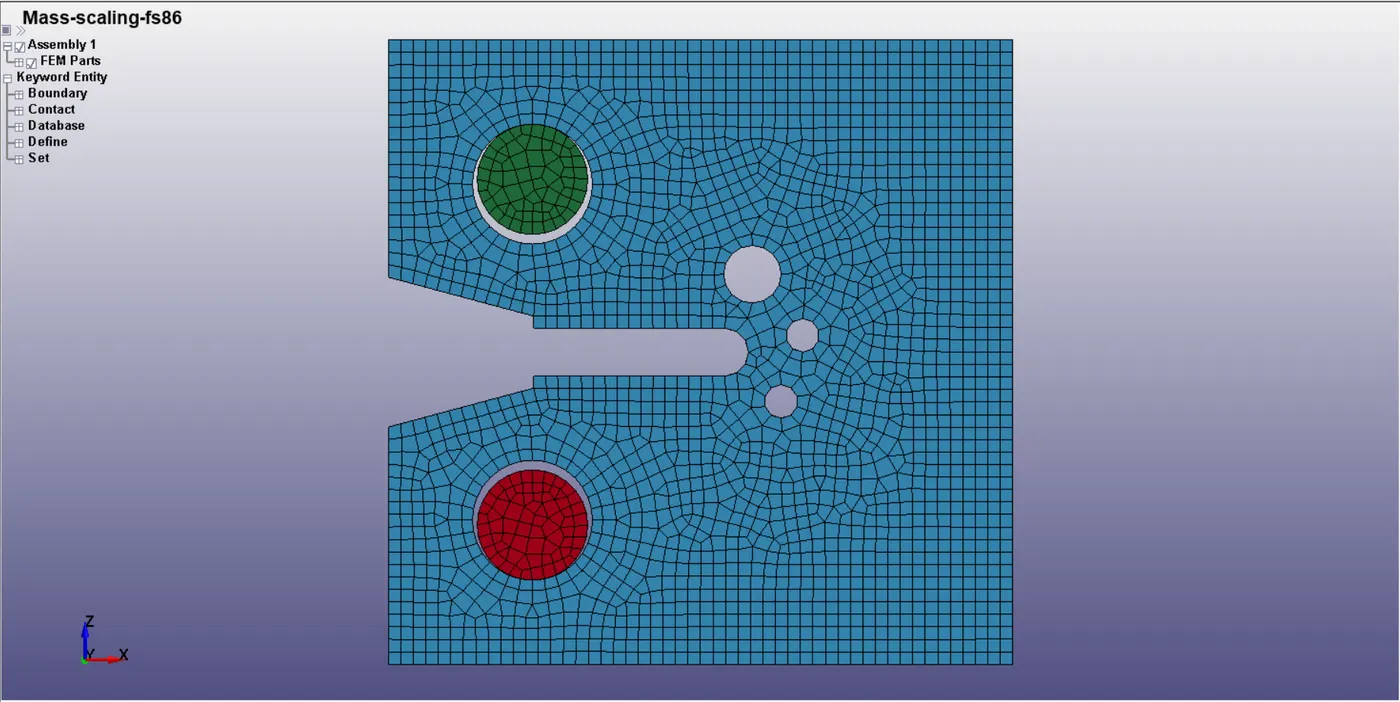
The unit system being used is kg, m, s upon seeing the material property card. Also the simulation lasts 600 seconds with constant loads making it a static simulation.
Explicit method :
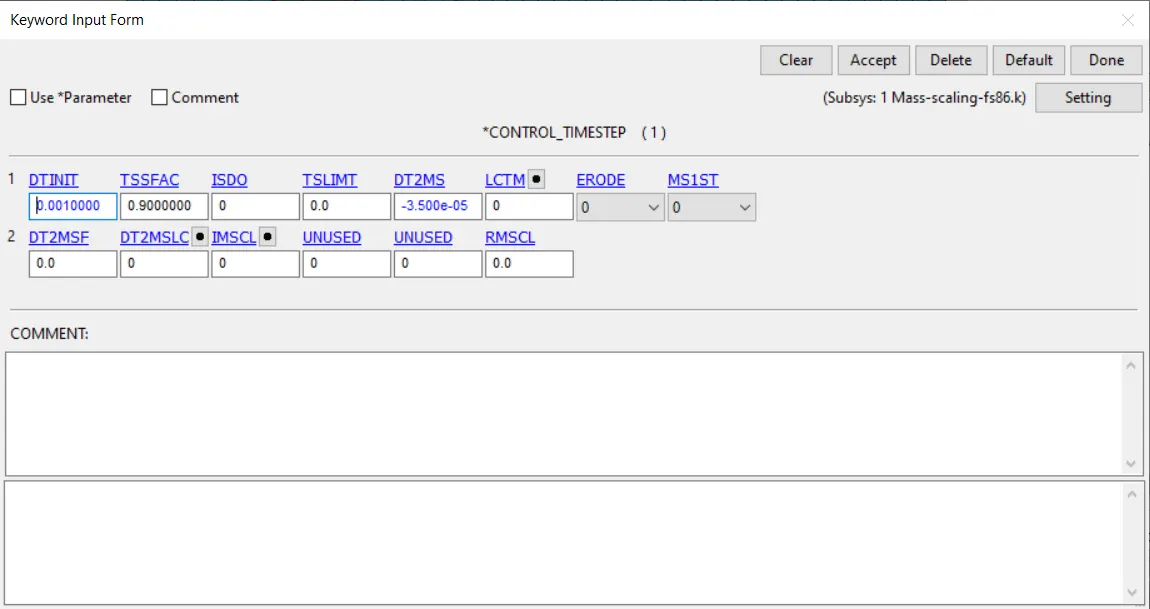
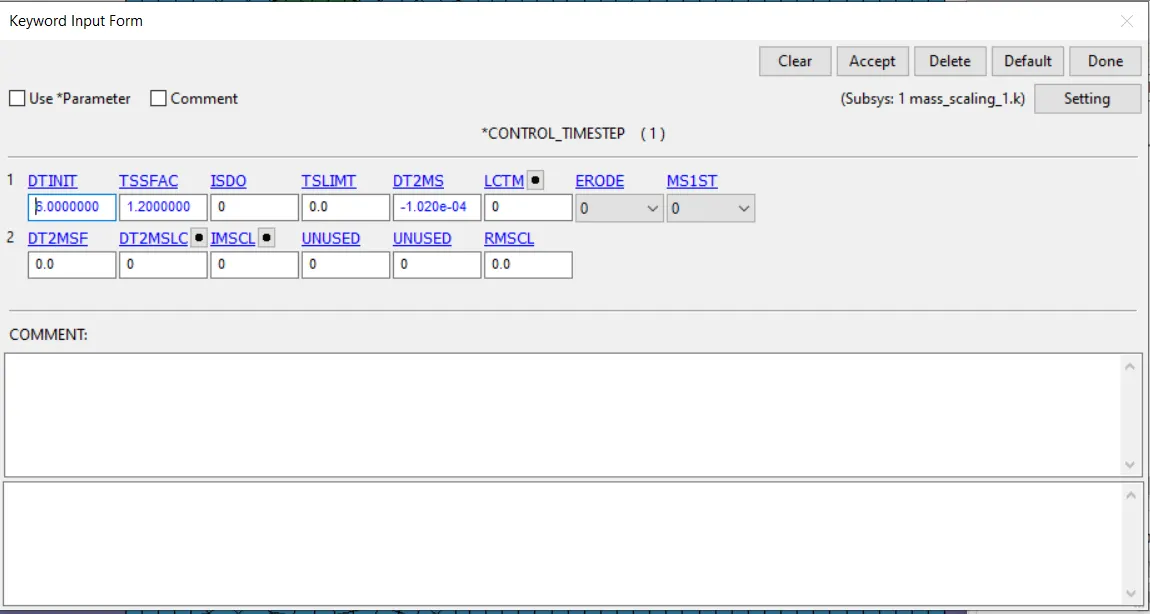
As we can see the control_timestep card has the following parameters.
Run the simulation to check the mass scaling and expected completion time.
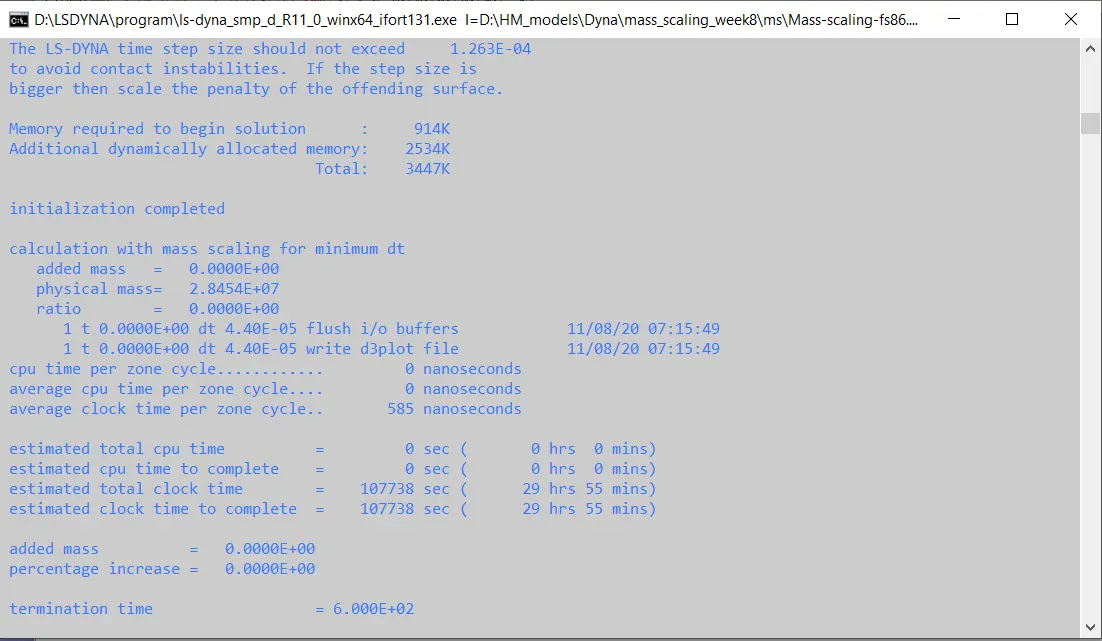
As we can see the simulation takes an estimated 25 hrs 47 mins for completion.
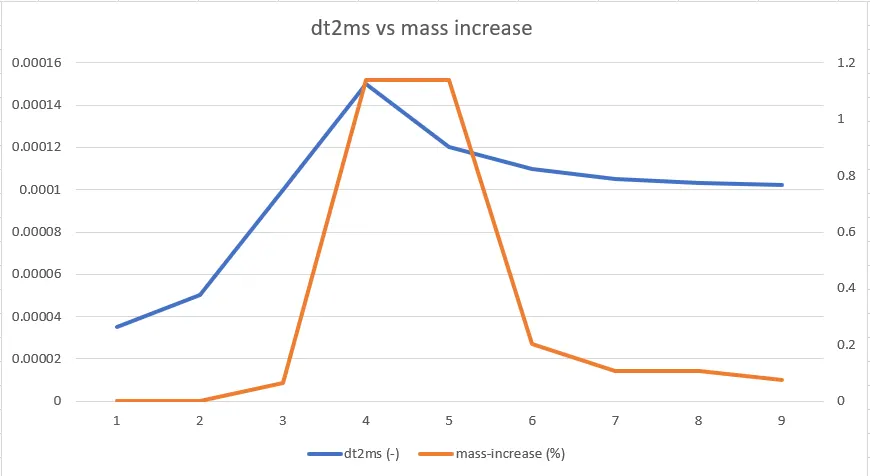
This is too big so we will modify the values given in the dt2ms section and see how it affects the simulation time, while keeping the added mass below 8%.
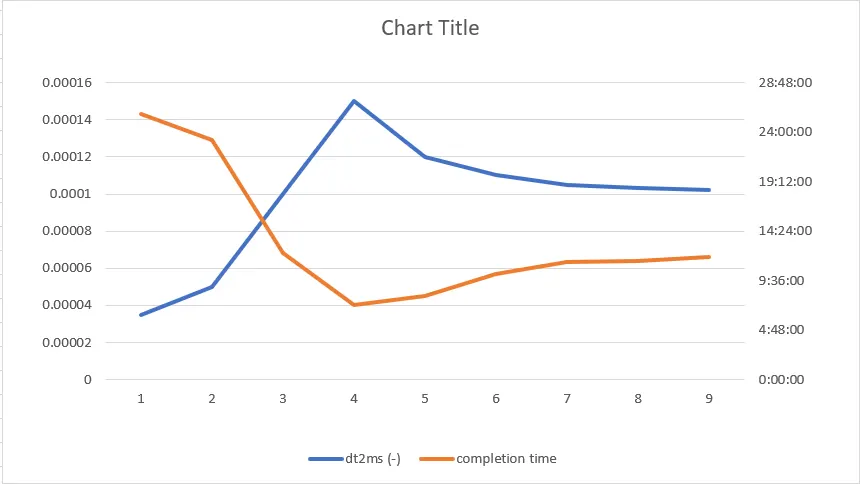
After running many iterations of dt2ms and checking the output, we get the following data :
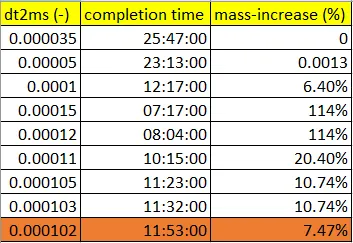
Highlighted in orange is the best value for dt2ms which gives the best values for mass scaling and estimated completion time. The simulation time can further be reduced by using a tssfac value of more than 1.
This is the graph for dt2ms v/s completion time.
This is the graph for dt2ms v/s Added mass.
In this way we have found out the best way to perform this simulation in explicit manner.
Implicit method : To perform the simulation with implicit method, we can make the following changes in the model.
Control Cards :
Control Implicit auto to set the number of iterations being performed per load step and the maximum and minimum timestep.
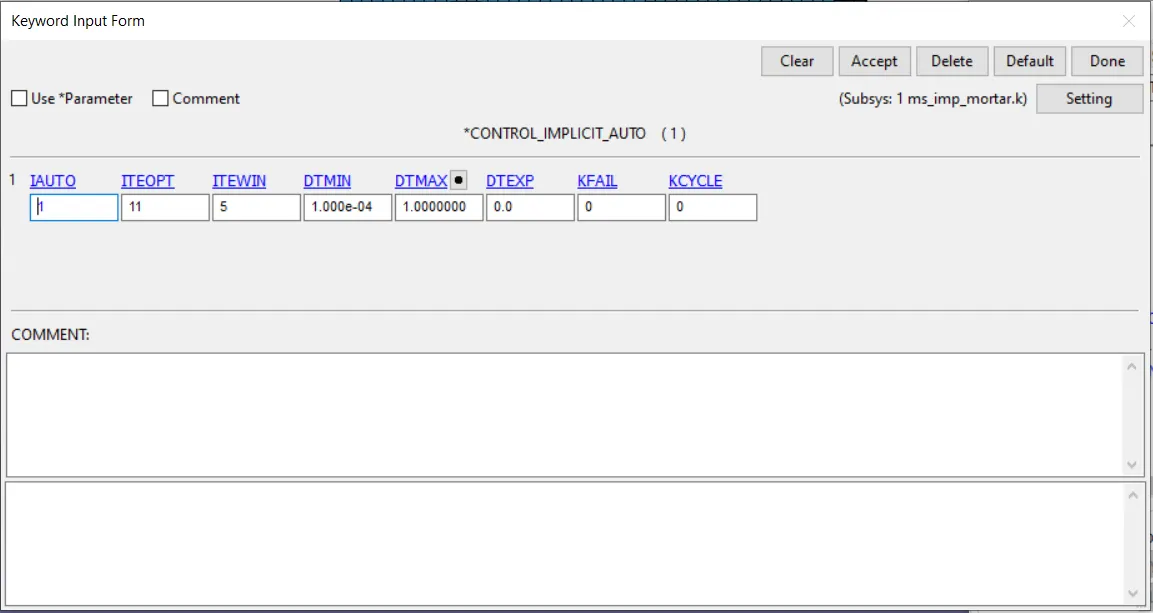
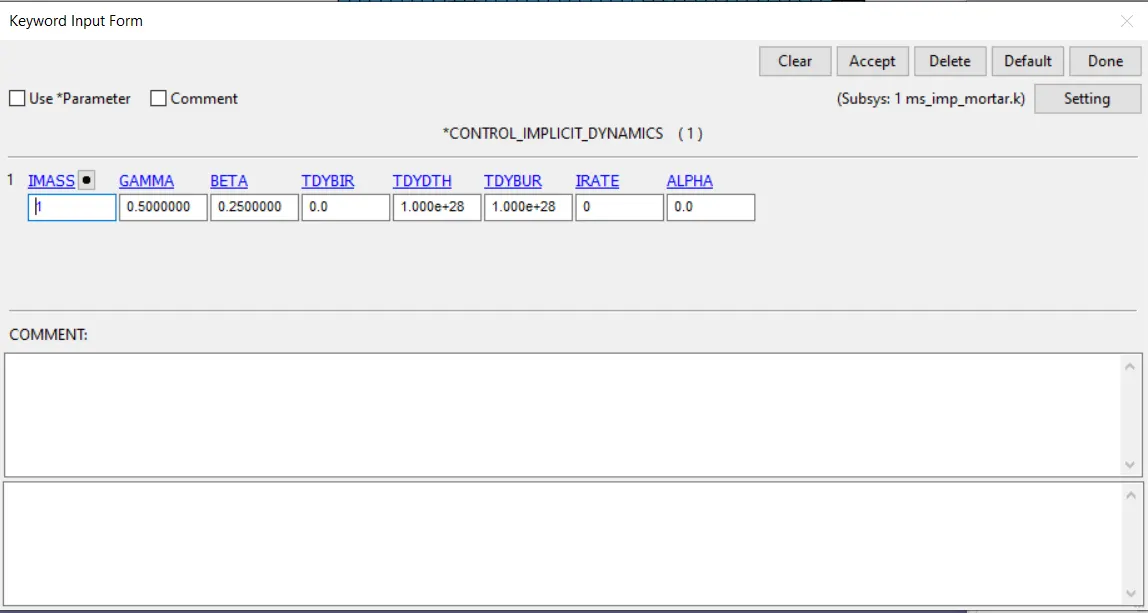
Control_implicit_dynamics :
This card is used so that it runs the simulation in a quicker manner treating it like a dynamic simulation instead of quasi-static.
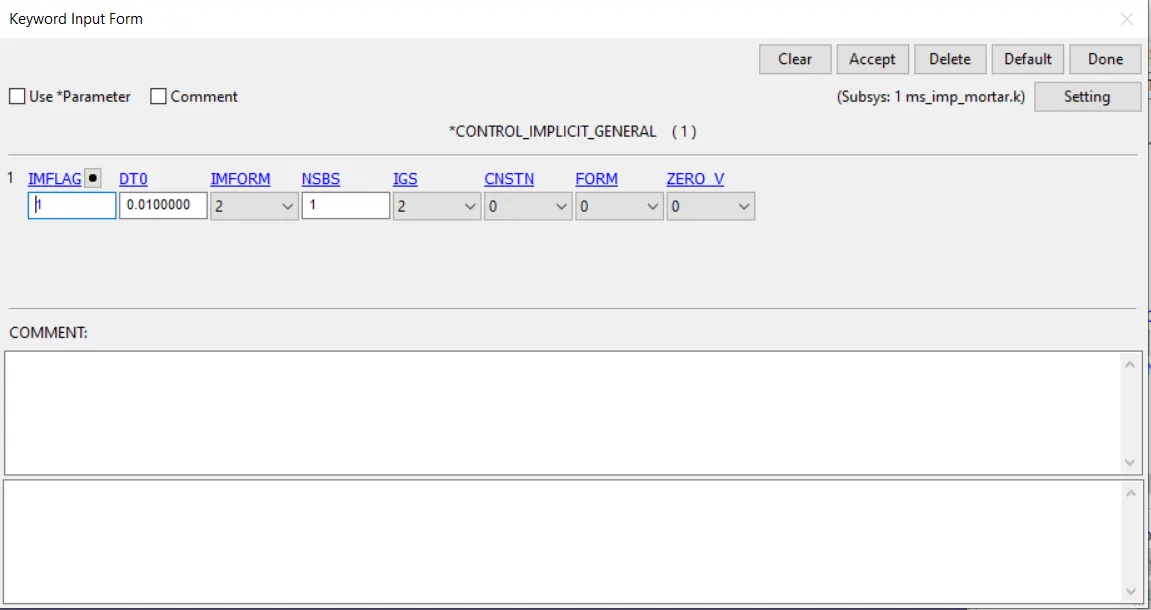
Control_implicit_general :
To ensure the simulation starts in implicit manner.
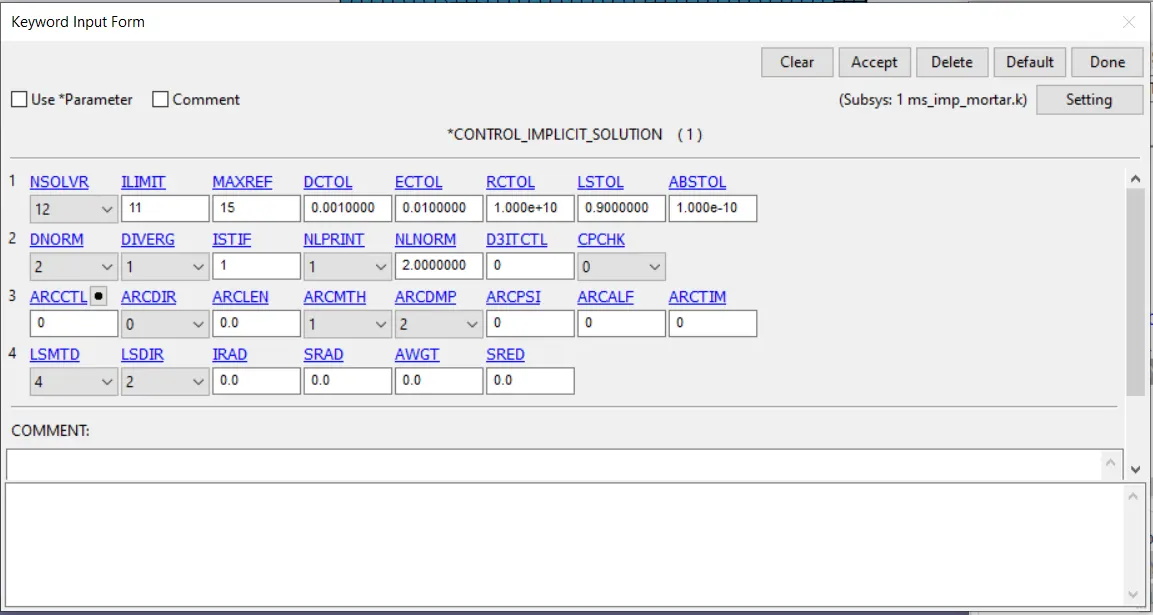
Control_implicit_solution :
This is used to set the convergence parameters for non-linear solution.
Control_timestep :
This card is used to set the minimum timestep below which mass-scaling occurs.
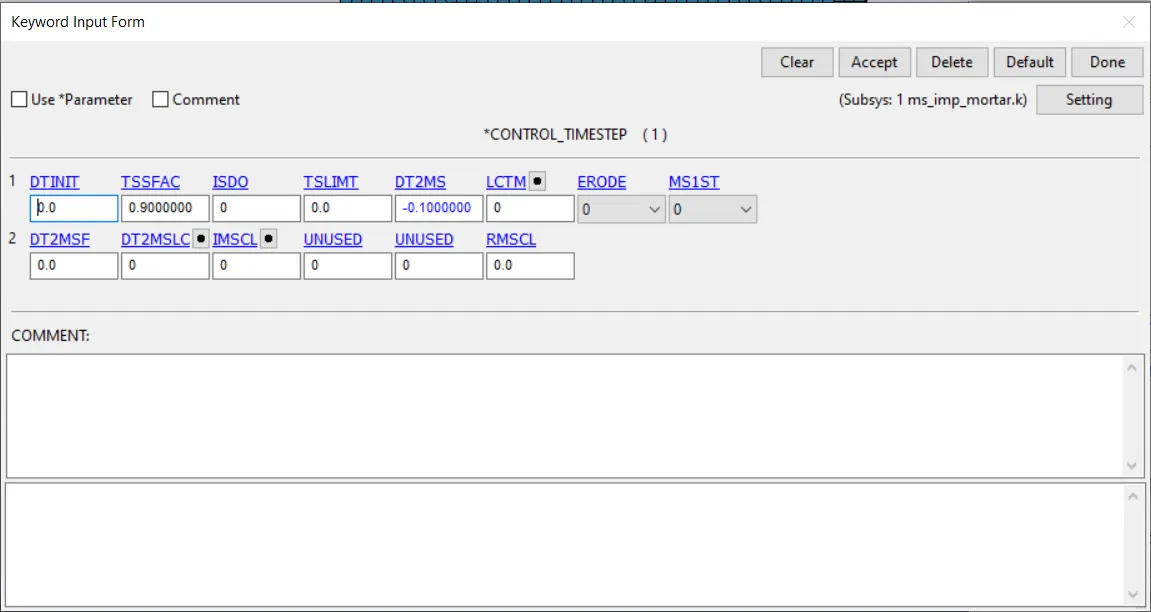
Here a dt2ms value of negative 0.1 is chosen.
Contacts :
The contact definition is changed to Automatic_surface_to_surface_mortar since this is better suited for implicit analysis.
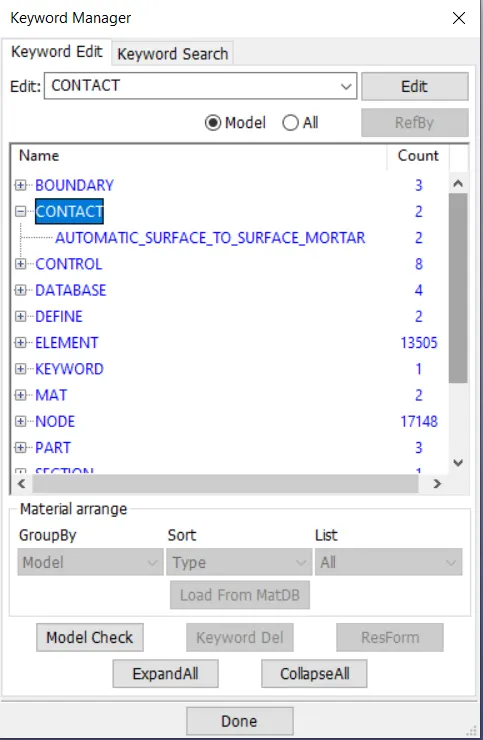
Another simulation is also run using the standard contacts.
Run the simulation :
On running the simulation, we see that the simulation completes rather quickly as compared to explicit analysis with no mass addition.
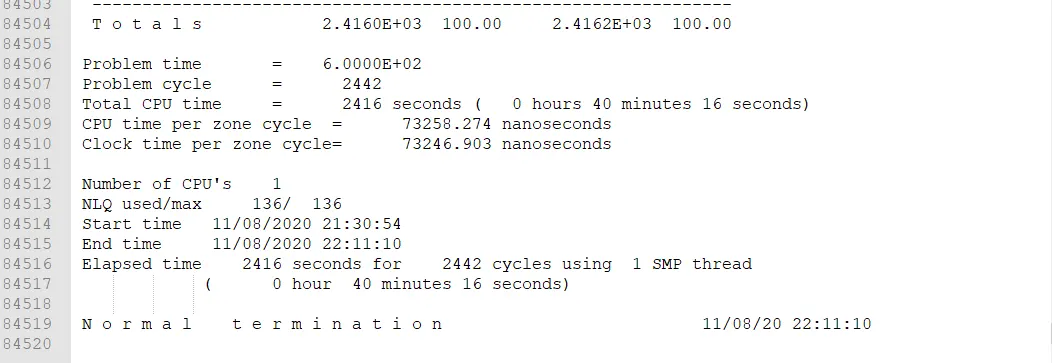
Time taken = 00:42:16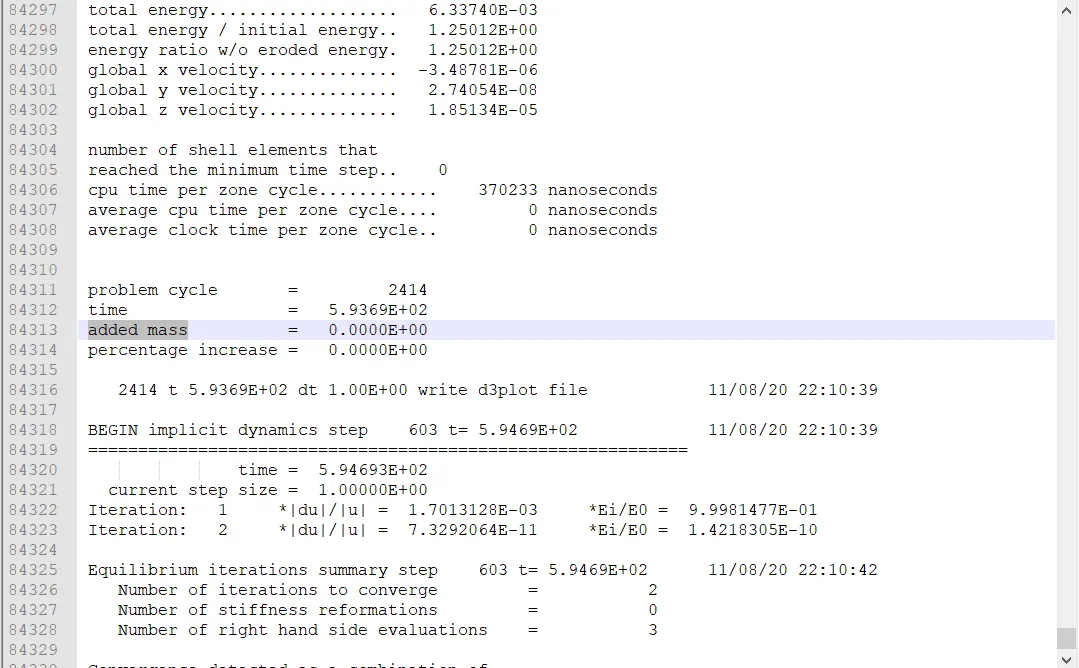
Added mass = 0 kgs.
Conclusion : Hence for quasi-static type simulations with long run times it is better to use implicit type analysis as we are mostly concerned with the end result (such as total deformation, total stress/strain and not the path which it follows) it solves quicker ensuring equilibrium and there is no added mass.
Result : 3 .k files are present, one with explicit mode, and 2 with implicit mode, (one with mortar contacts and other with standard contacts.)
Files