Week - 8 Mass Scaling
AIM:
- By using the mass scaling we need to reduce the run time of the explicit simulation for the given model.
- For the same model the implicit analysis is run and compare the run times of both implicit and explicit analysis.
PROCEDURE:
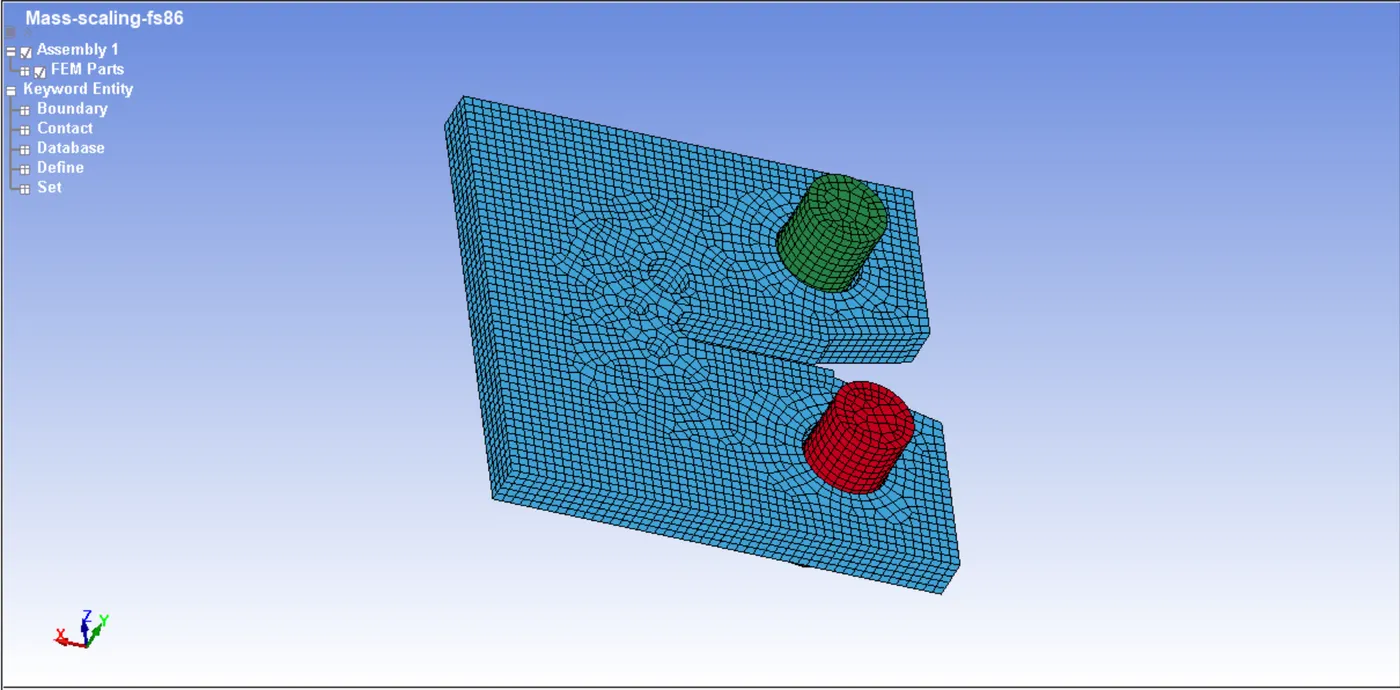
- The model is imported into the LS-DYNA and check the keyword in the file.
- Here the mass scaling is analysed in this challege. Generally mass scaling is adding the non physical mass to model in order to reduce the simulation time by increasing the time step.
- Most of the cases around 8% increase in mass will reduce the simulation time significantly.
- We can vary the simulation time by CONTROL_TIMESTEP keyword using the dt2ms and tssfac variables.
- If dt2ms>0 both the negative values and positive values are adjusted to dt2ms where as if dt2ms<0>
- The tssfac varible only effects the simulation time not the mass.
- In the control timestep we can change the dt2ms starting with -3.5e-5 with 0 mass added at that timestep. Then slowly the value of dt2ms is increased by trial and error method and check the percentage of mass added for every trail.
- This variation in the dt2ms is plotted in the graph and the data is also given in the table with variation in time.
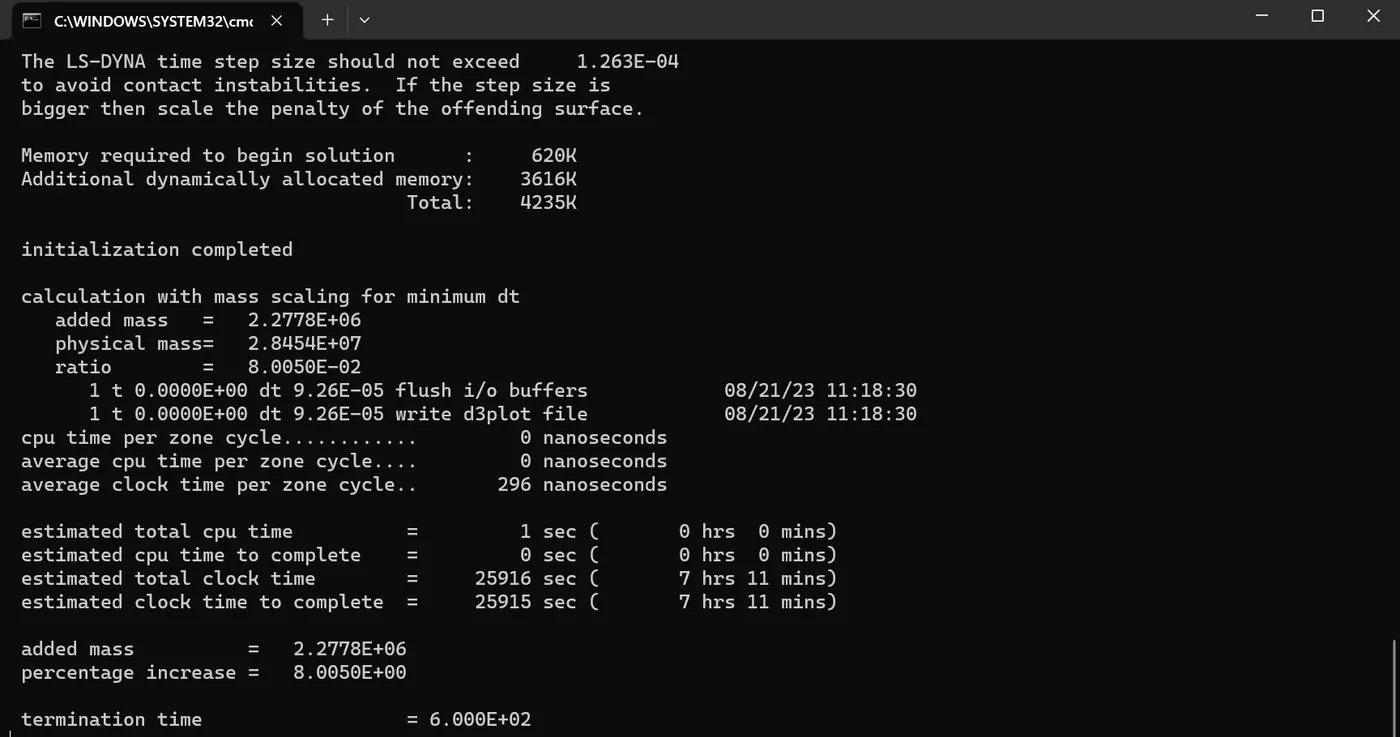
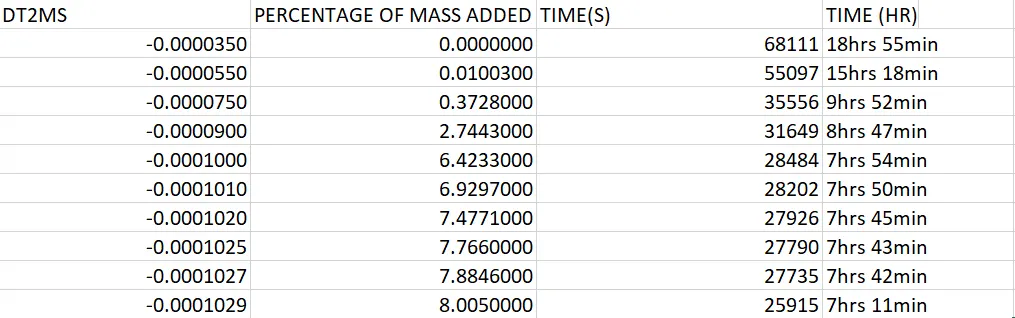
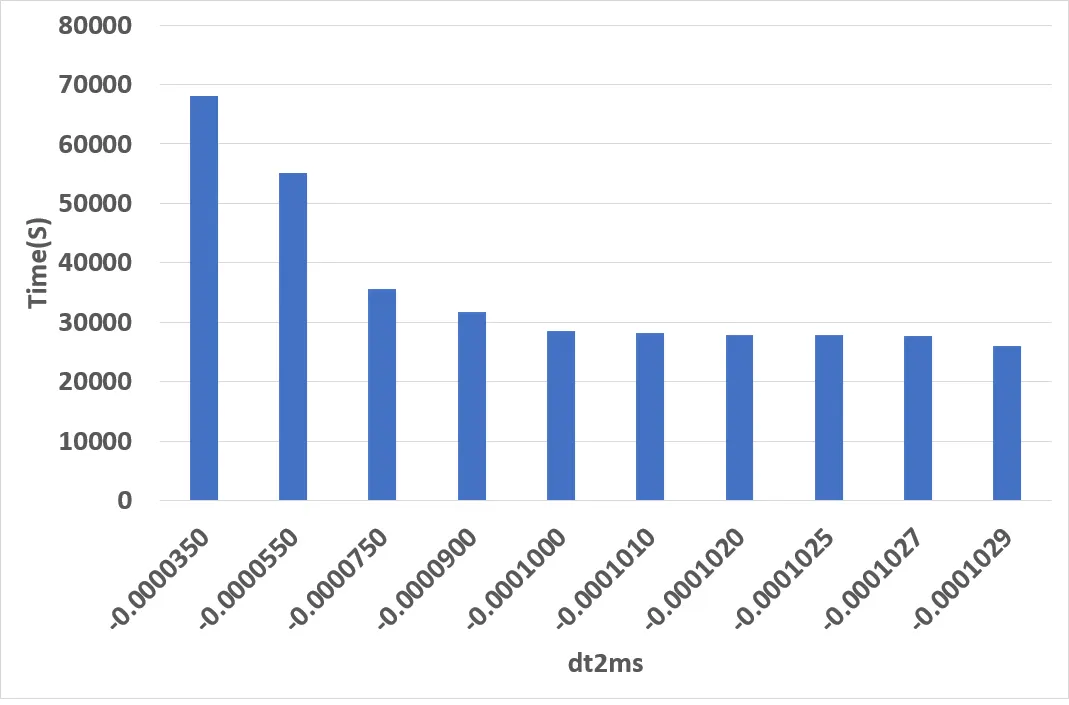
- For dt2ms value of -1.029e-4 is giving the percentage added mass as 8% and the time has gradually reduced from 18hrs 55mins to 7hrs 11mins.
- The variation of tssfac is also shown in the graph and also the data is shown in the table.

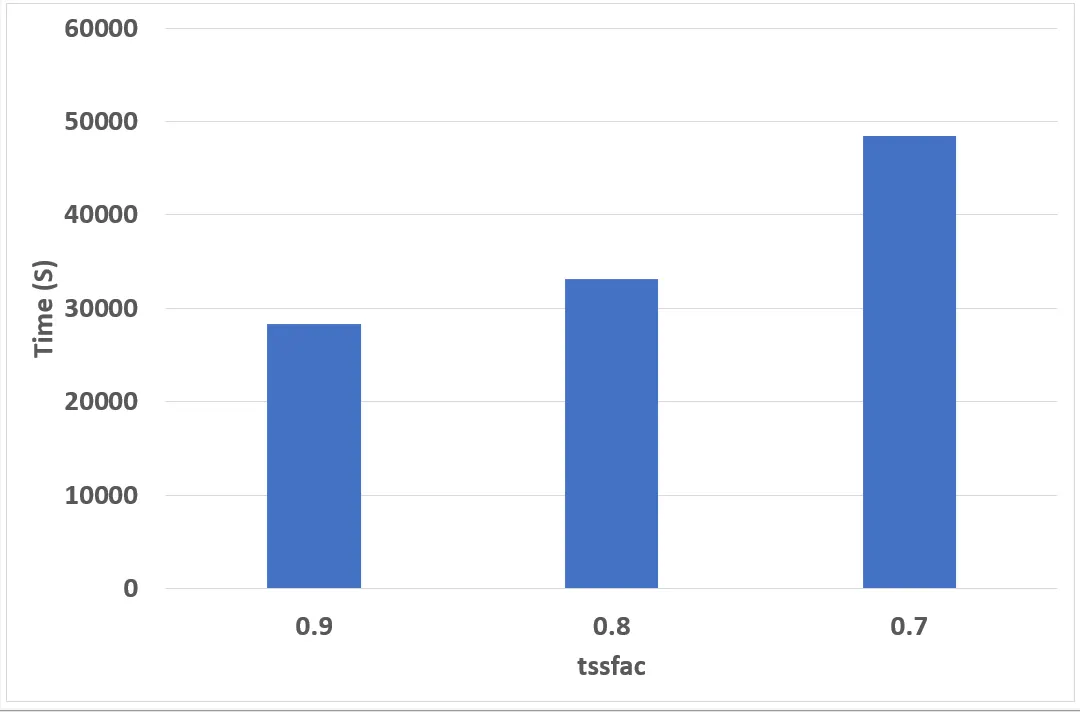
- As the tssfac values are decreasing the time is increasing but the percentage of added mass is not going to change.
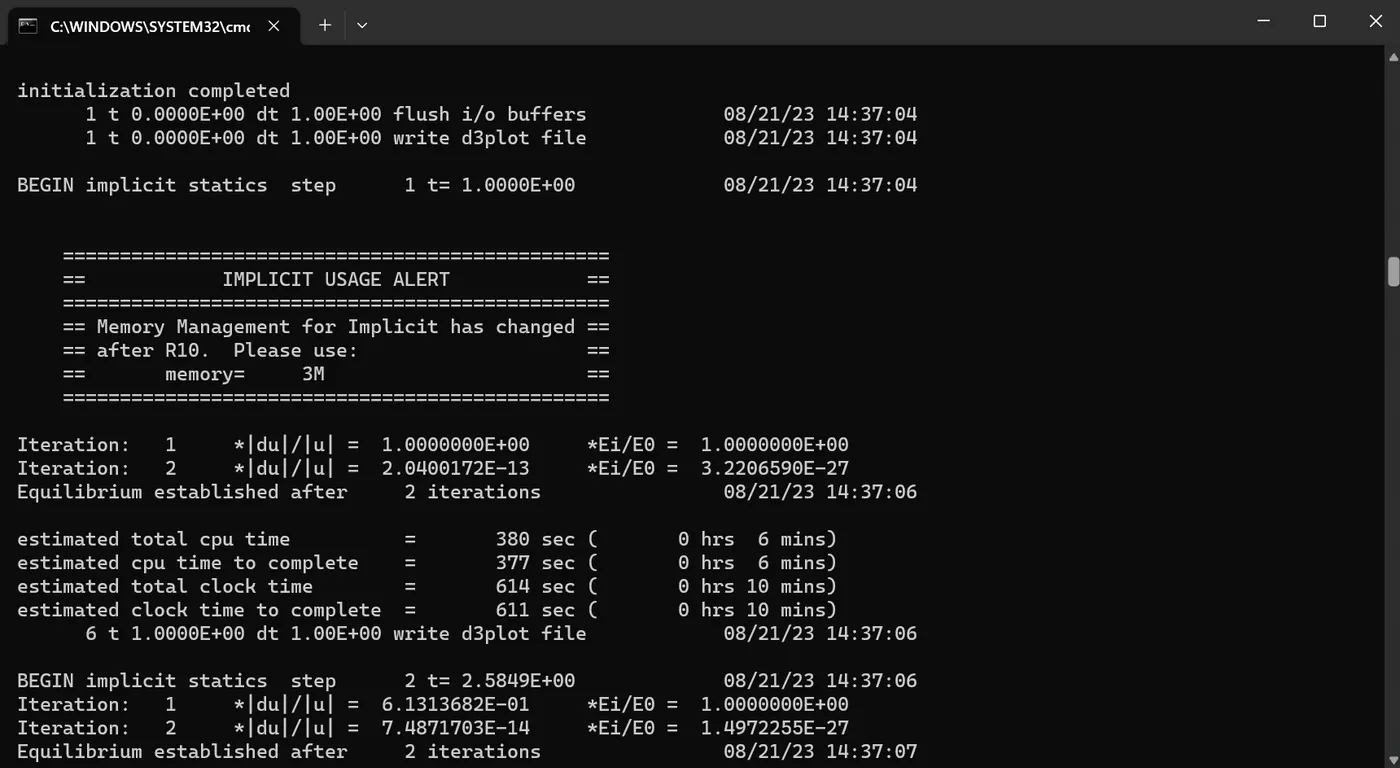
- After doing the explicit analysis the implicit analysis is done by deleting the keyword CONTROL_TIMESTEP and adding the keywords CONTROL_IMPLICIT_AUTO keyword so that it will take care of the time increament automatically and CONTROL_IMPLICIT_GENERAL with imflag=1 which will start the implicit analysis and IAUTO=1 gives the automatic time step.
CONCLUSIONS:
- For the given model mass scaling is done with added percentage of mass as 8% and also implicit analysis is done.
- The variation of time for different dt2ms values are compared.
- The tssfac values are changed and comparison of simulation time is done.
- For implicit analysis the simulation time is 10min where as for Explict analysis the simulation time is 7hrs 11mins.
- Based on type of problem we have to choose the type of analysis and reduce the simulation time.