Week 8 Challenge
AIM-:1. Calculate the loads as per IRC 6 assuming bridge in Bangalore on the pile group of the below given bridge for the abutment.(ignore temperature and wind).
ANS-:
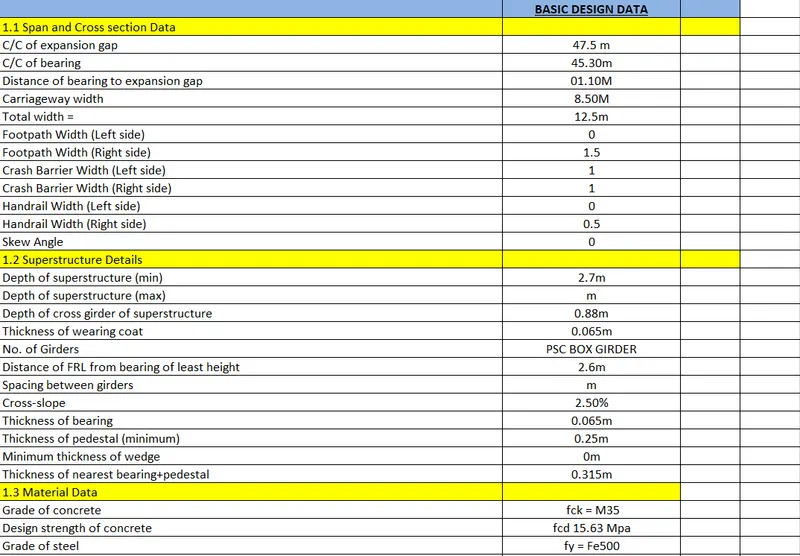
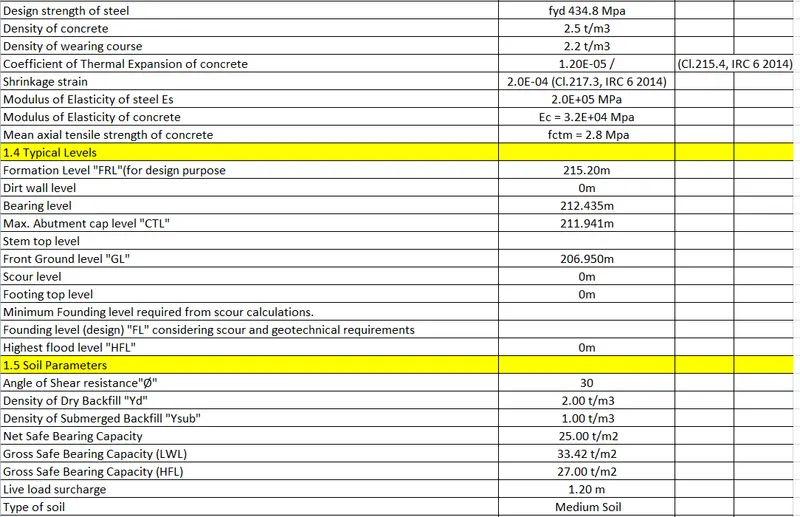
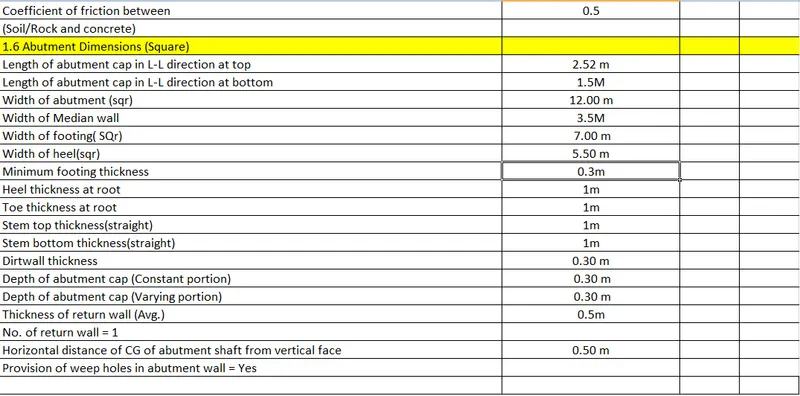
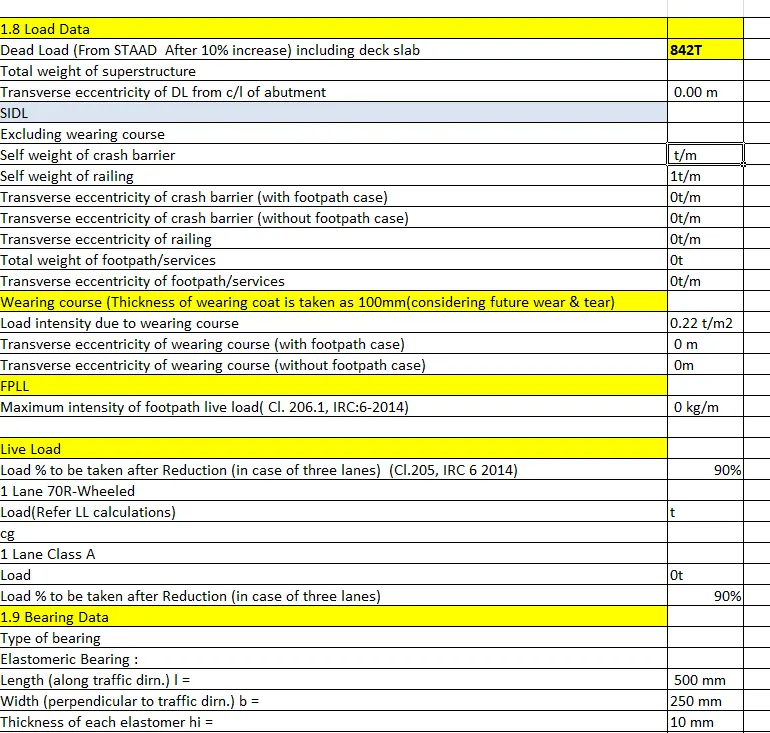
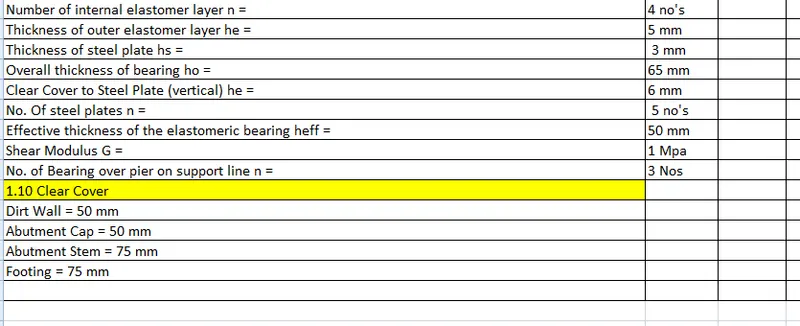
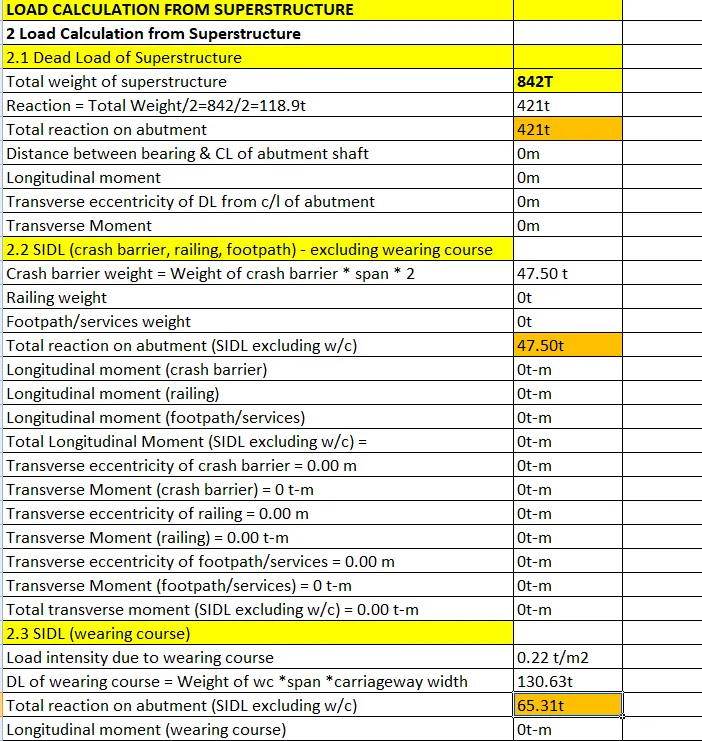

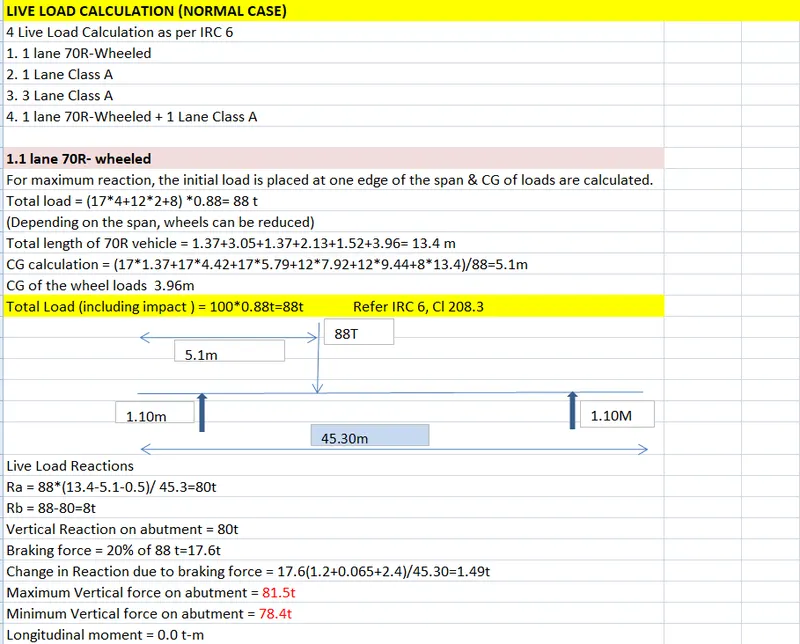
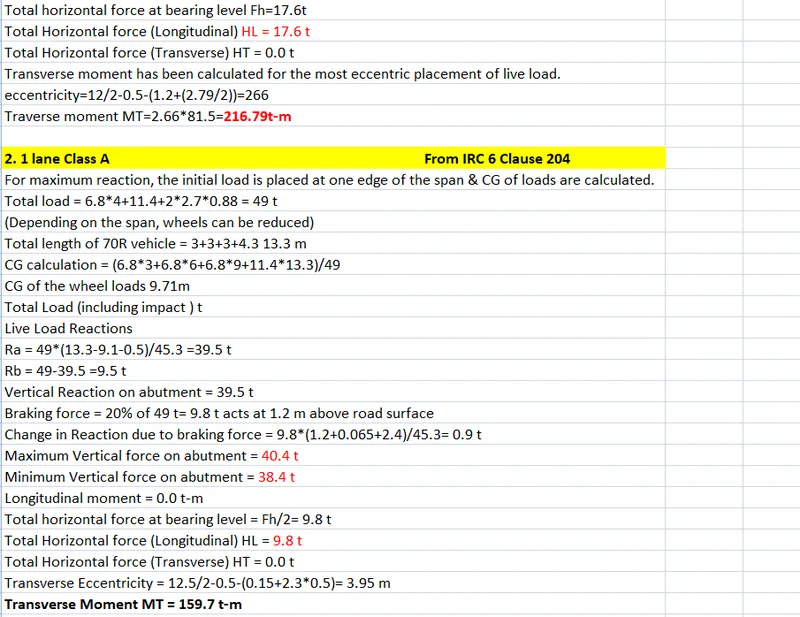
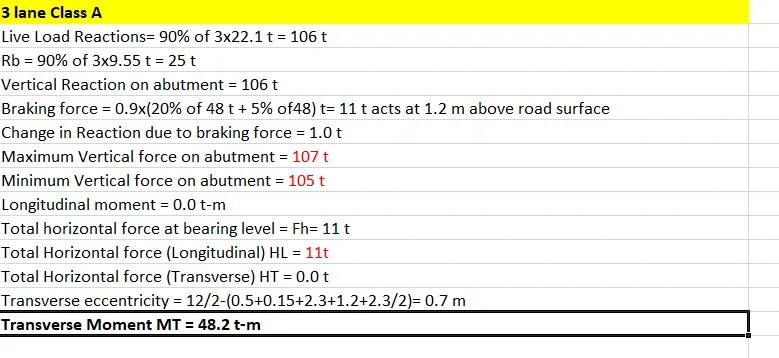
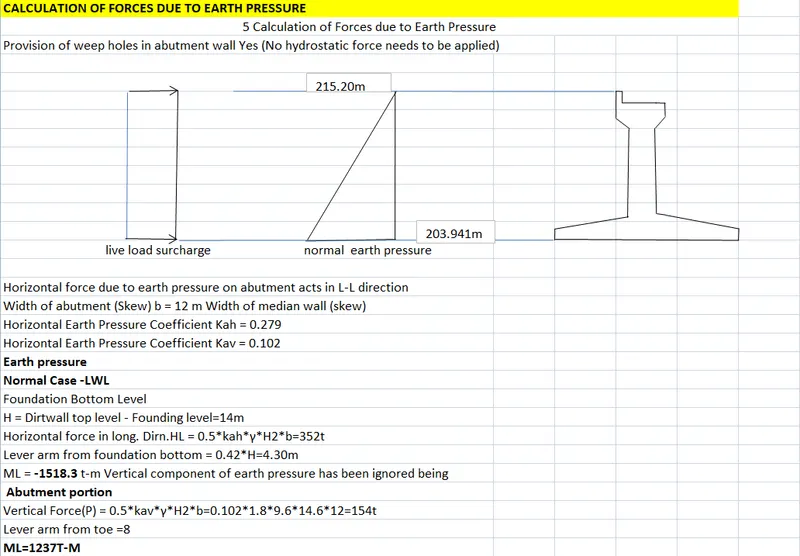
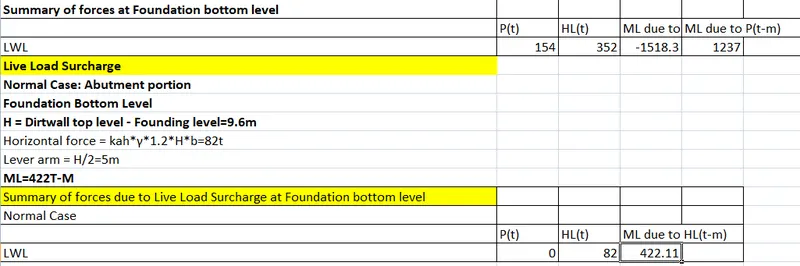
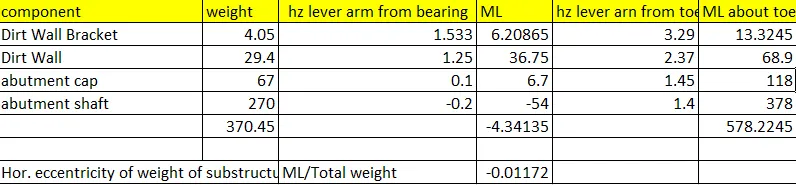
ABUTMENT WEIGHT
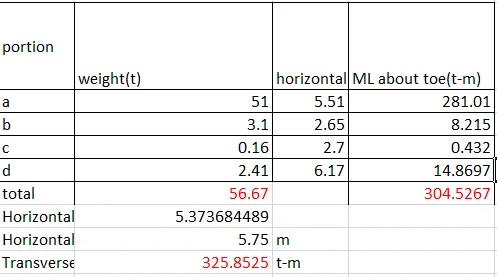
BACKFILL HEIGHT


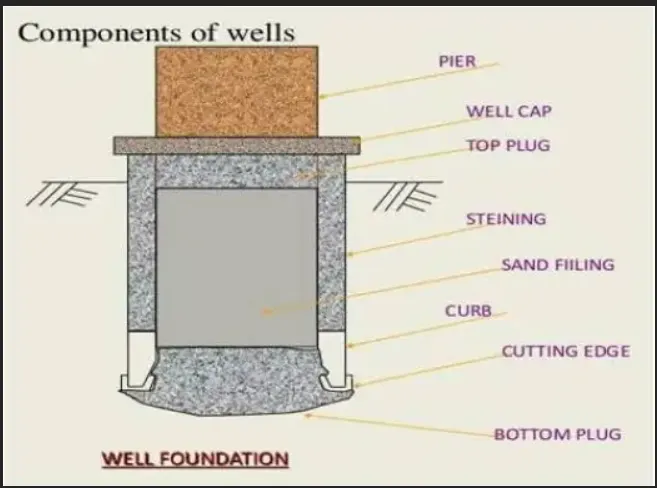
2) List all the components of the well foundation and list the minimum kg/cumec(poundage) in them mentioning clauses from IRC codes.
ANS-:
Components of well foundation are as follows:
- Well Cap
- Top plug
- Steining
- Bottom plug
- Well curb
- Cutting edge
- Filling inside (sand/water)
Well foundation:- Well foundation is a type of deep foundation which is generally provided below the water level for bridges.
The cassions are of three types:-
(i) Box cassion:- It is open at the top and closed at the bottom and is made of timber, reinforced concrete or steel. This type of cassion is used where bearing stratum is available at shallow depth.
(ii) Open cassion:-Open cassion is a box opened both at top and bottom. It is made up to either timber, concrete or steel. The open cassion is called well. Well foundation is the most common type of deep foundation used for bridges in India.
(iii) Pneumatic cassions:-Pneunmatic cassions has its lower end designed as a working chamber in which compressed air is forced to prevent the entry of water and thus excavation can be done in dry conditions.
Components of the well foundation:-
Cutting Edge:-It is the lowest part of the foundation well, and fabricated in the yard as per approved drawing. Cutting edge shall be fabricated in a number of segments depending upon circumference and ease of handling and transport. Cutting edge helps to cuts the soil during the sinking operation.
Well Curb:-The well curb is designed for supporting the weight of the well with partial support at the bottom of the cutting edge, i.e. when only part of the cutting edge is in contact with soil and the remaining portion is only held by skin friction.
Three-point support of the cutting edge resting on a log may be assumed for design purposes. The load coming on the cutting edge is uncertain as a considerable part of it is borne by skin friction.
Another factor of uncertainty is in regard to the effective depth of the well curb since the entire well acts as a deep girder to resist torsion and bending.
Since the load is occasional, working stress up to 99% of yield stress may be permitted. The well curb has also to withstand stress due to sand blows, as well as due to light blasting required when boulder obstructs the sinking of the well.
Well Steining:-Steining is a wall or shall type of structure made up of RCC, and which helps to transfer the load to the curb. It serves as an enclosure for excavating the soil for the penetration of the foundation well.
Bottom Plug:-After completion of sinking, the bottom of the foundation well is plugged with the help of concrete. The well curb confines the bottom plug, and functions like a raft against soil pressure from below.
Back-filling:-The well is dewatered after setting of bottom plug concrete, and it is backfilled by sand or excavated approved material. Sometimes water can be used instead of sand/excavated material.
Top plug:-It is a concrete layer of thickness around 500mm, as mentioned in design and drawing. Top plug provided over the filling and inside the well dredge hole.
Well cap:- A well cap is a thick concrete mat that rests on the top of well stening. It is a part of the foundation and used to distribute loads of superstructure over the steining.