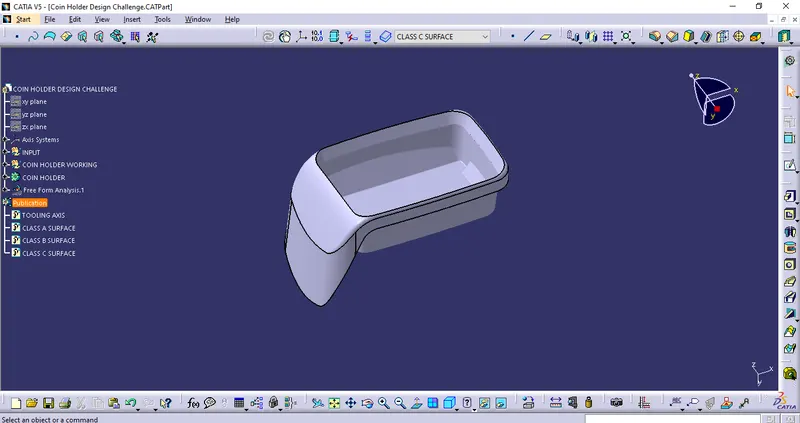
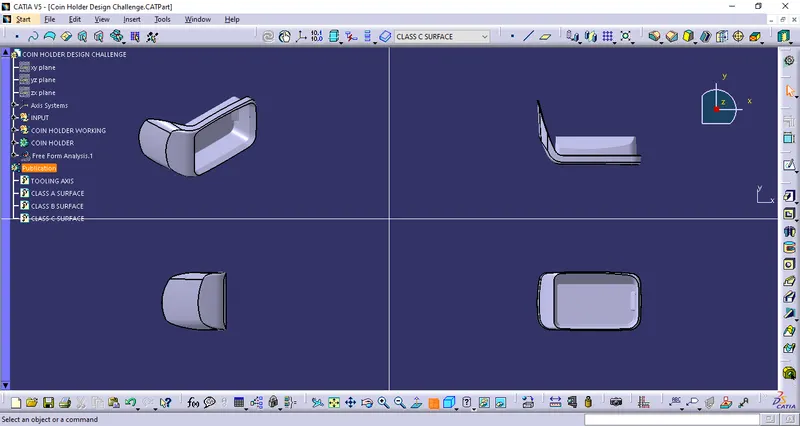
Week 8 - Challenge 3 - Coin Holder Design
Coin Holder Design
Aim
- To create the Coin Holder Plastic component through the given Class-A surface with the required Draft angle and perform Draft analysis on the model.
Software
- CATIA V5
Given CLASS -A Surface
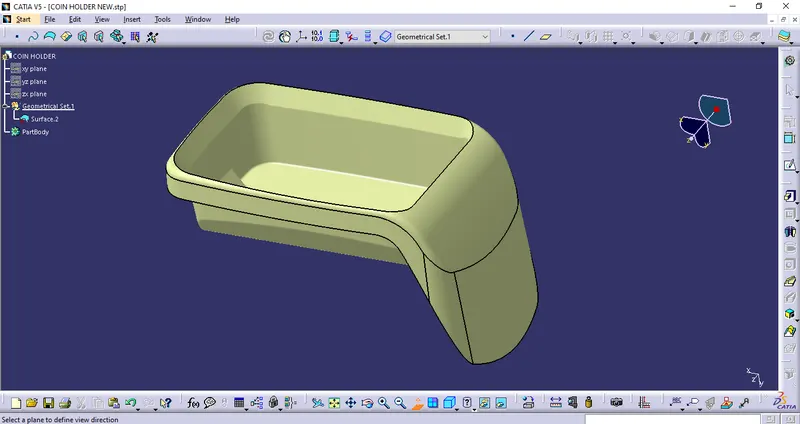
- The Class-A surface is the outermost surface of the plastic component which is also looks fine surface and it is the aesthetic surface that the designer creates as an input part for the design work.
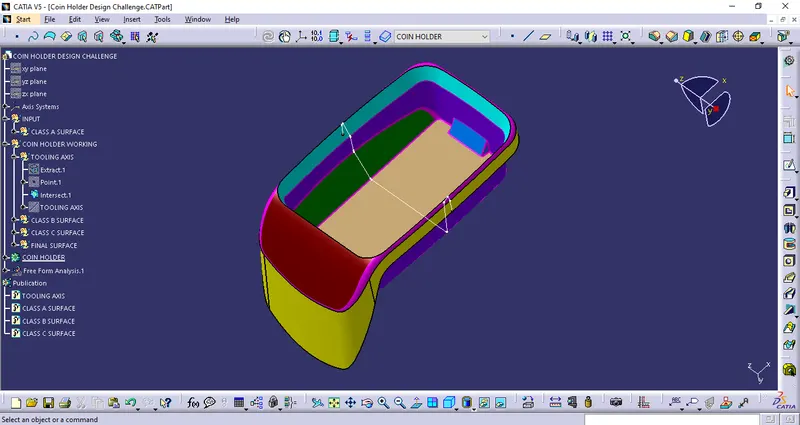
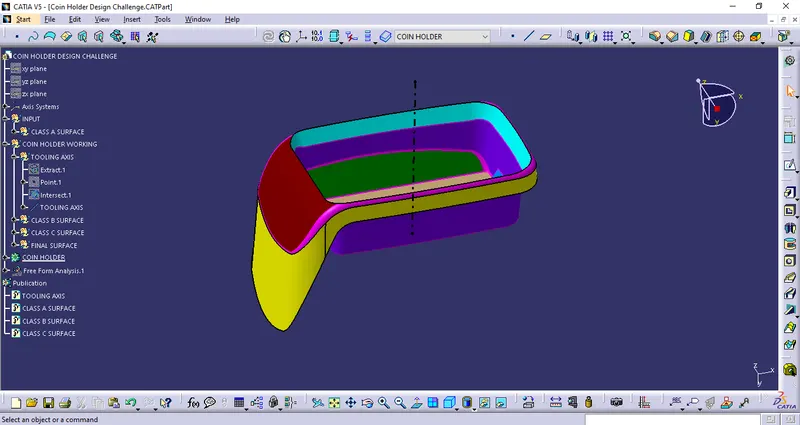
Tooling Axis
- In Molding, machine arrangement is given to open the mold along a direction which is known as Tooling Direction. In other words. The mold is built from two separate halves (Core and Cavity) and tooling direction basically defines the direction of mold or core pulls apart.
- The tooling axis is created by Bisecting method.
- Bisecting method : Determine the plane on which we must do the majority of the operations, then build the plane or axis on the component area and specify its direction using a dummy tooling axis. Get an intersection sketch by intersecting the class A surface with that plane. Find the inclined line profile that may cause a problem, extract it, then expand it using the line command. Then, using reference to the lines we've sketched draw a bisecting line that will serve as our toooling axis. In this instance, we create the Y direction and tooling axis with reference to the base surface.
CLASS -B Surface Creation
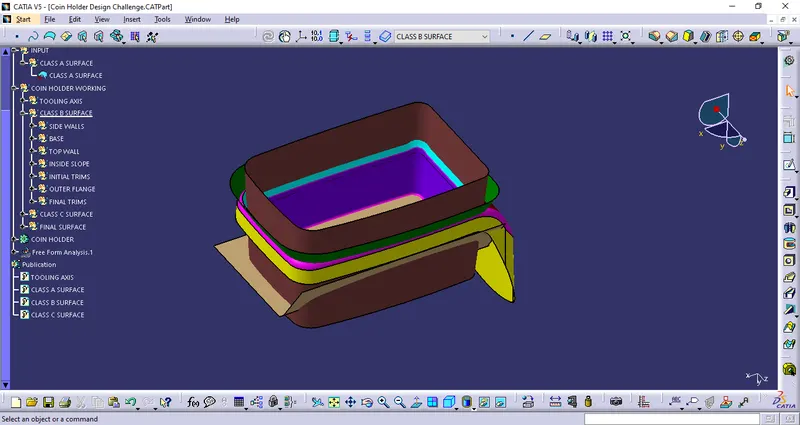
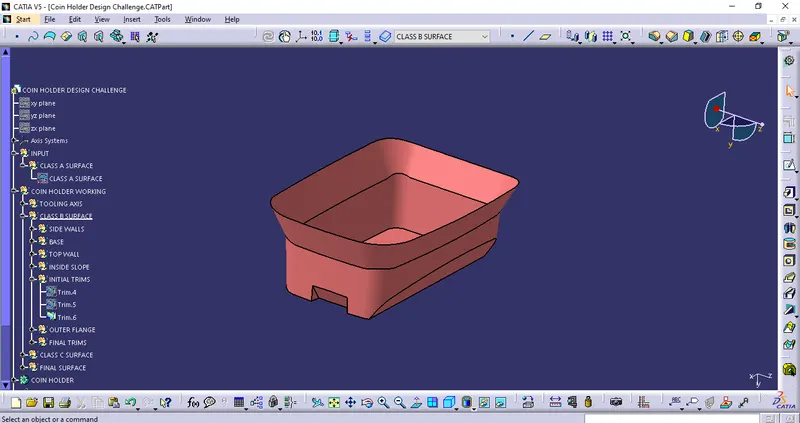
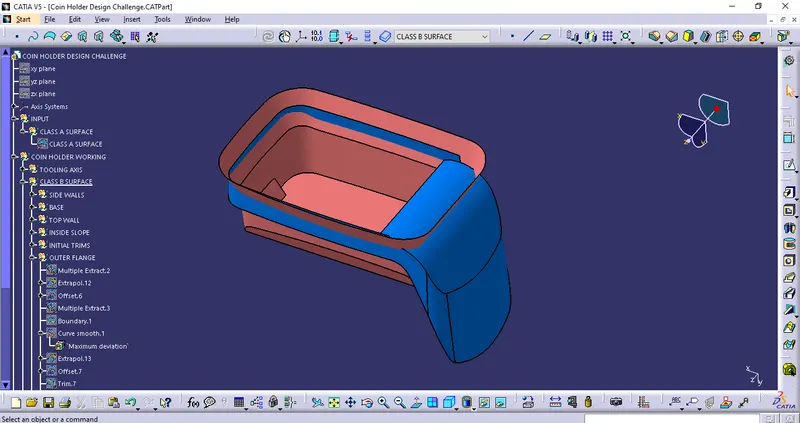
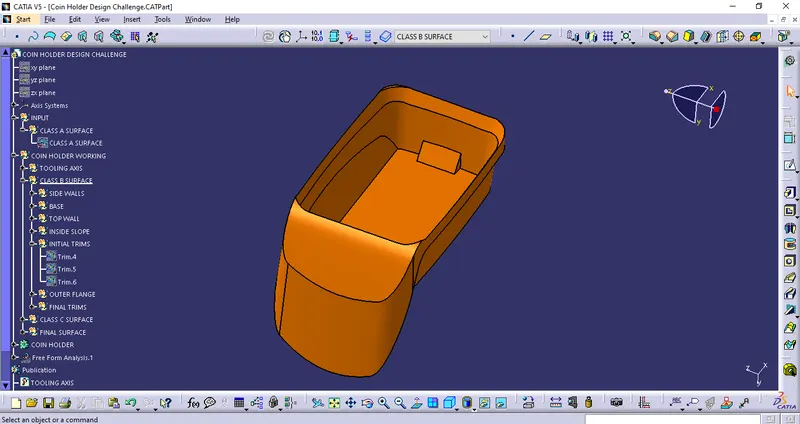
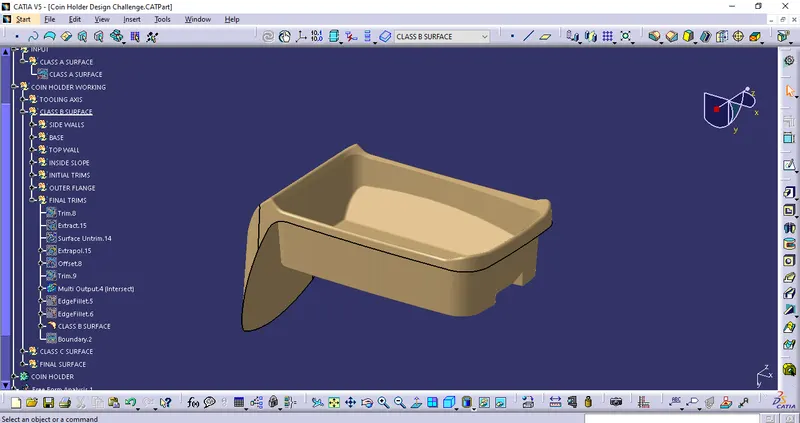
- The Class-B finish is a quality finish with only minimal imperfections. A Class-B finish is the most common finish for exterior surfaces. It is normally specified on surfaces such as external covers, panels, and parts that are fairly prominent.
CLASS -C Surface Creation
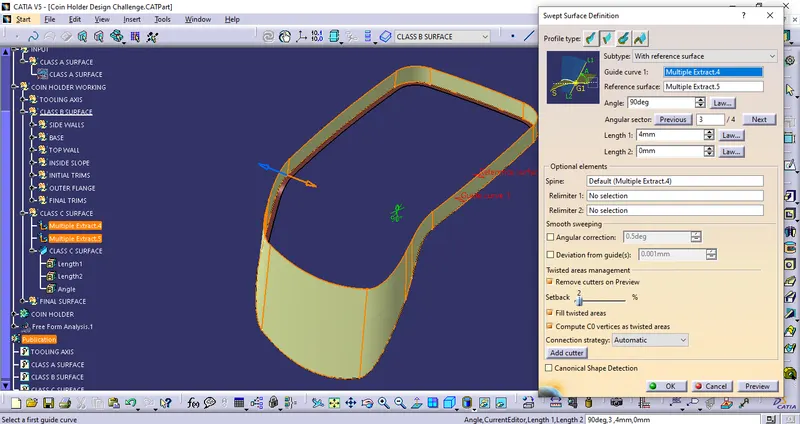
- The Class-C finish allows more imperfections than Class-A or Class-B. Class-C is often specified for interior surfaces not readily visible, surfaces that will be covered by another part when assembled, or surfaces which the Customer feels do not need to meet a high cosmetic finish.
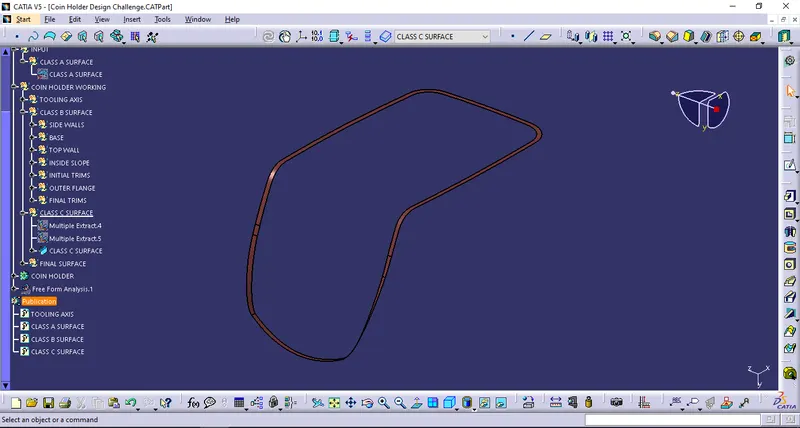
Final Surface
- The Class-A, Class-B and Class-C surfaces are joined together to form a closed surface.
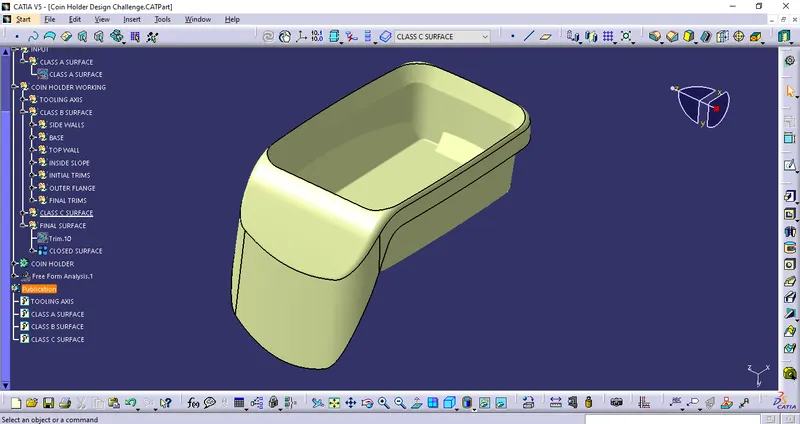
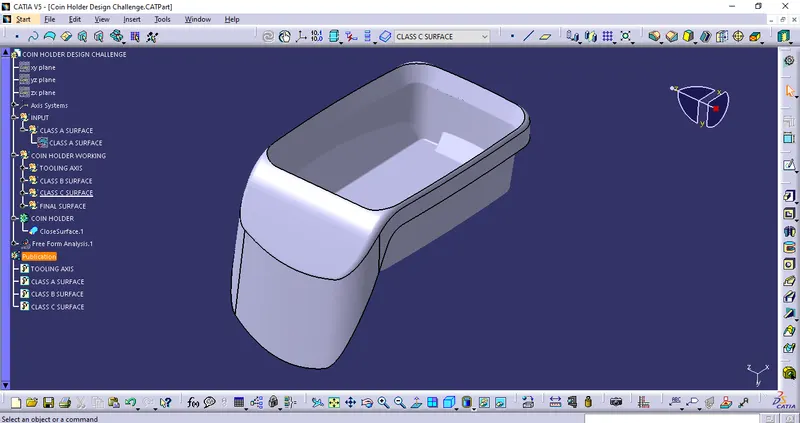
Final Plastic Component
Thickness : 2.5 mm
Draft Analysis
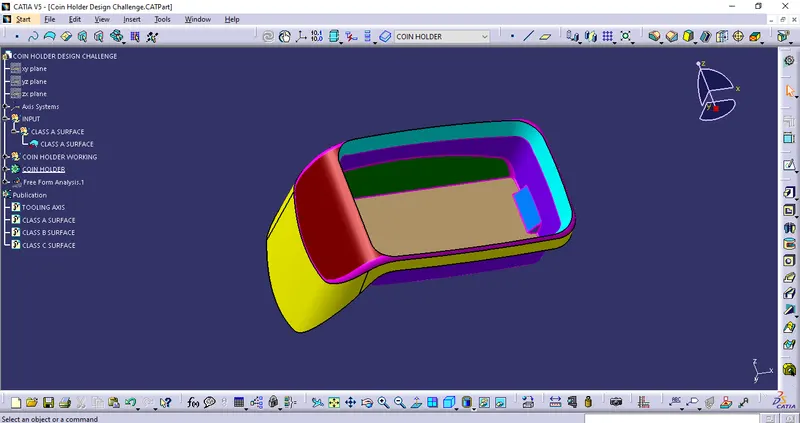
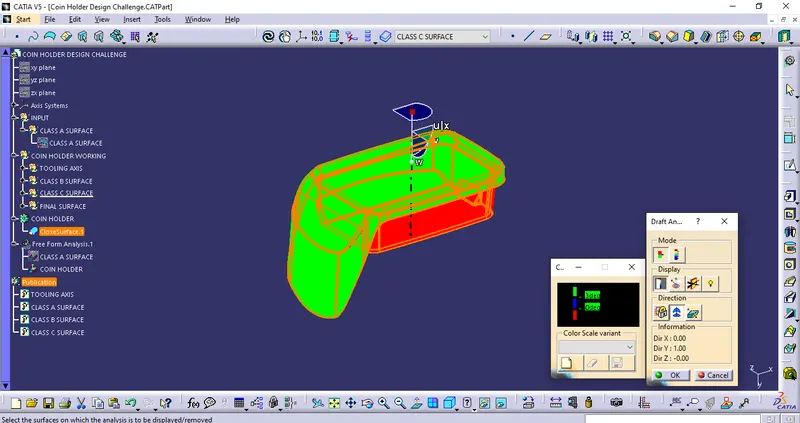
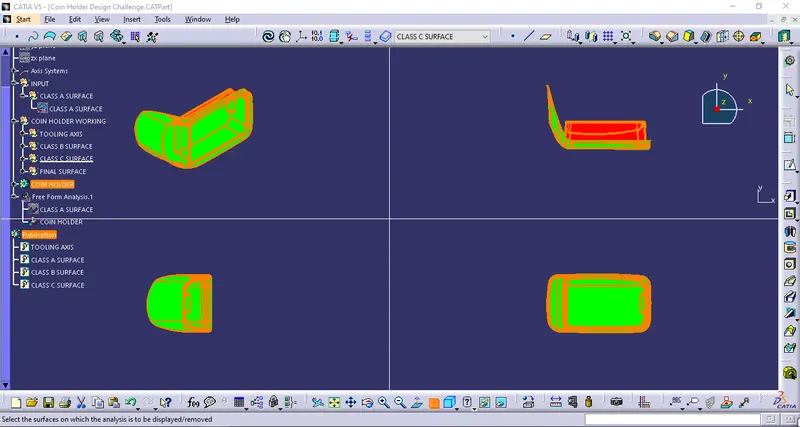
- The Draft Analysis command enables you to detect if the part you drafted will be easily removed. This type of analysis is performed based on color ranges identifying zones on the analysed element where the deviation from the draft direction at any point, corresponds to specified values.
- Most parts or applications require minimum of 1/2 to 1 degree, however 3 degrees is widely accepted as the norm.
- Draft analysis on Class-A surface.
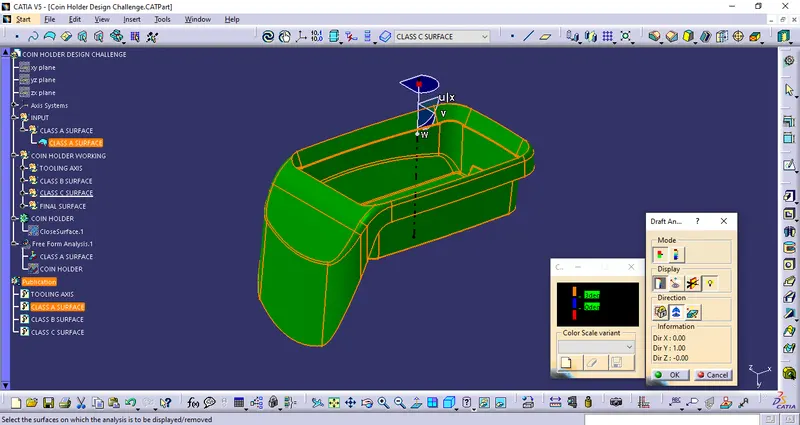
- Draft analysis on final component.
Conclusion
Thus the Coin Holder Plastic Component is Created through the given Class -A Surface with the required Draft Angle using CATIA V5 Software.