Week 8:- 3D Finishing - Challenges 1
1) What do you understand by the 3D finish process?
2) What are the points need to be taken care of while finishing the design?
Ans: 3D finish is the process where design is completely finished and to be ready for final simulation and 2D detailing.
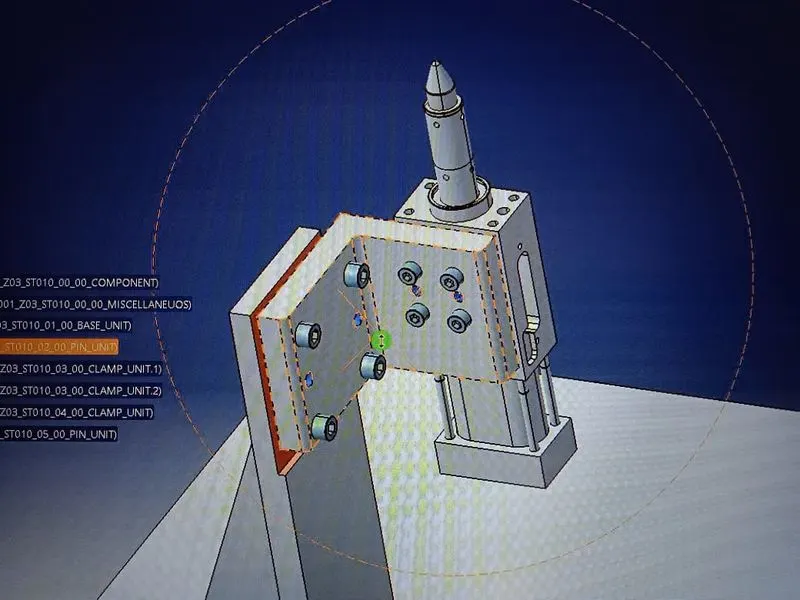
Points to consider:
- a) Hole concentricity and sizes has to be check for the rest blocks, mylars, blades and riser. All the holes must be concentric.
- b) If any surface of a part comes in contact with the other surface of the part, the surface has to be machined. To indicate the machined surface light brown color is indicated in the design.
- c) All the units must be in nominally designed. The pin is anyhow fixed so the pin is considered as the reference point and all the unit surfaces must be in nominal with the pin unit.
- d) Pneumatic cylinder pipes, wires from different unit has to be done in pneumatic lay-outing.
- e) There should be adequate gaps between the units and the weld gun.
- f) All the hardwares required for the units has to be checked. It helps in documenting the project.
- g) Holes must be colored as per the requirements. The dowel holes must be sky blue color, open holes must be dark blue color and threaded holes must be a yellow color.
- g) The parts and assemblies must be properly named as per the company standards.
3) What are rough Locators & what is their use?
4) What are the points you need to consider while designing a rough locator?
Rough Locators:i) Rough locators are basically used where manual loading of panels are to be implemented on the fixture.
ii) These are used to guide the panels in correct position and orientation.
iii) These also help for proper poka-yoke, which means to avoid errors.
iv) Materials used for rough locators are mild steel or similar metal.
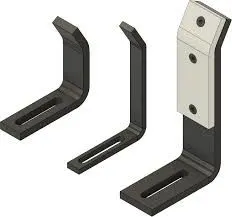
Points to be considered while designing rough locators:
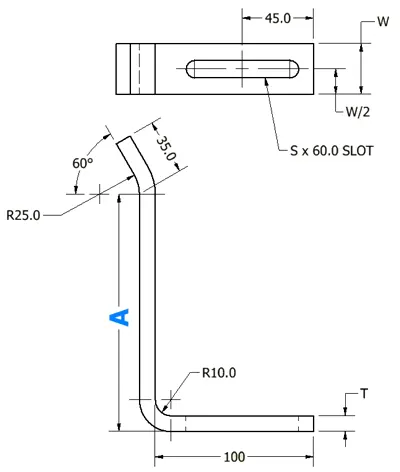
- a) Height of rough locators should not be more than the permissible ergo height of the fixture.
- b) The entry point/ top point of the rough locators must be 10 mm to 15 mm above the panel surface.
- c) Rough locators should have adjustment in the direction of guiding plane.
- d) 2 mm gap to be maintained b/w rough locators and panel at the time of design and we can provide adjustment of 5-10 mm in the positive or negative direction of guide plane.
- e) Rough locators can be rod type or flat type, depending upon the standards and other conditions.
5) What is the gun study process?
6) What re the points need to consider during the gun study?
Ans: In spot welding, the guns normally include a pneumatic or hydraulic cylinder and are designed to fit a particular assembly. The most common are C-type and X-type guns, which differ in shape and force application mechanisms (in the first case, the cylinder is connected directly to the moving electrode; in the second case, it is connected via the lever arm). However, some new welding guns incorporate built-in electromechanical servo actuators with MFDC supply for force generation. The selection of weld gun depends on the process parameters to be used for spot welding.
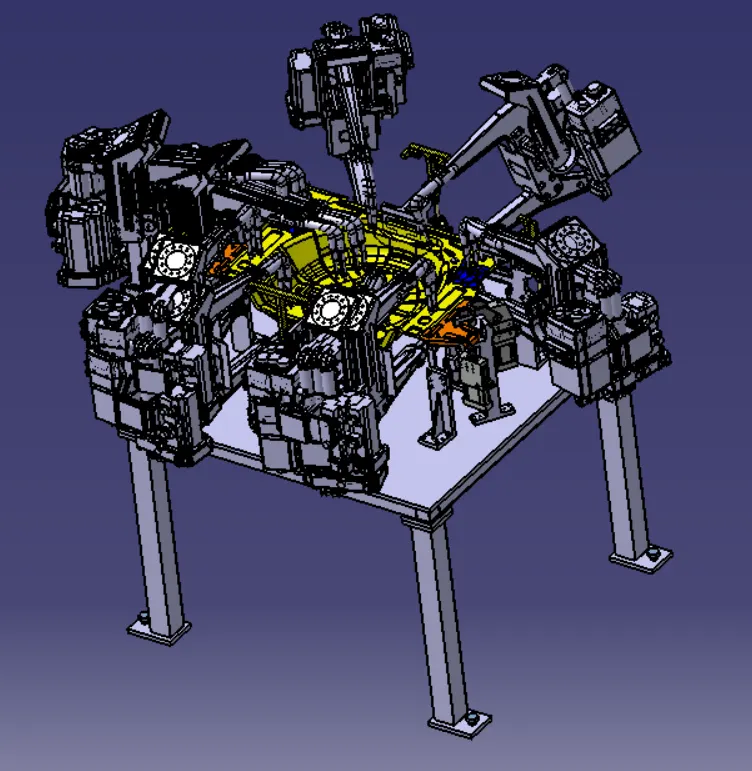
Points to be considered for the guns study process:
- a) The weld spots are given in the car panel where two metal sheets are need to be joined.
- b) The data of the weld spots must be taken in the excel. The X, Y and Z coordinates of the weld spot must be considered.
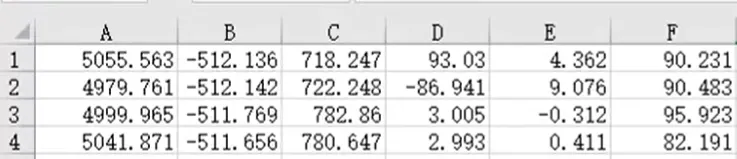
- c) The data of the weld spot must be given very precisely and it should be in the CATIA coordinates.
- d) The selected gun must be imported.
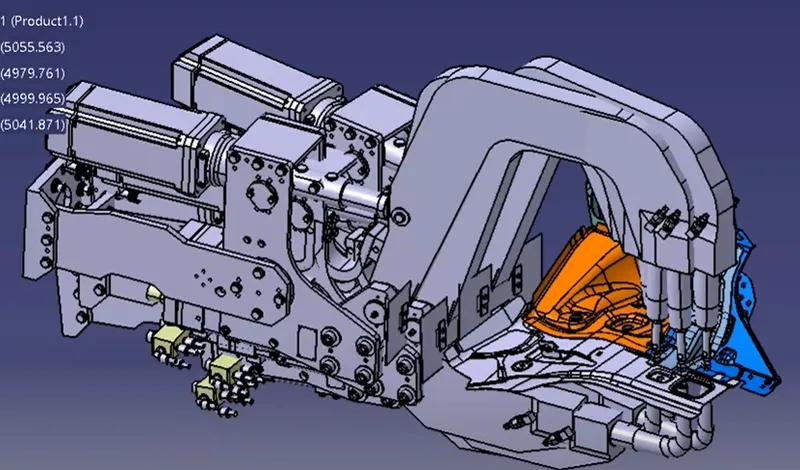
- e) Once the weld gun is imported, the weld gun units must be checked such that there should be no collision between the units and the gun.
- f) If all the weld guns are placed in the required spot, it is called the weld gun cloud.
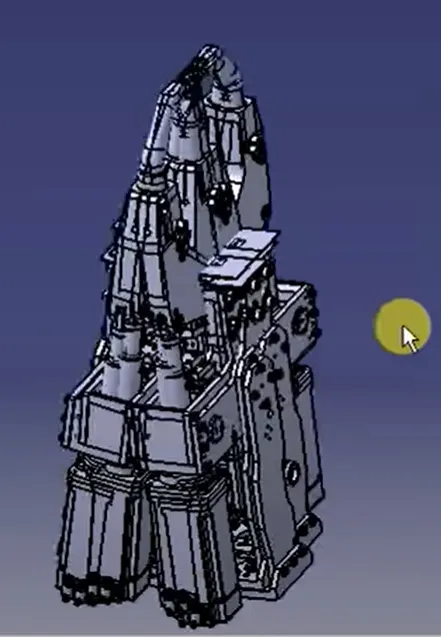
7) What is pneumatic routing?
Ans: Pneumatic routing is the process of arranging the hydraulic house pipes to the cylinder in the optimal condition.
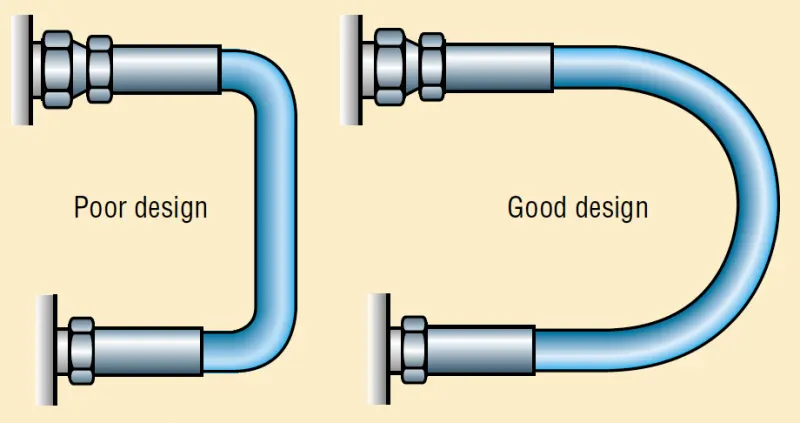
1. Make hose assemblies long enough and routed in a manner that prevents exceeding minimum bend radius recommendations.
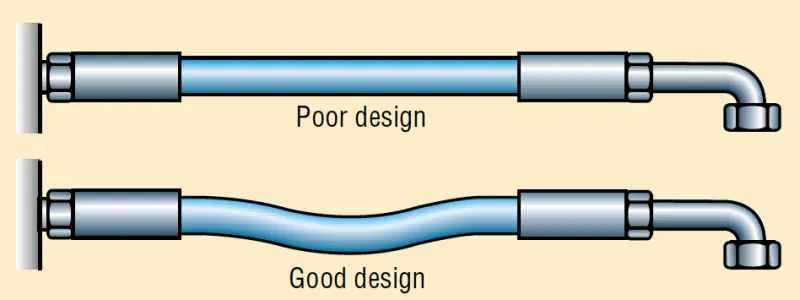
2. To prevent excessive strain at hose-to-coupling interfaces, make hoses long enough to allow for contraction and expansion.
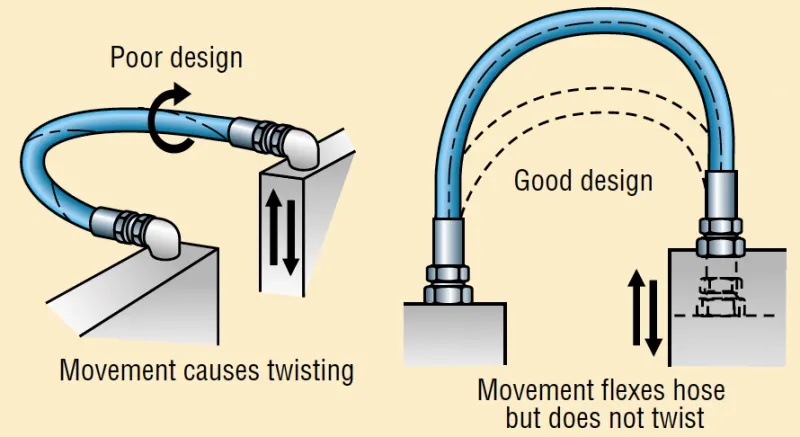
3. Left-hand drawing shows how hose twists because it is bent in one plane while oscillating motion bends in a second plane. Rerouting the hose eliminates multi-plane bending.
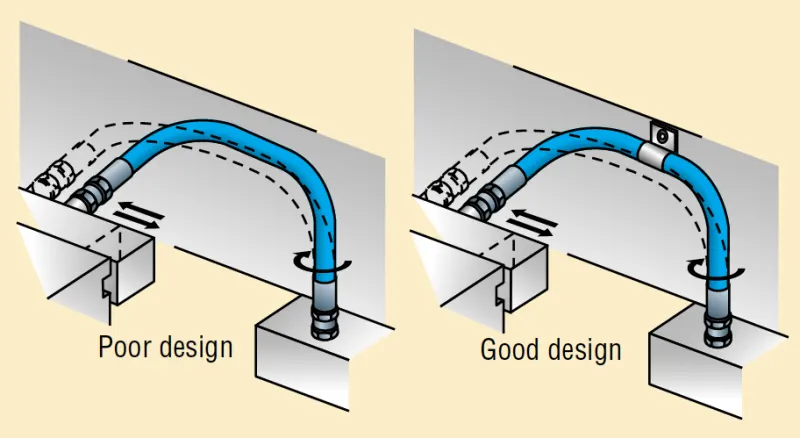
4. When multi-plane bending cannot be avoided, install a hose clamp between bends and provide enough hose length on both sides of the clamp to relax torsion and compensate for hose contraction.
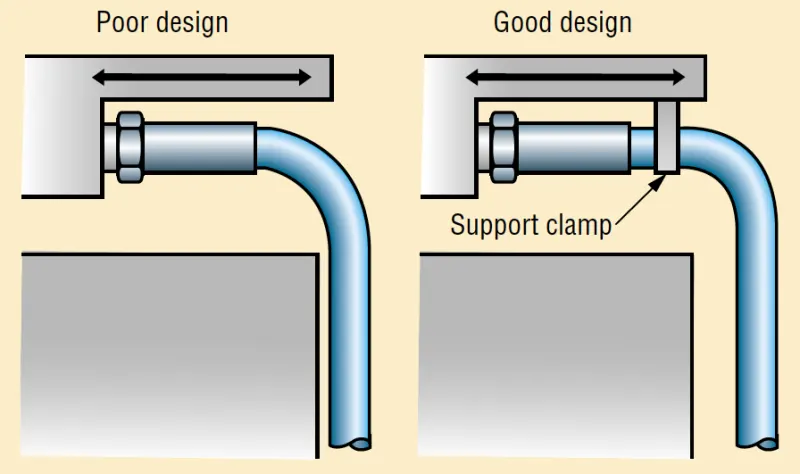
5. Hose clamps can prevent abrasion by holding the hose away from surfaces it would otherwise rub against.
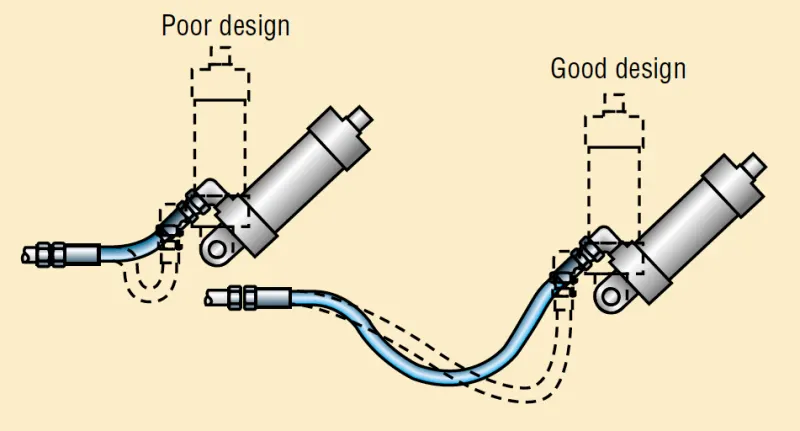
6. Design at left provides ample hose length when cylinder is pivoted, but bends hose in too small a radius when cylinder is vertical. Increasing hose length and providing greater clearance produces much greater bend radii.
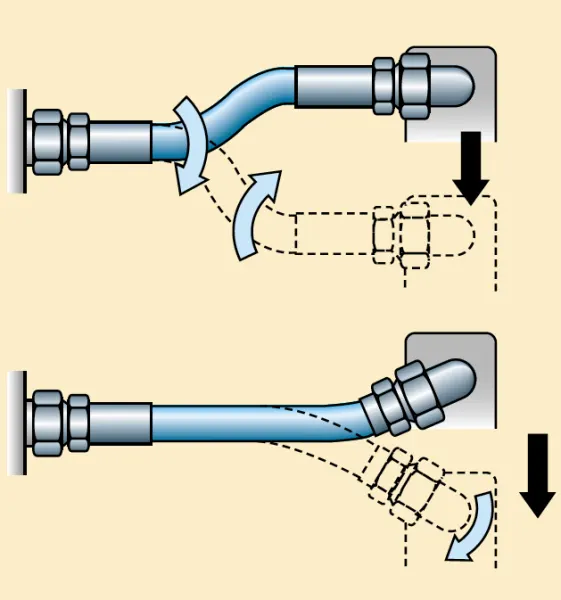
7. Swivel joints can extend hose life by reducing the amount of bending caused by relative motion between machine elements. They also aid maintenance by simplifying hose installation and replacement.
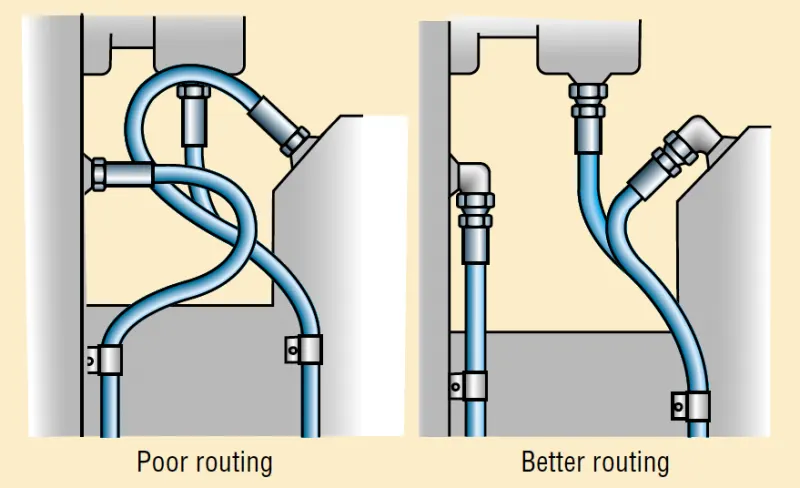
8. Lack of planning produces cluttered hose routing, far left, that complicates maintenance and can even reduce hose life. Well-thought-out routing and choice of end fitting configurations, near left, make assemblies that are more reliable and easier to maintain and troubleshoot.
8) What is the solenoid valve?
Ans: A solenoid valve is an electrically controlled valve. The valve features a solenoid, which is an electric coil with a movable ferromagnetic core (plunger) in its center. In the rest position, the plunger closes off a small orifice. An electric current through the coil creates a magnetic field. The magnetic field exerts an upwards force on the plunger opening the orifice. This is the basic principle that is used to open and close solenoid valves.
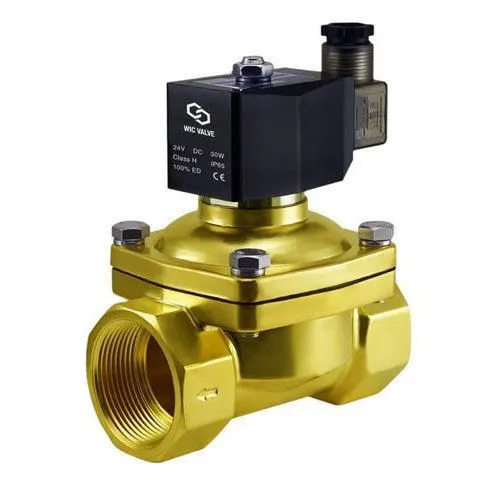
A solenoid valve consists of two main components: a solenoid and a valve body (G). Figure shows the components. A solenoid has an electromagnetically inductive coil (A) around an iron core at the center called the plunger (E). At rest, it can be normally open (NO) or normally closed (NC). In the de-energized state, a normally open valve is open and a normally closed valve is closed. When current flows through the solenoid, the coil is energized and creates a magnetic field. This creates a magnetic attraction with the plunger, moving it and overcoming the spring (D) force. If the valve is normally closed, the plunger is lifted so that the seal (F) opens the orifice and allows the flow of the media through the valve. If the valve is normally open, the plunger moves downward so that the seal (F) blocks the orifice and stops the flow of the media through the valve. The shading ring (C) prevents vibration and humming in AC coils.
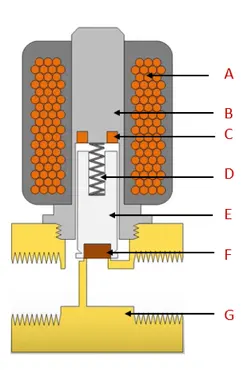
Solenoid valves are used in a wide range of applications, with high or low pressures and small or large flow rates. These solenoid valves use different operating principles that are optimal for the application. The three most important ones are explained in this article: direct acting, indirect acting, and semi-direct acting operation.
9) What is the valve bank?
Ans: On the solenoid bank, each of the solenoid valves separately controls the feed of high pressure servo air to a single pneumatic valve. The valve is actuated by selectively energizing the corresponding solenoid to allow servo air to the servo port of the valve. To return the valve to its fail-safe position, the solenoid is de-energized to vent the servo port of the valve to ambient.
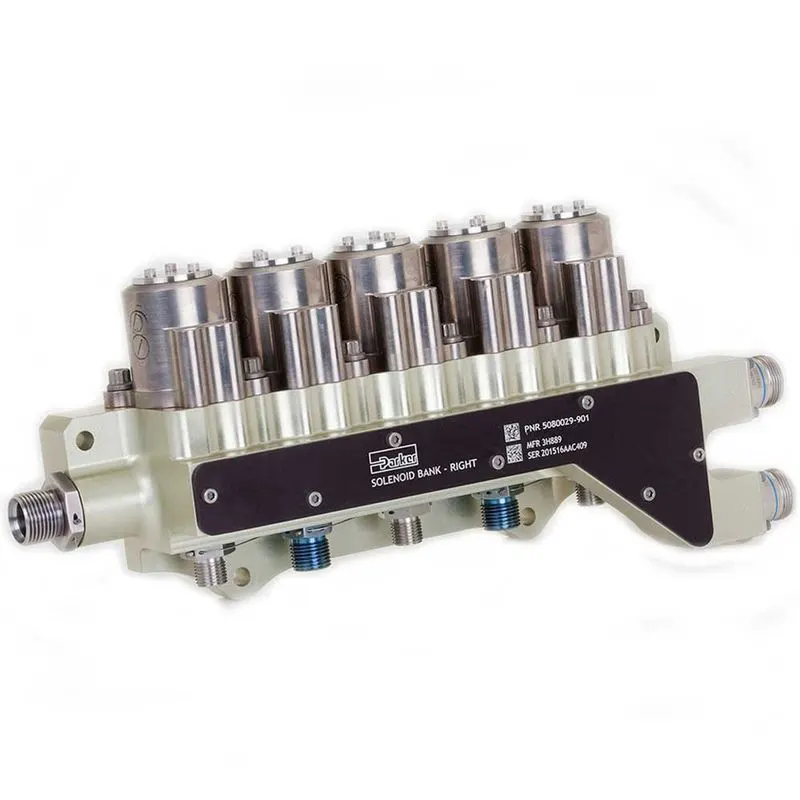
The solenoid bank is designed with an inlet port, a single servo line to each of the pneumatic valves, and independent vent passages for each solenoid.
The solenoids are two-stage pilot valves and are normally open with the solenoid de-energized, allowing high pressure supply air to the servo ports of the downstream pneumatic valves. Energizing the solenoid blocks high pressure air supply and simultaneously vents the pneumatic valve servo chamber to atmosphere, closing the respective pneumatic valve.
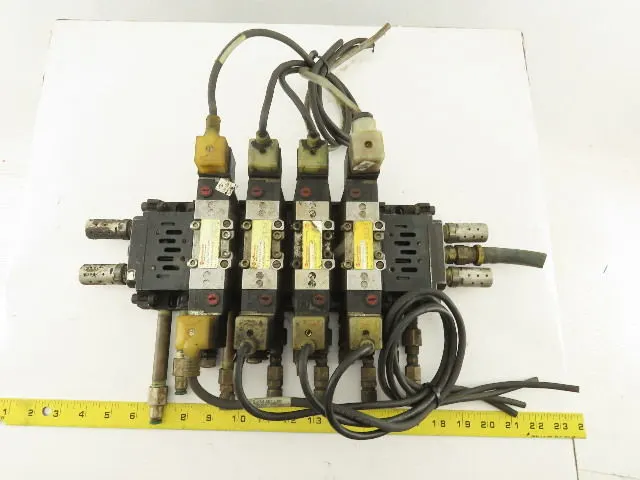
The Parker two-stage solenoid is designed to provide fast response times. The electrical configuration is a dual-coil redundant design providing an isolated circuit topology housed in a single package. Each coil is independent and identical in function.
- Designed for high vibration levels
- Uses aluminum alloy manifolds for light weight
- Designed for high-temperature environments
- Design architecture allows easy selection of two to six solenoid valves
10) What is sensor & brief about its application in automation?
Ans: Sensor is a device that allows us to sense objects around us, to see them, to smell the odor, to taste eatables, to feel the environment, etc. However, in general terms, a sensor can be defined as a device that detects, measures and converts a physical quantity into a signal that can be read by an observer or an instrument. A sensor allows us to notice things and understand them easily.
The sense organs that we have are considered to be Natural sensors and based on these sensors, we have many man-made or artificial sensors that allow us to make our life easy day by day. The artificial sensors are hardware components that can allow a device to know its location, surroundings and many more things. These can be either wired or wireless.
Sensors in Industrial Automation
In the industrial automation section, sensors play a very important role to make the products intelligent and highly automatic. These allow one to detect, analyze, measure and process various changes like change in position, length, height, appearance and displacement that occurs in the production sites. These sensors also play an important role in predicting and preventing many future events, thus, catering to the needs of many sensing applications. The following are the various types of sensors used in industrial automation: Proximity sensors, Vision sensors, Ultrasonic sensors, Position sensors, Photoelectric sensors, Temperature sensors, Inclination sensors, etc.
Positioning and Displacement
Certain sensors helps in determining the physical position of a device in the world’s frame of reference. That is, it measures the distance traveled by a device starting from its reference position. Based on the motion of a device, the position sensors used in them are categorized as Linear Position Sensor or Angular Position Sensor.
Linear Position Sensor: This plays an important role in the automation control, where accurate (precision) positioning is required. It measures the linear position of a device. A very good example of this type of sensor is the Linear variable differential transformer (also known as LVDT). It is a type of transformer that is used to sense and measure linear displacement.
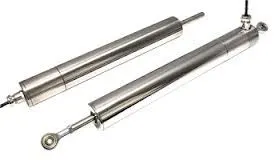
Angular Position Sensor: This sensor often referred to as a rotary sensor calculates the orientation of an object with respect to a specific reference position as has been expressed by the amount of rotation necessary to change from one rotation to the other about a specific axis. It measures the relation established by any position with respect to any other position. These are used, where long term reliability is required.
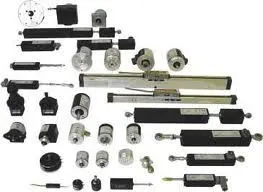
Whereas based on the sensing principles used, the position sensors can be classified into different categories.
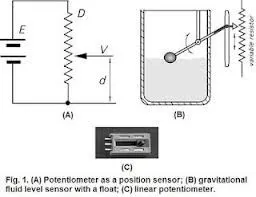
Potentiometric position sensors: These use resistive effect as the sensing principle. It is wear-free as these do not have any contacting parts. In these types of sensors, the position marker is attached to the moving part of the application, whose position needs to be measured. The sensing element is a resistive or a conductive track, where a wiper (for example) is attached to the part of the device, whose displacement has to be measured. The wiper remains in contact with the track. As the device moves, the wiper also moves and the resistance between one end point of the track and the wiper changes. This makes resistance a function of the wiper position. In this, the change in resistance per unit change in wiper position is linear. The ease to use these sensors makes them advantageous.
Applications
The applications for position sensors as a whole are broad. They can be used in anything from motion control of a robot, tank-level sensing or even in semiconductor process equipment.
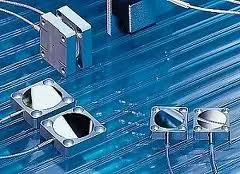
Capacitive displacement sensors: These are based on the principle of ideal plate type capacitors, where the moving object is attached to the dielectric or to the plates of the capacitor to generate the changes in the capacitance. These are the devices that are capable of high resolution measurement of the position or the change of position of any conductive target. These can also measure the density or the thickness of non-conductive material. These types of sensors are found in manufacturing and machining facilities all around the world.
Application
It is used in the precision positioning of objects at the nanometer level and in the measurement of precision thickness of disk drives, assembly line testing and machine tool metrology. It is widely used in machining.
Linear variable differential transformer (LVDT): Popularly known as differential transformer is an electromagnetic device that produces an electrical voltage, which is proportional to the displacement of a movable magnetic core. It is used to measure the linear displacement of the device. These are robust and frictionless. It operates on the principle of electromagnetic coupling and thus, can measure even the infinitesimally small changes in the core. The electromagnetic coupling refers to the transfer of modulated data from one part of the system to the other due to the electric and the magnetic field between them. It is frictionless and can work under high shock and vibration levels.
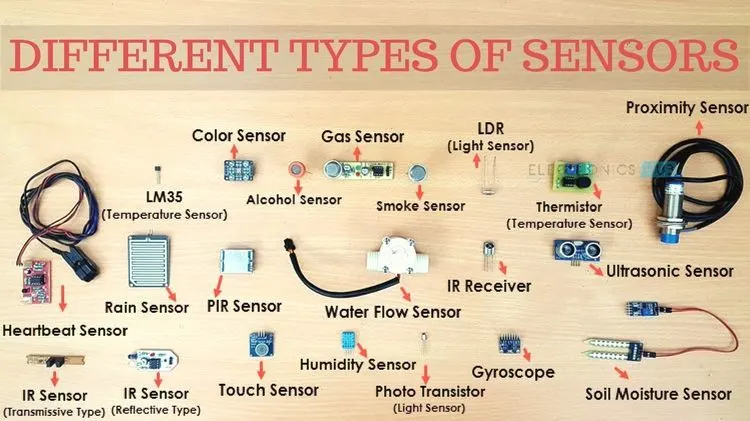
11) What are the types of the sensor?
Ans:
Vision and Imaging Sensors
Vision and Imaging Sensors/Detectors are electronic devices that detect the presence of objects or colors within their fields of view and convert this information into a visual image for display. Key specifications include sensor type and intended application, along with any particular transducer features.
Temperature Sensors
Temperature Sensors/Detectors/Transducers are electronic devices that detect thermal parameters and provide signals to the inputs of control and display devices. A temperature sensor typically relies on an RTD or thermistor to measure temperature and convert it to an output voltage. Key specifications include sensor/detector type, maximum and minimum measurable temperatures, as well as the dimensions of diameter and length. Temperature sensors are used to measure the thermal characteristics of gases, liquids, and solids in many process industries and are configured for both general- and special-purpose uses.
Radiation Sensors
Radiation Sensors/Detectors are electronic devices that sense the presence of alpha, beta, or gamma particles and provide signals to counters and display devices. Key specifications include sensor type and minimum and maximum detectable energies. Radiation detectors are used for surveys and sample counting.
Proximity Sensors
Proximity Sensors are electronic devices used to detect the presence of nearby objects through non-contacting means. A proximity sensor can detect the presence of objects usually within a range of up to several millimeters, and, doing so, produce a usually dc output signal to a controller. Proximity sensors are used in countless manufacturing operations to detect the presence of parts and machine components. Key specifications include sensor type, maximum sensing distance, minimum & maximum operating temperatures, along with dimensions of diameter and length. Proximity sensors are generally short-range devices but are available too in designs that can detect objects up to several inches away. One commonly used type of proximity sensor is known as a capacitive proximity sensor. This device uses the change in capacitance resulting from a reduction in the separation distance between the plates of a capacitor, one plate of which is attached to the object being observed, as a means of determining motion and position of the object from the sensor.
Pressure Sensors
Pressure Sensors/Detectors/Transducers are electro-mechanical devices that detect forces per unit area in gases or liquids and provide signals to the inputs of control and display devices. A pressure sensor/transducer typically uses a diaphragm and strain gage bridge to detect and measure the force exerted against a unit area. Key specifications include sensor function, minimum and maximum working pressures, full-scale accuracy, along with any features particular to the device. Pressure sensors are used wherever information about the pressure of a gas or liquid is needed for control or measurement.
Position Sensors
Position Sensors/Detectors/Transducers are electronic devices used to sense the positions of valves, doors, throttles, etc. and supply signals to the inputs of control or display devices. Key specifications include sensor type, sensor function, measurement range, and features that are specific to the sensor type. Position sensors are used wherever positional information is needed in a myriad of control applications. A common position transducer is a so-called string-pot, or string potentiometer.
Photoelectric Sensors
Photoelectric sensors are electrical devices that sense objects passing within their field of detection, although they are also capable of detecting color, cleanliness, and location if needed. These sensors rely on measuring changes in the light they emit using an emitter and a receiver. They are common in manufacturing and material handling automation for purposes such as counting, robotic picking, and automatic doors and gates.
Particle Sensors
Particle Sensors/Detectors are electronic devices used to sense dust and other airborne particulates and supply signals to the inputs of control or display devices. Particle sensors are common in bin and baghouse monitoring. Key specifications include transducer type, minimum detectable particle size, operating temperature range, sample volume, and response time. Particle detectors used in nuclear engineering are referred to as radiation detectors (see above).
Motion Sensors
Motion Sensors/Detectors/Transducers are electronic devices that can sense the movement or stoppage of parts, people, etc. and supply signals to the inputs of control or display devices. Typical applications of motion detection are detecting the stalling of conveyors or the seizing of bearings. Key specifications include the intended application, sensor type, sensor function, and minimum and maximum speeds.
Metal Sensors
Metal Detectors are electronic or electro-mechanical devices used to sense the presence of metal in a variety of situations ranging from packages to people. Metal detectors can be permanent or portable and rely on a number of sensor technologies with electromagnetics being popular. Key specifications include the intended application, maximum sensing distance, and certain feature choices like handheld and fixed systems. Metal detectors can be tailored to explicitly detect metal in specific manufacturing operations such as sawmilling or injection molding.
Level Sensors
Level Sensors/Detectors are electronic or electro-mechanical devices used for determining the height of gases, liquids, or solids in tanks or bins and providing signals to the inputs of control or display devices. Typical level sensors use ultrasonic, capacitance, vibratory, or mechanical means to determine product height. Key specifications include sensor type, sensor function, and maximum sensing distance. Level sensors/detectors can be of the contacting or non-contacting type.
Leak Sensors
Leak Sensors/Detectors are electronic devices used for identifying or monitoring the unwanted discharge of liquids or gases. Some leak detectors rely on ultrasonic means to detect air leaks, for example. Other leak detectors rely on simple foaming agents to measure the soundness of pipe joints. Still, other leak detectors are used to measure the effectiveness of the seals in vacuum packages.
Humidity Sensors
Humidity Sensors/Detectors/Transducers are electronic devices that measure the amount of water in the air and convert these measurements into signals that can be used as inputs to control or display devices. Key specifications include maximum response time and minimum and maximum operating temperatures.
Gas and Chemical Sensors
Gas and Chemical Sensors/Detectors are fixed or portable electronic devices used to sense the presence and properties of various gases or chemicals and relay signals to the inputs of controllers or visual displays. Key specifications include the intended application, sensor/detector type, measurement range, and features. Gas and chemical sensors/detectors are used for confined space monitoring, leak detection, analytical instrumentation, etc. and are often designed with the capability of detecting multiple gases and chemicals.
Force Sensors
Force Sensors/Transducers are electronic devices that measure various parameters related to forces such as weight, torque, load, etc. and provide signals to the inputs of control or display devices. A force sensor typically relies on a load cell, a piezoelectric device whose resistance changes under deforming loads. Other methods exist for measuring torque and strain. Key specifications include sensor function, number of axes, minimum and maximum loads (or torques), minimum and maximum operating temperature, as well as the dimensions of the sensor itself. Force sensors are used in load measuring applications of all kinds, from truck scales to bolt tensioning devices.
Flow Sensors
Flow Sensors/Detectors are electronic or electro-mechanical devices used to sense the movement of gases, liquids, or solids and provide signals to the inputs of control or display devices. A flow sensor can be all electronic—using ultrasonic detection from outside a pipeline, say—or partially mechanical—a paddlewheel, for instance, that sits and spins directly in the flow stream itself. Key specifications include sensor/detector type, sensor function, maximum flowrate, maximum working pressure, and minimum and maximum operating temperatures. Flow sensors are used extensively in the processing industries. Some designs for panel mounting allow quick indication of flow conditions to process operators.
Flaw Sensors
Flaw Sensors/Detectors are electronic devices used in a variety of manufacturing processes to uncover inconsistencies on surfaces or in underlying materials such as welds. Flaw detectors use ultrasonic, acoustic, or other means to identify defects in materials and can be portable or fixed installations. Key specifications include sensor type, detectable defect or thickness range, and intended application.
Flame Sensors
Flame Detectors are optoelectronic devices used to sense the presence and quality of fire and provide signals to the inputs of control devices. A flame detector typically relies on ultraviolet or infrared detection of the presence of flame and finds use in many combustion control applications such as burners. A key specification is detector type. Flame detectors find applications in safety settings too, such as in under-the-hood fire suppression systems.
Electrical Sensors
Electrical Sensors/Detectors/Transducers are electronic devices that sense current, voltage, etc. and provide signals to the inputs of control devices or visual displays. Electrical sensors often rely on hall effect detection but other methods are used as well. Key specifications include sensor type, sensor function, minimum and maximum measurement ranges, and operating temperature range. Electrical sensors are used wherever information on the state of an electrical system is needed and are employed in everything from railway systems to fan, pump, and heater monitoring.
Contact Sensors
Contact sensors refer to any type of sensing device that functions to detect a condition by relying on physical touch or contact between the sensor and the object being observed or monitored. A simple type of contact sensor is used in alarm systems to monitor doors, windows, and other access points. When the door or window is closed, a magnetic switch provides an indication to the alarm control unit so that the status of that entry point is known. Similarly, when a door or window is opened, the contact sensor alerts the alarm controller of the state of that access point and may trigger an action such as engaging an audible siren. There are many uses of contact sensors such as temperature monitoring and as proximity sensors in robotics applications and automated machinery.
Non-Contact Sensors
In contrast to contact sensors, non-contact sensors are devices that do not require a physical touch between the sensor and the object being monitored in order to function. A familiar example of this type of sensor is the motion detector used in security lights. Detection of objects within the range of a motion detector is accomplished using non-mechanical or non-physical means, such as via detection of passive infrared energy, microwave energy, ultrasonic waves, etc. Radar guns used by law enforcement to monitor the speed of vehicles is another example of a form of non-contact sensor. Other types of devices that fall under the category of non-contact sensors include Hall-effect sensors, inductive sensors, LVDTs (linear variable differential transformers), RVDTs (rotary variable differential transformers), and Eddy current sensors, to name a few.
12) What are the fundamental points that need to consider while designing or selecting of sensor?
Ans: Range: Difference between Maximum and Minimum value which can be sensed by the sensor.
Resolution: The smallest change which can be sensed by the sensor. (Should be High)
Sensitivity: Ratio of change in output to a unit change in the input.
Error: Difference between the Measured Value and True Value.
Accuracy: It is inversely proportional to Error, i.e. How close the sensor reading is to the True Value. (Should be high)
Precision: Ability to give/reproduce accurate value repeatedly. (Should be high)
Response Time: Time lag between the Input and Output. (Should be Minimum)
Signal-to-noise Ratio: Ratio between the magnitude of the signal and the noise at the output.
Calibration: As sensors need frequent calibration, so it should be easy to calibrate.
Cost: It shouldn’t be expensive.
Nature of Output: Do we need Analog output or Digital output, it should be clear.
Environment: It is one of the most important parameters because not all sensors can work in extreme conditions. Sensors can get affected due to the non-ideal conditions(like temperature, humidity, etc.) which may affect the output of the sensor.
Interfacing: It should be compatible to use with a wide range of instruments.
Some sensors need an external power source to produce an output, so it important to provide the power source, so that additional errors arent introduced.
Size and Weight: Sensors should be compact and lightweight.