Week 8:- 3D Finishing - Challenges 1
1) What do you understand by the 3D finishing process?
- It is the finalizing of the model and one of the last stages before drafting.
- The size of the holes, there positioning and feasibility is checked during this stage.
- All the parts or surfaces that needs to be machined are shown clearly for easy understanding.
- The product tree is renamed according to standard for proper documentation and creation of bill of material.
- The required fasteners are added in the product as per hole size.
- The dowel holes or screw hole dimensions are kept constant as having varying sizes is not recommended.
- Adding chamfers and fillets to where ever necessary.
- The model needs to prepared such that it represents the final manufactured product.
- Only after the final drawing we move to the next stage that is 2D drafting.
2) What are the points need to be taken care of while finishing the design?
- Concentricity: all the holes that are used to hold the parts together need to be concentric. This means that the blocks need to be first positioned correctly i.e., bottom surface parallel to ground and surfaces that will be in direct contact or through shims are parallel.
- Nominality: The parts that needs to be produced should be easy to manufacturing without a need for special process as that only adds to the cost.
- Color coding: The holes for dowel and screws need to be indicated by different colors so that it is clear and easy to locate positions of the holes. Different companies follow different standards. But general concept is to color open holes, threaded holes and counterbore holes differently.
- Machined surface: The surfaces that needs to be in contact are needed to be machined. These surfaces are indicated by showing them in a different color mostly cream. Machining is necessary for proper mounting of the parts. Machining is done only on necessary surfaces since it saves time and cost.
- Gaps: The gaps between parts where shims need to be added should be checked. All the components that need to be parallel co-planar should be checked and made sure that those surfaces having touch contact should have no gaps.
- Fasteners should be implemented where ever required as per load requirement.
- The mylars needs to be split according to the component profile.
- Reaming should be done for each identification.
3) What are rough locators and what is it’s use?
- Rough locators are usually needed during loading and unloading of the part.
- Rough locators are placed such that it is easy for the operator to locate the position at which it needs to be loaded.
- The accuracy of placing the components at the right location is important as it can affect the results of the process.
- There is scope for adjustments due to provision of slots.
- A rough locator can be a standard part or a make part.
- The rough locators are designed such that they are there is an angle which helps in guiding the part while loading.
- They can be a combined unit along with pin-clamp unit or directly attached to the base plate.
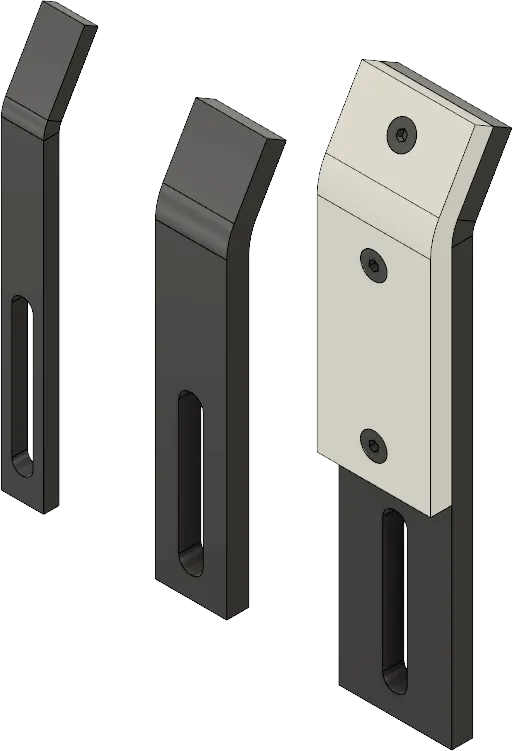
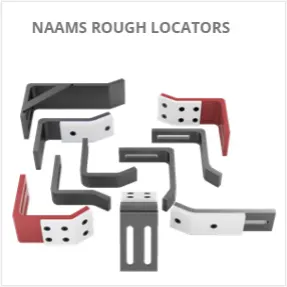
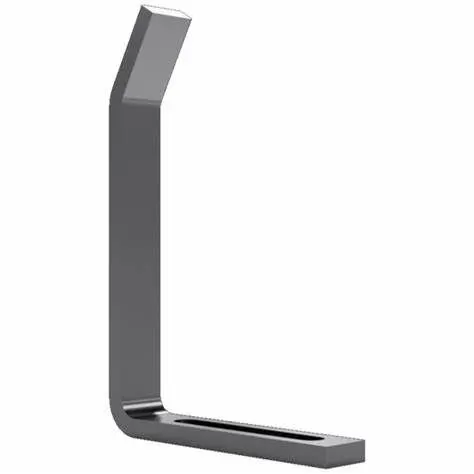
4) What are the things you need to consider while designing a rough locator.
- Position: The rough locaters need to be placed to guide the edges of the panel and positioned on the base plate accordingly.
- Angle: The angle should be maintained such that it is parallel to the panel edge and at a distance of at least 2.5mm. The angle ranges between 30-45o.
- Guiding range: The locators should start guiding from 10-15mm for proper engagement with pin.
- Direction: The direction of the car panel should be in the direction of the panel.
- There should be provision of adjustment of the locators.
5) What is the gun study process?
- There are more than 300-400 sheets to assembly for which the fixtures are designed.
- The entire assembly has around 50-55 robots simultaneously working, it is necessary to design all the units like clamp unit, pin unit etc. around the weld spots the robots work upon.
- The location of the weld spots is decided first, which from a base for designing the other units.
- The gun study includes the information on weld matric, weld spots. There are two types of weld spots, geo-spot which are necessary spots to be weld and re-spots which are done for strengthen of the weld.
- A weld gun is a device that is used for operation depending on the thickness of the part and its size.
- The arrival of the weld spot is the first step to designing the fixtures.
Gun Study: The process is done virtually on a software. The weld gun is positioned on the marked weld spot and checked for interference with all of the units around the weld spot. If interference is found, the units are accordingly adjusted.
6) What are the points that need to be considered for gun study?
- The axis of weld spots should be normal to the weld surface.
- The number of weld spots.
- Time required for working on each weld spot and all the spots in total.
- If there is more than one model needed to be programmed, the behavior of each model can be checked in required sequence. Sequence is the motion, action and direction of the device.
- Based on the distance, the motion direction, acceleration can be fed to the program, and the cycle time can be obtained.
- The last step is to check for any collisions during the process.
7) What is pneumatic routing?
- For proper operations of all the units, the pneumatic system should be working correctly without any leaks or errors.
- If there is any problem with it then, it affects the working of the entire fixture.
- In complex designs, line routing is even more important.
- Routing is done after the tube size is decided and appropriate fitting are locked in.
- The routing needs to be done in such a way that it is easily accessible and easy to service in times of any problems.
- U-bends are preferred.
- Using 45-degree bends is better compared to 90-degree bends as the pressure loss in less in such cases.
- Routing should be placed such that the likelihood of people standing on it is less or none.
- Clamping units need to be kept in mind while designing the routing.
- Assembly needs to be such that there is space for making all the connections.
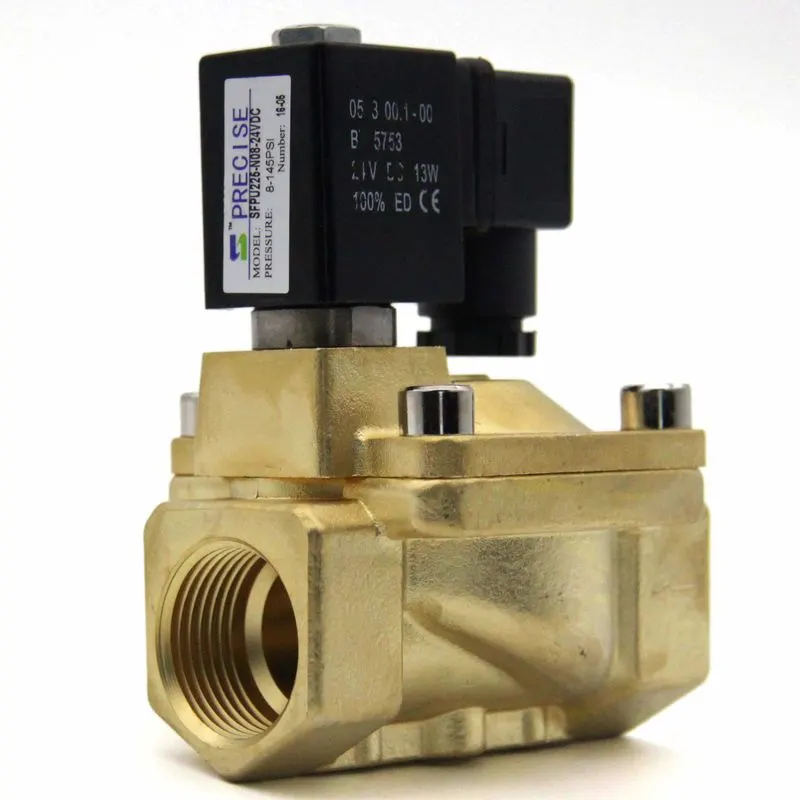
8) What is a solenoid valve?
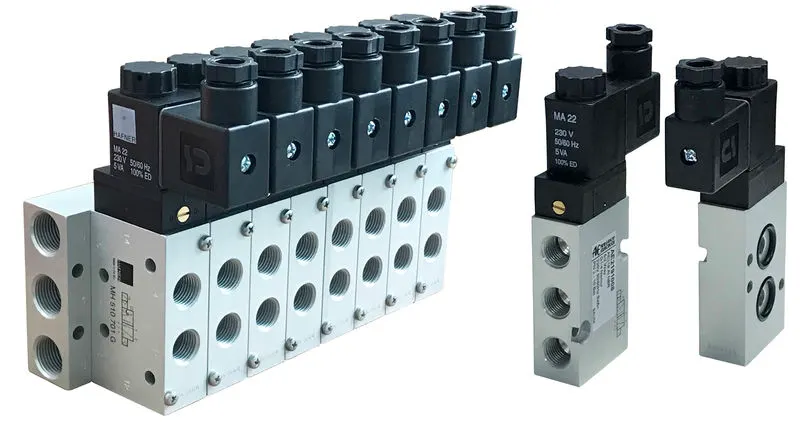
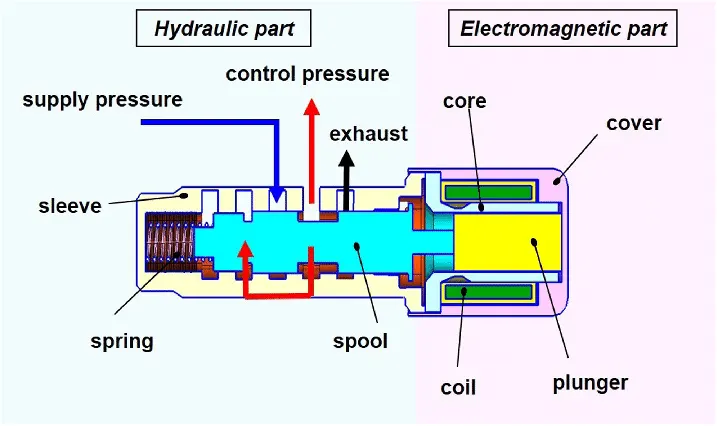
Solenoid valves convert electrical energy to mechanical energy. A normal 2-way valve having two ports, in open condition allows fluid or air to flow freely and in closed position stops the flow. This opening and closing of the valve is obtained by providing electrical impulse to it. If at rest, the valve is open, the valve is termed as normally open and if it is closed at rest position it is termed as normally closed. After the solenoid is energized, it is brought back to the rest position usually with the help of a spring.
Factors to choose a solenoid valve:
- Type: Whether the operation needs a 2-way, 3-way or 4-way valve.
- Operation: Does the circuit need to be normally closed or normal open.
- Media: Whether the fluid is liquid or gas. In case of fixtures, it’s usually gas.
- Size: the port size needed, as it plays a role in determining the pressure of the flow.
- Pressure: The pressure with which it needs to flow. In case of upstream flow, the pressure needs to be more compared to downstream.
- Atmosphere: Usually the temperature in which the valve needs to be operated and the moisture content in the air is determined for the type of valve to be decided.
- Voltage: Voltage is an important factor in determining the type of valve to be bought.
9) What is a valve bank?
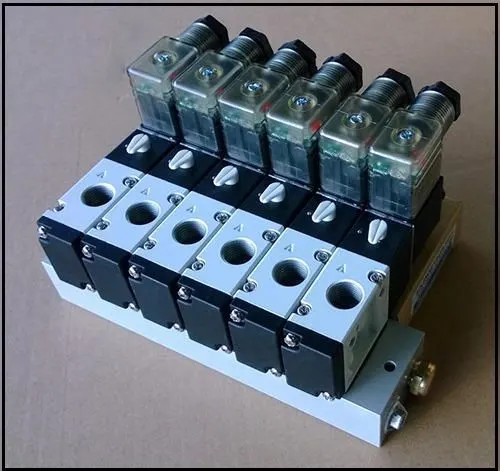
It a collection of solenoid valves having a common inlet port. It has separate vent passages for each of the solenoid valves. The solenoid valves control the feed of high-pressure air with the help of servo to a single pneumatic valve. The valve is actuated by selectively energizing the corresponding solenoid to allow servo air port of the valve. To return the valve to its fail-safe position, the solenoid is deenergized to vent the servo port of the valve to ambient.
10) What is a sensor and write in brief about its use in automation.
- Sensor is a device that takes input from its surroundings and responds as it is programed from. This input varies based on application. The input can be detecting the moisture content in air, detecting an obstacle on path or measuring the temperature.
- There are a number of sensors in a fixture unit to keep the position sand working of various units in check and the operations to run smoothly.
- The sensors are used to sense whether or not the car panels are at the right place or at a safe distance from the equipment.
Use in Automation
- Sensors are important to analyze correct positioning of various components. Some sensors also measure the distance travelled from the starting position.
- Measuring the linear distance travelled can be of importance in some cases and a LVDT sensor is used for this purpose.
- Rotary sensors are used to check the angular positioning of the components.
- Various sensors can be used depending on the need for contact and no contact applications.
- There are color sensors used for applications for sorting goods or detecting a wrong product in a batch, etc.
- For everyday use or for medical related applications, there are sensors for accurately measuring the temperature of the surroundings and even adjust as required depending on the use.
- Heartbeat sensors can be use to monitor the heart rate of patients or even for regular purpose.
- Moisture sensors can be used to check the moisture content in soil in a greenhouse.
11) What are the types of sensors?
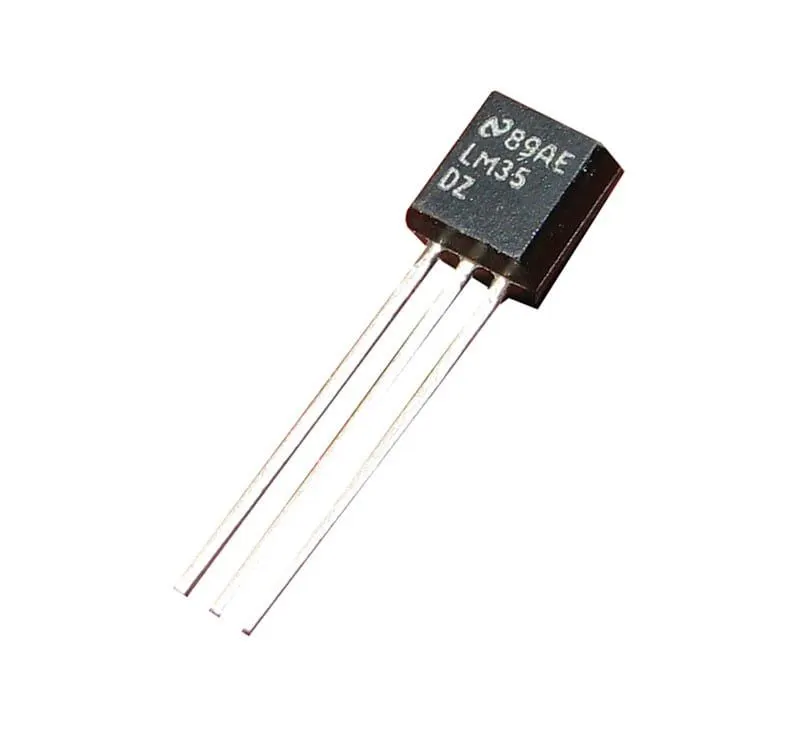
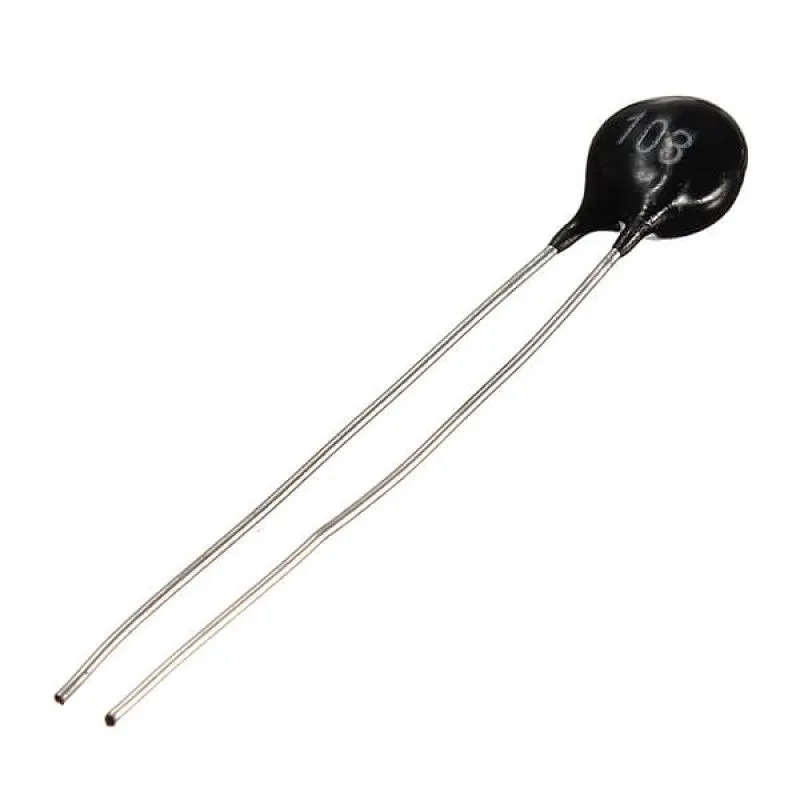
- Temperature sensors: It is used to measure temperature. There are various types of sensors that can be used for this application such as, Thermocouples, Thermistors, RTD, etc. These can be found to be both analog and digital sensors.
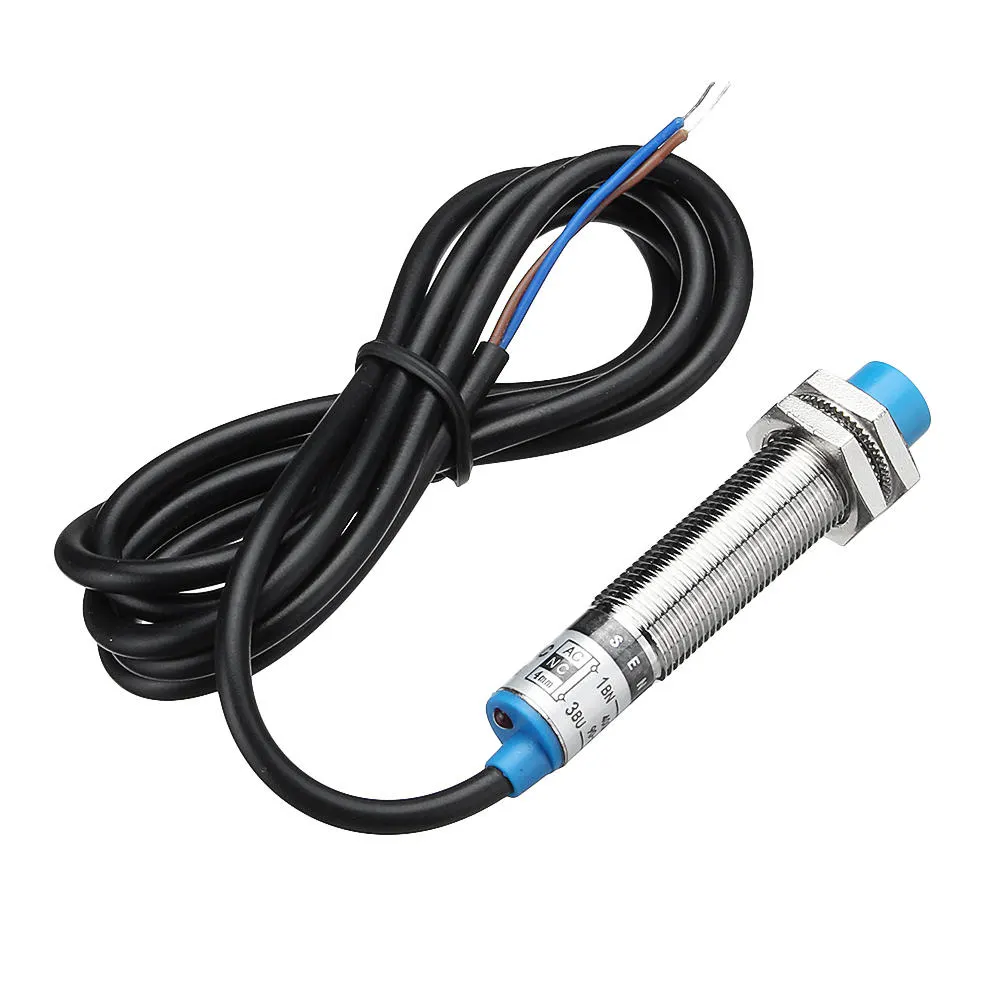
- Proximity Sensors: Used to detect presence of an object. These can be optical, sound based, magnetic or capacitive.
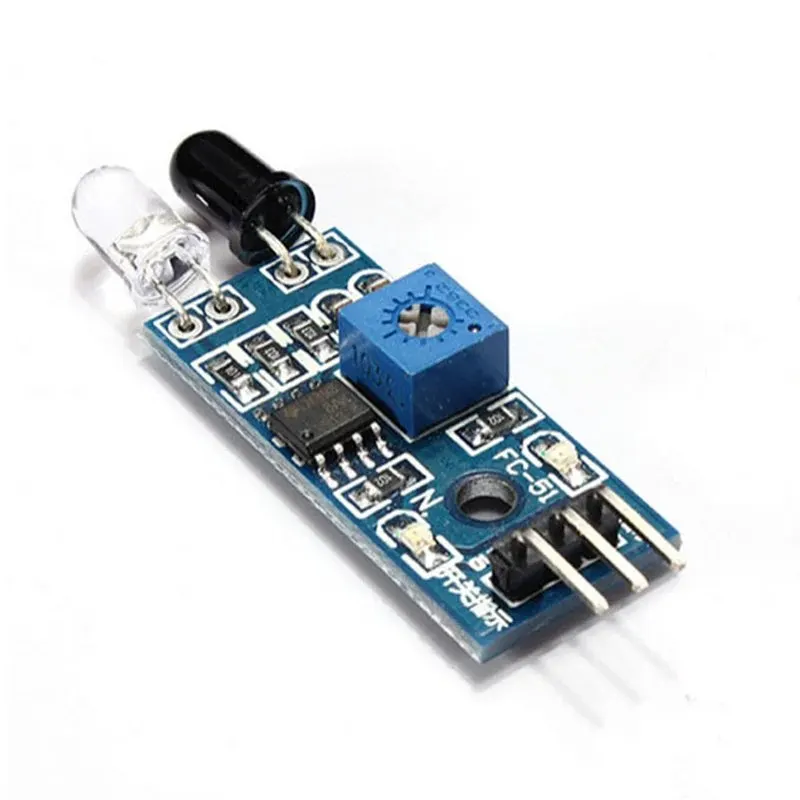
- IR Sensors: These are light based sensors with popular use in phones for various objects and proximity sensing. These can be classified into types, Transmission and Reflective type. In transmission types the IR sensors are placed facing each other and object is detected when there is a hinderance in between the transmitter and receiver. In reflective type the object is detected when the transmitted rays are reflected from it to the receiver placed adjacent to the transmitter.
- Ultrasonic Sensor: Used to measure distance and velocity.
- Light Sensor
- Smoke and Gas Sensor
- Alcohol Sensor
- Touch Sensor
- Color Sensor
- Humidity Sensor
12) Factors to consider while deciding or selecting a sensor.
- Sensor unit is required to detect the panel during welding process.
- Range: The range or the sensor needed for detecting the panel. The range can be determined after the location of the sensor is decided.
- Environment: The environment the sensor is working in, such as the surrounding temperature, humidity, moisture content etc. should be considered before selecting a sensor.
- Digital sensors: They give more accurate results as compared to analog sensors.
- Accuracy and Precision: The panels need to be in the right places and hence the accuracy and precision needs to be considered according to the budget.
- Excitation: The voltage required for running of the sensor.